Category: General news

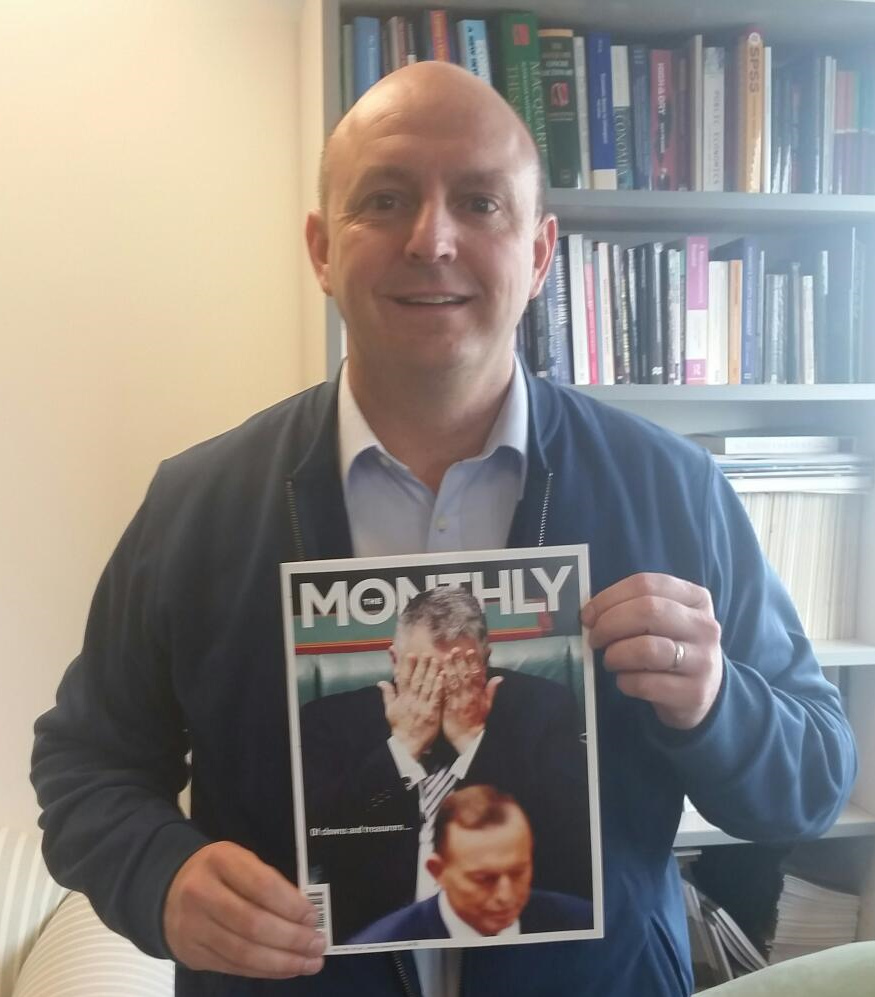
Managing director of Ebono Institute and major sponsor of The Generator, Geoff Ebbs, is running against Kevin Rudd in the seat of Griffith at the next Federal election. By the expression on their faces in this candid shot it looks like a pretty dull campaign. Read on

  • Government shoots super trawler messenger Inbox x

    1 of 48

    Government shoots super trawler messenger

    Inbox
    x

    Stop The Trawler Crew <stopthetrawler@et.org.au>

    4:41 PM (1 hour ago)

    to me
    stopthetrawler.net
    Hi Neville
    Secrecy surrounding the activities of the factory trawler Geelong Star just got worse. The Government has shot the super trawler messenger by abolishing an important committee responsible for providing advice on the management of the Small Pelagic Fishery, which the Geelong Star operates in. Sign the petition and tell your Federal MPs to stop avoiding super trawler problems and protect our fisheries and marine life today!

    The factory trawler Geelong Star continues to damage our seas, with less and less information being released by Government. Nine dolphins and at least four seals have been killed, the Independent Chair of the Small Pelagic Fishery advisory group quit due to concerns over industry influence, and what have the Government done in response? They are covering up the problems by axing the committee.

    Take action here and ask your Federal Politicians to stop the secrecy and protect our marine life and fisheries for good.

    The management of this fishery, the secrecy surrounding the trawlers operations, and its impacts, are under mounting speculation. We’re no longer being told how many seals are dying each day – the toll may be over 30 by now – we don’t know which recreational fisheries are being plundered because they won’t tell us where the trawler is fishing, and they won’t give us access to footage to ensure the company is playing by the rules.

    This foreign factory trawler is operated by a company with a bad reputation and a history of illegal fishing. Why is our Government covering for them instead of protecting our Australian-owned fisheries and marine life?

    We need to send our Local MPs a strong message that we won’t stand for this sell-out of our precious oceans to industrial trawlers. We need them to hear your voice, because we have stopped these super trawlers in the past, and we will do it again, with your help.

    Please sign the petition to your Federal Politicians here today and urge them to stop the secrecy and support the Small Pelagic Fishery Pledge.

    Thanks for all that you do,

    Bec, Erika and the Stop the Trawler crew

    p.s. Over 3,000 people have emailed their Federal MPs asking them to support the Pledge and protect our oceans from factory trawlers, but we need more. Without a wave of action, they won’t stand up on your behalf, so please take just 2 minutes to sign the petition to your Federal MP and help us stop the industrialisation of our oceans again!

  • Angora: Ripped From Rabbits’ Skin PETA AUSTRALIAN

    1 of 11

    Angora: Ripped From Rabbits’ Skin

    Inbox
    x

    Ingrid E Newkirk, PETA Australia membershipservices@peta.org.au via server8839.e-activist.com 

    10:24 AM (9 minutes ago)

    to me
    Trouble viewing this message? View this message online >

    Will You Help Us Save Their Skin?

    Donate Now

    Will You Help Us
    Save Their Skin?

    Dear neville,

    If you’ve spent any time with rabbits, you know how smart and sensitive they are. They’re naturally social animals with endearing personalities who form lifelong bonds with one another.

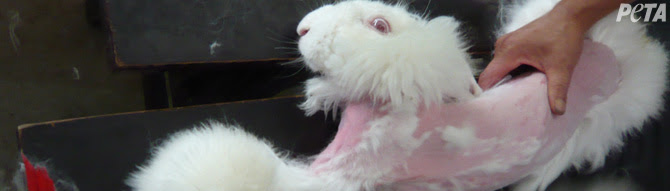
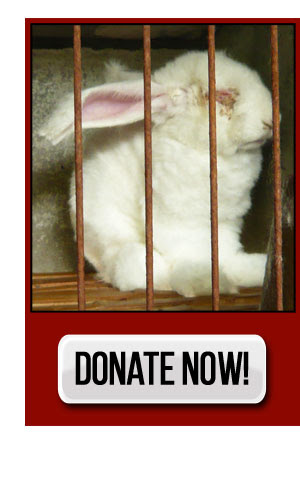
    But as you may have learned from our recent telephone event, on angora factory farms in China – the world’s largest producer and exporter of angora wool – rabbits are living in absolute terror, held prisoner in tiny, dirty cages until they’re grabbed by workers and the fur is painfully ripped out of their bodies.

    While tremendous progress is being made against this cruel and violent industry, as long as rabbits are still being harmed and killed on angora farms, we must work even harder to help them.

    Please help us work to push for even more progress for rabbits – and all animals – by making a donation online now.

    A PETA Asia investigator visited 10 rabbit farms in China, and on farm after farm, he found “live plucking” – a misleading term for tearing out rabbits’ hair by the fistful while the terrified animals scream in pain. Workers on these farms don’t stop until every last strand of the rabbits’ hair – except for small patches on their head, feet and tails – has been torn out. Most rabbits endure this ordeal every two to three months.

    On some farms that the investigator visited, the rabbits’ fur was cut with scissors or sheared with electric clippers, invariably wounding the thin skin of many as they struggled desperately to escape while tightly tethered or stretched across boards. For most of the rabbits on angora factory farms who manage to survive more than a year or two, their misery will end only when they’re hung upside down and their throats are slit so that their bodies can be sold for meat. Aside from a handful of companion-animal regulations in some of the major cities, there is still no animal-protection law in China – meaning that workers on these farms can do almost anything to animals with little personal risk.

    Your generous gift today will support our work to help save animals and make groundbreaking triumphs over such cruelty possible.

    The release of PETA Asia’s investigation has served as a wake-up call to retailers that stocked clothing and accessories made through the intense suffering of gentle rabbits and has inspired hundreds of thousands of caring people to take action to end the abuse and killing of these animals. Major retailers have banned angora and more companies, like David Jones, Myer and The Just Group, are banning or pulling angora products from their shelves almost every month.

    The tremendous progress that we’re making for animals through victories such as these is undeniable, and together with your help today, I’m certain that we can do even more to stop horrors like those witnessed during PETA Asia’s investigation.

    If you haven’t yet done so, please take a moment and visit our website to learn more about the agony behind angora wool and to promise never to wear angora. Then help spread awareness by sharing our campaign with your family and friends and asking them to pledge never to buy products made of angora wool. And if you see a shop that sells angora, speak to the manager and tell him or her about the suffering of rabbits.

    Thank you for helping PETA come to the aid of rabbits and other animals.

    Kind regards,


    Ingrid E Newkirk
    Founder

    PS: Together, we’ve accomplished so much during the past year to help save rabbits. Your donation today will support our work to achieve even more victories for animals who need our help.

  • Of clowns and treasurers AUSTRALIA INSTITUTE

    Something’s not right.
    We’re having trouble connecting to Google. We’ll keep trying…
    More

    1 of 43

    Of clowns and treasurers

    Inbox
    x

    The Australia Institute <mail@tai.org.au>

    4:31 PM (1 hour ago)

    to me
    The Australia Institute

    Dear Neville —

    The Monthly is one of Australia’s premier political current affairs magazines. The Australia Institute’s Richard Denniss provided the cover article for the current edition, titled: Of clowns and treasurers.

    The response has been staggering. As of Thursday, over 18,000 people had shared the article through their social media accounts (follow facebook or twitter). The reach and readership is enormous. The Monthly have now made it free to access the article online.

    Thankyou everyone who has shared the article, posted kind words or contacted us with feedback. If you haven’t already, read an excerpt of the article below, along with some other big issues of the week including mining, the ABC and taxes on booze.

    Montly_fb_rd_sqr.png

    Excerpt from Of clowns and treasurers by Richard Denniss

    I remember my first lesson in economics like it was yesterday. I’d never heard a bigger bunch of crap in my life. It made no sense. The assumptions were flawed. The examples were ridiculous and the conclusions worse.

    Burned into my memory from these first lessons is the sense of frustration and shame I felt. No matter how hard I tried to express my concerns, no matter what I said, my teacher’s face told me that he’d heard it all before. If I wanted to pass, I would have to agree. Greater minds than mine had puzzled over economics. My job was to remember it, and regurgitate it. And regurgitate it I did.

    My high school economics teacher was a great teacher and a nice bloke. But I hated his class more than all my other classes. It wasn’t him that was frustrating; it was the language of economics. I decided to become an economist, vowing never to make anyone who doubted what economists had to say feel stupid.

    Catholic priests once preached to the people in Latin to ensure that their audience had no idea what was being said. The purpose of the sermon was not to explain or persuade. The purpose was to silence. How can you criticise something you don’t understand?

    Economists often speak in Latin, and in Greek. We love to wear folk down with a few deltas and gammas before finishing them off with a bit of ceteris paribus. But one of our best tricks is to use words that sound like English but to which we attach our own very specific meaning. We use simple-sounding words like “efficiency” and “unemployment” to draw the unsuspecting into our conversation. Then we slam the door on their fingers when they admit to thinking that unemployment is measured by the number of people on the dole (it’s not) or that efficiency means reducing waste (not to economists it doesn’t).

    While economics provides a bunch of simple tools to help break down complicated problems, the language of economics is more frequently used to confound and confuse. Especially when it’s politicians talking about economics.

    The primary purpose of the econospeak that fills our airwaves, most of which is complete nonsense, is to keep ordinary Australians out of the big debates about tax, fairness, climate change and the provision of essential services.

    Read the full article here on The Monthly

    Huge week in mining

    It’s been a massive week for mining in Australia. The price of commodities are dropping, as our export quantities hit record highs. A giant coal mine that fails every economic, environmental and logic test was approved. NSW has again changed approvals processes. The world’s biggest coal project in the Galilee Basin has begun to look like the limb-less knight in Monty Python.

    There’s too much to cover here and now, but our Director of Research, Rod Campbell will be writing up a full review of the madness in a special bulletin, out this weekend. This will go to The Australia Institute’s Mining e-list. If you’d like to join the list- subscribe here.

    Abbott’s ABC

    The Abbott government campaign to defund, editorially intimidate and now boycott the Australian national broadcaster is a deeply unpopular one. To recap the last 18 months or so:

    While there may be some benefit to the Liberal party if editorial decisions are affected, the publicity around such an open and brazen attack on the ABC is unlikely to be advantageous.

    The Australia Institute commissioned a ReachTEL poll in late April in blue-ribbon Liberal electorates held by Christopher Pyne, Joe Hockey and Malcolm Turnbull.

    The results of the polling, indicate the majority of voters in these Liberal held seats oppose the cuts to the ABC, while an average of just 31% supported the budget cuts. Nearly two-thirds of those polled supporting protecting the ABC from political interference by enshrining its role in the Constitution. Previous polling has shown that the ABC enjoys much higher levels of trust than the Abbott Government.

    This was reported across the media, including this article in the Sydney Morning Herald. The ABC’s Media Watch program featured our Chief Economist, Richard Denniss, reviewing the polling results – watch here.

    The Goon Show: Report looks at how we tax grog

    The Australia Institute was approached by the Foundation for Alcohol Research and Education (FARE) to look into the way wine is taxed in Australia. The full report is published on our website – here.

    The findings were interesting, with a massive tax advantage for bulk, cheap wine over all other types of alcoholic drinks in Australia. It works, in effect, as a subsidy to bulk winemakers in the order of a billion dollars a year. The tax treatment of wine, described by the Henry tax review as ‘incoherent’, has distorted the industry, favouring industrial-scale production of wine, which attracts close to zero tax. This is despite the nature of bulk wine production in Australia – done in hot inland regions, reliant on heavy irrigation, and attracting a paltry price for growers.

    The report modelled changes to the tax system which could be good for consumers, winemakers, and the federal budget. By removing artificial incentives favouring the lowest quality of wine, growers would see more consumers move to a higher quality product. Improving Australian wines reputation for quality would likely increase revenue potential for exports, as well as better positioning local products against foreign imports.

    The Australia Institute in the media

    The Drum: Super tax problem

    Crikey: Five things everyone misunderstands about the Greek debt crisis

    AAP: Wine industry’s goon bag of tax goodies

    SMH: Abbott government’s ‘blue tape’ costs consumers billions, report finds

    The Conversation: Rising electricity demand could be here to stay

    The Saturday Paper: The Coalition’s ‘evil twin’ lobby firm

    Media Watch: Front benched from Q&A

    Climate Spectator: What would it take to make the NSW coal industry happy?

    SMH: Voters in blue-ribbon Liberal seats strongly support ABC, poll finds

    Canberra Times: Senate reform: Careful what you wish for

    Weekly updates from TAI

    We aim to keep you updated every week. Every fortnight we send out the Between The Lines which provides an overview of our research and topical issues. On alternate weeks we send out a newsletter based on our work in equity and mining. If you would like to receive those, click here, choose your newsletter, and we’ll make sure they land in your inbox.

  • The Homeless Are People Too Common Grace <info@co

    Something’s not right.
    We’re having trouble connecting to Google. We’ll keep trying…
    Errors: 101
    More

    1 of 44

    The Homeless Are People Too

    Inbox
    x

    Common Grace <info@commongrace.org.au>

    3:21 PM (4 minutes ago)

    to me
    6a010536d3e297970c01b8d12059c8970c.jpg


    “How can we worship a homeless man on Sunday and ignore those homeless on Monday.”

    –Common Grace supporter, Shane Claiborne

    It’s not just Jesus who had nowhere to lay his head. This week in Perth, people sleeping rough were “hosed down like animals”.

    Dear Neville,

    I (Tim) have had the confronting blessing of working with people who are sleeping rough on our streets. That’s why this news broke my heart: The WA Department of Culture and Arts (DCA) installed a water sprinkling system at Perth’s King Street Arts Centre — for the explicit purpose of wetting people sleeping rough, and forcing them to seek shelter elsewhere.1 I know firsthand that those affected often carry all their world’s possessions with them, will have nowhere to go to dry off, and no prospect of a hot shower in winter. Those who end up on the streets are some of society’s most vulnerable; people fleeing domestic violence, those suffering from mental illness or sexual abuse, and war veterans with post-traumatic stress disorder, are just some of the people sleeping rough in our nation tonight.

    Add your voice to Tim’s in calling for the ‘homeless sprinklers’ to be removed and for a compassionate response to those who are homeless.

    We welcome news that Mr Ord has agreed to turn off the taps. However we believe that the decent and dignified treatment of people means that they must be removed. We call on the WA government to remove the sprinkler to show their commitment to resolving the core problems that lead to homelessness.

    1 in 200 Australians are homeless, and a quarter of these are under the age of 18. Those sleeping rough are statistically at far higher risk of physical assault, sexual abuse and deprivation. Funding for homeless shelters is inadequate, and thousands are turned away every night. These people often have nowhere else to go.

    Jesus is found amongst those society considers the “least of these” and asks us to stand with them. Let’s send this message of dignity and value around Australia.

    That’s why I’m thankful for Common Grace. In 24 hours we’ve got over 1,000 signatures. Imagine what could happen if we all got behind this?

    Join Tim in signing the petition for the ‘homeless sprinklers’ to be removed and new compassionate approach to be taken.

    Thanks for putting love in action,

    Tim on behalf of the Common Grace Team


    References
    [1] “WA’s Department of Culture and Arts under fire for ‘turning hoses’ on homeless”, Brisbane Times, 8 July 2015
    [2] “Sprinkler used by WA government department to drive homeless away turned off”, 9 News, 8 July, 2015

    Common Grace
    http://www.commongrace.org.au/

  • Disinventing Democracy – monbiot.com

    4 of 44

    Disinventing Democracy – monbiot.com

    Inbox
    x

    George Monbiot <noreply+feedproxy@google.com>

    5:08 PM (1 hour ago)

    to me

    Disinventing Democracy – monbiot.com


    Disinventing Democracy

    Posted: 07 Jul 2015 10:38 PM PDT

    The assault on Greece is just the latest episode in a long history of shutting down choice on behalf of the financial elite.

    By George Monbiot, published in the Guardian 8th Juy 2015

    Greece might be financially bankrupt; the troika is politically bankrupt. Those who persecute this nation wield illegitimate, undemocratic powers: powers of the kind now afflicting us all.

    Consider the International Monetary Fund. The distribution of power here was perfectly stitched up: IMF decisions require an 85% majority, and the US holds 17% of the votes. It’s controlled by the rich, and governs the poor on their behalf. It’s now doing to Greece what it has done to one poor nation after another, from Argentina to Zambia. Its structural adjustment programmes have forced scores of elected governments to dismantle public spending, destroying health, education and the other means by which the wretched of the earth might improve their lives.

    The same programme is imposed regardless of circumstance: every country the IMF colonises must place the control of inflation ahead of other economic objectives; immediately remove its barriers to trade and the flow of capital; liberalise its banking system; reduce government spending on everything except debt repayments; and privatise the assets which can be sold to foreign investors.

    Using the threat of its self-fulfilling prophecy (it warns the financial markets that countries which don’t submit to its demands are doomed), it has forced governments to abandon their progressive policies. Almost single-handedly, it engineered the 1997 Asian financial crisis: by forcing governments to remove their capital controls, it opened currencies to attack by financial speculators. Only countries such as Malaysia and China, which refused to cave in, escaped the crisis.

    Consider the European Central Bank. Like most other central banks, it enjoys “political independence”. This does not mean that it is free from politics; only that it is free from democracy. It is ruled instead by the financial sector, whose interests it is constitutionally obliged to champion, through its inflation target of around 2%. Ever mindful of where power lies, it has exceeded this mandate, inflicting deflation and epic unemployment on poorer members of the eurozone.

    The Maastricht treaty, establishing the European Union and the euro, was built on a lethal delusion: a belief that the ECB could provide the only common economic governance that monetary union required. It arose from an extreme version of market fundamentalism: if inflation was kept low, its authors imagined, the magic of the markets would resolve all other social and economic problems, making politics redundant. Those sober, suited, serious people, who now pronounce themselves the only adults in the room, turn out to be demented utopian fantasists, votaries of a fanatical economic cult.

    All this is but a recent chapter in the long tradition of subordinating human welfare to financial power. The austerity now imposed on Greece, brutal as it is, is mild by comparison to earlier versions. Take, for example, the Irish and Indian famines, both exacerbated (in the second case caused) by the doctrine then known as laissez-faire, but which we now know as market fundamentalism or neoliberalism.

    In Ireland’s case, one eighth of the population was killed – one could almost say murdered – in the late 1840s, partly by the British refusal to distribute food, to prohibit the export of grain or to provide effective poor relief. Such policies offended the holy doctrine that nothing should stay the invisible hand

    When drought struck India in 1877 and 1878, the British imperial government insisted on exporting record amounts of grain, precipitating a famine that killed millions. The Anti-Charitable Contributions Act of 1877 prohibited “at the pain of imprisonment private relief donations that potentially interfered with the market fixing of grain prices.” The only relief permitted was forced work in labour camps, in which less food was provided than to the inmates of Buchenwald. Monthly mortality in these camps in 1877 was equivalent to an annual rate of 94%.

    As Karl Polanyi argued in The Great Transformation, the gold standard – the self-regulating system at the heart of laissez-faire economics – prevented governments in the 19th and early 20th centuries from raising public spending or stimulating employment. It obliged them to keep the majority poor, while the rich enjoyed a gilded age. Few means of containing public discontent were available, other than sucking wealth from the colonies and promoting aggressive nationalism. This was one of the factors that contributed to the First World War. The resumption of the gold standard by many nations after the war exacerbated the Great Depression, preventing central banks from increasing the money supply and funding deficits. You might have hoped that European governments would remember the results.

    Today, equivalents to the gold standard – inflexible commitments to austerity – abound. In December 2011, the European Council agreed a new fiscal compact, imposing on all members of the eurozone a rule that “government budgets shall be balanced or in surplus”. This rule, which had to be transcribed into national law, would “contain an automatic correction mechanism that shall be triggered in the event of deviation.” This helps to explain the seignorial horror with which the troika’s unelected technocrats have greeted the resurgence of democracy in Greece. Hadn’t they ensured that choice was illegal? Such diktats mean that the only possible democratic outcome in Europe is now the collapse of the euro: like it or not, all else is slow-burning tyranny.

    This is hard for those of us on the left to admit, but Margaret Thatcher saved the UK from this despotism. European monetary union, she predicted, would ensure that the poorer countries must not be bailed out, “which would devastate their inefficient economies.”

    But only, it seems, for her party to supplant it with a homegrown tyranny. George Osborne’s proposed legal commitment to a budgetary surplus exceeds that of the eurozone rule. Labour’s promised budget responsibility lock, though milder, had a similar intent. In all cases, governments deny themselves the possibility of change. In other words, they pledge to thwart democracy.

    So it has been for the past two centuries, with the exception of the 30-year Keynesian respite. The crushing of political choice is not a side effect of this utopian belief system but a necessary component. Neoliberalism is inherently incompatible with democracy, as people will always rebel against the austerity and fiscal tyranny it prescribes. Something has to give, and it must be the people. This is the true road to serfdom: disinventing democracy on behalf of the elite.

    www.monbiot.com

  • Huge win on CSG. Now let’s finish the job. get up

    Something’s not right.
    We’re having trouble connecting to Google. We’ll keep trying…
    Errors: 101
    6 of 41

    Huge win on CSG. Now let’s finish the job.

    Inbox
    x

    Lily – GetUp!

    6:14 PM (53 minutes ago)

    to me
    Dear NEVILLE,

    Huge news. Today AGL announced they’re withdrawing from massive coal seam gas projects across NSW.

    The company has sold back a gas exploration license to the NSW Government covering 6500km of NSW, including prime farm land and Sydney water catchments. Many parts of Sydney, the Illawarra, Camden and the Hunter Valley are now safe from AGL’s dangerous CSG expansion.

    This announcement, along with a massive $600 million write-down in AGL’s gas assets, shows they’re fighting a losing battle when it comes to coal seam gas.1 This proves that not only is CSG bad for our communities, it’s also bad for AGL’s business.

    This decision is in no small part thanks to our partners at Lock The Gate, Land Water Future and Stop CSG Illawarra who have worked tirelessly with the support of local communities in NSW for this. It is a huge win. Sadly AGL are still pushing ahead with their beleaguered CSG project in Gloucester.

    However, with $275 million of their asset write-downs coming from the Gloucester project alone, today’s announcement shows just how risky an investment CSG is for them.2 They’re in a very vulnerable position — in just a few months AGL will need to decide whether to get out of Gloucester for good.

    Today, AGL CEO Andrew Vesey said that the Gloucester project’s impact on AGL’s retail brand is “always something we have to be attentive to”.2 Put simply, if AGL’s retail brand is hurt because of their fracking in Gloucester that will influence their decision on whether to back out of the project. That’s where you come in.

    Switch your power now. If you’re with AGL, there’s no better way to convince them that their continued investment in fracking is bad for business.

    The same goes for the two other biggest energy providers, EnergyAustralia and Origin — both of whom also invest in coal seam gas around the country.

    AGL’s retail brand has already taken a major hammering thanks to the thousands of GetUp members who’ve switched their power away from AGL in protest, to a power provider who’s committed to never invest in coal seam gas. If hundreds more switch and let AGL know they’ve lost yet more customers because of their fracking in Gloucester, it could be the straw that breaks the camel’s back.

    Leading investment analyst Credit Suisse found that if GetUp switches 30,000 AGL customers, it’ll take $100 million off their bottom line.3 Through GetUp’s Better Power campaign, 12,000 people have already switched to our partner Powershop, ranked Australia’s Greenest Electricity Retailer last year by Greenpeace and the Total Environment Centre.

    Help add another nail to the coffin of CSG by switching your power.

    GetUp’s partnered with Powershop because they’ve committed to never invest in dirty coal or coal seam gas, and are backed by a 100% renewable energy company, Meridian. They strongly supported the 41,000 GWH Renewable Energy Target, unlike AGL, who called for it to be scrapped altogether.4 Powershop are also one of the cheapest retailers in Victoria, and since their launch earlier this year in New South Wales, their prices here have been very competitive too.5 It only takes about five minutes to switch online.

    Switch your power today to drive home the message: Fracking is not only bad news for our land and water — it’s bad news for their bottom line.

    If you are a customer of AGL (or EnergyAustralia or Origin – the two other companies that together with AGL make up the “Dirty Three”), you can make the switch through GetUp’s Better Power campaign now. It’s a simple process that takes a few minutes, with Powershop doing all the hard work for you — contacting your power company on your behalf and transferring your electricity account. You can also get a price comparison from Powershop first before you decide whether to switch.

    Find out how to make the switch away from CSG today.

    In addition to shifting customer value into a company that only invests in renewables, if you switch your power, GetUp will receive a fixed payment that goes into funding our renewables and anti-CSG campaigns. That means you’re supporting renewables in two ways – by divesting from a coal seam gas-investing company and by financially supporting our fight against coal and coal seam gas.

    Powershop will also offset your power so it is 100% carbon neutral at no extra cost to you. Once you’ve switched, you’ll get the chance to tell AGL (or EnergyAustralia or Origin) why they’ve lost you as a customer, further driving home the message that they have no social licence to frack. The more customers they lose, the less reason they have to continue their investment in fracking.

    Make the switch now and help stop CSG in its tracks: http://www.getup.org.au/better-power

    Together, we can help drive Australia’s transition to clean energy. Keep fighting.

    Lily, for the GetUp team

    P.S. If you’re an AGL shareholder, you have an unique opportunity to influence the company at this year’s Annual General Meeting. Already seventy GetUp members have taken powerful shareholder action, but we need thirty more to be counted! Click here to find out more and take action to help clean up AGL.

    P.P.S. For more information on Powershop and the Better Power campaign click here.

    References:
    1. ‘AGL Energy to take $603m write-down on gas business; to sell some assets’, The Sydney Morning Herald, 6 July 2015.
    2. ‘AGL takes $600m in writedowns’, The Australian, 6 July 2015.
    3. Credit Suisse analysis, July 2014; Credit Suisse Research and Analytics, AGL Energy – I can see clearly now, 19 March 2015; Citi Research, 18 February 2015.
    4. ‘AGL Energy calls for renewable energy target to be scrapped’, Renew Economy, 24 October 2014.
    5. The Victorian government’s Essential Services Commission issued a report on electricity prices in the state in October 2014 which said: “taking into account all available discounts, the lowest overall prices were most commonly available from Powershop.” Victorian government’s Essential Services Commission Energy Retailers’ Comparative Performance Report – Pricing, October 2014.