Category: General news

Managing director of Ebono Institute and major sponsor of The Generator, Geoff Ebbs, is running against Kevin Rudd in the seat of Griffith at the next Federal election. By the expression on their faces in this candid shot it looks like a pretty dull campaign. Read on

  • Days to save whales avaaz

    1 of 19

    Days to save whales

    Inbox
    x

    Lisa Vickers – Avaaz Unsubscribe

    7:07 AM (2 hours ago)

    to me

    Icelandic whalers are about to start harpooning over 150 endangered fin whales. But If we can get a tiny Caribbean nation to remove their flag from a ship that’s carrying millions of dollars worth of fin whale meat to Japan, we can hit them where it hurts. Stopping this sale could turn the tide. The ship could leave in six days. Add your voice and share this urgently:

    Sign the petition
    Dear friends,

    The Icelandic whaling fleet is about to leave port to hunt and kill 150 endangered fin whales. We’ve come close to shutting down this barbaric operation before and now we have a chance to end it for good.

    As the whalers sharpen their harpoons for this year’s hunt, their boss is trying to ship last year’s whale meat to Japan right now. Over 1,700 tonnes are about to be sent through the icy passage between Russia and the North Pole. But if the tiny Caribbean nation of St. Kitts and Nevis simply removes their flag from the vessel it can’t leave port! Tourism is the main pillar of their country’s economy and we can put their reputation on the line by throwing them into our giant global spotlight.

    We have just six days before the boat could set sail.

    Our community already helped push European countries to shun this shameful trade. Let’s now get St. Kitts to stop helping the whalers! Sign now and share with everyone urgently  Avaaz will deliver our voices straight to the new Prime Minister, and if he doesn’t respond quickly, Avaaz’ll target his biggest tourist market – the US – and show how St. Kitts is supporting the slaughter of these majestic beings:

    https://secure.avaaz.org/en/days_to_save_whales_loc/?bhPqncb&v=61041

    Dear friends,

    The Icelandic whaling fleet is about to leave port to hunt and kill 150 endangered fin whales. We’ve come close to shutting down this barbaric operation before and now we have a chance to end it for good.

    As the whalers sharpen their harpoons for this year’s hunt, their boss is trying to ship last year’s whale meat to Japan right now. Over 1,700 tonnes are about to be sent through the icy passage between Russia and the North Pole. But if the tiny Caribbean nation of St. Kitts and Nevis simply removes their flag from the vessel it can’t leave port! Tourism is the main pillar of their country’s economy and we can put their reputation on the line by throwing them into our giant global spotlight.

    We have just six days before the boat could set sail.

    Our community already helped push European countries to shun this shameful trade. Let’s now get St. Kitts to stop helping the whalers! Sign now and share with everyone urgently  Avaaz will deliver our voices straight to the new Prime Minister, and if he doesn’t respond quickly, Avaaz’ll target his biggest tourist market – the US – and show how St. Kitts is supporting the slaughter of these majestic beings:

    https://secure.avaaz.org/en/days_to_save_whales_loc/?bhPqncb&v=61041

    Iceland’s entire fin whaling industry is run by one man, Kristjan Loftsson, but his business is barely breaking even, so if we stop the whale meat from reaching Japan we can sink his profits! Other nations have removed their flag from vessels in response to public pressure over other environmental concerns so we know this can work for the whales. All we need to do is create a scandal and get a delay to make the crossing to Japan impossible.

    Japanese whalers plan to resume “scientific” whaling in the Southern Ocean Whale Sanctuary despite widespread opposition, and St. Kitts and Nevis votes in support of Japan’s “research” at the International Whaling Commission. If we take them out of the equation now we can strike a deadly blow to both Icelandic and Japanese whaling at the same time!

    Pressure has been mounting globally and nationally to stop the Icelandic whalers. This could be a turning point for the whales. Together we have the power to turn the International Whaling Commission into the International Whale Conservation Commission. And we can get started by stopping this year’s harpooning and this whale meat shipment! Sign the urgent petition now:

    https://secure.avaaz.org/en/days_to_save_whales_loc/?bhPqncb&v=61041

    We know our voices work! Following our 1 million strong petition in 2013, the Dutch government blocked Iceland’s whale meat shipments docking in the Netherlands. And together with Greenpeace, our community managed to get fin whale meat sent back to Iceland from Germany. Since then major shipping companies announced they would never ship whale meat again. We’re making it harder and harder for this industry to make a profit. Let’s shut it down for good!

    With hope,

    Lisa, Danny, Alice, Ricken, Mel, Nick, Rewan and the whole Avaaz team

    MORE INFORMATION

    Iceland sends shipment of 1,700 tonnes of whale meat to Japan (The Guardian)
    http://www.theguardian.com/environment/2015/jun/05/iceland-sends-shipment-of-1700-tonnes-of-whale-meat-to-japan.

    Desperate whalers go north (Greenpeace)
    http://www.greenpeace.org/international/en/news/Blogs/makingwaves/whale-meat-iceland/blog/53241/

    The Winter Bay (Vessel Fider – shows where the ship carrying the whale meat is and which country is registering it)
    https://www.vesselfinder.com/vessels/WINTER-BAY-IMO-8601680-MMSI-341433000

    Japan to resume whaling hunt despite IWC warning (AFP)
    https://uk.news.yahoo.com/japan-resume-whaling-hunt-despite-iwc-warning-105354478.html#ohHmAJ1

  • Calling all health professionals THE GUARDIAN

    Click here to enable desktop notifications for Gmail.   Learn more  Hide
    2 of 19

    Calling all health professionals

    Inbox
    x

    Emma Howard <info@mail.theguardian.com> Unsubscribe

    2:27 AM (6 hours ago)

    to me
    Can’t see this email? View in browser
    Dear Neville,

    Today in the Guardian, a group of senior health professionals – along with other doctors, nurses and academics – are asking the Wellcome Trust to divest from fossil fuels. Among them are the editors of the leading medical journals, the BMJ and the Lancet.

    “Health organisations such as the Wellcome Trust have considerable moral and scientific authority, and a decision to divest has the potential to influence policy-makers, other investors and the public, in the UK and internationally.”

    Do you belong to the health community? If so, the signatories to the letter are inviting you to join them and sign the letter too. Whether you’re a psychologist, community health worker, academic, student, retired GP, dentist or midwife, you can add your name to their letter here.

    Your voice has authority too and will hold weight with the Wellcome Trust. If you don’t want to sign the letter but you are a health professional concerned about climate change, simply tell us why and if you give permission we will publish a selection of your responses on our site.

    Also today, we launched our fifth carbon bomb – vast fossil fuel reserves, which, if burned, will take us well along the road to catastrophic climate change. This time it comes from the coast of Rio de Janeiro, where nine years ago billions of barrels worth of oil was discovered. Many hoped it would bring Brazil prosperity, but today their biggest energy company Petrobras is facing up to severe debt, scandal and the threat of a second Deepwater Horizon.

    Thank you for your support, as ever,

    Emma Howard, Keep it in the Ground

  • Click here to enable desktop notifications for Gmail.   Learn more  Hide
    More

    6 of 14

    Our heartfelt thanks for protecting our SBS

    Inbox
    x

    Margaret Pomeranz & Quentin Dempster – via CommunityRun <info@communityrun.org>

    9:23 PM (11 hours ago)

    to me
    Thank you for protecting our SBS

    Hi NEVILLE,

    Yesterday the Senate voted against the Bill that would have increased advertising on our SBS.

    We started the campaign six months ago, when the proposals were first flagged. Since then almost 62,000 Australians, including you, joined the campaign to protect our SBS from further commercialisation.

    This could not have been achieved without you and the hard work of our friends at Save Our SBS supporters & friends of SBS, and GetUp. We want to convey our heartfelt thanks for your individual contribution to the success of our campaign. This was democracy in action.

    As it says in the name, our Special Broadcasting Service is something special. With many Australians, speaking a language other than English at home, it’s important we foster a sense of inclusion within our community. We couldn’t sit back and watch as this vital and unique service was put at risk.

    After launching the campaign, it took only a matter of weeks before this display of public support for our SBS was decisive. This meant that when we met with senators in Canberra, we were able to demonstrate the mass support for our petition against an increase in ads on the SBS. As a result, we were able to persuade senators that SBS should be protected from destructive laws seeking to fully commercialise the SBS through doubling prime time advertising and product placement.

    Proponents of the laws argued an increase in advertising was needed to claw back revenue lost through recent budget cuts. However, if the Bill had passed, our SBS would have looked no different from commercial TV and would fail to meet its Charter obligations.

    Our concerns regarding the future of SBS don’t rest here. We’ll continue to advocate for the restoration of funding for our SBS and we’ll oppose any attempts to undermine its integrity. We hope you’ll continue to stand with us.

    Warmest regards,

    Margaret Pomeranz & Quentin Dempster

    PS. We ask that you join us for the next phase of the battle to secure a sustainable future for SBS. With this in mind, if you’d like to stay in the loop, you can join Save Our SBS, the national peak body for supporters & friends of SBS (if you haven’t already done so), by visiting SaveOurSBS.org

  • 64% outraged at Reef plans WWF

    esktop notifications for Gmail.   Learn more  Hide
    Something’s not right.
    We’re having trouble connecting to Google. We’ll keep trying…
    More

    1 of 8

    64% outraged at Reef plans

    Inbox
    x

    Richard Leck, WWF-Australia noreply@act.wwf.org.au via server8839.e-activist.com 

    4:50 PM (7 minutes ago)

    to me
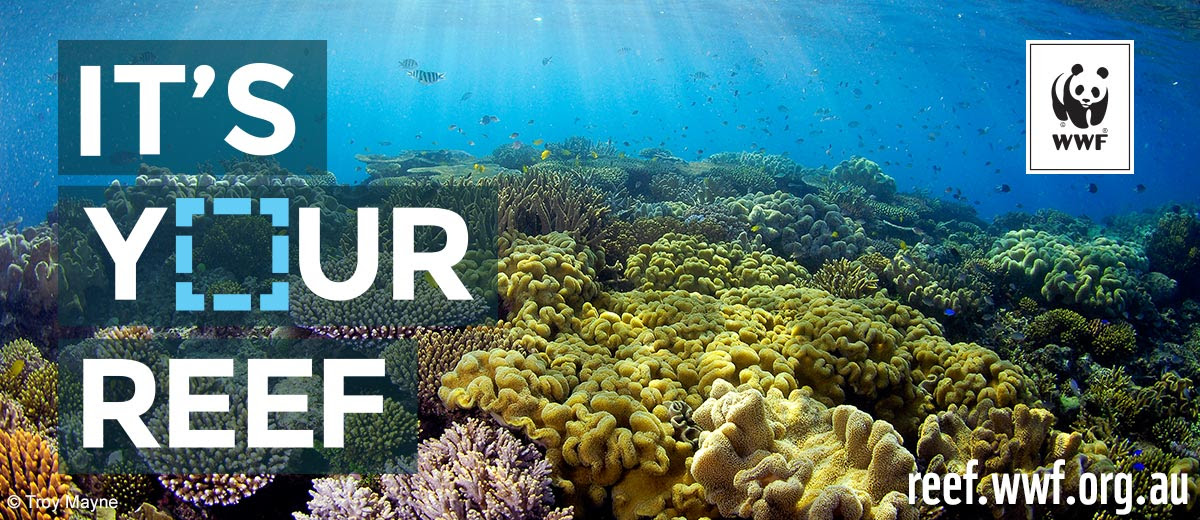
    Reef image

    Dear NEVILLE,

    (There’s a heap of important statistics in this email, then a link to an awesome virtual reality Reef experience toward the end – if you just want to go straight to the link, click here)

    Get this – last month, research agency YouGov asked 6,000 people from 6 different countries some questions about the Great Barrier Reef.  Here’s what they found:
    64% of people were either “outraged” or “concerned” by planned industrial expansion of the Reef – the world’s largest coral reef ecosystem.

    When asked what actions they would support their governments’ taking at the upcoming World Heritage meeting, over three-quarters of respondents chose “calling on UNESCO to maintain strong oversight of the condition of the Reef until its health has been secured” (77 per cent).

    A clear majority also wanted their country to declare support for the protection of the Reef (73 per cent) and to hold the Australian government accountable (70 per cent).  In fact, two-thirds (67 per cent) supported directly calling on the Australian Government to significantly increase protection for the Reef, even if this creates diplomatic tensions or has negative consequences for trade.

    These are powerful findings – it shows the world is hearing us.

    And here’s the good news: five of the countries polled currently sit on the 21 member World Heritage Committee.  So we’ve got a real chance that when the Committee votes on the future of the Great Barrier Reef they’ll be listening to their citizens.
    Combined with the more than 500,000 people who’ve now signed our petition, there’s now a strong chance the Committee will vote to keep the Australian Government on parole.

    Soon our team will be on the ground in Bonn, showing ambassadors from many of those countries a virtual reality dive tour we’ve developed to highlight the incredible beauty of the Great Barrier Reef.  I wanted you to have a chance to see it too.  If you click here you can go on a virtual reality dive tour of the Great Barrier Reef – it’s pretty spectacular.

    It works on a desktop computer, but it’s even better on a smartphone.  Even better, get yourself a pair of cardboard goggles – the plans to make them are here (click download kit) – and it’s like a virtual reality tour of the Reef. Enjoy it!

    Thanks for everything you’ve done to help so far,

    Richard Leck
    Great Barrier Reef Campaigner
    WWF-Australia

    P.S. In case you missed it yesterday, our new video featuring some amazing celebrity Reef Ambassadors is on facebook here.  So far, it’s been shared nearly 1000 times!

    Having trouble reading this email? View the webpage.
    Manage Email Preferences
    One Click Unsubscribe
    Privacy Policy
    WWF-Australia PO Box 528 Sydney NSW 2001
  • Let’s stop feeding big businesses addiction

    re to enable desktop notifications for Gmail.   Learn more  Hide
    Something’s not right.
    We’re having trouble connecting to Google. We’ll keep trying…
    Errors: 101
    More

    1 of 20

    Let’s stop feeding big businesses addiction

    Inbox
    x

    Michael O’Connor

    1:25 PM (2 hours ago)

    to me
    Dear Inga,
    Our employers have an addiction problem.

    They are addicted to vulnerable easily exploited temporary overseas workers. And with 1.2 million people on temporary visas with work rights currently in Australia (more than a tenth of the workforce), they’ve got plenty of people to exploit.

    But they also have an aversion. An aversion to advertising jobs to local workers or training them.

    The Abbott Government is feeding this addiction through failing to regulate the system that creates these abuses. They allow labour hire companies to flaunt Australian labour laws as revealed in recent exposés where workers tell stories of exploitation, terrible living conditions and harassment.

    We are way past the few rotten apples myth. This is a systemic attempt by companies to undermine the labour standards that we have fought for. The fact that labour hire agencies get to pick who they give work to when and how is bad for all workers, but it’s even worse for workers who are too scared to stand up and speak out.

    Labour hire companies should not be allowed to hire temporary work visas. They mustn’t be allowed to exploit vulnerable overseas workers and they mustn’t be allowed to drive down the wages and conditions of local workers.

    Please sign our petition telling Peter Dutton the Immigration Minister to put a stop to this abuse and stand up for jobs for locals.

    In unity

    Michael O’Connor
    CFMEU National Secretary

  • Revealed: Major new coal mines planned for the Upper Hunter

    10:22AM Thursday Jun 25, 2015
    24062 online now
    Do you know more about a story?

    Real Estate
    Cars
    Jobs
    Dating
    Newsletters

    The Sydney Morning Herald
    Environment

    UN Climate Conference
    Environment
    Weather
    Climate Change
    Whale Watch
    Animals
    Conservation
    Energy Smart

    You are here: Home Environment
    Search smh:
    Search in:

    Environment

    Revealed: Major new coal mines planned for the Upper Hunter

    Date
    February 28, 2015

    Peter Hannam
    Peter Hannam
    Environment Editor, The Sydney Morning Herald

    View more articles from Peter Hannam

    Follow Peter on Twitter Follow Peter on Google+ Email Peter

    Leaked reports show that mining companies have prepared plans for as many as 16 new or expanded coal mines in the NSW Upper Hunter Valley.

    inShare
    submit to reddit
    Email article
    Print
    Reprints & permissions

    Coal mines in the Hunter Valley near Singleton.

    Coal mines in the Hunter Valley near Singleton.

    Annual coal health toll $600m

    Large swaths of the Upper Hunter are likely to be cleared to make way for as many as 16 new or expanded open-cut coal mines, according to leaked studies prepared by the Office of the Environment and Heritage and 11 major mining companies.

    The OEH has been working with mining giants, including BHP, Glencore and Rio Tinto, to assess new coal projects that could cover as much as 45,000 hectares, or about 18 times the size of the City of Sydney. Each miner paid $93,000 to help cover the costs of the assessment, the OEH said.
    ADVERTISING
    A Rio Tinto coal mine in the Hunter Valley.

    A Rio Tinto coal mine in the Hunter Valley. Photo: Supplied

    As the accompanying interactive map reveals, the new mines dwarf existing projects (marked in white) in the region, and could result in new or enlarged mines over the next 25 years from an area abutting the Singleton Military Base right up to Aberdeen.
    Advertisement

    According to a separate leaked timeline prepared last July and obtained by Fairfax Media, the Baird government had planned to have “final sign-off” of the studies before next month’s NSW elections but “unforeseen delays” had occurred.

    The results of the twin OEH draft reports – a Strategic Assessment Report on the Future Coal Mining in the Upper Hunter Valley and the Biodiversity Plan – are due for an “industry review” before being presented to cabinet, and later to the federal Environment Minister, Greg Hunt, the timeline shows.

    According to the biodiversity study, seven species including the regent honeyeater, diamond firetail and brush-tailed phascogale, face being wiped out in the region. Endangered communities at risk include the Hunter Valley Weeping Myall Woodland and the Warkworth Sands Woodland.

    Little has been known of the progress of the studies into the biodiversity impacts of the mines since terms of reference were signed off by the former federal environment minister, Tony Burke, in October 2012.

    “We are frankly shocked that the Office of Environment and Heritage has been working behind the scenes with the coal industry on a plan for 16 mining projects that will potentially push threatened wildlife and ecological communities to extinction in this region,” Georgina Woods, a spokeswoman for Lock the Gate, said.

    “The public has had no opportunity to see the results of this assessment and advocate for the protection of our endangered wildlife and bushland,” Ms Woods said.

    “The agency responsible for protecting wildlife has utterly sold out the Hunter, giving privileged access to the very companies that want to mine the last remnants of bushland in this valley.”

    A spokesman for the OEH said the current timetable was to make the reports public by the second half of this year.

    “There has been extensive land clearing in the region for a variety of uses over the past 150 years and there is benefit in proactively identifying desired conservation outcomes in advance of project-by-project applications for future coal mining,” the spokesman said.

    While the specific areas to be mined were yet to be determined by the miners, the assessment would help improve environmental outcomes and provide “greater certainty for the community, industry and government”, the spokesman said.

    Environment Minister Rob Stokes said the government “is committed to a comprehensive independent assessment of the ecological sustainability of new development”, with the UN’s hierarchy convention of “avoid, minimise, offset” applied.

    “The intent of the strategic assessment is, in part, to identify species that are more vulnerable to loss of habitat,” Mr Stokes said. “This will provide mining companies the opportunity to avoid impacts on sensitive areas, up front in the mine-planning process.”

    Fairfax Media also sought comment from Opposition Leader Luke Foley.

    ‘Death’ blueprint

    The OEH study covered only part of the mining impacts from the planned projects. Other cumulative effects from the new mines would include impacts on water, air quality and noise levels.

    A report released this week by the Climate and Health Alliance said burning coal for electricity generation in the Hunter Valley was already causing health impacts costing hundreds of millions of dollars annually.

    Coal output in the region could increase from about 145 million tonnes a year now to 243 million tonnes by 2022, the report said.

    Greens mining spokesman Jeremy Buckingham said the coal mining plans amounts to “a blueprint for the death of the Hunter Valley and a climate suicide note”.

    “This plan will enable the continued destruction of the valley into a moonscape, by allowing companies to escape the specific requirement to account for threatened species and find and protect similar ecologies as offsets,” Mr Buckingham said.

    “It’s all about facilitating the coal industry and is a very dangerous move for threatened species and the remaining environment of the Hunter Valley,” he said.

    Stephen Galilee, the chief executive of the NSW Minerals Council, said it was “impossible to comment” on the specifics of the reports because the working documents had not been provided to industry.

    “The purpose of identifying species at risk of extinction is to ensure that additional measures are put in place to protect them,” Mr Galilee said.

    The draft biodiversity report also raised doubts about the granting of offsets for future mine rehabilitation as compensation for ecosystem destruction.

    “[T]he capacity to predict change and measure self-sustainability of rehabilitation on mined land is limited … This presents significant risks to government and to biodiversity conservation in NSW,” the report notes.

    Phil Gibbons, an associate professor at the Australian National University and one of the architects of NSW’s native vegetation laws, said the danger was further fragmentation of threatened ecosystems.

    “If you isolate a population, it becomes genetically inferior because it starts to inbreed,” Professor Gibbons said. Fire, disease and future climate change would all add to undermining their resilience.

    Professor Gibbons also cautioned against the use of mine restoration as a form of offset to compensate for land being cleared.

    “The success rate of restoration is between 20 and 50 per cent,” he said. “A lot of impacts on natural systems can’t be met through ecological restoration, at least for hundreds of years.”

    Mr Galilee defended the use of biodiversity offsets planned for the Upper Hunter and other mining projects.

    “They provide environmental benefits to compensate for residual impacts that remain after avoidance and mitigation measures have been accounted for,” he said. “Importantly, offsets do not make unacceptable impacts acceptable.”