Category: General news

Managing director of Ebono Institute and major sponsor of The Generator, Geoff Ebbs, is running against Kevin Rudd in the seat of Griffith at the next Federal election. By the expression on their faces in this candid shot it looks like a pretty dull campaign. Read on

  • NSW government pushing for council mergers

    More

    1 of 31

    [New post] NSW government pushing for council mergers

    Inbox
    x

    The Tally Room <donotreply@wordpress.com> Unsubscribe

    9:15 AM (1 hour ago)

    to me

    New post on The Tally Room

    NSW government pushing for council mergers

    by Ben Raue

    Local councils across Sydney are currently going through a process of making submissions to the state government’s ‘Fit For The Future’ program, which is aimed at judging councils on a bunch of criteria, seemingly with the goal of consolidating the number of local councils, producing a smaller number of more populous councils.

    In practice, the criteria are largely arbitrary, based on some vague concept of “big is better”, and attitudes of local councils towards amalgamation seem based on base politics, with various councils effectively promoting hostile takeovers of their neighbours in ways that will help their political party solidify its hold.

    Through the course of this month, each council in the Sydney region is making a submission to the Independent Pricing and Regulatory Tribunal (IPART) about how their council meets the criteria set by the NSW government as to whether they are ‘fit for the future’. This process has involved many councils undertaking consultation, and coming to decisions about their recommendations, which have focused on whether councils support amalgamating with their neighbours.

    The criteria cover the capability of the council, along with its efficiency, financial sustainability and management of infrastructure. The other criteria, ‘scale’, seems to be particularly arbitrary – the government has set a presumption that councils should have a substantially larger population than they have now, which necessitates significant amalgamations regardless of how a council performs on the other criteria. No number has been set for this criteria, with various figures suggesting different figures throughout the process.

    While the process is requiring councils to produce public submissions, there is no such requirement for the state government to be transparent in their decisions – the IPART decisions will remain secret, and we won’t know whether any decisions by the state government to recommend amalgamations was made based on an IPART recommendation, or despite IPART’s recommendations.

    There are undoubtedly some parts of Sydney which could do with local council amalgamations (hello, Burwood and Hunters Hill), but it is very unclear how much Sydney councils would be improved through amalgamations. While there may be some efficiencies, these in part could come from reductions in duplicated services, which may not be appreciated by their residents, and there will be a substantial cost to amalgamate different councils. Different councils provide different levels of service, and it remains unclear whether amalgamated councils would raise all parts of the council area to the highest standard, or lower services to the minimum.

    Many councils are already benefiting from efficiencies created by cooperation between councils, sharing procurement and other parts of a council’s work, through the existence of regional organisations.

    Looking at the list of councils who have expressed an openness to amalgamation, it has little to do with which councils are in most need of amalgamation, but more to do with politics – larger councils attempting to take over their smaller neighbours, and councils finding ways to design new boundaries that benefit the politically-dominant faction. In some cases, councils which are not considered to be in any need of merger have launched attempts to take over their neighbours.

    In most of these cases, these councils are run by Liberals or Liberal-aligned independents.

    Warringah Council, which is already well above the average population, has launched a bid to merge with its neighbours in Manly and Pittwater, neither of which support amalgamation.

    In the north-west, The Hills, another large conservative council, is seeking to take over Hawkesbury Shire, which has about one third of the population but covers a large swathe of north-western Sydney. Hawkesbury, despite its small population, was not targeted for amalgamation because it covers such a large area. Hornsby Shire has also proposed a merger with Ku-ring-gai, who have refused the overtures.

    In the inner west, most councils have opposed amalgamation, but in some cases councils have adopted ‘back-up options’. Leichhardt Council has proposed an amalgamation with Canada Bay and Ashfield councils, which would produce a strange Y-shaped area, but would conveniently weaken the Greens, who topped the poll in Leichhardt in 2012.

    Further out in the inner west, Auburn and Burwood councils both agreed to a merger with Canada Bay council, but Canada Bay rejected the proposal. The three-council merger proposal was already strange, as it would leave Strathfield council alone (one of the smallest with a population of 37,000) surrounded by a new council on three sides which would include a population of over 190,000. It’s even more ridiculous without Canada Bay, because Burwood and Auburn do not share a boundary. Auburn intends to still push for the merger despite Canada Bay’s objections.

    While Auburn is eager to merge with councils to its east, it has been resistant to joining an enlarged City of Parramatta with Holroyd (which is also anti-amalgamation) and Parramatta, which is generally supportive. One wonders whether this is linked to the political make-up of the councils, and where the centre of gravity would lie in an Auburn-Burwood-Canada Bay council compared to a City of Greater Parramatta.

    The most ridiculous case comes in the eastern suburbs of Sydney. The original proposal from the independent panel was to merge the councils of Botany Bay, Randwick, Waverley and Woollahra into the City of Sydney, so that Sydney would cover the entire eastern peninsula. The other four councils all oppose this option, but their tactics to prevent it have varied.

    Waverley and Randwick councils, which both have substantial numbers of Labor and Greens councillors but are currently dominated by conservatives, have both supported mergers with Woollahra and Botany Bay councils respectively, and possibly as a merger of all four councils. In Randwick, the Greens have come on board with the Liberal plans to launch a hostile takeover of Botany Bay council, which is dominated by Labor and strongly opposed to a merger.

    Woollahra council, which is also dominated by the Liberal Party, also rejects amalgamation – unlike its neighbours to the south, the Liberal Party has a solid hold on Woollahra which is unlikely to change. It seems like those ‘marginal Liberal’ councils may see amalgamation as a way to solidify their hold on the east.

    Of course, we have no idea how seriously these local council positions will be taken. Apart from Randwick and Waverley, no two other neighbouring councils support merging with each other. So any mergers will require the overriding of councils, at which point it seems far more rational to draw new boundaries where the government sees the most need, rather than drawing them according to the short-term political interests of sitting councillors.

    We also don’t know what other reforms could come along – the independent review panel also recommended direct election of mayors, and possibly other structural reforms. I would personally like to see larger councils (including those large councils that already exist) given a larger number of councils than the current limit of 15 – but the trend seems to be in the other direction, treating councils as ‘boards of directors’ which are easier to manage with less representation.

    While local government in New South Wales isn’t perfect, triggering a frenzy of amalgamation pushes across Sydney won’t do much to improve it – so much of the problems local councils have relate to the costs that have been imposed on them by other levels of government, and the ways in which they are restricted in finding funds to cover their work. Consolidating local councils into larger units won’t do much at all to fix that fundamental problem, but that’s a story for another day.

    The deadline for local council submissions is next Tuesday, 30 June, so we may well see solid proposals for council amalgamations, likely forced, later this year, in time for council elections in 2016.

    Ben Raue | June 23, 2015 at 9:15 am | Tags: Electoral reform, Local government, New South Wales | Categories: Uncategorized | URL: http://wp.me/ppI95-6RR
  • Today was powerful Josh Creaser – 350.org Australia

    Click here to enable desktop notifications for Gmail.   Learn more  Hide
    Something’s not right.
    We’re having trouble connecting to Google. We’ll keep trying…
    Errors: 101
    More

    1 of 8

    Today was powerful

    Inbox
    x

    Josh Creaser – 350.org Australia <350@350.org> Unsubscribe

    5:17 PM (1 hour ago)

    to me

    Dear Friends,

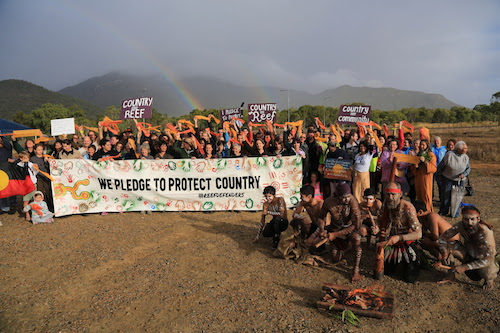
    Today, our movement took a bold and important step in the fight against the monstrous Galilee coal mines and the Abbot Point expansion on the Great Barrier Reef.

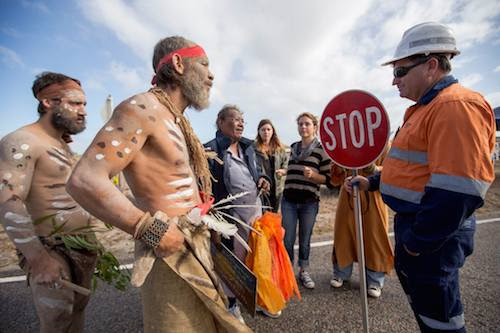
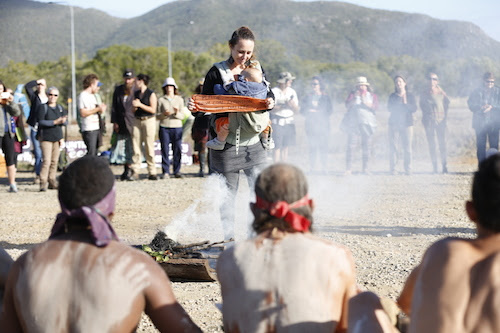
    Led by Traditional Owners, over 100 of us walked on to the Abbot Point coal terminal to deliver hand-written pledges to protect the climate and the Reef from Adani’s senseless coal expansion plans.

    Join us by taking the pledge to become a Reef Defender too – and be part of the next wave of bold community actions.

    On the frontiers of Australia’s (and one of the world’s) largest coal expansion projects, community leaders from the local region and allies from across the country sent a message that cannot be ignored– ‘this kind of community action is the new normal and we won’t stop until these disastrous projects are ditched once and for all’.

    We know that sometimes this can feel like an enormous struggle…

    …but in years to come we’ll look back on today as a turning point in that struggle. When locals and supporters from across Australia united in action and sent a signal that cannot be ignored.

    And today is just the beginning. Now is the time to step up like never before and put an end to the Galilee coal nightmare.

    Take the pledge to become a Reef Defender today and join with thousands across Australia as we take this fight to the next level.

    Today showed the power of what can happen when committed people from all walks of life stand as one and take action. Thank you to everyone who dedicated their time and passion in bringing about this bold action!

    Join the Reef Defenders and be part of a nation-wide movement that will take powerful, peaceful and dignified action to win this fight.

    Yours in strength,

    Josh and Moira on behalf of 350.org Australia and the Reef Defenders Alliance.

    P.S. for more highlights from the action today check out our Facebook and search for #ReefDefenders on twitter


    350.org is building a global climate movement.You can connect with us on Facebook, follow us on Twitter, and become a sustaining donor to keep this movement strong and growing.

  • BREAKING: Abbott Govt proposes end to public school funding

    Click here to enable desktop notifications for Gmail.   Learn more  Hide
    More

    2 of 30

    BREAKING: Abbott Govt proposes end to public school funding

    Inbox
    x

    Mark – GetUp!

    5:59 PM (23 minutes ago)

    to me
    NEVILLE,

    BREAKING: Fairfax papers reported last night on a leaked Abbott Government proposal to end Federal Government funding of public education and to make some parents pay to send their children to public school.1

    Those changes would mean the end of our public education system as we know it. They fly in the face not only of common sense and our common values, but of expert recommendations put forward by the Gonski review panel – the most comprehensive review of school funding in 40 years. And come on top of the Abbott Government huge blow to our public schools by cutting $30 billion in funding in last year’s Federal Budget.

    A massive public backlash against the Abbott Government’s attacks on our universal Medicare system forced them to back down. Now this leaked government paper gives us the chance to bury these terrible schools proposals before they even get off the ground. But we need to act quickly and in huge numbers – starting by sharing this news with everyone we know.

    Click here to sign the petition telling Prime Minister Abbott that access to a quality education is the right of every Australian child — and then spread the word.

    From university down to kindergarten now, Education Minister Pyne and Prime Minister Abbott seem hell-bent on tearing down every rung on the ladder of opportunity for everyday Australians. This statement from Mr Pyne says it all:

    Having talked to the Prime Minister about this matter many times, it is his view that we have a particular responsibility for non-government schooling that we don’t have for government schooling.2

    That’s right, the “government” is renouncing responsibility for “government” schooling. That’s why one proposal in the leaked government paper is for the Federal Government to stop funding public schools altogether.

    This would place the funding burden of public education entirely on the states, which is untenable. At a cost of $150 billion over ten years, it would mean the devastation of public schooling, along with educational opportunities for millions of Australian children.3

    The costs of that inequity will be felt on the entire economy in higher unemployment, lower earnings, lower productivity, less tax revenue, higher social welfare costs and higher crime rates.4

    Will you sign the petition to stop this assault on the aspirations of everyday Australian families? https://www.getup.org.au/free-education

    The expert Gonski review panel into school funding found that Australia’s international ranking in education is slipping and recommended a needs-based model whereby funding is allocated based on a school’s size, location and the needs of individual students. Crucially, Gonski recommended that most government funding should go to public schools, where student need is higher.

    If the Abbott Government guts funding for public schools, it will amount to an attack on evidence, and an attack on the future of education.

    What can our children aspire to be when every educational opportunity to lift themselves up is being stripped away, from kindy to uni? Let’s stand together to ensure schools have the resources to meet student needs – and create future opportunities and a stronger economy for all.

    Sign and share the petition today.

    Thanks for standing up, once again,
    Mark, Alycia, Nat and Daney, for the GetUp team

    PS – Another broken promise? Before the 2013 Federal Election Tony Abbott and Christopher Pyne announced they were on a “unity ticket” with the then Prime Minister Kevin Rudd on education funding because they knew how important universal access to a quality education is for all Australians.5 Now they’re launching a full frontal assault on our public schools. Make them pay the political price for this broken promise by signing and sharing the petition today.

    Resources
    [1] Tony Abbott’s school reform paper proposes cutting federal funding, Sydney Morning Herald, 22 June 2015
    [2] As above
    [3] As above (Note: $150 billion cost over ten years is based on a reported cost of $15 billion per year)
    [4] Correcting the Course for Australia’s Education System: Why we need to adopt The Full Gonski, Chris Bonnor and Jane Caro, 21 May 2013
    [5] Tony Abbott says Coalition will honour Gonski school funding plan for four years, ABC News, 2 August 2013


    GetUp is an independent, not-for-profit community campaigning group. We use new technology to empower Australians to have their say on important national issues. We receive no political party or government funding, and every campaign we run is entirely supported by voluntary donations. If you’d like to contribute to help fund GetUp’s work, please donate now! To unsubscribe from GetUp, please click here.

  • END OF PUBLIC SCHOOLS?

    END OF PUBLIC SCHOOLS?

    Inbox
    x

    Bill Shorten via sendgrid.info 

    6:05 PM (12 minutes ago)

    to me
    .
    .
    Inga,

    Tony Abbott’s education green paper recommends ending universal access to education in Australia.

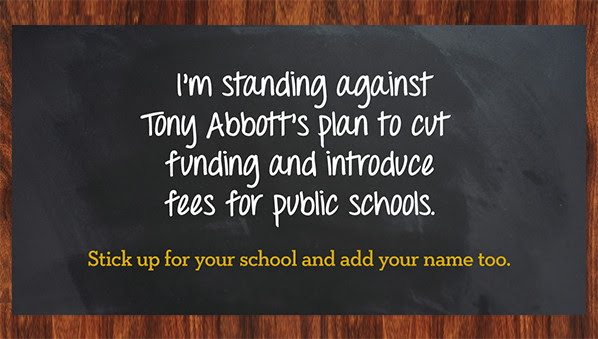
    The official paper, currently being considered by the Liberals, includes plans to charge compulsory government fees to parents who send their kids to public schools and even suggests ending Federal funding for public schools altogether.

    I believe that now is the time when Australia should be securing its future success and fairness by investing in the education of our young Australians and the skills of our workforce.

    Instead, the changes being considered by the Liberals would take our education system back to the 1960s.

    Cutting federal funding to public schools and introducing compulsory government school fees for public school students is the biggest attack on public education by a federal government ever.

    If the Liberal government goes ahead with these changes they would end universal access to education in Australia.

    This is about our kids and our country’s future.

    It’s up to all of us to get LOUD and stop Tony Abbott and Christopher Pyne in their tracks.

    Sign here to stick up for your public schools.

    Thanks for standing with me on this,

    Bill

    Australian Labor Party
    Authorised by G. Wright, Australian Labor, 5/9 Sydney Avenue, Barton 2600 ACT
    Unsubscribe
  • China Free Trade deal a shocker for working people Inbox x

    Click here to enable desktop notifications for Gmail.   Learn more  Hide
    More

    1 of 27

    China Free Trade deal a shocker for working people

    Inbox
    x

    Michael O’Connor

    11:40 AM (2 minutes ago)

    to me
    CFMEU
    Dear Inga –Tony Abbott has signed the China FTA and it’s a shocker for working people.

    Tony Abbott has signed a deal that means Chinese enterprises investing as little as $22.5 million dollars in a project will be able to bring their own workforce into Australia and will NOT have to offer these jobs to locals first.

    And of course tariffs will be lifted on all imports from China.

    This will hit the construction, mining, timber and pulp and paper industries hard.

    Jobs will be lost. Cheap imports that do not meet Australian standards will flood the market. And there will be fewer jobs for our kids for the future.

    The China FTA is a total sell out of the Australian community.

    It’s important that we send a message to the government urging local members to stand up and to speak out against a deal that is not fair and that will destroy local jobs and local communities.

    Please click here to send a message to your local member.

    It’s important that we do something today so that Abbott and the Coalition get a strong message that the China FTA is just not on.
    Yours in unity,

    Michael O’Connor
    CFMEU National Secretary

  • [New post] NT redistribution – draft boundary map finished

    Click here to enable desktop notifications for Gmail.   Learn more  Hide
    More

    1 of 28

    [New post] NT redistribution – draft boundary map finished

    Inbox
    x

    The Tally Room <donotreply@wordpress.com> Unsubscribe

    11:00 AM (2 minutes ago)

    to me

    New post on The Tally Room

    NT redistribution – draft boundary map finished

    by Ben Raue

    Following up on Wednesday’s post about the Northern Territory redistribution, I’ve now completed my Google Earth map of the electoral boundaries.

    You can download the map here, and it’s embedded below (sorry no stats, just the boundaries).

    As explained last week, the Alice Springs area effectively lost a seat to the Darwin area.

    Overall, this redistribution has been more dramatic than the last one, with big shifts in the Darwin, Palmerston and Alice Springs areas.

    Prior to the redistribution, the Alice Springs area included three seats entirely contained in the town, but the seat of Araluen has been abolished, and the seat of Stuart has shifted south to take in parts of Alice Springs and taking on a new name of Battarbee.

    In the top end, Nhulunbuy (renamed Milirrpum) has expanded to take in Groote Eylandt from Arnhem, which then shifts east to take in territory from Arafura. The seats of Goyder and Daly both shifted south, following the trend caused by the abolition of Araluen.

    A majority of seats in the Northern Territory are included in the two northern urban areas of Darwin and Palmerston, and traditionally there has always been one seat straddling Darwin and Palmerston. That seat is currently Fong Lim, but Fong Lim has retracted into the Darwin area, with the creation of a new seat called Spillett covering parts of Palmerston, and the fringe areas between Palmerston and Darwin.

    Antony Green has done his usual estimates of the partisan impact of the changes.

    https://www.google.com/fusiontables/embedviz?q=select+col2+from+1Zpx6HgrSPX5nc2-XrPyteOgkjj9-8_S9w-X79LvW&viz=MAP&h=false&lat=-12.44135783878677&lng=130.97645532226556&t=1&z=11&l=col2&y=2&tmplt=2&hml=KML

    Ben Raue | June 22, 2015 at 11:00 am | Tags: Northern Territory 2016, Redistribution | Categories: Uncategorized | URL: http://wp.me/ppI95-6Sp