
Category: Sustainable Settlement and Agriculture

The Generator is founded on the simple premise that we should leave the world in better condition than we found it. The news items in this category outline the attempts people have made to do this. They are mainly concerned with our food supply and settlement patterns. The impact that the human race has on the planet.

  • Zapitastas at Oxaca still strong, a decade on

    Zapitastas at Oxaca still strong, a decade on

    The Oxaca Commune
    The Oxaca Commune lives on a decade after its brutal repression

    Writing in CounterCurrents this week, Gustavo Esteva reports that the Oxaca Commune in Southern Mexico has continued to evolve and grow despite brutal repression by the Mexican government in 2006.

    A gentle revolution by the largely indigenous population of 4 million people set out to displace the economy from the center of social life, reclaiming a communal way of being, encouraging radical pluralism, and advancing towards real democracy.

    Construction and agriculture are both communal activities carried out on common land. Justice focuses on consolation and compensation of the victim and engages the perpetrator in the solution under the supervision of the community.

    Esteva reports that the Zapitastas have taken advantage of the collapse of the Mexican State to continue their unique approach to democracy.

    http://www.countercurrents.org/2016/08/28/the-oxaca-commune-and-the-zapitastas-hope-from-the-margins/
  • Reforestation for the Climate proceeds apace

    Reforestation for the Climate proceeds apace

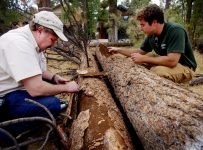
    Dead redwoods as a result of beetle infestation
    Beetles following a warming climate have infested Californian forests killing 66 nillion trees

    Global efforts at reforestation are accelerating, gollowing commitments made in the Paris Agreement of November last year.

    Volunteers in India smashed a world record by planting 49.3 million tree saplings on July 11. Last year, volunteers in Ecuador planted 647,250 trees from 200 species in one day. In 2014, Men of the Trees planted 100,450 trees in Perth, Australia in a single hour.

    Richard Houghton, a senior scientist with the Woods Hole Research Center in the US, though, warns that the impacts may not be as effective as predicted.

    “In general, [reforestation] is all good in the sense that trees, as they grow, take carbon out of the atmosphere,” he said. Complications occur when forests shade the snow, absorbing sunlight and adding to warming, or when reforestation is used as a carbon offset for extracting fossil fuels or cutting down old forests.

    Climate chaos itself threatens forests with increasing fire damage and attacks by exotic insects moving into forests as the climate warms.

    https://thinkprogress.org/planting-trees-climate-change-solution-3e5b6979561f#.qbiy49kcg

  • Biointensive farming shrinks agricultural footprint

    Biointensive farming shrinks agricultural footprint

    Photo from Ensia.com
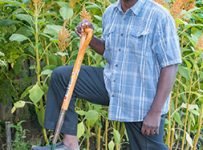
    Jean Apedoh, an intern from Togo, is testing strategies for growing rice with minimal water at Common Ground mini-farm. Photo by Cynthia Raiser Jeavons/Ecology Action

    Sustainability publication Ensia, this week published an account of bio-intensive farming projects that create more food per aquare metre with less energy, water and nutrients. Whereas corporate, industrialised agriculture is focused on profit and consequently minimizes labour, bio-intensive farming focuses on the minimization of external resources. As a result it is ideal for urban farming and community projects where capital and external resources are in short supply.

    http://ensia.com/features/how-three-u-s-mini-farms-are-sowing-the-seeds-of-global-food-security/

  • Loggers use fire to wipe out Amazon tribes

    Loggers use fire to wipe out Amazon tribes

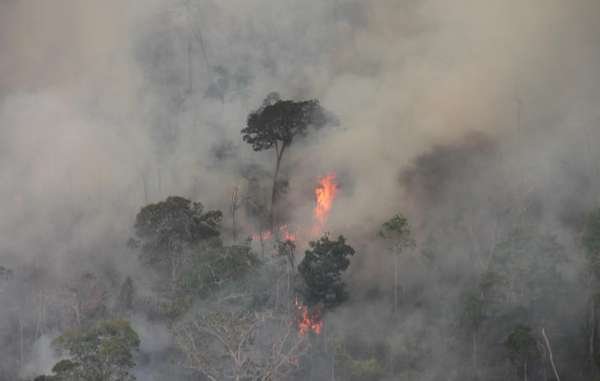
    Amazon fires
    Loggers are using fire to destroy the Amazon and indigenous people

    Huge forest fires raging in the Amazonian rainforest are threatening to wipe out the Awa tribe, one of the last uncontacted indigenous groups on Earth.

    The neighbouring Guajajara Guardians have been fighting to protect the Awa tribe from violence by loggers, disease and land clearing. Despite promises by the Brazilian government to assist, the Guardians have been fighting the forest fires without support from emergency services.

    Last year, loggers lit fires which wiped out forest cover across 50% of the region.

    http://www.countercurrents.org/2016/08/19/amazon-fires-threaten-to-wipe-out-uncontacted-indigenous-people/

  • Carp genocide plans worry locals

    Carp genocide plans worry locals

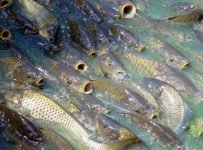
    Carp en masse
    Corrnered carp gasp for breath

    Scientists, environmentalists, anglers and the fishing industry have raised concerns about a fifteen million dollar plan by the Federal Government to kill Carp in the Murray Darling River system using a strain of the herpes virus.

    An invasive species and bottom feeder that stirs up mud, carp now make up eighty percent of the bio-mass in Australian rivers. The plan is to release the virus at the end of 2018 in the expectation that it will kill the vast bulk of the carp within weeks.

    Concerns range from the impact of the virus on native fish, to the impact on oxygen levels in the water of such a large volume of rotting fish. Adelaide University tests on the oxygen consumed by dead fish in 800litre tubs of water at 20 degrees Celsius have revealed that bacteria feeding on one dead carp can consume all the oxygen in the tank within 48 hours. The government hopes that community groups will volunteer to remove the dead fish from the river.

    http://www.abc.net.au/news/2016-08-14/herpes-carp-kill-in-river-murray-ecosystem-may-sap-oxygen/7731892

    http://www.abc.net.au/news/2016-05-01/herpes-to-eradicate-carp-in-murray-river-pyne-says/7373736

  • Greenwood looks at local food laws

    Greenwood looks at local food laws

    Local ecological food
    Local food has health as well as economic benefits

    Greenwood is the latest town in the US state of Maine to consider a law protecting local food producers from State and Federal laws that favour industrial food producers. The proposed ordinance states “We hold that federal and state regulations impede local food production and constitute a usurpation of our citizens’ rights to foods of their choice.” So far, 16 cities in Maine have passed similar audiences. Cities as diverse as Baw Baw in rural Australia and Yemen

    http://www.sunjournal.com/news/lewiston-auburn-oxford-hills-river-valley-franklin-bethel/0001/11/30/greenwood-ponders-local-food-ordinance-protect-farmers