Category: Sustainable Settlement and Agriculture

The Generator is founded on the simple premise that we should leave the world in better condition than we found it. The news items in this category outline the attempts people have made to do this. They are mainly concerned with our food supply and settlement patterns. The impact that the human race has on the planet.

  • Hunger Games and cars before people


    Hunger Games and cars before people

    If you’re new here, you may want to subscribe to my RSS feed. Thanks for visiting!

    www.planetextinction.com

    The rich world is causing the famines it claims to be preventing, by George Monbiot, published in the Guardian 14th August 2012

    I don’t blame Mo Farah, Pele and Haile Gebrselassie, who lined up, all hugs and smiles, outside Downing Street for a photocall at the prime minister’s hunger summit. Perhaps they were unaware of the way in which they were being used to promote his corporate and paternalistic approach to overseas aid. Perhaps they were also unaware of the crime against humanity over which he presides. Perhaps Cameron himself is unaware of it.

    You should by now have heard about the famine developing in the Sahel region of West Africa. Poor harvests and high food prices threaten the lives of some 18 million people. The global price of food is likely to rise still further, as a result of low crop yields in the United States, caused by the worst drought in 50 years. World cereal prices, in response to this disaster, climbed 17% last month.

    We have been cautious about attributing such events to climate change: perhaps too cautious. A new paper by James Hansen, head of NASA’s Goddard Institute for Space Studies, shows that there has been a sharp increase in the frequency of extremely hot summers. Between 1951 and 1980 these events affected between 0.1 and 0.2% of the world’s land surface each year. Now, on average, they affect 10%. Hansen explains that “the odds that natural variability created these extremes are minuscule, vanishingly small”. Both the droughts in the Sahel and the US crop failures are likely to be the result of climate change.

    But this is not the only sense in which the rich world’s use of fuel is causing the poor to starve. In the United Kingdom, in the rest of the European Union and in the United States, governments have chosen to deploy a cure as bad as the disease. Despite overwhelming evidence of the harm their policy is causing, none of them will change course.

    Biofuels are the means by which governments in the rich world avoid hard choices. Rather than raise fuel economy standards as far as technology allows, rather than promoting a shift from driving to public transport, walking and cycling, rather than insisting on better town planning to reduce the need to travel, they have chosen to exchange our wild overconsumption of petroleum for the wild overconsumption of fuel made from crops. No one has to drive less or make a better car: everything remains the same except the source of fuel. The result is a competition between the world’s richest and poorest consumers, a contest between overconsumption and survival. There was never any doubt about which side would win.

    I’ve been banging on about this since 2004, and everything I warned of then has happened. The US and the European Union have both set targets and created generous financial incentives for the use of biofuels. The results have been a disaster for people and the planet.

    Already, 40% of US corn (maize) production is used to feed cars. The proportion will rise this year as a result of the smaller harvest. Though the market for biodiesel is largely confined to the European Union, it has already captured seven per cent of the world’s output of vegetable oil. The European Commission admits that its target (10% of transport fuels by 2020) will raise world cereal prices by between 3 and 6%. Oxfam estimates that with every 1% increase in the price of food, another 16 million people go hungry.

    By 2021, the OECD says, 14% of the world’s maize and other coarse grains, 16% of its vegetable oil and 34% of its sugarcane will be used to make people in the gas guzzling nations feel better about themselves. The demand for biofuel will be met, it reports, partly through an increase in production; partly through a “reduction in human consumption.” The poor will starve so that the rich can drive.

    The rich world’s demand for biofuels is already causing a global land grab. ActionAid estimates that European companies have now seized five million hectares of farmland – an area the size of Denmark – in developing countries for industrial biofuel production. Small farmers, growing food for themselves and local markets, have been thrown off their land and destituted. Tropical forests, savannahs and grasslands have been cleared to plant what the industry still calls “green fuels”.

    When the impacts of land clearance and the use of nitrogen fertilisers are taken into account, biofuels produce more greenhouse gases than fossil fuels do. The UK, which claims that half the biofuel sold here meets its sustainability criteria, solves this problem by excluding the greenhouse gas emissions caused by changes in land use. Its sustainability criteria are, as a result, worthless.

    Even second generation biofuels, made from crop wastes or wood, are an environmental disaster, either extending the cultivated area or removing the straw and stovers which protect the soil from erosion and keep carbon and nutrients in the ground. The combination of first and second generation biofuels – encouraging farmers to plough up grasslands and to leave the soil bare – and hot summers could create the perfect conditions for a new dust bowl.

    Our government knows all this. One of its own studies shows that if the European Union stopped producing biofuels, the amount of vegetable oils it exported to world markets would rise by 20% and the amount of wheat by 33%, reducing world prices.

    Preparing for the prime minister’s hunger summit on Sunday, the international development department argued that, with a rising population, “the food production system will need to be radically overhauled, not just to produce more food but to produce it sustainably and fairly to ensure that the poorest people have the access to food that they need.” But another government department – transport – boasts on its website that, thanks to its policies, drivers in this country have now used 4.4 billion litres of biofuel. Of this 30% was produced from recycled cooking oil. The rest consists of 3 billion litres of refined energy snatched from the mouths of the people that David Cameron claims to be helping.

    Some of those to whom the government is now extending its “nutrition interventions” may have been starved by its own policies. In this and other ways, David Cameron, with the unwitting support of various sporting heroes, is offering charity, not justice. And that is no basis for liberating the poor.

    Leave a Reply

    Your email address will not be published. Required fields are marked *

    *

    You may use these HTML tags and attributes: 


  • Nepal’s female farmers need research and technology aimed at them

    Nepal’s female farmers need research and technology aimed at them

    Researchers must take greater account of the needs of women, who are increasingly at the forefront of agriculture

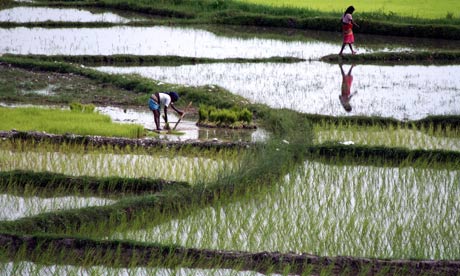
    MDG Agriculture : Nepalese women work at a paddy field, Nepal

    Women work at a paddy field at the village of Bamundangi, eastern Nepal. Photograph: Dipendu Dutta/AFP/Getty

    Most of Nepal‘s agriculture is undertaken by women, but research tailored to their needs is lacking. “We need new technologies that can reduce the drudgery for them,” said Devendra Gauchan, agricultural economist and chief of the socioeconomics and agri-research policy division at the Nepal Agricultural Research Council (Narc).


    Agriculture supports the livelihood of more than 60% of the rural population in Nepal, but most farmers, regardless of gender, stick to the manual practices that have been common for centuries, and seldom use mechanical equipment.


    Women have traditionally been involved in agriculture, but the scale and range of their responsibilities has increased. “Feminisation has been rapidly enhanced in recent years due to the massive migration … from rural areas, mostly of men,” said Gauchan.


    Around nine in every 10 people who have left the country – whether permanently or temporarily – are men, according to the most recent census in 2011 (pdf).


    A survey by the UN Food and Agriculture Organisation (FAO) in 2010 revealed that around 3% of households headed by women used mechanical equipment, compared with 8% of those headed by men.


    “The demands of women and men are different and we need to consider that in agriculture research,” said Shreeram Neopane, executive director of local initiatives at Biodiversity, Research and Development, an NGO based in Pokhara, about 200km (124 miles) west of the capital, Kathmandu.


    The Institute for Integrated Development Studies (pdf), a thinktank in Kathmandu, recently noted that agricultural research and training could cut poverty, “if it generates and disseminates technologies, which are specifically targeted at the problems of poor farmers, including women farmers, who, because of the gender division of labour, have different technology needs from men”.


    Such research should focus on inventing small equipment and machines that would mechanise farming, from sowing to harvesting and post-harvest processing, suggested Dhruva Joshy, former executive director of Narc.


    For example, the traditional way of husking finger millet, a small staple grain, with a pestle and mortar is labour-intensive and time-consuming, and a dehusking machine could significantly save time and energy, said Bhag Mal, a consultant to the Asia-Pacific Association of Agricultural Research Institutions in Bangkok, Thailand.


    Researchers need to keep in mind the different aspects of agricultural production that are of particular concern to women, said Neopane. In choosing rice varieties, for example, men care more about increasing yield and production, while women also consider taste, smell and the ease of threshing and cooking. Recognising the needs of women could result in a “higher rate of uptake of a technology, and more benefit from the technology for the family”.


    Although women would benefit most from a boost in agriculture research, Gauchan pointed out that few researchers in Nepal are women – in 2009 only 10% of public agriculture researchers were women, up just 1% from 2003, according to the US-based International Food Policy Research Institute (pdf) and Narc in 2011.


    The FAO (pdf) found that 98% of the total female labour force were engaged in agriculture in 2010, while the UN Environment Programme noted that women performed six times as much agriculture work as men.


    Despite contributing 35% to the national gross domestic product, investment in agriculture (pdf) accounted for just 2% of the government’s 2009 budget, with less than 0.2% going to research.


    Rural women in Nepal are less educated than men, with only about one year of formal schooling each on average, according to an analysis by the FAO in 2010 (pdf). The success of any new invention therefore depends on the empowerment of women, and on their training and access to information, said Gauchan.


    “Even if new technologies arrive, they do not reach many places. Only the smarter women have access, but women living in rural corners do not,” said Radha Nepal, a farmer and chairwoman of the community maize seed production committee in a village in Palpa district, in the southern Terai region bordering India.


    “If women’s knowledge was enhanced – if manure, seed and pesticide were made available, with the necessary tools – then women could do all the agriculture work themselves.”

  • tHEY’RE FORCING US OFF OUR LAND (avaaz)

    Dear friends,


    Middle Eastern kings and princes are about to force up to 48,000 people in Tanzania from their land to make way for corporate-sponsored big game hunting. But Tanzanian President Kikwete has shown before that he will stop deals like this when they generate negative press coverage. Click to deliver a media blitz that will push President Kikwete to stop the landgrab and save these Maasai.


    At any moment, a big-game hunting corporation could sign a deal which would force up to 48,000 members of Africa’s famous Maasai tribe from their land to make way for wealthy Middle Eastern kings and princes to hunt lions and leopards. Experts say the Tanzanian President’s approval of the deal may be imminent, but if we act now, we can stop this sell-off of the Serengeti.


    The last time this same corporation pushed the Maasai off their land to make way for rich hunters, people were beaten by the police, their homes were burnt to a cinder and their livestock died of starvation. But when a press controversy followed, Tanzanian President Kikwete reversed course and returned the Maasai to their land. This time, there hasn’t been a big press controversy yet, but we can change that and force Kikwete to stop the deal if we join our voices now.


    If 150,000 of us sign, media outlets in Tanzania and around the world will be blitzed so President Kikwete gets the message to rethink this deadly deal. Sign the petition now and send to everyone:


    http://www.avaaz.org/en/save_the_maasai_a/?bhPqncb&v=17057


    The Maasai are semi-nomadic herders who have lived in Tanzania and Kenya for centuries, playing a critical role in preserving the delicate ecosystem. But to royal families from the United Arab Emirates, they’re an obstacle to luxurious animal shooting sprees. A deal to evict the Maasai to make way for rich foreign hunters is as bad for wildlife as it is for the communities it would destroy. While President Kikwete is talking to favoured local elites to sell them on the deal as good for development, the vast majority of people just want to keep the land that they know the President can take by decree.


    President Kikwete knows that this deal would be controversial with Tanzania’s tourists — a critical source of national income — and is therefore trying to keep it from the public eye. In 2009, a similar royal landgrab in the area executed by the same corporation that is swooping in this time generated global media coverage that helped to roll it back. If we can generate the same level of attention, we know the pressure can work.


    A petition signed by thousands can force all the major global media bureaus in East Africa and Tanzania to blow up this controversial deal. Sign now to call on Kikwete to kill the deal:


    http://www.avaaz.org/en/save_the_maasai_a/?bhPqncb&v=17057


    Representatives from the Maasai community today urgently appealed to Avaaz to raise the global alarm call and save their land. Time and again, the incredible response from this amazing community turns seemingly lost causes into legacies that last a lifetime. Lets protect the Maasai and save the animals for tourists that want to shoot them with camera lenses, rather than lethal weapons!


    With hope and determination,


    Sam, Meredith, Luis, Aldine, Diego, Ricken and the rest of the Avaaz team


    For More Information:


    The Guardian: “Tourism is a curse to us”

    http://www.guardian.co.uk/world/2009/sep/06/masai-tribesman-tanzania-tourism


    News Internationalist Magazine: “Hunted down”

    http://www.newint.org/columns/currents/2009/12/01/tanzania/


    Society for Threatened People: Briefing on the eviction of the Loliondo Maasai

    http://lib.ohchr.org/HRBodies/UPR/Documents/session12/TZ/STP-SocietyThreatenedPeople-eng.pdf


    FEMACT: Report by 16 human rights investigators & media on violence in Loliondo

    http://www.pambazuka.org/en/category/advocacy/58956/print


    Voices of Loliondo: Short film from Loliondo on impact of eviction on Maasai


    Support the Avaaz Community!


    We’re entirely funded by donations and receive no money from governments or corporations. Our dedicated team ensures even the smallest contributions go a long way.


    Avaaz.org is a 15-million-person global campaign network that works to ensure that the views and values of the world’s people shape global decision-making. (“Avaaz” means “voice” or “song” in many languages.) Avaaz members live in every nation of the world; our team is spread across 19 countries on 6 continents and operates in 14 languages. Learn about some of Avaaz’s biggest campaigns here, or follow us on Facebook or Twitter.


    You are getting this message because you signed “Save our dying planet!” on 2011-12-08 using the email address nevilleg729@gmail.com.

    To ensure that Avaaz messages reach your inbox, please add avaaz@avaaz.org to your address book. To change your email address, language settings, or other personal information, https://secure.avaaz.org/act/index.php?r=profile&user=6be3e9aa63582c9b1397464fcc49baa9&lang=en, or simply go here to unsubscribe.


    To contact Avaaz, please do not reply to this email. Instead, write to us at www.avaaz.org/en/contact or call us at +1-888-922-8229 (US).

  • We must put a price on nature if we are going to save it

    We must put a price on nature if we are going to save it

    Campaigning against economic valuations could inadvertently strengthen the hand of those who believe nature has little or no worth

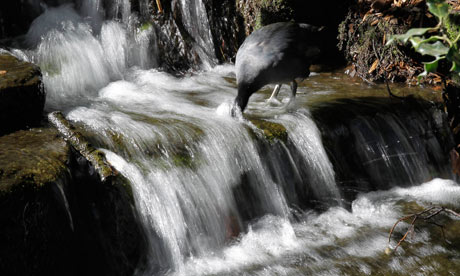
    Value of nature : A bird dips its head into a waterfall at Carshalton Pond in south London

    Putting an economic value on nature will help protect it. Photograph: Sang Tan/AP


    Recent calculations of the economic value of nature and ecosystem services have caused many environmentalists to react negatively. They point to the risk of a progressive “privatisation” and “commodification” of nature, and argue that society should appreciate the intrinsic values of nature – nature for its own sake. Putting a ‘price on nature’ will create more enclosures whereby the public benefits derived from ecosystems will be seized by corporations and other private interests.


    The new discourse about “natural capital” is seen by some as another step towards the degradation of the biosphere. George Monbiot wrote is such terms this week. He argued:


    Rarely will the money to be made by protecting nature match the money to be made by destroying it. Nature offers low rates of return by comparison to other investments. If we allow the discussion to shift from values to value – from love to greed – we cede the natural world to the forces wrecking it.


    But to paint such a one-sided picture is a dangerous game. For decades campaigners have fought for the protection of nature for its own sake, and while there has been notable progress (seen for example in the rapid increase in protected areas worldwide, which will hopefully continue irrespective of purely economic evaluations), the overall trends have not been encouraging.

    The destruction of unprotected forests, loss of soils, depletion of aquifers, extinction of animals and plants and plunder of the oceans has continued apace. It seems that the moral argument has gained insufficient traction, and that in the absence of new frames continuing population and economic growth will cause more damage.

    One source of hope comes from the growing realisation that nature is essential for economic development. The message is clear: without nature the economy is nothing. That penny is beginning to drop in various important places, and could soon lead to a new era of policy-making. One in which ecology and economics go hand in hand, but only if we have the tools to build bridges between these worlds that are so alien to each other. And that is where the economic valuation of nature can come in.

    By appreciating that nature is vital for economics, and has measurable tangible financial values, it is possible to get the attention of people who have at best hitherto regarded nature a supplier of resources, or worse still an economically costly distraction that gets in the way of economic ‘growth’. Making the moral case in the face of such beliefs won’t work. If, on the other hand, such scepticism can be met with economically compelling logic, then we might get a bit further.

    There are of course ecological values (like beauty and the very fact that things exist) that sometimes cannot be assigned financial values, and should be protected by the law, policy and public backing rather than through markets.

    There are certainly dangers that come with financial values being attached to natural systems. These might be seen in how countries choose to reflect the value of ecosystems (like forests) that indigenous people rely on and have ancestral rights over (or should do). Those dangers need to be managed with regulations and other safeguards when, for example, those same forests are deemed as financially valuable in supplying a distant city with water, and when managing that water affect the rights of the people in the forest. There are risks but just outcomes can be secured.

    While I am alarmed at how some environmentalists reject the economic valuation of nature, I am more alarmed still at how such a position can appear similar to those with deeply sceptical views about whether we should protect the environment in the first place. Nigel Lawson, the arch climate change denier, is like many environmentalists dead against putting financial values on nature. He knows well that if this happens then economics would have to change in fundamental ways requiring new government policies, changes to how capital is invested and shifts in consumption patterns. By campaigning against the valuation of ecosystem services, some campaigners could inadvertently strengthen the hand of those who believe nature has little or no value, moral, economic or otherwise.

    And it seems to me there is not a choice here. I have spent the past 25 years campaigning for nature for its own sake, because it is beautiful, because it should exist for its own reasons and because we have no right to destroy it. I have found that not everyone agrees with that though, and while I am trying to convince them, more forests are cleared, oceans polluted and greenhouse gases released.

    We could carry on like this, with ideological purity preserved (on all sides), or we could open a new discourse, one that requires the sceptics to meaningfully engage, and on the field where future environmental battles will be won and lost – the field of economics. After all, it is not most environmentalists who have misunderstood the realities that come with ‘growth’ a finite Earth, but most economists.


    • Tony Juniper’s book on the value of ecosystems for economies, What has Nature ever done for us? will be published in January

  • Drivers of marine biodiversity: Tiny, freeloading clams find the key to evolutionary success

    Drivers of marine biodiversity: Tiny, freeloading clams find the key to evolutionary success

    Posted: 09 Aug 2012 06:03 AM PDT

    What mechanisms control the generation and maintenance of biological diversity on the planet? It’s a central question in evolutionary biology. For land-dwelling organisms such as insects and the flowers they pollinate, it’s clear that interactions between species are one of the main drivers of the evolutionary change that leads to biological diversity.
    You are subscribed to email updates fromScienceDaily: Oceanography News
    To stop receiving these emails, you may unsubscribe now.
    Email delivery powered by Google
    Google Inc., 20 West Kinzie, Chicago IL USA 60610

    Posted: 09 Aug 2012 06:03 AM PDT

    What mechanisms control the generation and maintenance of biological diversity on the planet? It’s a central question in evolutionary biology. For land-dwelling organisms such as insects and the flowers they pollinate, it’s clear that interactions between species are one of the main drivers of the evolutionary change that leads to biological diversity.
    You are subscribed to email updates fromScienceDaily: Oceanography News
    To stop receiving these emails, you may unsubscribe now.
    Email delivery powered by Google
    Google Inc., 20 West Kinzie, Chicago IL USA 60610
  • Shortage of land to cost jobs in west

    Shortage of land to cost jobs in west

    0
    Parramatta

    Western Sydney: A view of the Parramatta CBD from the air. Picture: Supplied. Source: The Sunday Telegraph

    SYDNEY’S western suburbs needs a ten-fold increase in land zoned for employment or the area faces a future of 210,000 job losses and $84 billion wiped from the economy.

    A new report by influential planning body Regional Development Australia Sydney warns that the west is set for a boom in population growth without enough jobs.

    Analysis reveals that Sydney’s natural job growth would leave hundreds of thousands of people without work, failing to meet the NSW Government’s own employment targets.

    The Employment Lands Policy report calls for 8000ha of employment land to be zoned and serviced “rapidly”, as well as up to five new business and technology parks for white collar jobs in the west.

    By 2050, the greater west will contain 4 million of Sydney’s 7 million population – and if nothing is done by 2035, the report forecasts employment losses of 13.5 per cent, and gross regional product losses of 13.9 per cent.

    Current policies mean there is “no shift in employment opportunities to areas where population growth is planned”, the report said.

    It calls for 8000ha to be released over five years as “an economic priority”.

    RDA acting chairman Roy Medich called on the government to acquire all necessary corridors now for future inter-modal freight terminals and major roads, warning that failure to take action will send costs of development and acquisition soaring.

    “It’s the third largest economy in Australia and it has been neglected. And you don’t get infrastructure unless you get growth,” Mr Medich said.

    Development on land that is already released is being held back by lack of public sector investment in infrastructure, ignorance of corridor planning and an ill-defined freight strategy and transport links, the report said.


    Just 900ha of undeveloped, zoned and serviced employment land is available – enough for three years.

    That is half the government’s own target of five to seven years’ supply.

    In 1991, a government report warned that employment lands in the west and an efficient transport network were vital for the future.

    “Had they adopted that plan in the early 1990s we wouldn’t have the debacle we have today with shortages of residential land and shortages of employment lands,” Mr Medich said.