3 of 3
|
Web Clip
|
Daily update: Abbott’s emissions bluff steering Australia into $100bn carbon hole

|
||||||||||||||||||||||||||||||||||||||||||||
Add your news
You can add news from your networks or groups through the website by becoming an author. Simply register as a member of the Generator, and then email Giovanni asking to become an author. He will then work with you to integrate your content into the site as effectively as possible.
Listen to the Generator News online
The Generator news service publishes articles on sustainable development, agriculture and energy as well as observations on current affairs. The news service is used on the weekly radio show, The Generator, as well as by a number of monthly and quarterly magazines. A podcast of the Generator news is also available.
As well as Giovanni’s articles it picks up the most pertinent articles from a range of other news services. You can publish the news feed on your website using RSS, free of charge.
|
Web Clip
|
Daily update: Abbott’s emissions bluff steering Australia into $100bn carbon hole
|
||||||||||||||||||||||||||||||||||||||||||||
|
Web Clip
|
Daily update: How Australian utilities will cope with solar and storage
|
||||||||||||||||||||||||||||||||||||||||||||||
|
Web Clip
Best Cruises Latest Specials – Seabourn Cruise Line – Dalmation Coast & Greek Isles
|
Watch this video

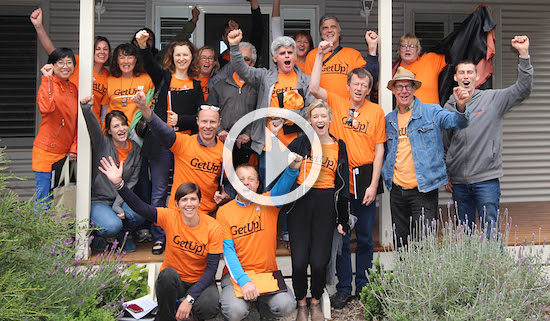
You’ve got to see this. Right now GetUp members in Victoria are breaking new ground and building real, grassroots political power for action on climate change. Watch this video to see how you can support their campaign: https://www.getup.org.au/chip-in-victoria
Dear NEVILLE, “From leaders to laggards” is how Victoria was described in a report released yesterday by the Climate Council. Not surprising when you consider Victoria is now responsible for almost a quarter of Australia’s emissions, and sources more than 90% of its energy from coal-fired power.1 But with a state election only days away, change is in the air in Victoria. That’s because for the last ten weeks, Victorian GetUp members have organised together to pressure the major parties to step up. By this time next week GetUp members will have knocked on over 10,000 doors and received over 5,000 commitments from voters in marginal seats to put the environment first. No matter which party these 5000 voters traditionally support, this election they’re united by a shared belief to protect our environment and invest in renewable energy. And this message is actually getting through! Candidates standing in Frankston – one of the most marginal seats in the state – confirmed today that the environment had been identified as a key issue for voters. 2 Just a few months ago, the environment wasn’t even on the agenda. Even though the act of door-knocking is free, there are still heaps of things GetUp volunteers like Russell, Ange and Mik need to make sure they can get the job done. That includes everything from GetUp t-shirts for volunteers to wear, to the petrol it takes to drive teams of volunteers to door-knock locations, to printing out thousands of the all important pledge cards. All donations, big and small go towards making this campaign a success. Although you don’t live in Victoria, GetUp members all around Australia are being asked to watch the video and chip in to help Victorian GetUp volunteers carry out their first Vote Clean election yet!
This is the first time in GetUp’s nine-years of campaigning that members have taken to the streets to go door-to-door and speak to voters directly – and the reaction they’ve received has been pretty inspiring. Some voters needed a bit of convincing because they weren’t sure their vote could make a difference, but when a friendly, passionate GetUp member explained to them the power of one person’s vote in a marginal seat, it was a total game changer. This campaign is changing the way our movement tackles climate change, and so we hope to make the last weekend before the election our biggest event yet. Watch this video to see how you can join Victorians in their fight for cleaner energy. https://www.getup.org.au/chip-in-victoria Thanks for everything you do, PS – If you want to show your support in person and are happy to travel, there’s still time! You can sign up here to join fellow GetUp volunteers in Victoria on the last weekend of election action: https://www.getup.org.au/volunteer 1The Australian Renewable Energy Race: Which States are Winning or Losing?, Climate Council, 18 November |
|||||||||||
The Guardian home
News
World
Sport
Comment
Culture
Business
Environment
Science
Travel
Technology
Life & style
Data
TV
Video
Comment is free
theguardian.com has a new look coming soon
preview it now
find out more
Growth: the destructive god that can never be appeased
The blind pursuit of economic exapansion stokes a cycle of financial crisis, and is wrecking our world. Time for an alternative
Share 836
inShare0
Email
George Monbiot
George Monbiot
The Guardian, Wednesday 19 November 2014 06.41 AEST
Jump to comments (498)
A man walks past a television monitor showing a drop in Hong Kong’s benchmark Hang Seng Index ‘Perhaps it’s inaccurate to describe this as another crash. Perhaps it’s a continuation of the last one, the latest phase in a permanent cycle of crisis.’ Photograph: Tyrone Siu/Reuters
Another crash is coming. We all know it, now even David Cameron acknowledges it. The only questions are what the immediate catalyst will be, and when it begins.
You can take your pick. The Financial Times reported yesterday that China now resembles the US in 2007. Domestic bank loans have risen 40% since 2008, while “the ability to repay that debt has deteriorated dramatically”. Property prices are falling and the companies that run China’s shadow banking system provide “virtually no disclosure” of their liabilities. Just two days ago the G20 leaders announced that growth in China “is robust and is becoming more sustainable”. You can judge the value of their assurances for yourself.
Housing bubbles in several countries, including Britain, could pop any time. A report in September revealed that total world debt (public and private) is 212% of GDP. In 2008, when it helped cause the last crash, it stood at 174%. The Telegraph notes that this threatens to cause “renewed financial crisis … and eventual mass default”. Shadow banking has gone beserk, stocks appear to be wildly overvalued, the eurozone is bust again. Which will blow first?
Or perhaps it’s inaccurate to describe this as another crash. Perhaps it’s a continuation of the last one, the latest phase in a permanent cycle of crisis exacerbated by the measures (credit bubbles, deregulation, the curtailment of state spending) that were supposed to deliver uninterrupted growth. The system the world’s governments have sought to stabilise is inherently unstable; built on debt, fuelled by speculation, run by sharks.
If it goes down soon, as Cameron fears, in a world of empty coffers and hobbled public services it will precipitate an ideological crisis graver than the blow to Keynesianism in the 1970s. The problem that then arises – and which explains the longevity of the discredited ideology that caused the last crash – is that there is no alternative policy, accepted by mainstream political parties, with which to replace it. They will keep making the same mistakes, while expecting a different outcome.
To try to stabilise this system, governments behave like soldiers billeted in an ancient manor, burning the furniture, the paintings and the stairs to keep themselves warm for a night. They are breaking up the postwar settlement, our public health services and social safety nets, above all the living world, to produce ephemeral spurts of growth. Magnificent habitats, the benign and fragile climate in which we have prospered, species that have lived on earth for millions of years – all are being stacked on to the fire, their protection characterised as an impediment to growth.
Cameron boasted on Monday that he will revive the economy by “scrapping red tape”. This “red tape” consists in many cases of the safeguards defending both people and places from predatory corporations. The small business, enterprise and employment bill is now passing through the House of Commons – spinelessly supported, as ever, by Labour. The bill seeks to pull down our protective rules to “reduce costs for business”, even if that means increasing costs for everyone else, while threatening our health and happiness. But why? As the government boasted last week, the UK already has “the least restrictive product market regulation and the most supportive regulatory and institutional environment for business across the G20.” And it still doesn’t work. So let’s burn what remains.
This bonfire of regulation is accompanied by a reckless abandonment of democratic principles. In the Commons on Monday, Cameron spoke for the first time about the Transatlantic Trade and Investment Partnership (TTIP). If this treaty between the EU and the US goes ahead, it will grant corporations a separate legal system to which no one else has access, through which they can sue governments passing laws that might affect their profits. Cameron insisted that “it does not in any way have to affect our national health service”. (Note those words “have to”.) Pressed to explain this, he cited the former EU trade commissioner, who claimed that “public services are always exempted”.
But I have read the EU’s negotiating mandate, and it contains no such exemption, just plenty of waffle and ambiguity on this issue. When the Scottish government asked Cameron’s officials for an “unequivocal assurance” that the NHS would not be exposed to such litigation, they refused to provide it. This treaty could rip our public services to shreds for the sake of a short and (studies suggest) insignificant fizzle of economic growth.
Is it not time to think again? To stop sacrificing our working lives, our prospects, our surroundings to an insatiable God? To consider a different economic model, which does not demand endless pain while generating repeated crises?
Amazingly, this consideration begins on Thursday. For the first time in 170 years, parliament will debate one aspect of the problem: the creation of money. Few people know that 97% of our money supply is created not by the government (or the central bank), but by commercial banks in the form of loans. At no point was a democratic decision made to allow them to do this. So why do we let it happen? This, as Martin Wolf has explained in the Financial Times, “is the source of much of the instability of our economies”. The debate won’t stop the practice, but it represents the raising of a long-neglected question.
This, though, is just the beginning. Is it not also time for a government commission on post-growth economics? Drawing on the work of thinkers such as Herman Daly, Tim Jackson, Peter Victor, Kate Raworth, Rob Dietz and Dan O’Neill, it would look at the possibility of moving towards a steady state economy: one that seeks distribution rather than blind expansion; that does not demand infinite growth on a finite planet.
It would ask the question that never gets asked: why? Why are we wrecking the natural world and public services to generate growth, when that growth is not delivering contentment, security or even, for most of us, greater prosperity? Why have we enthroned growth, regardless of its utility, above all other outcomes? Why, despite failures so great and so frequent, have we not changed the model? When the next crash comes, these questions will be inescapable.
Twitter: @georgemonbiot
A fully referenced version of this article can be found at Monbiot.com
|
Web Clip
Engadget RSS Feed – Engadget Daily: Nokia’s new tablet, Lindsay Lohan’s battle with Rockstar Games and more! – 2 hours ago
|
Now more than ever

|
||||||||||||||
|
Earning Our Children’s Trust
|
| Earning Our Children’s Trust is available here, in pdf format, on my web site, or on our blog.
~Jim Like my Facebook page |