NEVILLE GILLMORE retweeted

#renewables: affordable and achievable with today’s technologies: http://bit.ly/1CiMurC
Add your news
You can add news from your networks or groups through the website by becoming an author. Simply register as a member of the Generator, and then email Giovanni asking to become an author. He will then work with you to integrate your content into the site as effectively as possible.
Listen to the Generator News online
The Generator news service publishes articles on sustainable development, agriculture and energy as well as observations on current affairs. The news service is used on the weekly radio show, The Generator, as well as by a number of monthly and quarterly magazines. A podcast of the Generator news is also available.
As well as Giovanni’s articles it picks up the most pertinent articles from a range of other news services. You can publish the news feed on your website using RSS, free of charge.
#renewables: affordable and achievable with today’s technologies: http://bit.ly/1CiMurC
 | By By SETH BORENSTEIN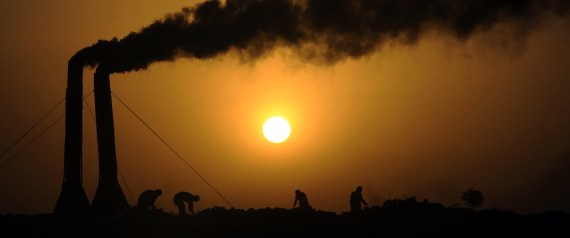
WASHINGTON (AP) — People are changing Earth so much, warming and polluting it, that many scientists are turning to a new way to describe the time we live in. They’re calling it the Anthropocene — the age of humans.
Though most non-experts don’t realize it, science calls the past 12,000 years the Holocene, Greek for “entirely recent.” But the way humans and their industries are altering the planet, especially its climate, has caused an increasing number of scientists to use the word Anthropocene to better describe when and where we are.
“We’re changing the Earth. There is no question about that, I’ve seen it from space,” said eight-time spacewalking astronaut John Grunsfeld, now associate administrator for science at NASA. He said that when he looked down from orbit, there was no place he could see on the planet that didn’t have the mark of man. So he uses the term Anthropocene, he said, “because we’re intelligent enough to recognize it.”
Grunsfeld was in the audience of a “Living in the Anthropocene” symposium put on last week by the Smithsonian. Meanwhile, the American Association for the Advancement of Science is displaying an art exhibit, “Fossils of the Anthropocene.” More than 500 scientific studies have been published this year referring to the current time period as the Anthropocene.
And on Friday the Anthropocene Working Group ramps up its efforts to change the era’s name with a meeting at a Berlin museum. The movement was jump-started and the name coined by Nobel laureate Paul Crutzen in 2000, according to Australian National University scientist Will Steffen.
Geologists often mark new scientific time periods with what they call a golden spike — really more of a bronze disk in the rock layer somewhere that physically points out where one scientific time period ends and another begins, said Harvard University’s Andrew Knoll, who supports the idea because “humans have become a geologic force on the planet. The age we are living now in is really distinct.”
But instead of a golden spike in rock, “it’s going to be a layer of plastic that covers the planet, if not a layer of (heat-trapping) carbon,” said W. John Kress, acting undersecretary of science for the Smithsonian. Kress said the Smithsonian is embracing the term because “for us it kind of combines the scientific and the cultural in one word.”
It’s an ugly word, one many people don’t understand, and it’s even hard to pronounce, Kress admitted. (It’s AN’-thruh-poh-seen.) That’s why when he opened the Smithsonian’s symposium, he said, “We are living in the Anthropocene,” then quickly added, “the age of humans.”
“Never in its 4.6 billion-year-old history has the Earth been so affected by one species as it is being affected now by humans,” Kress said.
Steffen, one of the main leaders of the Anthropocene movement, said in an email that the age of humans is more than just climate change. It includes ozone loss, disruption of nitrogen and phosphorous cycles that are causing dead zones, changes in water, acidification of the ocean, endocrine disruptors and deforestation.
Steffen said there’s no scientific consensus for the term Anthropocene yet, but he sees support growing. To become official it has to be approved by the International Union of Geological Sciences’ Commission on Stratigraphy.
That process is detailed and slow, said Harvard’s Kroll, who spearheaded the last successful effort to add a new time period — the little known Ediacaran period, about 600 million years ago. It took him 15 years.
The head of that deciding committee, Stan Finney at California State University at Long Beach, said in an interview that he is often called “the biggest critic” of the Anthropocene term. He said while there’s no doubt humans are dramatically changing the planet, creating a new geologic time period requires detailed scientific records, mostly based on what is in rocks.
Supporters also don’t agree on when the Anthropocene starts. Suggestions include the start of farming, industrialization and the use of the atomic bomb.
The Geological Society of America hasn’t taken up the term yet, but may soon start paying attention to the concept, said society president Hap McSween of the University of Tennessee.
“I actually think it’s a great idea,” McSween said. “Humans are profoundly affecting the environment, probably as much as natural events have in the past. And when effects become profound enough, we draw a new boundary and make it a period. … It’s a good way to point out the environmental havoc that humans are causing.”
___
Online:
Geologic time scale: http://www.ucmp.berkeley.edu/help/timeform.php
Anthropocene Working Group: http://quaternary.stratigraphy.org/workinggroups/anthropocene/
Smithsonian Living in the Anthropocene symposium: http://www.si.edu/consortia/anthropocene2014
___
Seth Borenstein can be followed at http://twitter.com/borenbears
 AdAward Winning Home Loan – www.loans.com.au – From 4.54% (4.56% Comparison Rate) Offer Ends Soon! Apply Online Now.
|
Falling Apart – monbiot.com

|
||||||||||||||
|
AdHome Loan Pre Approval – www.loans.com.au – 3 Month Home Loan Pre Approval. Takes Just 2 Minutes! Apply Now.
|
Daily update: The guerilla tactics allowing solar to beat utilities
|
||||||||||||||||||||||||||||
|
AdI want to retire abroad – www.escapologist.com.au – Now you can live in luxury for less These 3 countries are safe & cheap
|
A turning point?
Dear Sydney friend, This week, I’ve seen two confronting sides of the coin that is climate change. Last Friday, as thirty young Pacific Islanders arrived on our shores to stand up to the fossil fuel industry driving the destruction of their homes, I received an email from the President of The Marshall Islands College, asking for assistance in divesting his university from fossil fuels. Attached were thirteen photos of the frightening floods that have just hit the Islands and are evermore frequently scourging his home. I sat, speechless. Here was a people suffering the worst impacts of climate change yet who had done nothing to cause the problem – offering to help, not just their country, but all countries, by standing up to the fossil fuel industry and divesting from climate disruption. This fighting, hopeful spirit of the Pacific brought tears to my eyes. Meanwhile, back home, an announcement from Australia’s National University that they will divest* from two fossil fuel companies has prompted our Federal Treasurer to lambast ANU’s Vice Chancellor and our Financial Press to wage a condemnatory campaign, now into its eleventh day. It has even compelled our Prime Minister to exclaim, in his wisdom, that “Coal is Good for Humanity.” The contrast couldn’t be more stark. But, albeit confronting, these events, I believe, are a major turning point for Australia. They are laying bare the degree to which our politicians and our press are wedded to an industry whose activities will tank the planet. But more importantly, they’re highlighting the inexorable courage of our Pacific neighbours to tackle the heart of this problem and inspire all Australians to do the same. And this gives me great hope as we move into times that will be more difficult and confronting than humanity has ever faced. With the world’s largest coal port to blockade and millions more dollars to shift out of fossil fuels, the next fortnight will be 350.org Australia’s biggest and most challenging yet. We hope you will join us where and when you can by:
Because, to change everything, we need everyone. Yours, with hope for the massive times ahead, Charlie |
|||||||||||
 Science & Environment
 Leaves absorb significantly more CO2 that climate models have estimated
Global climate models have underestimated the amount of CO2 being absorbed by plants, according to new research.
Scientists say that between 1901 and 2010, living things absorbed 16% more of the gas than previously thought.
The authors say it explains why models consistently overestimated the growth rate of carbon in the atmosphere.
But experts believe the new calculation is unlikely to make a difference to global warming predictions.
The research has been published in the journal, Proceedings of the National Academy of Sciences.
Working out the amount of carbon dioxide that lingers in the atmosphere is critical to estimating the future impacts of global warming on temperatures.
About half the CO2 that’s produced ends up in the oceans or is absorbed by living things.
But modelling the exact impacts on a global scale is a fiendishly complicated business.
In this new study, a team of scientists looked again at the way trees and plants absorb carbon.
By analysing how CO2 spreads slowly inside leaves, a process called mesophyll diffusion, the authors conclude that more of the gas is absorbed than previously thought.
Between 1901 and 2100 the researchers believe that their new work increases the amount of carbon taken up through fertilisation from 915 billion tonnes to 1,057 billion, a 16% increase.
“There is a time lag between scientists who study fundamental processes and modellers who model those processes in large scale model,” explained one of the authors, Dr Lianhong Gu at Oak Ridge National Laboratory in the US.
“It takes time for the the two groups to understand each other.”
 Scientists monitor carbon dioxide levels near trees to work out how much is absorbed
The researchers believe that Earth systems models have over estimated the amount of carbon in the atmosphere by about 17%, and think their new evaluation of plant absorption explains the gap.
“The atmospheric CO2 concentration only started to accelerate rapidly after 1950,” said Dr Gu.
“So the 17% bias was achieved during a period of about 50 years. If we are going to predict future CO2 concentration increases for hundreds of years, how big would that bias be?”
Model revampOther researchers believe the new work could help clarify our models but it may not mean any great delay in global warming as a result of increased concentrations of the gas.
“The paper provides great new insights into how the very intricacies of leaf structure and function can have a planetary scale impact,” said Dr Pep Canadell from the Global Carbon Project at CSIRO Australia.
“It provides a potential explanation for why global earth system models cannot fully reproduce the observed atmospheric CO2 growth over the past 100 years and suggests that vegetation might be able to uptake more carbon dioxide in the future than is currently modelled.
“Having more carbon taken up by plants would slow down climate change but there are many other processes which lay in between this work and the ultimate capacity of terrestrial ecosystems to remove carbon dioxide and store it for long enough to make a difference to atmospheric CO2 trends.”
Many experts agree that the effect is interesting and may require a recalibration of models – but it doesn’t change the need for long-term emissions cuts to limit the impact of carbon dioxide.
“This new research implies it will be slightly easier to fulfil the target of keeping global warming below two degrees – but with a big emphasis on ‘slightly’,” said Dr Chris Huntingford, a climate modeller at the UK’s Centre for Ecology and Hydrology.
“Overall, the cuts in CO2 emissions over the next few decades will still have to be very large if we want to keep warming below two degrees.”
Follow Matt on Twitter @mattmcgrathbbc.