Category: News

Add your news
You can add news from your networks or groups through the website by becoming an author. Simply register as a member of the Generator, and then email Giovanni asking to become an author. He will then work with you to integrate your content into the site as effectively as possible.
Listen to the Generator News online

 
The Generator news service publishes articles on sustainable development, agriculture and energy as well as observations on current affairs. The news service is used on the weekly radio show, The Generator, as well as by a number of monthly and quarterly magazines. A podcast of the Generator news is also available.
As well as Giovanni’s articles it picks up the most pertinent articles from a range of other news services. You can publish the news feed on your website using RSS, free of charge.
 

  • Our female politicians discuss domestic violence policy

    This article is part of the cover feature NO in the September issue of Westender.

    According to the Office for Women,

    “one-in-three Australian women have experienced physical violence and almost one-in-five have experienced sexual violence since the age of 15”.

    On 27 June 2014 the Federal Government released the 2nd Action Plan to Reduce Violence against Women and their Children, a plan which builds on the work commenced by the Labor Government in the 2010-2013 Action Plan.

    Westenders are represented in the Qld Parliament and Federal Upper and Lower House by women. Westender approached them all: the Federal Member for Griffith, Terri Butler and Queensland Senator and Australian Greens spokesperson for women, Larissa Waters, for their comments on current Federal Government policies and actions to reduce violence against women, and on their expectations for the role of the Minister for Women.

    Jackie Trad MP, Labor Member for South Brisbane provided Westender with a  statement about policies and funding for women’s service by the Queensland State Government.

    All three raise concerns in their statements about the impact of budget measures such as Medicare fees, and funding changes to legal  and housing services, which they say serve to weaken the efforts of Governments to respond to violence against women and children.

    Statement from Federal Member for Griffith, Terri Butler

    Terri Butler
    “Everyone in Australia should be able to live free from violence, to feel safe in their homes and in their communities.

    Violence affects not only victims of violence, but also their families, their friends, their work colleagues and ultimately, our communities.

    Studies have shown that domestic violence and sexual assault committed against women costs our country $13.6 billion each year. More importantly, domestic and family violence, and sexual assault, are abhorrent and have no place in our community.

    The 2nd Action Plan to Reduce Violence against Women and Children has been released. This National Plan builds on the long-term strategy put in place by the previous Labor Government.

    The First Action Plan sought to improve the safety of women and their children by, building better primary prevention capacity, enhancing service delivery, strengthening justice responses and building the evidence base. Labor’s reforms to strengthen laws in relation to family violence were a pivotal part of this plan.

    Though I welcome the 2nd Action plan, I’m greatly concerned about the Abbott government’s rotten budget and its likely effect – if all of the measures were to be passed – on women and children who are suffering violence.

    The National Foundation for Australian Women’s analysis of the Federal Budget identified that cuts to housing programs and to legal services “undermine state and federal level measures to address violence against women under the National Plan to Reduce Violence against Women and their Children”.

    The proposed GP tax, blood test tax and x-ray tax will just add to the impediments that women face when seeking help, as will the cuts to Legal Aid funding.

    And the Abbott government’s decision to scrap the National Rental Affordability Scheme is concerning, particularly as women fleeing domestic and family violence are at risk of homelessness.

    Here in Queensland, we’ve seen a government that hasn’t had a domestic violence strategy for the first two and a half years of its term finally appoint a task force aimed at reducing domestic violence in Queensland.

    If Tony Abbott is going to be the Prime Minister for Women he needs to ensure that his policies improve the lives of women, and he needs to talk to his Liberal Premiers about devoting real effort towards tackling domestic and family violence.

    Labor is committed to dealing with family and domestic violence.

    On 15 August, Bill Shorten launched Labor’s family and domestic violence policy development process for the next election. He said:
    “Today we have been meeting with people who speak up as the voice for one of the urgent crises in Australian society: I talk about the crisis of family violence.

    “This is an important national political issue and it is a crisis across Australia. It is a national disgrace that more than a woman every week is murdered by someone who claims to love them.

    “The police can’t simply arrest their way out of this crisis. It is not just an issue for women. It is not just an issue of homelessness, it is a national political issue, which needs a determined bipartisan national political response.

    “Today Labor is starting the process of working our policies on how we would assist the fight the scourge of family violence and tackle the violence which is occurring in our suburbs regardless of postcode, regardless of ethnicity. This is a national political issue and Labor’s determined to fight this issue.”

    At the state level, Labor has introduced a private member’s bill that seeks to increase penalties for offenders who breach domestic violence orders. The bill would also require that all victims be provided with assistance.

    The Queensland Police Service’s most recent statistical review (http://www.police.qld.gov.au/Resources/Internet/services/reportsPublications/statisticalReview/1112/documents/QldCrime.pdf) show that there were 11,101 reported breaches of Domestic Violence Protection Orders in 2011-12.

    Queensland Senator and Australian Greens spokesperson for women, Larissa WatersSen L Waters

    “While the Abbott Government has released the second action plan on domestic violence, which provides about $25 million a year for four years; it is ripping far more funding out of the budget from support that victims of domestic violence currently rely on. This shows a complete ignorance of the needs of women, which is hardly surprising given the Abbott Government has only one woman in its Cabinet.

    Domestic violence pervades all parts of society. While victims have varying levels of financial means, a common feature of abusive relationships is control and often abusive partners control their victims’ money. Think about that control of money in the context of the Abbott Government’s proposed budget measure to make everyone pay at least $7 to see a doctor. If a victim of domestic violence cannot see a doctor for free, she may not go at all. Firstly, she may not be able to afford it and, secondly, even if she can afford the fee, she may need to ask her abusive partner for the money, who is of course, probably the reason that she needs to see a doctor in the first place.

    Finding the money to see a doctor would be challenging enough, let alone finding money to pay for legal advice. Many victims of domestic violence cannot afford private legal advice and, again, even if they could, they might not have control over the funds to secure the advice. That is why free legal advice for victims of domestic violence is so incredibly important. And yet the Abbott Government is cutting funding for community legal centres across the country, which will leave women stranded.

    The budget also abolishes the National Rental Affordability Scheme. Whilst women’s refuges provide some immediate accommodation for women and children fleeing domestic violence, they are already struggling financially to keep up with the alarming demand and they can only offer short-term housing. Once that short-term refuge accommodation is up, many victims will have nowhere to go. With no safe affordable, long-term housing options for accommodation, this means that, sadly, they will simply have to return to their abusive partners and live with the threat of more violence. The National Rental Affordability Scheme helped women to escape this fate and is now being wound up. On top of this, the federal budget also threatens to cut tax support for single parents, which again could see women financially unable to start or maintain a new, free life with their children.

    While the cuts to single parent support, housing, legal services and Medicare are bearing down ominously, I’m confident that the Senate will be able to block most of them. The Greens will be doing all we can in the Senate to ensure that the budget does not make the already heinous situation victims of domestic violence face even worse. I’ve also initiated a Senate Inquiry into domestic violence and am hopeful that through this process, government senators will see how the budget cuts would impact victims of domestic violence and will be able to convince the government to change course.”

    Tony Abbott may call himself a feminist but his track record indicates otherwise.

    As Minister for Women, Tony Abbott caused national outrage, when he winked and smirked in response to an elderly woman, with health problems, describing on radio how she makes ends meet with multiple jobs, including as a sex line worker. In the lead up to the election, Mr Abbott described one of his party’s female candidates as having “sex appeal”; told a group of young female netball players that “a bit of body contact never hurt anyone” and then told Big Brother contestants to vote for him “as I’m the guy with the not bad looking daughters”. The election blunders came on top of his past comments – he seemed to think that ironing was exclusively done by “the housewives of Australia” and that Julia Gillard should “make an honest woman of herself”. Buried deeper in Mr Abbott’s past are his comments about abortion being “the easy way out” and on women and leadership (“What if men are by physiology or temperament more adapted to exercise authority or to issue command?”), as well as allegations that as a university student he punched a wall close to a female student’s head.

    We need a Minister for Women who is prepared to stand up for women – not a man who has 1950s views on gender roles. And I think that person should be a woman, who is prepared to stand up for women. We Greens are calling on the Prime Minister to step down as Minister for Women and to appoint a woman for the role, who is prepared to tackle to real issues and the systemic discrimination that women still face.

    While I welcome the Queensland Government’s Special Taskforce on domestic violence and especially the appointment of Quentin Bryce as chair, we need a commitment from the state government that funding for specialist women’s refuges will be maintained and increased.

    With the Abbott Government’s disastrous budget cuts, the last thing Queensland women need is for the state government to take more money out of the support services that victims of domestic violence rely on.


    Jackie Trad MP – Labor Member for South Brisbane provided the following statement about policies and funding for women’s service by the Queensland State Government.

    Jackie Trad
    “In 2013 there were 64,246 reported incidents of domestic violence in Queensland. This figure has increased by over 10% from 2012. I think every Queenslander would agree this is unacceptable and more needs to be done to protect women and children from this horrendous violence.


    One in three Australian women will be subjected to domestic violence in their lifetime – while the statistics remain that staggeringly high, how can we claim women are truly equal members of our society?

    I unequivocally support any effort that genuinely seeks to combat violence against women.”

    “I think the Newman Government’s decision not to appoint a Minister for Women is a sad indication of their failure to address the serious issues facing Queensland women.

    The Newman Government’s savage cuts to community services, health and education have disproportionately affected women. Having spoken to many local women I know that Queensland’s growing unemployment rate is hurting families, with local women going months without work or being forced to accept part-time work because full time jobs are just not available.

    Clearly, the best way you can improve opportunities for women is to provide access to reliable jobs, so they can keep food on the table for their families.

    Queensland Labor is proud to have a Shadow Minister for Women and will continue to strongly advocate for greater support for our most vulnerable women.”


  • Global Warming’s ‘Missing’ Heat Is Being Stored in the Atlantic Ocean, Scientific Study Says

    view counter

    Tweets

    ICNfreesubscription

    KeystoneBeyondPreviewBlock

    Donate to InsideClimate News through our secure page on Network for Good.

    EagleFordProjectPreviewBlock

    BloombergLegacyPreviewBlock

    CleanBreakAdAmazon

    Global Warming’s ‘Missing’ Heat Is Being Stored in the Atlantic Ocean, Scientific Study Says

    Aug 22, 2014
    (Guardian)

    The key to the slowdown in global warming in recent years could lie in the depths of the Atlantic and Southern Oceans where excess heat is being stored – not the Pacific Ocean as has previously been suggested, according to new research.

    But the finding suggests that a naturally occurring ocean cycle burying the heat will flip in around 15 years’ time, causing global temperature rises to accelerate again.

    The slowdown of average surface temperature rises in the last 15 years after decades of rapid warming has been seized on by climate change sceptics and has puzzled scientists, who have hypothesised that everything from volcanic eruptions and sulphur from Chinese power stations to heat being trapped deep in the oceans could be the cause. Several studies have focused on the Pacific as potentially playing a major role.

    The new study, published in the journal Science on Thursday, concludes that the Pacific alone cannot explain the warming “hiatus” and that much of the heat being trapped by greenhouse gases at record levels in the atmosphere is being sunk hundreds of metres down in the Atlantic and Southern Oceans.

    Ka-Kit Tung, author of the paper and University of Washington professor, said: “The finding is a surprise, since the current theories had pointed to the Pacific Ocean as the culprit for hiding heat. But the data are quite convincing and they show otherwise.”

    “We are not downplaying the role of the Pacific. They are both going on [the oceans having an effect on temperatures]; one is short term [the Pacific], one is long term [the Atlantic],” he told the Guardian.

    A shift in the salinity of the north Atlantic triggered the effect around the turn of the century, the study says, as surface water there became saltier and more dense, sinking and taking surface heat down to depths of more than 300 metres.

    Using temperature data from floats across the world, Tung found the Atlantic and Southern Oceans “each account for just under half the global energy storage change since 1999 at below 300m.” The study’s result, he says, does not support the “Pacific-centric” view of earlier work on whether heat is being stored.

    “We were surprised to see the evidence presented so clearly. When you go with the energy, you cannot argue with that,” said Tung.

  • Serbian Festival in Dutton Park on Sunday

    The Brisbane Serbian Festival returns on Sunday 31st of August 2014 with a vibrant showcase of Serbian culture, values and traditions

    Supported by the Queensland Government, Brisbane City Council and Blue Sky Coffee this one day celebration will be held at Dutton Park State School Oval (112 Annerley Road, Dutton Park, Qld, 4102), which is located just 4 km south of the Brisbane CBD.

    This family-friendly event will kick off at 11am and will feature a great line-up of entertainment, including traditional Serbian music featuring the Moda Trubaci brass band and folkloric dancing, fun interactive activities and rides for children.

    There will also be a range of traditional Serbian sweet and savoury delicacies to sample, including Ćevapi (grilled sausages), Krofne (doughnuts) and Palačinke (crepes).

    At the Annerley Rd State School, Dutton Park Aunday August 31.

    Entry is free and all are welcome to attend.

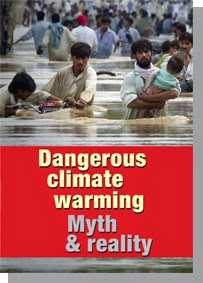
  • Dangerous climate change: Myths and reality (1) CLIMATE CODE RED

    Click here to enable desktop notifications for Gmail.   Learn more  Hide
    More

    1 of 1
    AdUTS Master of Teachingwww.uts.edu.au/future-students – Secondary Education 1.5yrs Get set in a new teaching career

    climate code red

    Inbox
    x

    Climate Code Red noreply@blogger.com via google.com

    6:32 PM (2 minutes ago)

    to me

    climate code red


    Dangerous climate change: Myths and reality (1)

    Posted: 21 Aug 2014 05:19 PM PDT

    Part 1 in a 3-part series | Part 2 | Part 3

    by David Spratt

    Download report (16 pages)

    Few would disagree that the world should avoid “dangerous” (or unsafe) climate warming, but what does that term mean? What does climate safety mean? Is climate change already dangerous? Are greenhouse gas levels already too high? This report surveys some recent developments in climate science knowledge as a way of discerning the gaps between myth and reality in climate policy-making.

    Scientific and political reticence

    Amongst advocates for substantial action on climate warming, there is a presumption of agreement on the core climate science knowledge that underlies policy-making, even though differences exist in campaign strategy.

    But the boundaries between science and politics have become blurred in framing both the problem and the solutions. Amongst advocates, advisors and policy-makers there are very different levels of understandings of the core climate science knowledge, how it is changing, what constitutes “danger”, what needs to be done, and at what pace.

    On the science side, the challenge is of a fast-developing discipline in a rapidly changing physical world. There is a concerted and unwarranted global attack on climate scientists and, in Australia, intimidation and fear of job loss generated by the Abbott government’s hostility to science and cuts in climate research funding. As well, there are always uncertainties and unknowns in science, and difficulties in communicating complex understandings in a non-technical manner. Together these factors can produce over-cautiousness in public presentation and scientific reticence.

    In his 2011 climate science update for the Australian Government, Prof. Ross Garnaut gave some “reflections on scholarly reticence”, questioned whether climate research had a conservative “systematic bias”, pointed to “unfortunate delays between discovery and influence in the policy discussion”, and asked “whether the reason why most of the new knowledge confirms the established science or changes it for the worse is scholarly reticence”. Garnaut pointed to a pattern across diverse intellectual fields of research being “not too far away from the mainstream”, but says in the climate field that this “has been associated with understatement of the risks”.

    With masterly restraint, he concluded that we should be “alert to the possibility that the reputable science in future will suggest that it is in Australians’ and humanity’s interests to take much stronger and much more urgent action on climate change than might seem warranted from today’s peer-reviewed published literature. We have to be ready to adjust expectations and policy in response to changes in the wisdom from the mainstream science”  (Garnaut, 2011).

    On the politics side, often insufficient attention is paid to the breadth and depth of published research, and there is a tendency to prioritise perceived political relevance over uncomfortable scientific evidence. Most climate advocacy organisations allocate few resources to critically interrogating the climate research as part of strategy and policy development, and generally fall into a middle-of-the-road advocacy consensus which downplays the warnings from the more forthright scientists whose expert elicitations – on such topics as the stability of ice sheets and sea ice to future sea-level rises – have generally proven more robust than those of their more reticent colleagues.

    A desire amongst advocacy organisations to stick together and present a common mainstream view is understandable, but Garnaut has pointed out the scientific danger, and his observation is just as powerful for climate politics. There is little point in constructing campaign strategies discordant with a fast-changing reality.

    The mainstream representation of climate science as it blurs with politics – in public discourse in Australia, across most civil society sectors, and at the global policy-making level – could reasonably be described as follows:

    • Climate change is not yet dangerous, and two degrees of warming (2°C) is the appropriate focus for policy-making, because 2°C impacts are manageable and big tipping points are unlikely before 2°C.
    • We should plan to mitigate (reduce emissions) for 2°C, but we may fail so we should also plan to adapt to 4°C (which is the likely “business-as-usual” outcome by 2100 if high rates of emission continue).
    • We have a substantial carbon budget left for 2°C, because long-term feedbacks are not materially relevant, and high risks of failure can be accepted because 2°C is a “target” (which can be exceeded) rather than a “cap” (an upper boundary not to be exceeded).
    • Hence, there is time for an orderly, non-disruptive reduction in emissions within the current political and economic paradigm.

    Much of the recent international policy discourse has focused on “what percentage reductions by when and by whom” in emissions would stop warming passing 2°C. In Australia, is it 5% by 2020, or 19%, or a lot more? Till 2030 or 2050? An observer of this discourse would not think that 2°C is other than a reasonable target, and that we have plenty of carbon emissions left for a few decades more. They would certainly not understand that such propositions are dangerous myths. Here’s why.

    Myth 1: Climate change is not yet dangerous

    In 2008 John Holdren, who was then senior advisor to President Barack Obama on science and technology issues, told the Eighth Annual John H. Chafee Memorial Lecture on Science and the Environment: “… the (climate) disruption and its impacts are now growing much more rapidly than almost anybody expected even a few years ago. The result of that, in my view, is that the world is already experiencing ‘dangerous anthropogenic interference in the climate system’ ” (emphasis added) (Holdren, 2008).

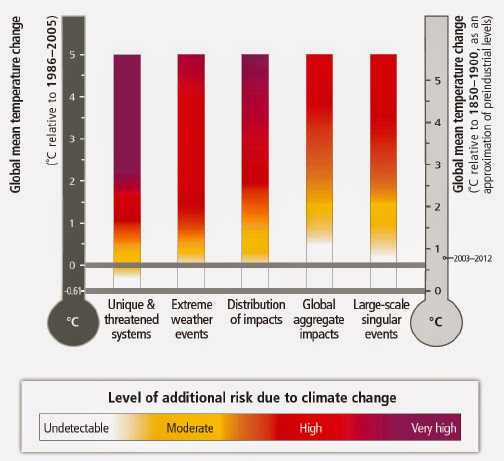
    “Dangerous” climate changed is broadly characterised by the Intergovernmental Panel on Climate Change (IPCC) in the “burning embers” diagram as including five “reasons for concern”: risk to unique and threatened systems; risk of extreme weather events; distribution of impacts; aggregate (total economic and ecological) impacts; and risk of large-scale discontinuities (that is, abrupt transitions or “tipping points”). See Figure 1.

    From this perspective, tipping points have already been passed, at less than 1°C of warming, for:

    • The loss of the Amundsen Sea West Antarctic glaciers, and 1–4 metres of sea level rise (Rignot, Mouginot et al., 2014; Joughin, Smith et al., 2014). Dr Malte Meinshausen, advisor to the German government and one of the architects of the IPCC’s Representative Concentration Pathways, calls the evidence published this year of “unstoppable” (Rignot, 2014) deglaciation in West Antarctica “a game changer”, and a “tipping point that none of us thought would pass so quickly”, noting now we are “committed already to a change in coastlines that is unprecedented for us humans” (Breakthrough, 2014).
    • The loss of Arctic sea-ice in summer (Duarte, Lenton et al., 2012; Maslowski, Kinney et al., 2012), which will hasten regional warming, the mobilization of frozen carbon stores, and the deglaciation of Greenland.
    • Numerous ecosystems, which are already severely degraded or in the process of being lost, including the Arctic (Wolf, 2010). In the Arctic, the rate of climate change is now faster than ecosystems can adapt to naturally, and the fate of many Arctic marine ecosystems is clearly connected to that of the sea ice (Duarte, Lenton et al., 2012). In May 2008, Dr Neil Hamilton, who was then director of Arctic programmes for WWF, told a stunned audience (of which I was a member) at the Academy of Science in Canberra that WWF was not trying to preserve the Arctic ecosystem because “it was no longer possible to do so”.

    Many extreme weather events which have been made worse by climate change and variations of the Jet Stream — including Superstorm Sandy, Typhoon Haiyan and extraordinary heat waves in France (2003) and Russia (2010) and associated death tolls of many thousands — are also evidence that climate change is already dangerous.

    The current level of greenhouse gases is around 400 ppm carbon dioxide (parts per million CO2), and 470 ppm carbon dioxide equivalent (CO2e) when other greenhouse gases including methane and nitrous oxide are included. The last time CO2 levels were as high as they are today, humans didn’t exist, and “CO2 values associated with major climate transitions of the past 20 millions years are similar to modern levels” (Tripati, Roberts et al., 2009). In other words, big changes (“transitions”) in significant climate system elements such as ice sheets, sea levels and carbon stores are likely to occur for the current level of CO2. From the study of climate history, we learn that:

    • “During mid-Miocene climatic optimum  [16-14 million years ago] CO2 levels were similar to today, but temperatures were ~3–6C warmer and sea levels 25 to 40 metres higher than at present… When CO2 levels were last similar to modern values (greater than 350 ppmv to 400 pmv), there was little glacial ice on land, or sea ice in the Arctic, and a marine-based ice mass on Antarctica was not viable… Lower levels were necessary for the growth of large ice mass on West Antarctica (~250 to 300 ppmv) and Greenland (~220 to 260 ppmv)” (Tripati, Roberts et al., 2009).
    • “We estimate sea level for the Middle Pliocene epoch [3.0–3.5 million years ago] – a period with near-modern CO2 levels – at 25±5 metres above present, which is validated by independent sea-level data” (Rohling, Grant et al., 2009).
    • Likewise, “during the middle-Pliocene … we find sea level fluctuations of 20-40 metres associated with global temperature variations between today’s temperature and +3°C” (Hansen, Sato et al., 2013).
    Figure 1:  The ‘burning embers’ diagram 
from the IPCC’s Fifth Assessment Report illustrates risks for five key areas of concern.  Note that for “Large-scale singular events” (right-hand column) the risk at the current level of warming is assessed as “undetectable”, whereas there is now clear evidence that dangerous tipping points have been already passed for significant elements of 
the climate system.

    Myth 2: Two degrees is an appropriate focus for policy making

    The evidence above indicates that dangerous tipping points have already been passed at the current level of climate warming of 0.8°C, so 2°C of warming is clearly not an appropriate focus for policy making. 2°C is a very unsafe target in any framing of risk. It is more appropriately considered as the boundary between dangerous and very dangerous climate change (Anderson and Bows, 2010). In Australia, 2°C would likely mean, amongst many impacts, the loss of the Great Barrier Reef, the salination of Kakadu, and the loss of the north Queensland tropical rainforests.

    This is consistent with a framework of “planetary boundaries” published in 2009, which “define the safe operating space for humanity with respect to the Earth system and are associated with the planet’s biophysical subsystems or processes” (Rockstrom, Steffen et al., 2009). It proposes a boundary of less than 350 ppm CO2e, compared to the current level of more than 470 ppm CO2e.

    Research also finds that:

    • 1C° of warming over the pre-industrial baseline — which we are now approaching — is hotter than the Holocene maximum (the period of human civilisation up to 1900)  (Marcott, Shakun et al., 2013; Hansen, Kharecha et al., 2013). See Figure 2.
    •  For 2°C of warming, the sea-level rise will likely eventually be measured in the tens of metres (Rohling, Grant et al., 2009).
    • Hansen and Sato (2012), using paleoclimate data rather than models of recent and expected climate change, warn that “goals of limiting human made warming to 2°C and CO2 to 450 ppm are prescriptions for disaster” because significant tipping points – where significant elements of the climate system move from one discrete state to another – will be crossed. As detailed in the next section, numerous tipping points are likely well before 2°C.

    As well, the IPCC considers that the risks to unique and threatened systems, and of extreme weather events, is high at 2°C of warming (see Figure 1).

    Note: References available at PDF download

  • Back to the drawing board for Kurilpa Riverfront Master Plan

    Cr Helen Abrahams
    Councillor Helen Abrahams

    Councillor Helen Abrahams, The Gabba Ward said that Council must go back to the drawing board with Draft Kurilpa Riverfront Master Plan following 300 guests at industry lunch laughing at the proposed excessive development.

    There is no innovation in this Plan. It is simply copying the highly designed riverbank features of SouthBank but with 11,000 residents and 8,000 workers in more than 30 high rise buildings. There are 25 buildings shown between the River and Montague Road.

    “There was mirth in the room when the number and heights of the proposed tower buildings was shown” said Helen Abrahams

    Essentially the plan shows a fringe of parkland along the river that already exists then three or four tower buildings deep to Montague Road.

    West End residents were concerned when they were not involved in the early stage to identify what was needed to ensure this area would be where people would wish to live. They had good reason to be concerned.

    This is a Plan by developers for developers. Little thought has been given to the needs of the new residents. If a person who can afford to eat out every night, they might be interested. But that is not what makes a wonderful place to live.

    Residents need parks, schools, community halls, children care centres, outdoor sports and clubhouses. If this Plan becomes are reality there will be a mass exit every morning to take the kids to school.

    It is a myth to think that families with children do not live in apartment buildings as a survey of West End State School has shown.

    The two new parks demonstrate the lack of balance with the Master Plan.

    One is about the same size as the new SouthBank park near Stokehouse Restaurant which is packed with people every weekend as it is not large enough. The second is 1 hectare but include buildings and excessive pathways. The parks are only 5% of the plan area.

    The Lord Mayor’s City Plan 2014 provides KPIs for parkland. The amount of parkland for recreational purposes for 11,000 is over 11 hectares or over 40% of the site. It sounds a large area of park but it illustrates how many people are being squeezed into this area of the city.

    This plan should take the opportunity to deliver a park of city wide importance such as Newstead Riverside Park, or Rocks Riverside Parks.

  • Daily update: How to live off the grid

    1 of 4
    AdDr Green – Solar Powerwww.drgreen.com.au/MonthlySpecial – 5kW System only $4490 + Free Meter or $48/wk. Hurry, ends 22nd August!

    Daily update: How to live off the grid

    Inbox
    x

    Renew Economy editor@reneweconomy.com.au via mail28.wdc01.mcdlv.net

    1:17 PM (51 minutes ago)

    to me
    Energy wars, AGL accuses networks of gold plating; Renewables campaign launches as Abbott heads for bunker; How to live off the grid; How solar, storage, EVs will make homes $1,500/yr better off; The dirty secrets behind ‘Clean Coal’ advertising campaign; Energy policy assessment; Can new small wind companied duplicate success of solar industry; Direct investment in renewables; Can India achieve 100% renewable energy; and grid parity coming in more than half of US states.
    Is this email not displaying correctly?
    View it in your browser.
    RenewEconomy Daily News
    The Parkinson Report
    Retailers set off a turf war against network operators, effectively accusing them of trying to gold plate the network once again, while the retailers suffer the impact has more consumers turn to solar and storage, and consider leaving the grid.
    Save renewables campaign strikes a chord as Abbott prepares to meet key ministers on RET, and renew attempts to kill ARENA, CEFC.
    We’re an average family doing everyday things.  The difference between your morning and ours is that you’re probably pulling your power from the grid.

    UBS says investing in solar, plus battery storage and electric vehicles will make homes much better off than those who rely only on grid.

    Advertising authorities have told Peabody Energy that it can no longer freely dangle its “clean coal” mythology in front of consumers without explanation.
    A round-up of the latest energy policy developments in Australia, US, China, EU, Japan and elsewhere. Australia the only negative for green energy.
    While solar has exploded in the U.S., small wind has struggled to grow. Two startups are hoping to change that.
    The spectre of direct government investment in renewable energy is haunting Australia. Well, it should be.
    By 2050, India could rely entirely on renewable energy to create a sustainable energy future.
    For more than 120 years, homes and businesses have been buying electricity. Now rooftop solar is changing the way hundreds of thousands of homeowners get energy