The Generator news service publishes articles on sustainable development, agriculture and energy as well as observations on current affairs. The news service is used on the weekly radio show, The Generator, as well as by a number of monthly and quarterly magazines. A podcast of the Generator news is also available.
As well as Giovanni’s articles it picks up the most pertinent articles from a range of other news services. You can publish the news feed on your website using RSS, free of charge.
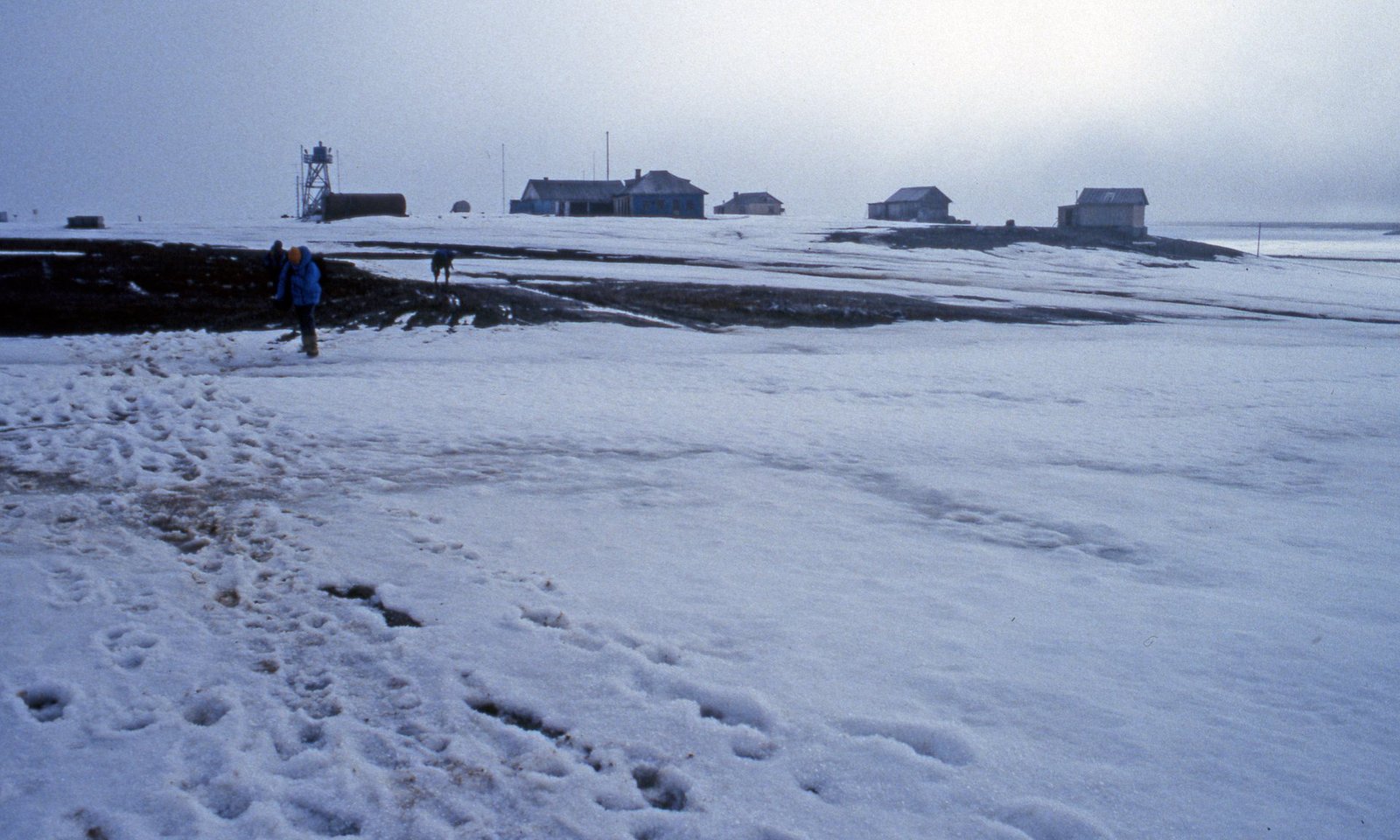
The Russian Arctic base at Troynoy is host to starving bears missing the summer ice.
The acceleration of global warming continues with this August and July tying for the label of hottest month on record. Almost every month for the last two years has been the hottest of its season, but this year the gap is widening. 2016 is about three tenths of a degree Celsius warmer than 2015. Among the more unusual impacts of the resultant climate chaos was the besieging of five Russian scientists by ten polar bears at the Arctic observatory of Troynoy.
August ties with July as hottest month on record
Compared to the average from 1881-1910 the global temperature for the year was 1.31˚C (2.36˚F) above the average.
Ship delivered dogs and flares to staff at Arctic weather station after five scientists were encircled by 10 adult bears for two weeks. A female bear had taken to spending nights beneath the station’s windows.
Sixty percent of countries in the Asia Pacific region face water insecurity according to the Asia Water Development Outlook report released last week. The region currently has 1.7 billion people with no access to sanitation and includes 22 cities with populations that will exceed ten million by 2030. These numbers have improved compared to the last report three years ago, thanks to work on providing sanitation and drinking water in Pacific Islands and South East Asia. The dangerous hot spots include Afghanistan, and the densely populated Pakistan, India and Bangladesh.
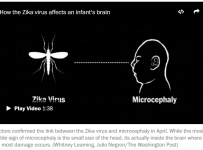
The Washington Post asserts the link between Zika and infant micro-encephalitis
Spraying for the Zika virus in South Carolina USA has resulted in a massive death toll of the bee population in the fertile and productive farming area.
Local farmers and environmentalists are up in arms that the local government sprayed an insecticide called Naled from aircraft for two hours on Sunday August 28th.
Those concerns are exacerbated by reports from Brazil that the virus alone is not responsible for the birth defects that earned it the WHO status of a global emergency.
The Zika virus is patented by the Rockefeller Foundation and the foundations earns money when the virus is distributed by designated US and UK companies.
Zika: CDC Unveils Forced Vaccination and Quarantine Policy, Mass Aerial Spraying
This is what passes for science: the mass aerial spraying of a toxic substance on specific populations with almost no evidence of its effectiveness to eradicate a non-fatal virus. It has been known for decades and whose patent is owned by the Rockefeller Foundation.
On Sunday morning, the South Carolina honey bees began to die in massive numbers.
Death came suddenly to Dorchester County, S.C. Stressed insects tried to flee their nests, only to surrender in little clumps at hive entrances. The dead worker bees littering the farms suggested that colony collapse disorder was not the culprit — in that odd phenomenon, workers vanish as though raptured, leaving a living queen and young bees behind.
While there is some evidence suggesting Zika virus may be linked to the birth defect microcephaly, and the virus has been spreading throughout Brazil, rates of the condition have only risen to very high rates in the northeast section of Brazil.
Since the virus has spread throughout Brazil, but extremely high rates of microcephaly have not, officials are now being forced to admit that something else is likely at play.
Dr. Fatima Marinho, director of information and health analysis at Brazil’s ministry of health, told the journal Nature, “We suspect that something more than Zika virus is causing the high intensity and severity of cases.”1
Two thirds of Africa’s forest elephants have been wiped out by poaching in the last decade. An estimated 100,000 elephants have been killed by poachers in that period. The population of elephants has fallen from around 20 million animals to less than one third of a million. At current rates there will be no elephants left by 2045. The illegal trade in wild animal parts is worth 23 billion dollars each year. At $60,000 a kilo rhino horn is a big part of this. Over 1,200 rhinoceri where killed in 2015. Dr David Bowman of the University of Tasmania has suggested releasing elephants and other megafauna into the Australian wild as one possible solution.
Bring elephants to Australia?
Dr David Bowman suggests that we could save megafauna and control feral plant pests at the same time.
Prior to European Colonization, scientists believe that Africa held as many as 20 million elephants; by 1979 only 1.3 million remained — and the current census reveals Africa’s elephant population has been devastated to 352,271 animals.
The illegal wildlife trade generates up to $23 billion annually and threatens Africa’s species with extinction. See the complete 2015 Wildlife Crime Infographic and more:
The Comprehensive Economic and Trade Agreement, abbreviated as CETA, has attracted broad criticism this week following an impassioned piece by George Monbiot in the UK Guardian.
The treaty is promoted by its Canadian and EU backers as a key to opening cross Atlantic trade and therefor increasing wealth. Its critics point out that allowing global corporations to sue governments whenever government policy threatens their projected profits, it effectively hands over control of policy to the private sector.
Monbiot describes this as the end of governing in the interests of the people. In other words, the end of democracy as we understand it.
Many existing trade agreements include such clauses. Canada has paid $170 million in compensation to American corporations under the first seven years of the North American Free Trade Agreement and Mexico $240 million.
One “Trade Treaty” after another – and we have to stop them all
Corporate lobbyists and their captive governments try to wear down our resistance with one trade treaty after another.
* A private corporate tribunal has supremacy over sovereign government legislation. For example, the tribunal could fine an elected government whose legislation, environmental protection and other social policies would reduce corporation profits.
* Similar in the banking sector, monetary policy would be dictated by Wall Street
* Agriculture policy would have been dictated, especially with regard to GMOs and ag-subsidies. Monsanto and the like would have had free access and no government could pass legislation prohibiting genetically modified seeds.
* Standards for health and nutrition would be limited so they do not reduce profits.
* Labor laws would be weakened to US standards which have virtually no protection for workers.
CETA treaty is equivalent to the land treaties illiterate African chiefs were induced to sign in the 19th Century.
The Comprehensive Economic and Trade Agreement (CETA) allows any corporation to sue governments. It threatens to tear down laws protecting us from exploitation and prevent parliaments. Like TTIP, CETA threatens to lock in privatisation, making renationalisation or attempts by cities to take control of failing public services impossible. Like TTIP, it uses a broad definition of investment and expropriation to allow corporations to sue governments when they believe their “future anticipated profits” might be threatened by new laws.
Intellectual Property Rights And Free Trade Agreements
a group of highly concentrated transnational corporations in the knowledge industries such as pharmaceuticals, high-tech, and entertainment pack so much lobbying clout that they can convince the governments of the industrialized world to bully developing countries to “harmonize” their copyright, patent and trademarks laws into a global intellectual property regime.
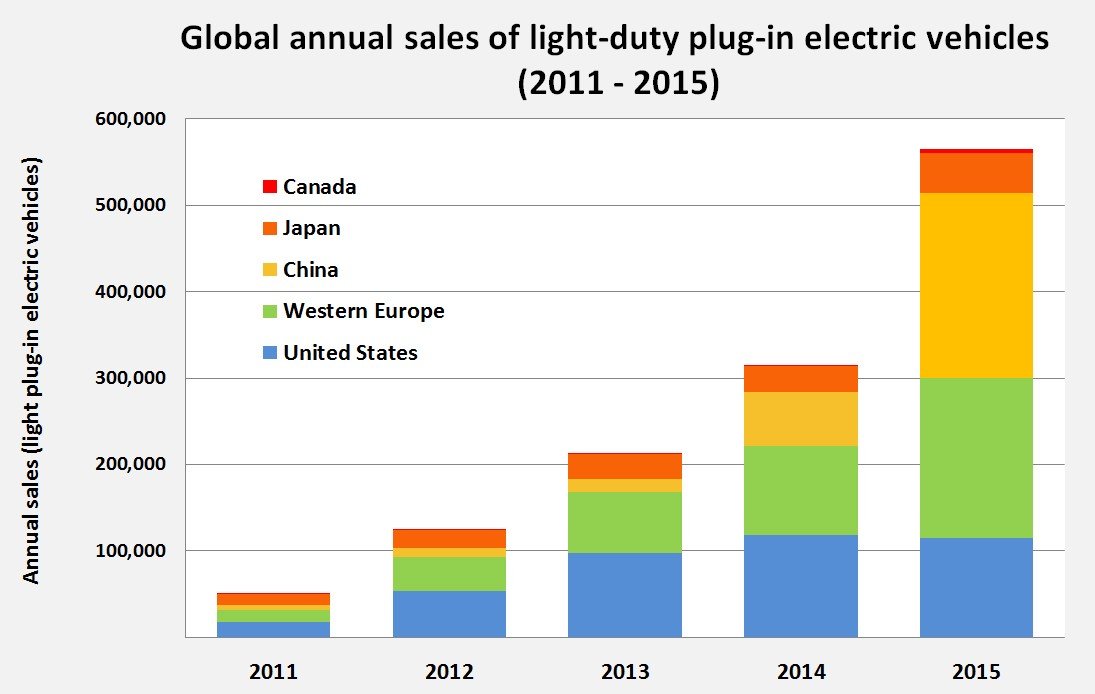
China now leads the US and EU in electric car production
The rapid take up of renewable energy has been boosted by Chinese government subsidies for electric cars, rapidly boosting their world ranking to the number one producer.
Over half a million electric cars were produced worldwide last year, 200 thousand of them in China. The Chinese government believes the car is the key to a renewable led economy with charging stations and domestic batteries the facilitating technologies that will engender long term change.
Tesla has pre-sold over 400,000 of its 2017 model 3, but China has more than doubled its production for each of the last three years.
China Plans To Boost Electric Vehicle Sales 10-Fold
While Tesla racks up a record-setting 400,000 presales for its affordable Model 3 due out next year, the world’s leading EV maker, China’s BYD, has already sold more EVs than Tesla, GM, and Nissan combined!