Category: News

Add your news
You can add news from your networks or groups through the website by becoming an author. Simply register as a member of the Generator, and then email Giovanni asking to become an author. He will then work with you to integrate your content into the site as effectively as possible.
Listen to the Generator News online

 
The Generator news service publishes articles on sustainable development, agriculture and energy as well as observations on current affairs. The news service is used on the weekly radio show, The Generator, as well as by a number of monthly and quarterly magazines. A podcast of the Generator news is also available.
As well as Giovanni’s articles it picks up the most pertinent articles from a range of other news services. You can publish the news feed on your website using RSS, free of charge.
 

  • Turn green worda into green deeds

    Turn green words into green deeds


    Despite government talk, transport emissions are rising because carbon-generating schemes are being given the go-ahead


    Two key transport announcements were made yesterday. The UK government launched a Carbon Reduction Strategy for transport which set out a vision with little action on the ground. Far less noted was the launch of a National Transport Plan for Wales, cancelling an extension of the M4 planned for south-east Wales. A saving of a cool £1bn, with plans to invest instead in improvements to the existing road, together with sustainable travel initiatives.


    The decision to cancel the M4 in south-east Wales can be seen as a watershed. As the first cancellation of a motorway extension in recent times, a low-carbon transport strategy is being led not from Whitehall but from Cardiff.


    Clearly, the UK government recognises the need to promote low-carbon transport, and its proposals to integrate transport modes, promote walking and cycling and reduce the need to travel are welcome. But here’s the rub: transport emissions are increasing because, on the ground, schemes that generate carbon are being given the go-ahead. This is true at a national level through approval of Heathrow’s third runway, as well as at regional and local levels.


    The government’s own assessment found that helping people to find alternatives to car use is one of the most effective and cost-efficient ways of reducing emissions from transport. Sustrans’ TravelSmart programme provides tailored travel advice direct to households and has reduced car use by more than 10% in the towns and cities where it has operated. Further city pilots and work with local authorities are welcome, but government has missed an opportunity to invest in a national Smarter Choices programme as a way of promoting change through better information. If the government invested the £250m earmarked for electric cars in Sustrans’ TravelSmart, it could reach about 10m households across the country and achieve reductions in car trips of about 10%, together with significant increases in levels of walking, cycling and public transport use.


    The decision from the Welsh assembly has set the bar very high for the first litmus test of the low-carbon transport strategy. Today the UK government will announce decisions on English regional funding for transport. With the majority of English regions having prioritised road schemes it rests with the government to put its low-carbon transport strategy into action and ensure that we are indeed travelling towards a low-carbon future.


  • Labour orders green energy revolution

    Labour orders green energy revolution


    Miliband takes control of power grid and lays out plan for low-carbon UK


    Wave and tidal energy

    Natural power: Britain has most of Europe’s wave and tidal energy resources yet it provides next to no electricity at present. New funding will provide support, particularly in Cornwall. Photograph: Matt Oldfield/Getty Images/Dorling Kindersley


    The government seized control of key levers in the energy sector today in an attempt to kickstart a stalling “green energy” revolution and head off the threats of global warming and a rundown in North Sea oil.


    Ministers plan to take over the allocation of electricity grid connections in order to favour renewable schemes, force the industry regulator, Ofgem, to tackle carbon pollution and pass laws to compel power companies to help poorer families meet rising energy bills.


    John Vidal: ‘This has never been attempted on this scale in any country’ Link to this audio

    The moves came as Ed Miliband, energy and climate change secretary, set out an ambitious road map for the UK to meet its legally binding target of a 34% cut in greenhouse gas emissions by 2020. Measures range across homes, cars, business and farming, but clean electricity generation will deliver half the reduction.

    Miliband said Britain would meet 40% of its electricity needs from wind, tidal and nuclear by the end of the next decade. The government’s overall plans believe 1.2m new green jobs will be created.

    “Our plan will strengthen our energy security, it seeks to be fair to the most vulnerable, it seizes industrial opportunity and it rises to the moral challenge of climate change,” he said.

    The government said £100bn had to be spent on energy projects and accepted that customers’ bills would have to rise to pay for much of it.

    But Miliband said domestic energy saving initiatives should mean there would be no related hikes in utility bills until 2015 and by 2020 should mean on average 6% – £75 – a year on domestic bills. The decision to significantly strengthen government control of the planning and infrastructure of the energy markets in a bid to increase renewable power sixfold turns back some of the market-driven approach developed by Margaret Thatcher.

    Lord Mandelson, business secretary, said: “We must combine the dynamism of the private sector with a strategic role for government to deliver the benefits of innovation, growth and job creation in the UK.”

    The developments have delighted a clean energy sector frustrated by long delays to win access to the national electricity grid. “The renewables industry has had a tough time in the UK for many years and it has missed out on technologies where it should have led the world. What we heard … today shows a level of understanding and political leadership that suggests that may be about to change,” said Gaynor Hartnell, director of policy at the Renewable Energy Association.

    Friends of the Earth also welcomed the moves. “Today’s announcements are a significant step towards the creation of a safe, clean and low-carbon future,” said Andy Atkins, executive director.

    But some of the large power companies which want to build nuclear and coal plants as well as wind farms still felt the government was not doing enough. “The government has to give companies such as E.ON a market that also gives them confidence to build Britain’s low carbon future,” said Paul Golby, chief executive of E.ON UK, which is pushing to build a coal-fired plant at Kingsnorth but is also engaged in the world’s biggest wind farm, the London Array off the coast of Kent.

    Ofgem denied it had been found wanting by the government. “We don’t see this as a kick in the teeth. We have been working under our existing powers to make changes to the grid access regime without much success. So [we] welcome the government stepping in,” said an Ofgem spokesman, who also said it was happy to take on a greener role.

    Miliband said he was exercising reserve powers provided under the 2008 Energy Act for the government to intervene. He expects wind and other renewables to provide “over 30%” of the renewable power for electricity by 2020 but denied this was rowing back on a previous commitment to obtain 32%.

  • Radar beams could protect bats from wind turbines

    Radar beams could protect bats from wind turbines


    A stationary beam reduces bat activity near turbines by almost 40%, research shows


    A noctule bat in flight. Photograph: Dietmar Nill/Nature Picture Library/Rex Features

    The bats appeared to be unharmed by the radar and returned once it had been switched off. Photograph: Dietmar Nill/Nature Picture Library/Rex Features


    Radar beams that irritate bats could be used to prevent the animals from being diced by the spinning blades of wind turbines, according to a study of how the animals react to radar signals. The researchers discovered that a stationary beam reduced bat activity near the turbines by almost 40%.


    Bat and bird populations can be significantly effected by collisions with turbines. A six-week study at two wind farms in the US recorded more than 4,500 bat deaths and the Peñascal wind farm in southern Texas is currently using radar to prevent migrating birds from flying into it.


    “This is a major problem in the States, especially during the bats’ migratory period,” said Paul Racey of the University of Aberdeen, which undertook the study. The Department for Environment, Food and Rural Affairs recently commissioned a three-year study to gather data on the effect wind farms are having on bats in the UK.


    Racey, who co-authored the research, outlined three ways to deter bats using radar in a paper published today in the journal PLoS One. One method employs a rotating antenna similar to those used in air traffic control – bats are known to avoid these large installations and the researchers hoped to replicate the effect with a smaller device. The team also tested a stationary antenna that used two different radar signals that used different pulse lengths.


    His results showed that a fixed antenna was most effective at keeping the bats away. Radar signals led to a drop in bat activity of 38.6% in an area 30 metres from the device. The animals appeared to be unharmed by the experience and returned once the radar was switched off. With refinement and purpose-built radar transmitters, the effect could be even greater, said the researchers. “We want 80- 90% reduction in bat activity,” said Racey.


    Scientists don’t know why bats avoid radar signals. One explanation is that radar energy warms the bats’ wings “like a kitchen microwave” said Racey. Another theory suggests the bats’ ears heat up, causing them to “hear” the radar signal as a clicking sound.


    The research comes a day after the energy and climate change secretary, Ed Miliband, announced a target of the UK producing 31% of its energy from renewable sources by 2020, which includes 3,000 new wind turbines. Racey said that these additional turbines should only be built if they satisfy conservation laws intended to preserve bat habitats, and mounting the radar devices could solve this problem.

  • Warmer winter for southern scientists

    Warmer winter for southern scientists


    (NB Could also accelerate ice-melt and raise sea-levels)


    ABC July 17, 2009, 3:44 pm


    The blast of warm air is melting snow around the station.

    ABC News © [Enlarge photo]


      Scientists at Antarctica’s Casey station have recorded the warmest July on record.


      After weeks of blizzards, scientists at the station are now enjoying some relative warmth.


      The maximum of 2.4 degrees and minimum of -3 are the warmest July temperatures since record keeping began at the station 20 years ago.


      The Bureau of Meteorology’s Steve Pendlebury says once-in-a-decade wind patterns are the likely cause.


      “The air from the central Indian Ocean east of Africa somewhere, has moved all the way down right onto the Antarctic coast,” he said.


      Station leader Geoff Cook says it has started melting snow and is a welcome change.


      He says scientists have been able to venture out into the field for the first time in a month.

    • Canada’s dirty secret

      Canada’s dirty secret


      Despite its environmentally friendly reputation, Canada’s efforts on climate change rank last among the G8 nations 


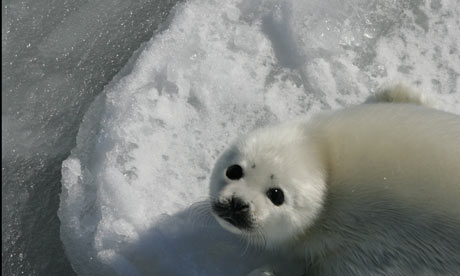
      A Harp seal white coat pup struggles in poor ice conditions in the Cabot Strait, Eastern Canada

      A Harp seal pup in the Cabot Strait, Canada. Photograph: Stewart Cook/IFAW


      Canada has come last on a WWiF scorecard of G8 countries’ efforts against climate change. That news would once have elicited at least a slightly surprised response. For several decades, Canada managed to present itself as the friendly giant of environmental issues. The 1989 Protocol on CFCs, an early turning point in combating the depletion of the ozone layer, was born in Montreal, and American environmental campaigners like Al Gore are always quick to heap praise on their northern neighbour.


      But these days, Canada is looking increasingly like the dirty one of G8. The WWF report noted that Canada is one of the few countries on the scorecard whose emissions are still rising, and that Canada’s Conservative government isn’t doing enough to combat climate change.


      Maybe some of Canada’s new bad-guy image on environmental issues is just a by-product of America’s new green image. Obama’s presidency was always going to bump the US up a few places on environmental scorecards, almost just out of gratitude that America has at least promised not to so flagrantly and unapologetically deplete the world’s natural resources.


      But Obama isn’t why Canada is losing its green reputation. The real reason lies in the vast Alberta oil sands. In 2008, Alberta’s economically recoverable reserves were placed at 173 billion barrels, meaning that only Saudi Arabia outstrips Canada on oil reserves. But unlike Saudi Arabia, in Alberta the oil is literally in the sand. To dig it up and refine it is a process far higher in emissions than the processing of Saudi Arabian oil, and is destroying much of Alberta’s northern Boreal forest along the way.


      The response to the report in Canada has been less hand-wringing than one might expect. Some dismiss the finding by pointing out that even other environmental organisations have problems with WWF. Others argue that surveys like the WWF’s are just penalising countries like Canada and Russia for their geographic realities – smaller countries keep their emissions down by importing oil from Canada, then criticise Canada for producing it, and so on.


      On top of the recession’s effect on plans for the oil sands, defenders argue that Obama’s cap-and-trade proposals would severely impact Canadian oil production because the proposal will heavily penalise those who ship Canadian oil sand bitumen to the United States, given that refining the raw bitumen is so energy-intensive.


      But Canada isn’t being punished for its geographic reality. It is finally being called out for presenting itself as environmentally friendly, while under the Conservative government green issues have been completely sidelined, if not derided. Before becoming prime minister, Stephen Harper implied that the science of climate change was “tentative and contradictory”, called the Kyoto accord a “socialist scheme” and ranted that an “army of Canadians” was needed to defeat it. While he has proposed “made in Canada” solutions to cutting carbon emissions, Harper’s main actions have been to cut programmes that promoted renewable energy like wind power. Even plans for the 2010 Winter Olympics in Vancouver risk causing environmental damage to rare forests in the nearby Eagle Ridge Bluffs.


      Vancouver is consistently voted one of the world’s most liveable cities, and the Canadian government intends to use the Olympics to showcase Canada’s pleasant, fresh-aired way of life. But the price Canada is paying to maintain its “friendly giant” facade is increasingly being paid for by the environment.


      The fact that Obama’s Clean Energy and Security Act will, if passed by Congress, disproportionately hurt oil companies working with Albertan oil sands may feel like American hypocrisy to Canadians who have long watched the US’s profligate environmental destruction go unchecked. But while Harper continues to disappoint on his commitments to the environment, someone has to play the bad cop to Canada.

    • With Push Toward Renewable Energy, California Sets Pace for Solar Power

      With Push Toward Renewable Energy, California Sets Pace for Solar Power


      Noah Berger for The New York Times

      Richard Halvorsen of Akeena Solar at a home in Saratoga, Calif. There are some 50,000 solar-panel installations in the state.


      Published: July 15, 2009


      SAN FRANCISCO — A decade ago, only 500 rooftops in California boasted solar panels that harvest the sun’s energy. Today, there are nearly 50,000 solar-panel installations in the state, according to a report to be issued Thursday by the research and lobbying group Environment California.


      As a result, California, the longtime national leader in solar energy, has a capacity of more than 500 megawatts of solar power at peak periods in the early afternoon — the same as a major power plant.


      The solar capacity in California grew by a third from 2007 to 2008. It now represents about two-thirds of the national total, according to a different report that is being prepared by the Interstate Renewable Energy Council, a nonprofit group promoting expansion of solar energy.


      As the Obama administration pushes for a national shift to more renewable energy sources, California’s example is therefore being closely watched. Nationally, the states in which solar installations are spreading fastest are those that provide the most generous subsidies for them, industry experts agree.


      Two long-term statewide programs in California provide rebates and other financial incentives to encourage rooftop solar panels, and individual municipalities like Berkeley are also beginning to offer financing for the solar arrays.


      “The thing about California is that they have a consistent program that has 10 years of funding,” said Larry Sherwood, a consultant to the interstate council.


      (The California budget cuts that were being brokered Wednesday will not directly affect the subsidies because the subsidies are underwritten by utility ratepayers, not taxpayers.)


      New Jersey is a distant second to California in installed solar capacity with 70 megawatts, followed by Colorado and Nevada, the council’s report said.


      The Clean Energy program in New Jersey offers qualifying residential and commercial customers rebates for energy generated by solar arrays.


      “Typically, New Jersey incentives have been higher, but its program has had many fits and starts,” Mr. Sherwood said.


      Within California, solar technology has spread beyond highly environmentally conscious areas like San Francisco and Sacramento over the last decade to gain a hold throughout the state, Environment California’s report indicates. As of the end of 2008, when the report’s figures were compiled, San Diego had more than 19 megawatts in capacity from installations on 2,200 roofs, followed by San Jose with 15.4 megawatts from 1,330 roofs and Fresno with 14.5 megawatts from 1,028 roofs.


      “The biggest thing here,” said Bernadette Del Chiaro, the report’s author, “is that from farms to firehouses, the face of solar power is changing. While California’s biggest cities have led the way, the rest of the state and country are quickly picking up on it.”


      She added that the cities of the Central Valley, which is both heavily agricultural and baking hot in the summer, are natural places for the solar panels. High air-conditioning loads and high peak electricity rates tend to dovetail partly with the afternoon hours when solar panels are most effective, she noted, giving people an incentive to embrace the new technology.


      Nationally, residential installations account for about a third of the energy supplied to the power grid by photovoltaic arrays on panels; the remainder come from installations on larger facilities, like government buildings, retail stores and military installations.


      Each of the four top-ranked cities in California in terms of solar power capacity have more electricity available from these sources than all but six states.


      Still, 10 states, led by Colorado and including Hawaii, Connecticut, Oregon, Arizona, North Carolina, Pennsylvania and Massachusetts more than doubled their rooftop solar capacity in 2008, Mr. Sherwood said.


      While most installations are on rooftops, the number of larger-scale installations is increasing. Fresno’s total output is augmented by a 2.4-megawatt facility at the Fresno Yosemite International airport, while the local Sierra Nevada brewery in Chico has a 1.9-megawatt solar array.


      Outside the state, Nellis Air Force Base in Nevada has the largest photovoltaic generating plant, with 70,000 panels generating 14 megawatts of electricity, according to the federal Energy Information Administration.


      But even with the increases of the last decade, solar power is a pipsqueak among energy sources; it represents about one-quarter of 1 percent of California’s total energy capacity, according to the California Energy Commission. Nationally, according to the Energy Information Administration, it represents about 0.02 percent of total capacity, but those federal figures are incomplete: they reflect only centralized facilities, not distributed rooftop installations.


      Cost is a major hurdle; installation of a rooftop system is likely to cost at least $20,000.


      In other countries, according to the Renewable Energy Policy Network for the 21st Century, a research and advocacy group, government subsidies have led to rapid growth in solar power. The group’s latest report shows Germany as the world leader in solar power, with 5,400 megawatts, or about 1 percent of the country’s total generating capacity.