Category: Uncategorized

  • Federal Reserve initially failed to grasp 2008 crisis

    21 February 2014 Last updated at 20:48

    Federal Reserve initially failed to grasp 2008 crisis

    Ben Bernanke The transcripts of the meetings show the Fed’s struggles to cope with the financial crisis under Mr Bernanke

    During the 2008 financial crisis, the US Federal Reserve struggled to grasp the scope of the problem and how to adequately respond, transcripts reveal.

    After a five-year wait, the central bank released the records of a total of 14 meetings from 2008.

    The transcripts offer the clearest insights yet into the central bank’s thinking during the crisis.

    “Frankly, I am decidedly confused and very muddled” said former chair Ben Bernanke during a September meeting.

    Overall, the documents paint a picture of the Fed that shows that it worried perhaps more than it should about inflation risks, and failed to grasp initially the full impact of the housing market crisis.

    However, once the extent of the problems were known, the central bank was largely in agreement about moving decisively to prevent the next Great Depression from occurring.

    Continue reading the main story

    “Start Quote

    It is becoming abundantly clear that we are in the midst of a serious global meltdown”

    Janet Yellen

    ‘I am very concerned’

    The hundreds of pages of transcripts underscore the difficulty of coping with the financial crisis and the Fed’s scramble to react to events like the collapse of Bear Sterns in March of 2008.

    Minutes from the 16 September 2008 meeting – which took place a day after the Fed had allowed Lehman Brothers to fail – show that Mr Bernanke and other Fed officials were grappling with the implications of bailing out some institutions and not others.

    Mr Bernanke worried about the “ad hoc” nature of deciding who to bail out, while noting “the real possibility in some cases that you might have very severe consequences for the financial system and, therefore, for the economy of not taking action.”

    However, overall the September transcripts indicate that most members of the Fed thought the crisis was contained.

    At another point, Mr Bernanke said: “I think that our policy is looking actually pretty good,” indicating he thought that a move by the central bank earlier in 2008 to trim interest rates had stemmed the tide of the crisis.

    After that meeting concluded with the bank keeping its benchmark interest rate at 2%, just two days later, Mr Bernanke and Treasury Secretary Henry Paulson were forced to speak to members of Congress, advising them to agree to a bailout of the banking system.

    ‘A witch’s brew’The transcripts also give an insight into current Fed chair Janet Yellen’s involvement with its decisions during the crisis.

    Although Ms Yellen went along with the decision to keep rates steady in September, she warned during the same meeting: “I am very concerned about downside risks to the real economy and think that inflation risk is diminished.”

    At an October meeting, Ms Yellen noted the dire events that had occurred that year, saying the Fed had received “witch’s brew of news”.

    “The downward trajectory of economic data,” Yellen went on, “has been hair-raising”.

    “It is becoming abundantly clear that we are in the midst of a serious global meltdown,” she said.

    More on This Story

    Related Stories

  • You Can’t Beat Climate Change With Weather Guns

    You Can’t Beat Climate Change With Weather Guns

    John Kerry gave a speech in Jakarta, Indonesia, last weekend where he referred to climate change as “perhaps the world’s most fearsome weapon of mass destruction.” Defense Secretary Chuck Hagel and Navy Admiral Samuel Locklear, the head of U.S. Pacific Command, have made similar statements. Yet the most recent research shows that the human output of carbon dioxide, a leading cause of climate change, is only getting worse, increasing the probability that mean global temperatures will rise by the end of this century, perhaps by as much as 4.5 degrees Celsius, which would be disastrous.

    Some researchers have proposed changing the weather deliberately, a strategy referred to as geoengineering. It’s sometimes considered the last-ditch effort to avert the worst possible effects of climate change and it’s controversial to say the least.

    One weather-shifting tactic that’s received a lot of attention from researchers involves enormous injections of sulfate into the atmosphere via boats or even balloons. The sulfate works like a volcanic ash cloud bouncing more of the sun’s light back into space and resulting in cooler global temperatures. The idea works, in theory, but a team of researchers from the University of Washington this week found that, if not properly maintained, any attempt to change the weather by continually pushing sulfate into the atmosphere will backfire.

    They describe their findings in this paper:

    Here’s the key point: “If such an enhanced stratospheric aerosol layer were produced, any interruption to its continual maintenance would cause a quick return to natural aerosol levels within 1–2 years…In turn, global temperature would increase rapidly as the climate adjusts to the full, unmasked GHG radiative forcing.”

    If the U.S. or some other government were to begin a program of solar radiation management with sulfate, and continue the program for decades, it would need to keep up the program, perhaps indefinitely. Without consistent injections, warming could get much worse very quickly, bringing about the dreaded  4°C rise in as little as a decade.

    In other words, our climate could get hooked on sulfate.

    The University of Washington researchers aren’t the first team to point out the potential dangers of geoengineering. But they are the first to find that the extreme variability in weather patterns that would result from abruptly ceasing sulfate blasts would be higher than researchers had previously anticipated.

    The GAO has recommended continued research into geoengineering before any anyone makes an attempt to purposely tamper with the climate. And the researchers say if solar radiation management is tied to aggressive and sustained efforts to actually curb greenhouse gases, the results will be better.

    In short, global warming may be the newest security threat, but that doesn’t mean we’ll defeat it by shooting at it.


  • Renewable Energy, Nuclear Power, and Galileo (HANSEN) (ACCESS TO WEBSITE)

    Renewable Energy, Nuclear Power, and Galileo

    Inbox
    x

    James Hansen via mail170.wdc02.mcdlv.net

    5:04 AM (4 hours ago)

    to me
    Email not displaying correctly? View it in your browser.
    Renewable Energy, Nuclear Power, and Galileo

    A draft opinion piece, Renewable Energy, Nuclear Power, and Galileo, is available here or on my web site. Criticisms are welcome.

    ~Jim
    21 February 2014

  • Crystallography: Atomic secrets

    Nature | News Feature

    Sharing

    Crystallography: Atomic secrets

    100 years of crystallography.

    29 January 2014

    Article tools

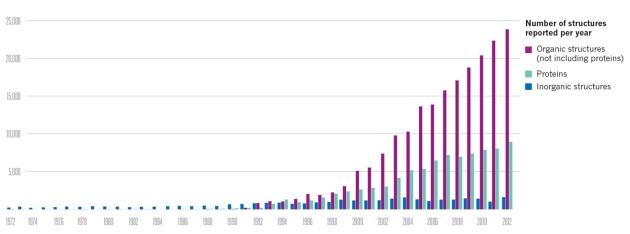
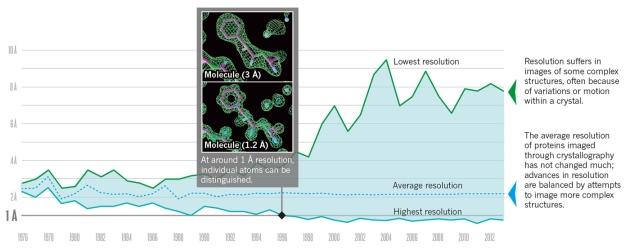
    In 1914, German scientist Max von Laue won the Nobel Prize in Physics for discovering how crystals can diffract X-rays: a phenomenon that led to the science of X-ray crystallography. Since then, researchers have used diffraction to work out the crystalline structures of increasingly complex molecules, from simple minerals to high-tech materials such as graphene and biological structures, including viruses. With improvements in technology, the pace of discovery has accelerated: tens of thousands of new structures are now imaged every year. The resolution of crystallographic images of proteins passed a critical threshold for discriminating single atoms in the 1990s, and newer X-ray sources promise images of challenging proteins that are hard or impossible to grow into large crystals.

    Birth of an idea

    SPL

    Von Laue hit on the idea that when X-rays passed through a crystal, they would scatter off the atoms in the sample and then interfere with each other like waves passing through a breach in a shore wall. In some places, the waves would add to each other; in others, cancel each other out. The resulting diffraction pattern could be used to back-calculate the location of the atoms that scattered the original X-rays. Von Laue and his colleagues proved his theory in 1912 with a sample of copper sulphate.

    Going up

    The Worldwide Protein Data Bank has been collecting resolved structures of proteins since 1971, and now holds nearly 100,000 entries. Other databanks, including the Crystallography Open Database (COD), include structures of everything from minerals to metals and small biological molecules. The COD is now adding instructions into its database for how to print three-dimensional models of some structures.

    Source: Worldwide Protein Data Bank/ Crystallography Open Database

    Getting clearer

    Better techniques for both imaging and interpreting data have allowed researchers see finer details in some structures and tackle ever more complicated molecules.

    Images: Bernhard Rupp/Garland Science/Taylor & Francis Graph: H. M. Berman Protein Sci. 21, 1587–1596 (2012), with updates from Worldwide Protein Data Bank

    100 years of crystallography

    1913: Diamond

    Diffraction image allowed researchers to confirm the tetrahedral structure of carbon atoms in this famous crystal.

    1923: Hexamethylenetetramine

    The first organic molecule to be imaged, chosen because of its simple cubic symmetry. It proved that molecules, not just atoms, can make up the repeating elements of a crystal.

    Am. Chem. Soc.

    Hexamethylenetetramine in 3D

    Courtesy: James Garnett and Jonathan Taylor

    1925: Quartz

    The determination of the structure of silicate minerals was fundamental to the field of mineraology.

    1952: DNA

    Rosalind Franklin’s X-ray image of DNA, known as photo 51, helped James Watson and Francis Crick to create their famous model of the double helix. An atomic-resolution image of the structure proposed in 1953 was not taken until 1980.

    King’s College London

    DNA in 3D

    Courtesy: James Garnett and Jonathan Taylor

    1958: Myoglobin

    The irregular folds seen in the structure of the first imaged protein were a huge surprise.

    Myoglobin in 3D

    Courtesy: James Garnett and Jonathan Taylor

    1965: Lysozyme

    The first enzyme to be imaged, sourced from hen egg whites.

    Lysozyme in 3D

    Courtesy: James Garnett and Jonathan Taylor

    1970: Synchrotron

    A study of insect muscle at the German Electron Synchrotron (DESY) in Hamburg was the first to use X-rays generated by a synchrotron. The use of these machines caused a boom in crystallography studies.

    1978: Tomato bushy stunt virus

    First atomic-scale image of a complete virus: in this case, a plant virus. It revealed structural rules that were found to hold true in human pathogens a few years later.

    Tomato bushy stunt virus in 3D

    Courtesy: James Garnett and Jonathan Taylor

    1984: Quasicrystals

    The first crystals were identified with atomic arrangements that do not repeat exactly, defying general wisdom about crystals.

    US Dept of Energy/AFP/Getty

    2000: Ribosome

    The molecular machine that assembles proteins from instructions encoded in DNA.

    V. Ramakrishnan & D. E. Brodersen/Medical Research Council

    Ribosome in 3D

    Courtesy: Said Sannuga and V. Ramakrishnan, MRC Laboratory of Molecular Biology

    2009: X-ray free-electron laser

    The Linac Coherent Light Source at the SLAC National Accelerator Laboratory in Menlo Park, California, went into operation, opening up a new world of imaging possibilities (see page 604).

    2013: HIV trimer

    An X-ray crystallographic image of the hook that HIV uses to bind to human cells helped to resolve a debate about what this important protein looks like.

    AAAS

    HIV trimer in 3D

    Courtesy: James Garnett and Jonathan Taylor

    The future

    The ‘most wanted’ list of proteins that remain to be imaged includes the massive spliceosome, which helps to organize and edit messenger RNA, and the even larger nuclear-pore complex, which serves as a nucleus’s gatekeeper.

    These structures can contain hundreds of proteins, making them hard to crystallize or keep still for an image.

    One strategy is to crystallize bits of these structures and piece them together like a jigsaw; the use of X-ray free-electron lasers should also help.

    Nature
    505,
    602–603
    (30 January 2014)
    doi:10.1038/505602a

    Author information

    For the best commenting experience, please login or register as a user and agree to our Community Guidelines. You will be re-directed back to this page where you will see comments updating in real-time and have the ability to recommend comments to other users.

  • Warmer world may wreak havoc with the Atlantic

    Environment

    Home |Environment | News

    Warmer world may wreak havoc with the Atlantic

    A warming world could slow the circulation of the Atlantic Ocean, potentially triggering African droughts and more rapid sea level rise around Europe. If it happens, it won’t be the first time the Atlantic has been disrupted during a warm period.

    Water in the Atlantic is constantly on the move. In the icy north, cool and dense surface water sinks and flows south, forming the North Atlantic Deep Water. The NADW then encourages warm surface water in the south to flow north, creating the Gulf Stream.

    In theory, this “conveyor belt” could weaken as a result of climate change. A hugely exaggerated version of this proposal was the premise for the film The Day After Tomorrow. But until now the evidence from warmer periods in Earth’s past suggested that temperature rises would not affect the circulation. A new study indicates otherwise.

    Eirik Vinje Galaasen at the University of Bergen, Norway, and his colleagues looked at deep-sea sediments from a site off the southern tip of Greenland. Sediment builds up so rapidly there that 3.5 centimetres are deposited each century, meaning that important but short-lived climate shifts show up clearly.

    Shifting waters

    The team focused on sediments from the last interglacial, a warm period between 130,000 and 115,000 years ago, before the last ice age. The ratio of carbon isotopes in fossilised microbes from this time showed several sudden shifts, each indicating an abrupt change in environmental conditions and probably in the NADW.

    Some members of the team had seen a similar isotope ratio shift before, in marine sediments from 8200 years ago. In 2007 they showed that the shift occurred when a vast North American lake burstMovie Camera, sending 100,000 cubic kilometres of fresh water into the North Atlantic, and briefly reducing formation of the NADW. Galaasen says NADW reductions were common in the last interglacial, when the North Atlantic was warmer.

    According to Galaasen, the NADW reductions have been missed because sediment builds up slowly at most deep-sea sites, making such brief events hard to spot. At most sites the shifts would be recorded in just a few millimetres of sediment, rather than a few centimetres as in the Greenland site.

    “The deep Atlantic is not as stable as previously thought,” says Galaasen. “Perhaps especially so when the North Atlantic is warmer and fresher, which may be the case again in the near future.”

    Coming soon?

    If the NADW conveyor did slow, we would certainly feel it. For starters, sea levels would rise faster around Europe, because the change in ocean currents would see more water ending up there.

    What’s more, north Africa might suffer severe droughts, says Galaasen, because the altered ocean currents could affect atmospheric circulation in the subtropics. Climate records from the past 57,000 years support such a link (Paleoceanography, doi.org/d92bk9).

    Less NADW could also mean that the planet would warm more than expected. “NADW formation is an important process by which anthropogenic carbon dioxide enters the deep ocean, thus helping to slow down the rise in atmospheric CO2 levels,” says David Thornalley at University College London in the UK. An NADW reduction could reduce the size of this carbon sink, leading to even more warming.

    However, it is far too early to say whether reductions in NADW are likely in the short term, says Carl Wunsch at the Massachusetts Institute of Technology. We still know little about how ocean circulation varies over millennia. “This is the sort of paper that really needs to be evaluated over the coming years.”

    The relevance to today’s climate will need further investigation, agrees Thomas Stocker at the University of Bern in Switzerland. The study suggests NADW reductions are particularly likely after an influx of fresh water from melting ice, and it is by no means clear that will happen. “Today much less terrestrial ice surrounds the North Atlantic than at the early stages of the past interglacial,” he says. The NADW weakening would only happen if a lot of fresh water came off the Greenland ice sheet. Stocker says that is a wild card.

  • Old Arctic Ice Is Disappearing and Taking the Rest of the Ice With It

    “Death Spiral” Continues

    The entire universe in blog form
    Feb. 20 2014 7:45 AM

    Old Arctic Ice Is Disappearing and Taking the Rest of the Ice With It

    Arctic ice is melting
    Older ice in the Arctic is melting away.
    Photo by the NOAA, from the video

    The National Oceanic and Atmospheric Administration recently released a video that shows compellingly just how bad things are getting at the top of the world. The animation displays Arctic ice over time not just by how much area it covers, but also by age, with white being the oldest ice (nine years or older):

    It’s not hard to see that over the past few years, the oldest ice has melted away, and over time the ice gets younger. That’s not good: Older ice is thicker and tends to hang around longer; young ice is generally thinner and melts away every summer. That means that the year-round amount of ice is dropping, and dropping rapidly. As the Arctic warms, its ability not just to form ice but to keep it wanes.

    Advertisement

    It’s not just area, either, it’s volume. Yes, the ice is covering less area of the sea, but it’s also thinning. That means it will melt even faster in the summer. This is very bad, because as far as we can tell this is a runaway process. Ice is white and reflective, while the water under it is darker. When the ice goes away it exposes the darker water which absorbs sunlight more efficiently, raising the temperature further. That’s one of the reasons we’re seeing the ice dwindling in the Arctic with alarming rapidity.

    This is fact, pure and simple. Yet I still see some global warming deniers claiming the Arctic ice has “rebounded” from its low in 2012. That is 100 percent pure grade-A fertilizer (and I’d use far stronger words if I didn’t want to keep this blog at least semi-family-friendly). There were several reasons the ice hit a record low in 2012—including an overall thinning for years that made it prone to break up in big weather events. There was just such a storm in August 2012. But that thinning is due to increasing temperatures in the Arctic, and that’s due to global warming.

    This video shows how bad it is:

    As you can see, the little bump there in 2013 doesn’t go very far in mitigating the huge and stunning drop in Arctic sea ice we’ve been seeing for many years now. “Recovery,” my ice. That’s denier smoke-and-mirrors, an attempt to distract people from what’s really going on (just like the completely false claim that Antarctic ice growth compensates for Arctic loss). Ironically, even the major oil companies are admitting Arctic ice is going away. In some ways, they’re counting on it, since it makes drilling for oil up there easier.

    Phil Plait Phil Plait

    Phil Plait writes Slate’s Bad Astronomy blog and is an astronomer, public speaker, science evangelizer, and author of Death from the Skies! Follow him on Twitter.

    Incidentally, Arctic ice is right now at a record low for this time of year. It’s far too early to be predicting how low it will get during the spring and summer thaw—the current amount is not lower than the previous February minimum by a statistically significant amount—but it’s definitely worth keeping our eyes on it. The warmer-than-usual temperatures up north are certainly to blame for this.

    We don’t know how long it will be before we see our first ice-free Arctic summer, but it may be as soon as 30 years. Most likely it will be somewhat longer; I hope so. But the bottom line is that the ice is going away due to global warming, and as it does we’ll see worse and worse effects from it. The time to stick our heads in the sand about this is long, long gone.