Category: Uncategorized

  • The burgeoning business of death

    The burgeoning business of death

    Date
    January 28, 2014

    Baby boomers are fuelling a massive rise in death services.

    Acacia Remembrance SanctuaryAcacia Remembrance Sanctuary, Australia’s first ‘natural’ burial park.

    Want to go out with a bang? Why not have your ashes sent above in a dramatic fireworks display?

    Or you could choose to spend eternity floating in a man-made reef purporting to be the ultimate in “green burials” – the Neptune Memorial Reef under the sea in Miami, Florida.

    In the past few decades, the options for laying your loved ones to rest have increased dramatically, as many veer away from traditional religious services to select highly personalised farewells.

    LifeArtLifeArt: creates personalised, eco-friendly coffins.

    In Australia, many members of the ageing baby boomer generation are opting to prepay their funerals, and are often choosing more environmentally friendly options.

    Advertisement

    By 2018, according to IBISWorld figures, the post-World War II generation will make up more than 16 per cent of the population, leading to an inevitable rise in the average number of deaths in Australia each year.

    Last year about 142,000 Australians left this earth, with the figure predicted to rise to more than 300,000 by 2050, providing a boom for the many small businesses that make up more than 60 per cent of the “death care” industry.

    In Sydney, where burial plots are expected to reach capacity by 2035, small development company Zinnia Group has created plans for a natural burial site south-west of the city.

    Acacia Remembrance Sanctuary, billed as Australia’s first natural burial park, would offer an alternative to “the old morbid, concrete-looking cemeteries” of old, says group financial controller Danny Masri.

    He says a new cemetery hasn’t been built in Sydney since 1960, and Zinnia’s parkland site, which is up for sale, will include 7500 burial plots and potentially bring in revenue of $250 million over a 25-year period.

    Plans for the sanctuary include online memorials, and a smartphone app that would use GPS technology to direct visitors to grave sites. Instead of tombstones, the spot might instead be marked by a rock with a small plaque.

    “It’s all in keeping with the philosophy of having a very natural site. It’s more about the loved ones going and having an uplifting experience,” says Masri.

    While many Australians are steering away from traditional ceremonies, they are also asking to be cremated in much larger numbers.

    IBISWorld figures show that around 70 per cent of people are now cremated, as they choose a less expensive option or become more aware of a lack of cemetery space.

    Ellese Templeton, who owns Templeton Family Funerals in Melbourne, says many people are also choosing a “no service cremation”, where family or friends hold the service down the track.

    “It’s becoming more common to do a no service cremation rather than doing a $5500 to $6000 service,” she says.

    “A lot more people are prepaying and pre-arranging their funerals. Because it’s for them they don’t want to spend the money.”

    She says people who prepay their own funerals often say they’d prefer to spend the money on an after-party of sorts for their loved ones. For funerals likely to have fewer guests, many people opt instead for a celebration of the person’s life at a restaurant or other venue, says Templeton.

    “The other thing that people are doing a lot more of is photography. They hire a professional photographer to come in and photograph the entire service.”

    Skype is also becoming a fairly common feature at funerals, allowing people living interstate or overseas to see – and record – the service via the internet, says Templeton.

    Funeral director Warwick Hansen has been in the game for more than four decades, and says funerals “have changed dramatically over the last 10 to 20 years”.

    “Twenty years ago, probably 90 per cent of funerals would have been carried out by clergy, whereas now about 50 per cent are carried out by clergy,” he says.

    Hansen is also now the New South Wales regional manager for LifeArt Australia, a business now owned by industry giant InvoCare. LifeArt creates personalised coffins created with a mix of environmentally friendly cardboard and sugarcane.

    The company now sells about 2500 cardboard coffins each year, with many buyers selecting personalised prints reflecting the deceased’s interests and lifestyle.

    “They might have been a very keen surfer or like to go walking through forests,” says Hansen.

    Others opt for a plain white coffin where guests can write their own messages on the day.

    The sturdy cardboard coffins, comparable to the price of a timber coffin, weigh about 12 kilograms compared to the usual 30 or 40, and are set to get cheaper as more people buy them, says Hansen.

  • Inside the engines powering life at sea

    Inside the engines powering life at sea

    yesterday

    For more than two centuries we’ve relied on engines to power our exploration, travel and trade on the seas.

    With each new generation of engine technologies, we’ve travelled faster and safer with less impact on the environment.

    It’s been a long, exciting journey since the early days when the wind carried the First Fleet’s eleven ships to Sydney Cove on January 26, 1788.

    To recognise their voyage this Australia Day, and the spirit of adventure behind marine engine development, here is a look at the technologies that helped connect the world.

    Sailing by steam

    Marine steam engines emerged during the early 19th century and became a popular propulsion method for turning paddle wheels and propulsion screws, or what’s today called the propeller.

    These external combustion engines used wood, coal or fuel oil to fire the burners that turned water into steam inside large boilers, or pressurised tanks. The steam was then used to drive pistons moving inside a cylinder, which then turned the drive mechanism.

    Andy Munns, an engineer and teacher at Sydney Heritage Fleet, said the primary advantage of steam engines was releasing ships from the limitations of variable wind conditions.

    As metallurgy improved, early copper and wrought iron engines were replaced with stronger steel engines. “Cheaper and higher quality steel led to higher quality pressures and more powerful engines,” he explained.

    Three piston models known as triple-expansion engines let steam flow through successively smaller cylinders. The steam also cools through each stage before being recycled in the boiler.

    The steam engine reached its zenith with triple-expansion engines featuring vertical pistons, an efficient design that’s echoed in the internal combustion engines of today.

    Internal combustion

    As internal combustion engine technology developed through the 19th and 20th centuries, reciprocating diesel engines superseded steam turbines as more efficient and reliable power sources.

    The diesel engine, or compression-ignition engine, followed the invention of the gasoline engine in the late 1800s. Both diesel and gasoline engines use a spark or small explosion to convert chemical energy from fuels into mechanical energy that push pistons inside cylinders. Like steam engines, the pistons drive a crankshaft and propeller.

    However, unlike gasoline (or petrol) engines that use a spark to ignite the fuel, diesel engines use the heat generated by compressed air to ignite the fuel.

    The main advantage of this approach, Mr Munns explained, is they’re about 30 percent energy efficient, compared to the 15 percent efficiency of a marine steam engine, or the 20 percent efficiency of a car engine.

    “The energy doesn’t go into boiling steam and throwing it away,” he said. “With diesel, you transfer the energy directly to the piston.”

    Diesel engines remain dominant in marine vessels today because of their simplicity, reliability and ability to generate significant amounts of power at slower engine speeds.

    The age of gas turbines

    Gas turbine engines emerged towards the end of World War II in German aircraft, such as the Messerschmitt.

    Early examples were not as efficient as diesel engines, however gas turbines produced significant amounts of power and were very light, making them ideal for aircraft.

    In marine applications, the same advantages apply. Mr Munns said gas turbine technology still operates using the four stroke principle found in diesel and gasoline engines. Air is drawn into a cylinder, compressed, injected with fuel, and the resulting exhaust gases drive the propeller.

    Today the advances in gas turbines are coupled with developments in the variety and costs of available fuels.

    For example, GE’s LM gas turbine engines run on marine gas oil (MGO), bio diesel, bio-synthetic parraffinic kerosene bends and liquid natural gas (LNG). Cleaner fuels such as LNG are good for the environment and reduce maintenance costs. “The developments are all driven by fuel costs,” Mr Munns said.

    In the future, technologies such as Dry Low Emissions (DLE) engines will improve emissions through near-optimum fuel-air distribution and reduced NOx and CO outputs.

    The use of hybrid diesel, gas turbine and electric propulsion will also continue to shape engine technologies and new marine vessels.

    For example, electric propulsion technology is being used to power ships like the world’s largest ocean liner RMS Queen Mary 2

  • Australia’s climate plan: are you serious?

    • Search BRW

    Australia’s climate plan: are you serious?

    Courtesy of David Spratt

    Published 24 January 2014 11:05, Updated 24 January 2014 11:32

    Penny van Oosterzee

    Australia’s climate plan: are you serious? 
A young woman cooling off in the Nepean River, south-west of Sydney; heat waves are expected to become more common with climate change. Photo: Jonathan Ng

    The Emissions Reduction Fund (ERF), the central pillar of Australia’s Direct Action climate policy, continues to attract a fair bit of derision with its credibility said to be “hanging by a thread”. Is it really that bad? Probably.

    Now that environment minister Greg Hunt has released a Green Paper for the Emissions Reduction Fund, let’s look at just three aspects: comparable global action, the proposed baseline and credit system for business, and implications for the land sector.

    World abandons carbon pricing?

    In the Green Paper foreword the environment minister introduces the ERF as one of the two major global policies of emissions reductions. The main policy is a price on carbon, like ours to be removed in July this year.

    But the minister dismisses this because of “considerable uncertainty and policy instability within many of these schemes”. Is this correct?

    True, there have been problems with European Union’s falling carbon price due thanks to an oversupply of carbon permits, causing the price to drop to around €5. But the EU last week agreed to postpone sale of 900 million carbon permits to increase demand and price.

    The OECD says that to be serious governments must price carbon, and their latest list shows the growing number of countries and regions where emissions trading is being implemented. Rest assured emissions trading is alive and well.

    As for policy instability, look no further than home. Australia is the only country in the world dismantling a working carbon price: one that has, in its short life, already reduced emissions by nearly 40 megatonnes CO2 equivalent.

    Paying to reduce

    The other global approach is “purchasing abatement”. Instead of paying to emit, polluters are paid if they reduce emissions below a threshold.

    This is the model the ERF nominally follows, founded on part of our current carbon policy known as the Carbon Farming Initiative. The initiative, designed to work with a carbon price, rewards landowners for reducing emissions with carbon credits that can be traded and bought by polluters.

    The United Nations Clean Development Mechanism (CDM), cited in the ERF Green Paper, is the global example. The CDM allows developed nations to buy emissions reductions in developing nations to help meet their emissions reductions targets under the Kyoto Protocol.

    The CDM is not a stand-alone scheme. It is voluntary program dependent on the Kyoto Protocol to function. Take away the compliance aspects of the Kyoto Protocol and you would be left with a voluntary scheme with nowhere to go.

    It would be like, well, dismantling our carbon price and leaving only the Carbon Farming Initiative.

    The UK model

    The ERF also cites the United Kingdom Non Fossil Fuel Obligation Scheme. Operating between 1990-98, the scheme encouraged private investors to invest in nuclear power, but also subsidised all forms of renewable energy.

    The scheme was funded through a fossil fuel levy, not out of the public purse as with the ERF. Each year the scheme was allocated the equivalent of A$2.2 billion, more than the entire allocation of the ERF. The scheme is said to have incentivised the shift to renewable energy in the UK.

    Competing bids for funding under the scheme were also price-banded so that different technologies could compete. The ERF makes it clear it is only interested in the lowest-cost abatement.

    Baseline and credit, or simply credit

    But let’s not quibble. Using an expanded, streamlined Carbon Farming Initiative to generate carbon credits might well work.

    But for it to have any integrity it must be linked to a baseline and credit system that manages companies’ emissions. The ERF Green Paper calls this “safeguarding emissions reductions”. It would be self-defeating, for instance, if the government purchased emissions only to see business increase emissions.

    The guts of any baseline and credit scheme is that there is a baseline for emitting activities. Credits are awarded for activities that emit below the baseline, and costs apportioned to activities that emit above the baseline.

    The ERF, however, “is designed to allow businesses to continue ordinary operations without penalty.” “Ordinary” is not defined but clearly means as long as businesses contribute to economic growth. This is the real baseline of the ERF, underscored by the statement that entities that consistently exceed their baselines will be “rare cases”.

    Actually businesses will have difficulty exceeding ERF baselines. They will be set “flexibly” that is to say they will reflect a “high point” in emissions using data from the current National Greenhouse Energy Reporting Scheme.

    If a business did actually manage to exceed its generous baseline then flexible compliance arrangements would kick in including a transition period during which compliance would not apply. Consistently high polluters could actually be rewarded with investments in emissions reductions funded by the ERF.

    Almost by definition this is not a baseline and credit scheme. It is simply a credit scheme.

    Modelling from carbon consultancy Reputex shows that up to 75 per cent of credits could be of this kind, potentially leading to a windfall of A$2 billion over the first four years.

    In any case, a recent survey shows that three quarters of Australian businesses have assumed they’ll be charged a carbon price to run their business.

    Big global businesses have long priced carbon into their investment decisions with prices ranging from $8 to $60 per tonne CO2 equivalent. But instead the ERF could provide a windfall.

    Biodiversity abandoned again

    Paradoxically, the one thing a streamlined and expanded Carbon Farming Initiative under an ERF will not do is fund abatement across the land sector, as originally intended. Instead emissions reductions will be achieved at the lowest cost, and this will cut out the land.

    Gone too is the focus on soil carbon “as the lowest cost of CO2 emissions reduction available in Australia on a large scale”. Given the methodological difficulties associated with measuring soil carbon that’s really no surprise. But that’s not the only flaw.

    Players working across the landscape in the ecosystem sector are generally small. They will find it difficult to bid into the ERF. The Green Paper suggests a minimum bid size is likely to be adopted. The government does not, however propose a maximum bid size.

    Purchasing emissions reductions at the lowest available cost also means that other objectives like biodiversity conservation, reducing salinity control and improving water quality won’t count. The Green Paper says in fact that these could raise costs, “as Australia would have to forgo lower-cost emissions reductions projects” to deliver them.

    Alongside the ERF is the government’s 20 Million Trees plan, to aid carbon storage and reforestation. It sounds grand, but 20 million trees amounts to a area just 200 kilometres squared, and less than half that that if we’re talking about rainforest.

    And even if we do meet our 5 per cent reduction goal through the ERF, government modelling shows emissions soaring after 2020 to 23 per cent above 2012 levels.

    Reverting to fossil fuels, phasing out of renewable energy incentives and increasing deforestation levels to accommodate expanding agriculture explains most of this. Which begs the question of Australia’s government: are you serious?

    Penny van Oosterzee is a senior research adjunct at James Cook University and a linkage partner in an ARC Research Project on cost-effective reforestation for biodiversity and carbon. She does not work for, consult to, own shares in or receive funding from any company or organisation that would benefit from this article. This article was originally published at The Conversation. Read the original article

    Comments

    advertising

    Recruit self-disciplined people who don’t need to be managed so you can manage the business, not the people. It’s amazing how much more focus and time you have when you have the right people around you.

    advertising

  • January 26, 2014: A huge fire burned for more than 12 hours after a natural gas pipeline exploded near Winnipeg, Canada

    Huge fire shakes neighbours from beds

    11:40am January 26, 2014
    January 26, 2014: A huge fire burned for more than 12 hours after a natural gas pipeline exploded near Winnipeg, Canada
    Share
    0
    Email

    Residents of a small Canadian town have woken to an enormous fireball spewing flames hundreds of metres into the air after being jolted out of their beds by the explosion.

    Flames could be seen kilometres away from where a natural gas pipeline caught fire in Otterburne, near Winnipeg, overnight.

    “The sky lit up as if it was daylight, and the roar of a plane,” nearby neighbour Richard Gagnon told CBC.

    “It was just insane,” said Mr Gagnon’s son, Hunter.

    “It was absolutely huge, the fire.

    “It was at least 300-feet high, there was a bunch of people there all parked along the highway.” Five homes in the area were evacuated.

    Authorities were forced to let the fire burn for more than 12 hours before the gas line could be turned off.

    It has left up to 4000 people in the area without natural gas, with cold weather on the way.

    The cause of the fire is being investigated.

    Source: CBC.


    Share
    0
    Email
    © ninemsn 2014

    Do you have any story leads, photos or videos?

    9RAW: Two-year-old Victorian skateboarding prodigy

    Two-year-old shows off skateboard skills
    9RAW: Syria toddler pulled from rubble

    Video shows Syrian toddler pulled alive from rubble
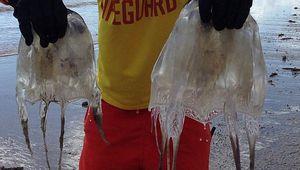
    Lifeguard Tori Demopoulos with the two lethal box jellyfish that washed up onshore at Balgal Beach. (Supplied)

    Lethal jellyfish could have killed 120
    Australian of the Year Adam Goodes. (Getty)

    Goodes has racism in his sights
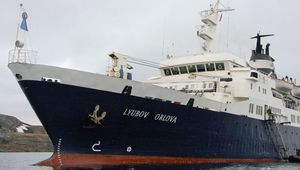
    Lyubov Orlova in Canada (Education Images/UIG via Getty Images)

    Ghost ship full of cannibal rats threatens UK
    9RAW: Deformed kitten given new life

    Crippled kitty gets new lease on life
    Marie Waxel gets a scare from Una the lioness. (WAFF-TV)

    Close encounters between reporters and animals
    Sydney Swans player Adam Goodes. (AAP)

    Goodes pushes for indigenous recognition

    The latest new car offers

    Recommended:

    Minimise

  • Why Are Arctic Bird Populations Declining?

    Biodiversity, Climate Change

    Why Are Arctic Bird Populations Declining?

    Yale Environment 360 | January 24, 2014 12:23 pm | Comments

    By Ed Struzik

    On Coats Island, in northern Hudson Bay, thick-billed murres—members of the auk family—have been under assault on several fronts in recent years. Polar bears, faced with a sharp decline in the sea ice from which they hunt ringed seals, have retreated to the island and are eating the murres’ eggs. As the sea ice disappears, the murres now have to fly farther and work harder to get food that they normally find along the ice edges. And as temperatures around Hudson Bay rise, mosquitoes are hatching earlier in the season. So many mosquitoes have swarmed on Coats Island in recent years that some of the nesting murres have perished from blood loss, according to biologist Anthony Gaston of Environment Canada, who has been studying the murre colonies on the island since 1984.

    National Bird Biodiversity Indicators from Canada show a strongly declining trend since 1974 for all waders (shorebirds; red line) compared to other bird types (North American Bird Conservation Initiative Canada, 2012).

    National Bird Biodiversity Indicators from Canada show a strongly declining trend since 1974 for all waders (shorebirds; red line) compared to other bird types. Graphic credit: Arctic Report Card 2013

    Gaston believes that the toll these changes are taking on long-lived murres and their chicks will inevitably lead to a sharp decline and ultimate collapse of the island’s 30,000 breeding pairs. “Maybe not in my lifetime, but it will happen,” says Gaston, who will retire in March. “These and other seabirds are superbly adapted to the sea ice environment. Without that ice, and with polar bears and mosquitoes hitting them hard, the only future in the Arctic for them is to move north.”

    Across the Arctic, resident birds such as the murres are experiencing increasing stresses that affect their foraging patterns and reproductive success. Researchers say that the gyrfalcon, the peregrine falcon, the willow and rock ptarmigan, the long-tailed jaeger or skua, and Ross’s and ivory gulls are in decline, as are some other birds that fly north to nest in the Arctic. In many cases, the birds’ prey—from lemmings, to snowshoe hare, to cod in the southern reaches of the Arctic Ocean—are experiencing population declines and shifts in their reproductive cycles.

    “There’s no doubt that something is happening,” says Dave Mossop, a biologist at Yukon College who has been studying birds in the Yukon for more than 40 years. “Kestrels here are declining so fast, it’s scary. As many as 60 percent of the adult peregrines we have in the Yukon haven’t even bothered nesting in recent years. Our gyrfalcons are breeding much later, seem to be producing fewer young, and are declining in abundance.”

    Scientists are working hard to understand why these cycles are changing, but many suspect that climate change is at least partially responsible. With springtime in the Arctic advancing by two or three weeks, snowshoe hares may not be losing their white coats fast enough to make them less vulnerable to predation in spring. Higher temperatures may be having an impact on vegetation that is critical for some birds, and warmer and shorter winters are resulting in snowfall and icing events that may not be conducive to lemming, vole and other rodent reproduction.

    Predators such as the peregrine, the gyrfalcon, the snowy owl and the Greenland long-tailed skua depend on peaks in these prey species to reproduce in numbers that will sustain their populations. For these birds, collapsing prey cycles are bad news. A team of Danish scientists, for example, recently documented how a collapse in collared lemming cycles at two sites in Greenland between 1998 and 2010 resulted in a 98 percent decline in the snowy owl population. They also documented a similar, albeit less drastic, decline in the population of long-tailed jaegers, part of the skua family.

    snowowl

    Snowy owls are dependent on Arctic lemmings, whose populations are highly cyclical. Thousands of young snowy owls have headed south this winter in the biggest “irruption” of the species in southern Canada and the U.S. in decades. Photo credit: Bill Bouton

    Mossop and others are convinced that this rush of protein that periodically flushes through the system during predator peaks is what drives these resident populations in the Arctic. “All Arctic creatures have to have sophisticated strategies in order to survive in this part of the world.” he says. “Exploiting those peaks, I think, is part of the strategy.”

    According to Don Reid, a scientist for the Wildlife Conservation Society in the Yukon, early and deep snow provides the insulation that is necessary for lemmings to breed and produce enough young to account for the population peaks. Because snow conditions are declining or changing in some places in the Arctic, that insulation is being compromised, Reid says. Lemmings, as a result, cannot produce enough offspring to bounce back from the lows that follow heavy predation.

    University of Alberta biologist Alastair Franke has unequivocal evidence of peregrine falcon nestlings starving to death on the west coast of Hudson Bay. But lack of food, he says, is not the main thing killing these birds. According to a recent study led by graduate student Alexandre Anctil of the University of Quebec, some regions of the Arctic are now experiencing more periods of heavy rain each summer when compared to the early 1980s. With their downy white coats insulating them against the snow and the cold, these chicks do just fine. When it rains heavily, however—as it has increasingly been doing along the west coast of Hudson Bay since 1980—up to a third of the peregrine chicks in the study area die of hypothermia as their wet feathers rapidly draw heat from their bodies. Some even drowned in their nests.

    Anctil and Franke came to this conclusion by analyzing meteorological records dating back to 1980 and by placing nest boxes on cliffsides to provide shelter for some of the chicks. With the help of remote cameras, they discovered that sheltered chicks fared better than birds that were exposed to heavy rain events. All of this counters the good news for a species that has undergone a strong recovery after nearly being driven to extinction in the 1970s.

    Acadia University biologist Mark Mallory has been watching this and other similar events unfold with concern for the fulmars, murres, black guillemots, and other year-round Arctic residents that he studies in the High Arctic. This past summer was an especially bad one for the birds Mallory studies. As happened with some regularity in the past, snow, ice, and cold conditions lingered for so long that the terns, gulls and jaegers at Nasaruvaalik Island didn’t even lay eggs. Mallory says that while the birds are adapted to deal with these occasional seasonal extremes, the overall warming trend is a real cause for concern. “What worries me is what’s happening in the southern parts of the Arctic,” says Mallory. “If we see these ecosystem changes and rain events migrating north into the High Arctic, I don’t know how these birds are going to adapt.”

    bird

    Francis St. Pierre, examines a common eider off the northern coast of Ellesmere Island. Farther south, in western Hudson Bay, some common eider colonies have been hit hard by avian cholera in recent years. Found mainly in the south, avian cholera is beginning to spread into the Arctic as temperatures warm. Photo credit: Ed Struzik

    For researchers, the problem in almost all cases is that there is a dearth of information about how Arctic birds and their prey are faring throughout the circumpolar world. The impact of climate change is often an indirect one, creating subtle mismatches between predator and prey that may be caused by changes in snow and vegetation, icing events, the arrival of an invasive species or the early melting of sea ice.

    What’s more, climate change is not be the only reason some birds like the ivory gull are in trouble. For example, Mallory and colleague Grant Gilchrist of Environment Canada once thought that receding sea ice—which makes it increasingly difficult for these birds to forage for fish and marine invertebrates—was the main reason for the 80 percent decline that they documented in Canada’s ivory gull population since the 1980s. “Receding sea ice means that, just like bears having less time to hunt seals, there’s less time for the gulls to follow bears and scavenge kills,” says Mallory.

    But now he and other scientists have evidence to suggest that high levels of mercury, which the gulls may be ingesting from foraging on seal carcasses left behind by polar bears, may also be a factor. “Mercury is something we think is a smoking gun,” he says. “But because there are so few of the birds in Canada, it’s tough to justify sampling to run experiments.”

    To get a clearer picture of what is happening in the Arctic, Mossop, Mallory and other scientists are attempting to set up international networks that can better track changes. Even with that, says Mallory, figuring out what is going on is still daunting.

    “We have a very small population and few, widely distributed sampling sites (e.g. weather stations), so our baseline data is not too great,” says Mallory. “Add to that the complex suite of threats that some of these species are facing simultaneously—climate change, contamination of food webs, alteration to migratory stopover sites and wintering habitats, competition with human fisheries for prey, industrial development in the Arctic, invasion of the Arctic by new parasites, diseases — and you can appreciate that trying to nail down a cause-and-effect explanation for what we are seeing is very tough.”

    nest

    A falcon nest in Greenland, with eggs ringed by the carcasses of dozens of lemmings. In some parts of Arctic regions, snow cover—which provides insulation that enables lemmings to raise their young—is in decline, which scientists say may be reducing the peaks of lemming cycles. That, in turn, is reducing populations of birds of prey such as snowy owls, falcons and long-tailed jaegers. Photo credit: Christine Blais-Soucy

    Mallory says three things are needed to better understand these significant shifts in Arctic bird populations: interdisciplinary and international collaboration, a commitment to long-term studies, and the financial resources to do the work properly. “The commitment to long-term studies and the funding to do them properly is floundering,” he says.

    Laval University scientist Gilles Gauthier—who has spent the last quarter century leading a team of scientists studying the fauna and flora on Bylot Island in the eastern Arctic—cautions his colleagues not to read too much into short-term trends in animal cycles. But Gauthier says that when change happens in a simple food web such as the Arctic, it can occur abruptly, whether from declines in prey abundance, the appearance of new competitors or diseases, or changes in vegetation.

    “The eastern Arctic where I work is still relatively cold compared to what is happening in Fenno-Scandinavia and Alaska and the western Arctic of Canada,” says Gauthier. “That may account for the fact that on Bylot Island we are not seeing the big changes that are occurring elsewhere. What we do know, though, is that the warming that is coming will greatly exceed anything we have seen so far. In order to understand how plants and animals can adapt to constraints brought on by rapid change, we need to better understand these linkages between different species.”

    Visit EcoWatch’s BIODIVERSITY and CLIMATE CHANGE pages for more related news on this topic.

  • Tiny plankton – major threat to climate

    A news stream provided by the Ocean Acidification International Coordination Centre (OA-ICC)

    Tiny plankton – major threat to climate

    Published 24 January 2014 Media coverage Leave a Comment

    An unprecedented rise in tiny phytoplankton could threaten the spread of larger phytoplankton species, vital for curbing global warming.

    Shown to thrive as CO2 levels rise, pico- and nanoplankton — the sea’s smallest plankton — could upset the marine food web and affect key processes involved in counteracting global warming. This is the upshot of a recent publication1 based on research carried out in May 2010 in the Arctic as part of the European Project on Ocean Acidification (EPOCA, 2008–2012), which rallied more than 160 scientists from 32 European institutions.


    Since the start of the Industrial Revolution, around 1880, oceans have absorbed approximately one third of man-made CO2 emissions, resulting in a 26% rise in their acidity levels. As CO2 is more soluble at low temperatures, the Arctic Ocean is especially prone to this ongoing trend. To investigate how acidification affects marine ecosystems in situ, an EPOCA team travelled to Kings Bay (west of Norway), to set up nine mesocosms, or giant floating plastic bags holding a range of plankton species in seawater. In seven of the 50 m3 bags, CO2 concentration was increased to reach that expected 20, 40, 60, 80, and 100 years from now, while two controls were maintained in natural conditions.

    The five-week study notably showed that at high CO2 levels, pico- and nanoplankton at the base of the marine food chain grow faster and absorb nutrients usually left for larger phytoplankton. Yet, the latter are crucial to sustain two vital climate regulation processes. First, large phytoplankton carry carbon from surface waters to the depths for storage, so their decline would cut the ocean’s carbon uptake capacity. Second, they release dimethyl sulfide (DMS) gas, known to favor the formation of clouds that block out solar radiation and reduce the greenhouse effect.

    “Acidification is the root cause of the changes observed in the Arctic, and could hinder resistance to climate change,” explains EPOCA coordinator Jean-Pierre Gattuso of the LOV.2 “The best strategy is to limit CO2 emissions, but current trends are not promising.” In the meantime, the impact of acidification could be partially offset by “locally eliminating stress factors such as pollution to boost sea organisms’ resistance to higher acidity,” he concludes.

    01. U. Riebesell et al., “Arctic ocean acidification: pelagic ecosystem and biogeochemical responses during a mesocosm study,” Biogeosciences, 2013. 10: 5619-26.
    02. Laboratoire d’océanographie de Villefranche (CNRS/ UPMC).

    CONTACT INFORMATION:
    LOV, Villefranche-sur-Mer.
    Jean-Pierre Gattuso
    gattuso(at)obs-vlfr.fr

    Fui Lee Luk, CNRS international magazine No.32, January 2014, p. 14. Article.

    Rate this:

    1 Votes

    Share this post!

    0 Responses to “Tiny plankton – major threat to climate”

    1. Leave a Comment

    Leave a Reply

    Subscribe to the RSS feed

    Powered by FeedBurner

    Follow AnneMarin on Twitter

    Blog Stats

    • 698,010 hits

    OUP book

    Tags

    abundance adaptation algae annelids Antarctic Arctic Arctic Ocean bacteria Baltic Sea biodiversity biogeochemistry biological response BRcommunity bryozoa calcification chemistry Cnidaria community community composition corals crustaceans dissolution diversity