Category: Uncategorized

  • Interplanetary Dust Particles Could Deliver Water and Organics to Jump-Start Life On Earth

    Science News

    … from universities, journals, and other research organizations

    Interplanetary Dust Particles Could Deliver Water and Organics to Jump-Start Life On Earth

    Jan. 24, 2014 — Researchers from the University of Hawaii — Manoa (UHM) School of Ocean and Earth Science and Technology (SOEST), Lawrence Livermore National Laboratory, Lawrence Berkeley National Laboratory, and University of California — Berkeley discovered that interplanetary dust particles (IDPs) could deliver water and organics to Earth and other terrestrial planets.


    Share This:

    Interplanetary dust, dust that has come from comets, asteroids, and leftover debris from the birth of the solar system, continually rains down on Earth and other Solar System bodies. These particles are bombarded by solar wind, predominately hydrogen ions. This ion bombardment knocks the atoms out of order in the silicate mineral crystal and leaves behind oxygen that is more available to react with hydrogen, for example, to create water molecules.

    “It is a thrilling possibility that this influx of dust has acted as a continuous rainfall of little reaction vessels containing both the water and organics needed for the eventual origin of life on Earth and possibly Mars,” said Hope Ishii, new Associate Researcher in the Hawaii Institute of Geophysics and Planetology (HIGP) at UHM SOEST and co-author of the study. This mechanism of delivering both water and organics simultaneously would also work for exoplanets, worlds that orbit other stars. These raw ingredients of dust and hydrogen ions from their parent star would allow the process to happen in almost any planetary system.

    Implications of this work are potentially huge: Airless bodies in space such as asteroids and the Moon, with ubiquitous silicate minerals, are constantly being exposed to solar wind irradiation that can generate water. In fact, this mechanism of water formation would help explain remotely sensed data of the Moon, which discovered OH and preliminary water, and possibly explains the source of water ice in permanently shadowed regions of the Moon.

    “Perhaps more exciting,” said Ishii, “interplanetary dust, especially dust from primitive asteroids and comets, has long been known to carry organic carbon species that survive entering the Earth’s atmosphere, and we have now demonstrated that it also carries solar-wind-generated water. So we have shown for the first time that water and organics can be delivered together.”

    It has been known since the Apollo-era, when astronauts brought back rocks and soil from the Moon, that solar wind causes the chemical makeup of the dust’s surface layer to change. Hence, the idea that solar wind irradiation might produce water-species has been around since then, but whether it actually does produce water has been debated. The reasons for the uncertainty are that the amount of water produced is small and it is localized in very thin rims on the surfaces of silicate minerals so that older analytical techniques were unable to confirm the presence of water.

    Using a state-of-the-art transmission electron microscope, the scientists have now actually detected water produced by solar-wind irradiation in the space-weathered rims on silicate minerals in interplanetary dust particles. Futher, on the bases of laboratory-irradiated minerals that have similar amorphous rims, they were able to conclude that the water forms from the interaction of solar wind hydrogen ions (H+) with oxygen in the silicate mineral grains.

    This recent work does not suggest how much water may have been delivered to Earth in this manner from IDPs.

    “In no way do we suggest that it was sufficient to form oceans, for example,” said Ishii. “However, the relevance of our work is not the origin of the Earth’s oceans but that we have shown continuous, co-delivery of water and organics intimately intermixed.”

    In future work, the scientists will attempt to estimate water abundances delivered to Earth by IDPs. Further, they will explore in more detail what other organic (carbon-based) and inorganic species are present in the water in the vesicles in interplanetary dust rims.


  • Climate scientist to US Senate: ‘Climate change is a clear and present danger’

    Climate scientist to US Senate: ‘Climate change is a clear and present danger’

    In a Senate hearing on President Obama’s Climate Action Plan, Dessler summarised the science behind the climate threat
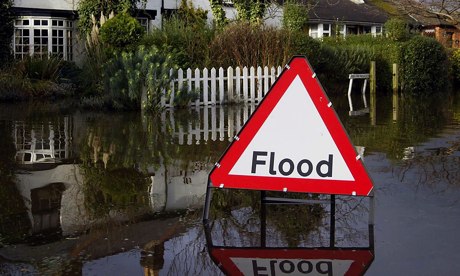
    A flood warning sign

    Andrew Dessler warned the US Senate about climate impacts like increased precipitation and floods. Photograph: Christopher Lee/Getty Images

    Last Thursday, the US Senate committee on environment & public works held a four-hour hearing to review President Obama’s Climate Action Plan. The hearing began with statements from the committee members, and then proceeded with two expert panels. The first was comprised of administrators of government agencies that are key to implementing President Obama’s Climate Action Plan, like EPA administrator Gina McCarthy. The second panel was comprised of climate science and policy experts.

    Andrew Dessler, a climate scientist from Texas A&M University, was one of the expert climate science witnesses invited to testify. In his testimony, Dessler simply and clearly articulated what we know about climate change, and why he personally views it as “a clear and present danger.” Dessler’s main points were:

    1. The climate is warming – not just the atmosphere, but also the oceans, which are rising as a result, and ice is melting.

    2. Most of the recent warming is extremely likely due to emissions of carbon dioxide and other greenhouse gases by human activities. This is supported by overwhelming evidence and hence was a conclusion of the 2014 IPCC report.

    3. Future warming could be large. Over the 21st century, if we continue with business-as-usual, the IPCC projects 2.6–4.8°C average global surface warming.

    4. The impacts of this are profound. The virtually certain impacts include increasing temperatures, more frequent extreme heat events, changes in
    the distribution of rainfall, rising seas, and the oceans becoming more acidic. There are numerous additional possible impacts as well.

    Strangely, in her testimony, Georgia Tech climate scientist Judith Curry directly contradicted Dessler’s second point, arguing that the 2014 IPCC report actually weakens scientists’ confidence in human-caused global warming. Curry’s evidence to support that assertion boiled down to arguing of a supposed ‘lack of warming since 1998’, discrepancies between models and observations during that time, a lower climate sensitivity range in the 2014 than the 2007 IPCC report, and the fact that Antarctic sea ice extent has increased.

    However, Dessler was correct that the IPCC increased its confidence in human-caused global warming between 2007 and 2014. It did so because the scientific evidence that humans are the dominant cause of global warming over the past century grew significantly stronger in recent years.

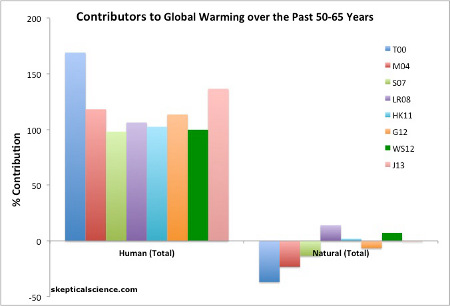
    Net human and natural percent contributions to the observed global surface warming over the past 50-65 years according to Tett et al. 2000 (T00, dark blue), Meehl et al. 2004 (M04, red), Stone et al. 2007 (S07, light green), Lean and Rind 2008 (LR08, purple), Huber and Knutti 2011 (HK11, light blue), Gillett et al. 2012 (G12, orange), Wigley and Santer 2012 (WS12, dark green), and Jones et al. 2013 (J12, pink). Net human and natural percent contributions to the observed global surface warming over the past 50-65 years according to Tett et al. 2000 (T00, dark blue), Meehl et al. 2004 (M04, red), Stone et al. 2007 (S07, light green), Lean and Rind 2008 (LR08, purple), Huber and Knutti 2011 (HK11, light blue), Gillett et al. 2012 (G12, orange), Wigley and Santer 2012 (WS12, dark green), and Jones et al. 2013 (J13, pink).

    This conclusion has also been supported by research published after the 2014 IPCC report, showing that the natural internal variability of the climate can’t account for recent global warming, and that the IPCC confidence in human-caused global warming is robust. And contrary to Curry’s second point, the observed global warming has been consistent with the projections of the range of models used in the IPCC report.

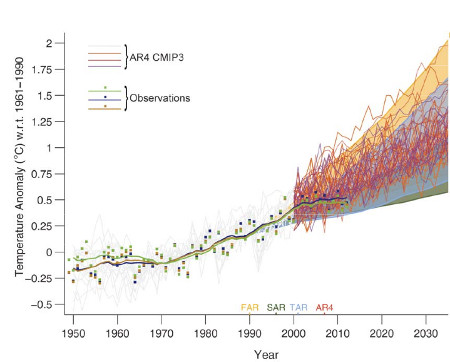
    IPCC AR5 Figure 1.4. Solid lines and squares represent measured average global surface temperature changes by NASA (blue), NOAA (yellow), and the UK Hadley Centre (green). The colored shading shows the projected range of surface warming in the IPCC First Assessment Report (FAR; yellow), Second (SAR; green), Third (TAR; blue), and Fourth (AR4; red). IPCC AR5 Figure 1.4. Solid lines and squares represent measured average global surface temperature changes by NASA (blue), NOAA (yellow), and the UK Hadley Centre (green). The colored shading shows the projected range of surface warming in the IPCC First Assessment Report (FAR; yellow), Second (SAR; green), Third (TAR; blue), and Fourth (AR4; red).

    In his testimony, Dessler also addressed the myth of the ‘lack of warming.’ In addition to being a result of cherry picking and largely an artifact of a lack of Arctic temperature station coverage, Dessler pointed to:

    “…the continued accumulation of heat in the bulk of the ocean, which is a clear marker of continued warming. And because heat can be stored in places other than at the surface, a lack of surface warming for a decade tells you almost nothing about the underlying long-term warming trends … I judge that there is virtually no merit to suggestions that the “hiatus” poses a serious challenge to the standard model [of human-caused global warming].”

    Regarding the sensitivity of the climate to the increased greenhouse effect, Dessler pointed out that the 2014 IPCC report matched the 2001, 1995, and 1990 reports, estimating an eventual global surface warming of 1.5–4.5°C in response to a doubling of atmospheric carbon dioxide. Only the 2007 IPCC report slightly changed the estimated range to 2–4.5°C. Additionally, recent research has suggested that the true climate sensitivity lies on the high end of that range.

    Regarding Antarctic sea ice, it’s a complex issue, influenced by factors like ozone depletion and recovery and associated changes in wind patterns. However, the rapid loss of Arctic sea ice has been much larger than the small increase in Antarctic sea ice. Moreover, the Southern Ocean around Antarctica has warmed. Thus changes in Antarctic sea ice tell us very little about global warming.

    Overall, Dessler was correct that the evidence for human-caused global warming is now stronger than ever. His testimony presented a compelling case for the threat of human-caused global warming, which he considers “a clear and present danger.” Dessler and Curry agreed on one key point: that our actions can’t alter the path of climate change over the next several decades (though Curry sounded like the Borg, calling emissions reductions efforts “futile”). It’s true that we’re locked in for significant additional global warming from the greenhouse gases we’ve already emitted.

    However, Dessler pointed out that our actions today will determine whether we proceed on a dangerous path of continued rapid climate change over the second half of the 21st century, or stabilise global temperatures and minimize the threat posed by climate change. Dessler concluded:

    “The scientific community has been working on understanding the climate system for nearly 200 years. In that time, a robust understanding of it has emerged. We know the climate is warming. We know that humans are now in the driver’s seat of the climate system. We know that, over the next century, if nothing is done to rein in emissions, temperatures will likely increase enough to profoundly change the planet. I wish this weren’t true, but it is what the science tells us.

  • I’ve never seen a turnaround like this

    Why this ad?
    Community Service Courseswww.seeklearning.com.au/Community – Get TAFE Qualified. Online Community Services Courses.

    I’ve never seen a turnaround like this

    Inbox
    x
    Sara Haghdoosti noreply@list.moveon.org
    4:26 AM (5 hours ago)

    to me
    Dear Neville,

    A few weeks ago we were looking at the prospect of Senator Menendez’s sanctions bill getting a veto-proof majority in the Senate and torpedoing the President’s negotiations with Iran.

    Then things changed—check out the headlines from the last two weeks:

    Previous Iran Sanctions Cosponsor won’t back new sanctions now
    National Journal, January 16

    Support for new Iran sanctions wanes
    —MSNBC. January 17Another blow to the Iran sanctions bill 
    –Washington Post, January 22

    How did this turnaround happen? One Senate staffer said: “more voters contacting the Hill with phone calls and emails, voicing opposition to the bill*.”

    In other words, we made this happen. Over the last few weeks since this legislation was announced, over 150,000 people have taken action, we’ve made over 10,000 phone calls and had petition deliveries all across the country.

    What we’re doing is working and that’s exactly why we can’t let up now. What we’ve achieved over the last few weeks is proof that not only can we fight back against war—we can help create the space for politicians to become champions for diplomacy.

    Now is the time for us to turn supporters into champions and the undecided into supporters. That’s why over the next few weeks I’ll be in touch over things you can do in your local area.

    Today—I just wanted to say congratulations, I’ve never seen a political turnaround like this. We may not have money or fancy lobbyists—but what we have is each other. The power we have when we stand alongside each other is truly inspiring.

    Yours, with hope.
    –Sara Haghdoosti, on behalf of Berim.org

    P.S. The interim deal with Iran went into effect last week. Click here to check out the full graphic and share it with your friends and family so we can get more people informed, excited and bring them into our movement.

  • Europe delivers “toothless” set of 2030 climate and green energy targets

    Europe delivers “toothless” set of 2030 climate and green energy targets

    Thursday 23 January 2014 12:05

    European decision-makers have been accused of weakness after delivering a watered-down set of targets on climate change and renewable energy.

    Today’s European Commission announcement revealed plans to reduce greenhouse gas (GHG) emissions by 40% below the 1990 level, an EU-wide binding target for renewable energy of at least 27% and renewed ambitions for energy efficiency policies.

    But the WWF said it was disappointed by the weak set of policies and claims the Commission appears to be putting the brakes on modernising Europe’s energy system by suggesting a greenhouse gas emissions target out of line with climate science, as well as a low renewable energy target which places no legal requirements on member states.

    Jason Anderson, Head of Climate and Energy, WWF European Policy Office, said: “After months of anticipation, the Commission has repackaged a slowdown in the current pace of emissions cuts and renewable energy deployment, and called it ambitious. It is putting Europe’s economic modernisation at risk.

    “The picture painted by the full set of policy proposals is dispiriting – an energy efficiency target has been deferred; cancelling the massive oversupply of carbon in the Emissions Trading Scheme is also deferred; closing the gaps in EU shale gas legislation is deferred. I’m sure the fossil fuel lobbyists will sleep well tonight.

    “It is now up to Member State governments to show the political leadership needed to inspire Europe towards an industrial and economic revolution that will provide for both people and the planet.”

    And Greenpeace UK Executive Director John Sauven shared the sense of disappointment, adding: “After months of bickering and in-fighting the European Commission has produced a set of proposals that will satisfy almost no-one.

    “They will do little to tackle climate change and in their current form give little certainty to Europe’s once thriving but now fragile clean tech sector. They would also leave European consumers hopelessly exposed to rising fossil fuel prices, which is what drove up energy bills in the first place.

    “The commission has set out its broken stall – it’s now up to Europe’s elected leaders to fix it. They must agree to cut greenhouse gases by at least 55% by 2030 if they wish to play a meaningful role in a new global climate deal and help reduce the devastating impacts of extreme weather.

    “They must also put in place a renewables policy that will give genuine confidence to those wishing to invest in Europe. Anything less will see Europe fall further and further behind the US and China in the global race for clean energy markets.

    “This toothless policy, which involves no legal obligation on member states, has the fingerprints of a UK government in hock to the Big Six energy giants written all over it. David Cameron now has a clear choice ahead of him.

    “He can go to Brussels and fight for British interests – which means supporting a genuinely binding renewables target that works for our world-class clean energy sector – or he can sacrifice the stability of the climate and the future of British industries in an attempt to buy off his party’s anti-green clique.

    “Building a UK’s clean energy system will also be cheaper for consumers if we do it with our European partners. Grid interconnections, expanded markets and economies of scale will all help drive down the costs of renewable energy – whilst isolating our energy system from that of our nearest neighbours will pile more costs on UK tax-payers and bill payers.”

    The European Commission claims today’s set of proposals for the 2030 framework will ensure regulatory certainty for investors and a coordinated approach among Member States, leading to the development of new technologies.

    The framework aims to drive continued progress towards a low-carbon economy and a competitive and secure energy system that ensures affordable energy for all consumers, increases the security of the EU’s energy supplies, reduces dependence on energy imports and creates new opportunities for growth and jobs.

    The Communication setting out the 2030 framework will be debated at the highest level, in particular in the European Council and European Parliament. It is accompanied by a legislative proposal for a market stability reserve for the EU emissions trading system (EU ETS) starting in 2021, to improve its robustness.

    A report on energy prices and costs in Europe, published alongside the Communication, suggests that the rising energy prices can be partly mitigated by ensuring cost effective energy and climate policies, competitive energy markets and improved energy efficiency.

    European Commission President José Manuel Barroso said: “Climate action is central for the future of our planet, while a truly European energy policy is key for our competitiveness. Today’s package proves that tackling the two issues simultaneously is not contradictory, but mutually reinforcing.

    “It is in the EU’s interest to build a job-rich economy that is less dependent on imported energy through increased efficiency and greater reliance on domestically produced clean energy. An ambitious 40% greenhouse reduction target for 2030 is the most cost-effective milestone in our path towards a low-carbon economy.

    “And the renewables target of at least 27% is an important signal: to give stability to investors, boost green jobs and support our security of supply.”

    Energy Commissioner Günther Oettinger added: “The 2030 framework is the EU’s drive for progress towards a competitive low-carbon economy, investment stability and security of energy supply. My aim is to make sure that energy remains affordable for households and companies.

    “The 2030 framework sets a high level of ambition for action against climate change, but it also recognises that this needs to be achieved at least cost. The internal energy market provides the basis to achieve this goal and I will continue to work on its completion in order to use its full potential. This includes the ‘Europeanisation’ of renewable energy policies”.

    Connie Hedegaard, Commissioner for Climate Action, commented: “In spite of all those arguing that nothing ambitious would come out of the Commission today, we did it. A 40% emissions reduction is the most cost-effective target for the EU and it takes account of our global responsibility. And of course Europe must continue its strong focus on renewables. That is why it matters that the Commission is proposing today a binding EU-level target.

    “The details of the framework will now have to be agreed, but the direction for Europe has been set. If all other regions were equally ambitious about tackling climate change, the world would be in significantly better shape.”

    The key elements of the 2030 policy framework set out by the Commission are as follows:

    * A binding greenhouse gas reduction target: A centre piece of the EU’s energy and climate policy for 2030, the target of a 40% emissions reduction below the 1990 level would be met through domestic measures alone. The annual reduction in the ‘cap’ on emissions from EU ETS sectors would be increased from 1.74% now to 2.2% after 2020. Emissions from sectors outside the EU ETS would need to be cut by 30% below the 2005 level, and this effort would be shared equitably between the Member States. The Commission invites the Council and the European Parliament to agree by the end of 2014 that the EU should pledge the 40% reduction in early 2015 as part of the international negotiations on a new global climate agreement due to be concluded in Paris at the end of 2015.

    * An EU-wide binding renewable energy target: Renewable energy will play a key role in the transition towards a competitive, secure and sustainable energy system. Driven by a more market-oriented approach with enabling conditions for emerging technologies, an EU-wide binding target for renewable energy of at least 27% in 2030 comes with significant benefits in terms of energy trade balances, reliance on indigenous energy sources, jobs and growth. An EU-level target for renewable energy is necessary to drive continued investment in the sector. However, it would not be translated into national targets through EU legislation, thus leaving flexibility for Member States to transform the energy system in a way that is adapted to national preferences and circumstances. Attainment of the EU renewables target would be ensured by the new governance system based on national energy plans.

    * Energy efficiency: Improved energy efficiency will contribute to all objectives of EU energy policy and no transition towards a competitive, secure and sustainable energy system is possible without it. The role of energy efficiency in the 2030 framework will be further considered in a review of the Energy Efficiency Directive due to be concluded later this year. The Commission will consider the potential need for amendments to the directive once the review has been completed. Member States’ national energy plans will also have to cover energy efficiency.

    * Reform of EU ETS: The Commission proposes to establish a market stability reserve at the beginning of the next ETS trading period in 2021. The reserve would both address the surplus of emission allowances that has built up in recent years and improve the system’s resilience to major shocks by automatically adjusting the supply of allowances to be auctioned. The creation of such a reserve – in addition to the recently agreed delay in the auctioning of 900 million allowances until 2019-2020 (‘back-loading’) – is supported by a broad spectrum of stakeholders. Under the legislation, proposed today, the reserve would operate entirely according to pre-defined rules which would leave no discretion to the Commission or Member States in its implementation.

    * Competitive, affordable and secure energy: The Commission proposes a set of key indicators to assess progress over time and to provide a factual base for potential policy response. These indicators relate to, for example, energy price differentials with major trading partners, supply diversification and reliance on indigenous energy sources, as well as the interconnection capacity between Member States. Through these indicators, policies will ensure a competitive and secure energy system in a 2030 perspective that will continue to build on market integration, supply diversification, enhanced competition, development of indigenous energy sources, as well as support to research, development and innovation.

    * New governance system: The 2030 framework proposes a new governance framework based on national plans for competitive, secure and sustainable energy. Based on upcoming guidance by the Commission, these plans will be prepared by the Member States under a common approach, which will ensure stronger investor certainty and greater transparency, and will enhance coherence, EU coordination and surveillance. An iterative process between the Commission and Member States will ensure the plans are sufficiently ambitious, as well as their consistency and compliance over time.

    The Communication setting out the 2030 framework is accompanied by a Report on energy prices and costs, which assesses the key drivers and compares EU prices with those of its main trading partners.

    Energy prices have risen in nearly every Member State since 2008 – mainly because of taxes and levies, but also due to higher network costs. The comparison with international partners highlights rising price differentials, notably with US gas prices – which could undermine Europe’s competitiveness, particularly for energy intensive industries.

    Nevertheless, rising energy prices can be partly offset by cost effective energy and climate policies, competitive energy markets and improved energy efficiency measures, such as using more energy-efficient products. European industry’s energy efficiency efforts may need to go even further, bearing in mind physical limits, as competitors do the same and European industry decides to invest abroad to be closer to expanding markets. These findings inform the 2030 framework.European decision-makers have been accused of weakness after delivering a watered-down set of targets on climate change and renewable energy.


    Today’s European Commission announcement revealed plans to reduce greenhouse gas (GHG) emissions by 40% below the 1990 level, an EU-wide binding target for renewable energy of at least 27% and renewed ambitions for energy efficiency policies.


    But the WWF said it was disappointed by the weak set of policies and claims the Commission appears to be putting the brakes on modernising Europe’s energy system by suggesting a greenhouse gas emissions target out of line with climate science, as well as a low renewable energy target which places no legal requirements on member states.


    Jason Anderson, Head of Climate and Energy, WWF European Policy Office, said: “After months of anticipation, the Commission has repackaged a slowdown in the current pace of emissions cuts and renewable energy deployment, and called it ambitious. It is putting Europe’s economic modernisation at risk.


    “The picture painted by the full set of policy proposals is dispiriting – an energy efficiency target has been deferred; cancelling the massive oversupply of carbon in the Emissions Trading Scheme is also deferred; closing the gaps in EU shale gas legislation is deferred. I’m sure the fossil fuel lobbyists will sleep well tonight.


    “It is now up to Member State governments to show the political leadership needed to inspire Europe towards an industrial and economic revolution that will provide for both people and the planet.”


    And Greenpeace UK Executive Director John Sauven shared the sense of disappointment, adding: “After months of bickering and in-fighting the European Commission has produced a set of proposals that will satisfy almost no-one.
    “They will do little to tackle climate change and in their current form give little certainty to Europe’s once thriving but now fragile clean tech sector. They would also leave European consumers hopelessly exposed to rising fossil fuel prices, which is what drove up energy bills in the first place.


    “The commission has set out its broken stall – it’s now up to Europe’s elected leaders to fix it. They must agree to cut greenhouse gases by at least 55% by 2030 if they wish to play a meaningful role in a new global climate deal and help reduce the devastating impacts of extreme weather.


    “They must also put in place a renewables policy that will give genuine confidence to those wishing to invest in Europe. Anything less will see Europe fall further and further behind the US and China in the global race for clean energy markets.


    “This toothless policy, which involves no legal obligation on member states, has the fingerprints of a UK government in hock to the Big Six energy giants written all over it. David Cameron now has a clear choice ahead of him.
    “He can go to Brussels and fight for British interests – which means supporting a genuinely binding renewables target that works for our world-class clean energy sector – or he can sacrifice the stability of the climate and the future of British industries in an attempt to buy off his party’s anti-green clique.


    “Building a UK’s clean energy system will also be cheaper for consumers if we do it with our European partners. Grid interconnections, expanded markets and economies of scale will all help drive down the costs of renewable energy – whilst isolating our energy system from that of our nearest neighbours will pile more costs on UK tax-payers and bill payers.”


    The European Commission claims today’s set of proposals for the 2030 framework will ensure regulatory certainty for investors and a coordinated approach among Member States, leading to the development of new technologies.


    The framework aims to drive continued progress towards a low-carbon economy and a competitive and secure energy system that ensures affordable energy for all consumers, increases the security of the EU’s energy supplies, reduces dependence on energy imports and creates new opportunities for growth and jobs.


    The Communication setting out the 2030 framework will be debated at the highest level, in particular in the European Council and European Parliament. It is accompanied by a legislative proposal for a market stability reserve for the EU emissions trading system (EU ETS) starting in 2021, to improve its robustness.


    A report on energy prices and costs in Europe, published alongside the Communication, suggests that the rising energy prices can be partly mitigated by ensuring cost effective energy and climate policies, competitive energy markets and improved energy efficiency.


    European Commission President José Manuel Barroso said: “Climate action is central for the future of our planet, while a truly European energy policy is key for our competitiveness. Today’s package proves that tackling the two issues simultaneously is not contradictory, but mutually reinforcing.


    “It is in the EU’s interest to build a job-rich economy that is less dependent on imported energy through increased efficiency and greater reliance on domestically produced clean energy. An ambitious 40% greenhouse reduction target for 2030 is the most cost-effective milestone in our path towards a low-carbon economy.


    “And the renewables target of at least 27% is an important signal: to give stability to investors, boost green jobs and support our security of supply.”


    Energy Commissioner Günther Oettinger added: “The 2030 framework is the EU’s drive for progress towards a competitive low-carbon economy, investment stability and security of energy supply. My aim is to make sure that energy remains affordable for households and companies.
    “The 2030 framework sets a high level of ambition for action against climate change, but it also recognises that this needs to be achieved at least cost. The internal energy market provides the basis to achieve this goal and I will continue to work on its completion in order to use its full potential. This includes the ‘Europeanisation’ of renewable energy policies”.


    Connie Hedegaard, Commissioner for Climate Action, commented: “In spite of all those arguing that nothing ambitious would come out of the Commission today, we did it. A 40% emissions reduction is the most cost-effective target for the EU and it takes account of our global responsibility. And of course Europe must continue its strong focus on renewables. That is why it matters that the Commission is proposing today a binding EU-level target.


    “The details of the framework will now have to be agreed, but the direction for Europe has been set. If all other regions were equally ambitious about tackling climate change, the world would be in significantly better shape.”


    The key elements of the 2030 policy framework set out by the Commission are as follows:


    * A binding greenhouse gas reduction target: A centre piece of the EU’s energy and climate policy for 2030, the target of a 40% emissions reduction below the 1990 level would be met through domestic measures alone. The annual reduction in the ‘cap’ on emissions from EU ETS sectors would be increased from 1.74% now to 2.2% after 2020. Emissions from sectors outside the EU ETS would need to be cut by 30% below the 2005 level, and this effort would be shared equitably between the Member States. The Commission invites the Council and the European Parliament to agree by the end of 2014 that the EU should pledge the 40% reduction in early 2015 as part of the international negotiations on a new global climate agreement due to be concluded in Paris at the end of 2015.


    * An EU-wide binding renewable energy target: Renewable energy will play a key role in the transition towards a competitive, secure and sustainable energy system. Driven by a more market-oriented approach with enabling conditions for emerging technologies, an EU-wide binding target for renewable energy of at least 27% in 2030 comes with significant benefits in terms of energy trade balances, reliance on indigenous energy sources, jobs and growth. An EU-level target for renewable energy is necessary to drive continued investment in the sector. However, it would not be translated into national targets through EU legislation, thus leaving flexibility for Member States to transform the energy system in a way that is adapted to national preferences and circumstances. Attainment of the EU renewables target would be ensured by the new governance system based on national energy plans.


    * Energy efficiency: Improved energy efficiency will contribute to all objectives of EU energy policy and no transition towards a competitive, secure and sustainable energy system is possible without it. The role of energy efficiency in the 2030 framework will be further considered in a review of the Energy Efficiency Directive due to be concluded later this year. The Commission will consider the potential need for amendments to the directive once the review has been completed. Member States’ national energy plans will also have to cover energy efficiency.


    * Reform of EU ETS: The Commission proposes to establish a market stability reserve at the beginning of the next ETS trading period in 2021. The reserve would both address the surplus of emission allowances that has built up in recent years and improve the system’s resilience to major shocks by automatically adjusting the supply of allowances to be auctioned. The creation of such a reserve – in addition to the recently agreed delay in the auctioning of 900 million allowances until 2019-2020 (‘back-loading’) – is supported by a broad spectrum of stakeholders. Under the legislation, proposed today, the reserve would operate entirely according to pre-defined rules which would leave no discretion to the Commission or Member States in its implementation.


    * Competitive, affordable and secure energy: The Commission proposes a set of key indicators to assess progress over time and to provide a factual base for potential policy response. These indicators relate to, for example, energy price differentials with major trading partners, supply diversification and reliance on indigenous energy sources, as well as the interconnection capacity between Member States. Through these indicators, policies will ensure a competitive and secure energy system in a 2030 perspective that will continue to build on market integration, supply diversification, enhanced competition, development of indigenous energy sources, as well as support to research, development and innovation.


    * New governance system: The 2030 framework proposes a new governance framework based on national plans for competitive, secure and sustainable energy. Based on upcoming guidance by the Commission, these plans will be prepared by the Member States under a common approach, which will ensure stronger investor certainty and greater transparency, and will enhance coherence, EU coordination and surveillance. An iterative process between the Commission and Member States will ensure the plans are sufficiently ambitious, as well as their consistency and compliance over time.


    The Communication setting out the 2030 framework is accompanied by a Report on energy prices and costs, which assesses the key drivers and compares EU prices with those of its main trading partners.


    Energy prices have risen in nearly every Member State since 2008 – mainly because of taxes and levies, but also due to higher network costs. The comparison with international partners highlights rising price differentials, notably with US gas prices – which could undermine Europe’s competitiveness, particularly for energy intensive industries.


    Nevertheless, rising energy prices can be partly offset by cost effective energy and climate policies, competitive energy markets and improved energy efficiency measures, such as using more energy-efficient products. European industry’s energy efficiency efforts may need to go even further, bearing in mind physical limits, as competitors do the same and European industry decides to invest abroad to be closer to expanding markets. These findings inform the 2030 framework.


    email
    Get involved and join the twitter conversation
    nextgen
    Ebec

    European decision-makers have been accused of weakness after delivering a watered-down set of targets on climate change and renewable energy.


    Today’s European Commission announcement revealed plans to reduce greenhouse gas (GHG) emissions by 40% below the 1990 level, an EU-wide binding target for renewable energy of at least 27% and renewed ambitions for energy efficiency policies.


    But the WWF said it was disappointed by the weak set of policies and claims the Commission appears to be putting the brakes on modernising Europe’s energy system by suggesting a greenhouse gas emissions target out of line with climate science, as well as a low renewable energy target which places no legal requirements on member states.


    Jason Anderson, Head of Climate and Energy, WWF European Policy Office, said: “After months of anticipation, the Commission has repackaged a slowdown in the current pace of emissions cuts and renewable energy deployment, and called it ambitious. It is putting Europe’s economic modernisation at risk.


    “The picture painted by the full set of policy proposals is dispiriting – an energy efficiency target has been deferred; cancelling the massive oversupply of carbon in the Emissions Trading Scheme is also deferred; closing the gaps in EU shale gas legislation is deferred. I’m sure the fossil fuel lobbyists will sleep well tonight.


    “It is now up to Member State governments to show the political leadership needed to inspire Europe towards an industrial and economic revolution that will provide for both people and the planet.”


    And Greenpeace UK Executive Director John Sauven shared the sense of disappointment, adding: “After months of bickering and in-fighting the European Commission has produced a set of proposals that will satisfy almost no-one.
    “They will do little to tackle climate change and in their current form give little certainty to Europe’s once thriving but now fragile clean tech sector. They would also leave European consumers hopelessly exposed to rising fossil fuel prices, which is what drove up energy bills in the first place.


    “The commission has set out its broken stall – it’s now up to Europe’s elected leaders to fix it. They must agree to cut greenhouse gases by at least 55% by 2030 if they wish to play a meaningful role in a new global climate deal and help reduce the devastating impacts of extreme weather.


    “They must also put in place a renewables policy that will give genuine confidence to those wishing to invest in Europe. Anything less will see Europe fall further and further behind the US and China in the global race for clean energy markets.


    “This toothless policy, which involves no legal obligation on member states, has the fingerprints of a UK government in hock to the Big Six energy giants written all over it. David Cameron now has a clear choice ahead of him.
    “He can go to Brussels and fight for British interests – which means supporting a genuinely binding renewables target that works for our world-class clean energy sector – or he can sacrifice the stability of the climate and the future of British industries in an attempt to buy off his party’s anti-green clique.


    “Building a UK’s clean energy system will also be cheaper for consumers if we do it with our European partners. Grid interconnections, expanded markets and economies of scale will all help drive down the costs of renewable energy – whilst isolating our energy system from that of our nearest neighbours will pile more costs on UK tax-payers and bill payers.”


    The European Commission claims today’s set of proposals for the 2030 framework will ensure regulatory certainty for investors and a coordinated approach among Member States, leading to the development of new technologies.


    The framework aims to drive continued progress towards a low-carbon economy and a competitive and secure energy system that ensures affordable energy for all consumers, increases the security of the EU’s energy supplies, reduces dependence on energy imports and creates new opportunities for growth and jobs.


    The Communication setting out the 2030 framework will be debated at the highest level, in particular in the European Council and European Parliament. It is accompanied by a legislative proposal for a market stability reserve for the EU emissions trading system (EU ETS) starting in 2021, to improve its robustness.


    A report on energy prices and costs in Europe, published alongside the Communication, suggests that the rising energy prices can be partly mitigated by ensuring cost effective energy and climate policies, competitive energy markets and improved energy efficiency.


    European Commission President José Manuel Barroso said: “Climate action is central for the future of our planet, while a truly European energy policy is key for our competitiveness. Today’s package proves that tackling the two issues simultaneously is not contradictory, but mutually reinforcing.


    “It is in the EU’s interest to build a job-rich economy that is less dependent on imported energy through increased efficiency and greater reliance on domestically produced clean energy. An ambitious 40% greenhouse reduction target for 2030 is the most cost-effective milestone in our path towards a low-carbon economy.


    “And the renewables target of at least 27% is an important signal: to give stability to investors, boost green jobs and support our security of supply.”


    Energy Commissioner Günther Oettinger added: “The 2030 framework is the EU’s drive for progress towards a competitive low-carbon economy, investment stability and security of energy supply. My aim is to make sure that energy remains affordable for households and companies.
    “The 2030 framework sets a high level of ambition for action against climate change, but it also recognises that this needs to be achieved at least cost. The internal energy market provides the basis to achieve this goal and I will continue to work on its completion in order to use its full potential. This includes the ‘Europeanisation’ of renewable energy policies”.


    Connie Hedegaard, Commissioner for Climate Action, commented: “In spite of all those arguing that nothing ambitious would come out of the Commission today, we did it. A 40% emissions reduction is the most cost-effective target for the EU and it takes account of our global responsibility. And of course Europe must continue its strong focus on renewables. That is why it matters that the Commission is proposing today a binding EU-level target.


    “The details of the framework will now have to be agreed, but the direction for Europe has been set. If all other regions were equally ambitious about tackling climate change, the world would be in significantly better shape.”


    The key elements of the 2030 policy framework set out by the Commission are as follows:


    * A binding greenhouse gas reduction target: A centre piece of the EU’s energy and climate policy for 2030, the target of a 40% emissions reduction below the 1990 level would be met through domestic measures alone. The annual reduction in the ‘cap’ on emissions from EU ETS sectors would be increased from 1.74% now to 2.2% after 2020. Emissions from sectors outside the EU ETS would need to be cut by 30% below the 2005 level, and this effort would be shared equitably between the Member States. The Commission invites the Council and the European Parliament to agree by the end of 2014 that the EU should pledge the 40% reduction in early 2015 as part of the international negotiations on a new global climate agreement due to be concluded in Paris at the end of 2015.


    * An EU-wide binding renewable energy target: Renewable energy will play a key role in the transition towards a competitive, secure and sustainable energy system. Driven by a more market-oriented approach with enabling conditions for emerging technologies, an EU-wide binding target for renewable energy of at least 27% in 2030 comes with significant benefits in terms of energy trade balances, reliance on indigenous energy sources, jobs and growth. An EU-level target for renewable energy is necessary to drive continued investment in the sector. However, it would not be translated into national targets through EU legislation, thus leaving flexibility for Member States to transform the energy system in a way that is adapted to national preferences and circumstances. Attainment of the EU renewables target would be ensured by the new governance system based on national energy plans.


    * Energy efficiency: Improved energy efficiency will contribute to all objectives of EU energy policy and no transition towards a competitive, secure and sustainable energy system is possible without it. The role of energy efficiency in the 2030 framework will be further considered in a review of the Energy Efficiency Directive due to be concluded later this year. The Commission will consider the potential need for amendments to the directive once the review has been completed. Member States’ national energy plans will also have to cover energy efficiency.


    * Reform of EU ETS: The Commission proposes to establish a market stability reserve at the beginning of the next ETS trading period in 2021. The reserve would both address the surplus of emission allowances that has built up in recent years and improve the system’s resilience to major shocks by automatically adjusting the supply of allowances to be auctioned. The creation of such a reserve – in addition to the recently agreed delay in the auctioning of 900 million allowances until 2019-2020 (‘back-loading’) – is supported by a broad spectrum of stakeholders. Under the legislation, proposed today, the reserve would operate entirely according to pre-defined rules which would leave no discretion to the Commission or Member States in its implementation.


    * Competitive, affordable and secure energy: The Commission proposes a set of key indicators to assess progress over time and to provide a factual base for potential policy response. These indicators relate to, for example, energy price differentials with major trading partners, supply diversification and reliance on indigenous energy sources, as well as the interconnection capacity between Member States. Through these indicators, policies will ensure a competitive and secure energy system in a 2030 perspective that will continue to build on market integration, supply diversification, enhanced competition, development of indigenous energy sources, as well as support to research, development and innovation.


    * New governance system: The 2030 framework proposes a new governance framework based on national plans for competitive, secure and sustainable energy. Based on upcoming guidance by the Commission, these plans will be prepared by the Member States under a common approach, which will ensure stronger investor certainty and greater transparency, and will enhance coherence, EU coordination and surveillance. An iterative process between the Commission and Member States will ensure the plans are sufficiently ambitious, as well as their consistency and compliance over time.


    The Communication setting out the 2030 framework is accompanied by a Report on energy prices and costs, which assesses the key drivers and compares EU prices with those of its main trading partners.


    Energy prices have risen in nearly every Member State since 2008 – mainly because of taxes and levies, but also due to higher network costs. The comparison with international partners highlights rising price differentials, notably with US gas prices – which could undermine Europe’s competitiveness, particularly for energy intensive industries.


    Nevertheless, rising energy prices can be partly offset by cost effective energy and climate policies, competitive energy markets and improved energy efficiency measures, such as using more energy-efficient products. European industry’s energy efficiency efforts may need to go even further, bearing in mind physical limits, as competitors do the same and European industry decides to invest abroad to be closer to expanding markets. These findings inform the 2030 framework.


  • Rock’s power to mop up carbon revisited

    Rock’s power to mop up carbon revisited

    Experts push for more research into olivine weathering.

    21 January 2014

    Article tools

    Siim Sepp/Alamy

    Estimates suggest that olivine could be used to sequester a significant proportion of carbon emissions.

    Last week, a group of geoengineers met in Hamburg to discuss what on the face of it sounds like a very attractive idea: to soak up anthropogenic carbon emissions using only rocks and water. In particular, they want to help to mitigate climate change by crushing rocks and dropping them into the sea or spreading them on land. The meeting was hailed a success, but the idea is still far from fruition.

    The ‘weathering’, or breaking down, of rocks is a hugely important but very slow part of the carbon cycle. Natural weathering locks up atmospheric carbon dioxide by means of chemical reactions between common silicate minerals and air. For example, when magnesium-rich olivine, a rock of particular interest to geoengineers, is brought together with CO2 and water under natural conditions, the resulting reaction forms magnesium carbonate and silicic acid, thereby removing and storing carbon.

    But some scientists think that this natural process could be exploited to offset at least some of the carbon emitted by human activities. Rather than waiting for rocks to be slowly weathered away, olivine could be mined on an industrial scale, ground up, and spread over land or in the sea, speeding up these chemical reactions and sucking vast quantities of CO2 out of the atmosphere. But this presents practical problems: according to one estimate, you would need to spread 5 gigatonnes of olivine on beaches annually to offset 30% of global CO2 emissions (assuming 1990 levels of emissions; S. J. T. Hangx & C. J. Spiers Int. J. Greenhouse Gas Contr. 3, 757–767; 2009).

    At the informal meeting, about 20 enhanced-weathering experts discussed recent research in the area and tried to summarize and coordinate future work, for example by agreeing to standardize experiments. Until now, there has been no organized research agenda for the fledgling field, says meeting convener Jens Hartmann, who works on geological cycles and carbon sequestration at the University of Hamburg in Germany. “It was very positive; we know we are now a community,” he says.

    Hartmann points out that humans have been exploiting rock weathering for decades — for example, by spreading minerals such as olivine, pyroxenes and serpentines as fertilizers. “The question is, can we optimize it and can we do it in areas we are not doing it?” he says.

    As with its use as a fertilizer, olivine would have to be finely crushed to maximize its exposure to carbon. Olaf Schuiling, a geochemist at Utrecht University in the Netherlands and a passionate advocate of enhanced weathering, proposes spreading coarse olivine grains on beaches that experience heavy seas. “There the grains are tumbling around in the surf and the waves, they collide, they abrade each other, and produce very rapidly a lot of tiny olivine slivers that weather quickly,” he says.

    However, there is little evidence for the practical rates of weathering that could be expected if large amounts of olivine or other rocks were mined and spread on fields or dumped into the sea. This, in turn, means it is not clear how much would be needed to significantly mitigate carbon emissions, how long it would take to work or whether it would be cost and energy efficient.

    In theory, one kilogram of olivine sequesters about one kilogram of CO2, but the rate at which this happens can be slow. And the actual efficiency of sequestration will be much lower than 100%, because of the energy used — and emissions released — in grinding and transporting the rock. In some cases, this could emit more carbon than would be sequestered.

    “We have good and very promising results, but there are still a lot of unknowns.”

    Francesc Montserrat, a marine benthic ecologist at the Royal Netherlands Institute for Sea Research in Yerseke, is trying to pin down the figures. He is using small tanks to measure the weathering of olivine in various conditions — including the impact of worms that live in and eat the sandy sediment. Montserrat’s experiments will test the idea that when these worms eat tiny grains of olivine they also help to break down the crust that can form on olivine’s surface, which slows down the weathering effect.

    “You need to have some hard numbers to go to the authorities to say whether it will be safe enough to try it out,” he says. “We have good and very promising results, but there are still a lot of unknowns.”

    Even advocates of this method of geo­engineering admit that large-scale enhanced weathering is not without risk. Olivine can contain toxic heavy metals such as nickel that could accumulate in the environment. Grinding rocks would produce dust, which might harm human health. And putting olivine into the sea could change the pH of the water, helping to combat ocean acidification driven by climate change but also potentially harming marine organisms by altering their environment.

    Phil Renforth studies carbon sequestration and minerals at the University of Oxford, UK, and attended the Hamburg meeting. He says that there is a pressing need to conduct more work on enhanced weathering given that carbon emissions are likely to continue to rise, and because of the current focus on dealing with emissions by capturing them from power stations and storing them underground.

    “We’re putting all our eggs in one basket if we’re only looking at one method,” he says. There’s a real need to diversify the portfolio.”

    Nature
    505,
    464
    (23 January 2014)
    doi:10.1038/505464a
  • Polar drilling problems revealed

    Nature | News

    Sharing

    Polar drilling problems revealed

    Report into failings of expedition to explore Antarctic lake finds equipment to blame — but complications can be fixed.

    21 January 2014

    Article tools

    Pete Bucktrout/BAS

    A 2012 attempt to drill through a 3-kilometre-thick Antarctic ice sheet faced technical difficulties.

    Christmas Day 2012 was a very bad day for glaciologist Martin Siegert and his team of Antarctic researchers. After weeks of equipment failures, Siegert was forced to halt an ambitious attempt to drill into a lake deep beneath the West Antarctic Ice Sheet. “The decision was difficult to make but easy enough to call,” he noted in his field diary. Exhausted and disappointed, the team packed up.

    But it has not given up. Over the past year, researchers, engineers and officials involved in the US$12-million drilling project, funded by the UK Natural Environment Research Council, have carried out and responded to several internal reviews into the reasons for its failure. And now, in a paper under review by the Annals of Glaciology, Siegert, who is based at the University of Bristol, UK, and his colleagues have summarized the problems that they suffered at Lake Ellsworth and laid out options for putting them right. They think that several years of engineering work will be required to develop improved technology for a more reliable drill, but they say that success is achievable.

    “I am glad to see that they plan to publish their drilling efforts,” says John Priscu, a glaciologist at Montana State University in Bozeman who has worked on similar lake-drilling projects in western Antarctica. “It will quell rumours and provide a solid bit of groundwork on which they can move forward.”

    Lake Ellsworth is one of several hundred lakes beneath Antarctica’s ice sheets (see ‘Hidden lakes’). Scientists suspect that the extended basins, isolated for possibly millions of years, support specially adapted forms of life. Organisms that may thrive in the extreme environment could even bear clues as to the biology of extraterrestrial life, such as any that might exist in a suspected ocean beneath the icy surface of Europa, one of Jupiter’s moons.

    The Ellsworth project was in planning for more than ten years. The teardrop-shaped lake, about 15 kilometres long and up to 156 metres deep, and in a valley, was extensively charted with seismic methods and ice-penetrating radar by the team before the drilling attempt.

    After arriving at the lake in early December 2012, Siegert’s team had hoped to cut through the 3-kilometre-thick ice sheet in a single 72-hour effort. A specially developed hot-water drilling technique, devised by engineers at the British Antarctic Survey, was designed to minimize air and water pollution.

    According to the paper, problems started when the boiler that was intended to melt large quantities of snow to provide hot water for the drill failed to work properly because of short-circuiting in its control panel. More severe problems followed. The two parallel drills — one to drill the main borehole to reach the lake, and one to create a reservoir cavity to recirculate drilling water — ran too slowly. Other failures, including of components designed to ensure vertical drilling, exacerbated the problems.

    “The drilling was essentially undertaken blindly,” says Siegert. Probably because one or both holes were not drilled vertically, the cavity failed to link with the main borehole. Water also leaked into the cavity drill and froze the hose in the drill hole. Attempts to remove the hose failed, so it had to be cut. At that point, and with not enough fuel left to reach the lake, Siegert gave up.

    His report into the project suggests a number of steps to improve the drilling system: sensors need to be thoroughly tested for reliability under conditions comparable to Antarctica’s harsh environment, spare parts must be available on the site, and a field team must include electrical engineers to assist with on-site operations.

    The method is not fundamentally flawed, however. Last year, Priscu and his team successfully used a hot-water drill to explore Lake Whillans, a small body of water on the edge of the Ross Ice Shelf in western Antarctica. The lake, which is not as deep as Ellsworth, does seem to harbour microbial life (see Nature http://doi.org/q3m; 2013).

    There are other reasons for pursuing hot-water drill technology. In 2012, Russian scientists broke into Lake Vostok, by far the largest of Antarctica’s hidden lakes, using a kerosene-fuelled drill. But their samples are spoiled with drill fluid and the bacteria they contain are probably contaminant species.

    Consideration of what went wrong at Ellsworth should result in a revised plan for a return mission, says Mahlon Kennicutt, chair of the Lake Ellsworth advisory committee. The team hopes to formally propose a second attempt in five years.

    “Antarctic science is by its nature risky,” says Kennicutt. “However, the potential gains in knowledge outweigh the costs and the risks in most cases, and this is especially true for the exploration of subglacial aquatic environments.”

    Nature
    505,
    463
    (23 January 2014)
    doi:10.1038/505463a