Category: Uncategorized

  • 2013 in review: a year of fracking, wacky weather and soaring CO2

    2013 in review: a year of fracking, wacky weather and soaring CO2

    Last updated on 19 December 2013, 9:21 am

    The RTCC team reflect on a year which broke records, stunned climate experts and left Russell Brand steaming

    Dawn rising at the Mauna Loa observatory in Hawaii, where CO2 levels are recorded by US scientists (Pic: NOAA)

    Dawn rising at the Mauna Loa observatory in Hawaii, where CO2 levels are recorded by US scientists (Pic: NOAA)

    By Ed King

    One number marks 2013 out as a unique year in human history.

    On May 11 levels of carbon dioxide broke the 400 parts per million barrier. The last time it was that high was three to five million years ago.

    The last 12 months witnessed our obsession with fracking hit new heights, while extreme weather events continued to alarm scientists and economists alike.

    It also offered signs of hope. China’s choking smog forced the government to scale back its investment in coal, while US President Barack Obama released a new climate action plan.

    The world’s largest solar and wind farms opened, a plane powered by the sun flew across America, and leading development banks cut funding for fossil fuels.

    Here’s our month-by-month review of 2013.

    January
    Severe drought forced the US Army to dredge the Mississippi, amid fears it could dry up. NOAA revealed 2012 was the USA’s warmest year on record, but Chevron’s CEO John Watson said he wasn’t too bothered about climate change. As a heatwave scorched Australia, Greenpeace warned 14 major oil and gas projects could set off a ‘carbon bomb’. New US Secretary of State John Kerry promised the climate would be a ‘priority’ on his appointment, while the World Economic Forum was told $5 trillion was needed to ‘green investment’.

    (Pic: Flickr/JeffFran)

    (Pic: Flickr/JeffFran)

    February
    Pope Benedict decided he’d had enough of being number one, but we saluted him for being the ‘First Green Pope’. After a series of disasters and lost ships Shell suspended Arctic drilling, and the news got worse – HSBC said oil and gas firms could lose 60% of their value if countries took quick action to avoid global warming. Pakistan launched its national climate strategy, Saudi Arabia released a solar roadmap, China proposed a carbon tax. All necessary according to US Generals, who warned in February of an “imminent threat” from climate related conflict.

    March
    Ferrari and McLaren launched their new hybrid supercars at the Geneva motorshow, while Formula One revealed it had reduced its emissions by 9%. Masdar opened a 100MW solar thermal plant in Abu Dhabi, Obama presented a $2bn clean energy investment package, and South Africa promised a carbon tax by 2015. Venezuela President Hugo Chavez died; the country’s climate chief said a UN deal would ‘honour his memory’. Scientists reported Antarctica’s ice sheet was melting rapidly, not that this appeared to bother UK Prime Minister David Cameron. RTCC revealed he had blocked climate change from the G8 agenda.

    Ferrari_466

    April
    Former UK Prime Minister Margaret Thatcher died, and was praised by Ban Ki-moon for her commitment to climate change in the late 1980s. The world’s poorest countries said they were ready to make legally binding emission cuts, and Afghanistan became the latest state to join the Kyoto Protocol. A report from the UN warned 168 countries were at risk from land degradation, the UK opened the world’s largest offshore windfarm, and opposition leader Tony Abbott promised to scrap the country’s carbon tax. April also saw the launch of one of the most important reports of the year – by the Carbon Tracker Initiative. It warned fossil fuel investments of $674bn would blow the 2C warming target.

    May
    The EU’s beleaguered carbon market looked out for the count at the start of May, with supporters calling for urgent reform. Data from the WMO revealed the world was continuing to warm, despite claims of a ‘hiatus’ in global temperatures. On May 11 the Mauna Loa observatory in Hawaii recorded the concentration of CO2 in the atmosphere had broken 400 parts per million, a level not seen for 3-5 million years. Veteran campaigner Bill McKibben described it as a “grim landmark”. Melting ice forced Russia to evacuate its Arctic research station, China said it would cap emissions by 2016, and Prince Charles let rip at climate sceptics holding back green investments.

    keeling curve apr 2013 credit Scripps 466px

    June
    New York Mayor Mike Bloomberg made waves at the start of the month with a $20billion plan to make the city climate resilient, a vital step post Hurricane Sandy. Smoke from Indonesia’s burning rainforests turned Singapore’s skies black in a month where the IEA said the world would warm by 3.6C. UK climate experts met to discuss the ‘unusual weather’, concluding it was indeed unusual. High tides swamped the Marshall Islands capital Majuro, and experts warned China’s production of HFC gases was (another) climate ‘bomb’. The month ended on a high, with the release of President Obama’s National Climate Action Plan and a commitment from the World Bank to stop funding coal.

    July
    Fracking stole the headlines in the UK with a wave of protests against shale gas drilling across the country, notably in Balcombe. It was a month where plans for a giant solar power plant in North Africa were ditched, a senior Saudi Prince said oil markets were in decline, and Alberta’s tar sands sprung an unstoppable leak. BMW launched its electric i3 range to great acclaim, Coke announced a 25% carbon reduction target and RTCC investigated a new phenomenon – flying wind farms. Clean energy companies also gained a massive boost with China’s announcement of $294 billion investment up to 2020.

    The Yasuni region in Ecuador is home to rare insects, including the Spiny Katydid (Pic: Geoff Gallis)

    The Yasuni region in Ecuador is home to rare insects, including the Spiny Katydid (Pic: Geoff Gallis)

    August
    Fund managers worth $14 trillion kicked off August advising investors to take climate change into account when assessing the value of companies. In a sign of the levels of finance now at stake in the carbon markets, Interpol warned $176bn was at risk from fraudsters. Ecuador binned its project to protect the Yasuni national park, blaming foreign investors, while UK farmers reported an increase in extreme weather events affecting food production. Former IPCC chief Bob Watson told RTCC a forthcoming UN science report needed to deal with the ‘temperature slowdown’, while campaign group 350.org called for tropical storms to be named after prominent climate deniers.

    September
    The UN’s much awaited IPCC climate science study was published in September. Key messages included increased confidence of scientists that climate change is happening and being caused by people, sea levels are rising, the oceans are becoming more acidic, and that continued releases of CO2 will cause ‘sustained warming’. Australia’s new PM ignored these messages, embarking on cuts to climate departments and policies. But there was movement in the Pacific, where leaders of 13 island nations adopted the Majuro Declaration on Climate Change. Greenpeace efforts to stop oil and gas drilling in the Arctic were ended by Russia, which boarded their Arctic Sunrise ship and arrested the 30-strong crew at gunpoint.

    October
    Saudi efforts to weaken the IPCC climate science report were revealed by RTCC, although it seems they were consistently ignored. India’s solar capacity smashed the 2GW mark, VW proposed plans for 100% green energy cars, Walmart topped US solar rankings and Google announced its latest investment in a $103m solar plant. UN climate summit hosts Poland recorded an early #fail, publishing a series of blogs saying that a melting Arctic would mean “more pirates and terrorists”. Leaked government documents revealed Japan planned to reduce its climate targets, while comedian Russell Brand eviscerated politicians for their “indifferent attitude” to climate change.  And perhaps in a sign of times to come, a man from Kiribati arrived in New Zealand as a ‘climate change refugee’.

    November
    Published at the start of the month, the annual UNEP ‘emissions gap’ report said efforts to avoid 2C warming could be doomed to fail by 2020 unless greater efforts to cut greenhouse gas levels were made. UN climate talks in Warsaw kicked off under the cloud of Typhoon Haiyan, a tropical storm that devastated parts of the Philippines leaving thousands dead. The country’s lead negotiator Yeb Sano delivered an emotional speech to delegates, calling on them to deliver the emission cuts needed to stabilise the climate. Did the summit deliver? Climate change economics expert Lord Stern wasn’t impressed, and green groups walked out protesting at a lack of progress, but here are five reasons we feel it was a success.

    December
    Nelson Mandela’s death dominated the news in December; we looked at what his legacy to climate activists was. China released its new climate adaptation strategy, while the World Bank told India it could be a solar leader [if it sorted out a few issues]. The UN’s Green Climate Fund opened its doors for business [it’s still skint] with hopes it can be running by late 2014.

    Ban Ki-moon warned world leaders he wants them to arrive at his New York climate meeting next September with solutions, while the UN’s REDD project resolved a long-running dispute with Panama forest tribes. And most importantly, with two big years ahead of the UN climate summit in Paris, RTCC learnt that Sauron’s fires are responsible for changing Middle Earth’s climate, along with deforestation caused by orcs and hobbits.
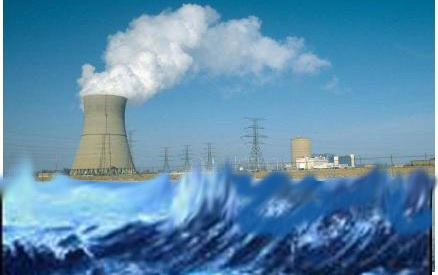
     

  • Sea level rise, storm surges, not factored in to NRC’s nuclear waste policy

    Sea level rise, storm surges, not factored in to NRC’s nuclear waste policy

    nuke-&-seaLCCCL also argued that the discussion of sea level rise was insufficient.  The DGEIS relied on dated sources that did not account for uncertainty in sea level rise projections and may underestimate risk.  Also, the DGEIS merely looks at static sea level rise, which ignores risks due to more frequent and severe flooding.  CCCL pointed to data showing that a number of coastal nuclear power plants potentially subject to sea level rise and storm surge, are located in highly populated areas of the country

    Center For Climate Change Law December 19th, 2013 by Ethan Strell   The Columbia Center for Climate Change Law (CCCL) submitted comments today on the United States Nuclear Regulatory Commission’s “Waste Confidence Draft Generic Environmental Impact Statement” (DGEIS), which concerns the storage of highly radioactive spent nuclear fuel at individual power plants beyond the duration of each plant’s operating license.  CCCL’s comments focus on the DGEIS’s lack of analysis of how future climate conditions could affect the safety of these high level nuclear waste storage facilities.

    Waste-Confidence-Rule“Waste Confidence” refers to the Commission’s confidence that permanent disposal of nuclear waste can be accomplished when it is needed.

    Currently, spent nuclear fuel is stored on-site at nuclear reactors beyond the duration of plants’ operating licenses.  The Waste Confidence Rule stems from a 1976 petition by NRDC to halt the licensing of nuclear plants until the Commission could guarantee the permanent, safe disposal of spent nuclear fuel.

    In denying NRDC’s petition, the Commission stated that “it is neither necessary nor reasonable for the Commission to insist on proof that a means of permanent waste disposal is on hand at the time reactor operation begins, so long as the Commission can be reasonably confident that permanent disposal (as distinguished from continued storage under surveillance) can be accomplished safely when it is likely to become necessary.”  42 Fed. Reg. 128, 34391, July 5, 1977……..

    As part of the authorization process for on-site waste storage, the Commission periodically updates its Waste Confidence Rule.  In June of 2012, the DC Circuit appellate court invalidated the Commission’s 2010 Waste Confidence Decision Update, and directed that the Commission comply with the National Environmental Policy Act (NEPA) by completing an environmental impact statement or a finding of no significant impact. New York v. Nuclear Regulatory Commission, 681 F.3d 471 (D.C. Cir. 2012).

    CCCL commented on two aspects of the DGEIS’s analysis of the effects of future climate change on the storage of spent nuclear fuel: (1) the NRC’s limitation of its analysis to only the “short-term timeframe” of 60 years, and (2) the sea level rise projections used in the DGEIS.

    CCCL argued that limiting the analysis to just the short-term timeframe does not satisfy NEPA because spent nuclear fuel remains dangerously radioactive well beyond 60 years and the prospects of a completed and operational permanent waste repository for spent nuclear fuel within 60 years are speculative.

    CCCL also argued that the discussion of sea level rise was insufficient.  The DGEIS relied on dated sources that did not account for uncertainty in sea level rise projections and may underestimate risk.  Also, the DGEIS merely looks at static sea level rise, which ignores risks due to more frequent and severe flooding.  CCCL pointed to data showing that a number of coastal nuclear power plants potentially subject to sea level rise and storm surge, are located in highly populated areas of the country. http://blogs.law.columbia.edu/climatechange/2013/12/19/nuclear-regulatory-commission-downplays-risk-of-sea-level-rise-in-waste-storage-eis/

  • Thank yourself! 350 ORG.

    1 of 42
    Why this ad?
    Cape York 4WD Adventuresoutbackspirittours.com.au/CapeYork – Small Grp Tours with Outback Spirit Save $1000 Per Couple Ends 31 Dec

    Thank yourself!

    Inbox
    x
    Charlie Wood – 350.org Australia <charlie@350.org>
    2:58 PM (3 hours ago)

    to me

    Dear friends,

    Campaign email writing 101: “always ask something of your members.” Today, because it’s almost Christmas, we’d love you to do something for yourself. For just a moment, stop, reflect and thank yourself for what you’ve done, this year, to bring the vision of a safe climate closer to reality.

    Although 2013 has seen political leadership on climate reach some of the lowest of lows, these depths have birthed a spectacular groundswell of compassion, courage and fire in the belly activism.

    Rather than deferring to our political leaders to lead, we’re empowering, inspiring and gearing up to take the fight to a new level. We’re also focusing our campaigning might squarely on the biggest blockers of them all – the fossil fuel industry and their supporters.

    Take, for example, this past fortnight in which we’ve witnessed decisions that might well compel the most hardened campaigner to hang up their hat. We’ve seen our government approve two massive coal terminals which could cook the climate and wreck the Reef. Despite dwindling demand for coal, we’ve seen Australia’s largest commercial bank – ANZ – renew its loan for a massive open-cut coal-mine in Leard State forest.

    But we haven’t buried our heads in the sand. We haven’t succumbed to apathy or depression. We’ve stood up and we’ve turned out in a new and exciting way. Check out this video of highlights:

    Over the weekend, dozens of ANZ customers showed up at bank branches across the country to close their accounts in protest over the Bank’s lending to fossil fuels (check out the SBS coverage here). Last month, over 100 Commonwealth customers did the same and dozens more ANZ customers before that. In 2014, we’ll continue to support bank customers and super fund members, fund managers, and public institutions to join this growing movement of change-makers. We’ll fight city-by-city, account-by-account, dollar-by-dollar, for as long as it takes to win.

    And while folk turned out in cities over the weekend, more than 100 Australians – grandfathers, teenagers, mothers and more – made the journey to Maules Creek, risking arrest to block construction of a coal mine which will destroy a forest and commit our children to a grim and unimaginable future.

    In the same fortnight, dozens of people attended AGMs of the Big Four Banks – the managers of our savings, mortgages, and our kids’ future finances – who are fuelling a future that no parent would wish upon their child. Last Friday, you helped us and Market Forces deliver a 3000-strong message to Westpac. On Wednesday, dozens of concerned Australians put climate change front and centre of ANZ’s AGM, prompting the chairman to plea: “no more questions on coal!” (checkout this piece from ACF’s Ian Lowe.).

    And that was just two weeks in 2013. Think of what we can achieve together in the 52 to come next year.

    The climate stakes are high, rising higher by the day. But so too are we rising – arming ourselves with the financial literacy, political power and stalwart resilience needed to wage this fight – the biggest we’ll ever face – and win.

    So, as the year draws to a close, thank yourself, reflect on this moment in which we began to overcome our inner enemies to fight the real enemies and win back the brilliant future that’s ours if we want it.

    Have a wonderful xmas, get re-charged, and see you in 2014.

    With fire in the belly and xmas cheer,

    Charlie, Blair, Aaron, Simon and Josh


  • More than 40% of Scotland’s energy demand is now met by renewables

    More than 40% of Scotland’s energy demand is now met by renewables

    Scotland’s renewable electricity output has reached record-high levels, according to official statistics released today.

    The figures, released by the Department of Energy and Climate Change, show that renewables met a record-breaking 40.3 per cent of gross electricity consumption in 2012, confirming that Scotland is on track to meet its interim target of 50% by 2015. This is important progress towards the Government’s 2020 target of the equivalent of 100 per cent of Scotland’s electricity needs met from renewable electricity, as well as more from other sources.

    Scottish renewable electricity made up 36 per cent of the UK’s renewable energy generation in 2012. Scotland continues to be a net exporter of electricity, exporting over 26 per cent of generation in 2012.

    Also, quarterly data up to Q3 2013 shows that renewable generation in 2013 is on track to beat the record year set in 2012.

    Energy Minister Fergus Ewing said: “These figures show that renewable electricity in Scotland is going from strength to strength, confirming that 2012 was a record year for generation in Scotland and that 2013 looks set to be even better. We can already see from the first 9 months of 2013 that generation is 4 per cent higher compared to the same period in 2012.

    “The Scottish Government’s target is to generate the equivalent of 100% of Scotland’s gross annual electricity consumption from renewable sources by 2020, as part of a wider, balanced, low carbon energy mix. These figures show that renewable generation in Scotland was at a record high last year, meeting around 40 per cent of our electricity demand, and helping keep the lights on across these islands at a time when Ofgem are warning of the ever tightening gap between peak electricity demand and electricity supply.

    “Our support for renewable generation, combined with energy efficiency measures, will help protect Scotland’s consumers by keeping energy prices down in the long term.”

    Commenting on the publication of an update to the Scottish Government Routemap for Renewable Energy for Scotland, Mr Ewing said: “Today, our publication clearly show the progress that has been made in the last year and the further steps that are being taken to help Scotland achieve the equivalent of 100 per cent from renewable sources by 2020. This is an ambitious target, but achievable as we are already on track to meet our 2015 interim target.”

    Also commenting on the UK Government’s Electricity Market Reform Delivery Plan, he said: “The UK Government continues to ignore the need for different levels of support across the three main island groups – a need that the UK’s own research identified. I have announced plans to convene a summit in early 2014 bringing all interested parties together to assess whether anything further can be done to help deliver a positive outcome for each island group. Island renewables could provide up to 5% of total GB electricity demand by 2030 and support tens of thousands of jobs – an opportunity which we can’t afford to put at risk.

    “Despite a very modest increase, the UK continues to display a lack of ambition for offshore wind. This could yet cast doubt over some of the projects planned for Scotland, and jeopardise our opportunity to secure thousands of jobs as well as manufacturing and supply chain investment. In addition, potential investors in the offshore wind and marine renewables sectors have no market signals nor any commitment beyond 2020. The UK Government must take serious and considered steps to address these issues.”

    WWF Scotland director Lang Banks added: “It’s great news that Scotland’s renewable energy capacity and output both continue to grow, and this year looks like being another record breaker. Most importantly, Scotland is further along the track to meeting its 2020 target than we thought, which means ever greater amounts of climate change emissions are being avoided every day.

    “However, in order to remain on target Scotland will need to deploy significant amounts of offshore wind in the near future. It’s therefore vital that the UK Government gives a stronger signal of
    its ambition on the growth of offshore wind in Scotland’s seas, as well as the necessary support needed to deliver that growth. We also need to see a quick resolution to outstanding issues over transmission charges and the harnessing of renewable energy from Scotland’s islands.

    “While the rest of the UK has become distracted by gas fracking and new nuclear power, Scotland has quietly got on with the business of deploying renewables at scale. It’s clear from these figures that renewables are already ensuring the lights stay on, creating jobs, and cutting emissions.

    “By combining Scotland’s superb renewable energy resource with greater energy efficiency and investment in the grid Scotland, can continue to avoid the need for polluting forms of energy.”

  • Scientists Solve a Decades-Old Mystery in Earth’s Upper Atmosphere

    Science News

    … from universities, journals, and other research organizations

    Scientists Solve a Decades-Old Mystery in Earth’s Upper Atmosphere

    Dec. 18, 2013 — New research published in the journal Nature resolves decades of scientific controversy over the origin of the extremely energetic particles known as ultra-relativistic electrons in Earth’s near-space environment and is likely to influence our understanding of planetary magnetospheres throughout the universe.


    Share This:

    Discovering the processes that control the formation and ultimate loss of these electrons in the Van Allen radiation belts — the rings of highly charged particles that encircle Earth at a range of about 1,000 to 50,000 kilometers above the planet’s surface — is a primary science objective of the recently launched NASA Van Allen Probes mission. Understanding these mechanisms has important practical applications, because the enormous amounts of radiation trapped within the belts can pose a significant hazard to satellites and spacecraft, as well astronauts performing activities outside a craft.

    Ultra-relativistic electrons in Earth’s outer radiation belt can exhibit pronounced variability in response to activity on the sun and changes in the solar wind, but the dominant physical mechanism responsible for radiation-belt electron acceleration has remained unresolved for decades. Two primary candidates for this acceleration have been “inward radial diffusive transport” and “local stochastic acceleration” by very low-frequency plasma waves.

    In research published Dec. 19 in Nature, lead author Richard Thorne, a distinguished professor of atmospheric and oceanic sciences in the UCLA College of Letters and Science, and his colleagues report on high-resolution satellite measurements of high-energy electrons during a geomagnetic storm on Oct. 9, 2012, which they have numerically modeled using a newly developed data-driven global wave model.

    Their analysis reveals that scattering by intense, natural very low-frequency radio waves known as “chorus” in Earth’s upper atmosphere is primarily responsible for the observed relativistic electron build-up.

    The team’s detailed modeling, together with previous observations of peaks in electron phase space density reported earlier this year by Geoff Reeves and colleagues in the journal Science, demonstrates the remarkable efficiency of natural wave acceleration in Earth’s near-space environment and shows that radial diffusion was not responsible for the observed acceleration during this storm, Thorne said.

    Co-authors of the new research include Qianli Ma, a graduate student who works in Thorne’s lab; Wen Li, Binbin Ni and Jacob Bortnik, researchers in Thorne’s lab; and members of the science teams on the Van Allen Probes, including Harlan Spence of the University of New Hampshire (principal investigator for RBSP-ECT) and Craig Kletzing of the University of Iowa (principal investigator for EMFISIS).

    The local wave-acceleration process is a “universal physical process” and should also be effective in the magnetospheres of Jupiter, Saturn and other magnetized plasma environments in the cosmos, Thorne said. He thinks the new results from the detailed analysis of Earth will influence future modeling of other planetary magnetospheres.

    The Van Allen radiation belts were discovered in Earth’s upper atmosphere in 1958 by a team led by space scientist James Van Allen.

    The new research was funded by the NASA, which launched the twin Van Allen probes in the summer of 2012.

    Share this story on Facebook, Twitter, and Google:
  • Mountain Erosion Accelerates Under a Cooling Climate

    Science News

    … from universities, journals, and other research organizations

    Mountain Erosion Accelerates Under a CoolingCli

    mate

    Dec. 18, 2013 — Earth’s continental topography reflects the balance between tectonics, climate, and their interaction through erosion. However, understanding the impact of individual factors on Earth’s topography remains elusive. Professor Todd Ehlers of the University of Tübingen Geoscience Department, in cooperation with international colleagues, has studied the coupling of climate and erosion on a global scale. The scientists investigated the effect of global cooling and glaciation on topogrpahy over the last two to three million years. To quantify erosion, they compiled bedrock thermochronometric data from around the world. Their data show that mountain erosion rates have increased since circa 6 million years and most rapidly in the last 2 million years. Moreover, alpine glaciers play a significant role in the increase of erosion rates under a cool climate. The results are published in the current edition of Nature.


    Share This:

    The scientists have compiled data from 18,000 rock samples to globally estimate temporal and spatial variations in erosion rates. During mountain erosion rocks travel from about 10 kilometers depth in the crust to the Earth’s surface. During this process, the rocks cool from great depths to the surface. Thermochronology exploits that small quantities of radioactive uranium contained in the rock decay in a time-dependent process. Below a given so-called closure temperature rocks accumulate the products of radioactive decay. In quantifying decay products, scientists are able to calculate the travel time of a rock from a determined depth to the surface and the time elapsed for cooling. Finally, these data can be converted into an erosion rate using sophisticated computer models.

    The study’s broad approach that uses a global distribution of samples reduces the influence of individual regional tectonic events on the overall study results. The overall global picture that emerged was a strong correlation of erosion rates with the global climate change over the last several million years.

    “On a global scale erosion rates span four orders of magnitude in the last eight million years from one hundreth millimeter up to ten millimeters a year,” Todd Ehlers says. Six million years ago, increase of erosion rates was expressed at all latitudes, but was most pronounced in glaciated mountain ranges, indicating that glaciers played a significant role.

    Furthermore, erosion rates accelerated more in the last two million years with the most substantial changes at latitudes greater than 30°, for example in the European Alps, Patagonia, Alaska, the South Island of New Zealand and The Coast Mountains of British Columbia. These areas are highly variable in their tectonic activity, but they have in common that they have all been glaciated in the past few million years. Mountain erosion rates since about six million years ago were increased once more by nearly a factor of two for the Pleistocene compared to the Pliocene. “This change with increased activity of glaciers and higher sediment flux shows a clear temporal correspondence with further Late Cenozoic cooling,” Todd Ehlers comments. These results have important implications in general for improving our understanding of the coupling between climate and erosion.

    Share this story on Facebook, Twitter, and Google:

    Other social bookmarking and sharing tools:

    |

    Story Source:

    The above story is based on materials provided by Universitaet Tübingen, via AlphaGalileo.

    Note: Materials may be edited for content and length. For further information, please contact the source cited above.


    Journal Reference:

    1. Frédéric Herman, Diane Seward, Pierre G. Valla, Andrew Carter, Barry Kohn, Sean D. Willett, Todd A. Ehlers. Worldwide acceleration of mountain erosion under a cooling climate. Nature, 2013; 504 (7480): 423 DOI: 10.1038/nature12877

    APA

    MLA

    Universitaet Tübingen (2013, December 18). Mountain erosion accelerates under a cooling climate. ScienceDaily. Retrieved December 19, 2013, from http://www.sciencedaily.com­ /releases/2013/12/131218133603.htm?utm_source=feedburner&utm_medium=email&utm_campaign=Feed%3A+sciencedaily%2Fearth_climate%2Foceanography+%28ScienceDaily%3A+Earth+%26+Climate+News+–+Oceanography%29

    Note: If no author is given, the source is cited instead.

    Search ScienceDaily

    Number of stories in archives: 148,822

    Find with keyword(s):
    Enter a keyword or phrase to search ScienceDaily’s archives for related news topics,
    the latest news stories, reference articles, science videos, images, and books.

    Recommend ScienceDaily on Facebook, Twitter, and Google:

    Other social bookmarking and sharing services:

    |
    Interested in ad-free access? If you’d like to read ScienceDaily without ads, let us know!

    Social Networks


    Follow ScienceDaily on Facebook, Twitter,
    and Google:

    Recommend ScienceDaily on Facebook, Twitter, and Google +1:

    Other social bookmarking and sharing tools:

    |

    Breaking News

    … from NewsDaily.com

    Science Video News


    Our Changing Climate

    Geographers have projected temperature increases due to greenhouse gas emissions to reach a not-so-chilling conclusion: climate zones will shift and. …  > full story

    Strange Science News


    Free Subscriptions

    … from ScienceDaily

    Get the latest science news with our free email newsletters, updated daily and weekly. Or view hourly updated newsfeeds in your RSS reader:

    Feedback

    … we want to hear from you!

    Tell us what you think of ScienceDaily — we welcome both positive and negative comments. Have any problems using the site? Questions?