Category: Uncategorized

  • Lithgow Council concerned about the region’s coal mining industry

    Lithgow Council concerned about the region’s coal mining industry

    By Natalie Whiting Updated Tue 8 Oct 2013, 9:45 AM AEDT

    Mining trucks go about their work in the mines
    PhotoMining trucks go about their work at a coal mine

    Araluen: ABC Contribute

    The Lithgow Council says it is concerned about the future of the coal mining industry in the region, after a recommendation to refuse an expansion of a local mine.

    The Department of Planning says Coalpac’s proposal to consolidate and expand its operations at Cullen Bullen will have too greater impact on biodiversity in the area.

    The proposal will go back to the Planning Assessment Commission for a final decision.

    The Mayor, Maree Statham, says knocking it back could set a dangerous precedent.

    “Well I guess it depends on the standard that the government set and if they set a precent like with Coalpac, there could be difficulties down the track with other DAs and applications for extensions with other coal mines.

    I think it’s going to be a tough time, as it is with every other industry at the moment.

    Lithgow Mayor Maree Statham

    “I think it’s going to be a tough time, as it is with every other industry at the moment.”

    The Lithgow Council has previously raised concerns about job losses and economic impacts if the project does not get up.

    Councillor Statham says she thought new conditions put on the project should have sufficed.

    “I think it’s probably not a fair go, considering that they have complied to a lot of new conditions and there’s been very stringent conditions placed on the consolidation project,” she said.

    “I thought that it would be a fair outcome for the residents of Cullen Bullen and a fair outcome for Coalpac in the event that it was given the go ahead with the new conditions”

    However some residents think there would not be a dramatic impact on employment in the village if the expansion does not go ahead.

    Cullen Bullen local Darcy McCann is opposed to the development, he says he is happy with the Department’s recommendation.

    “I’m a self employed operator, I have been for the last 20 years and I’ve never received any work from that area, so it wouldn’t bother me in anyway.

    “But in saying that, there’s only five pre cent of the townspeople who were involved in that mine while it was operating.”

    He says he and some other residents still have serious concerns with the project.

    “The main concern is the immediate town area with the dust and that that we’ve been coping for the last 10 years or so and they still haven’t done anything to suppress that.

    “With the noise and the damage that was caused to the homes, which they won’t recognise and the health of our families for now and in the future.”

  • Rewild the Child MONBIOT

    Rewild the Child

    Posted: 07 Oct 2013 12:42 PM PDT

    A week in the countryside is worth three months in a classroom.


    By George Monbiot, published in the Guardian 8th October 2013

    What is the best way to knacker a child’s education? Force him or her to spend too long in the classroom.

    An overview of research into outdoor education by King’s College London found that children who spend time learning in natural environments “perform better in reading, mathematics, science and social studies.”(1) Exploring the natural world “makes other school subjects rich and relevant and gets apathetic students excited about learning.”

    Fieldwork in the countryside, a British study finds, improves long-term memory(2). Dozens of papers report sharp improvements in attention when children are exposed to wildlife and the great outdoors(3). Teenaged girls taken on a three-week canoeing trip in the US remained, even 18 months later, more determined, more prepared to speak out and show leadership and more inclined to challenge conventional notions of femininity(3).

    Studies of the programmes run by the Wilderness Foundation UK, which takes troubled teenagers into the mountains, found that their self-control, self-awareness and behaviour all improved(4,5,6). Ofsted, the schools inspection service, reports that getting children out of the classroom raises “standards, motivation, personal development and behaviour.”(7)

    Last week I saw the evidence for myself. With the adventure learning charity WideHorizons, I spent two days taking a group of 10 year-olds from a deprived borough in London rockpooling and roaming the woods in mid-Wales(8). Many of them had never been to the countryside before and had never seen the sea.

    I was nervous before I met them. I feared that our differences might set us apart. I thought they might be bored and indifferent. But my fears evaporated as soon as we reached the rockpools.

    Within a few minutes, I had them picking up crabs and poking anenomes. When I showed that they could eat live prawns out of the net they were horrified, but curiosity and bravado conquered disgust, and one after another they tried them. Raw prawns are as sweet as grapes: some of the children were soon shovelling them into their mouths. I don’t think there was anyone in the group who managed not to fall into the water. But no one complained.

    In the woods the next day we paddled in a stream, rolled down a hill, ate blackberries, tasted mushrooms, had helicopter races with sycamore keys, explored an ant’s nest, broke sticks and collected acorns. Most had never done any of these things before, but they needed no encouragement: the exhilaration with which they explored the living world seemed instinctive. I realised just how little contact they’d had when I discovered that none of them had seen a nettle or knew what happens if you touch it.

    But what hit me hardest was this. One boy stood out: he had remarkable powers of observation and intuition. When I mentioned this to his teacher, her reply astonished me: “I must tell him. It’s not something he will have heard before.” When a child as bright and engaged as this is struggling at school, the problem lies not with the child but with the education system. We foster and reward a narrow set of skills.

    The governments of this country accept the case for outdoor learning. In 2006 the departments for children and schools, culture and the environment signed a manifesto which says the following: “We strongly support the educational case for learning outside the classroom. If all young people were given these opportunities we believe it would make a significant contribution to raising achievement.”(9,10) In 2011, the current government published a white paper proposing “action to get more children learning outdoors, removing barriers and increasing schools’ abilities to teach outdoors”(11).

    So what happened? Massive cuts. The BBC reports that 95% of outdoor education centres have had their entire local authority funding cut(12). Instead of being encouraged to observe and explore and think and develop, children are being treated like geese in a foie gras farm. Confined to the classroom, stuffed with rules and facts, dragooned into endless tests: there could scarcely be a better formula for ensuring that they become bored and disaffected(13,14).

    When children are demonised by the newspapers, they are often described as feral. But feral is what children should be: it means released from captivity or domestication. Those who live in crowded flats, surrounded by concrete, mown grass and other people’s property, cannot escape their captivity without breaking the law. Games and explorations that are seen as healthy in the countryside are criminalised in the cities. Children who have never visited the countryside – 50% in the UK according to WideHorizons – live under constant restraint(15).

    Why shouldn’t every child spend a week in the countryside every term? Why shouldn’t everyone be allowed to develop the kind of skills the children I met were learning: rock climbing, gorge scrambling, caving, night walking, ropework and natural history? Getting wet and tired and filthy and cold, immersing yourself, metaphorically and literally, in the natural world: surely by these means you discover more about yourself and the world around you than you do during three months in a classroom. What kind of government would deprive children of this experience?

    www.monbiot.com

    References:

    1. Kings College, London. April 2011. Understanding the diverse benefits of learning in natural environments. Commissioned by Natural England. http://www.naturalengland.org.uk/Images/KCL-LINE-benefits_tcm6-31078.pdf

    2. Stuart Nundy, 2001. Raising achievement through the environment: the case for fieldwork and field centres. National Association of Field Studies Officers.
    http://bit.ly/1fdazsx Cited by Kings College, London, as above.

    3. Many of them are listed here: William Bird, 2007.  Natural Thinking: investigating the links between the natural environment, biodiversity and mental health. Royal Society for the Protection of Birds.

    http://www.rspb.org.uk/images/naturalthinking_tcm9-161856.pdf

    4. http://www.wildernessfoundation.org.uk/wp-content/uploads/2013/01/TA-executive-summary.pdf

    5. http://www.wildernessfoundation.org.uk/wp-content/uploads/2013/01/TurnAround-2007-Executive-Summary-Stand-Alone-Document.pdf

    6. http://www.wildernessfoundation.org.uk/wp-content/uploads/2013/01/TA2-Executive-Summary.pdf

    7. Ofsted, 2nd October 2008. Learning outside the classroom: How far should you go? http://www.ofsted.gov.uk/resources/learning-outside-classroom

    8. http://www.widehorizons.org.uk/

    9. http://www.lotc.org.uk/about/manifesto/

    10. http://www.lotc.org.uk/manifesto/view/d

    11. Defra, 2011. The Natural Choice: securing the value of nature. White Paper.

    http://www.official-documents.gov.uk/document/cm80/8082/8082.pdf

    12. http://www.bbc.co.uk/news/uk-13715804

    13. http://www.telegraph.co.uk/comment/letters/9940846/The-dangers-of-the-new-National-Curriculum-proposals.html

    14. http://www.thetimes.co.uk/tto/opinion/letters/article3883125.ece

    15. http://www.widehorizons.org.uk/who-we-are/about-us/values/

    You are subscribed to email updates from George Monbiot
    To stop receiving these emails, you may unsubscribe now.
    Email delivery powered by Google
    Google Inc., 20 West Kinzie, Chicago IL USA 60610
  • Greens’ claims over Ferguson lobbying are in the ballpark

    Greens’ claims over Ferguson lobbying are in the ballpark

    ABC October 7, 2013, 4:56 pm

    It’s not unusual for former government ministers to find top paying jobs in the private sector. But two recent appointments of former federal resources and energy minister, Martin Ferguson, have drawn the ire of Australian Greens’ leader Christine Milne.

    Mr Ferguson’s new roles, six months after he resigned from federal cabinet in March, made a mockery of the ministerial code of conduct, .

    “Martin Ferguson’s appointment as group executive of natural resources for Seven Group Holdings and as chair to a petroleum industry advisory board makes a mockery of the code of conduct which prevents former ministers engaging in lobbying activities relating to any matter that they had official dealings in,” she said.

    The new jobs

    Mr Ferguson accepted a role as chairman of an advisory board of the gas and oil industry’s peak body, the Australian Petroleum Production & Exploration Association.

    The association’s website acknowledges its status as a lobby group, saying it “works with Australian governments to help promote the development of the nation’s oil and gas resources in a manner that maximises the return to the Australian industry and community”. Its board includes representatives from Australia’s largest oil and gas companies including resources giants BHP Billiton, Origin Energy and Shell.

    Mr Ferguson has taken a newly-created position of chairman of the association’s advisory board.

    The association’s chairman, says of Martin Ferguson, who served as energy minister for over five years: “There are few people in Australia with such a comprehensive understanding of Australia’s oil and gas industry.”

    He says as chairman of the advisory board, Mr Ferguson will be responsible for “providing strategic advice” to the chair, board and chief executive of the association.

    Mr Ferguson is also due to take up the position of group executive, natural resources, at Kerry Stokes’ Seven Group on October 9, also a newly-created position. Seven Group has an interest in WesTrac, a provider of construction and mining equipment.

    Mr Ferguson told the his “skills and contacts” as a former resources minister would be a major advantage for Seven Group. “What I will be looking for is to develop the mining sector with Seven Group,” he said.

    The Lobbying Code

    The was first tabled by the then special minister of state in the Rudd government, , in 2008. It came into effect on July 1, 2008.

    The code says: “Persons who, after 6 December 2007, retire from office as a Minister or a Parliamentary Secretary, shall not, for a period of 18 months after they cease to hold office, engage in lobbying activities relating to any matter that they had official dealings with in their last 18 months in office”.

    It defines “lobbying activities” as any oral, written, or electronic communications with a government representative in an effort to influence government decision-making.Â

    There are a number of exclusions. One is when statements are made in a public forum.

    This would cover Mr Ferguson’s recent appearance at the recent on September 26 which he co-chaired and was attended by the federal resources minister, Ian MacFarlane and NSW resources minister, Chris Hartcher, and hundreds of industry delegates.

    After the summit appeared on ABC’s The Business program. He talked about coal seam gas potential in NSW for big gas producers Santos and AGL.

    Mr Ferguson said: “It’s the responsibility of all levels of government, plus the private sector, to get the gas out of the ground.” Later in the same interview he said: “Our challenge is getting through the regulatory process”.

    Two days later Mr Ferguson’s appointment to the gas and oil lobby group was announced.

    Ministerial Code of Conduct

    Another set of rules which covers the conduct of ministers is This was first issued in 1996 during In 2007, the then prime minister Kevin Rudd replaced some of the code, including the part that refers to the employment of ministers after they leave parliament.

    The standards says for eighteen months after ceasing being a minister they “will not lobby, advocate or have business meetings with members of the government, parliament, public service or defence force on any matters on which they have had official dealings as Minister in their last eighteen months in office.”

    It also says “ministers will not take personal advantage of information they received as a minister that isn’t available to the general public”.

    Senator Faulkner says: “The combination of these Standards and the Lobbying Code means the public can be confident that Ministers will not be able to use the experience and contacts they have gained in office to enhance their value to the private sector, either as lobbyists or as senior executives in business with the Government”.

    Spirit of the Code

    from the School of Politics at the Australian National University says of Mr Ferguson’s appointment to a lobby group: “It’s a grey area. If he is on an advisory board, he might not be personally doing lobbying”.

    He said Mr Ferguson’s acceptance of the position so soon after resigning “may be seen to be against the spirit” of the 18-month cooling off period.

    Senator Faulkner says the public is concerned about politicians who immediately begin a a career in lobbying “using contacts they developed and information they obtained while in office”.

    He says the code was intended to promote trust in the integrity of government process.

    Mr Ferguson’s job as an advisor to an oil and gas lobby group does not appear to directly breach the Lobbying Code, but is it at odds with the intent of the code?

    Mr Ferguson is aware of his obligations under both codes but not across the detail of the 18-month cooling off period. At a gas conference in Adelaide last week told a press conference: “I can not lobby, for a period of 12 months, on any things I directly handle. I resigned in March, so I am well into the 12 months”.

    In a to a Senate Inquiry on the Lobbying Code in 2008 Professor Warhurst said: “Evaluated on its own terms the potential problem of lack of teeth and lack of real sanctions remains”.

    Neither the lobbying code nor the ministerial code is underpinned by legislation, nor do they carry any specific penalties for those who breach them.

    Other countries’ codes

    In Britain the says: “On leaving office, Ministers will be prohibited from lobbying Government for two years. They must also seek advice from the independent Advisory Committee on Business Appointments about any appointments or employment they wish to take up within two years of leaving office. Former Ministers must abide by the advice of the Committee”. The committee is an advisory body and has no enforcement powers.

    In Canada, the for ministers says for a period of two years former ministers must not “accept services contracts, appointment to a board of, directors of, or employment with, an entity with which they had direct and significant official dealings during the period of one year immediately prior to the termination of their service in public office”. The code is backed up with the Federal Accountability Act 2006.

    The Verdict

    There is no evidence that Mr Ferguson has breached the code. But by taking up the appointment within the cooling off period it can be argued that he has made a mockery of the intent and spirit of the code. Senator Milne’s claim is in the ballpark.


  • The Social Science Explaining Why More Climate Science Hasn’t Led to Greenhouse Action

    human nature October 6, 2013, 11:57 am 27 Comments

    The Social Science Explaining Why More Climate Science Hasn’t Led to Greenhouse Action

    By ANDREW C. REVKIN


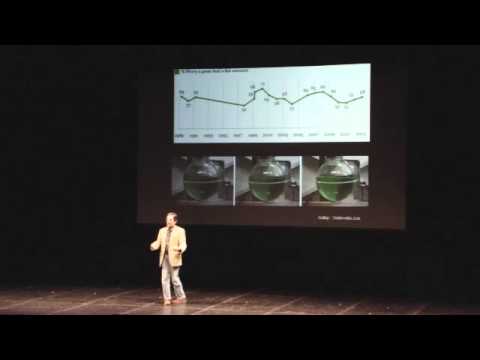
    Earlier this year, I took part in a fast-paced tour of the science of climate change at the Seattle Science Festival. I posted on the event at the time, but the Pacific Science Center has uploaded better video versions.

    Richard Alley of Penn State talked about the hunt for “climate zombies” and explained why climate science is solid. Kevin Trenberth of the National Center for Atmospheric Research dug into the physical science underpinning knowledge of the human role in global warming.

    My job was to describe the empirical social science that, in part, explains why more climate science hasn’t led to more climate-smart energy action, but also hints at paths forward even in an era of intense political polarization.

    I started by examining the deeply divergent climate change views of four Nobel laureates in physics and reviewed the valuable work on “cultural cognition” by Dan Kahan and others. Read on for a few transcribed moments, starting with my admission that, on some points, I am a climate denier: Read more…

  • Queensland swelters in unseasonable temperatures; extreme fire warnings stretch across state

    ABC By Chrissy Arthur, Elise Worthington, Jo Skinner and staff – October 7, 2013, 6:12 pm

    Cloncurry already reached 39 degrees at 10:30am (AEST).
    ABC Cloncurry already reached 39 degrees at 10:30am (AEST).

    Emergency crews are dealing with about 30 grassfires across Queensland, with dry conditions and high temperatures complicating the task.

    Fire weather warnings are in place for a number of central and southern regions as temperatures soar to more than eight degrees above average.

    Water-bombing helicopters have been called in to help battle a large grassfire in the Ipswich area, west of Brisbane.

    The blaze is causing problems at Collingwood Park.

    Elsewhere, nine crews are dealing with a fire that broke out on private property at Booyal in the Wide Bay region, and three crews are monitoring the aftermath of a blaze at Mudgeeraba on the Gold Coast.

    Peter Varley from the Rural Fire Service (RFS) says while crews are busy, the blazes are under control.

    “We’ve got a couple of fires burning around Brisbane, the main one just north of Brisbane up at Stanmore,” he said.

    “That burnt all last night and crews put in some big backburns around that one to get it ready for today.

    “It’s in the state forest so Parks and Wildlife and our crews are working on that one again today.

    “We have it contained at the moment, but under these conditions we have to be very careful with any fires.”

    Extreme fire warnings in state’s south

    Fire authorities are on high alert with extreme fire dangers in southern Queensland.

    There is a very high to severe fire danger for the south-west, north coast and south-east regions, and extreme conditions are predicted in the Darling Downs and Granite Belt areas.

    Senior forecaster Rick Threlfall says severe to extreme fire danger warnings have been issued across much of the state.

    “It’s a combination of very dry air over the south of the state, the hot temperatures and some fresh and gusty west to south-westerly winds that will develop over the south of the state as a trough moves through,” he said.

    “A perfect combination to lead to those high fire dangers for today.”

    The RFS is urging residents across southern Queensland to be vigilant.

    Mr Varley says the hot, dry conditions and strong winds will fuel any flames.

    “There may be local suspension of anybody that has a permit but we are asking anybody that does not to light up today,” he said.

    “The extreme fire conditions – any sort of a spark could start a fire and there’s very very little water in any vegetation that is around.

    “We are asking people to be extremely cautious with any sort of ignition sources today.”

    Temperatures soar across Queensland

    There has been little reprieve from the state’s recording-breaking run of hot weather.

    Overnight at Richmond, east of Mount Isa, a low of 27 degrees Celsius was recorded.

    The mercury is expected to rise to 41C at Doomadgee in the state’s Gulf Country, and 40C further south at Birdsville and Winton.

    The weather bureau says Brisbane will hit 35C today, while Ipswich should reach 37C.

    At 10:30 am (AEST), the temperature in Cloncurry, also east of Mount Isa, had reached 39C.

    Stacey Robertson from Cloncurry’s pool facility says most people are staying in air-conditioning.

    “The people that are coming down are saying that if they didn’t get off that couch now and out of the air-conditioning, they’d be swallowed up all day inside,” she said.

    “This has been my busiest season so far.”

    Mr Threlfall says the temperatures are more than eight degrees above average.

    “A large part of the state – central and southern areas of the state – are well above average as well, so some places could approach around about 40 degrees,” he said.

    “Certainly Mount Isa is looking at about 40 degrees but right through the southern interior of the state, generally temperatures are looking to be about five to eight degrees above average.”

  • Age of Unreason MONBIOT

    Age of Unreason

    September 30, 2013

    The governments of Britain, Canada and Australia are trying to stamp out scientific dissent.


    By George Monbiot, published in the Guardian 1st Ooctober 2013

    It’s as clear and chilling a statement of intent as you’re likely to read. Scientists should be “the voice of reason, rather than dissent, in the public arena.”(1) Vladimir Putin? Kim Jong-un? No, Professor Ian Boyd, chief scientific adviser at the UK’s department for environment.

    Boyd’s doctrine is a neat distillation of government policy in Britain, Canada and Australia. These governments have suppressed or misrepresented inconvenient findings on climate change, pollution, pesticides, fisheries and wildlife. They have shut down programmes which produce unwelcome findings and sought to muzzle scientists. This is a modern version of Soviet Lysenkoism: crushing academic dissent on behalf of bad science and corporate power(2).

    Writing in an online journal, Boyd argued that if scientists speak freely, they create conflict between themselves and policy-makers, leading to a “chronically deep-seated mistrust of scientists that can undermine the delicate foundation upon which science builds relevance”(3). This, in turn, “could set back the cause of science in government”. So they should avoid “suggesting that policies are either right or wrong”. If they must speak out, they should do so through “embedded advisers (such as myself), and by being the voice of reason, rather than dissent, in the public arena.”

    Shut up, speak through me, don’t dissent, or your behaviour will ensure that science becomes irrelevant. Note that the conflicts between science and policy are caused by scientists, rather than by politicians ignoring or abusing the evidence. Or by chief scientific advisers.

    In an online question and answer session hosted by his department, Professor Boyd maintained that 50% of tuberculosis infections among cattle herds are caused by badgers(4). He repeated the claim in an official document called “Science to inform TB Policy”(5). But as the analyst Jamie McMillan points out, the figure has been sexed up from inadequate data(6). Like the 45-minute claim in the Iraq debate, it is “spurious, simple to take on board, and crucial in convincing Parliament.”

    The badger cull as a whole defies the findings of the £49m study the previous government commissioned. It has been thoroughly dissected by the leading scientists in the field, which might explain why Boyd is so keen to shut them up(7,8). It’s one of many ways in which his department has binned the evidence in setting its policies.

    On Sunday, Boyd’s boss, Owen Paterson, told the Conservative party conference not to worry about global warming. “I think we should just accept that the climate has been changing for centuries.”(9) A few weeks ago on Any Questions, he managed to repeat ten discredited claims about climate change in one short contribution(10).

    His department repeatedly misrepresents science to appease industrial lobbyists. It claimed that its field trials of neonicotinoid pesticides on bees showed that “effects on bees do not occur under normal circumstances”(11). Hopelessly contaminated, the study was in fact worthless, which is why it was not submitted to a peer-reviewed journal(12).

    Similar distortions surround the department’s refusal to establish meaningful marine reserves(13), its attempt to cull buzzards on behalf of pheasant shoots(14,15) and its determination to allow farmers to start dredging streams again, turning them into featureless gutters(16).

    There’s one consolation: Ian Boyd, in his efforts to establish a tinpot dictatorship, has not yet achieved the control enjoyed by his counterparts in Canada. There, scientists with government grants working on any issue that could affect industrial interests – tar sands, climate change, mining, sewage, salmon farms, water trading – are forbidden to speak freely to the public(17,18,19). They are shadowed by government minders and, when they must present their findings, given scripts to memorise and recite(20). Dozens of turbulent research programmes and institutes have either been cut to the bone or closed altogether(21).

    In Australia, the new government has chosen not to appoint a science minister(22). Tony Abbott, who once described manmade climate change as “absolute crap”(23), has already shut down the government’s Climate Commission and Climate Change Authority(24). But at least Australians are fighting back: the Climate Commission has been reconvened as an NGO, funded by donations(25). Here, we allowed the government to shut down the Royal Commission on Environmental Pollution and the Sustainable Development Commission with scarcely a groan of protest(26).

    Cameron’s government claimed that the tiny savings it made were required to reduce the deficit. Yet somehow it manages to fund a lavish range of planet-wrecking programmes. The latest is the “Centre for Doctoral Training in Oil and Gas” just launched by the Natural Environment Research Council(27). Its aim is “to support the oil and gas sector” by providing “focused training” in fracking, in exploiting tar deposits and in searching for oil in polar regions. In other words, it is subsidising fossil fuel companies while promoting climate change. How many people believe this is a good use of public money?

    To be reasonable, when a government is manipulating and misrepresenting scientific findings, is to dissent. To be reasonable, when it is helping to destroy human life and the natural world, is to dissent. As Julien Benda argued in La Trahison des Clercs, democracy and civilisation depend on intellectuals resisting conformity and power(28).

    A world in which scientists speak only through their minders and in which dissent is considered the antithesis of reason is a world shorn of meaningful democratic choices. You can judge a government by its treatment of inconvenient facts and the people who expose them. This one does not emerge well.

    www.monbiot.com

    References:

    1. http://elife.elifesciences.org/content/2/e01061

    2. http://en.wikipedia.org/wiki/Lysenkoism

    3. http://elife.elifesciences.org/content/2/e01061

    4. http://storify.com/DefraGovUK/defra-chief-scientist-prof-ian-boyd-answers-your-a

    5. https://www.gov.uk/government/uploads/system/uploads/attachment_data/file/205741/tb-eradication-presentation-130605.pdf

    6. http://planetrant.wordpress.com/2013/09/13/fifty-percent-of-tb-due-to-badgers-a-spurious-statistic-and-how-it-was-created/

    7. http://www.theguardian.com/environment/2012/oct/13/badger-cull-mindless

    8. http://www.theguardian.com/environment/2011/jul/11/badger-culling-ineffective-krebs

    9. http://www.theguardian.com/environment/2013/sep/30/owen-paterson-minister-climate-change-advantages

    10. http://www.skepticalscience.com/paterson-on-climate.html

    11. Department for Environment, Food and Rural Affairs, March 2013. An assessment of key evidence about Neonicotinoids and bees.
    https://www.gov.uk/government/uploads/system/uploads/attachment_data/file/181841/pb13937-neonicotinoid-bees-20130326.pdf.pdf

    12. http://www.theguardian.com/commentisfree/2013/apr/29/beware-rise-government-scientists-lobbyists

    13. http://www.theguardian.com/environment/georgemonbiot/2013/feb/11/eu-fishing-discards-ban-richard-benyon

    14. http://www.theguardian.com/environment/georgemonbiot/2012/may/24/buzzards-pheasant-shoots-wildlife

    15. http://www.theguardian.com/commentisfree/2012/jun/04/wildlife-land-aristocracy

    16. http://charlesrangeleywilson.com/2013/04/26/a-storm-cloud-for-rivers/

    17. http://sciencewriters.ca/initiatives/muzzling_canadian_federal_scientists/

    18. http://www.watershedsentinel.ca/content/harpers-war-science

    19. http://www.canada.com/technology/Critics+instructions+Environment+Canada+scientists+Montreal+conference/6500175/story.html

    20. http://www2.macleans.ca/2013/05/03/when-science-goes-silent/

    21. http://www.watershedsentinel.ca/content/environmental-science-axed-harper-2012-2013

    22. http://www.theguardian.com/commentisfree/2013/sep/17/science-minister-abbott-australia

    23. http://www.theaustralian.com.au/archive/politics/the-town-that-turned-up-the-temperature/story-e6frgczf-1225809567009

    24. http://www.theguardian.com/world/2013/sep/19/coalition-scraps-climate-commission-flannery

    25. http://www.theguardian.com/environment/2013/sep/24/climate-council-faces-titanic-struggle

    26. http://www.theguardian.com/commentisfree/2011/oct/03/bins-roads-wars-george-osborne

    27. http://www.nerc.ac.uk/funding/available/postgrad/schemes/documents/cdt-ao.pdf

    28. Julien Benda, 1927. The Treason of the Intellectuals. Translated by Richard Aldington, 2007. Transaction Publishers, New Brunswick.

    Bookmark and Share