Category: Uncategorized

  • Coralline algal structure is more sensitive to rate, rather than the magnitude, of ocean acidification

    Coralline algal structure is more sensitive to rate, rather than the magnitude, of ocean acidification

    Published 20 August 2013 Science Leave a Comment
    Tags: , , , , , , , ,

    Marine pCO2 enrichment via ocean acidification (OA), upwelling and release from carbon capture and storage (CCS) facilities is projected to have devastating impacts on marine biomineralisers and the services they provide. However, empirical studies using stable endpoint pCO2 concentrations find species exhibit variable biological and geochemical responses rather than the expected negative patterns. In addition, the carbonate chemistry of many marine systems is now being observed to be more variable than previously thought. To underpin more robust projections of future OA impacts on marine biomineralisers and their role in ecosystem service provision, we investigate coralline algal responses to realistically variable scenarios of marine pCO2 enrichment. Coralline algae are important in ecosystem function; providing habitats and nursery areas, hosting high biodiversity, stabilizing reef structures and contributing to the carbon cycle. Red coralline marine algae were exposed for 80-days to one of three pH treatments: (1) current pH (control), (2) low pH (7.7) representing OA change and (3) an abrupt drop to low pH (7.7) representing the higher rates of pH change observed at natural vent systems, in areas of upwelling and during CCS releases. We demonstrate that red coralline algae respond differently to the rate and the magnitude of pH change induced by pCO2 enrichment. At low pH, coralline algae survived by increasing their calcification rates. However, when the change to low pH occurred at a fast rate we detected, using Raman spectroscopy, molecular bonding weaknesses in the calcite skeleton, with evidence of molecular positional disorder. This suggests that, while coralline algae will continue to calcify, they may be structurally weakened, putting at risk the ecosystem services they provide. Notwithstanding evolutionary adaptation, the ability of coralline algae to cope with OA may thus be determined primarily by the rate, rather than magnitude, at which pCO2 enrichment occurs.


    Kamenos N. A., Burdett H. L., Aloisio E., Findlay H. S., Martin S., Longbone C., Dunn J., Widdicombe S. & Calosi P., in press. Coralline algal structure is more sensitive to rate, rather than the magnitude, of ocean acidification. Global Change Biology. Article.

    Rate this:

    Published 20 August 2013 Science Leave a Comment
    Tags: , , , , , , , ,

    Marine pCO2 enrichment via ocean acidification (OA), upwelling and release from carbon capture and storage (CCS) facilities is projected to have devastating impacts on marine biomineralisers and the services they provide. However, empirical studies using stable endpoint pCO2 concentrations find species exhibit variable biological and geochemical responses rather than the expected negative patterns. In addition, the carbonate chemistry of many marine systems is now being observed to be more variable than previously thought. To underpin more robust projections of future OA impacts on marine biomineralisers and their role in ecosystem service provision, we investigate coralline algal responses to realistically variable scenarios of marine pCO2 enrichment. Coralline algae are important in ecosystem function; providing habitats and nursery areas, hosting high biodiversity, stabilizing reef structures and contributing to the carbon cycle. Red coralline marine algae were exposed for 80-days to one of three pH treatments: (1) current pH (control), (2) low pH (7.7) representing OA change and (3) an abrupt drop to low pH (7.7) representing the higher rates of pH change observed at natural vent systems, in areas of upwelling and during CCS releases. We demonstrate that red coralline algae respond differently to the rate and the magnitude of pH change induced by pCO2 enrichment. At low pH, coralline algae survived by increasing their calcification rates. However, when the change to low pH occurred at a fast rate we detected, using Raman spectroscopy, molecular bonding weaknesses in the calcite skeleton, with evidence of molecular positional disorder. This suggests that, while coralline algae will continue to calcify, they may be structurally weakened, putting at risk the ecosystem services they provide. Notwithstanding evolutionary adaptation, the ability of coralline algae to cope with OA may thus be determined primarily by the rate, rather than magnitude, at which pCO2 enrichment occurs.


    Kamenos N. A., Burdett H. L., Aloisio E., Findlay H. S., Martin S., Longbone C., Dunn J., Widdicombe S. & Calosi P., in press. Coralline algal structure is more sensitive to rate, rather than the magnitude, of ocean acidification. Global Change Biology. Article.

    Rate this:

  • Effects on Scope for Growth due to elevated carbon dioxide in the copepod Calanus finmarchicus

    Effects on Scope for Growth due to elevated carbon dioxide in the copepod Calanus finmarchicus

    Published 20 August 2013 Science Leave a Comment
    Tags: , , , , ,

    Cohorts of the keystone copepod species Calanus finmarchicus exposed to simulated ocean acidification environments were followed during the course of two consecutive generations. The time of development into the different molting stages were monitored. While the more moderate CO2 concentration (1080 ppm) did not seem to affect the development rate, a slower development into molting stages were found in the highest exposure groups (2080 – 3080 ppm CO2). Measurements of oxygen consumption and feeding rate in sub adult individuals (copepodite stage C5) were integrated into calculations of the overall energy balance (Scope for Growth) of the animals. Together with biometric measurements that were performed these results points to an energy depletion due chronic exposure of elevated CO2 as has been predicted for the future. This stage of Calanus finmarchicus seems to be tolerant to a more moderate CO2 elevation (1080ppm) over the time frame of this study.


    Håkedal O. J., 2013. Effects on Scope for Growth due to elevated carbon dioxide in the copepod Calanus finmarchicus. MSc thesis, Norwegian University of Science and Technology, 80 p. Thesis.

    Rate this:

  • A campaign sadly lacking in poetry and vision

    A campaign sadly lacking in poetry and vision

    Updated 2 hours 0 minutes ago

    Government is done in prose, but election campaigns should speak in poetry. Ahead of the second leaders’ debate in Brisbane, Terry Barnes laments that we have seen plenty of attack ads and pork barrelling, but no deeper conversation about our future.

    John Howard’s Coalition government deservedly lost to Kevin Rudd and Labor in the 2007 federal election.

    Right until the end, the Howard government was competent and efficient. Notwithstanding Peter Costello’s frustrated leadership ambitions, it remained united and disciplined as a team. Its policy and economic legacies not only were coveted by Rudd, but positively embraced by the then-self-described economic conservative.

    But the Howard government deserved to lose in 2007 because it demonstrated no other reason to seek re-election than to say “look at our record and don’t trust Labor”. Howard and his team, including current prime ministerial aspirant Tony Abbott, couldn’t convince enough Australians that they had a meaningful reason for retaining office other than that they held it. They simply offered more of the same, while Rudd was a fresh alternative who seemed a safe bet in good economic times. Unsurprisingly, enough swinging voters dismissed the Howard government as past it.

    Fast forward to 2013. At the half-way point of this election campaign, the messages of the major parties have crystallised. Abbott’s Coalition hammers that a divided, incompetent and destructive Labor government must go, now. Like Howard in 2007, the resurrected Rudd counters that if Abbott wins, Australians lose.

    Paul Keating’s political mentor Jack Lang famously asserted that “In the race of life, always back self-interest – at least you know it’s trying”.

    That’s why most major party policy announcements assume the question most on voters’ minds is “what’s in it for me?”. As Chris Berg noted on The Drum this week, the Coalition and Labor are steadily rolling out big, small and micro election policy and spending commitments that tick as many self-interest boxes as they can – especially in hotly-contested marginal seats that will decide the outcome. These range from the Coalition’s paid parental leave scheme and Labor’s hang on to Holden car plan, to local scout hall and sporting facility upgrades.

    This is potentially a change of government election, and changing a government truly changes the country. Yet what we’re not so far getting from either Labor or the Coalition is a deeper conversation about how they will change our nation, our society and their future beyond September 7.

    If Tony Abbott becomes prime minister, what sort of future Australia does he want to see, and how will he use his political power and the prestige of his high office to realise his vision? What higher principles and values will guide him? How will these translate to shaping social, economic and foreign policy that will drive Australia’s economy, society and place in the world not just for the next three years, but possibly the next three decades?

    And Kevin Rudd? Since regaining the Labor leadership in June, Rudd has offered little evidence that he’s used his wilderness years to reflect on shaping Australia and its future, as opposed to his own. Eschewing the policy achievements of the vanquished Julia Gillard, especially the Gonski education funding reforms and the National Disability Insurance Scheme, Rudd is reduced to throwing money at problems thrown up by Labor’s pollsters and focus groups. Like Howard in 2007, however, the so-called master campaigner is offering no coherent justification for another term of Labor beyond simply stoking fear of Abbott.

    Yet millions of Australians are yearning for more direction, vision and leadership on big issues that matter for our common future. Take immigration as just one example. Stopping the human misery of leaky boats overloaded with desperate asylum-seekers tops the political agenda, but it’s become the only part of the immigration challenge that matters. In the past three years, how much meaningful debate has there been about how many migrants we should accept, how many are needed to support an ageing population’s standard of living, what long-term population growth we can sustain with finite natural resources, and what is the best economic, skills and family migration mix for our nation? In truth, almost none.

    Governing is done in prose, but election campaigns should speak in poetry. They should be eloquent contests of ideas, higher purposes and values that give context to policies and funding commitments. Voters want politicians to have a vision of how to make the Australia our children will inherit happier, healthier, kinder and more prosperous, and want to know how leaders’ values and beliefs will guide them as they govern. Above all, we want inspiration – especially after the last three turgid political years.

    With the People’s Forum debate in Brisbane tonight, and the Coalition’s and Labor’s centrepiece policy launches coming up next week, Rudd and Abbott have golden opportunities to reframe this election in terms of higher aspirations, values and beliefs. They should not only bash the other side and (re-)announce their big ticket items, but tell us something of what drives them, how they’ll lead and how they’ll try to change our world for the better.  Above all, they should give us the confidence to vote for them and to trust their judgment.

    As John Howard’s demise in 2007 shows, seeking power for power’s sake is not enough. Australians want to know how their leaders will use that power, and that whoever wins will use it wisely and well.

    So Kevin and Tony, please give us some poetry.

    Terry Barnes is a freelance writer and former senior adviser to Liberal ministers, including Tony Abbott.

  • Sea ice area in the arctic is up significantly over last which was the record low of the satellite era.

    August 20: Arctic Update
    Posted: 08.20.2013 at 4:46 PM
    Karl Bohnak

    Chief Meteorologist

    3
    13
    Sea ice area in the arctic is up significantly over last which was the record low of the satellite era.
    Slideshow
    Photo:

    How is the ice doing in the arctic?

    There has been a lot of interest in the arctic recently due to record-low ice extent.  The first record low of the satellite era (which began in 1979) was in 2007.  Then last year, the ice extent went even lower.  After the big melt in 2007, some scientists were warning of an ice-free arctic by 2013.  That prediction failed.  Arctic sea ice is up significantly from last year (Image 1 above).


    One of the reasons for less melt is the temperature.  The Danish Meteorological Institute has followed arctic temperature since 1958.  This year is the coldest summer on record (Image 2).  Since May, there has not been a day where the temperature went above the long-term normal.  Here is the link where you can compare temperatures to this year.  At the present time, all the reporting buoys on the ice have temperatures at or below freezing.  Even land areas have felt the chill.  Grise Fiord on Elsmere Island in Canada had the country’s first snow of the season this past weekend.


    This level of cold will not be felt here.  It will remain bound up over the arctic for the time being.  For us, the warm and humid spell could end with a bang over parts of the U.P. Wednesday as a fairly strong cool front sweeps through.  This cool down looks temporary, however.  It appears that more warmth and humidity will build as this upcoming weekend wears on.

  • Methane emergency in the Arctic?

    Methane emergency in the Arctic? August 20, 2013 12:32 AM | 7 Comments Thanks to Bob Baker for this. It really isn’t that hard to know what is true and what isn’t. From kindergarten to junior high to high school to college to graduate school, I cannot recall a lot of confusion or controversy. Within the education departments across the planet a fact is a fact. Two plus two is four. E=Mc2. Redding is really hot in the summer. It is only when politicians and media companies and Anthony Watts get involved that the science becomes distorted and confused. When money and power need the truth to be something it isn’t. And people are easy to fool. If their television tells them, they believe. And yet trustworthy sources exist. Like Skeptical Science, where “there is an ongoing effort to combat disinformation from those who maintain that climate change is a non-issue or non-reality.” And where sometimes, they must call out those who “overhype the impacts of climate change beyond the realm of plausibility. Some of this is well-intentioned but misguided. For those who advocate climate literacy or for scientists who engage with the public, it is necessary to call out this stuff in the same manner as one would call out a scientist who doesn’t think that the modern CO2 rise is due to human activities.” While I was in Colorado in June at AGU’s Communicating Climate Science Conference, I asked a question of one of the presenters who was an expert on the Arctic who worked with the National Snow & Ice Data Center. I asked about the Arctic Methane Emergency Group (AMEG) and whether current science had evidence that there is indeed an emergency in the Arctic and whether the global climate is at risk of an imminent release of a massive methane burst. The scientist was perplexed — she had never heard of AMEG — and seemed quite certain, that at least in the short run, we were not in danger of a methane catastrophe. Now I was confused until I spoke directly with another scientist with whom I was quite familiar and deeply trusted. And he stated with adamant certainty that AMEG could not be trusted with any of their doomsday scenarios. He said he had repeatedly confronted their bad math and science and appealed to AMEG directly to no avail. They ignored him and refused to correct their flawed calculations. According to Skeptical Science, “Many overblown scenarios or catastrophes seem to involve methane in the Arctic in some way. There are even groups out there declaring a planet-wide emergency because of catastrophic, runaway feedbacks, involving the interplay between high latitude methane sources and sea ice. “In this article, I will argue that there is no compelling evidence for any looming methane spike. Other scientists have spoken out against this scenario as well, and I will encompass some of their arguments into this piece. In summary, the reason a huge feedback is unlikely is because of the long timescale required for global warming to reach some of the largest methane hydrate reservoirs (defined later), and because no evidence exists for such an extreme methane concentration sensitivity to climate in the past record. Permafrost feedbacks are of concern, but there is no basis for assuming a dramatic ‘tipping point’ in the atmospheric methane concentration.” Read the whole article if you are interested. But here is the conclusion: “The observed methane venting from the East Siberian shelf sea-floor to the atmosphere is probably not a new component of the Arctic methane budget. Furthermore, warming of the Arctic waters and sea ice decline will likely impact subsea permafrost on longer timescales, rather than the short term. “Methane feedbacks in the Arctic are going to be important for future climate change, just like the direct emissions from humans. This includes substantial regions of shallow permafrost in the Arctic, which is already going appreciable change. Much larger changes involving hydrate may be important longer-term. “Nonetheless, these feedbacks need to be kept in context and should be thought of as one of the many other carbon cycle feedbacks, and dynamic responses, that supplement the increasing anthropogenic CO2 burden to the atmosphere. There is no evidence that methane will run out of control and initiate any sudden, catastrophic effects. There’s certainly no runaway greenhouse. Instead, chronic methane releases will supplement the primary role of CO2. Eventually some of this methane oxidizes into CO2, so if the injection is large enough, it can add extra CO2 forcing onto the very long term evolution of global climate, over hundreds to thousands of years.” And if you want to wade more deeply into the weeds on this issue, here is Joe Romm’s take from last year. – See more at: http://blogs.redding.com/dcraig/archives/2013/08/methane-emergen.html#sthash.U179SPt8.dpuf

  • With the forthcoming IPCC report, the contrarians finally agree we are changing the climate

    With the forthcoming IPCC report, the contrarians finally agree we are changing the climate

    Climate contrarians may concede more than they bargained for when the next IPCC report is published

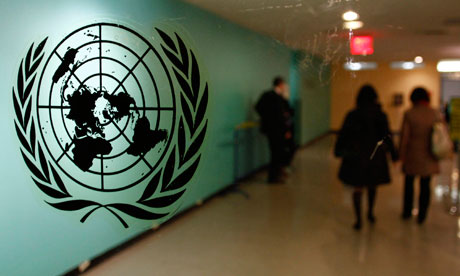
    UN logo on a door at U.N. headquarters in New York

    The next UN IPCC report is due out in September. Photograph: Joshua Lott/REUTERS

    We are weeks away from the much-anticipated release of the 5th climate report from the Intergovernmental Panel on Climate Change (IPCC). This organization has worked very hard to summarize the latest science on climate change, with thousands of donated hours from scientists around the globe. Although there are many other climate reports that synthesize the science, the IPCC is the largest and most comprehensive.

    I know many of the scientists who have taken on leadership author roles, without pay, to produce this document. We owe them our gratitude and congratulations.

    So, what will the report say? I will admit that I have not read the report (it hasn’t been released). Early drafts have been leaked, primarily by people trying to disrupt the process. These early drafts allow us to predict what will be contained within the report. An alternative approach is to review the immense body of literature from which the report is drawn. Based on the literature I’ve reviewed, I will predict the central themes of the IPCC report.

    First, readers will likely find that this report is very similar to the last report (which was released in 2007). There will be slight changes to our confidence in certain observations. Climate models will have improved slightly, particularly in how they handle atmospheric particulates and cloud formation. A major effort since the last report has been the use of climate models to predict changes at the regional level. The report will likely say that this endeavor has had mixed success.

    The new report will describe how climate changes are continuing without abatement. In particular, temperatures are rising, oceans are heating, waters are rising, ice is melting, the oceans are acidifying, heat is even moving to the deepest parts of the oceans. Just as importantly, the report will show that these changes are largely human-caused.

    Some items are worse than we thought. In the last report, ice loss, particularly from Greenland, was a minor issue. Now, it is clear that not only Greenland, but also Antarctica are melting and this melt is raising sea levels. Furthermore, Arctic sea ice is being lost faster than previously reported.

    The new report will likely have continued questions. For instance, how will hurricanes change in a warming world (the most powerful hurricanes are becoming even more powerful, but the change in frequency is not known) is still an open question.

    Extreme weather will be a mixed bag. Some extreme weather has certainly increased (heat waves for instance, drought in certain areas, and heavy precipitation events). Changes to tornadoes and thunderstorms? That is one area that is highly uncertain.

    So, in short, since 2007 we have developed better tools, and we are more certain about how we are changing the climate. Other areas still vex us. But, it is clear we certainly know enough to take action to stop the coming changes to our climate.

    How does this square with my title? One continuing question is, how much and how fast will the climate change. Are we going to be in a “slow simmer” or a “fast boil”? The answer to this question rests on how sensitive the climate is. If the climate is not very sensitive, it means the Earth’s temperature will change more slowly. A more sensitive Earth will have a more rapid temperature change.

    There is some belief that the IPCC will lower the range of climate sensitivity by a tiny amount. If my crystal ball is correct, the denialosphere will latch onto this, and will, unwittingly, be agreeing that the IPCC is correct; we are changing the climate. You cannot both accept the IPCC conclusions that humans are changing the climate and simultaneously claim that climate change is either not occurring or is natural. In the end, the contrarians will be in the “slow simmer” camp. So listen carefully to the Christopher Moncktons, James Inhofes, and Rush Limbaughs of this world. Wait for them to bring up the IPCC sensitivity and realize just how much they have conceded.

    But back to the IPCC; in a certain sense, the IPCC has done its job. For this fifth report, they have synthesized the science and provided enough evidence that action is warranted. How many more reports of this type do we need? Will a sixth report that confirms what we already know make much of a difference? Will a seventh? Do these reports need to be written every 5-6 years? Perhaps one a decade would be sufficient? These reports require enormous amounts of time and energy. Scientists who take authorship roles put their own research on hold, sometimes for years.

    Whatever the future holds for the IPCC, the history books will tell us we were warned. Time and time again, the world’s best scientists have sent us clear messages. Whatever happens, whatever pathway we choose, whatever are the future climate disruptions, we owe these scientists, and the IPCC our deepest gratitude. Thanks.