Category: Uncategorized

  • The Sun’s Magnetic Field is About to Flip

    The Sun’s Magnetic Field is About to Flip

    Inbox
    x
    NASA Science News <noreply@nasascience.org>
    8:05 AM (1 hour ago)

    to NASA
    NASA Science News for August 5, 2013According to data from NASA-supported observatories, the sun’s global magnetic field is about to reverse polarity. This is a sign that Solar Max has arrived.

    FULL STORY: http://science.nasa.gov/science-news/science-at-nasa/2013/05aug_fieldflip/

    VIDEO: http://www.youtube.com/watch?v=34gNgaME86Y

    You are currently subscribed to snglist as: nevilleg729@gmail.com.

    YouTube – Videos from this email
  • Neonicotinoids are the new DDT killing the natural world

    Neonicotinoids are the new DDT killing the natural world

    UK is collaborating in peddling the corporate line that neonicotinoid pesticides are safe to use – they are anything but

    Beta
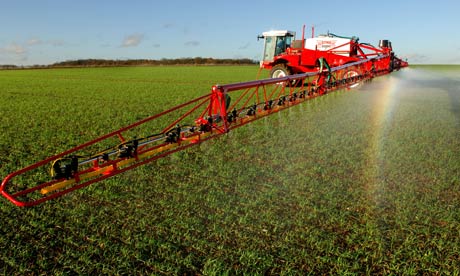
    Monbiot on Neonicotinoids : Farmer spraying insecticide in agricultural field of  Bedfordshire

    A farmer spraying crops with insecticide in Bedfordshire. Photograph: David Wootton/Alamy

    It’s the new DDT: a class of poisons licensed for widespread use before they had been properly tested, which are now ripping the natural world apart. And it’s another demonstration of the old truth that those who do not learn from history are destined to repeat it.

    It is only now, when neonicotinoids are already the world’s most widely deployed insecticides, that we are beginning to understand how extensive their impacts are. Just as the manufacturers did for DDT, the corporations which make these toxins claimed that they were harmless to species other than the pests they targeted. Just as they did for DDT, they have threatened people who have raised concerns, published misleading claims and done all they can to bamboozle the public. And, as if to ensure that the story sticks to the old script, some governments have collaborated in this effort. Among the most culpable is the government of the United Kingdom.

    As Prof Dave Goulson shows in his review of the impacts of these pesticides, we still know almost nothing about how most lifeforms are affected. But as the evidence has begun to accumulate, scientists have started discovering impacts across a vast range of wildlife.

    Neonicotinoids are already known as a major cause of the decline of bees and other pollinators. These pesticides can be applied to the seeds of crops, and they remain in the plant as it grows, killing the insects which eat it. The quantities required to destroy insect life are astonishingly small: by volume these poisons are 10,000 times as powerful as DDT. When honeybees are exposed to just 5 nanogrammes of neonicotinoids, half of them will die. As bees, hoverflies, butterflies, moths, beetles and other pollinators feed from the flowers of treated crops, they are, it seems, able to absorb enough of the pesticide to compromise their survival.

    But only a tiny proportion of the neonicotinoids that farmers use enter the pollen or nectar of the flower. Studies conducted so far suggest that only between 1.6% and 20% of the pesticide used for dressing seeds is actually absorbed by the crop: a far lower rate even than when toxins are sprayed onto leaves. Some of the residue blows off as dust, which is likely to wreak havoc among the populations of many species of insects in hedgerows and surrounding habitats. But the great majority – Goulson says “typically more than 90%” – of the pesticide applied to the seeds enters the soil.
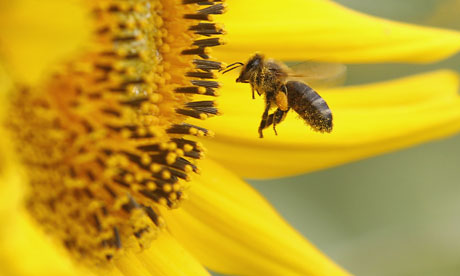
    Europe Ban insecticide Fipronil : A bee collects pollen from a sunflower A bee collects pollen from a sunflower. Neonicotinoid containing insecticides used in gardens and fields have proved fatal for the bee population, which has a knock-on effect on the wider ecology. Photograph: Roland Weihrauch/AFP/Getty ImagesIn other words, the reality is a world apart from the impression created by the manufacturers, which keep describing the dressing of seeds with pesticides as “precise” and “targeted”.

    Neonicotinoids are highly persistent chemicals, lasting (according to the few studies published so far) for up to 19 years in the soil. Because they are persistent, they are likely to accumulate: with every year of application the soil will become more toxic.

    What these pesticides do once they are in the soil, no one knows, as sufficient research has not been conducted. But – deadly to all insects and possibly other species at tiny concentrations – they are likely to wipe out a high proportion of the soil fauna. Does this include earthworms? Or the birds and mammals that eat earthworms? Or for that matter, the birds and mammals that eat insects or treated seeds? We don’t yet know enough to say.

    This is the story you’ll keep hearing about these pesticides: we have gone into it blind. Our governments have approved their use without the faintest idea of what the consequences are likely to be.
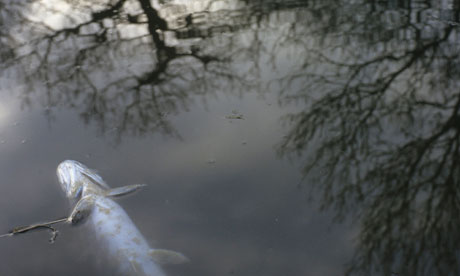
    Monbiot blog on Neonicotinoids : A dead pike due to pollution on the River Kennet A dead pike on the River Kennet. Photograph: Adrian Arbib/AlamyYou may have the impression that neonicotinoids have been banned by the European Union. They have not. The use of a few of these pesticides has been suspended for two years, but only for certain purposes. Listening to the legislators, you could be forgiven for believing that the only species which might be affected is honeybees, and the only way in which they can be killed is through the flowers of plants whose seeds were dressed.

    But neonicotinoids are also sprayed onto the leaves of a wide variety of crop plants. They are also spread over pastures and parks in granules, in order to kill insects that live in the soil and eat the roots of the grass. These applications, and many others, remain legal in the EU, even though we don’t know how severe the wider impacts are. We do, however, know enough to conclude that they are likely to be bad.

    Of course, not all the neonicotinoids entering the soil stay there indefinitely. You’ll be relieved to hear that some of them are washed out, whereupon … ah yes, they end up in groundwater or in the rivers. What happens there? Who knows? Neonicotinoids are not even listed among the substances that must be monitored under the EU’s water framework directive, so we have no clear picture of what their concentrations are in the water that we and many other species use.

    But a study conducted in the Netherlands shows that some of the water leaving horticultural areas is so heavily contaminated with these pesticides that it could be used to treat lice. The same study shows that even at much lower concentrations – no greater than the limits set by the EU – the neonicotinoids entering river systems wipe out half the invertebrate species you would expect to find in the water. That’s another way of saying erasing much of the foodweb.

    I was prompted to write this article by the horrible news from the River Kennet in southern England: a highly protected ecosystem that is listed among the few dozen true chalk streams on Earth. In July, someone – farmer or householder, no one yet knows – flushed another kind of pesticide, chlorpyrifos, down their sink. The amount was equivalent – in pure form – to two teaspoonsful. It passed through Marlborough sewage works and wiped out most of the invertebrates in 15 miles of the river.

    The news hit me like a bereavement. The best job I ever had was working, during a summer vacation from university, as temporary waterkeeper on the section of the Kennet owned by the Sutton estate. The incumbent had died suddenly. It was a difficult job and, for the most part, I made a mess of it.

    But I came to know and love that stretch of river, and to marvel at the astonishing profusion of life the clear water contained. Up to my chest in it for much of the day, I immersed myself in the ecology, and spent far more time than I should have done watching watervoles and kingfishers; giant chub fanning their fins in the shade of the trees; great spotted trout so loyal to their posts that they had brushed white the gravel of the river bed beneath their tails; native crayfish; dragonflies; mayflies; caddis larvae; freshwater shrimps and all the other teeming creatures of the benthos.

    In the evenings, wanting company and fascinated in equal measure by the protest and the remarkable people it attracted, I would stop at the peace camp outside the gates of the Greenham Common nuclear base. I’ve told the strange story that unfolded during my visits in another post.

    Campaigners seeking to protect the river have described how, after the contamination, the river stank from the carcasses of the decaying insects and shrimps. Without insects and shrimps to feed on, the fish, birds and amphibians that use the river are likely to fade away and die.

    After absorbing this news, I remembered the Dutch study, and it struck me that neonicotinoid pesticides are likely, in many places, to be reducing the life of the rivers they enter to a similar extent: not once, but for as long as they are deployed on the surrounding land.

    Richard Benyon, the minister supposed to be in charge of protecting wildlife and biodiversity, who happens to own the fishing rights on part of the River Kennet, and to represent a constituency through which it passes, expressed his “anger” about the chlorpyrifos poisoning. Should he not also be expressing his anger at the routine poisoning of rivers by neonicotinoids?

    Were he to do so, he would find himself in serious trouble with his boss. Just as they are systematically poisoning our ecosystems, neonicotinoids have also poisoned the policies (admittedly pretty toxic already) of the department supposed to be regulating them. In April, the Observer published a letter sent by the minister in charge of the Department for Environment, Food and Rural Affairs (Defra), Owen Paterson, to Syngenta, which manufactures some of these pesticides. Paterson promised the company that his efforts to prevent its products from being banned “will continue and intensify in the coming days”.

    And sure enough, the UK refused to support the temporary bans proposed by the commission both in April and in July, despite the massive petitions and the 80,000 emails on the subject that Paterson received. When Paterson and his department “Deathra” were faced with a choice between the survival of natural world and the profits of the pesticides companies, there was not much doubt about how they would jump. Fortunately they failed.

    Their attempt to justify their votes led to one of the most disgraceful episodes in the sorry record of this government. The government’s new chief scientist, Sir Mark Walport, championed a “study” Deathra had commissioned, which purported to show that neonicotinoids do not kill bees. It was not published in a peer-reviewed journal, nor could it be, as any self-respecting scientist, let alone the government’s chief scientist, should have been able to see in a moment that it was complete junk. Among many other problems, the controls were hopelessly contaminated with the pesticide whose impacts the trial was supposed to be testing. The “study” was later ripped apart by the European Food Safety Authority.

    But Walport did still worse, making wildly misleading statements about the science, and using scare tactics and emotional blackmail to try to prevent the pesticides from being banned, on behalf of his new masters.

    It is hard to emphasise sufficiently the importance of this moment or the dangers it contains: the total failure of the government’s primary source of scientific advice, right at the beginning of his tenure. The chief scientist is not meant to be a toadying boot-licker, but someone who stands up for the facts and the principles of science against political pressure. Walport disgraced his post, betrayed the scientific community and sold the natural world down the river, apparently to please his employers.

    Last week, as if to remind us of the extent of the capture of this government by the corporations it is supposed to be regulating, the scientist who led the worthless trials that Walport and Paterson cited as their excuse left the government to take up a new post at … Syngenta. It seems to me that she was, in effect, working for them already.

    So here we have a department staggering around like a drunkard with a loaded machine gun, assuring us that “it’sh perfectly shafe.” The people who should be defending the natural world have conspired with the manufacturers of wide-spectrum biocides to permit levels of destruction which we can only guess. In doing so they appear to be engineering another silent spring.

    Monbiot.com

  • Relocation of Alaska’s sinking Newtok village halted

    Relocation of Alaska’s sinking Newtok village halted

    Setback for tribal communities threatened by climate change as government freezes funding over local political dispute

    Newtok, Alaska

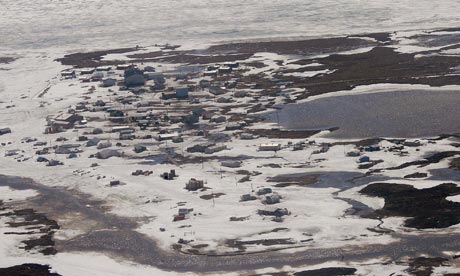
    An aerial view of Newtok, Alaska where the eroding bank along the Ninglick River has long been a problem for the village. Photograph: Al Grillo/AP

    An Alaskan village’s quest to move to higher ground and avoid being drowned by climate change has sputtered to a halt, The Guardian has learned.

    Newtok, on the Bering Sea coast, is sinking and the highest point in the village – the school which sits perched atop 20ft pilings – could be underwater by 2017. But the village’s relocation effort broke down this summer because of an internal political conflict and a freeze on government funds.

    The Guardian wrote about the strains placed on Newtok by the erosion which is tearing away at the land, and at the villagers’ efforts to move to a new site, known as Mertarvik, in an interactive series in May.

    Those tensions fed a rebellion against the village leadership, the Newtok Traditional Council, which had run the village for seven years without facing an election, and the administrator overseeing the relocation effort, Stanley Tom. His critics said he had botched the move to Mertarvik, and neglected the existing village.

    Since October, Newtok residents voted repeatedly to elect a new roster of candidates to the council. They also tried to remove Tom. But the council refused to recognise the results, and Tom refused to step aside.

    In July, the Bureau of Indian Affairs (BIA) took the unusual step of intervening in the internal dispute, and ruled the old council – which was working closely with Tom – no longer represented the villagers of Newtok. In an 11 July letter, Eufrona O’Neill, acting regional director of the BIA, noted the agency generally did not intervene in tribal political conflicts.

    But she said the stand-off put the village at risk: “The continuation of a leadership vacuum would be detrimental to the best interests of the tribe, particularly in the present circumstances, where the community is in the midst of trying to physically relocate to a new village site due to serious erosion occurring at the present site.”

    O’Neill noted the confusion could freeze funds for the village, as government agencies withhold funds if there are doubts about lawful signing authority. She went on to determine that the BIA now recognised the new council, which had challenged Tom’s authority. Tom said in a telephone interview he would appeal the ruling – ensuring the political stand-off continues.

    The long stand-off has cost the village several months in its efforts to relocate, Tom said. “Everything is kind of frozen right now,” he said. “We’ve had a pretty big setback.” Other relocations efforts were also on hold for unrelated causes.

    The internal dispute exposed the severe strain on native Alaskan villages – such as Newtok – in dealing with the effects of climate change. Some 186 native Alaskan villages – or 86% of all native communities in Alaska – are threatened by climate change, a federal government report found.

    Many villages, like Newtok, are losing land to erosion. The Ninglick river, which encircles Newtok is eating the land out from under the village. Others are sinking in the melting permafrost. A handful have started the process of relocation. But none had gone as far as Newtok in finding a new site, and beginning the slow and laborious process of negotiating through the web of state agencies to find funds for their relocation.

    Robin Bronen, a human rights lawyer in Anchorage, has argued extensively that the federal government’s failure to recognise slow-moving climate threats as disasters leaves such communities stranded, with no clear set of guidelines – or designated funds – to secure their communities in place, or plan a move.

    Now even Newtok’s relocation effort is in trouble. Amid the funding delays and political crisis, Newtok did not take on any new building work – leaving the 350 residents with no place to go when the waters come in. It was the second year in a row the village was forced to cancel planned construction. In 2012, a barge laden with materials for a road project undertaken by the military ran aground – shutting down construction for the year.

    Tom had said at the start of the year that he hoped 2013 would bring a burst of construction at the new site. He had initially hoped to use more than $4m in Alaskan state government to bring in heavy equipment to quarry rock, and to build housing for the villages. Tom also said he was hoping to complete a detailed planning survey.

    There were plans also to complete the largest planned structure for the new village – an evacuation centre designed to provide shelter to all of Newtok’s residents in the event of a severe storm. The evacuation centre now consists of a simple concrete platform. But the funds were not released – and Tom’s determination to contest the BIA decision – suggests the stand-off could continue.

  • Climate change pushing marine life towards the poles, says study

    Climate change pushing marine life towards the poles, says study

    Marine species, more than land-based species, are altering their breeding, feeding and migration patterns

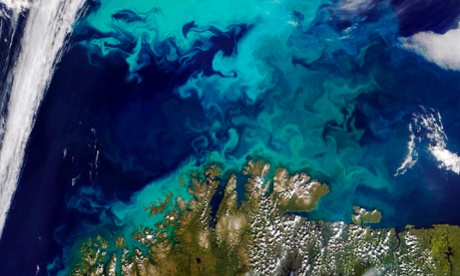
    Phytoplankton bloom in the cool waters of the Barents Sea off the northern coast of Norway.
    Phytoplankton blooms, such as above in Norway, and other marine life are moving towards cooler waters. Photograph: HO/AFP/Getty Images

    Rising ocean temperatures are rearranging the biological make-up of our oceans, pushing species towards the poles by 7kms every year, as they chase the climates they can survive in, according to new research.

    The study, conducted by a working group of scientists from 17 different institutions, gathered data from seven different countries and found the warming oceans are causing marine species to alter their breeding, feeding and migration patterns.

    Surprisingly, land species are shifting at a rate of less than 1km a year in comparison, even though land surface temperatures are rising at a much faster rate than those in the ocean.

    “In general, the air is warming faster than the ocean because the air has greater capacity to absorb temperature. So we expected to see more rapid response on land than in the ocean. But we sort of found the inverse,” said study researcher Dr Christopher Brown, post-doctoral research fellow at the University of Queensland’s Global Change Institute.

    Brown said this may be because marine animals are able to move vast distances, or it could be because it’s easier to escape changing temperatures on land where there are hills and valleys, rather than on a flat ocean surface.

    The team looked at a wide variety of species, from plankton and ocean plants to predators such as seals, seabirds and big fish.

    “One of the unique things about this study is that we’ve looked at everything,” said Brown.

    “We covered every link in the food chain and we found there were changes in marine life that were consistent with climate change across all the world’s oceans and across all those different links in the food chain.”

    The warming oceans are shortening winter and bringing on spring and all the events that come with it – like breeding events and plankton blooms – earlier than normal.

    For the species that can’t keep moving towards the colder waters, this could have dire consequences.

    “Some species like barnacles and lots of shellfish are constrained to living on the coast, so in places like Tasmania, if they’re already at the edge of the range there’s nowhere for them to go. You could potentially lose those,” said Brown.

    The scientists found that 81% of the study’s observations supported the hypothesis that climate change was behind the changes seen.

    To combat this, Brown said people have to think about changing activities to adapt.

    “For example, fisheries might need to move their ports to keep track of the species they prefer to catch,” he said.

    “The obvious one is to reduce greenhouse gas emissions which will slow or reduce the rate of warming in the oceans, but there’s a long lag time in that. Even if we reduce emissions now then those effects won’t be seen for 20 years or so.”

  • Ground zero in Australia’s fight against infectious diseases

    Ground zero in Australia’s fight against infectious diseases

    First published:
    Monday 5 August 2013 9:01AM
    By:
    Professor Clement Boughton

    Australia’s early settlements were for many years immune to foreign infectious diseases by virtue of the fact that most sufferers had either died or recovered by the time they arrived. But gradually Europe’s diseases—smallpox, scarlet fever, measles and diphtheria—all made it to the mainland, resulting in wave upon wave of panic-inducing outbreaks, as Professor Clem Boughton writes.


    On the 25th of May 1881, the child of Mr Chong, a Chinese immigrant living at 223 Lower George St Sydney was found to be suffering from smallpox. Smallpox had been a scourge for centuries and the cause of many thousands of deaths and much disability. From Lower George St, the contagion spread to other streets in the city and inner suburbs. The public reaction was predictable—one of virtual panic.

    Smallpox was a quarantinable disease. Sufferers had to be isolated from the community until they were no longer infectious and contacts who might have been infected also had to be isolated in case they developed the disease. This was done initially at the North Head Quarantine Station that was designed to accommodate passengers and crew from overseas ships carrying cases with quarantinable diseases. Obviously this station should not be filled with land based patients, as a ship could arrive at any time with a quarantinable disease aboard, so a couple of old hulks were also pressed into use until more satisfactory arrangements could be made. In addition, the Station was remote from the city and at that time, not near any hospital facilities.

    When finally Australia was discovered by Europe, such diseases as  measles, diphtheria, poliomyelitis and whooping cough did not enter this country for some time.  Because of the long time needed to sail from England and Europe, often longer than the incubation periods of these diseases, such infections usually died out when all those on board who were susceptible had been infected.

    This was the occasion for the establishment of the Board of Health in NSW, and it was appointed specifically to deal with this frightening emergency. And so 500 acres of land located well out of town, nine miles in fact, at a place called Little Bay down near La Perouse, were allocated for the establishment of an emergency quarantine hospital to handle the problem. This was remote sandy scrubby country to which only unmade roads and tracks gave access.

    The initial accommodation consisted of a series of bell tents hastily erected on a flat area of grassy ground adjoining the beach of Little Bay, and the first patients were admitted in wet and windy weather in September 1881. However, Constable Houlahan, who was put in charge, did a great job in making admissions to the settlement welcome.

    In the meantime, construction of more substantial accommodation along the cliffs facing the Pacific Ocean proceeded apace. Because of the urgency of the situation, the quickest construction methods were used and this meant building with wood and corrugated iron—not designed for long life in the salty air of the seashore. Still, the crisis had been met to everyone’s satisfaction.

    The epidemic continued until February 1882 and during the nine months it lasted, there were a known 157 cases, most of whom were treated at the Coast Hospital as the new hospital came to be known. Its name was changed to the Prince Henry Hospital in 1934. Forty of these smallpox cases died, a case fatality rate of 25%. These victims were buried in a hospital cemetery some distance south of the newly constructed wards.

    Smallpox was introduced into Sydney from time to time on ships bringing the virus from infected overseas ports, and periodically the place was reopened to accommodate such cases. After 1884 it was decided to use the Coast as a convalescent centre for patients from the city hospitals to free up their beds. And then the reasonable suggestion was made to make it the infectious diseases hospital for Sydney, a decision welcomed by the city hospitals as a highly transmissible infectious disease inadvertently admitted could result in the closure of one or more of their wards for several weeks..

    The story of the Coast Hospital is related to the intriguing history of infectious diseases in this country. The Australian continent separated from the great south Gondwanaland Continent about 70 million years ago, and migrated northwards. Because of its extreme geographical isolation from the rest of the world for many millions of years, most of the communicable diseases that evolved in the major populated centres of Europe were not to be found among Australian indigenes.

    When finally Australia was discovered by Europe, such diseases as  measles, diphtheria, poliomyelitis and whooping cough did not enter this country for some time.  Because of the long time needed to sail from England and Europe, often longer than the incubation periods of these diseases, such infections usually died out when all those on board who were susceptible, had been infected. Also while the sizes of communities in Australia were small, when infectious diseases like measles were introduced, they died out because there were not enough susceptibles to keep them going.

    Measles (morbilli) probably made its first appearance in Australia in October 1834 among the passengers of the ship David Scott which sailed direct from London to Sydney; this resulted in an outbreak of the disease in Sydney. Another outbreak started in 1850 in Victoria as a result of importation of the infection on the ship Persian from England, and reached NSW in 1853.

    Scarlet fever was first recognised in NSW between 1840 and 1850 and was noted then to cause high death rates among indigenes. Towards the end of the 19th century it was quite virulent, causing many deaths and much disability. Penicillin could have quickly controlled the infection, but of course was not available until the late 1940s.

    Whooping cough appeared in NSW in March 1828 having arrived on the ship Morley which carried convicts from England. It swept uncontrollably through the colony, causing many deaths including the son of Governor Darling. There were explosive outbreaks from 1858, with 80% of deaths occurring in babies in the first two years of life. Death rates among indigenes were again very high.

    Diphtheria was first recorded in Victoria in October 1858, to which state most English immigrants went. The disease was prevalent in England in June 1858. It took a heavy toll of children until the introduction of vaccine in the late 1920s.

    By the time the Coast Hospital had been established in 1881, these diseases had become endemic in Sydney.

    Poliomyelitis (infantile paralysis) was first recorded in sporadic form in 1887 when cases were reported on the Clarence River NSW and in Port Lincoln SA, and thereafter in sporadic outbreaks until the early 1900’s when it became endemic. Parents’ greatest fears were that their children could become paralysed for life, or die from asphyxia. It was not until 1963 that it could be controlled by the injectable Salk and then the oral Sabin polio vaccine.

    Smallpox made a re-appearance in 1913 among workers in a clothing factory in Chalmers St Sydney; this time it was variola minor, a less virulent form of smallpox called alastrim. It was apparently brought into Australia by the ship SS Zealandia from Vancouver. The disease spread through Sydney and to a number of country towns including Taree, Stroud, Moree, Walgett and Yass and continued until 1919, being responsible for some 2400 cases in total, but no deaths.

    Smallpox was declared in 1980 by WHO to be globally eradicated by means of Jennerian vaccination—one of mankind’s greatest achievements.

    The numbers of cases of scarlet fever, measles, diphtheria and whooping cough admitted to the Coast Hospital from the community, increased each year, until in the 1920s there were up to 2000 admissions of some of these diseases in a year. In Australia as a whole, in the decade 1926 to 1935 there were 4074 deaths from diphtheria alone, when the total population was only 6.6 million. The vaccine was introduced during that decade and numbers of cases and deaths steadily declined, until in the decade from 1986 to 1995 there were none.  In the decade 1946 to 1955, polio caused 1013 deaths.  After the vaccines became available, the number of cases declined to zero by 1985.

    At the Coast in the early years prior to immunisation there were no ways of effectively protecting staff members from these illnesses, and many succumbed. They were very brave people. One can visit the museum at the Prince Henry Hospital site at Little Bay recounting its history. It is open on Sundays between 10am and 4pm in Ward 1.

    This hospital had many tumultuous years ahead, which included, in addition to the infectious diseases of childhood, bubonic plague, cholera, leprosy, sexually transmissible infections, poliomyelitis and influenza epidemics, and the vicissitudes of politics.

    One message comes through very loud and clear:  that is, without adequate immunisation of our communities, we can never fully protect our people, and especially our children, from these terrible vaccine preventable infectious diseases.  Mistaken prejudice is still undermining full effectiveness of our immunisation programs, with the risk that these diseases could reappear here, as is now happening in the UK, USA and Europe. We must not let this happen.

    Professor Clement Boughton is from the University of New South Wales and worked at the Prince Henry Hospital for many years. Find out more at Ockham’s Razor.

    Add comment

  • ARCTIC SEA ICE Sea ice extent


    Polar Portal
    Welcome

    Welcome to the new arctic monitoring web-site
    The Danish Arctic research institutions present updated knowledge on the condition of two major components of the Arctic: The Greenland Ice Sheet and the sea ice

    ARCTIC SEA ICE

    Sea ice extent


    Sea Ice coverage on the northern hemisphere


    The figure shows daily updated sea-ice extent in the Arctic, calculated as the total area of ice-covered ocean. The sea-ice cover expands throughout the winter and reaches its maximum in early March. The melt season begins when the sunlight intensifies in the spring, and in late summer the ice-covered area is down to about a third of the winter maximum.

    The ice-covered area is calculated from the ice-type data from the Ocean and Sea Ice, Satellite Application Facility (OSISAF), where areas with ice concentrations higher than 15% are classified as ice and below 15% as open water.

    The grey shaded area corresponds to the climate mean plus/minus 1 standard deviation.

    Sea Ice coverage on the northern hemisphere


    The figure shows a map with daily updated sea-ice coverage in the northern hemisphere. The scale goes from white, representing 100% ice cover, to black that defines the ice edge. The blue colour indicates coastlines. The melt season begins when the sunlight intensifies in the spring and in late summer the ice-covered area is down to about a third of the winter maximum.

    The ice-covered area is calculated from the ice-type data from the Ocean and Sea Ice, Satellite Application Facility (OSISAF), where areas with ice concentrations higher than 15% are classified as ice, and below 15% as open water.