Category: Uncategorized

  • Rising Seas 5: 800 miles of roads at risk, especially in shore counties

    Rising Seas 5: 800 miles of roads at risk, especially in shore counties

    By · August 2, 2013 · No comments
    ·
         

    This is the fifth and last in a series on rising sea levels.

    By Karl B. Hille and Sydney Paul

    Capital News Service
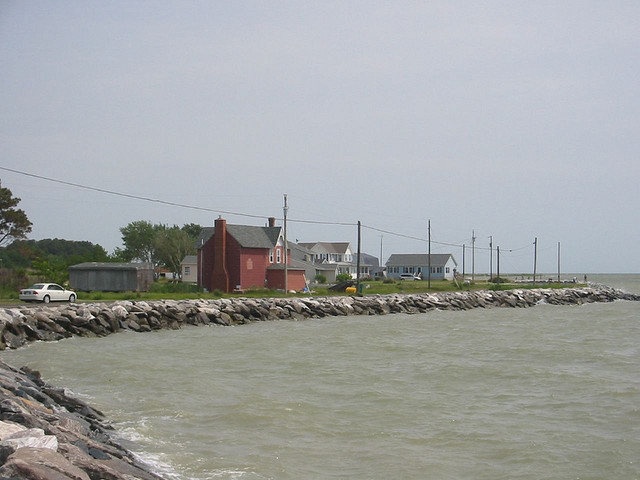
    Seawall at Hoopersville on Middle Hoopers Island (By WorldIslandInfo.com on flickr)

    Seawall at Hoopersville on Middle Hoopers Island (By WorldIslandInfo.com on flickr)

    Gov. Martin O’Malley warned in December that rising sea levels over the next century would threaten “400 miles of roadways,” when he signed an executive order making protection of billions of dollars in state infrastructure a top priority.

    That’s not the half of it. A CNS analysis shows the total impact, factoring in county-maintained roads, could be much worse.

    Maryland has more than 5,200 miles of state roads and about 21,000 miles of county roads, according to the Maryland State Highway Administration. A CNS analysis found that roughly 800 miles of roads would be affected if sea levels rise another 2 feet. At 5 feet, an estimated 3,700 miles would be under water.

    The bay already has risen more than a foot in the last century, and scientists predict it will rise 2 to 5 feet before the end of the next century.

    The CNS analysis used land elevation data from U.S. Geological Survey and population survey data from the census. The effect of local man-made structures such as seawalls is difficult to determine and not included in the calculations.

    The rising waters are expected to flood roads and weaken the foundations of bridges, causing some bridge decks to fail, according to state reports. A 2-foot rise in water levels would have an impact on 93 bridges, culverts and other highway structurres.

    Measuring rods mark water levels under a bridge in Chesapeake Beach.  In low-lying coastal areas, high tides sometimes prevent charter boats from clearing bridges and flood roadside ditches. Capital News Service photo by Sydney Paul

    Measuring rods mark water levels under a bridge in Chesapeake Beach. In low-lying coastal areas, high tides sometimes prevent charter boats from clearing bridges and flood roadside ditches. Capital News Service photo by Sydney Paul

    State Highway Administration evaluating solutions

    Elizabeth Habic, manager of the climate change program at the State Highway Administration, said the agency has embarked on an ambitious mapping effort to identify which state roads are vulnerable to rising sea levels, so they can decide how to tackle the problem.

    “We don’t know how to fix it yet,” she said. “We’re evaluating solutions.”

    Already, high tides alone have been enough to routinely swamp some important state highways, such as Route 261, Bay Avenue, connecting nearly 7,000 people living in Chesapeake Beach and North Beach with Annapolis and points north. That road was raised more than a foot after Hurricane Isabel made it impassable in 2003.

    Other roads critical to smaller communities remain in jeopardy, such as the 10.5-mile-long Route 362 to Mount Vernon in Somerset County.  The route connects many isolated neighborhoods near the end of Mount Vernon’s peninsula and includes a volunteer firehouse and a major bridge nearby.

    Options for sea-level rise adaptation can range from abandoning roads and relocating entire communities to elevating roads, building walls or levees to protect them, and improving drainage, according to engineers and planners. But those measures can be costly.
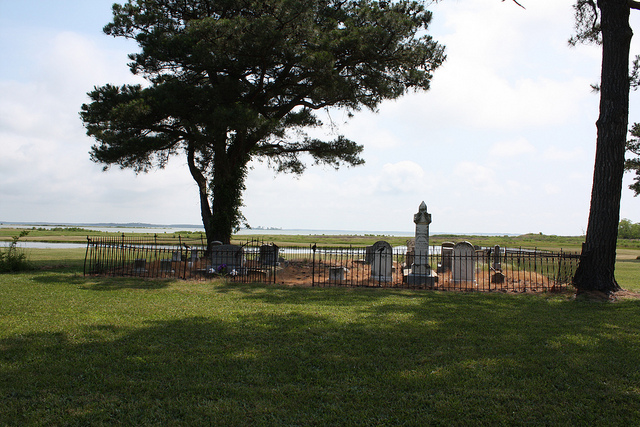
    Hoopers Memorial Church cemetery, like much of Hoopers Island, is near the water. (by melvisflickr)

    Hoopers Memorial Church cemetery, like much of Hoopers Island, is near the water. (by melvisflickr)

    Counties less prepared

    In a state that just raised gas taxes to replenish its depleted Transportation Trust Fund, finding an affordable way to address the looming threat will be a challenge.

    Where funding is in shorter supply, county road systems may be in deeper water. A recent study found some counties less prepared than the state to address the threat.

    Somerset County is one of the few coastal jurisdictions that took advantage of federal funding administered by the state Department of Natural Resources to develop a strategy for dealing with rising sea levels. Among other things, the guidance document said that Somerset either needs to reinforce roadbeds in low-lying areas or raise them higher.

    So far, the county has done “absolutely nothing” to prepare county roads for sea level rise, said George W. Barnes III, director of the county’s roads department: no strategic planning for severe weather, storm surges, long-term sea-level rise, or even routine high-tide flooding. “It’s not on the radar.”

    Other than incorporate some adaptation measures into road repairs after Hurricane Sandy, “we haven’t done anything in preparation, just because of funding,” Barnes said. “Funding is our biggest limitation.”

    “As far as even 2 feet of additional water elevation, some of these areas won’t need road repair, because there won’t be anything there,” he said.

    Climate change now integrated into project planning

    Last year, the agency completed a statewide overview of roads, bridges and other assets that might be threatened, said Gregory Slater, the State Highway Administration’s director of planning and preliminary engineering.. The next step is a more thorough analysis of each road’s function, such as whether it serves as an evacuation route or major interstate.

    For now, sea-level rise adaptations are incorporated into routine road repair and replacement in consultation with the state Department of Natural Resources, Slater said.

    “If we go out there to resurface a roadway, maybe we add a little more pavement to elevate it,” he said.

    There are hundreds of projects under construction or in design that incorporate adjustments for climate change, such as adding an extra inch or so of asphalt to keep up with rising sea levels, he said. However, he said he doesn’t keep a tally and did not know how many miles of state road have actually received such fixes. He also did not know how much money the effort is costing.

    “When (climate change preparation) becomes a part of your business plan, it’s tough to say that you need X amount of dollars to make it happen,” he said. “It’s just integrated in every project.”

    ‘There isn’t anything you can do about it’

    Court Stevenson, an environmental scientist at the University of Maryland, said the state needs do a better job of encouraging the counties to prepare their roads.

    Stevenson served on the Adaptation and Response Working Group of the Governor’s Climate Change Commission, which produced the state’s climate action plan in 2008. The plan set goals and deadlines for reducing carbon emissions and preparing for the effects of climate change, such as weather extremes and rising sea levels.

    “The county roads are vulnerable,” Stevenson said, and local officials in some of the most vulnerable areas of the state are “very resistant” to taking steps to protect their roads against rising sea levels.

    It’s a hard sell in places like Dorchester County, said State Sen. Richard Colburn, a Republican who represents four counties on the Eastern Shore.

    “There is not a tremendous amount of worry about sea level changes because there isn’t anyone in Dorchester County that believes there is anything they can do about it,” he said.

    In a later email, he added that residents’ “overall concern is that they are a poor county, without the financial means to address sea levels rising and climate change.”

    Hooper Island chain in Dorchester threatened

    The Hooper Island chain in Dorchester County would suffer up to $4.3 million in infrastructure damage if sea levels rose 2 feet, according to a report published by the Maryland Department of Transportation. Roads would be swamped and many of the islands’ 389 residents would be stranded.

    But upgrading a 10-mile stretch of roadway there could cost nearly $31 million — almost equaling the total assessed value of all the islands’ land and structures, according to the report.

    Like Somerset County, Dorchester sought guidance on sea-level rise through a federal program administered through the Department of Natural Resources, but the recommendations for roads haven’t been put into action. Also, like Somerset, money is a major hurdle.

    Drivers can see the difference between better funded and maintained state highways and county roads in some areas, said Dorchester roads director Tom Moore.

    “The county funds all we can fund,” he said. “We still continue with our road surveys, like we always did, and make decisions about which roads need attention.”

    Recently, the county raised the road surface on portions of Elliot Island, Moore said. Dorchester also has to contend with roads that are sinking faster than the surrounding land. Roads through marshy areas, like Bestpitch Ferry Road, have new asphalt added on top without grinding down the old surface first.

    “We know that there’s certain places where an extra one and a half inches of asphalt overlay will make some difference,” Moore said, but sometimes the road is still underwater in a high tide or severe storm.


    – See more at: http://baltimorepostexaminer.com/rising-seas-5-800-miles-of-roads-at-risk-especially-in-shore-counties/2013/08/02#sthash.jcZ1xksH.dpuf
  • Finding electricity in water waves

    Finding electricity in water waves

    WET Rotor

    Special to the Hamilton Spectator,Jim Unsworth

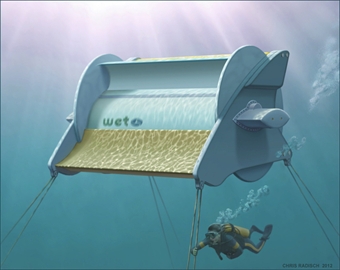
    This is an artist’s rendering of Waterotor, a technology being developed by a couple of Hamilton entrepreneurers Kenneth Spurling and Jim Unsworth.

    Hamilton Spectator

    You’ve heard about wind turbines, those big propellers that whirr away in the countryside generating electricity.

    But what would happen if you used slow water currents instead of air to drive them?

    Imagine being able to generate electricity from trickling water at an economical cost with virtually no impact on the environment.

    That’s the goal behind new technology that two Hamilton businessmen are raising capital for on behalf of Ottawa-based Waterotor Energy Technologies Inc.

    Ken Spurling of Blazon Co. Ltd., and board member of Waterotor, with associate Jim Unsworth are pounding the pavement to raise $6 million in capital to move the technology closer to market.

    They argue the Waterotor technology is an affordable, environmentally friendly way to generate electricity, especially in developing countries that have no electricity or have to rely on expensive fossil-fuel driven generators. They contend that early testing has shown the Waterotor can generate electricity at a cost of 5 or 6 cents per kWh. That compares to the 6.7 c/kWh to 12.4 c/kWh that electricity users pay in Ontario. Elsewhere in the world it can be more than 40 cents.

    Engineers have been drawing power from fast-moving waterways for eons, but slow moving water is only more recently being seen as a potential power source

    Air turbines are criticized for harming birds and bats as well as being noisy. But Unsworth says the Waterotor blade is much smaller and moves much more slowly than wind-powered turbine blades. Unlike propeller-style air turbines, the Waterotor unit turns like a sideways barrel.

    He says fish and other marine life either move over or under the unit without being harmed. As for noise, the blade moves so slowly, that virtually no noise is created, he says.

    The technology was developed by Fred Ferguson of Ottawa, an award-winning inventor who is CEO and chief technology officer of the company. Ferguson, a direct descendant of Samuel F.B. Morse, the inventor of the telegraph, has a background in aeronautics and essentially retooled his knowledge from air to water.

    For more than five years, his company has been developing the technology with various test projects in the Gatineau River in Ottawa, among others.

    The turbines are 10 by 8 feet wide and 7½ feet high. Each unit would cost about $80,000 and is capable of generating up to 5 kilowatts of electricity, enough electricity for a few houses. Typically, several Waterotor units would be placed side-by-side in the water.

    The technology needs water flow speeds of 1.7 and 6.5 mph. Research has shown irrigation canals are typically below 5 mph and more than 90 per cent of all river currents and major ocean currents are below 6.5 mph.

    Hamilton environmentalist and Green Party member Peter Ormond says the technology appears to be low-impact renewable energy. “However, appropriate sites must be reviewed and monitored to ensure that impacts on the local habitat are minimized.

    “Especially as communities embrace conservation and demand management, the Waterotor system is a very exciting technology that represents the new generation of innovative technologies that are replacing the outdated mega-power plants with local sources of environmentally friendly renewable energy options.”

    Professor Bryan Karney, chair of the division of environmental engineering and energy systems department at the University of Toronto, says he feels the kW/hr cost estimate “seems a bit like wishful thinking before one knows the installation environment, generation details, mounting challenges, stability issues, transmission issues, hydraulic capacity, and the role of introducing a significant resistance element into the flow.”

    But he feels the technology shows promise and believes water turbines could play role in supplying future energy needs.


    mmcneil@thespec.com

    905-526-4687 | @Markatthespec

  • Decoding Material Fluxes in the Tropical Ocean: Turbulent Processes Provide Important Contribution to Oxygen Supply

    Science News

    … from universities, journals, and other research organizations

    Decoding Material Fluxes in the Tropical Ocean: Turbulent Processes Provide Important Contribution to Oxygen Supply

    Aug. 2, 2013 — How is vital oxygen supplied to the tropical ocean? For the first time, oceanographers at GEOMAR Helmholtz Centre for Ocean Research Kiel were able to make quantitative statements regarding this question. They showed that about one third of the oxygen supply in these areas is provided by turbulent processes, such as eddies or internal waves.


    Share This:

    The study, conducted in the framework of the Collaborative Research Centre SFB 754 “Climate-Biogeochemistry Interactions in the Tropical Ocean,” was just published in the international journal Biogeosciences.

    In many areas of the tropical oceans, oxygen is in rather short supply. In the Indian Ocean, the eastern Pacific and the Atlantic Ocean off the coast of West Africa, at depths of several hundred meters, there are vast areas with very low oxygen levels, so-called oxygen minimum zones (OMZ). These have been the focus of scientists in Kiel for a number of years. Using modern measurement techniques, they were now able to quantify for the first time which of the processes are important for the oxygen supply to these areas, the so-called ventilation. Thus far, oceanographers had assumed that the dissolved oxygen in the ocean would slowly penetrate from the surface layers to greater depths through large-scale processes. Fluctuations in the trade winds driving the ocean currents could thus regulate the oxygen supply directly. However, measurements off the coast of West Africa and south of the Cape Verde islands have now revealed the major importance of turbulent mixing processes. The scientists used high-precision measurements, such as microstructure probes and profiling current meters, for their investigations.

    The surveying of a so-called tracer, a chemically inert substance discharged into the ocean, confirmed the results of the direct turbulence measurements. The horizontal and vertical spreading of the tracer was determined by chemical analysis with a high degree of accuracy over a period of three years.

    Both measurement methods showed that about one third of the oxygen supply in the tropical oxygen minimum zones is provided by the vertical turbulent mixing. “The relatively high contribution of turbulence to the oxygen budget has surprised us,” says Prof. Dr. Martin Visbeck, one of the initiators of the experiment. “Also, thanks to the improved measurement methods and accuracies, we were breaking new ground here,” Visbeck continued. First author Dr. Tim Fischer, who — as part of his doctorate — was able to significantly improve the parameters settings and evaluation of ship-based current profile measurements to determine the turbulence in the ocean from a moving ship, adds: “Thus, in comparison to the time-consuming microstructure probe measurements, we are able to collect much more data.” Co-author Dr. Donata Banyte from GEOMAR, who — as part of her dissertation — has worked for more than three years with the data from the tracer experiment, adds: “I am delighted to have discovered something really new and important in physical oceanography.”

    “Since any expansion of oxygen deficient areas can have negative effects on the marine ecosystem, it is important to identify the relevant processes thereof. The results will help us to better understand the dynamics and changes in the oxygen minimum zones in the oceans,” says Prof. Visbeck.

    Background information

    The dynamics of oxygen minimum zones is the central theme of the Collaborative Research Center (SFB) 745 “Climate-Biogeochemistry Interactions in the Tropical Ocean,” which is funded by the German Research Foundation at the Christian-Albrechts University in Kiel and at GEOMAR Helmholtz Centre for Ocean Research Kiel.

    Oxygen minimum zones, i.e. zones where oxygen is scarce or even completely missing, are present in all tropical oceans. Measurements of recent years, however, indicate that these zones are expanding. One of the consequences is that the habitat of certain fish species is shrinking. But are these changes part of a natural variation or are they a result of human-induced global change? And how far will these low-oxygen zones spread? These and other questions are investigated by the researchers who are participating in SFB 754.

    In addition, the scientists at the Kiel Cluster of Excellence “The Future Ocean,” also explore the changes in the oceans of the past, present and future with a globally unique approach: Marine, geo and economic scientists, physicians, mathematicians, computer scientists, lawyers as well as corporate and social scientists combine their expertise in eleven multidisciplinary research groups. Their findings contribute significantly to concepts in sustainable use and activity options for a global management of the oceans The new research program is thus aimed at an increased integration of knowledge. The goal is that a basic understanding of the ocean should lead to scientifically sound predictions and scenarios — in a close dialogue with decision-makers — to contribute to a sustainable management of the oceans.


  • Fracking firm Cuadrilla trespassed on private land for geological surveys

    “Different set of rules in the UK for rights of property owners.”

    Fracking firm Cuadrilla trespassed on private land for geological surveys

    Firm has had to pay out to at least one Lancashire homeowner and was warned by ministers that such issues strengthened campaign against shale gas exploration

    A proposed Cuadrilla site at Westby near Lytham on the Fylde coast in Lancashire

    A proposed Cuadrilla site at Westby near Lytham on the Fylde coast in Lancashire which the company plans to explore for shale gas. Photograph: Christopher Thomond for the Guardian

    Fracking company Cuadrilla repeatedly trespassed on to private land during geological surveys and in one garden marked a site for the detonation of explosive charges before being chased off, the Guardian can reveal.

    The company, currently facing serious protests at its drilling site in Balcombe, West Sussex, has paid out to at least one Lancashire homeowner to settle legal action over the trespassing and was warned by ministers that such issues undermined confidence in the company and “only served to strengthen what was now becoming a national campaign” against shale gas exploration.

    Between April and June 2012, Cuadrilla used explosives and lorry-mounted ground vibrators to probe the geological layers beneath the surface of its exploration area in Lancashire. Mark Mills, who lives near Lytham St Annes, told the Guardian: “They blanketed the area; it was unbelievable to see.” Mills said Cuadrilla operatives repeatedly trespassed into his large garden in May to lay cables and drive in dozens of sensors to make seismic recordings.

    After the first cables were laid, he said: “I told an operator don’t go back on my land and he said, ‘I won’t.’ But lo and behold, the next day they had been in again and put a big red mark on the ground.” Mills said the operators’ maps, which he copied, showed the mark was to be the site of a detonation. “It was right near a gas main and my septic tank,” he said.

    Mills said an argument ensued with a group of operators that led to them leaving his property: “It was the most stressful hour of my life. They were extremely unpleasant and my blood pressure had gone through the roof.”

    Mills received a letter in June from Cuadrilla’s then CEO, Mark Miller, apologising for the “disturbance and inconvenience” of “accidentally accessing your property”. In February, the company settled a legal complaint from Mills by paying his legal fees and compensation. Mills has also written to the company requesting compensation for damage to his property following explosions set off on his neighbour’s property, he says.

    Mills said he had initially been in favour of the shale gas exploration, but said: “Cuadrilla have lived up to my worst expectations. I am not a negative person but these people were so disingenuous to deal with: could they not have done it in a professional way?”

    Other local residents, who have chosen anonymity, also reported trespassing by Cuadrilla in the same local area in May. One householder, near Kirkham, said: “I caught four contractors trespassing on my land having gained entry through a field gate which was closed. No permission had been given or indeed sought.”

    A spokesman for Cuadrilla said: “We acknowledge there were some issues with the contractors involved in this operation and we have learned lessons. We are committed to being a good neighbour where we operate: recognising our mistakes and learning from them is an important part of this commitment.”

    The issue of trespassing was raised with senior Cuadrilla managers at a high level meeting on 2 July last year with Charles Hendry, the energy minister at the time. Miller attended the meeting, as did Cuadrilla chairman Lord Browne, who is also the government’s lead non-executive director. According to the minutes of the meeting released to the Guardian under freedom of information rules, Hendry told Cuadrilla’s team: “Fracking has now turned into a very controversial issue. The issue of seismic tremors has contributed to this, but the situation has got worse because of recent reports of badly managed community meetings, reports of trespass on people’s land, etc.”

    Hendry also expressed concern over “recent reports of intrusion into developed areas for the seismic testing over the Jubilee weekend” and said “these incidents only served to strengthen what was now becoming a national campaign”. He warned that before taking a decision on the future of fracking, “the government would need to have confidence that the correct procedures were in place”.According to the meeting notes, Lord Browne said the board was now working effectively and was taking these issues very seriously.

    Previously, the Guardian revealed that Cuadrilla broke the terms of its planning permission in Lancashire by drilling beyond an agreed time limit put in place to protect wintering birds. The Guardian revealed in March that Cuadrilla had failed to inform the government for six months that small earthquakes triggered by their drilling had deformed the well casing that is designed to prevent the contamination of ground water. The latter incident led Hendry to warn Cuadrilla over “weaknesses in its performance as a licensee”.

    Ministers have made a series of announcements in recent weeks to encourage shale gas exploration, including tax breaks and new planning rules. Chancellor George Osborne believes the shale gas revolution seen in the US could, if repeated in the UK, lower gas prices. But many energy experts dispute this and campaigners have warned of environmental risks.

  • Arctic Methane Burp May Slam World Economy

    Arctic Methane Burp May Slam World Economy

    July 28, 2013 in Green, Top News

    By Arthur K Burditt on July 28, 2013.

    Arctic Methane Sea Ice

    Arctic ice is believed by scientists to be a reservoir of methane, a potent greenhouse gas. Recent measurements over such ice masses have recorded heightened methane levels. Source: Eric Kort/NASA, JPL.

    Methane release, due to ice melting in the Arctic, is likely to have a devastating impact on the world economy according to scientists studying the issue. Expected release of methane from thawing permafrost beneath the East Siberian Sea in the next several decades alone is estimated to cost $60 trillion. This is just 15 percent of a total predicted cost of $400 trillion associated with Arctic melt.

    This forecast comes among findings published July 1 in Nature based on research by climate change professor Gail Whiteman of the Erasmus University Rotterdam, ocean physics professor Peter Wadhams of the University of Cambridge, and policy modeling reader Chris Hope of Judge Business School at University of Cambridge.

    According to the research team, the Arctic region is pivotal to the functioning of Earth’s oceans and climate, and the ripple effects of climate change in the Arctic would deal a severe blow to the global economy. In particular, this will come as a result of unlocking frozen reserves of methane, releasing the gas into the atmosphere and speeding up global warming with destructive and costly climactic changes resulting planet-wide.

    An estimated 50-gigatonne (Gt) reservoir of methane is stored in the form of hydrates on the East Siberian Arctic Shelf. This methane will be emitted either gradually over a half a century or suddenly, or alternately in  spurts. The scientists used an integrated assessment model known as PAGE09 to quantify the likely impacts and the costs of mitigative efforts or adaptation.

    An earlier version of the PAGE model was used in preparation of the United Kingdom’s official 2006 Stern Review on the Economics of Climate Change. The PAGE model focuses on net present value of climate effects in relation with quantities of carbon dioxide emitted or saved from entry into the atmosphere. In this study, the team ran the PAGE09 tool 10 thousand times to calculate confidence intervals and assess risks of climate change until the year 2200.

    Higher methane concentrations in the atmosphere that result from release of Arctic Shelf reserves will accelerate global warming, speeding up consequent sea-ice retreat, reducing the reflection of solar energy, accelerating the melting of the Greenland ice sheet. In the scenarios run using the PAGE09 model, a 50 Gt release of methane into the atmosphere between 2015 and 2025 could advance by 15–35 years the date when global mean temperature rise exceeds two degrees Celsius. This would come about in 2035 if no mitigating actions are taken, or by 2040 with more conservative assumptions. Mean climate change impacts were calculated at $60 trillion as a result of methane release alone from that area.

    Arctic climate change risk has not found its way yet into world’s economic and financial institutions in long term planning or preparations. As noted in Nature, neither the World Economic Forum nor the IMF recognize the potential economic threat at hand.

  • Sally Jewell: ‘I Hope There Are No Climate Change Deniers In The Department Of Interior’

    A Republican Case For Climate Action


    Sally Jewell: ‘I Hope There Are No Climate Change Deniers In The Department Of Interior’

    The Huffington Post  |  By Posted: 08/02/2013 10:21 am EDT  |  Updated: 08/02/2013 1:34 pm EDT

    195
    52
    6
    1806
    Get Green Newsletters:

    sally jewell climate change deniers

    Interior Department Secretary says climate change deniers are not welcome at the agency. (Andrew Harrer/Bloomberg via Getty Images)

    Interior Secretary Sally Jewell wants to get rid of any climate change denial at the agency, telling her employees this week that if they doubt the existence of manmade global warming, they need to visit some federal lands to see the proof.

    “I hope there are no climate change deniers in the Department of Interior,” Jewell said Wednesday.

    E&E News reported that Jewell invited any individuals who still hold such views to see the melting permafrost in Alaska or the disappearing snowpacks in the Sierra Mountains.

    “If you don’t believe in it, come out into the resources,” she added.

    Jewell, the former CEO of Recreation Equipment Inc., took over at the Interior Department in April.

    In late June, President Barack Obama used his executive authority to issue a number of measures aimed at curbing climate change.

    The Interior Department will be responsible for issuing permits for 10 gigawatts of renewables on public lands by the end of the year.

    “You and I can actually do something about it,” Jewell said, according to E&E. “That’s a privilege, and I would argue it’s a moral imperative.”

    Jewell’s comments have drawn criticism from climate skeptic blogs, with Marlo Lewis at GlobalWarming.org writing, “Such moralizing would be funny were it not for the chilling effect it is bound to have in an agency already mired in group think.”

    Also on HuffPost:

    Connect The Dots On Climate Change
    1 of 19