Category: Uncategorized

  • Arctic Methane Claims Questioned

    We are seeing conflicting scientific reports. Which one is correct?

    Arctic Methane Claims Questioned

    By Becky Oskin, Staff Writer   |   July 26, 2013 05:19pm ET
    28

    120

    3

    Share

    2

    Arctic ice photographed in 2005.
    The dramatic loss of Arctic sea ice this summer is just one of the signs global warming has not stopped, scientists say.
    Credit: Jeremy Potter NOAA/OAR/OER

    A scientific controversy erupted this week over claims that methane trapped beneath the Arctic Ocean could suddenly escape, releasing huge quantities of methane, a greenhouse gas, in coming decades, with a huge cost to the global economy.

    The issue being debated is this: Could the Arctic seafloor really fart out 50 billion tons of methane in the next few decades? In a commentary published in the journal Nature on Wednesday (July 24), researchers predicted that the rapid shrinking of Arctic sea ice would warm the Arctic Ocean, thawing permafrost beneath the East Siberian Sea and releasing methane gas trapped in the sediments. The big methane belch would come with a $60 trillion price tag, due to intensified global warming from the added methane in the atmosphere, the authors said.

    But climate scientists and experts on methane hydrates, the compound that contains the methane, quickly shot down the methane-release scenario.

    “The paper says that their scenario is ‘likely.’ I strongly disagree,” said Gavin Schmidt, a climate scientist at the NASA Goddard Institute for Space Studies in New York.

    An unlikely scenario

    One line of evidence Schmidt cites comes from ice core records, which include two warm Arctic periods that occurred 8,000 and 125,000 years ago, he said. There is strong evidence that summer sea ice was reduced during these periods, and so the methane-release mechanism (reduced sea ice causes sea floor warming and hydrate melting) could have happened then, too. But there’s no methane pulse in ice cores from either warm period, Schmidt said. “It might be a small thing that we can’t detect, but if it was large enough to have a big climate impact, we would see it,” Schmidt told LiveScience.

    David Archer, a climate scientist at the University of Chicago, said no one has yet proposed a mechanism to quickly release large quantities of methane gas from seafloor sediments into the atmosphere. “It has to be released within a few years to have much impact on climate, but the mechanisms for release operate on time scales of centuries and longer,” Archer said in an email interview.

    Methane has a lifetime of about 10 years in the atmosphere before it starts breaking down into other compounds. [What are Greenhouse Gases?]

    Defending new model

    Today (July 26), Peter Wadhams, a co-author of the Nature commentary, defended the work against critics in an essay posted online.

    Methane hydrate

    When brought to the surface, methane gas will escape from the hydrate and can be burnt off as seen in this picture.
    Credit: Department of Energy

    “The mechanism which is causing the observed mass of rising methane plumes in the East Siberian Sea is itself unprecedented, and the scientists who dismissed the idea of extensive methane release in earlier research were simply not aware of the new mechanism that is causing it,” wrote Wadhams, an oceanographer at the University of Cambridge in the United Kingdom.

    “But once the ice disappears, as it has done, the temperature of the water can rise significantly, and the heat content reaching the seabed can melt the frozen sediments at a rate that was never before possible,” Wadhams added. “David Archer’s 2010 comment that ‘so far no one has seen or proposed a mechanism to make that (a catastrophic methane release) happen’ was not informed by the … mechanism described above. Carolyn Ruppel’s review of 2011 equally does not reflect awareness of this new mechanism,” Wadhams wrote.

    But Ruppel, a methane hydrate expert at the U.S. Geological Survey who authored a review of research on gas hydrates in 2011, also called the sudden-thawing scenario unrealistic.

    “I would say it’s nearly impossible,” Ruppel, chief of the USGS Gas Hydrates Project in Woods Holes, Mass., told LiveScience.

    Methane: microbial or hydrate?

    Much of the Arctic’s methane sits in permafrost buried under hundreds of meters of seafloor sediments, Ruppel said. The deposits formed on exposed ground during the last Ice Age, when sea levels were lower. The rising seas have been warming the deposits for millennia. Any added warming will have to work down through the thick sediment cap.

    gas hydrates

    On this cross-section running from onshore to deep-water ocean basin, gas hydrates occur in and beneath permafrost that is located onshore and on continental shelves flooded over the past 15,000 years due to sea level rise. For the deep-water system, the gas hydrate zone vanishes on upper continental slopes before thickening seaward in the shallow sediments with increasing water depth.
    Credit: USGS

    Much of the modeling predictions in the Nature commentary were based on recent discoveries of rising methane plumes in the East Siberian Sea. However, those plumes may be from methane hydrates or from microbes.

    “Methane release in the Arctic from both marine and terrestrial sources is expected to increase with warming climate, as documented in numerous papers,” Ruppel said. “Much of the methane may actually be produced in the shallow sediments by microbial processes and be completely unrelated to methane hydrates.”

    However, there has yet to be a detectable change in Arctic methane emissions in the atmosphere over the past two decades, Ed Dlugokencky, a research scientist with the National Oceanic and Atmospheric Administration’s Earth System Research Laboratory, said in an email interview.

    Email Becky Oskin or follow her @beckyoskin. Follow us @livescience, Facebook & Google+. Original article on LiveScience.com.

    You Might Also Like

    Worst Allergy Season Ever?
    Worst Allergy Season Ever?
    Realities of One-Night Stands Revealed
    Realities of One-Night Stands Revealed
    'Most Threatened' Tribe Sees No Relief from Illegal Loggers
    ‘Most Threatened’ Tribe Sees No Relief from…
    Easter Science: 6 Facts About Jesus
    Easter Science: 6 Facts About Jesus
    Villagers flee as Java volcano spews ash
    Sponsored
    Villagers flee as Java volcano spews ash
    news.com.au
    Photos from Space: Saunders Island
    Sponsored
    Photos from Space: Saunders Island
    redOrbit
    Latest solar cell breakthrough a nark’s worst nightmare
    Sponsored
    Latest solar cell breakthrough a nark’s worst…
    SolarQuotes.com.au
    Miley Cyrus' Revealing Jean Shorts Cause Twitter To Explode (Pictures)
    Sponsored
    Miley Cyrus’ Revealing Jean Shorts Cause…
    Zimbio
    Worst Allergy Season Ever?
    Worst Allergy Season Ever?
    Realities of One-Night Stands Revealed
    Realities of One-Night Stands Revealed
    'Most Threatened' Tribe Sees No Relief from Illegal Loggers
    ‘Most Threatened’ Tribe Sees No Relief from…
    Easter Science: 6 Facts About Jesus
    Easter Science: 6 Facts About Jesus
    Villagers flee as Java volcano spews ash
    Sponsored
    Villagers flee as Java volcano spews ash
    news.com.au
    Photos from Space: Saunders Island
    Sponsored
    Photos from Space: Saunders Island
    redOrbit
    Latest solar cell breakthrough a nark’s worst nightmare
    Sponsored
    Latest solar cell breakthrough a nark’s worst…
    SolarQuotes.com.au
    Miley Cyrus' Revealing Jean Shorts Cause Twitter To Explode (Pictures)
    Sponsored
    Miley Cyrus’ Revealing Jean Shorts Cause…
    Zimbio
    Author Bio
    Becky Oskin, OurAmazingPlanet Staff Writer

    Becky Oskin

    Becky was a science reporter at The Pasadena Star-News. She has freelanced for New Scientist and the American Institute of Physics and interned at Discovery News. She earned a master’s degree in geology from Caltech, a bachelor’s degree from Washington State University, and a graduate certificate in science writing from the University of California, Santa Cruz. To find out what her latest project is, you can follow Becky on .

    Becky Oskin on

    Contact @beckyoskin on Twitter Contact Becky Oskin by EMail

    Subscribe

    Most Popular

    North Pole buoy
    North Pole Now a Lake
    The goonch is a large, predatory catfish living in much of Asia.
    Photos of the Largest Fish on Earth
    Boy Inhales Blowgun Dart
    an illustration of the quantum teleportation of 'Schrodinger's Cat' wave packets of light from a past physics study.
    Bizarre ‘Schrodinger’s Cat’ Comes Alive in New Experiments
    A map of the United States showing healthy life expectancy - how many years a person can be expected to live in good health - by state.
    Older Adults in South Have Fewer Healthy Years Left
    AdChoices
  • Leaked IPCC report doesn’t let us off the hook


    Leaked IPCC report doesn’t let us off the hook

    Can we all stop worrying about global warming? According to a recent rash of stories in the media, the “climate sensitivity” – the extent to which temperatures respond to more carbon dioxide in the atmosphere – is lower than expected, and thus that the world won’t get as hot as predicted. One story, in The Economist, based on leaked information from a draft of the next assessment by the Intergovernmental Panel on Climate Change, claims the IPCC will revise its sensitivity estimate downwards when they release their official report this September.

    The sceptics have mounted a concerted campaign to persuade journalists and politicians that climate scientists now think that climate sensitivity is lower, says Bob Ward of the Grantham Research Institute on Climate Change and the Environment, London. But is there any truth to the claims?

    Climate sensitivity refers to how much the world will warm if carbon dioxide levels double. But this apparently simple concept is slippier than a Turkish wrestler. As the planet warms in response to rising CO2 levels, a whole series of feedbacks kick in over the following decades, centuries or millennia. Depending on which feedbacks are included and what the timescale is, there are many competing ways of defining sensitivity. To add to the confusion, there are also dozens of ways of calculating it.

    Pollutants

    One way is to look at how much warming there has been in response to rising CO2 levels over the past century. But this approach has all kinds of problems. For starters, we have been pumping out all kinds of pollutants, some of which may be masking the effect of CO2.

    What’s more, in the last decade, CO2 levels have continued to rise but with little surface warming. Such lulls are expected and the latest is probably a blip, due to the oceans soaking up more heat than usual. Unsurprisingly, this means that any sensitivity estimate that includes the past decade will produce a lower value than any calculated without taking the last decade into account, says Reto Knutti of the Institute for Atmospheric and Climate Science in Zurich, Switzerland. He co-authored one such study published earlier this year, which concluded that “equilibrium sensitivity” – usually taken to mean the warming expected after several decades of doubled CO2 – is between 1° C and 5° C, most likely 2° C.

    Another way to calculate sensitivity is to look at how global temperatures changed thousands or millions of years ago in response to changing CO2 levels. Such studies point to a higher value for equilibrium sensitivity, closer to 3° C, says Knutti, who reviewed the evidence last year. But there are all kinds of problems with this approach too, such as the uncertainties about what the world was like in the past.

    A third way to calculate sensitivity is to use climate models, which point to even higher values for equilibrium sensitivity, between 2.2 and 4.7° C, says Knutti: “Above 3 °C at least.” But there’s a lot missing from the models. For one thing, most only include fast feedbacks such as the effect of water vapour. They don’t include slower feedbacks such as increasing vegetation, or the risk of a sudden methane “belch” as the Arctic warms.

    No new consensus

    The bottom line is that there is no new consensus that climate sensitivity is lower than previously thought, says Knutti. The observed trend points to lower values because of the recent slowdown, but other evidence continues to support higher values.

    The last IPCC report stated that equilibrium climate sensitivity was between 2 and 4.5 °C, mostly likely 3 °C. The Economist claims the IPCC’s next report will give a figure between 1.5 and 4.5 °C, with no most likely value. The IPCC won’t confirm or deny it, but it’s not a huge change if it is true.

    “What matters for avoiding dangerous climate change is the upper end, and that hasn’t changed,” says Knutti. Ward makes the same point. “We can’t afford to gamble on sensitivity definitely being low,” he says.

    But will it all be a huge waste if sensitivity does turn out to be low? Far from it. If we don’t cut emissions, Knutti points out, all low sensitivity means is that it will take a decade or two longer for the planet to warm as much as it would if sensitivity was high.

  • The power of solar this election

    The power of solar this election

    Inbox
    x
    GetUp!
    1:22 PM (6 hours ago)

    to me
    We thought you might be interested in this email from Xavier Mayes, a member of Solar Citizens about an opportunity to get involved with the campaign for renewable energy in Macquarie this election.

    Your details have not been shared with Solar Citizens or Xavier Mayes.

    Dear GetUp member,

    About two years ago my partner and I moved from the city and bought our first house in Faulconbridge. Within a month the hot water system gave out! But rather than only looking at it as a hit to our bank balance, it was the push we needed to invest in solar hot water. It was great to know the sun was heating our water each day for free instead of paying for dirty coal power. And, I love my hot water so much that we decided to put in solar panels, as well.

    I am one of 5,777 people in the Blue Mountains-Hawkesbury area who have made the switch to solar. We are taking power generation back into our own hands. And an energy revolution is underway. But there is so much more that needs to be done for us to get to a clean, renewable energy future.

    Through Solar Citizens, I’m working together with members of our community to reach out to solar voters, and demonstrate to candidates that the people of Macquarie want more solar. We are going to make sure Louise Markus, Susan Templeman and the rest of the candidates who want to represent us are clear that solar is important to the voters of Macquarie. Will you join us?

    Come along to one of our upcoming information nights, and we’ll let you know how you can help ensure that solar stays strong in Australia. The information nights will be fun and inspiring, and, we’ll share the plan to make sure solar power is front and centre this election.

    Info night details:

    When: Tuesday 30 July, 6.30 – 8pm
    Where: Mid Mountains Neighbourhood Centre, Lawson
    RSVP and map: www.solarcitizens.org.au/macquarie_info_night_lawson

    When: Wednesday 31 July, 6.30 – 8pm
    Where: Richmond Club, Richmond
    RSVP and map: www.solarcitizens.org.au/macquarie_info_night_richmond

    Everyone is welcome.

    This election is crucially important for Australia’s renewable energy future. In our marginal electorate of Macquarie there are five candidates who are asking for our vote, and all of them have different views on what kind of energy path we go down – whether we see the continued roll out of wind and solar, or stick to more coal and gas.

    This seat’s election race will be one of the most interesting in New South Wales. The media is watching it closely. It will only take only a little over 1000 votes for the seat to change hands. And there are over 11,000 solar voters. That gives those of us who support a solar-powered future a huge opportunity.

    Solar Citizens is a new community organisation, but in a few months, we’ve managed great things. Thousands of Solar Citizens came together in Queensland to stop the Newman Government from penalising solar owners, and we’re now fighting in other states to ensure a sunny future.

    We know that people power has the ability to influence policy – and that’s why we need your voice in Macquarie.

    We look forward to seeing you sometime next week!

    Yours for a sunny future,
    Xavier Mayes, Solar Citizens

    PS from GetUp – Interested in going solar? Already 155 GetUp members have installed panels on their roof as part of our solar campaign with Sungevity. Click here to be part of it http://au.sungevity.org/getup


    GetUp is an independent, not-for-profit community campaigning group. We use new technology to empower Australians to have their say on important national issues. We receive no political party or government funding, and every campaign we run is entirely supported by voluntary donations. If you’d like to contribute to help fund GetUp’s work, please donate now! If you have trouble with any links in this email, please go directly to www.getup.org.au. To unsubscribe from GetUp, please click here. Authorised by Sam Mclean, Level 2, 104 Commonwealth Street, Surry Hills NSW 2010.

    Reply
    Forward
  • AAustralia, the country where you can be ‘too privileged’ to go to jail

    Australia, the country where you can be ‘too privileged’ to go to jail

    This is the story of two Australian men, both 27, drunk and in trouble with the law. Their respective treatment neatly encapsulates a tale of two Australias

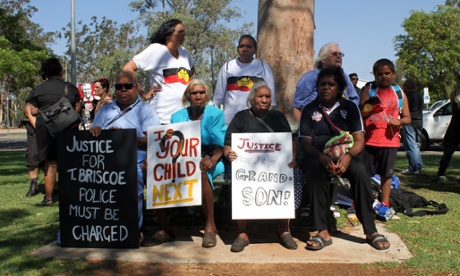
    Relatives of Mr Briscoe hold placards at a rally in Alice Springs on 5 October 2012.
    Relatives of Mr Briscoe hold placards at a rally in Alice Springs on 5 October 2012. Photograph: AAP/Xavier La Canna

    This is the story of two Australian men, both 27, drunk and in trouble with the law.

    On 7 April, Liam Danial Sweeney attended a friend’s birthday drinks at Crown Casino in Melbourne. According to the prosecution, Sweeney had been ignored when he attempted to shake another guest’s hand, and stewed on this “insult” for a couple of hours. At midnight, under the influence of alcohol, he reportedly engaged in an “unprovoked and gratuitous” assault of the man, Richard Huiswaard. Sweeney smashed a wine glass into Huiswaard’s face, and then punched him twice in the head. The defence argued that Huiswaard had made comments about Sweeney’s mother, implying he was gearing up to a fight.

    Huiswaard was bleeding, but Sweeney did not stop to render assistance, nor to speak to police. Again according to prosecutors, he instead “fled the scene like a coward“. Huiswaard was left needing stitches in his head and three weeks off work.

    Compare Sweeney with the second 27-year-old Australian man – Mr Briscoe of Alice Springs. Briscoe was also drinking with friends but, unlike Liam Danial Sweeney, had not entered an “unprovoked and gratuitous assault”, glassed someone, or permanently scarred their face when he encountered police on 5 January 2012. He had committed no crime whatsoever when the police chased him, wrestled him to the ground and took him into “protective custody” that evening. It was, in fact, Briscoe who complained of a bleeding headwound when he was locked in a cell.

    What follows is a neat encapsulation of the two very different realities faced by the different segments of Australia’s population.

    Briscoe’s pleas for treatment for his headwound were ignored by the police. Officers were listening to iPods while other prisoners heard the audible “choking and gasping” that Briscoe was making while he was confined behind bars. The police did not make cell checks as required, despite Briscoe’s bleeding face and severely inebriated state; they surfed the internet instead. Two hours later, when an ambulance was finally called, Briscoe – the 27-year-old man innocent of any crime – was dead.

    Sweeney, the 27-year-old who had committed a crime, did not die in police custody once apprehended for his assault. His crime made it to trial, and he pleaded guilty to “intentionally causing injury”, which can carry a sentence of up to 10 years in prison.

    But Sweeney will not serve a day. He received an 18-month suspended sentence and a $5,000 fine. The serving magistrate, Jack Vandersteen, explained in sentencing that he did not believe Sweeney “would last very long” in jail. “Not many people are in jail who went to Haileybury,” continued Vandersteen, naming the prestigious private school that educated the kind of young man who glassed and scarred another as the result of a perceived slight.

    Vandersteen’s concern was that it may be “extremely devastating” for Sweeney’s parents, one of whom is a barrister himself, to see Sweeney in court. There were concerns, too, about the impact of sentencing Sweeney due to the young man being a lawyer himself. Should he be jailed, he would not be able to practice law, after all.

    The death of Briscoe was the subject of a court inquest into police responsibility for his death. Although it was identified that police had committed “errors and failures” that evening, the officers brought before the inquest were “formally disciplined” and not charged.

    Briscoe’s family were certainly “extremely devastated” after the finding, and shouted abuse at the police officers as they left court. “He was a young man, didn’t even have a wife and kids, and policemen walk free,” one family member said.

    No one needed me to mention that Briscoe was Aboriginal, did they?

  • No right to defend against sea for sea-side property owners

    No right to defend against sea for sea-side property owners

    RISING TIDE: Belongil Beach shows the scars from a super moon tides, the type of event from which waterside landowners want to protect themselves.
    RISING TIDE: Belongil Beach shows the scars from a super moon tides, the type of event from which waterside landowners want to protect themselves. Christian Morrow

    BEACHFRONT property owners have no right under common law to protect their properties against erosion or rising sea levels, according to research by a Southern Cross University academic.

    Recently published in the Australian Law Journal, the research was conducted by PhD candidate John Corkhill.

    His paper disputes research by Karen Coleman, published in 2010, that there was a fundamental right for private landholders and a government duty to protect properties against the sea.

    “I think it’s a weak claim that we have these common law rights if the best thing you can point to is a case from 1828 in England,” Mr Corkhill said.

    To come to his conclusion, he reviewed legal cases dating back to the 1800s from Australia and Britain.

    “The idea that we have got common law rights to defend against the sea just is nonsensical, given that we now have a framework in legislation that says if you want to build seawalls you need to get consent from council and the Crown.

    “You can’t have the right under common law when the legislation says you need permission.”

    “The fact that we have this legislation in place basically extinguishes those common law rights.”

    Coastal management should be done in the public interest, not the interests of private landholders, Mr Corkhill said.

    “The fishing industry, the tourism industry, the boating industry, the surfing industry and public use are all at risk if we go down this track of building seawalls along the coast.”

    In a submission to a review on coastal reforms, Mr Corkhill said evidence of predicted sea rises and an increase in severe storms should be taken into account in developing a revised coastal management plan.

    The risk to coastal properties would only increase over time and retreat was the best option.

    “It’s really past time in saying intensive development of the coast is a mistake; we need to be moving well back, in anticipation of what the scientists are saying is going to be centuries of sea level rise.”

  • Spain rail crash: why was train travelling so fast on bend?

    “This highlights the need for electronic sensors on HSR rail lines to detect the speed of HSR trains and either slow them down or bring them to a stop if necessary. The rail line did not appear to have been suitable for high speed rail. The role of the guard must also be determined, he should have realised the speed and warned the driver. We must take heed of this in any proposals to introduce HSR tyravel in Australia”


    Spain rail crash: why was train travellingso fast on bend?

    As death toll rises to 80, questions asked about how train was allowed to travel at up to twice the speed limit

    Link to video: Santiago train crash: Spanish PM visits site of derailmentAs Spain mourned the 80 dead in Europe’s worst rail crash this century, questions were being asked about how the train had been able to hit a tight curve at such a speed that it spun off into a concrete security wall.

    Analysis of video of the accident in the northern city of Santiago de Compostela suggested the train was going faster than 85mph on a bend where drivers are supposed to slow down after a straight stretch that allows them to reach up to 125mph.

    “We were going strongly when we got into the curve,” one driver was reported to have admitted shortly after surviving the accident on Wednesday, which killed more than a third of the passengers and left 168 injured.

    A spokeswoman for the Galicia supreme court said the driver, who was only slightly injured, was under investigation.

    The man, who has been named, is not believed to be under arrest but is expected to face questions from a judge with access to the train’s data recording black box.

    While trapped in the cab, the driver was reported to have given an account over the radio to officials at Santiago station. He was quoted saying, “I hope there are no dead because they would fall on my conscience” and having repeated over and over: “We’re human. We’re human.”

    Rail safety experts said such accidents are usually the result of more than one failure, and questions will inevitably be asked about how warning signals about the train’s speed were not picked up and acted on.

    On Thursday evening the death count looked set to creep up, with 36 of the 95 victims in hospital said to be in a critical condition.

    The Foreign Office confirmed that one Briton was among the injured.

    The Spanish prime minister, Mariano Rajoy, who is from the crash city, toured the scene alongside rescue workers and went to a nearby hospital to visit the injured and their families.

    “For a native of Santiago, like me, this is the saddest day,” said Rajoy, who declared Spain would observe a three-day period of mourning. He said judicial authorities and the Public Works Ministry had launched parallel investigations into what caused the crash.

    Link to video: Santiago de Compostela train crash: CCTV captures moment of derailmentEyewitness accounts backed by security camera footage of the disaster suggested the eight-carriage train was travelling at high speeds as it took the pronounced left-hand curve through a deep culvert.

    An estimate by Associated Press of the speed at the moment of impact using the time stamp of the video and the estimated distance between two pylons gives a range of 89mph to 119mph. Another estimate calculated on the basis of the typical distance between railroad ties gives a range of 96mph to 112mph.

    The speed limit on that section of track is 50mph, and locals said that trains often creep through, as the station is just a short way down the tracks.

    The leaked video footage, which railway authority Adif admitted must have come from one of its cameras, shows the front engine and train carriages buckling as they enter the turn.

    Professor Roger Kemp, of the Royal Academy of Engineering, said a derailment would be expected at high speeds on such a curve.

    “The big question is why the train was running at more than twice the speed limit. There must have been at least prominent visual warnings to reduce speed, if not audible warnings and an electronic speed supervision system,” he said.

    Francisco Otero, who lives near the crash site and is a relative of a woman who was a passenger, told the Guardian that she had said the train was going too fast.

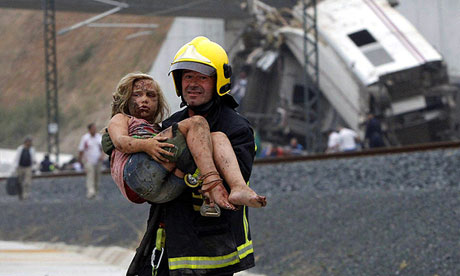
    A firefighter carries an injured girl from the wreckage of the Santiago de Compostela train crash A firefighter carries an injured girl from the wreckage of the train crash near Santiago de Compostela. Photograph: AFP/Getty Images”Until then I thought that it had been terrorist attack,” Otero said. “But it was one of the first things she said.”

    One of the survivors, Sergio Prego, told Cadena Ser radio station that the train “travelled very fast” just before it derailed and the cars flipped upside down, on their sides and into the air.

    “I’ve been very lucky because I’m one of the few able to walk out,” he said.

    Forensic scientists are still trying to identify the most mutilated corpses. Groups of families and friends gathered at the city’s Cersia hospital waiting for news of loved ones – though there was little chance they were alive as all survivors had been identified and their families informed.

    “It’s a major challenge to identify the people who have died,” Rajoy said. “Unfortunately, in many cases, this isn’t easy, but we are very conscious that the families cannot live in a state of uncertainty.”

    The Alvia 730 series train started from Madrid and was scheduled to end its journey at Ferrol, about 60 miles north of  Santiago.

    Alvias do not go as fast as Spain’s AVE bullet trains, but still reach 155mph on AVE tracks and travel at a maximum of 137mph on normal gauge rails.

    The accident came a day before a public holiday in Galicia: the feast of St James, after whom the region’s capital Santiago is named.

    “24 July will no longer be the eve of a day of celebration but rather one commemorating one of the saddest days in the history of Galicia,” said Alberto Núñez Feijóo, the region’s president.

    Residents of the semi-rural neighbourhood by the accident site struggled to help victims out of the toppled cars on Wednesday night. Some passengers were pulled out of broken windows as rescuers used rocks to try to free survivors from the wreckage.

    Daily Email

    close

    Sign up for the Guardian Today

    Our editors’ picks for the day’s top news and commentary delivered to your inbox each morning.

    Sign up for the daily email

    Daily Email

    close

    Get the Guardian’s daily US email

    Our editors’ picks for the day’s top news and commentary delivered to your inbox each morning. Enter your email address to subscribe.

    Sign up now
    Daily Email