Category: Uncategorized

  • Sunny days to return after wettest June in six years Date

    Not down to climate change “EH”, Deniers please note.

    Sunny days to return after wettest June in six years

    Date
    July 1, 2013 – 7:45AM

    Melanie Kembrey

    A landslide which hit Harris Park station in Sydney's west on Sunday night.A landslide which hit Harris Park station in Sydney’s west on Sunday night. Photo: Carlos Furtado

    Sunshine has returned to Sydney but not before a week of rain caused a variety of issues over the weekend, including a land slip that caused a brick wall to collapse onto a train station in Sydney’s west, and the fall of an enormous fig tree to fall in Hyde Park on Saturday afternoon.

    It is expected to take several days to clear debris caused by a landslide from rail tracks at Harris Park.

    For the first week of July residents can expect an average of nine hours sunshine per day and virtually no rain

    The tracks and platform at Harris Park station were covered with debris after the retaining wall gave way about 5.50pm on Sunday.

    Here comes the sun: A ferry makes it way south as a rainbow tries to break through after heavy rainstorms.Here comes the sun: A ferry makes it way south as a rainbow tries to break through after heavy rainstorms. Photo: Jenny Evans

    At approximately 5.50pm an embankment at Harris Park station collapsed due to heavy rain.
    No one was injured during the incident and rail staff  and emergency services attended the scene.

    Advertisement

    At approximately 8.40pm another segment of the embankment wall collapsed onto the station, causing the suspension of all services stopping at Harris Park. Buses were operating between Harris Park and Parramatta and Harris Park and Granville, although on Monday morning some train services were again stopping at the station.

    Parramatta local area command Acting Inspector James Littler said nobody was injured and it is believed nobody was on the platform when the embankment fell.

    Force of nature: a large tree has fallen over in Sydney's Hyde Park.Force of nature: A large tree was uprooted in Sydney’s Hyde Park. Photo: Wolter Peeters

    ‘‘It’s quite a significant landslide. It’s basically gone on the platform and covered the tracks,’’ Acting Inspector Littler said.

    ‘‘It’s very fortunate there wasn’t a train at the time and the best thing is that nobody has been injured.’’

    The fragments of concrete, trees and fencing partially buried two of the station’s four rail lines.

     Centennial Park was still abuzz with joggers, walkers and dogs this morning despite the heavy rain.Out and about: Rain didn’t put off walkers and dogs in Centennial Park. Photo: Jenny Evans

    It could take several days to clear the debris from the tracks.

    Dave Wright, from the Transport Management Centre, said the landslip was causing minimal delays for train services on Monday morning.

    ‘‘The impact is only for people getting on or off at Harris Park, which is a smaller station between two bigger stations,’’ Mr Wright said.

    Harris Park train station has had a landslide over night. Click for more photos

    Landslip at Harris Park Railway Station

    Harris Park train station has had a landslide over night. Photo: Carlos Furtado

    • Harris Park train station has had a landslide over night.
    • Harris Park train station has had a landslide over night.
    • Harris Park train station has had a landslide over night.
    • Harris Park train station has had a landslide over night.
    • Harris Park train station has had a landslide over night.
    • Harris Park train station has had a landslide over night.
    • Harris Park train station has had a landslide over night.
    • Harris Park train station located has had a landslide over night.
    • Harris Park train station located has had a landslide over night.
    • Harris Park train station located has had a landslide over night.

    ‘‘Some trains are still stopping at Harris Park, but not every train, and some trains will go through without stopping.

    ‘‘Delays are relatively minimal at this stage but as the morning progresses we might see some additional delays.’’

    Bureau of Meteorology forecaster Olenka Rudewych said there had been more than 240 millimetres of rain in Sydney during the past nine days, making up about 77 per cent of this month’s total rainfall.

    But there will finally be a chance to drain the dirty clothes overflowing from laundry baskets with rain expected to clear early Monday morning and the rest of the week due to remain mostly sunny.

    “Generally we expect showers to clear by early Monday morning and the rest of the week should remain mostly sunny with a return to dry conditions,” Ms Rudewych said.

    The bad weather will take a rain check with the sunniest week since May or April now expected, according to Weatherzone senior meteorologist Brett Dutschke.

    “For the first week of July residents can expect an average of nine hours sunshine per day and virtually no rain,” Mr Dutschke said.

    “There has been a total of just seven hours of sunshine, an average of an hour per day, the cloudiest week since February 2009.”

    State Emergency Service spokeswoman Sue Pritchard said volunteers were looking forward to a rest after responding to 1211 calls for help, including 600 in the Sydney metropolitan area, since strong rain and wind started to batter the state’s east coast last Saturday.

    Seventeen of the callers required assistance for animals or people trapped in flood waters and most of the others were about roof damage, fallen trees and minor flooding.

    “I think all of our volunteers deserve a rest this week. They have been fantastic of course. A lot of them work full time, they don’t even come home, they just go straight from work and out in the field at night,” Ms Pritchard said.

    In Hyde Park on Sunday, nobody was injured when a hills weeping fig toppled over but there were reports that two mothers and their young children narrowly missed being hit.

    A City of Sydney spokesman said a crane would remove the tree on Monday and it would be replaced with another one.

    It’s not just the emergency service workers who are looking forward to the sunshine, reptiles have been stuck on heat pads and giraffes in their dens at Taronga Zoo.

    The zoo’s spokesman Ben Gibson said workers would be out in force raking and sweeping once the rain stopped.

    “The zoo attendance was down due to the weather but we still had huge amount of schools kids coming in for excursions who braved it with ponchos and umbrellas,” Mr Gibson said.

    Car wash workers are also restocking soap supplies in the hope that customers will return with the sunshine.

    Crystal Car Wash Cafe manager Lina Toutonji said she had experienced a stressful week.

    “It’s been really dead. There has hardly been any customers at all, one day there was just no one,” Ms Toutonji said.

    “Because of that a lot of the guys who work here have left their job during the last week. They just can’t rely on this type of business when consistently raining for 10 days and there are no customers.”

    Weatherzone.com.au is owned by Fairfax Media, publisher of this website.

    Read more: http://www.smh.com.au/environment/weather/sunny-days-to-return-after-wettest-june-in-six-years-20130630-2p533.html#ixzz2XkLMUwVf

  • Effects of ocean acidification on iron availability to marine phytoplankton

    Effects of ocean acidification on iron availability to marine phytoplankton

    Published 29 June 2013 Newsletters and reports , Science Leave a Comment
    Tags: , ,

    Dalin Shi is currently a professor at the State Key Laboratory of Marine Environmental Science, Xiamen University, China. His research focuses on the biogeochemical cycling of trace metals in the ocean and their roles in the global carbon and nitrogen cycles.

    About one-third of the anthropogenic carbon dioxide (CO2) released into the atmosphere dissolves in the ocean, increasing the partial pressure of CO2 (pCO2) and lowering the pH in surface water. These changes in seawater chemistry, commonly referred to as ocean acidification, will likely have significant effects on marine phytoplankton, which are responsible for about half of the contemporary global primary production (Field et al., 1998) and form the basis of all marine food webs.


    In vast areas of the oceans, the vanishingly low concentration of iron (Fe) often limits the growth of marine phytoplankton (Martin and Fitzwater, 1988). It is known that the bulk of Fe in the ocean is chelated by organic compounds (Rue and Bruland, 1995), and that the availability of Fe to phytoplankton depends largely on its chemistry in seawater, which is highly sensitive to changes in pH (Shaked and Lis, 2012). We therefore examined the effect of ocean acidification on the complexation of Fe by organic ligands, and, hence, its bioavailablility to phytoplankton. In the presence of organic complexing agents with various chemical functionalities, the bioavailability of dissolved Fe to model species of diatoms and coccolithophores was observed to decline at low pH. This effect is quantitatively explained by the decrease in the free Fe concentration, Fe’, in seawater with decreasing pH and is thus not a physiological response of the organisms.

    The extent to which changes in pH affect a ligand’s ability to bind Fe depends on the number of protons (H+) released upon dissociation of Fe from the ligand (Y). The dissociation reactions can be written in a simplified but general form as:

    FeY + 3H2O = Fe(OH)3 + HxY + (3–x)H+

    The number of protons released varies between 3 (e.g., for the tetracarboxylate EDTA) and 0 (e.g., for the bis-catecholate azotochelin), and depends on the acidity of the binding moieties, the affinity of the ligand for other metals such as Ca2+ and Mg2+. Consequently, the effective binding strength of ligands that release more protons is more sensitive to changes in pH. In field manipulation experiments, a slower rate of Fe uptake by Thalassiosira weissflogii, with decreasing pH, was observed in both coastal and oceanic Atlantic surface water samples where Fe was bound to natural Fe-chelating ligands (Figure). This result is in agreement with the laboratory data, though the magnitude of the pH effect on the uptake of Fe was modest, suggesting that little of the Fe was bound to carboxylic acid moieties or other ligands that release protons upon dissociation in the field samples (Shi et al., 2010).

    We note that the decrease in Fe bioavailability caused by the change in Fe chelation at low pH is only one of several potential effects that ocean acidification may have on Fe limitation of phytoplankton in the oceans. For example the rate of dissolution and precipitation of Fe oxides particles, through thermal or photochemical mechanisms, may also change and, perhaps, compensate for the increase in Fe complexation.

    References

    Field, C., et al. (1998). Primary production of the biosphere: Integrating terrestrial and oceanic components. Science 281:237-240.
    Martin, J. and Fitzwater, S. (1988). Iron-deficiency limits phytoplankton growth in the Northeast Pacific subarctic.
    Nature 331:341-343.
    Rue, E. and Bruland, K. (1995). Complexation of iron(iii) by natural organic-ligands in the central North Pacific as determined by a new competitive ligand equilibration adsorptive cathodic stripping voltammetric method. Mar Chem. 50:117-138.
    Shaked, Y. and Lis, H. (2012). Disassembling iron availability to phytoplankton. Front Microbiol. Chem. 3:123.
    Shi, D., et al. (2010). Effects of ocean acidification on iron availability to marine phytoplankton. Science 327:676-679.

    Shi D., Xu Y., Hopkinson B. M. & Morel F. M. M., 2013. Effects of ocean acidification on iron availability to marine phytoplankton. SOLAS NEWS 15, Summer 2013: 8-9. Article.

  • Editorial: A war on climate change

    Editorial: A war on climate change

    June 30, 2013   |
    12 Comments
    Rick Nease/Detroit Free Press
    By The Detroit Free Press Editorial Board
    • Filed Under

    Climate change is surely the looming disaster of our time.

    Scientists say it’s inevitable that sea levels will rise 2 1/2-6 1/2 feet — sufficient to endanger or wipe out many cities. One scientist believes that in the long-term, 69 feet of sea level rise is inescapable.

    And the source of the swelling oceans — rising temperatures — will stress the nation’s food system, while the increasing number of devastating storms will place an economic burden on a nation reeling from disaster to disaster, patching its wounds without effecting meaningful change.

    It’s tempting to dismiss these projections as hysterical. That life as we know it could change so dramatically, so quickly, seems impossible. But on this topic, the scientific community (if not the political one) speaks with one voice.

    Despite the preponderance of evidence — rising temperatures, powerful storms, droughts and fires — no significant action has been taken that would limit the impacts of climate change. Until last Tuesday.

    President Barack Obama delivered a bold proposal for a set of regulatory changes that could turn the U.S. from its headlong rush into disaster. This is the course our nation must take if we are to preserve our way of life, and we’re energized to see the president championing such vital reform.

    Obama’s plan calls for carbon pollution standards for new and existing power plants, efficiency standards that would reduce carbon pollution by at least 3 billion cumulative metric tons by 2030, fuel economy standards for heavy duty vehicles, the reduction of greenhouse gases and the development of a comprehensive methane strategy. It also provides federal support for local investment to mitigate the worst impacts of climate change.

    The plan is sure to impact the way Americans live — or at least the way we pay bills. But that’s preferable to the alternative.

    It won’t be easy to turn the nation from habits we’ve indulged for decades, though the true costs of capping carbon emissions are still unknown, and likely won’t be as severe as naysayers’ predictions. (Remember: Cap and trade was offered during the George H.W. Bush adminsitration as a “conservative” alternative to harsher regulation; now the nation’s right wing villifies it as a kind of commie profit-killer. Truth is often the victim of political rhetoric in this debate.)

    But for that reason — not to mention that some obdurate lawmakers still deny the basic facts of climate change endorsed by the entire scientific community cling — the president is unlikely to find support in the U.S. Congress for the path we believe he must pursue.

    Indeed, some members of Congress have made their careers by obstructing just such measures. Sadly, many of those whose denials of the causes and impacts of climate change ring the loudest represent the coastal areas most vulnerable to rising seas, an act of self-immolation that’s impossible to understand.

    Obama’s climate change plan was heralded by these intransigent members as “job killing,” irresponsible and an abuse of executive fiat. (“War on coal” we’ll accept — the plan does take aim at coal, but 38% of greenhouse gas emissions are caused by power plants, most of which burn coal; the next biggest culprit is transportation, accounting for 31%. And these changes needn’t kill jobs — developing alternative energy technologies should provide new sources of employment.)

    As a steward of America and American resources, for Obama to sit this one out is unacceptable. And remember that late in the 2012 presidential campaign, it was Obama’s promise to deal with climate change that wooed some unsure voters to his side. So what’s a responsible president to do?

    Well, the president says he doesn’t need Congress. Rather, Obama says the broad reforms he envisions can be implemented by executive order, expanding the U.S. Environmental Protection Agency’s regulatory oversight of pollution to include carbon emissions, a use of the executive order is sure to prompt legal and political battles. It’s also worth nothing that Obama is the second American president to define the powers of the executive in broad terms, insisting that the office carries authority and autonomy traditionally not exercised by American presidents.

    Obama’s willingness to circumnavigate Congress is a regrettable necessity.

    In an ideal world, lawmakers would be swayed by the preponderance of scientific evidence, reach consensus and move to enact regulations that protect our environment. But that’s not what has happened. For a legislator to accept that climate change is happening has become a political, not scientific decision.

    And while we’re wary of the increasing power of the presidency, what could be a more appropriate use of that power than to turn the country from environmental devastation?

  • Insurers Given Severe Weather Warning

    Insurers Given Severe Weather Warning

    Posted on Jun 29, 2013
    Flying Lava Shark (CC BY 2.0)
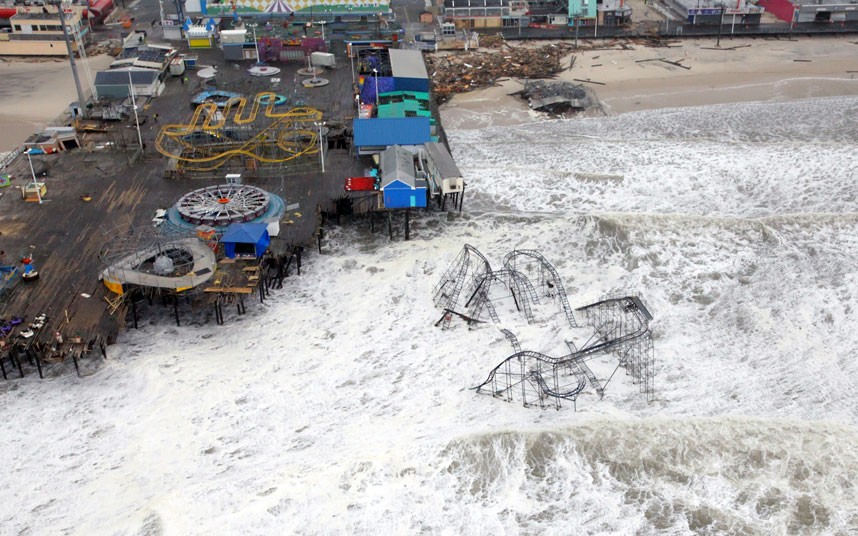
    A scene from the wreckage of Hurricane Sandy in Ocean Grove, NJ.

    By Kieran Cooke, Climate News Network

    This piece first appeared at Climate News Network.

    LONDON—The global insurance industry’s own analysts warn that it faces potentially serious financial losses unless it plays an active role in urging governments to address climate-change factors such as greenhouse gas emissions.

    The Geneva Association, a leading international insurance thinktank that examines trends in the global insurance industry, has published a report this week that identifies “a significant upward trend in the insured losses caused by extreme weather events”.

    It warns that changes in climate mean insurance companies have entered a new, highly uncertain era, and must adapt to what it calls a “new normal” in assessing risks and setting pricing policies. Traditional ways of assessing such risks, based solely on analysing historical data, are “increasingly failing”.

    The report, Warming of the Oceans and Implications for the (Re)insurance Industry, says the world’s oceans have been warming significantly as the result of rising greenhouse gas emissions ? and it is this warming that is the key driver of global extreme events.

    Advertisement

    <a href=’http://www.truthdig.com/banners/www/delivery/ck.php?n=abee66dc&cb=171288478′ target=’_blank’><img src=’http://www.truthdig.com/banners/www/delivery/avw.php?zoneid=8&cb=171288478&n=abee66dc’ border=’0′ alt=” /></a>

    Ocean dynamics

    “Understanding the changes in ocean dynamics and the complex interactions between the ocean and the atmosphere is the key to understanding current changes in the distribution, frequency and intensity of global extreme events relevant to the insurance industry ? such as tropical cyclones, flash floods or extra-tropical storms,” the report says.

    The warming of the oceans means an “increased loss potential” for the insurance industry, the report says. It’s uncertain how the risk associated with the warming of the oceans and changes in climate will develop over time, but the report’s authors advocate moving from traditional data-based ways of assessing such risks to what they call predictive risk estimation methods, based on various modelling techniques.

    Such forecasting techniques are by no means perfect and can often give rise to more uncertainties ? although this does not mean they are not useful or scientifically sound. “It rather reflects the limits of the scientific understanding and the ability to predict extreme events in a chaotic system,” the report says.

    Increased risk

    The report’s authors issue a stark warning about insurance-related problems in parts of the world that are seeing increasing levels of risk matched with growing demands for insurance, and, at the same time, decreasing levels of self-protection. Such areas might be uninsurable, the report says. “Examples for markets with this potential are UK flood or Florida wind storm insurance.”

    The only way to make sure such regions remain insurable is immediately to put in place risk-mitigation measures says the report. The insurance industry should distribute high-quality information about risk associated with climate change, and should encourage adaptation through innovative product design.

    The report concludes: “These actions, alongside the support of science in tackling the major challenges in projecting the impacts of ocean warming and climate change more generally, will help the insurance industry avoid market failures and increase societal resilience.”

  • Gladstone Harbour review delayed

    Gladstone Harbour review delayed

    AAPJune 30, 2013, 2:48 pm

    An independent review panel has been granted more time to assess the health of Gladstone Harbour and the impact of port developments on the Great Barrier Reef.

    The United Nation’s environment arm was highly critical of Australia’s management of the reef in a report last year and requested a review of the harbour.

    Federal Environment Minister Tony Burke commissioned an independent review in February and a report was due to be handed down on Sunday.

    However, a spokeswoman for Mr Burke says the panel asked for, and has been granted, more time to complete the report.

    She says there’s no new deadline but the report is expected to be handed down soon.

    The review will look at current and future port developments, including large liquified natural gas plants on Curtis Island, and the impact it’s having on the local environment and the reef’s health.

    Concerns have also been raised by commercial fishers about the health of fish within the port and the loss of seagrass.

  • This Is What Climate Change Looks Like: Top 10 Most Expensive U.S. Climate Disasters of 2012

    Daniel Kessler

    350.org and 350 Action Fund

    GET UPDATES FROM Daniel Kessler

    8

    This Is What Climate Change Looks Like: Top 10 Most Expensive U.S. Climate Disasters of 2012

    Posted: 06/27/2013 4:29 pm
    16
    24
    2
    7
    Get Green Newsletters:

    On Tuesday President Obama released his climate action plan — and not a moment too soon. Extreme weather has been pounding the U.S., and while pundits and the fossil fuel industry will claim action is too expensive, the cost of inaction is far too much to bear.

    In 2012 there were 11 climate disasters that cost more than $1 billion each, according to NOAA. Below are the 10 most expensive.

    1. Hurricane Sandy – cost $65.7 billion and caused 159 deaths
    Hurricane Sandy touched down on U.S. soil on October 29 after leaving a path of destruction through Jamaica, Haiti, the Dominican Republic, Cuba, the Bahamas, and Bermuda. Sandy was the second-costliest and deadliest hurricane ever to hit the U.S. after Hurricane Katrina in 2005. A total of 24 states were affected, with thousands of homes destroyed and millions of people left without electricity. Of the direct deaths, the storm caused 48 direct deaths and 87 additional indirect deaths. Of those Sandy killed directly, 48 people died in New York, 12 in New Jersey, 5 in Connecticut, 2 each in Pennsylvania and Virginia, and 1 each in New Hampshire, West Virginia, and Maryland.

    2013-06-24-1a.jpg
    EPA/MASTER SGT. MARK OLSEN / US AIR FORCE

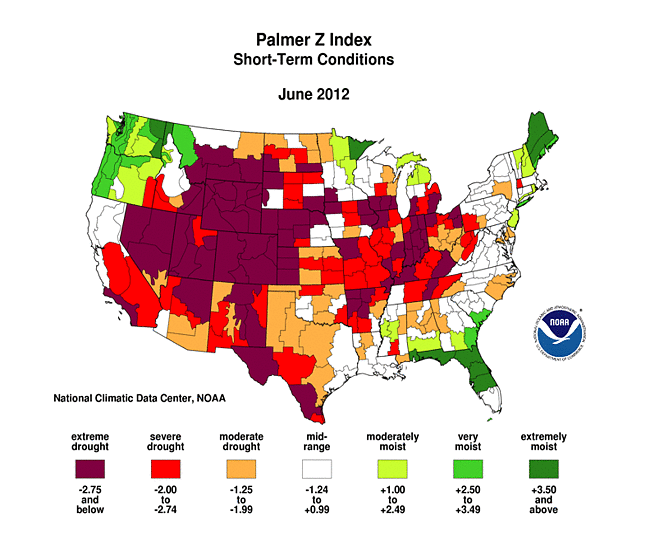
    2. Nationwide Drought and Heat Wave – cost $30.3 billion and caused 123 deaths
    The 2012 drought and heat wave was the most extreme to hit the United States since the 1930s. Most than half of the country experienced the drought, with 81 percent experiencing abnormally dry conditions at its peak on July 17th. Record high temperatures and low rainfall caused extensive agricultural damage, particularly affecting corn and soybean crops. This in turn has created an increase in the price of food, as well as the lowest number of cattle in the U.S. in the last 60 years. The summer heat wave caused 123 direct deaths.

    2013-06-24-2a.jpeg
    NOAA

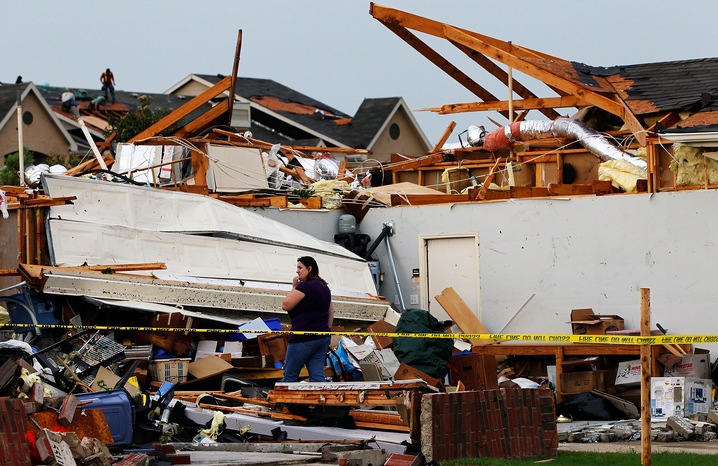
    3. Ohio Valley Extreme Weather and Tornadoes – cost $6.4 billion and caused 43 deaths
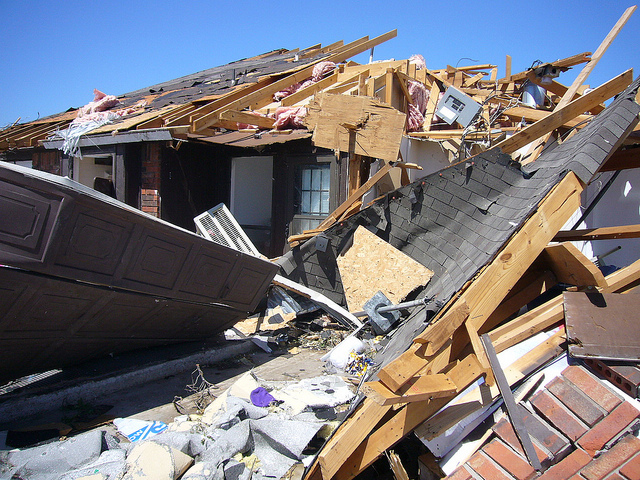
    Extreme weather throughout March and April devastated the Midwest, Southeast, and Ohio Valley areas. In early March, 75 tornadoes left 42 people dead in Kentucky, Indiana, Ohio, Alabama, and Georgia. Hundreds of homes, businesses, and cars were destroyed. Between April 28th and May 1st, 38 confirmed tornadoes and hailstorms swept through the Midwest and Ohio Valley, killing one person.

    2013-06-24-3a.jpg
    Tom Pennington/Getty Images

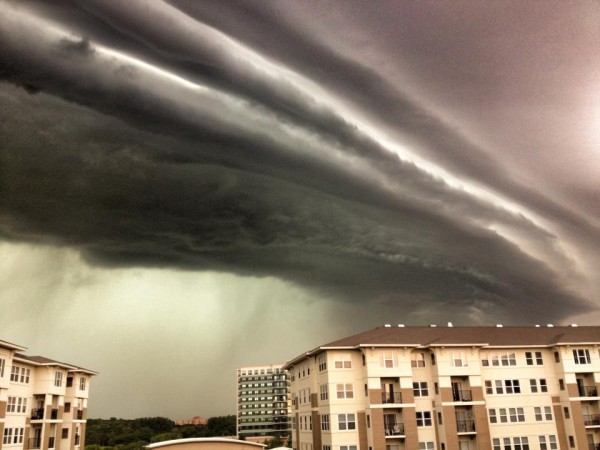
    4. Derecho Storm – cost $2.9 billion and caused 28 deaths
    A “derecho,” or rapidly-moving line of long-lived thunderstorms, moved across the Midwest and mid-Atlantic on June 29th and 30th, leaving a more than 700-mile trail of destruction in its wake. About three million homes and businesses lost power, and damages to water filtration facilities in Maryland caused water shortages. One of the most destructive and deadly thunderstorms in North American history, the derecho resulted in 28 deaths.

    2013-06-24-4a.jpg
    NWS Meteorologist Samuel Shea

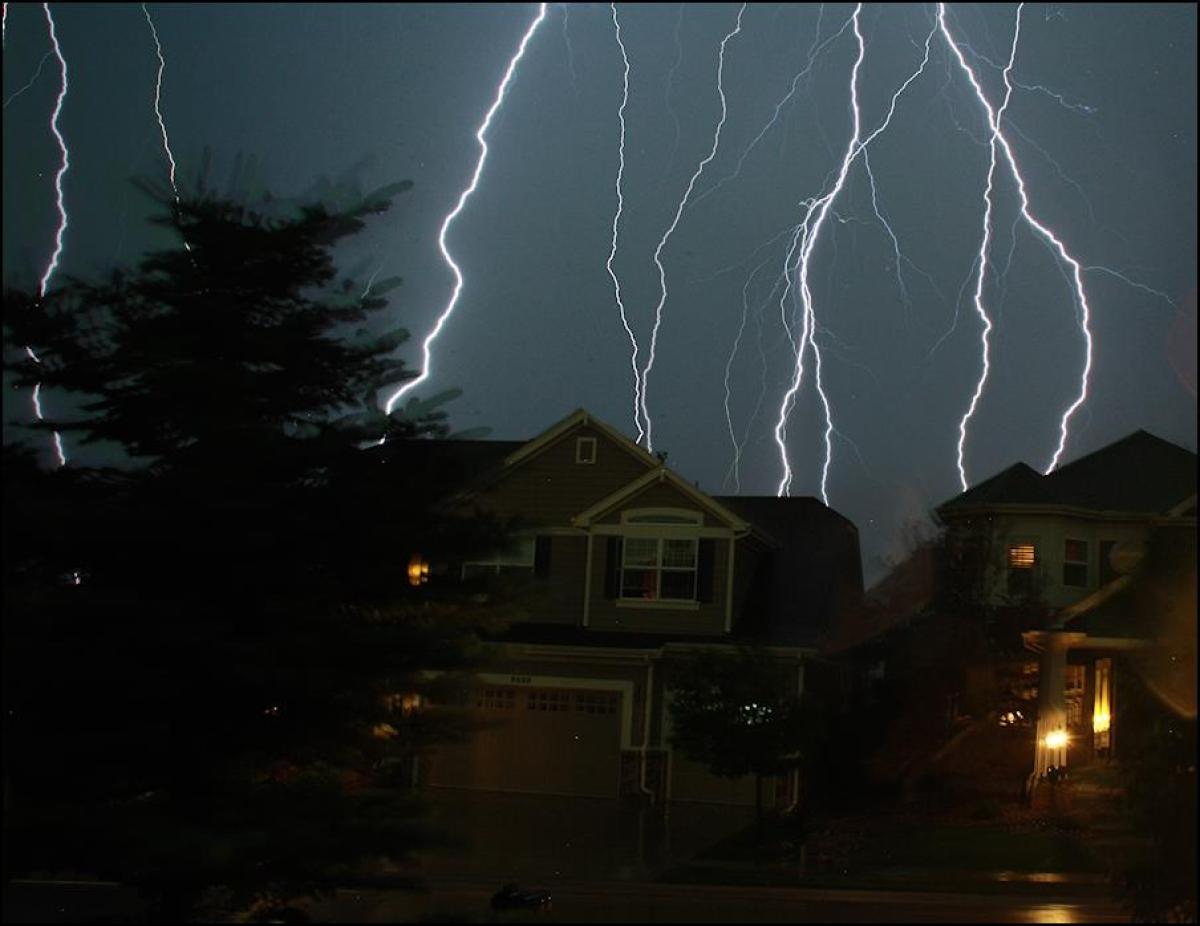
    5. Tornadoes in Colorado – cost $2.6 billion and caused 0 deaths
    Extreme storms with high-speed winds and hail, including 25 confirmed tornadoes, moved through Colorado, New Mexico, and Texas in early June. Forty people were rescued, many from within or on top of vehicles. Over six hundred 9-1-1 calls were made within a two-hour period, and flooding damaged many areas in Colorado. A severe hailstorm also caused extensive damage, with Colorado alone experiencing over $1 billion in damages. The storms also produced tornadoes and lightning strikes in the area.

    2013-06-24-5a.jpg
    Flickr: Brokentaco

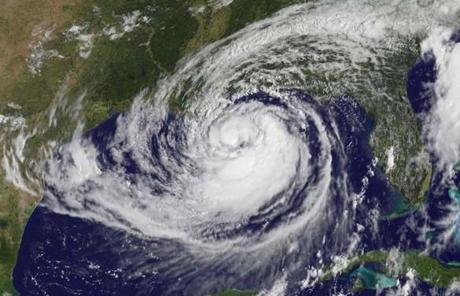
    6. Hurricane Isaac – cost $2.3 billion and caused 9 deaths
    Hurricane Isaac made landfall in Southeastern Louisiana on August 29th as a category 1 hurricane. More than 900,000 people were without power in Louisiana, Mississippi, Alabama, Florida, Texas, and Arkansas. 34 tornadoes also touched down across the southeast region during this time period. The large storm surge and flooding rains created extensive destruction and caused 9 deaths in the United States. Thirty-two people also died in Haiti, the Dominican Republic, Venezuela, and Puerto Rico.

    2013-06-24-6b.jpg
    AP

    7. Southern Plains and Midwest Storms – cost $2.3 billion and caused 1 death
    Severe thunderstorms over the Southern Plains, Midwest, and Northeast blew across Texas, Oklahoma, Kansas, Minnesota, Pennsylvania, and New York between May 25th and May 30th. At least 27 tornadoes, extreme hailstorms with golf-ball sized pieces of ice, and straight-line winds damaged homes and businesses in the area. There was one direct death from the storms.

    2013-06-25-7b.jpg
    Niccolò Ubalducci Photographer

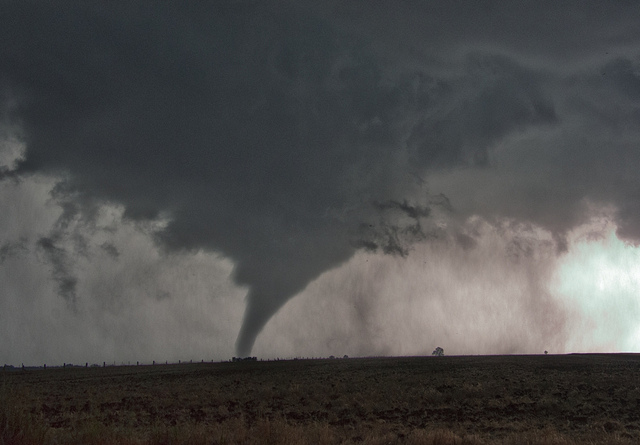
    8. Midwest Tornadoes – cost $1.1 billion and caused 6 deaths
    98 confirmed tornadoes and extreme weather developed over Oklahoma, Kansas, Nebraska, and Iowa on April 13th and 14th. The tornadoes remained on the ground for long periods of time, some traveling tens of miles. With forecasters warning of life-threatening storms, central Oklahoma and northeast Nebraska saw baseball-sized hail and winds of more than 70 mph, sending a few dozen people to the hospital. There were 6 deaths as a result of the tornadoes in Woodward, Oklahoma.

    2013-06-25-8a.jpg
    Wikipedia Commons

    9. Western Wildfires – cost $1 billion and caused 8 deaths
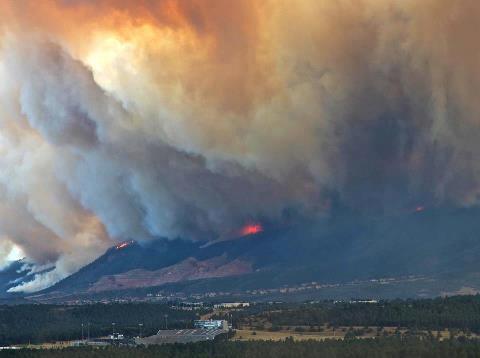
    The Western Wildfires were a series of blazes that spread throughout Colorado and other western states, including Idaho, Wyoming, Montana, California, Nevada, Oregon, and Washington. During the summer and fall these fires burned over 9.2 million acres, the highest annual total in over a decade. Colorado suffered the worst and most costly wildfires, losing more than 200,000 acres and hundreds of homes and businesses. In Colorado at least 34,500 residents were evacuated in the month of June alone. There were 8 direct deaths from the wildfires throughout the western states.

    2013-06-25-9b.jpg
    Keystoneridin

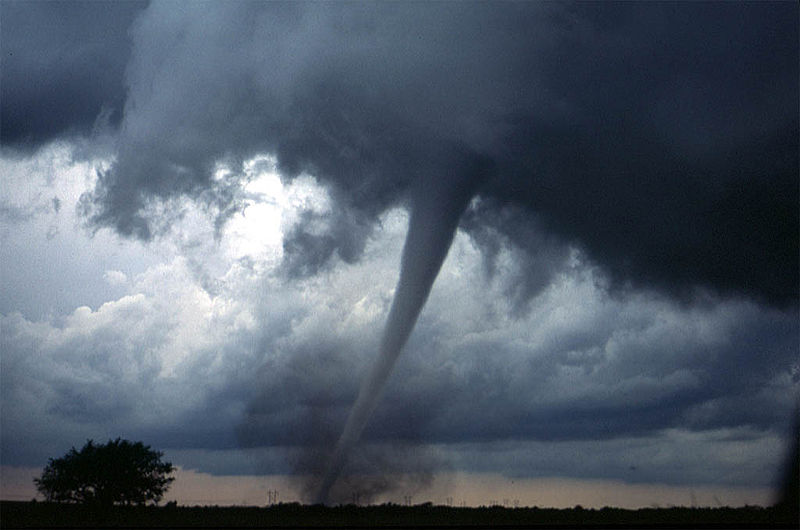
    10. Texas Tornadoes – cost $1 billion and caused 0 deaths
    On April 3rd an outbreak of tornadoes near the greater Dallas-Fort Worth area developed from individual supercells. There were 22 confirmed tornadoes; one of the strongest was an EF3 tornado that hit Forney, Texas. Strong winds and hailstorms struck the area, damaging numerous homes and businesses and injuring 29 people.

    2013-06-25-10b.jpg

    Follow Daniel Kessler on Twitter: www.twitter.com/danieljkessler

    FOLLOW GREEN
    136k

    • Comments
    • 7
    • Pending Comments
    • 0
    • View FAQ

    Post Comment Preview Comment

    To reply to a Comment: Click “Reply” at the bottom of the comment; after being approved your comment will appear directly underneath the comment you replied to.

    Share your Comment:

    Post to Facebook.
    Post to Blogger.
    Post to Twitter.
    Post to WordPress.
    Post to TypePad.
    Post to Tumblr.
    View All
    Favorites
    Recency  |
    Popularity
    HUFFPOST SUPER USER

    bthompson18

    41 seconds ago ( 2:58 PM)

    According to the climate scientists they are just natural weather events.

    12 hours ago ( 2:44 AM)

    climate disasters – hahahahaha

    He meant storm damage.

    16 hours ago (10:30 PM)

    Symptoms Of Climate Change
    — stevengoddard
    Be on the lookout for these :

    Warm temperatures
    Cold temperatures
    Mild temperatures
    Snow
    Lack of snow
    Rain
    Lack of rain
    Tornadoes
    Lack of tornadoes
    Hurricanes
    Lack of Hurricanes
    Hail
    Lack of hail
    Storms
    Lack of storms
    Floods
    Lack of floods

    All of these symptoms are sure fire signs of missing heat, and should be reported to authorities immediately.

    photo

    HUFFPOST SUPER USER

    SeriouslySushi

    God sure baked a lot of fruit cake, baby.
    7 hours ago ( 8:24 AM)

    Actually, if one believes that we are now in the midst of climate change- which is to say it’s not a future event, but a current and ongoing one- then all the weather everywhere everyday, from the mild to catastrophic, is occurring within the context of a changing climate and all that entails.

    And as I’m sure you know, the impacts of climate change are not expected to be uniform across the globe. Some areas will be wetter. Some will get less rain. If Antarctica gets more snow, that would actually signify warming there, since it’s often too cold for significant snowfalls.

    People like to say that statements like the one you quoted create a situation where AGW cannot be disproved, since just about any weather can be attributed to it. But all one has to do to disprove AGW theory is show that CO2 does not have infrared energy absorption properties and that our atmospheric makeup and function is much different than we believe after centuries of study and observation. Easy Peasy Lemon Squeezy.

    4 hours ago (10:39 AM)

    1. Climate is always changing, and there is nothing unusual at all about its present characteristics, including the magnitude or rate of change in global temps. That this is true is easily seen in the historic and geologic record.

    http://climate.geologist-1011.net/HoloceneTemperatures.png