Category: Uncategorized

  • Carbon pricing, one year on: independent expertise is crucial

    Carbon pricing, one year on: independent expertise is crucial

    Climate change is too important a topic to leave to politicians. Canberra should listen to the real experts – the Climate Change Authority

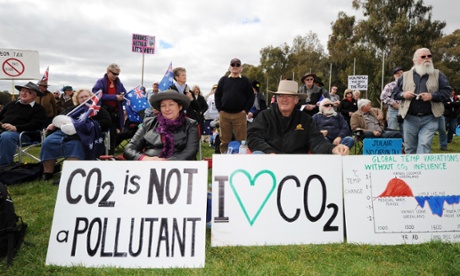
    Anti-carbon tax protesters in Canberra.
    Anti-carbon tax protesters in Canberra. Photograph: Torsten Blackwood/AFP/Getty

    When it comes to dealing with matters of profound complexity and gravity, matters that will have a fundamental impact on our lives, we expect decisions to be based on the best expert advice available. Yet, disturbingly, when it comes to working how Australia should tackle climate change – the “great moral challenge of our generation”–politicians are sidelining independent science and policy advisory bodies for the sake of political expediency.

    Within hours of Kevin Rudd’s return to the helm – just shy of the first anniversary of the carbon pricing mechanism on 1 July – reports emerged of a potential election promise to bring forward the trading phase of the scheme, in line with business demands. Moving to an emissions trading scheme will make it cheaper for business and industry to comply with the scheme because they’ll have access to the dirt-cheap European Union permits (currently trading at approximately $4.65 in Australian currency, compared to the scheme’s 2013-2014 fixed price of $24.15) and distance the Rudd government from Gillard’s much maligned “carbon tax”.

    Following the trend in recent years, climate change policy is once again in the national spotlight around a federal election and leadership spill. But there are some things that are too important to leave to politics, subject as it is to lobbying and opinion polls. This is one of the reasons why the minority government established the expert Climate Change Authority – to get the issue out of politics and publicly provide government decision-makers with impartial advice on how to best cut fossil fuel emissions. And they should be commended for that.

    The Climate Change Authority reviews and advises the government about Australia’s climate change policies, including the operation and effectiveness of the carbon price and renewable energy target. Some of Australia’s leading experts from business, science and ethics sit on its board. It’s in charge of recommending yearly carbon pollution limits (“caps”) and tracking our progress on cutting emissions. By law, its reviews and advice must be guided by principles of fairness, the public interest and environmental effectiveness. It has a legislative duty to engage in public consultation and make its review and recommendations publicly available. The development of climate policy in nations like the UK has been dependent on the fierce independence and expertise of similar bodies.

    This week, prime minister Rudd meets with his newly assembled team of ministers (including a replacement for outgoing climate change minister, Greg Combet). Will Rudd seek and heed the advice of this body as he takes the reins of Australia’s climate policy once again? Or will he sideline climate expertise to do what is politically convenient and advantageous?

    On the other side of the political spectrum, things look even grimmer. If elected, the Abbott-led Coalition intends to abolish the Climate Change Authority entirely (along with the carbon pricing mechanism, a range of other clean energy measures and the Climate Commission – the body established to provide all Australians with an independent and reliable source of information about climate change science).

    Australians respect the role and advice of independent expertise in other priority areas, like Australia’s monetary policy (Reserve Bank), economic policy (Productivity Commission), health (National Health and Medical Research Council) and national water reform (National Water Commission). Are we really prepared to accept our leaders marginalising, or indeed abolishing, climate expertise?

    Bodies known for their conservatism – the World Bank, the International Energy Agency and companies like PricewaterhouseCoopers – have reviewed the best available science and are united: we’re on a collision course with climate catastrophe. We are playing a giant experiment with an extraordinarily complex system. We are changing the chemical composition of the earth’s atmosphere and oceans at unprecedented rates. And we’re entering a climate never before experienced by human civilisation. We’re the guinea pigs in this experiment, which we desperately need to bring under control.

    Policy-makers and theorists have a word for these kinds of issues. They call them “wicked problems“. And climate change is the wickedest problem we face today. The wickedest problems call for the wisest counsel. That’s unlikely to be found on the floor of parliament. What we need are impartial experts. But we also need leaders who are willing to listen.

  • It’s time Australia moved to full-blown emissions trading scheme

    It’s time Australia moved to full-blown emissions trading scheme

    Ending the carbon tax and moving to emissions trading – as Kevin Rudd is reportedly considering – is the right thing to do

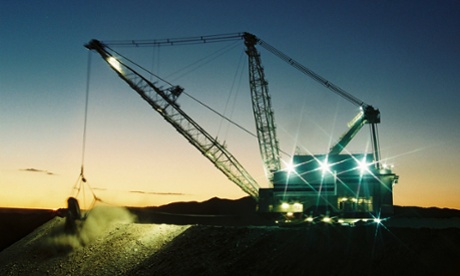
    An excavator works at a Rio Tinto coal mine in the Hunter valley north of Sydney

    An excavator works at a Rio Tinto coal mine in the Hunter valley north of Sydney. Photograph: HO/REUTERS

    Over the weekend, there has been widespread reporting that returned prime minister Kevin Rudd is contemplating moving the carbon price from a fixed price to floating price for emissions permits.

    The Age reported that it was expected that the carbon price would be a priority item for discussion at the next cabinet meeting:

    Speculation is growing the newly reinstalled Prime Minister will dump the fixed carbon price in favour of an earlier transition to an emissions trading scheme, with two ministers indicating on Friday that carbon pricing will be a priority at the first meeting of a new Rudd cabinet.

    The effect of moving from a fixed price to a genuine emissions trading scheme would be for the price of carbon emission permits to fall, and fall significantly.

    Currently, emissions permits are fixed just above $23. This price is fixed until 1 July 2015, when it would become a floating price — that is, a price determined by supply and demand.

    Complicating matters is the fact that Australia‘s carbon price from 2015 will be linked to the emissions trading scheme in the European Union. This is just one reason why it would be difficult for Tony Abbott, were he to become prime minister, to abolish the Australian emissions trading system.

    The current cost per tonne in Europe for carbon emissions permits is around 3 euroes (approximately $4 in Australia). The price fell sharply in recent years due to the effects of the global financial crisis, and because big polluters received substantial numbers of free permits. This oversupply, followed by a decline in economic activity accounts for the majority of the price decline, according to University of Melbourne research associate Katherine Lake.

    Australia followed the path of Europe by giving away significant numbers of free permits. Furthermore, the impact on future budgets was locked in through the decision to front-load compensation to taxpayers and businesses. That is, people got carbon price compensation before the income came in from the scheme.

    The added complication was our fixed price. In the middle price-range, it has succeeded in seeing around a 30% increase in renewable energy production and significant reduction in carbon emissions. Longer term, the risk was that it would lock in investment in gas projects.

    Australia should dump the fixed price and move to a full trading scheme. To avoid the mistakes of the European scheme, rather than using fixed prices, we should rely on scarcity to drive up the price and encourage the big polluters to innovate and reduce emissions. The number of permits should be progressively reduced.

    Kevin Rudd can also underscore his commitment to taking action on climate change by ramping up investment in clean, renewable energy projects, and expand the existing programmes that are in the system that assist households increase energy efficiency.

    More broadly, Rudd could halt some controversial coal and unconventional fossil fuel projects that are being planned, which would also assist Australia’s action on keeping temperature rise to below 2 degrees Celsius. Tied to this, Rudd could reduce fossil fuel subsidies, which amounts to tax-payer subsidised funding of carbon pollution. This could help Australia avoid the coal bubble that would lock in catastrophic global warming. A report by Centre for Naval Analysis states (with respect to fossil fuel investment in the USA):

    Using more natural gas and oil, even if domestically produced, neither frees our economies from global oil prices nor checks the greenhouse gas emissions that threaten future generations. The only sustainable solution to this dual challenge is to improve our energy efficiency and diversify our energy sources to include cleaner and renewable power.

    The carbon price is an important tool, but it is by no means the only one that the government has. The renewable energy target is by far the most effective way Australia to reduce its emissions in the short term.

    Moving sooner rather than later to full emissions trading is a good thing.

    Monday 1 July marks the first full year of the carbon price being in place in Australia. If you’re so inclined, you can sign a card to Greg Combet the former climate change minister, who announced he is resigning from parliament.

  • Mega-quakes ’caused volcanoes to sink’

    Mega-quakes ’caused volcanoes to sink’

    Updated: 10:40, Monday July 1, 2013

    Mega-quakes 'caused volcanoes to sink'

    Massive earthquakes can cause distant volcanoes to sink, according to research in Japan and Chile.

    The magnitude 9.0 tsunami-generating quake that occurred off northeastern Japan in 2011 caused subsidence of up to 15 centimetres in a string of volcanoes on the island of Honshu as much as 200 kilometres from the epicentre, a Japanese study published on Sunday said.

    And the 8.8-magnitude Maule quake in Chile in 2010 caused a similar degree of sinking in five volcanic regions located up to 220km away, according to a US-led paper.

    It was not clear whether the phenomenon boosted eruption risk, the authors wrote.

    Both the Japan and Chile quakes were of the subduction type, caused when one part of Earth’s crust slides beneath another.

    If the movement is not smooth, tension can build up over decades or centuries before it is suddenly released, sometimes with catastrophic effect.

    In both cases, the sinking occurred in mountain ranges running horizontally to the quake.

    The 2011 quake “caused east-west tension in eastern Japan,” Youichiro Takada of the Disaster Prevention Research Institute at Kyoto University told AFP in an email.

    “Hot and soft rocks beneath the volcanoes, with magma at the centre, were horizontally stretched and vertically flattened. This deformation caused the volcanoes to subside.”

    The researchers for the Chilean volcanoes said subsidence occurred along a stretch spanning 400km.

    As in Japan, the ground deformation in Chile occurred in huge ellipse-shaped divots up to 15km by 30km in size, although the cause appears to be different.

    Pockets of hot hydrothermal fluids that underpinned the volcanic areas may have escaped through rock that had been stretched and made permeable by the quake.

    Two earthquakes in the Chilean subduction zone in 1906 and 1960 were followed by eruptions in the Andean southern volcanic zone within a year of their occurrence.

    However, no big eruptions in this volcanic hotspot can be associated with the 2010 temblor, says the study led by Matthew Pritchard of Cornell University in New York.

    Takada said the impact of the 2011 quake on volcano risk on Honshu was unclear.

    The studies, published in the journal Nature Geoscience, used data from satellite radar which mapped terrain before and after the quakes.

    SHARE THIS ARTICLE:

  • El Nino Unusually Active in the Late 20th Century: Is It Because of Global Warming?

    El Nino Unusually Active in the Late 20th Century: Is It Because of Global Warming?

    June 30, 2013 — Spawning droughts, floods, and other weather disturbances world-wide, the El Niño — Southern Oscillation (ENSO) impacts the daily life of millions of people. During El Niño, Atlantic hurricane activity wanes and rainfall in Hawaii decreases while Pacific winter storms shift southward, elevating the risk of floods in California.


    Share This:

    The ability to forecast how ENSO will respond to global warming thus matters greatly to society. Providing accurate predictions, though, is challenging because ENSO varies naturally over decades and centuries. Instrumental records are too short to determine whether any changes seen recently are simply natural or attributable to human-made greenhouse gases. Reconstructions of ENSO behavior are usually missing adequate records for the tropics where ENSO develops.

    Help is now underway in the form of a tree-ring record reflecting ENSO activity over the past seven centuries. Tree-rings have been shown to be very good proxies for temperature and rainfall measurements. An international team of scientists spearheaded by Jinbao Li and Shang-Ping Xie, while working at the International Pacific Research Center, University of Hawaii at Manoa, has compiled 2,222 tree-ring chronologies of the past seven centuries from both the tropics and mid-latitudes in both hemispheres. Their work is published in the June 30, 2013 online issue of Nature Climate Change.

    The inclusion of tropical tree-ring records enabled the team to generate an archive of ENSO activity of unprecedented accuracy, as attested by the close correspondence with records from equatorial Pacific corals and with an independent Northern Hemisphere temperature reconstruction that captures well-known teleconnection climate patterns.

    These proxy records all indicate that ENSO was unusually active in the late 20th century compared to the past seven centuries, implying that this climate phenomenon is responding to ongoing global warming.

    “In the year after a large tropical volcanic eruption, our record shows that the east-central tropical Pacific is unusually cool, followed by unusual warming one year later. Like greenhouse gases, volcanic aerosols perturb the Earth’s radiation balance. This supports the idea that the unusually high ENSO activity in the late 20th century is a footprint of global warming,” explains lead author Jinbao Li.

    “Many climate models do not reflect the strong ENSO response to global warming that we found,” says co-author Shang-Ping Xie, meteorology professor at the International Pacific Research Center, University of Hawaii at Manoa and Roger Revelle Professor at Scripps Institution of Oceanography, University of California at San Diego. “This suggests that many models underestimate the sensitivity to radiative perturbations in greenhouse gases. Our results now provide a guide to improve the accuracy of climate models and their projections of future ENSO activity. If this trend of increasing ENSO activity continues, we expect to see more weather extremes such as floods and droughts.”

    Share this story on Facebook, Twitter, and Google:
  • Rising sea level restrictions ‘ridiculous’

    Rising sea level  restrictions ‘ridiculous’

    By DAMON CRONSHAW

    June 30, 2013, 11:14 p.m.

    • DENIED: Steve Turner's plan for his property at Belmont South has been hampered by the council's sea-level-rise measure. Picture: Peter StoopDENIED: Steve Turner’s plan for his property at Belmont South has been hampered by the council’s sea-level-rise measure. Picture: Peter Stoop

    A BELMONT South resident says building restrictions placed on his property because of Lake Macquarie City Council’s concern about rising sea levels are ridiculous.

    Steve Turner sought to build a dual-occupancy and two-lot subdivision on his Beach Street property.

    “We wanted to make some money for our retirement,” he said.

    The property is about 200 metres from the lake.

    A waterfront reserve, the Pacific Highway and a couple of houses sit between it and the lake.

    The plan was to knock down a shack on the site, build two houses, live in one and sell the other.

    The council has consistently argued that it has a duty of care to consider sea-level rise in planning and development decisions.

    A council document about Mr Turner’s plan, dated April 2013, said the site’s ground level was 1.24 metres above sea level.

    “Council has a sea-level-rise policy, which applies to this property,” the council document said.

    “The policy does not permit the construction of new dual occupancies on lots that are lower than two metres [above sea level]. The construction of a new single dwelling would still be permissible.”

    Mr Turner could not afford to build only one house.

    He will be among residents to attend a Lake Macquarie Ratepayers Action Group meeting on Wednesday at 7pm at Marks Point Bowling Club to discuss concerns about the council’s sea-level-rise measures.

    Residents believe these are causing property prices to fall, despite the council’s denials.

    Group spokeswoman Barbara Davis said residents’ concerns about sea-level-rise planning were being ignored.

    Mrs Davis said the council had placed “damaging information on property planning certificates before any real opportunity to discuss how to manage predictions of future flooding and inundation”.

    A council statement said there had been “no change in the number of properties with flood notations [which includes sea-level rise] since 2009”.

    “Of the 9800 properties, there are 7700 properties in low-lying parts of the city that have had a flood-risk notation on their properties since 1997 [or before].”

  • limate Change Threatening The Continued Survival Of Low-Elevation Forests In Arid Regions

    Climate Change Threatening The Continued Survival Of Low-Elevation Forests In Arid Regions

    Posted on June 30, 2013 by
    Print Friendly
    0 Share 5 Tweet 0 Share 5 5 Share

    Climate change may result in the inability of low-elevation forests which are located in arid regions to regenerate, according to new research from Oregon State University.

    "A decade after a stand-replacement forest fire on the Metolius watershed in Central Oregon, almost no trees have begun to regenerate on one of the dry sites at lower elevation." Image Credit: Oregon State University

    “A decade after a stand-replacement forest fire on the Metolius watershed in Central Oregon, almost no trees have begun to regenerate on one of the dry sites at lower elevation.”
    Image Credit: Oregon State University

    With rising temperatures and increasing aridity, many regions may see the disappearance of their forests. “Predicted increases in temperature and drought in the coming century may make it more difficult for conifers such as ponderosa pine to regenerate after major forest fires on dry, low-elevation sites, in some cases leading to conversion of forests to grass or shrub lands.”

    The researchers “concluded that moisture stress is a key limitation for conifer regeneration following stand-replacing wildfire, which will likely increase with climate change. This will make post-fire recovery on dry sites slow and uncertain. If forests are desired in these locations, more aggressive attempts at reforestation may be needed.”

    The new research was based on work “done in a portion of the Metolius River watershed in the eastern Cascade Range of Oregon, which prior to a 2002 fire was mostly ponderosa pine with some Douglas-fir and other tree species. The research area was not salvage-logged or replanted following the severe, stand-replacing fire.”

    “A decade after this fire, there was almost no tree regeneration at lower, drier sites,” said Erich Dodson, a researcher with the OSU Department of Forest Ecosystems and Society. “There was some regeneration at higher sites with more moisture. But at the low elevations, it will be a long time before a forest comes back, if it ever does.”

    The Oregon State University press release continues:

    Similar situations may be found in many areas of the American West in coming decades, the researchers say, and recruitment of new forests may be delayed or prevented — even in climate conditions that might have been able to maintain an existing forest. While mature trees can use their roots to tap water deeper in the soil, competition with dense understory vegetation can make it difficult for seedlings to survive.

    Openings in ponderosa pine forests created by wildfire have persisted for more than a century on harsh, south-facing slopes in Colorado, the researchers noted in their report. And fire severity is already increasing in many forests due to climate change — what is now thought of as a drought in some locations may be considered average by the end of the next century.

    If trees do fail to regenerate, it could further reduce ecosystem carbon storage and amplify the greenhouse effect.

    Restoration treatment including thinning and prescribed burning may help reduce fire severity and increase tree survival after wildfire, as well as provide a seed source for future trees. These dry sites with less resilience to stand-replacing fire should be priorities for treatment, if maintaining a forest is a management objective.

    Higher-elevation, mixed conifer forests in less moisture-limited sites may be able to recover from stand-replacing wildfire without treatment.

    The new research was just published in Forest Ecology and Management.

    Read more at http://planetsave.com/2013/06/30/climate-change-threatening-the-continued-survival-of-low-elevation-forests-in-arid-regions/#kSEXQzbUZUbRVGBe.99