Antony Green @AntonyGreenABC 1h
First Rudd PM Galaxy Poll gives Coalition an 8 seat majority http://bit.ly/10r4bpK #ausvotes #auspol
Retweeted 51 times
Antony Green @AntonyGreenABC 1h
First Rudd PM Galaxy Poll gives Coalition an 8 seat majority http://bit.ly/10r4bpK #ausvotes #auspol

The religious leaders say they are as one on human-induced climate change and have called for bipartisan support for carbon pricing, the fast-tracking of renewable energy and the winding back of coal exports.
Carbon pricing is opposed by Opposition Leader Tony Abbott but supported by Labor.
The letter follows a prediction from scientists at a conference in Tasmania this week that sea level rises will likely be double the .5m forecast by the Intergovernmental Panel on Climate Change for the end of this century.

Professor Tim Naish, director of the Antarctic Research Centre at Victoria University of Wellington, said the window was closing quickly on mitigation options in terms of a world response.
“Rises could be higher than what the upper bounds of IPCC would suggest,” Prof Naish said. “We have got to prepare for a world with extreme climate. Wetter areas will be wetter and warmer places will get warmer.”
CO2 levels have passed 400 ppm for the first time in 3 million years.
Weather bureau chief Rob Vertessy said humankind was changing the earth at a rapid pace and in a way that had never happened before.
“Change on the planet largely stems from population growth, growing consumption and that is going to accelerate all kinds of environmental processes,” Dr Vertessy said.
“We are going to lose a lot more natural capital and the climate and earth will change with it.”
Prominent religious leaders to sign the letter include the Grand Mufti Dr Ibrahim Abu Mohammad; the Chair of Catholic Earthcare Australia, Archbishop Philip Wilson; the President of the Uniting Church Assembly, Rev Professor Andrew Dutney; and the Chair of the Hindu Council of Australia, Professor Nihal Agar.
The letter, which has gone viral on social media a week before its formal launch, says: “Influential bodies are now warning us about an unthinkable 4C rise in temperatures if greenhouse gas emissions continue to increase. Recent experiences of extreme weather events, both here and overseas, are a mild foretaste of what this will mean.”
Uniting Church NSW-ACT Moderator, the Reverend Dr Brian Brown said: “We urge all Australians to give this moral issue the attention it demands. If we don’t, our children and grandchildren will face devastating consequences because of our failure to act now.”
In the 2011 Census, more than 67 per cent of Australians identified themselves with the religions from which the signatories are drawn.
June 28, 2013 — To prevent coral reefs around the world from dying off, deep cuts in carbon dioxide emissions are required, says a new study from Carnegie’s Katharine Ricke and Ken Caldeira. They find that all existing coral reefs will be engulfed in inhospitable ocean chemistry conditions by the end of the century if civilization continues along its current emissions trajectory.
Their work will be published July 3 by Environmental Research Letters.
Coral reefs are havens for marine biodiversity and underpin the economies of many coastal communities. But they are very sensitive to changes in ocean chemistry resulting from greenhouse gas emissions, as well as to coastal pollution, warming waters, overdevelopment, and overfishing.
Ricke and Caldeira, along with colleagues from Institut Pierre Simon Laplace and Stanford University, focused on the acidification of open ocean water surrounding coral reefs and how it affects a reef’s ability to survive.
Coral reefs use a mineral called aragonite to make their skeletons. It is a naturally occurring form of calcium carbonate, CaCO3. When carbon dioxide, CO2, from the atmosphere is absorbed by the ocean, it forms carbonic acid (the same thing that makes soda fizz), making the ocean more acidic and decreasing the ocean’s pH. This increase in acidity makes it more difficult for many marine organisms to grow their shells and skeletons, and threatens coral reefs the world over.
Using results from simulations conducted using an ensemble of sophisticated models, Ricke, Caldeira, and their co-authors calculated ocean chemical conditions that would occur under different future scenarios and determined whether these chemical conditions could sustain coral reef growth.
Ricke said: “Our results show that if we continue on our current emissions path, by the end of the century there will be no water left in the ocean with the chemical properties that have supported coral reef growth in the past. We can’t say with 100% certainty that all shallow-water coral reefs will die, but it is a pretty good bet.”
Deep cuts in emissions are necessary in order to save even a fraction of existing reefs, according to the team’s results. Chemical conditions that can support coral reef growth can be sustained only with very aggressive cuts in carbon dioxide emissions.
“To save coral reefs, we need to transform our energy system into one that does not use the atmosphere and oceans as waste dumps for carbon dioxide pollution. The decisions we make in the next years and decades are likely to determine whether or not coral reefs survive the rest of this century,” Caldeira said.
Carbon reporting for ships using EU ports will become legally binding if approved by the European parliament
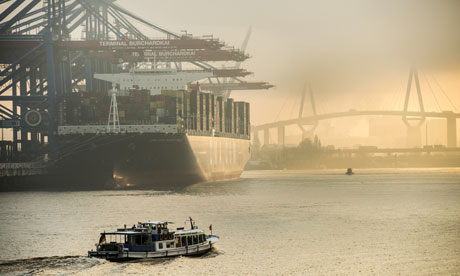
Owners of large ships using EU ports will have to measure and report annual carbon emissions from January 2018 under new European commission proposals published on Friday.
The plans stop short of including shipping emissions in the EU carbon market, but the commission says they can still have an impact and are part of its work towards global emissions agreements.
“The EU monitoring system will bring environmental and economic gains for the shipping sector by increasing transparency about emissions and creating an incentive for ship-owners to cut them,” Connie Hedegaard, EU commissioner for climate action, said in a statement.
The proposals are subject to months of debate and will need approval from EU member states and the European parliament before they can become law.
They would create an EU-wide legal framework for collecting and publishing verified annual data on CO2 emissions from all large ships (defined as more than 5,000 gross tons) that use EU ports, irrespective of where the ships are registered.
Owners – such as Denmark’s AP Moller-Maersk A/S, the group behind the world’s biggest container shipping operator – will also be required to provide other information, such as data to determine the ships’ energy efficiency.
The commission said the EU-wide monitoring system should cut emissions from the journeys covered by up to 2% and could also help to reduce costs to owners.
Debate on how to handle shipping emissions, which the commission estimates account for 3% of global and 4% of EU greenhouse gas emissions, has rumbled on for years with little progress.
Without action, shipping emissions are expected to more than double by 2050 as transport demand increases.
Preliminary discussions between EU member states and the shipping industry addressed the option of including emissions in the emissions trading scheme.
But there is little chance of that happening in the short term, given the international outcry and threats of a trade war that followed an earlier decision to expand the carbon trading scheme to include all flights to and from EU airports.
As a result, the EU agreed to freeze the charge on intercontinental flights for a year to give the UN International Civil Aviation Organisation (ICAO) a chance to come up with an alternative.
Talks are already under way at the International Maritime Organisation on a global deal for shipping emissions. The EC says its measures on both shipping and airlines are only being introduced pending a worldwide agreement and the EU shipping rules would be modified if necessary to conform to any global standards, if agreed.
Related
|
Inbox
|
x | |||

|
12:01 PM (35 minutes ago)
 |
|
||
|
||||
Dear Friend,
Whilst our politicians play musical chairs, we’re stepping up the divestment push with our campaign to stop the big banks investing in climate destruction.
Together with our friends at Market Forces, we’ve supported and signed on to an open letter in major Fairfax and News Limited outlets to ANZ, Commonwealth, NAB and Westpac, urging them to stop investing in the fossil fuel industry.
Sixty respected individuals have signed the letter including 350.org’s own Bill McKibben, authors Peter Carey and John Cotzee, former politician Carmen Lawrence, musicians Felix Riebl and Claire Bowditch, Professor Peter Singer, climate change scientist Lesley Hughes and former Coal Association Chair Ian Dunlop.
Will you join our call for the big four to divest and invite your friends to do the same? Click here to join: openletter.marketforces.org.au/
In only a few months, you’ve already committed to move almost $30 million of your savings if the ‘big four’ don’t stop funding fossil fuels. This open letter adds the voices of 60 prominent Australians to your call.
Sign and share this letter and tell the banks to start moving money out of fossil fuels in a big way.
Yours in hope,
Charlie Wood,
350.org Australia
PS – Our letter to PM Rudd telling him to keep his climate promises has gotten great pickup. If you haven’t had a chance to sign, add your name now, and make sure he gets the message: act.350.org/sign/rudd-climate-promises/
350.org is building a global movement to solve the climate crisis. Connect with us on Facebook and Twitter, and sign up for email alerts. You can help power our work by getting involved locally, sharing your story, and donating here.To stop receiving emails from 350.org, click here.
EC abandons vote on making cars more fuel efficient after intervention of German chancellor, supported by David Cameron
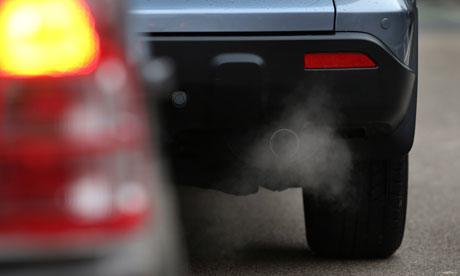
German chancellor Angela Merkel personally thwarted plans this week to improve the fuel efficiency of European cars, in order to protect luxury marques including BMW, Audi and Daimler. Supporters of the policy, which had been agreed by officials from the 27 EU nations, say it would save motorists in the UK £400 a year in fuel costs.
David Cameron helped Merkel block the plan to limit emissions from new cars sold in 2020, despite his own department of transport being in favour. The plan had been expected to be rubber stamped by national leaders at the quarterly European council meeting on Thursday, but was dropped from the agenda after Merkel telephoned other leaders to lobby them.
The policy would see new European cars required to emit no more on average than 95grammes of carbon dioxide per kilometre by 2020. The current target of 120gCO2/km by 2015 will be easily met as manufacturers meet increasing consumer demand for fuel efficient vehicles.
“Merkel’s unilateral attempt to try and stop the car CO2 deal is undemocratic and unwelcome,” said Matthias Groote, German MEP from the opposition SPD party and chair of the European parliament environment committee. He said Merkel’s personal interventions, including a call to the Enda Kenny taiseoch of Ireland which currently holds the EU presidency, had caused “chaos” and added he had not seen such “brazen behaviour” in seven years in the European parliament.
Merkel faces national elections in Germany in September and some observers said her block was aimed at shifting a policy unpopular with Germany’s powerful car makers until after the vote while others suggested Germany would use the postponement to recruit enough member states to water down the efficiency plans. No new date has been set for the policy to be approved.
The European Automobile Manufacturers’ Association, which represents the biggest car companies, opposes the plan as expensive. Ivan Hodac, ACEA secretary general, said some of the proposals “will clearly put us at a strong disadvantage on the global market”.
But not all manufacturers welcomed the abandoned vote. “As a company committed to meaningful CO2 emission reductions through advanced technology, Ford is disappointed,” said a company spokesman. “We will now have to regroup within the industry to determine the next steps.”
Monique Goyens, director-general of BEUC – the European Consumer Organisation, said: “It’s consumers who will pay the price for this last-minute scuppering of the deal on car CO2 emissions. This last-minute intervention at the highest political level is a clear case of the concerns of a handful of companies taking precedence over consumers’ interests.”
Environmental campaigners also criticised Merkel’s actions. “This new delay means Merkel can mount another assault on the draft CO2 standards we’ve fought for – and keep polluting cars on the roads for longer,” said a Greenpeace spokeswoman. “And yet we all know carmakers are capable of innovating to meet these targets – VW has shown that.”
Greg Archer of Transport and Environment said: “It’s unprecedented in EU environmental policymaking that the pressure of one country delays a vote in an attempt to overturn a fairly-negotiated agreement between the European parliament, the commission and the council itself. It is ludicrous for Germany to claim it needs more time, as the 95g target was agreed five years ago and Germany has already put forward five different proposals that have been rejected by the vast majority of EU countries.”
German car makers produce a fleet with emissions 15gCO2/km above the current 132gCO2/km European average, according to the International Council on Clean Transportation, while France’s Peugot and Italy’s Fiat sell smaller cars with lower emissions.
 Email
Email Print this
 Share
Share Contact us


