Category: Uncategorized

  • Alberta flooding sets records, prompts calls for action on climate change

    Alberta flooding sets records, prompts calls for action on climate change

    OTTAWA – Water-logged southern Alberta is on track to set a new Canadian record for flood damage, both in terms of cost and the number of people forced from their homes.

    The severity of the flooding has a former top federal environmental adviser hoping that the Alberta-centric Harper government will finally get its “head out of the sand bag” when it comes to climate change.

    “It’s a helluva warning, really, about unpredictable, extreme weather events and the need to prepare for it,” said David McLaughlin, former head of the now-defunct National Roundtable on the Environment and the Economy.

    While one can debate the causes of climate change, McLaughlin said it’s indisputable that the planet is warming and setting off more frequent extreme weather events: floods, tornadoes, drought, freezing rain, prolonged heat waves or cold snaps.

    The changes usually “happen so slowly that we typically don’t pay much attention to them until we have this incredible event taking place before our eyes so quickly,” he said in an interview.

    “And that’s why the Calgary flood and southern Alberta floods may really mark a change in how people view climate, the issues of climate.”

    In terms of property damage and lives up-ended, the flooding appears to be without precedent.

    The Alberta government estimates 120,000 people have been forced out of their homes since the flooding began in earnest last week — and more may yet face evacuation as the torrential flow of water moves downstream.

    Premier Alison Redford committed $1 billion to the recovery effort Monday — and that’s just to kick-start the operation.

    Until now, according to the Canadian Disaster Database, the 1950 Winnipeg flood was the largest flood-related evacuation in the country since 1900. One-third of Winnipeg’s population — 107,000 people — were forced out of their homes as the Red River submerged a tenth of the city.

    The database also pegs the 2010 flooding of southern Alberta and Saskatchewan as the costliest — $984 million in damage — until now.

    Immigration Minister Jason Kenney, who represents a Calgary riding, has dismissed suggestions that climate change has anything to do with the magnitude of flooding in southern Alberta, which he has called “a once-in-a-century event.”

    But McLaughlin noted that the 2005 flooding in southern Alberta — which seems like a trickle of water compared to the deluge over the past few days — was also said to be a once-in-a-century event.

    “Now we have in 2013 the second once-in-a-century flood in less than a decade,” he said.

    “Denying that climate change is a cause is akin to putting your head in the sand — in this case, your head in a sand bag.”

    McLaughlin noted that polls suggest Albertans tend to be the most skeptical among Canadians that climate change is a real problem. And he said Prime Minister Stephen Harper, a Calgarian himself, and his government have tended to “reinforce” that skepticism.

    But now, under the federal disaster financial assistance arrangements, the Harper government could end up paying as much as 90 per cent of the costs of rebuilding southern Alberta.

    That billion-plus price tag, along with the cascading economic costs of shutting down the country’s fourth largest city, may finally force the skeptics to come to terms with reality, McLaughlin hopes.

    “Maybe there’s going to be a more acute awareness now that this can hit home anywhere and, if it hits home in downtown Calgary, we can see because of the importance of that city … it can have an effect right across the country.”

    Apart from Canada doing its part to reduce global greenhouse gas emissions, McLaughlin said governments need to focus on adapting to climate change, making cities and towns more resilient in the face of extreme weather.

    Among other things, that means building stronger, less vulnerable infrastructure, prohibiting development on flood plains, investing in back-up power systems and better emergency planning.

    It also means paying more for insurance, he said.

    According to the Insurance Bureau of Canada, the amount insurers pay out in damage claims due to severe weather has doubled every five to 10 years since 1980. And that doesn’t include most of the damage wrought by floods.

    Home insurance policies generally don’t include coverage for damage caused by overland flooding — that is, water that pours in through doors or windows as was the case in Alberta. They do, however, cover water damage that seeps in through the basement or is the result of backed up sewer pipes.

    Steve Kee, spokesman for the Insurance Bureau of Canada, said overland flooding isn’t offered because only a relatively small fraction of Canadians live in flood plains or near rivers and lakes.

    With so few prospective policy holders among whom to spread the risk, the cost of flood insurance would be prohibitive, he said.

    Still, even without having to pay staggering overland flood claims, water damage is now the leading cause of property damage in Canada, costing insurance companies an estimated $1.7 billion per year. The bureau says the damage is typically the result of municipal infrastructure failure.

    News from © The Canadian Press
    Today’s Headlines Yesterday’s Headlines Past 2 Weeks

  • Ocean acidification threatens economies and marine life

    Ocean acidification threatens economies and marine life

    Posted: 24 Jun 2013 01:57 PM PDT

    Environment: Corals weaken as pH drops, UN report detail further ocean harm

    Evidence for ocean acidification abounds, but what that means for different organisms has been hard to pin down. A recent study finds that at least one coral species won’t be able to acclimatize to more acidic waters (Proc. Natl. Acad. Sci. USA 2013, DOI: 10.1073/pnas.1301589110).


    Led by Elizabeth D. Crook of the University of California, Santa Cruz, researchers sampled Porites astreoides corals from waters in the Yucatan Peninsula with a natural pH gradient.

    The researchers used computed tomography (CT) scans to determine annual growth rates over four years and skeletal erosion due to wear-and-tear or predation. Then they assessed how these measures vary with the water’s carbonate ion concentration, which roughly tracks pH.

    Some of the corals came from waters with a pH just above 8.0, which is near the average value for oceans. Others came from an area with much less carbonate than average, where pH is 7.2–7.6. They found that corals in low-carbonate waters calcified 30% less, their skeletons were 28% less dense, and their bioerosion was nearly twice as extensive. These effects worsened in areas with even more acidic waters. The observed trends mirror those seen in short-term lab studies, suggesting they would persist over a lifetime, Crook says.

    Chris Langdon of the University of Miami is concerned by the study’s findings. He notes that the oceans are becoming warmer, which also negatively affects coral. Research on how these two factors synergize is a growing field, he adds. Study coauthor Adina Paytan of UC Santa Cruz says that coral reefs serve as frameworks for diverse ecosystems and help humans by providing tourism opportunities, coastal protection, and homes for seafood.

    Adding to the gloom, a new United Nations report says human activities that generate carbon emissions are acidifying the oceans and the problem could get far worse without emission cuts. By 2050, ocean pH could drop to 7.8 on average, a 150% acidity increase over preindustrial values of around 8.2. The economic impact of these changes could reach billions of dollars, the report warns.

    Puneet Kollipara, Chemical & Engineering News 91(25): 8. 24 June 2013. Article.

  • China’s state newspaper praises Edward Snowden for ‘tearing off Washington’s sanctimonious mask’

    China’s state newspaper praises Edward Snowden for ‘tearing off Washington’s sanctimonious mask’

    State-run People’s Daily says whistleblower has exposed US hypocrisy after Washington blamed Beijing for his escape

    Link to video: Barack Obama says US will pursue Edward SnowdenChina‘s top state newspaper has praised the fugitive US spy agency contractor Edward Snowden for “tearing off Washington’s sanctimonious mask” and rejected accusations Beijing had facilitated his departure from Hong Kong.

    The strongly worded front-page commentary in the overseas edition of the People’s Daily, the official newspaper of the Chinese Communist party, responded to harsh criticism of China from the US for allowing Snowden to flee.

    The Chinese government has said it was gravely concerned by Snowden’s allegations that the US had hacked into many networks in Hong Kong and China, including Tsinghua University, which hosts one of the country’s internet hubs, and Chinese mobile network companies. It said it had taken the issue up with Washington.

    “Not only did the US authorities not give us an explanation and apology, it instead expressed dissatisfaction at the Hong Kong special administrative region for handling things in accordance with law,” wrote Wang Xinjun, a researcher at the Academy of Military Science in the People’s Daily commentary.

    “In a sense, the United States has gone from a ‘model of human rights’ to ‘an eavesdropper on personal privacy’, the ‘manipulator’ of the centralised power over the international internet, and the mad ‘invader’ of other countries’ networks,” the People’s Daily said.

    The White House said allowing Snowden to leave was “a deliberate choice by the government to release a fugitive despite a valid arrest warrant, and that decision unquestionably has a negative impact on the US-China relationship”.

    The People’s Daily, which reflects the thinking of the government, said China could not accept “this kind of dissatisfaction and opposition”.

    “The world will remember Edward Snowden,” the newspaper said. “It was his fearlessness that tore off Washington’s sanctimonious mask”.

    The exchanges mark a deterioration in ties between the two countries just weeks after a successful summit meeting between presidents Barack Obama and Xi Jinping. But experts say Washington is unlikely to resort to any punitive action.

    A commentary in the Global Times, owned by the People’s Daily, also attacked the US for cornering “a young idealist who has exposed the sinister scandals of the US government”.

    “Instead of apologising, Washington is showing off its muscle by attempting to control the whole situation,” the Global Times said.

    Snowden gave US authorities the slip by leaving Hong Kong on an Aeroflot plane to Moscow on Sunday. The US had requested his detention for extradition to the US on treason charges but the Hong Kong authorities responded that the papers had not been in order and Snowden was free to leave.

    Jay Carney, the White House spokesman, said Washington did not believe the explanation that it was a “technical” decision by Hong Kong immigration authorities. “The Hong Kong authorities were advised of the status of Mr Snowden’s travel documents in plenty of time to have prohibited his travel as appropriate. We do not buy the suggestion that China could not have taken action.”

    On Monday Snowden had been expected to board another plane from Moscow for Cuba and ultimately fly from there to Ecuador, which is considering granting him asylum. But journalists who boarded the plane in Moscow soon found Snowden had not taken his seat.

    When the plane landed in Cuba there was likewise no sign that Snowden had been on board. The pilot greeted journalists at Havana’s Jose Marti international airport by pulling out his own camera, taking pictures of the them and saying: “No Snowden, no.”

    The harshly worded Chinese commentaries did not appear on the country’s main news portals on Tuesday afternoon. Instead most articles focused on hard news, such as Snowden’s still-unknown final destination, his relationship with WikiLeaks and the details of his departure from Hong Kong.

    Another editorial in the People’s Daily on Monday defended the Hong Kong government for allowing Snowden to leave despite a US warrant for his arrest, claiming that it acted according to the law and “will be able to withstand examination”.

    “The voices of a few American politicians and media outlets surrounding the Prism scandal have become truly shrill,” it said. “Not only do some of them lack the least bit of self-reflection but they also arrogantly find fault with other countries for no reason at all.”

    Shi Yinhong, an expert on China-US relations at Renmin University in Beijing, said the Snowden affair had given China’s leaders an opportunity to shore up their own legitimacy domestically by projecting a strong message of US hypocrisy.

    Yet behind the scenes, he said, top leaders were probably reluctant to allow the affair to significantly impact bilateral ties. “Maybe this will have an impact on public opinion in China, but for the Chinese government almost nothing has changed,” he said. “Even if this damages China-US relations it’ll be very temporary.”

  • How can we invest our trust in a government that spies on us?

    How can we invest our trust in a government that spies on us?

    We should not fear some Orwellian future state where we’re subjected to total electronic scrutiny – it’s our present reality

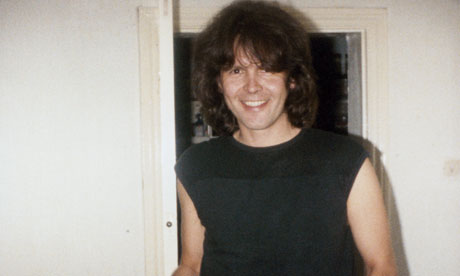
    Bob Lambert

    Bob Lambert, an undercover policeman who is alleged to have lied in court and has been accused by an MP of firebombing, was awarded an MBE in 2008 and now teaches at St Andrews University. Photograph: guardian.co.uk

    ‘If you are a law-abiding citizen of this country, going about your business and your personal life, you have nothing to fear.” That’s how William Hague, the foreign secretary, responded to the revelations of mass surveillance in the US and the UK. Try telling that to Stephen Lawrence’s family.

    Four police officers were deployed to spy on the family and friends of the black teenager murdered by white racists. The Lawrences and the people who supported their fight for justice were law-abiding citizens going about their business. Yet undercover police were used, one of the spies now tells us, to hunt for “disinformation” and “dirt”. Their purpose? “We were trying to stop the campaign in its tracks.”

    The two unfolding spy stories resonate powerfully with each other. One, gathered by Paul Lewis and Rob Evans, shows how police surveillance has been comprehensively perverted. Instead of defending citizens and the public realm, it has been used to protect the police from democratic scrutiny and stifle attempts to engage in politics.

    The other, arising from the documents exposed by Edward Snowden, shows that the US and the UK have been involved in the mass interception of our phone calls and use of the internet. William Hague insists that we should “have confidence in the work of our intelligence agencies, and in their adherence to the law and democratic values”. Why?

    Here are a few of the things we have learned about undercover policing in Britain. A unit led by a policeman called Bob Lambert deployed officers to spy on peaceful activists. They adopted the identities of dead children and then infiltrated protest groups. Nine of the 11 known spies formed long-term relationships with women in the groups, in some cases (including Lambert’s) fathering children with them. Then they made excuses and vanished.

    They left a trail of ruined lives, fatherless children and women whose confidence and trust have been wrecked beyond repair. They have also walked away from other kinds of mayhem. On Friday we discovered that Lambert co-wrote the leaflet for which two penniless activists spent three years in the high court defending a libel action brought by McDonald’s. The police never saw fit to inform the court that one of their own had been one of the authors.

    Bob Lambert has been accused of using a false identity during a criminal trial. And, using parliamentary privilege, the MP Caroline Lucas alleged that he planted an incendiary device in a branch of Debenhams while acting as an agent provocateur. The device exploded, causing £300,000 of damage. Lambert denies the allegation.

    Police and prosecutors also failed to disclose, during two trials of climate-change activists, that an undercover cop called Mark Kennedy had secretly taped their meetings, and that his recordings exonerated the protesters. Twenty people were falsely convicted. Those convictions were later overturned.

    If the state is prepared to abuse its powers and instruments so widely and gravely in cases such as this, where there is a high risk of detection, and if it is prepared to intrude so far into people’s lives that its officers live with activists and father their children, what is it not prepared to do while spying undetectably on our private correspondence?

    Already we know that electronic surveillance has been used in this country for purposes other than the perennial justifications of catching terrorists, foiling foreign spies and preventing military attacks. It was deployed, for example, to spy on countries attending the G20 meeting the UK hosted in 2009. If the government does this to other states, which might have the capacity to detect its spying and which certainly have the means to object to it, what is it doing to defenceless citizens?

    It looks as if William Hague may have misled parliament a fortnight ago. He claimed that “to intercept the content of any individual’s communications in the UK requires a warrant signed personally by me, the home secretary, or by another secretary of state”.

    We now discover that these ministers can also issue general certificates, renewed every six months, which permit mass interception of the kind that GCHQ has been conducting. Among the certificates issued to GCHQ is a “global” one authorising all its operations, including the trawling of up to 600m phone calls and 39m gigabytes of electronic information a day. A million ministers, signing all day, couldn’t keep up with that.

    The best test of the good faith of an institution is the way it deals with past abuses. Despite two years of revelations about abusive police spying, the British government has yet to launch a full public inquiry. Bob Lambert, who ran the team, fathered a child by an innocent activist he deceived, co-wrote the McDonald’s leaflet, is alleged to have lied in court and has been accused by an MP of firebombing, was awarded an MBE in 2008. He now teaches at St Andrews University, where he claims to have a background in “counter-terrorism”.

    The home office minister Nick Herbert has stated in parliament that it’s acceptable for police officers to have sex with activists, for the sake of their “plausibility”. Does this sound to you like a state in which we should invest our trust?

    Talking to Sunday’s Observer, a senior intelligence source expressed his or her concerns about mass surveillance. “If there was the wrong political change, it could be very dangerous. All you need is to have the wrong government in place.” But it seems to me that any government prepared to subject its citizens to mass surveillance is by definition the wrong one. No one can be trusted with powers as wide and inscrutable as these.

    In various forms – Conservative, New Labour, the coalition – we have had the wrong government for 30 years. Across that period its undemocratic powers have been consolidated. It has begun to form an elective dictatorship, in which the three major parties are united in their desire to create a security state; to wage unprovoked wars; to defend corporate power against democracy; to act as a doormat for the United States; to fight political dissent all the way to the bedroom and the birthing pool. There’s no need to wait for the “wrong” state to arise to conclude that mass surveillance endangers liberty, pluralism and democracy. We’re there already.

    Twitter: @georgemonbiot. A fully referenced version of this article can be fo

  • Migrating Animals Add New Depth to How the Ocean ‘Breathes’

    Migrating Animals Add New Depth to How the Ocean ‘Breathes’

    June 24, 2013 — The oxygen content of the ocean may be subject to frequent ups and downs in a very literal sense — that is, in the form of the numerous sea creatures that dine near the surface at night then submerge into the safety of deeper, darker waters at daybreak.


    Share This:

    Research begun at Princeton University and recently reported on in the journal Nature Geoscience found that animals ranging from plankton to small fish consume vast amounts of what little oxygen is available in the ocean’s aptly named “oxygen minimum zone” daily. The sheer number of organisms that seek refuge in water roughly 200- to 650-meters deep (650 to 2,000 feet) every day result in the global consumption of between 10 and 40 percent of the oxygen available at these depths.

    The findings reveal a crucial and underappreciated role that animals have in ocean chemistry on a global scale, explained first author Daniele Bianchi, a postdoctoral researcher at McGill University who began the project as a doctoral student of atmospheric and oceanic sciences at Princeton.

    “In a sense, this research should change how we think of the ocean’s metabolism,” Bianchi said. “Scientists know that there is this massive migration, but no one has really tried to estimate how it impacts the chemistry of the ocean.

    “Generally, scientists have thought that microbes and bacteria primarily consume oxygen in the deeper ocean,” Bianchi said. “What we’re saying here is that animals that migrate during the day are a big source of oxygen depletion. We provide the first global data set to say that.”

    Much of the deep ocean can replenish (often just barely) the oxygen consumed during these mass migrations, which are known as diel vertical migrations (DVMs).

    But the balance between DVMs and the limited deep-water oxygen supply could be easily upset, Bianchi said — particularly by climate change, which is predicted to further decrease levels of oxygen in the ocean. That could mean these animals would not be able to descend as deep, putting them at the mercy of predators and inflicting their oxygen-sucking ways on a new ocean zone.

    “If the ocean oxygen changes, then the depth of these migrations also will change. We can expect potential changes in the interactions between larger guys and little guys,” Bianchi said. “What complicates this story is that if these animals are responsible for a chunk of oxygen depletion in general, then a change in their habits might have a feedback in terms of oxygen levels in other parts of the deeper ocean.”

    The researchers produced a global model of DVM depths and oxygen depletion by mining acoustic oceanic data collected by 389 American and British research cruises between 1990 and 2011. Using the background readings caused by the sound of animals as they ascended and descended, the researchers identified more than 4,000 DVM events.

    They then chemically analyzed samples from DVM-event locations to create a model that could correlate DVM depth with oxygen depletion. With that data, the researchers concluded that DVMs indeed intensify the oxygen deficit within oxygen minimum zones.

    “You can say that the whole ecosystem does this migration — chances are that if it swims, it does this kind of migration,” Bianchi said. “Before, scientists tended to ignore this big chunk of the ecosystem when thinking of ocean chemistry. We are saying that they are quite important and can’t be ignored.”

    Bianchi conducted the data analysis and model development at McGill with assistant professor of earth and planetary sciences Eric Galbraith and McGill doctoral student David Carozza. Initial research of the acoustic data and development of the migration model was conducted at Princeton with K. Allison Smith (published as K.A.S. Mislan), a postdoctoral research associate in the Program in Atmospheric and Oceanic Sciences, and Charles Stock, a researcher with the Geophysical Fluid Dynamics Laboratory operated by the National Oceanic and Atmospheric Administration.

    Share this story on Facebook, Twitter, and Google:
  • The Wrong State ( Monbiot )

    Monbiot.com


    The Wrong State

    Posted: 24 Jun 2013 12:36 PM PDT

    The police spy scandal shows that mass surveillance will be used against us.


    By George Monbiot, published in the Guardian 25th June 2013

    “If you are a law-abiding citizen of this country, going about your business and your personal life, you have nothing to fear.”(1) That’s how William Hague, the foreign secretary, responded to the revelations of mass surveillance in the US and the UK. Try telling it to Stephen Lawrence’s family.

    Four police officers were deployed to spy on the family and friends of the black teenager murdered by white racists(2). The Lawrences and the people who supported their fight for justice were law-abiding citizens going about their business. Yet undercover police were used, one of the spies now tells us, to hunt for “disinformation” and “dirt”. Their purpose? “We were trying to stop the campaign in its tracks.”

    The two unfolding spy stories resonate powerfully with each other. One, gathered by Paul Lewis and Rob Evans, shows how police surveillance has been comprehensively perverted. Instead of defending citizens and the public realm, it has been used to protect the police from democratic scrutiny and stifle attempts to engage in politics.

    The other, arising from the documents exposed by Edward Snowden, shows that the US and the UK have been involved in the mass interception of our phone calls and use of the internet. William Hague insists that we should “have confidence in the work of our intelligence agencies, and in their adherence to the law and democratic values”(3). Why?

    Here are a few of the things we have learnt about undercover policing in Britain. A unit led by a policeman called Bob Lambert deployed officers to spy on peaceful activists. They adopted the identities of dead children then infiltrated protest groups. Nine of the eleven known spies formed long-term relationships with women in the groups, in some cases (including Lambert) fathering children with them(4). Then they made excuses and vanished.

    They left a trail of ruined lives, fatherless children, women whose confidence and trust have been wrecked beyond repair. They have also walked away from other kinds of mayhem. On Friday we discovered that Lambert co-wrote the leaflet for which two penniless activists spent three years in the high court defending a libel action brought by McDonalds(5). The police never saw fit to inform the court that one of their own had authored it.

    Bob Lambert has been accused of using a false identity during a criminal trial(6). And, using parliamentary privilege, the MP Caroline Lucas alleged that he planted an incendiary device in a branch of Debenhams while acting as an agent provocateur(7). The device exploded, caused £300,000 of damage. Lambert denies the allegation.

    Police and prosecutors also failed to disclose, during two trials of climate change activists, that an undercover cop called Mark Kennedy had secretly taped their meetings, and that his recordings exonerated the protesters. Twenty people were falsely convicted(8).

    If the state is prepared to abuse its powers and instruments so widely and gravely in cases such as this, where there is a high risk of detection, and if it is prepared to intrude so far into people’s lives that its officers live with activists and father their children, what is it not prepared to do while spying undetectably on our private correspondence?

    Already we know that electronic surveillance in this country has been used for purposes other than the perennial justifications of catching terrorists, foiling foreign spies and preventing military attacks. It was deployed, for example, to spy on countries attending the G20 meeting the UK hosted in 2009(9). If the government does this to other states, which might have the capacity to detect its spying and which certainly have the means to object to it, what is it doing to defenceless citizens?

    It looks as if William Hague might have misled parliament a fortnight ago. He claimed that “to intercept the content of any individual’s communications in the UK requires a warrant signed personally by me, the Home Secretary, or by another Secretary of State.”(10) We now discover that these ministers can also issue general certificates, renewed every six months, which permit mass interception of the kind that GCHQ has been conducting. Among the certificates issued to GCHQ is a “global” one authorising all its operations(11), including the trawling of up to 600 million phone calls and 39 million gigabytes of electronic information a day(12,13). A million ministers, signing all day, couldn’t keep up with that.

    The best test of the good faith of an institution is the way it deals with past abuses. Despite two years of revelations about abusive police spying, the British government has yet to launch a full public inquiry. Bob Lambert, who ran the team, fathered a child by an innocent activist he deceived, co-wrote the McDonalds leaflet, is alleged to have lied in court and has been accused by an MP of firebombing, was awarded an MBE in 2008. He now teaches at St Andrews University, where he claims to have a background in “counter-terrorism”(14).

    The home office minister Nick Herbert has stated in parliament that it’s acceptable for police to have sex with activists, for the sake of their “plausibility”(15). Does this sound to you like a state in which we should invest our trust?

    Talking to Sunday’s Observer, a senior intelligence source expressed his or her concerns about mass surveillance. “If there was the wrong political change, it could be very dangerous. All you need is to have the wrong government in place.”(16) But it seems to me that any government prepared to subject its citizens to mass surveillance is by definition the wrong one. No one can be trusted with powers as wide and inscrutable as these.

    In various forms – Conservative, New Labour, Coalition – we have had the wrong government for 30 years. Across that period its undemocratic powers have consolidated. It has begun to form an elective dictatorship, in which the three major parties are united in their desire to create a security state; to wage unprovoked wars; to defend corporate power against democracy; to act as a doormat to the United States; to fight political dissent all the way to the bedroom and the birthing pool. There’s no need to wait for the “wrong” state to arise to conclude that mass surveillance endangers liberty, pluralism and democracy. We’re there already.

    www.monbiot.com

    References:

    1. http://www.guardian.co.uk/uk/video/2013/jun/09/data-snooping-law-abiding-citizens-nothing-fear-hague-video

    2. http://www.guardian.co.uk/uk/2013/jun/23/stephen-lawrence-undercover-police-smears

    3. http://www.guardian.co.uk/uk/2013/mar/01/police-spy-fictional-character

    4. http://www.guardian.co.uk/uk/2012/jan/20/undercover-police-children-activists

    5. http://www.guardian.co.uk/uk/2013/jun/21/mclibel-leaflet-police-bob-lambert-mcdonalds

    6. http://www.guardian.co.uk/uk/undercover-with-paul-lewis-and-rob-evans/2011/oct/21/second-undercover-officer-accused-misleading-court

    7. http://www.guardian.co.uk/uk/2012/jan/20/undercover-police-children-activists

    8. http://www.guardian.co.uk/environment/2011/jul/19/power-station-activists-win-appeal

    9. http://www.guardian.co.uk/uk/2013/jun/16/gchq-intercepted-communications-g20-summits

    10. http://www.publications.parliament.uk/pa/cm201314/cmhansrd/cm130610/debtext/130610-0001.htm#13061011000001

    11. http://www.guardian.co.uk/uk/2013/jun/21/legal-loopholes-gchq-spy-world

    12. http://www.guardian.co.uk/uk/2013/jun/21/gchq-mastering-the-internet

    13. http://www.guardian.co.uk/uk/2013/jun/21/gchq-cables-secret-world-communications-nsa

    14. http://www.st-andrews.ac.uk/~cstpv/staff/boblambert/boblambert.html

    15. http://www.itv.com/news/meridian/2012-06-13/nick-herbert-its-important-police-are-allowed-to-have-sex-with-activists/
    (or go to source)

    16. http://www.guardian.co.uk/uk/2013/jun/23/mi5-feared-gchq-went-too-far