Category: Uncategorized

  • How climate change climbed up the business agenda

    How climate change climbed up the business agenda

    The problem is not just an issue for activists, as extreme weather events put sustainability centre stage for business

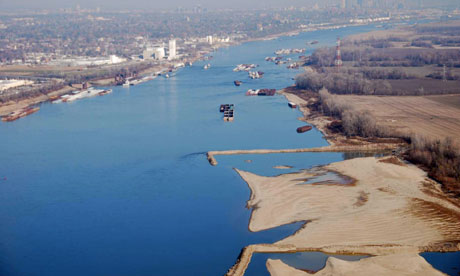
    Drought-hit areas of the Mississippi river

    At its peak last summer, the North American drought crippled commerce along the Mississippi river. Photograph: Colby Buchanan/AP

    Climate change, deforestation, sustainable sourcing. Voices of concern over these issues – and more – aren’t only those of activists or the environmental community. Increasingly, disparate stakeholders and investors are chiming in. What was once a murmur is now a chorus, often built into business plans and integrated into corporate agendas.

    In a recent preview of the 2013 proxy season, Ernst & Young reported that 45% of shareholder proposals focus on environmental and social topics. Interestingly, nearly one third of climate change and other sustainability proposals were withdrawn, indicating dialogue between corporations and shareholders on these issues that has satisfied both parties.

    Shareholder expectations have historically pushed the corporate agenda, but why the growing interest in greener topics? Environmental and social issues – in other words sustainability issues – interest shareholders because they are strategic risk-management issues. Leading companies are taking their cue accordingly, renewing their focus on the need for resource efficiency and scenario planning. This response spans large industrial sectors including oil and gas, agriculture, food and beverage, manufacturing and utilities.

    What other trends are solidifying a new sustainability minded business reality? A recent survey by Ernst & Young and GreenBiz queried sustainability executives (annual revenues of $1bn plus) representing 17 industries. More than 50% expect natural resources to affect their company’s core business.

    Water-related risks gained the greatest notoriety in the corporate sphere, and for good reason. A full 76% of respondents ranked water as the top cause for concern among resources “most at risk”. At its peak last summer, the North American drought crippled commerce along the Mississippi river, almost forcing closure of the largest continental shipping lane in the US. Munich Re cited the drought as “the single most important cause of losses in 2012.”

    More broadly, extreme weather events around the world accentuate the need to focus on climate change from an operational perspective. Addressing and planning for potential supply chain disruptions are requisite.

    Deforestation and biodiversity are also affecting suppliers of commodities from basic metals to those linked to the production and delivery of agricultural products. Across the board, risks to natural resources, extreme weather events and other factors are helping businesses realise the connection between risk-management and sustainability.

    Investors aren’t alone in being interested in sustainability issues. The C-suite follows suit: 36% of survey respondents reported full engagement from the CEO and board of directors. This engagement in turn drives interest – and action – throughout organisations, even taking root in overarching policy. Close to three-quarters of survey respondents reported that sustainability issues were included in their organisation’s mission statement.

    As business leaders emphasise and base actions upon sustainability issues, contemporaries will likely do the same. While a focus on profit and the competition remains constant, more and more businesses are realising the benefits that come from integrating sustainability into operations. Beyond “doing the right thing”, sustainable operations drive revenue and help businesses lead. What executive wouldn’t see sustainability’s alignment with the core business aims of profit and market leadership?

    The study also revealed executives’ perception of customers’ influence and interest in sustainability – 61% of respondents saw its customers, both individual consumers and businesses, as drivers of sustainability agendas. That viewpoint makes sense: today’s younger consumers have grown up with recycling and conservation ingrained into daily life. As they enter the working world and exert a stronger influence in the marketplace, they expect the same. As this population ages, their economic influence and purchasing power will grow proportionately.

    Across corporate America, we’re witnessing sustainability – once relegated to the backdrop of business – approach centre stage on the corporate agenda. Its inextricable connection to risk management is accentuated by today’s limited availability of and access to natural resources, matters compounded by the proliferation of extreme weather.

    Seeing the financial implications, a broader base of investors and shareholders are taking both notice and action. One and the same, customers and employees have new sustainability expectations that carry over from the marketplace to the workplace. All of these factors have helped bring other environmental and social issues to the table. It’s clear too, that the growing integration of sustainability into the corporate agenda is much more than a trend. It is an accepted acknowledgement of how business is and how it must operate for long-term success.

    Brendan LeBlanc executive director climate change and sustainability services, Ernst & Young LLP

    This content is brought to you by Guardian Professional. Become GSB member to get more stories like this direct to your inbox

  • Explainer: how much carbon can the world’s forests absorb?

    11 June 2013, 2.35pm EST

    Explainer: how much carbon can the world’s forests absorb?

    You are walking through the bush when you see an enormous tree trunk, tens of metres long, lying across the forest floor. Imagine you and several dozen friends lifting it by hand. Now you’ve literally grasped the significance of trees and forests when it comes to carbon sequestration – trees are heavy…

    W7g8m7b8-1370229613
    If deforestation is cut down, the world’s forests could act as a large net sink for carbon emissions. Flickr/sobriquet.net

    You are walking through the bush when you see an enormous tree trunk, tens of metres long, lying across the forest floor. Imagine you and several dozen friends lifting it by hand. Now you’ve literally grasped the significance of trees and forests when it comes to carbon sequestration – trees are heavy, and carbon accounts for almost half their dry weight, or biomass.

    The world’s forests are a net carbon “sink”. Each year they remove more carbon from the atmosphere by photosynthesis than they return via their own respiration, decomposition of dead roots, trunks and leaves, and by forest fires.

    That is how the growth and re-growth of forests around the world has slowed climate change in the past century. It has been estimated that between one-third and one-fourth of the total carbon dioxide (CO2) emissions from burning coal, gas and petrol has been turned into wood and other plant parts through this process. Without that incredible ecosystem service, climate change would be much more extreme today than it already is.

    Despite advances in satellite remote sensing and ground inventories, our estimate of the area covered by forests globally is surprisingly shaky. We are unsure how much the trunks of all those trees weigh, nor can we know for certain the weight of their roots. It is even harder to figure out how much the total global forest biomass grows from one year to the next – a key figure that tells us how much of our annual CO2 pollution has been scrubbed out of the air by forests.

    Forest ecologists like a challenge however, and there have been several attempts at estimating the forest carbon “sink”. Perhaps the most internationally comprehensive approach was an assessment of forest carbon stocks and fluxes across the globe between 1990 and 2007. They assessed the carbon content of live biomass, dead wood, litter, oil organic matter and harvested wood products in tropical, temperate and boreal forests, and examined how these stocks changed over roughly two decades.

    According to this analysis, intact forests and those re-growing after disturbance (like harvesting or windthrow) sequestered around 4 billion tonnes of carbon per year over the measurement period — equivalent to almost 60% of emissions from fossil fuel burning and cement production combined.

    This news is not as good as it seems. During the time measured, tropical deforestation resulted in the release of almost 3 billion tonnes per year. Thus, globally, the net forest carbon sink amounted to just 1.1 billion tonnes per year or one-seventh of average emissions from fossil fuel burning and cement production over the period measured.

    These numbers suggest that forests, and tropical forests in particular, could play a key role in slowing the rise of atmospheric CO2 in the decades to come.

    In the tropics, growth and re-growth of forests generated a colossal carbon sink of 2.8 billion tonnes of carbon per year. This largely, but not entirely, counterbalanced the equally colossal carbon emissions associated with deforestation of other tropical forests. As a result, the tropics served as a relatively small net source of carbon to the atmosphere since 1990.

    If deforestation continues unabated, and droughts and forest fires become more common, as is expected, then tropical forests could become a large net source of carbon to the atmosphere, heating up the pace of climate change. Disturbances to temperate and boreal forests from climate change-induced droughts, wildfires and windstorms could make the situation even worse.

    Conversely, if deforestation was to slow in comparison to continued growth of recovering and intact forests, tropical forests could serve as a large net sink of carbon in the future and make the United Nation’s Reducing Emissions from Deforestation and Forest Degradation (REDD) programme a meaningful contributor to offsetting emissions.

    Our best estimates of global forest carbon sinks and sources demonstrate the ongoing importance of forests to the global carbon cycle. Unfortunately, however, they do not provide a road map to the future.

    If forest “scrubbing of CO2” declines while release of CO2 remains stable or grows, the “braking” effect of the world’s forests on the pace of climate change will grow weaker, perhaps disappearing entirely. That would be truly bad news for the global climate and those who depend on it.

    And unfortunately, that is not just a lot of hot air.

  • Colorado is burning as climate change extends wildfire season

    The same could be said for Australia

    Colorado is burning as climate change extends wildfire season

    By John Upton

    Colorado burning
    Phillip Stewart
    Smoke from the Black Forest Fire.

    Hellish wildfires are ravaging parts of Colorado. Thousands of people have been evacuated and at least 360 homes have been destroyed by the Black Forest Fire, currently burning northeast of Colorado Springs. It’s just one of many blazes being battled by firefighters in the state and across the West.

    Hot and Bothered - small x  200
    Susie Cagle

    This year’s Western fire season began early with blazes in Southern California — a phenomenon that California Gov. Jerry Brown (D) blamed on climate change. Last week, the head of the U.S. Forest Service warned Congress that climate change is prolonging the annual wildfire season.

    The Associated Press reports that the Black fire is “the most destructive in state history” — and it’s still raging.

    Fueled by hot temperatures, changing gusts, and thick, bone-dry forests, the Black Forest Fire earlier prompted evacuation orders and pre-evacuation notices to more than 9,000 people and to about 3,500 homes and businesses, sheriff’s officials said. …

    The fire was among several that surged rapidly Tuesday along Colorado’s Front Range. Wildfires also were burning in New Mexico, Oregon and California, where a smokejumper was killed fighting one of dozens of lightning-sparked fires.

    The Black Forest Fire is expected to worsen, The Denver Post reported this morning:

    Thursday’s forecast called for shifting, gusty winds, even hotter temperatures and a threat of dry lightning.

    “The potential for this fire to spread is extreme,” [El Paso County Sheriff Terry] Maketa said. “We’re throwing everything at this we possibly can.”

    Even one of the evacuation centers, New Life Church, had to be evacuated Wednesday because of thick, acrid smoke.

    Nearly 500 firefighters were supported by Chinook helicopters and air tankers spreading slurry over Black Forest, north of Colorado Springs. Army, National Guard and Air Force units also pitched in.

    The Guardian reported last week on the Forest Service chief’s warnings:

    America’s wildfire season lasts two months longer than it did 40 years ago and burns up twice as much land as it did in those earlier days because of the hotter, drier conditions produced by climate change, the country’s forest service chief told Congress on Tuesday. …

    “Hotter, drier, a longer fire season, and lot more homes that we have to deal with,” Tidwell told the Guardian following his appearance. “We are going to continue to have large wildfires.”

    Even as climate change makes the fire season more deadly, the federal government is having to battle the blazes with fewer firefighters and less equipment than in previous years — the result of sequester spending cuts ordered by Congress.

    John Upton is a science fan and green news boffin who tweets, posts articles to Facebook, and blogs about ecology. He welcomes reader questions, tips, and incoherent rants: johnupton@gmail.com.

  • Weird weather might just wake feeble politicians up to climate change

    Weird weather might just wake feeble politicians up to climate change

    Meteorologists are debating our role in bizarre weather events. We have the technology for change, but not the political will

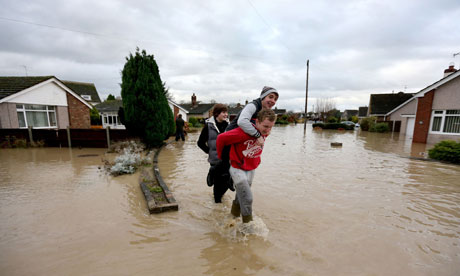
    Residents of St. Asaph, Denbighshire, North Wales make their way through flood waters

    Residents of St. Asaph, north Wales, make their way through flood waters. Photograph: Dave Thompson/PA

    On Monday, Amory Lovins, physicist, environmentalist, and unassuming colossus of the green movement, appeared in London to talk about energy use. I mention this in the context of the Guardian’s story that meteorologists are due to meet next week to discuss whether our bizarre weather is climate change-related (moreover, anthropogenic climate change-related) or just represents natural variation.

    I have got into the habit of mentally and often literally shutting my eyes when I see a story like that; ditto, when I see the phrase “400 parts per million”. What else do you do about a looming disaster that politics refuses to address? How is it possible to stay hopeful, when the G8 is meeting and climate change isn’t even on its agenda? What’s the point of international politics if not to address this?

    But then I heard Lovins talk about his negawatt revolution, and it cheered me right up.

    He said the solutions are already there; we know how to make cars out of materials that make them so much lighter they could be powered on hugely reduced fuel. We know how to build houses with solar bricks so that they don’t need heating (he grows bananas in his house, while it’s snowing outside and without heating it. This blew my mind). We also already know how to make renewable energy work: Austria gets a quarter of its inland energy consumption from renewables; Sweden a third; Latvia more than a third.

    What we lack is not expertise, but will. We’re living with politicians so feeble that they see wind energy as a local planning issue and they’re afraid to talk about saving energy for fear that it might sound expensive. Faced with a scientific consensus on carbon use that is as close as humanity will ever get to unanimous, their response is to find more carbon.

    The discoveries we need to make are not technological; they are human. How do we imbue the political cycle with some long-term thinking, some altruism, some care for future generations?

    What this situation needs is actual bad weather, actual negative events, that we can all see, that we can agree on the significance of, to spur us into action. In the meantime the answers are sitting there, waiting to happen.

  • Is a Sleeping Climate Giant Stirring in the Arctic?

    Is a Sleeping Climate Giant Stirring in the Arctic?

    Permafrost zones occupy nearly a quarter of the exposed land area of the Northern Hemisphere. Permafrost zones occupy nearly a quarter of the exposed land area of the Northern Hemisphere. NASA’s Carbon in Arctic Reservoirs Vulnerability Experiment is probing deep into the frozen lands above the Arctic Circle in Alaska to measure emissions of the greenhouse gases carbon dioxide and methane from thawing permafrost – signals that may hold a key to Earth’s climate future. Image credit: Hugo Ahlenius, UNEP/GRID-Arendal
    › Larger view

    • 3
    •  1203

    June 10, 2013


    Flying low and slow above the wild, pristine terrain of Alaska’s North Slope in a specially instrumented NASA plane, research scientist Charles Miller of NASA’s Jet Propulsion Laboratory, Pasadena, Calif., surveys the endless whiteness of tundra and frozen permafrost below. On the horizon, a long, dark line appears. The plane draws nearer, and the mysterious object reveals itself to be a massive herd of migrating caribou, stretching for miles. It’s a sight Miller won’t soon forget.

    “Seeing those caribou marching single-file across the tundra puts what we’re doing here in the Arctic into perspective,” said Miller, principal investigator of the Carbon in Arctic Reservoirs Vulnerability Experiment (CARVE), a five-year NASA-led field campaign studying how climate change is affecting the Arctic’s carbon cycle.

    “The Arctic is critical to understanding global climate,” he said. “Climate change is already happening in the Arctic, faster than its ecosystems can adapt. Looking at the Arctic is like looking at the canary in the coal mine for the entire Earth system.”

    Aboard the NASA C-23 Sherpa aircraft from NASA’s Wallops Flight Facility, Wallops Island, Va., Miller, CARVE Project Manager Steve Dinardo of JPL and the CARVE science team are probing deep into the frozen lands above the Arctic Circle. The team is measuring emissions of the greenhouse gases carbon dioxide and methane from thawing permafrost — signals that may hold a key to Earth’s climate future.

    What Lies Beneath

    Permafrost (perennially frozen) soils underlie much of the Arctic. Each summer, the top layers of these soils thaw. The thawed layer varies in depth from about 4 inches (10 centimeters) in the coldest tundra regions to several yards, or meters, in the southern boreal forests. This active soil layer at the surface provides the precarious foothold on which Arctic vegetation survives. The Arctic’s extremely cold, wet conditions prevent dead plants and animals from decomposing, so each year another layer gets added to the reservoirs of organic carbon sequestered just beneath the topsoil.

    Over hundreds of millennia, Arctic permafrost soils have accumulated vast stores of organic carbon – an estimated 1,400 to 1,850 petagrams of it (a petagram is 2.2 trillion pounds, or 1 billion metric tons). That’s about half of all the estimated organic carbon stored in Earth’s soils. In comparison, about 350 petagrams of carbon have been emitted from all fossil-fuel combustion and human activities since 1850. Most of this carbon is located in thaw-vulnerable topsoils within 10 feet (3 meters) of the surface.

    But, as scientists are learning, permafrost – and its stored carbon – may not be as permanent as its name implies. And that has them concerned.

    “Permafrost soils are warming even faster than Arctic air temperatures – as much as 2.7 to 4.5 degrees Fahrenheit (1.5 to 2.5 degrees Celsius) in just the past 30 years,” Miller said. “As heat from Earth’s surface penetrates into permafrost, it threatens to mobilize these organic carbon reservoirs and release them into the atmosphere as carbon dioxide and methane, upsetting the Arctic’s carbon balance and greatly exacerbating global warming.”

    Current climate models do not adequately account for the impact of climate change on permafrost and how its degradation may affect regional and global climate. Scientists want to know how much permafrost carbon may be vulnerable to release as Earth’s climate warms, and how fast it may be released.

    CARVing Out a Better Understanding of Arctic Carbon

    Enter CARVE. Now in its third year, this NASA Earth Ventures program investigation is expanding our understanding of how the Arctic’s water and carbon cycles are linked to climate, as well as what effects fires and thawing permafrost are having on Arctic carbon emissions. CARVE is testing hypotheses that Arctic carbon reservoirs are vulnerable to climate warming, while delivering the first direct measurements and detailed regional maps of Arctic carbon dioxide and methane sources and demonstrating new remote sensing and modeling capabilities. About two dozen scientists from 12 institutions are participating.

    “The Arctic is warming dramatically – two to three times faster than mid-latitude regions – yet we lack sustained observations and accurate climate models to know with confidence how the balance of carbon among living things will respond to climate change and related phenomena in the 21st century,” said Miller. “Changes in climate may trigger transformations that are simply not reversible within our lifetimes, potentially causing rapid changes in the Earth system that will require adaptations by people and ecosystems.”

    The CARVE team flew test flights in 2011 and science flights in 2012. This April and May, they completed the first two of seven planned monthly campaigns in 2013, and they are currently flying their June campaign.

    Each two-week flight campaign across the Alaskan Arctic is designed to capture seasonal variations in the Arctic carbon cycle: spring thaw in April/May, the peak of the summer growing season in June/July, and the annual fall refreeze and first snow in September/October. From a base in Fairbanks, Alaska, the C-23 flies up to eight hours a day to sites on Alaska’s North Slope, interior and Yukon River Valley over tundra, permafrost, boreal forests, peatlands and wetlands.

    The C-23 won’t win any beauty contests – its pilots refer to it as “a UPS truck with a bad nose job.” Inside, it’s extremely noisy – the pilots and crew wear noise-cancelling headphones to communicate. “When you take the headphones off, it’s like being at a NASCAR race,” Miller quipped.

    But what the C-23 lacks in beauty and quiet, it makes up for in reliability and its ability to fly “down in the mud,” so to speak. Most of the time, it flies about 500 feet (152 meters) above ground level, with periodic ascents to higher altitudes to collect background data. Most airborne missions measuring atmospheric carbon dioxide and methane do not fly as low. “CARVE shows you need to fly very close to the surface in the Arctic to capture the interesting exchanges of carbon taking place between Earth’s surface and atmosphere,” Miller said.

    Onboard the plane, sophisticated instruments “sniff” the atmosphere for greenhouse gases. They include a very sensitive spectrometer that analyzes sunlight reflected from Earth’s surface to measure atmospheric carbon dioxide, methane and carbon monoxide. This instrument is an airborne simulator for NASA’s Orbiting Carbon Observatory-2 (OCO-2) mission to be launched in 2014. Other instruments analyze air samples from outside the plane for the same chemicals. Aircraft navigation data and basic weather data are also collected. Initial data are delivered to scientists within 12 hours. Air samples are shipped to the University of Colorado’s Institute for Arctic and Alpine Research Stable Isotope Laboratory and Radiocarbon Laboratory in Boulder for analyses to determine the carbon’s sources and whether it came from thawing permafrost.

    Much of CARVE’s science will come from flying at least three years, Miller says. “We are showing the power of using dependable, low-cost prop planes to make frequent, repeat measurements over time to look for changes from month to month and year to year.”

    Ground observations complement the aircraft data and are used to calibrate and validate them. The ground sites serve as anchor points for CARVE’s flight tracks. Ground data include air samples from tall towers and measurements of soil moisture and temperature to determine whether soil is frozen, thawed or flooded.

    A Tale of Two Greenhouse Gases

    It’s important to accurately characterize the soils and state of the land surfaces. There’s a strong correlation between soil characteristics and release of carbon dioxide and methane. Historically, the cold, wet soils of Arctic ecosystems have stored more carbon than they have released. If climate change causes the Arctic to get warmer and drier, scientists expect most of the carbon to be released as carbon dioxide. If it gets warmer and wetter, most will be in the form of methane.

    The distinction is critical. Molecule per molecule, methane is 22 times more potent as a greenhouse gas than carbon dioxide on a 100-year timescale, and 105 times more potent on a 20-year timescale. If just one percent of the permafrost carbon released over a short time period is methane, it will have the same greenhouse impact as the 99 percent that is released as carbon dioxide. Characterizing this methane to carbon dioxide ratio is a major CARVE objective.

    There are other correlations between Arctic soil characteristics and the release of carbon dioxide and methane. Variations in the timing of spring thaw and the length of the growing season have a major impact on vegetation productivity and whether high northern latitude regions generate or store carbon.

    CARVE is also studying wildfire impacts on the Arctic’s carbon cycle. Fires in boreal forests or tundra accelerate the thawing of permafrost and carbon release. Detailed fire observation records since 1942 show the average annual number of Alaska wildfires has increased, and fires with burn areas larger than 100,000 acres are occurring more frequently, trends scientists expect to accelerate in a warming Arctic. CARVE’s simultaneous measurements of greenhouse gases will help quantify how much carbon is released to the atmosphere from fires in Alaska – a crucial and uncertain element of its carbon budget.

    Early Results

    The CARVE science team is busy analyzing data from its first full year of science flights. What they’re finding, Miller said, is both amazing and potentially troubling.

    “Some of the methane and carbon dioxide concentrations we’ve measured have been large, and we’re seeing very different patterns from what models suggest,” Miller said. “We saw large, regional-scale episodic bursts of higher-than-normal carbon dioxide and methane in interior Alaska and across the North Slope during the spring thaw, and they lasted until after the fall refreeze. To cite another example, in July 2012 we saw methane levels over swamps in the Innoko Wilderness that were 650 parts per billion higher than normal background levels. That’s similar to what you might find in a large city.”

    Ultimately, the scientists hope their observations will indicate whether an irreversible permafrost tipping point may be near at hand. While scientists don’t yet believe the Arctic has reached that tipping point, no one knows for sure. “We hope CARVE may be able to find that ‘smoking gun,’ if one exists,” Miller said.

    Other institutions participating in CARVE include City College of New York; the joint University of Colorado/National Oceanic and Atmospheric Administration’s Cooperative Institute for Research in Environmental Sciences, Boulder, Colo.; San Diego State University; University of California, Irvine; California Institute of Technology, Pasadena; Harvard University, Cambridge, Mass.; University of California, Berkeley; Lawrence Berkeley National Laboratory, Berkeley, Calif.; University of California, Santa Barbara; NOAA’s Earth System Research Laboratory, Boulder, Colo.; and University of Melbourne, Victoria, Australia.

    For more information on CARVE, visit: http://science.nasa.gov/missions/carve/ .

    Alan Buis
    Jet Propulsion Laboratory, Pasadena, Calif.
    818-354-0474
    Alan.buis@jpl.nasa.gov

    2013-197

  • Nanoparticle Opens the Door to Clean-Energy Alternatives

    Nanoparticle Opens the Door to Clean-Energy Alternatives

    June 13, 2013 — Cheaper clean-energy technologies could be made possible thanks to a new discovery. Led by Raymond Schaak, a professor of chemistry at Penn State University, research team members have found that an important chemical reaction that generates hydrogen from water is effectively triggered — or catalyzed — by a nanoparticle composed of nickel and phosphorus, two inexpensive elements that are abundant on Earth.


    Share This:

    The results of the research will be published in the Journal of the American Chemical Society.

    Schaak explained that the purpose of the nickel phosphide nanoparticle is to help produce hydrogen from water, which is a process that is important for many energy-production technologies, including fuel cells and solar cells. “Water is an ideal fuel, because it is cheap and abundant, but we need to be able to extract hydrogen from it,” Schaak said. Hydrogen has a high energy density and is a great energy carrier, Schaak explained, but it requires energy to produce. To make its production practical, scientists have been hunting for a way to trigger the required chemical reactions with an inexpensive catalyst. Schaak noted that this feat is accomplished very well by platinum but, because platinum is expensive and relatively rare, he and his team have been searching for alternative materials. “There were some predictions that nickel phosphide might be a good candidate, and we had already been working with nickel phosphide nanoparticles for several years,” Schaak said. “It turns out that nanoparticles of nickel phosphide are indeed active for producing hydrogen and are comparable to the best known alternatives to platinum.”

    To create the nickel phosphide nanoparticles, team members began with metal salts that are commercially available. They then dissolved these salts in solvents, added other chemical ingredients, and heated the solution to allow the nanoparticles to form. The researchers were able create a nanoparticle that was quasi-spherical — not a perfect sphere, but spherical with many flat, exposed edges. “The small size of the nanoparticles creates a high surface area, and the exposed edges means that a large number of sites are available to catalyze the chemical reaction that produces hydrogen,” Schaak explained.

    The next step was for team members at the California Institute of Technology to test the nanoparticles’ performance in catalyzing the necessary chemical reactions. Led by Nathan S. Lewis, the George L. Argyros Professor of Chemistry at the California Institute of Technology, the researchers performed these tests by placing the nanoparticles onto a sheet of titanium foil and immersing that sheet in a solution of sulfuric acid. Next, the researchers applied a voltage and measured the current produced. They found that, not only were the chemical reactions happening as they had hoped, they also were happening with a high degree of efficacy.

    “Nanoparticle technology has already started to open the door to cheaper and cleaner energy that is also efficient and useful,” Schaak said. “The goal now is to further improve the performance of these nanoparticles and to understand what makes them function the way they do. Also, our team members believe that our success with nickel phosphide can pave the way toward the discovery of other new catalysts that also are composed of Earth-abundant materials. Insights from this discovery may lead to even better catalysts in the future.”

    In addition to Schaak and Lewis, other researchers who contributed to this study include Eric J. Popczun, Carlos G. Read, Adam J. Biacchi, and Alex M. Wiltrout from Penn State; and James R. McKone from the California Institute of Technology.

    The research was funded by the U.S. National Science Foundation and the U.S. Department of Energy. The team has filed a patent application.

    Share this story on Facebook, Twitter, and Google:

    Other social bookmarking and sharing tools: