Category: Uncategorized

  • Storage Is the New Solar: Will Batteries and PV Create an Unstoppable Hybrid Force?

    Storage Is the New Solar: Will Batteries and PV Create an Unstoppable Hybrid Force?

    by Stephen Lacey

    0

    Storage Is the New Solar: Will Batteries and PV Create an Unstoppable Hybrid Force?

    by Stephen Lacey

    Once a dominant force in solar, batteries were pushed aside in favor of grid-tied systems. But that dynamic may be changing.

    “We’re trying to apply the things that we learned in the solar development world to storage.”

    — Tom Leyden, Solar Grid Storage

    When Wes Kennedy started engineering solar systems in the mid-1990s, he pretty much had one integration option: batteries.

    At that time, Kennedy designed and installed systems for Jade Mountain, a Colorado-based distributed energy retailer that eventually merged with Real Goods Solar. With very little policy support from utilities, the off-grid market was the dominant driver of business in the U.S and globally. The vast majority of PV was paired with lead-acid batteries and sold to people who wanted to disconnect from the grid, or who had no other choice for electricity.

    That’s the way it was from the 1970s onward for a couple decades, until a steady march of state-level policies and interconnection laws made tying solar into the grid more attractive. In typical first-mover fashion, California offered some of the first U.S. incentives for solar systems connected to utility wires in 1996. A handful of other states followed, extending net metering to solar and creating state rebate programs.

    At that time, Germany and Japan also beefed up promotion laws, creating a strong burst of activity for the grid-tied market globally. In 1997, nearly two-thirds of worldwide solar deployment was off-grid. Three years later, grid-tied installations outpaced off-grid installations globally for the first time. In 2005, the market finally flipped for the U.S. as state promotion policies blossomed.

    Over the last decade and a half, battery storage went from being the core enabler of solar PV to a marginal technology. Battery-based systems now only represent around 1 percent of yearly solar installations in America and throughout the world.

    “Sometimes people forget that storage was the roots of the solar industry,” said Kennedy.


    “In the next five years, customers are going to decide what they pay the utility.”

    — Tom Werner, SunPower

    But the industry is getting back to those roots and embracing storage once again. As lithium ion batteries get cheaper and more abundant, solar penetration reaches high enough levels to worry utilities, and electricity markets evolve to reward storage, attention has suddenly turned back to batteries.

    This time, interest in the technology isn’t coming from backwoods pioneers and off-grid enthusiasts – it’s coming from technology pioneers in Silicon Valley and savvy industry veterans who see it as the next big business opportunity.

    “Storage is a big deal for our industry,” declared SunPower CEO Tom Werner during a keynote address at a recent Energy Storage Association conference.

    In Germany, as feed-in tariff rates dipped below retail rates from the grid, batteries have become more popular to serve self-consumption. In the U.S., solar service providers like SolarCity and SunPower see batteries as a way to enhance their long-term relationships with customers, while also utilizing net metering and ancillary service payments to increase the value of the solar system.

    The applications are still very limited, but a growing number of solar companies are declaring batteries a central piece of their growth strategy.

    “It’s kind of satisfying,” said Kennedy. “It’s great to see people trying to crack storage again.”

    Kennedy is now developing hybrid systems at SMA, the world’s biggest inverter manufacturer. Like Kennedy, SMA also has its roots in in off-grid and microgrid applications. Over the years, however, the company turned much of its attention to grid-tied applications where most of the activity was happening. SMA put some of its hybrid inverter designs back on the shelf, waiting for a time when pursuing them made sense.

    “The market dictated that we mothball some of that early stuff for a big chunk of time,” said Kennedy.

    The dust has finally been brushed off. SMA is boosting its investment in hybrid inverter products due to a renewed interest in microgrids, the promise of solar-storage combinations, a surge in self-consumption in Germany, and the increased use of solar to reduce diesel consumption at remote industrial and tourism sites.

    Kennedy said the company’s Sunny Island inverter, which has been the core of SMA’s hybrid activities for the last decade, has been getting cheaper, more efficient and more responsive when stacked together for sites requiring up to a couple hundred kilowatts. SMA is also developing a central grid-forming inverter for large applications that can switch between batteries, the grid or other generating units.


    Photo Credit: SMA. A bank of SMA Sunny Island inverters for a 166-kW microgrid.

    For applications behind the meter, SMA is programming the Sunny Island inverter to control a hybrid solar-battery system that responds to signals from the grid –going far beyond its traditional use as an enabler of storage simply for backup. The inverter could be used for residential customers seeking to take advantage of time-of-use rates, or commercial customers looking to reduce demand charges and use batteries for ancillary services.

    Currently, SolarCity is using two inverters to integrate storage at a small number of residential sites. SMA and others are betting that hybrid inverters that can handle switching demands will be the next big thing in residential and commercial solar. The question is when.

    “That market is just emerging. It’s not quite there, but it’s definitely coming,” said Kennedy.

    The timing of the surge is up for debate. GTM Research projects that distributed storage in the U.S. will grow to more than 700 megawatts in the next six years, partly driven by solar installers who can monetize batteries.

    Some executives in the solar industry are far more bullish – perhaps borderline hyperbolic – in their projections.

    “In the next five years, customers are going to decide what they pay the utility,” said SunPower CEO Tom Werner in an interview. “You’ll simply be able to dial in your home lifestyle.”

    Werner believes that the combination of lithium-ion batteries, home energy management software and smarter power electronics will make SunPower into an energy services provider, not just a solar supplier. And he thinks that shift will almost fully take place by the end of the decade.


    “Battery storage for residential, commercial, and utility-scale customers is one of the most anticipated developments in the energy space.”

    — Peter Rive, SolarCity

    SunPower has been talking publicly about storage since 2010, when it first developed its internal strategy and rolled out pilots to test solar with flow batteries, lithium-ion batteries and thermal storage. However, the company hadn’t done anything noteworthy since then until last month, when it announced two more residential pilots in Australia and California to outfit dozens of homes with hybrid solar-storage systems.

    Last January, SunPower also partnered with Ford on a project called MyEnergi Lifestyle to demonstrate how solar, electric vehicles, smart appliances, energy monitoring and price signals could empower consumer choice. Werner said that “was one of the foundations on which we learned how to integrate storage.”

    But nearly five years after declaring storage part of its business strategy, Sunpower hasn’t gotten past the pilot phase. Will another five years fundamentally change the value proposition of storage for the company and its customers?

    “Five years seems very unrealistic to assume storage will dominate solar,” said Shayle Kann, VP of GTM Research. “But if there’s any company that can move the needle on both of those technologies at once, it’s a company like SunPower.”

    Others aren’t convinced it will be the solar companies that directly leverage the value of distributed storage. Jigar Shah, a partner with Clean Fleet Investors, doesn’t believe that installers and service providers are internally equipped to handle the complexities of regulation around storage.

    “My sense is that you’re going to have storage-only companies that really get the model right,” said Shah, speaking on GTM’s Energy Gang podcast. “I think the solar companies are going to be forced to outsource storage to those distributed storage companies.”

    Listen to an Energy Gang podcast featuring a discussion about the economic impact of solar paired with storage:


    America’s biggest solar installer, SolarCity, could buck that prediction, however. In April, Chief Technology Officer Peter Rive announced he was creating a grid-engineering department specifically to work on the regulatory and technical complexities of integrating storage with solar. It showed how serious the company is getting about batteries. (SunPower’s Werner also said the company had hired more than 40 people dedicated to storage.)

    “Any utilities or grid operators interested in exploring storage benefits such as peak shaving, frequency regulation, and voltage support should contact us,” wrote Rive in a blog post. “I’ve recently created a Grid Engineering Solutions department made up of some of the brightest minds in power systems engineering, and its mission is to help solve the challenges preventing the shift from the grid that we currently have, to the grid that we need.”

    SolarCity also benefits from its close financial ties to Tesla, which is preparing to break ground on the world’s biggest factory for lithium-ion batteries. Tesla Founder Elon Musk and Chief Technology Officer JB Straubel have talked extensively about using batteries for stationary applications beyond cars, and see SolarCity has a way to expand the market for storage.


    Photo Credit: SolarCity

    “We need to be thinking bigger,” said Straubel at a recent storage event in Silicon Valley. “How do you enable super-high density of renewables on the grid? That’s what drives storage over the next decade.”

    The relationship between Tesla and SolarCity shows how the storage and solar industries are becoming more closely aligned.

    “Storage is where solar was 5 or 10 years ago,” said Tom Werner. “2014 for batteries feels a lot like 2003 in solar.”

    Other solar veterans feel the same way. A handful of executives in the solar industry have moved into storage and are attempting to apply the financial innovation and cost-reduction lessons they learned from deploying PV.

    Former SunPower President Jim Pape – the man who helped write the company’s first plan to integrate storage with solar – became CEO of the grid-scale flow battery company EnerVault in 2013.

    Tom Leyden, who was a managing director at PowerLight/SunPower and a VP of project development at SolarCity, founded the company Solar Grid Storage in 2012; Two other executives at Solar Grid Storage – President Chris Cook and CFO Dan Dobbs – both came from SunEdison.

    The CEO of Stem, a commercial-scale distributed storage company, was the former chief executive at the CIGS thin-film company Miasole.

    And Jigar Shah, who has invested in both Solar Grid Storage and Stem, is well known as the co-founder of SunEdison.

    “We’re trying to apply the things that we learned in the solar development world to storage,” said Leyden of Solar Grid Storage.

    Before getting acquired by SunPower, Leyden was vice president of PowerLight’s East Coast operations back in 2000, when developers “were doing projects anyway they could,” and off-grid solar was still bigger than grid-tied solar. Being a pioneer in solar-storage development is very similar, he said.

    “We’re in exactly the same place right now,” said Leyden. “You figure out where to get revenues anywhere you can. That’s one of our core strengths – we’ve been through this before.”

    Solar Grid Storage works with developers to co-locate lithium-ion batteries with solar projects in the PJM region, typically in the capacity range of 150 kilowatts to 10 megawatts. Solar Grid Storage owns and operates the storage system and inverter, and makes money through providing ancillary services to the grid. The solar developer shares the Solar Grid Storage inverter, thus reducing upfront capital costs, and can use the partnership to offer customers backup power or help them reduce demand charges.

    Solar Grid Storage has four projects in the ground and another five in contract negotiations. Each project is still difficult to execute, said Leyden, but he sees it getting easier as market rules improve around the country and investors get more comfortable with the concept.

    “This is going to accelerate faster than solar,” he said. “In the next five years, I can’t imagine a solar system installed without storage.”

    Despite the excitement and predictions about widespread use of storage in the solar industry, companies are barely scratching the surface. Installations in the U.S. number in the dozens. And although lithium-ion battery costs have dropped 40 percent since 2010, adoption is still limited to wealthy customers willing to pay a premium or to commercial customers in markets where storage can cut demand charges.


    Photo Credit: Rocky Mountain Institute

    However, projections suggest that the combination will be a major force in electricity markets over the coming decade. According to a recent analysis from the Rocky Mountain Institute and CohnReznick, tens of millions of customers around the country could be cost-effectively served by solar PV and batteries by 2024 – making them a “real, near and present” threat to traditional power providers. And that’s under a scenario that doesn’t take into account changes to business models or dramatic improvements to technology.

    “Millions of customers, commercial earlier than residential, representing billions of dollars in utility revenues will find themselves in a position to cost effectively defect from the grid if they so choose,” wrote the authors.

    As SolarCity’s Peter Rive spelled out in a blog post in April, his company “has no interest in this scenario.” Solar companies understand the value of the grid, and are not looking to entirely displace customers. But the potential to defect will realistically be there for a growing number of people – putting more than $30 billion at risk for utilities.

    “In conversations with utilities, they’re terrified,” said SMA’s Kennedy. “It’s certainly not mainstream, but the solar-storage option seems to be coming.”

    Utilities may be nervous, but storage providers are thrilled at the prospect of leading solar companies embracing solar.


    Photo Credit: GTM Research. U.S. Commercial storage will grow steadily, partly due to solar.

    Because penetration of solar has been so low in the U.S., the industry historically resisted talking about the need for batteries. But high PV saturation on circuits in Hawaii and worries about over-generation of solar in California is now forcing a discussion about the need for more storage. Improving technology economics is making that discussion easier, and encouraging a shift in tone among solar leaders.

    In his keynote address at a storage conference earlier this month, SunPower’s Werner said that solar advocates “need to accept” the reality about the need for more distributed and centralized storage. He described SunPower’s intention to work closely with storage companies to create more demand for the technology.

    “We’re interested in partnering, using your technology or investing in it,” proclaimed Werner.

    After finishing his speech, an audience member stepped up to the microphone and expressed his gratitude for Werner’s comments. “Everyone in the room should be standing up and doing a happy dance about a solar executive saying what you said,” explained the man. “Only a few years ago, a solar executive would never have said that.”

    The rhetorical shift among solar executives like Werner is undoubtedly strong. But the actual business shift has yet to fully materialize. For now, with limited applications, solar companies are attempting to find the local value of storage and figure out how it can fit into existing installation and service models. That’s a challenge reminiscent of the early days of solar.

    But it’s nothing that hasn’t been done before.

    “The horse is out of the barn. It will happen,” said Werner. “Just like solar you’re going to get scale and you’ll get costs down. We as a company are banking on it.”

    For an in-depth look at how storage, solar and home energy management may start to change electricity delivery, come to GTM’s Grid Edge Live conference in San Diego on June 24 and 25.

    About the Author:

    Stephen Lacey

    Stephen Lacey is a Senior Editor at Greentech Media, where he reports on energy efficiency, solar and grid modernization. He is also host of the Energy Gang podcast, a weekly audio digest of cleantech news. He has extensive experience reporting on the business and politics of the clean energy industry. Lacey was formerly Deputy Editor of Climate Progress, a climate and energy blog based at the Center for American Progress. He was also an editor/producer with Renewable Energy World. He received his B.A. in journalism from Franklin Pierce University

  • Overpopulation: Environmental and Social problems

    Institute for Population Studies  |   Berkeley, CA  |   (510) 848-9062  |   info@howmany.org

    The World Population Clock is ticking:
    Facebook  Twitter   YouTube  Subscribe to HowMany.org by Email

    Overpopulation:

       Environmental and Social problems

    Human population is growing like never before. We are now adding one billion people to the planet every 12 years. That’s about 220,000 per day.

    The list of problems this is causing, or at least complicating, is a long one. It includes shortages of all our resources, war and social conflict, limits on personal freedom, overcrowding and the health and survival of other species.

    This page summarizes many of these problems, and more could easily be added. While overpopulation is not the sole cause of these, it is certainly a root cause. We hope to see more media coverage of this link in the future. We can do something about population, and we can solve all these problems more easily if we do.

    How about our resources?

    Many basic resources are strained by our current population:

      • Food: one billion people, one out of every seven people alive, go to bed hungry.Every day, 25,000 people die of malnutrition and hunger-related diseases. Almost 18,000 of them are children under 5 years old. Food production and distribution could catch up if our population stopped growing and dropped to a sustainable level.

      • Water Shortages: About one billion people lack access to sufficient water for consumption, agriculture and sanitation. Aquifers are being depleted faster than they can be replenished. Melting glaciers threaten the water supply for billions. Wouldn’t an ethic of population reduction now, make people’s lives much better? [read more]

      • Air quality: Pollution from smokestack In many regions of the country, childhood asthma rates have risen dramatically in the past 20 years. The problems are not limited to the industrialized countries with their automobiles and factories. Children in undeveloped countries, where people depend on burning wood and dung for their heat and cooking, are also at risk.

      • Oil and gas are the underpinnings of what is, historically-speaking, the extremely cheap and fast transportation that today’s huge population depends on. Imagine how we could feed and supply our huge cities (N.Y., L.A., London, Mexico City, Peking) if all the hauling was done in horse-drawn carts and sailing ships. Yet there is a finite amount of these fossil fuels in the Earth, and we have already extracted the easy-pickings in much of the world. The concept “Peak Oil” means that after some year, perhaps between 2005 and 2020, world oil production will max out and then start to decline.

        Bull pulling truck cab shell “M. King Hubbert created and first used the models behind peak oil in 1956 to accurately predict that United States oil production would peak between 1965 and 1970.[1] His logistic model, now called Hubbert peak theory, and its variants have described with reasonable accuracy the peak and decline of production from oil wells, fields, regions, and countries,[2]”

        Hubbert’s predictions were accurate for U.S. production, and his prediction for World peak production was around 2006. There is ample disagreement among experts as to if and when this will happen, but some experts point to the sharp rises in oil prices since 2007 as an indication that oil is now passing it’s peak production. See these Feb. & March 2010 articles for three current estimates.

        As our population and our needs for energy rise, we try to exploit ever more difficult sources of energy. At least half of the cause of the oil-spill disaster in the Gulf is

        oil soaked pelican
        May 25: “Let’s make no mistake about it,
        what is at threat here is our way of life”
        Gov. Bobby Jindal

        the unprecedented rise in population. If we had only 150 million people in the country, we would not be rushing to drill wells one mile deep in the ocean before we have developed safe technologies to do so. Of course our inefficient energy consumption patterns play a part in the urgency of our needs, and we will have to adjust them over time. But equal efforts must be put into keeping our population below critical levels.
        (news about oil & gas)

      • Other Fuel:   Half the World’s population relies on burning wood and dung for cooking and for heating. More and more people live in these regions and have to travel further each day to collect wood, and are often exposed to hardship and danger. Articles at National Geographic tell these stories from around the World.

        February 01, 2009 THIES, SENEGAL – Adam and 100 Friends launched a region-wide initiative to provide pregnancy prevention tools called CycleBeads and also to build more energy-efficient wood stoves that will help address desertification in Senegal.

      • The Ozone Layer. 50 years ago parents told their kids to go play outside because sunshine is good for you. Many parents today don’t think that way, because the ozone layer of the atmosphere no longer protects us as well from the harmful ultraviolet (UV) rays of the sun. The ozone layer is a region of concentrated molecules of a form of oxygen (O3) high above the earth. Without it there would be no life as we know it here because the UV rays from the sun can be very harmful. But various chemicals from human industries, especially chlorofluorocarbons (CFCs), destroy ozone over the course of years. Some of the most dangerous ones have been banned in many countries, which has slowed their rate of increase in the atmosphere, but they are very long lasting and will continue to deplete the ozone layer for many years. Currently the layer is being destroyed at a rate of about 4% per decade.

      • The World’s forests are another resource that is strained by our growing population. Not only are they a source of fuel and building material, recent research has focused on forests’ ability to sequester greenhouse gases and protect us from global warming.
        (News about forests and carbon sequestration)

      • We are straining our Oceans’ ability to breed the fish we eat, to sequester carbon, and to replenish the air. In the 50’s and 60’s, Florida was a by-word for the abundance of the sea. Now even some of the “trash fish” of that era are too rare to fish commercially or recreationally. Isn’t this a clarion call that we need to lower our human population so that we can again enjoy the abundance of nature? [article on Florida seafood, 2010]
        June 2011, The Second Annual European Fish Week, organized by Ocean2012, a coalition hoping to change the Common Fisheries Policy of the European Union.

    • Even the earth’s topsoil itself has limits: most people don’t realize that in many regions good growing soil is limited to the top 6 inches of topsoil and that heavy crop growing is depleting this.

    Social Problems

    Overcrowding I don’t know about you, but back in school I heard about experiments on Norway Rats that were put in overcrowded cages, and suffered many physical and behavioral problems. The same has been shown for Sitka Deer and for mice. Some folks think this is happening to people too.

    It’s a common observation that people in small towns are friendlier than people in cities. However, that’s just a hunch for most of us. One recent study from U.C.Irvine found that less densely packed people are friendlier towards their neighbors. One specific finding was, “For every 10 percent decrease in population density, the likelihood of residents talking to their neighbors at least once a week jumps by 10 percent. And involvement in hobby-oriented clubs increases even more significantly — by 15 percent for every 10 percent decline in density.”

    Conflicts and Wars: Some of the most brutal and persistent conflicts and full-out wars of the past decades include the stresses of overpopulation and conflict over resources.

    – One of these was the genocide in Rwanda. As John M. Swomley wrote in War and the Population Explosion: Some Ethical Implications, Michael Renner noted that “The Hutu leaders that planned and carried out the genocide against the Tutsis in 1994 relied strongly on heavily armed militias who were recruited primarily from the unemployed. These were the people who had insufficient land to establish and support a family of their own and little prospect of finding jobs outside agriculture. Their lack of hope for the future and low self esteem were channeled by the extremists into an orgy of violence against those who supposedly were to blame for these misfortunes.”

    – Another source of resource conflict is the Jordan River, Jordan River which passes through Syria, Jordan, the West Bank and Israel. Researchers report that most of the 37 actual military conflicts over water since 1950 took place between Israel and its Arab neighbors over the Jordan River and its tributaries, which supply millions of people with water for drinking, bathing, and farming. These are desert regions and the limits on water should guide the population policies of the nations involved.

    [article on Jordan River, 2010]
    – The confilict between Pakistan and India are especially sensitive since both highly-populated, fast growing countries have nuclear weapons. Pakistan’s major water source is the glacial waters of the Indus river, which originates in Indian territory. [article on Pakistan’s water] [archive]

    Further information about the scarcity of water. Sandia Postel in her 1992 book, The Last Oasis: Facing Water Scarcity, indicates that early in the 90’s, twenty-six countries with combined population of about 230 million people had water scarcity.

    Democracy? We tend to think that Democracy offers us freedom of choice, but in the last 40 years, we have had little effective input into most of the political decisions that affect our lives.

    Do we have a truly Democratic system when most of us never even meet our Representatives at the various levels of Government? Even our State and City representatives probably don’t know us and our views about the laws and regulations they pass. The only people most of them see on a regular basis are the lobbyists, who consequently have a disproportionately large influence on those laws and regulations.

    Democracy and Optimum Population Size: 2500 years ago, Aristotle considered the best size for a city and concluded that a large increase in population would bring, “certain poverty on the citizenry, and poverty is the cause of sedition and evil.” He considered that a city of over 100,000 people would exclude most citizens from a voice in government.

    To get an idea of what the founders of the United States had in mind for our representative Democracy, at the low end, the Constitution says (Article 1, Section 2) that a Representative to the House should represent a minimum of 30,000 people. When the Constitution was written, the United States had a total population of around 2.5 million, and the Constitution allocated 65 Representatives to the 13 states. So each Representative of “the People’s House” had about 38,500 constituents. Currently each Representative has 712,650 constituents. It’s really a form of irony today to call it “the People’s House” when only wealthy donors and paid lobbyists really have the ear of your “representatives.” What we have now is not Democracy in the sense intended by the country’s founders.

    Health and Population density: Sometimes viruses spread faster in denser populations, which enables deadly mutations to continue. Doctor Nathan Wolfe, of the Global Viral Forecasting Initiative, studies virus mutations which jump from animal to human populations. The AIDS virus is one of the deadliest of these. On a recent episode of CNN’s Planet in Peril, Dr. Wolfe said “Individuals have been infected with these viruses forever. “What’s changed, though, is in the past you had smaller human populations; viruses would infect them and go extinct. Viruses actually need population density as fuel.” [read article]

    Bringing it back home — Overcrowding

    If you live in a growing metropolitan area, you notice:

      • The cost of housing is rising significantly. Usually, the denser the city, the higher the cost of housing and taxes.

      • The length of your commute: the average American heavy trafficspends over 100 hours per year commuting to and from work. Not only does this needlessly waste energy (gas or electricity) but especially it wastes our time. Certainly most of us have better uses for our time than inching through stop-and-go traffic. Yet they keep on building housing, without paying for our wasted time and energy.

      • Recreation: the distance you must travel to enjoy natural open spaces. In his 2005 book: “Last Child in the Woods“, Richard Louv introduced the term “Nature deficit disorder” to identify a phenomenon we all knew existed but couldn’t quite articulate. His book has created a national conversation about the disconnection between children and nature, and his message has galvanized an international movement. Now, three years later, we have reached a tipping point, with the book inspiring Leave No Child Inside initiatives throughout the country. Not only adults, but especially our children, need easy casual access to natural environments.

      • How about parking in your town? Where we live, the developers with a complicit city council just build, build, build new housing; block after block of 5 & 6 story buildings. They do not contain ample parking for their residential units, and they bring many more people into the town. And the developers have gobbled up several of the convenient down parking lots and turned them into more gigantic housing blocks, doubly compounding the problem.
        Unfortunately for the residents of the city, the outcome for many local businesses has been termination. We certainly try our best to support local businesses and would strongly prefer to shop where we can see the merchandise and talk to an informed salesperson, but we won’t fruitlessly try to park, circle the block, and pay to park in a lot 3 blocks from the store. It’s much faster and easier for most residents over the age of 45 to go online and have goods delivered. Many downtown stores are closed, and either vacent or replaced with fast food shops for the students who walk through on their way to and from school.

      • The never-ending new buildings block our views, our light and our air. Twenty years ago, my town had a sense of space, with views of hills and water from most streets even downtown and nearby. But thanks to a few developers’ and planners’ emphasis on “growth”, many entire blocks are now walled in with 5 and 6 story behemoths.
        Many of us bemoan these losses and have felt helpless in the face of the financial powers backing these developments. However, if these developers had to fully pay the rest of us for the loss of our amenities, they might slow down. There is a way to put a monetary value on the losses the community has suffered. In an appraisal, a residence with a view and a spacious surrounding is more valuable than one that is boxed in between high-rise buildings. In my region that might add $100,000-$200,000 (or more) to the value of a house. If 2 people spend perhaps 10 waking hours a day there and own the house for 5 years, that works out to about 36,500 waking hours. That’s $2.74 – $5.48 per hour. Let’s call it $3.00 per hour for the sake of this very rough estimate.Of course, no one person spends 10 hours a day at one spot on a city street, but many hundreds (or thousands) of people do pass by. In my town of about 100,000 people, perhaps 100 cars/hour and 100 pedestrians per hour pass through the downtown blocks. (More in the daytime and fewer at night.) The buildings which are being built take up an average of about half a block apiece. By rough estimate, it takes a car 10 seconds to pass, and a pedestrian one minute. That works out to 46.7 person-hours/day that someone is being deprived of light and air and a sense of spaciousness. At $3.00 per hour, that’s $140 a day or a little over $51,000 per year. These buildings may last 40-50 years, making the total value of the lost amenity $2,040,000-$2,550,000.

        The problem so far has been that when an individual buys or sells a single house, they control what they are willing to spend or what they can ask for that asset. But when a building is built in town, the 4,000 or 5,000 people per day who pass by it are not compensated for their loss. However, that is what government can do, and we suggest permitting and licensing fees to compensate us for our losses. The city can charge this to the developer, and apply the resulting city income to mitigating these losses by purchasing other sites & the development rights to other sites.

        These are, of course, very rough estimates, and a permitting law would require better estimation of the current value of spaciousness in the community, and of the foot and vehicle traffic past any proposed building site.

    Personal Freedom

    As the problems of higher population density become worse, there are more and more restrictions placed on our freedoms. You may think some of these are good ideas. Some of them are, given the circumstances. But they are necessary only in order to accommodate the larger population that our policies are encouraging.

      • Putting limits on water consumption. California is mandating that residential users cut back 20% on water consumption. At the same time they mandate that Cities build more and more housing. That is severely mistaken priorities on the part of our non-representatives.

      • Cities put limits on driving London charges people to drive into downtown. Annually, politicians in New York repeatedly propose doing the same thing.

      • Limits on travel: Traffic and congestion themselves put limits on our freedom to travel when and where we please. Cities that are overly crowded are not good places to go shopping, for meals or entertainments, because it is overly difficult to get there and park.

      • One seemingly small loss of freedom that comes with increased housing density is limits on burning fires in fireplaces. Laws are passed, neighbors snitch on neighbors, and one more of life’s little pleasures is lost to increasing housing density.

      • Restricting what people can do on their land: In rural areas, people are freer to build what they want and do what they want on their own land. When people are packed in close together, our actions impinge much more directly on our neighbors and more restrictions must be enacted.

    How about other species?

    Species Extinction: We are in the midst of one of the greatest extinctions of other species in the history of the planet. The last one of this magnitude was over 60 million years ago, when the dinosaurs became extinct. Yep, we’re the cause of this one, as we either kill them off outright, or cover over their living space with houses, roads and development. Did God give us dominion over this beautiful garden that we might destroy it, or that we might take care of the glory of creation? It’s our choice.

    Habitat destruction:   Our exploding population in the U.S. is converting about 1.2 million acres of rural land per year to subdivisions, malls, workplaces, roads, parking lots, resorts and the like. The rural area lost to development between 1982 and 1997 is about equal to the entire land mass of Maine and New Hampshire combined. (Approximately 39,000 square miles or 25 million acres)

    Habitat Fragmentation in the Indiana Dunes Habitat Fragmentation   Not only is habitat being built over, it is also being divided into ever-smaller pieces. Habitat fragmentation reduces species richness and diversity, by isolating a species population into subpopulations that may be too near the minimum viable population size, and so die off in each fragment. A fundamental finding of ecology is the species-area relationship, that the size of a habitat is a primary determinant of the number of species in that habitat.

    Some critics point out that we can accommodate more people without so much habitat loss and habitat fragmentation if we all live in cities or densely packed developments. This is certainly true, but the point we emphasize here at HowMany.org is that this is not what most people want.Jaguar Many people, given the choice, prefer to live on larger parcels. Many people want larger yards and gardens, and get-away cabins where you can’t see your neighbors. And we can continue to have these amenities if we re-energize a vision of a smaller, more sustainable population.
    Habitat fragmentation endangers the Jaguars in Costa Rica. (May 12, 2010)
    More news about Endangered Species & Habitat.

    Does a growing population really help any of us?

    These are some of the ways our growing population is impinging on our quality of life, and in many regions of the Globe, life itself.It’s a long list, and more could be added. As some point out, these problems are not entirely the result of overpopulation. We could consume less, we could use resources more efficiently, and we could distribute them in ways that would not deprive so many of access to the basics. But there is no doubt that these these problems could be solved more easily if we don’t add 3 billion or 5 billion, or many many more people to our lovely planet.

    And coverage of the link is almost nonexistent in most media outlets, even those covering the environmental and social problems that ensue. This is the most basic question that an intelligent species could ask: What is the right number of us to be living on our fair planet?

    Instead of saying there is nothing we can do about it, just accommodating to the imagined inevitability of it, shouldn’t we be asking “Does a growing population really help any of us?”

    It’s hard to think of a current problem which will be solved more easily by adding another 2.3 billion people to our population.

    Rather than asking how we might accommodate additional billions of people, we could be asking:

    • Will the addition of another 2.3 billion people competing for land and resources do anything to improve the lives of people living now?
    • Will the lives of those 2.3 billion additional people be anything as enjoyable, prosperous, and free as those of their parents?
    • How can we effectively and non-invasively control population growth?

    The answer to that last question is easy

  • Coal kills 22,000 Europeans a year

    12 Jun 2013
    Home  »  A sustainable economyClimate chaos, Extreme weather and global warmingEnergy Matters   »   Coal kills 22,000 Europeans a year

    Coal kills 22,000 Europeans a year

    Posted in A sustainable economy, Climate chaos, Extreme weather and global warming, Energy Matters By Neville On June 12, 2013

    Burning coal also costs companies and governments billions of pounds in disease treatment and lost working days

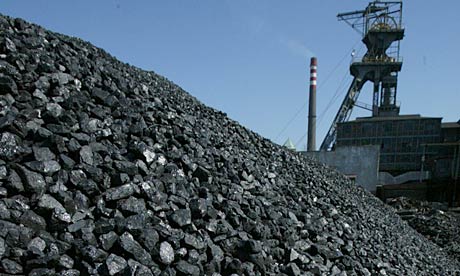
    Freshly mined, high quality coal awaits transport in Katowice, PolandCoal awaits transport in Katowice, Upper Silesia. According to the study, Polish coal power plants have the worst health impact in the European Union. Photograph: Sean Gallup/Getty Images

    Air pollution from Europe‘s 300 largest coal power stations causes 22,300 premature deaths a year and costs companies and governments billions of pounds in disease treatment and lost working days, says a major study of the health impacts of burning coal to generate electricity.

    The research, from Stuttgart University’s Institute for energy economics and commissioned by Greenpeace International, suggests that a further 2,700 people can be expected to die prematurely each year if a new generation of 50 planned coal plants are built in Europe. “The coal-fired power plants in Europe cause a considerable amount of health impacts,” the researchers concluded.

    Analysis of the emissions shows that air pollution from coal plants is now linked to more deaths than road traffic accidents in Poland, Romania, Bulgaria and the Czech Republic. In Germany and the UK, coal-fired power stations are associated with nearly as many deaths as road accidents. Polish coal power plants were estimated to cause more than 5,000 premature deaths in 2010.

    The cumulative impact of pollution on health is “shocking”, says an accompanying Greenpeace report. A total of 240,000 years of life were said to be lost in Europe in 2010 with 480,000 work days a year and 22,600 “life years” lost in Britain, the fifth most coal-polluted country. Drax, Britain’s largest coal-powered station, was said to be responsible for 4,450 life years lost, and Longannet in Scotland 4,210.

    According to the study, Polish coal power plants have the worst health impact in the European Union. The Polish government and Polish utilities are planning to build a dozen new power plants. The utility companies with the worst estimated health impacts, according to the report, are PGE (Poland), RWE (Germany and UK), PPC (Greece), Vattenfall (Sweden) and ČEZ (Czech Republic).

    Acid gas, soot, and dust emissions from coal burning are, along with diesel engines, the biggest contributors to microscopic particulate pollution that penetrates deep into the lungs and the bloodstream. The pollution causes heart attacks and lung cancer, as well as increasing asthma attacks and other respiratory problems that harm the health of both children and adults.

    “Tens of thousands of kilogrammes of toxic metals such as mercury, lead, arsenic and cadmium are spewed out of the stacks, contributing to cancer risk and harming children’s development,” says the Greenpeace report, which does not emphasise the impact of coal burning on climate change.

    The 300 plants produce one-quarter of all the electricity generated in the EU but are responsible for more than 70% of the EU’s sulphur dioxide emissions and more than 40% of nitrogen oxide emissions from the power sector. The Greenpeace report notes that coal burning has increased in Europe each year from 2009 to 2012.

    “The results are staggering. The only way to eliminate the health impacts associated with burning coal in Europe is to phase out these dirty power plants and replace them with clean renewable energy. The current EU renewable energy target has been proven to boost renewable energy and help modernise energy systems and the economy. Europe must continue down the path of clean renewable energy by setting an ambitious, binding 2030 renewable energy target,” said Greenpeace International energy campaigner Lauri Myllyvirta.

    The air pollution from coal burning comes on top of transport emissions that are still increasing despite attempts by the EU to force reductions. According to the European Environmental Agency, more than 90% of urban population in the EU is exposed to fine particle (PM2.5) and ozone pollution levels above the World Health Organisation guidelines.

    Greenpeace International is calling on the European commission to come forward with proposals for a binding renewable energy target of 45% and a greenhouse gas reduction target of at least 55% by 2030

  • At Home: Use of geothermal heat pumps on the rise

    Home  »  Uncategorized   »   At Home: Use of geothermal heat pumps on the rise

    At Home: Use of geothermal heat pumps on the rise

    Posted in Uncategorized By Neville On March 28, 2014

    At Home: Use of geothermal heat pumps on the rise

    Posted: March 21, 2014 – 3:10pm
    Special to The Capital-Journal

    With homeowners exploring more energy-efficient options for their heating and cooling systems, the purchase and installation of geothermal heat pumps are on the rise in the Sunflower State, according to the Kansas Geological Survey, or KGS.

    Large-scale “direct use” geothermal systems – which involve using the heat in the water directly (without a heat pump or power plant) for such things as heating of building complexes, industrial processes, greenhouses, aquaculture (fish farming) and resorts – are more common west of the Rockies. However, the KGS informational report indicates that geothermal heat pumps, or GHP’s, for residential and commercial use are increasing in Kansas.

    While that news may be encouraging, what exactly is geothermal heat and how does a geothermal heat pump work?

    According to the Geothermal Resources Council, “GHP’s use the earth or groundwater as a heat source in winter and a heat sink in summer. Using resource temperatures of 4°C (40°F) to 38°C (100°F), the heat pump, a device which moves heat from one place to another, transfers heat from the soil to the house in winter and from the house to the soil in summer.”

    Tim Dugan began Ground Source, Inc., of Holton, in the early 1990’s. He said while the awareness in the geothermal heat pumps has grown since he began installing the systems in homes and small businesses, the science of geothermal heat isn’t new. In fact, he said Oklahoma State University began studying geothermal heat after WWII. He said today, the basic level of knowledge about GHP’s mainly centers around the energy cost savings.

    “From 23 years ago to now, yes, there’s more interest,” Dugan said. “From the people we talk to at the home show, they know someone who’s had lower bills (with the GHP). They know it’s good.”

    Dugan said he estimates he’s installed 700 to 800 GHP’s in northeast Kansas since the early 1990’s. He said the GHP units he sells and installs initially cost an estimated $20,000. With a 30-percent federal tax credit (Kansas doesn’t offer a tax credit at this time for GHP’s), the cost drops to $14,000 and could decrease even more with additional energy-efficient credits and rebates. Some FHA-backed mortgage loans also have higher loan limits for homebuyers who will install energy-efficient systems and windows.

    Using all available credits and rebates, Dugan said if you’ve been a propane customer, you could potentially recoup the cost of your GHP in two to three years. If you’ve been natural gas consumer, it could be four to six years before the GHP “pays for itself.”

    Aside from the savings on your heating and cooling bills, Dugan said the GHP’s are quieter than standard HVAC systems and provide a more constant, comfortable temperature level in your home, even during the extremes of summer and winter.

    According to information posted on Ground Source, Inc.’s website, “There is no combustion or need to vent exhaust gasses which means our equipment can be installed virtually anywhere.

    If you have ductwork already installed in your home, you are starting the race ahead of the pack. If not, we can effortlessly install ductwork so you can enjoy the comfort of geothermal to its full extent.”

    Another advantage of the GHP’s is they can be installed inside the home, free from the problems that weather and vandalism can present for traditional outside units.

  • Geothermal energy could meet a fifth of UK’s power needs – report

    31 May 2012
    Home  »  Energy Matters   »   Geothermal energy could meet a fifth of UK’s power needs – report

    Geothermal energy could meet a fifth of UK’s power needs – report

    Posted in Energy Matters By admin On May 31, 2012

    We have the capacity for “HOT ROCKS POWER GENERATION”  in South Australia. It is not being developed.

    Geothermal energy could meet a fifth of UK’s power needs – report

    The study found that subsidising geothermal technology initially would help to bring down costs rapidly as UK sites were developed

    Geothermal energy : Construction site of new Newcastle University buildings

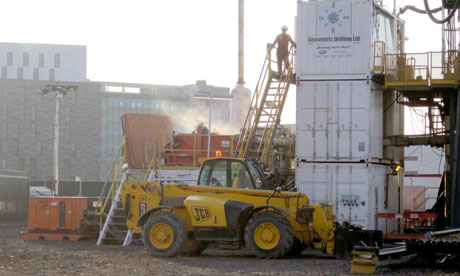
    Construction site of new Newcastle University buildings which will be carbon neutral. Among other energy efficient measures, they will have space heating using geothermal heat from a borehole that is being drilled 6000 feet beneath the site. Photograph: Hugh Macknight/PA

    The UK could meet a fifth of its power needs – the equivalent of nine nuclear power stations – by exploiting geothermal power, a new report into the technology has found.

    But the report found that the current subsidy regime does not provide sufficient incentive to develop the technology in the UK – even as Charles Hendry, minister of state at the Department of Energy and Climate Change, flew to Iceland on Wednesday afternoon and signed a Memorandum of Understanding with his Icelandic counterpart Oddný G. Harðardóttir to explore a possible new interconnector that could be used to import geothermal electricity from the country’s volcanoes.

    Geothermal power stations use water pumped down to hot rocks under the earth that returns to the surface heated, fuelling electricity generation or to be used for space heating.

    There are promising sites for geothermal power spread throughout the UK, from Cornwall to the Lake District, East Yorkshire, Northern Ireland and Scotland.

    Another plus is that geothermal power, while renewable and low-carbon, can provide baseload electricity. That means it can be used to back up intermittent sources of renewable energy such as wind and sun. The study found geothermal could supply 9.5GW of electricity, about 20% of current demand, but also 100GW of heat, which would be enough for the whole of the UK’s space heating needs. The government has struggled to encourage the take-up of renewable forms of heat, such as wood-fired boilers and underground heat pumps.

    However, geothermal power receives a relatively low level of subsidy – less than that offered to wave and tidal power, and less than that offered in rival countries such as Germany and Switzerland – according to the report, commissioned by the Renewable Energy Association and written by the engineering consultancy Sinclair Knight Merz. The study, published on Wednesday, found that subsidising geothermal technology initially would help to bring down costs rapidly as sites around the UK were developed. It recommended a different system of subsidy, targeting support at the exploration drilling phase.

    Ryan Law, chair of the REA’s deep geothermal group, said: “We don’t want to be left out of a global industry which is estimated to be worth £30bn by 2020. We could be at the forefront of this industry given the strength of British engineering skills. If the UK wants to seize a share of this booming global market we must prove our competence at home. Clearly investment at home could also go a long way to meeting our future energy needs cleanly and safely.”

    There are potential problems to be overcome, however. Geothermal technology is still expensive, can only work in certain sites and the process of drilling and pumping water to the underground rocks has been linked to seismic activity in some areas. The two small earthquakes that hit Blackpool following drilling in the area for shale gas exploration did not stop advisors recommending that ministers should allow shale drilling to go ahead – but local residents may have concerns.

    Separately, the UK has been advised to extract as much of its remaining reserves of oil and gas as possible, in a report by the International Energy Agency. While praising the UK’s low-carbon strategy, the agency said oil and gas would still be needed and should be exploited.

    Maria van der Hoeven, executive director of the IEA, said that the UK needed a more liquid wholesale electricity market, with more competition. She commended government plans for a “green deal” to encourage households to insulate their homes, but warned that its success would depend on making the public “sufficiently aware of its benefits”.

    She also warned that plans for electricity market reform, which will include companies entering contracts to supply power at a price above the market rate, were “pioneering” and would be “closely observed by other countries in their efforts to ensure continuing reliability of electricity systems while promoting timely decarbonisation of electricity supplies”.

    About Author

  • Ocean acidification set to spiral out of control

    18 Nov 2013
    Home  »  Uncategorized   »   Ocean acidification set to spiral out of control

    Ocean acidification set to spiral out of control

    Posted in Uncategorized By Neville On November 18, 2013

    Ocean acidification set to spiral out of control

    Published 18 November 2013 Media coverage Leave a Comment

    [WARSAW] The continued release of greenhouse gases into the air is set to bring about huge changes to land ecosystems as they are forced to adapt to rising temperatures.

    But the marine world — which is just as integral to human existence yet receives little attention during climate negotiations — will endure a similarly tumultuous time as emissions rise, scientists say.

    “Changing oceans will cause massive destruction of coral reefs, which, with their rich biodiversity, are the jungles of the sea,” says Luis Valdes, the head of ocean science at UNESCO’s Intergovernmental Oceanographic Commission (IOC-UNESCO), and co-author of a forthcoming report into ocean acidification.


    This is expected to hit marine species used for food and have knock-on effects on coastal communities, especially in developing countries.

    Business-as-usual carbon dioxide emissions will lead to the acidity levels of oceans rising by 170 per cent by 2100 compared with pre-industrial levels, according to a report to be launched next week at COP 19 (Conference of the UN Framework Convention on Climate Change).

    The report will be published jointly by the International Geosphere-Biosphere Programme, the IOC-UNESCO and the Scientific Committee on Oceanic Research.

    As carbon dioxide levels in the atmosphere rise, some of this extra carbon is absorbed by the oceans and converted into acidic compounds.

    While some organisms such as seagrasses and phytoplankton will likely thrive in increasingly acidic waters, most will not be so lucky.

    Coral reefs and shellfish — both important sources of food — will be hit hard, with higher acidification levels predicted to halt all new further growth of reefs by the end of the century.

    It will be poor coastal communities, especially those in small island states whose existence revolves around coral reefs and fishing, which will bear the brunt of this change, says Valdes.

    “Poor communities are more dependent on the sea and have fewer options to mitigate effects if their current lifestyles become unsustainable,” he adds.

    Creating marine reserves to provide a safe environment away from human pressures to ease species’ transition to this altered world may be a way to minimise the damage, but ultimately the only way to prevent major problems is to halt the carbon emissions, says Valdes.

    But their effect on marine habitats is often absent from climate negotiations and Valdes calls for policymakers to pay more attention to the issue over the next week in Warsaw.

    Jan Piotrowski, SciDevNet, 15 November 2013. Article.

    Rate this: