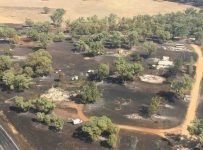
Fires caused by the extreme heat wave over the weekend have consumed the NSW town of Uarbry leaving around 100 residents homeless. Over 80 fires continue to burn, 23 of them out of control, across Western and Northern NSW. Those areas report the hottest February temperatures on record, while much of Queensland recorded the hottest temperatures ever as the Summer That Will Not End in Our Lifetime settles in. Climate chaos has led to unseasonal flooding in Western Australia with many rivers rising more than four metres in massive rainfall over the weekend.
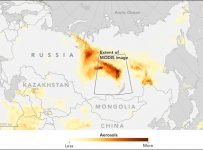
Following a summer of intense drought the forests of Siberia are burning in a climate altering event that is one of the original tipping points predicted by NASA scientists.
Siberian fires cover massive area of the sub-arctic
Over 2 million hectares of forest have burned in the last six months, four times the area incinerated in Australia’s Black Saturday fires in 2009.
The fires release vast amounts of carbon dioxide and water into the atmosphere, accelerating climate chaos and further damaging the landscape. Water does not soak into the scorched earth and so nutrients are swept away further retarding the recovery of the landscape
Russia’s Siberian forests, hit with a severe drought this summer, are increasingly being consumed by wildfires that are consistently underestimated by the government. The fires have destroyed 2 million hectares.
Indonesia is the sixth largest emitter of carbon dioxide in the world
Indonesian agribusiness interests are responsible for hundreds of thousands of premature deaths from the after effects of smoke from last year’s forest fires, according to a report released by Harvard University this week.
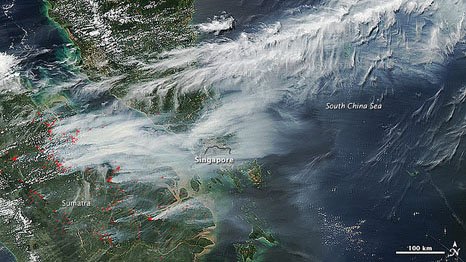
This time last year, the smoke haze from the fires blanketed South East Asia, diverting aircraft and causing illness in countries from Malaysia to the Philippines and New Guinea.
The Harvard University study identified the tiny smoke particles, less than 2.5mirons in diameter as reaching deep into the lungs and bloodstream of humans, causing a long list of ailments such as decreased lung function, heart attack, aggravated asthma, and premature death.
The 2015 fires caused widespread disruption at the time
Agricultural fires in Indonesia linked to 100,000 premature deaths
Fires associated with palm oil and timber are mostly to blame. Smoke haze from agricultural fires may have caused more than 100,000 premature deaths across Indonesia, Malaysia, and Singapore last fall