Author: admin

  • How Many Jobs Are Needed to Keep Up with Population Growth?

    How Many Jobs Are Needed to Keep Up with Population Growth?
    Economic Populist
    The press quotes all sorts of figures for the number of monthly job gains needed to keep up with population growth. We see numbers like 80,000, 100,000, 125,000 and 175,000 thrown around like statistical snow as the number of jobs needed each month
    See all stories on this topic »
    Latino Voters 2012: Sleeping Giant Unlikely To Turn Population Growth Into
    Huffington Post
    “One doesn’t automatically lead to the other.” Fererra, a celebrity with a cause, isn’t wrong, some political analysts and longtime activists said. Unless population growth is channeled into the political process — with voter registration, Election
    See all stories on this topic »
    Housing must be in check despite school numbers
    Baltimore Sun
    I would guess that, pretty soon, school population will be on the increase again, and for the same reasons that saw past spikes. Namely, when people find it within their means to move from congested areas to a more suburban lifestyle, they take it.
    See all stories on this topic »
    Latino Voters 2012: Sleeping Giant Unlikely To Turn Population Growth Into Power
    Democratic Underground
    Latino Voters 2012: Sleeping Giant Unlikely To Turn Population Growth Into Power. http://www.huffingtonpost.com/2012/09/08/latino-voter-2012-population-power_n_1866131.html?utm_hp_ref=latino-voices —-snip. Right now about 10.9 million Latinos are
    See all stories on this topic »
    Illiterate Muslims in Assam bear more children: Gogoi
    Firstpost
    He said growth of Muslim population in Assam was higher than Hindus as the community give birth more children due to poor rate of literacy among themselves. “It is because of low literacy…Illiteracy among the Muslims. Most of them are illiterate.
    See all stories on this topic »

    Firstpost
    Western N.C. vitality index centralizes data about region
    Morganton News Herald
    The region’s population has grown at an average annual rate of about 1.87 percent since 1920, significantly less than the state’s average annual population growth rate of 3.02 percent over the same period. Henderson (485 percent), Caldwell (316 percent
    See all stories on this topic »
    Annexation requests up: Nedrose school losing students to Minot
    Minot Daily News
    Miller said board members have started talking about the possibility of adding on to the elementary or building a new middle school elsewhere in the Nedrose school district if the population growth continues. “It’s coming at us very fast,” said Miller
    See all stories on this topic »

    Minot Daily News


    Tip: Use quotes (“like this”) around a set of words in your query to match them exactly. Learn more.

    Delete this alert.
    Create another alert.
    Manage your alerts.

  • Rising seas bring Pacific Rim leaders to UCSD

    Rising seas bring Pacific Rim leaders to UCSD
    U-T San Diego
    As part of a study by The San Diego Foundation, scientists at Scripps Institution of Oceanography produced maps of Mission Beach and other low-lying areas showing projections that sea levels will rise in coming decades more than twice as fast they did
    See all stories on this topic »

    Web 3 new results for SEA LEVEL RISE
    Sea Level Rise at a local scale: Will the saltwater mosquitoes
    Mosquito control managers want to know what the impacts of sea level rise (SLR) will be in mosquito producing wetlands over the next 5 to 30 years. Students
    www.griffith.edu.au/…/sea-level-rise-at-a-local-scale-will-the-s…
    OCE Posdoctoral Fellow – Ocean Change and Sea Level Rise job
    MyCareer provides job search and employment opportunities in Australia. Search for jobs by location, job sector, industry or salary to find your dream job.
    mycareer.com.au/…/8607004+oce+posdoctoral+fellow+ocean…
    Projections of sea level rise are all we have – Financial Review
    THE threat or otherwise of sea level rise up and down the NSW coast is fraught with controversy for the councils and communities trying to come to terms with it.
    newsstore.fairfax.com.au/…/viewDocument.ac?…
  • Councils can jettison UN sea-rise rules

    Councils can jettison UN searise rules
    The Australian
    THE O’Farrell government will ditch UN sealevel rise predictions as the basis for coastal management, after local council decisions based on what climate change might do by the end of the century shattered waterfront property values. The move
    See all stories on this topic »

  • The moment we’ve been waiting for GET UP ree CSG Extraction

    The moment we’ve been waiting for

    Inbox
    x

    GetUp!
    10:59 AM (34 minutes ago)

    to me

    — Have you seen the coal seam gas (CSG) industry’s latest advertising campaign? The CSIRO’s slammed it for misusing their research to claim CSG is safe for Australia’s precious water and aquifers. Send the CSG spin doctors a message now demanding they publicly commit to ending their campaign of lies: http://www.getup.org.au/stop-csg-lies

    Dear NEVILLE,

    We’ve been waiting for this moment – the CSG industry’s just been caught blatantly lying about the safety of coal seam gas mining by Australia’s peak scientific body, the CSIRO.

    Part of a new multi-million dollar advertising campaign, the offending ad says: ‘CSIRO and government studies have shown that groundwater is safe with coal seam gas’. But that’s a lie and the CSIRO flatly rejects it. They issued this sharp rebuke to APPEA, the CSG lobby group running the ad:

    “At no time has CSIRO made such a statement, and nor do the results of CSIRO research support such a statement. CSIRO has stated on the public record that coal seam gas extraction is likely to pose a ‘low risk’ to groundwater quality through contamination. CSIRO has also indicated that groundwater levels will fall as a consequence of coal seam gas extraction. In some places this could see aquifer levels subside by tens of metres for tens of years; in others it is likely to reduce aquifer levels by several metres for several hundred years.” [1]

    APPEA has dismissively stated they have “taken CSIRO’s comments on board”[2] as they develop a plan to reach as many Australians as possible with the new campaign. The recklessness of saying CSG is safe when Australian lives, land and water are at risk is outrageous. Let’s start a public outcry demanding APPEA do more than take it on board – tell APPEA to never air the ad again and to issue an apology for their lies:

    http://www.getup.org.au/stop-csg-lies

    Australia is the driest continent on earth – water that has been stored in aquifers, in some cases for millions of years, sustains our cities, food production and natural environment. That’s why coal seam gas mining, which involves injecting toxic chemicals deep underground at high pressure and removing huge volumes of water, is just too risky.

    The CSG industry works tirelessly to prove their untested technologies are safe. Their sophisticated PR machine doesn’t make many missteps, but they went too far this time, as the CSIRO’s strong response shows.

    So far, APPEA has ignored calls to take down its misleading ads. While we may not have the multi-million dollar budgets to counter the CSG industry’s spin, we do have the power of our movement.

    Tell APPEA to stop playing with lives for a quick buck. Sign the petition calling on them to shelve the ad and retract their claims:

    http://www.getup.org.au/stop-csg-lies

    Let’s put this thing in a vault.
    The GetUp team.

    [1] ‘CSIRO rejects claims made by APPEA regarding groundwater and coal seam gas’. CSIRO Press Release, 4 September, 2012.
    [2] Rick Wilkinson, Twitter.com, 4 September, 2012.
    [3] ‘Halt ordered for Fullerton Cove gas drilling’, ABC News. 5 September, 2012.


    GetUp Action for Australia is an independent, not-for-profit community campaigning group. We use new technology to empower Australians to have their say on important national issues. We receive no political party or government funding, and every campaign we run is entirely supported by voluntary donations. If you’d like to contribute to help fund GetUp Action for Australia’s work, please donate now! If you have trouble with any links in this email, please go directly to www.getup.org.au. To unsubscribe from GetUp Action for Australia, please click here. Authorised by Sam Mclean on behalf of GetUp Action for Australia, Level 2, 104 Commonwealth Street, Surry Hills NSW 2010.

  • Wind and tide smash our coastal defences

    Wind and tide smash our coastal defences

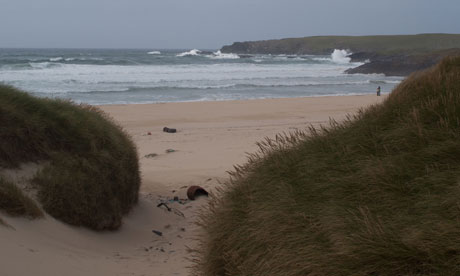
    South Uist: In less than 10 minutes, a foot of sand collapses into the water along the length of the sea-battered stretch

    Country Diary : dunes and waves

    Stormy seas threaten the integrity of sand dunes in the Hebrides. Photograph: Alamy

    The river, running full from the rain, sweeps towards the sea, where it meets the incoming tide in a flurry of wavelets and a swirl of currents. At the point where river and sea are no longer distinguishable from one another, a flock of common gulls and a solitary glaucous gull stand head to wind among the weed on a small sandbank. But today it’s impossible to continue round from the river’s sandy banks to the open beach, for the combination of the high tide and the wind-driven sea has fetched the waves up almost to the foot of the dunes.

    The waves have carried away sand from the gentle slope in front of the dunes and then cut into it, creating a step a couple of feet high. We watch fascinated as successive waves smash into the step: the flung spray blasts the sandy wall of the dunes themselves and, as the wave withdraws, another inch or two of sand crumbles from the step that is all that protects the base of the dune.

    After a while we recognise a pattern. Waves striking at the outermost dunes are deflected to run at right angles to the oncoming sea and it is this powerful surge of water rushing along the face of the step that is the destructive agent.

    Every onrush scours away more sand, undercutting and weakening the step, leaving it unable to withstand the next forward striking wave. In less than 10 minutes, more than a foot of sand collapses into the water along the length of the sea-battered stretch. A single spine of sand bearing an outlying clump of dune-binding marram grass holds out a little longer than the rest but, inevitably, isolated as it is, it too soon falls to the sea. This is no raging winter storm, merely a strong wind combined with a high tide, but it is enough to demonstrate a salutary lesson about the vulnerability of the dunes that protect our coasts.

  • Canada cuts diplomatic ties with Iran

    Canada cuts diplomatic ties with Iran

    Canada closes Tehran embassy and expels Iranian diplomats over support for Syria, nuclear plans and alleged rights abuses

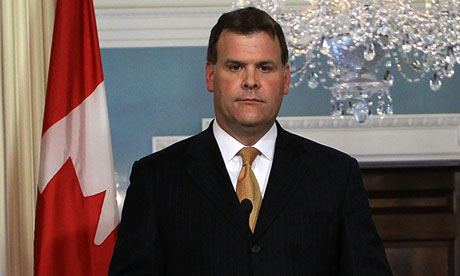
    Canada's foreign minister John Baird announced the cutting of diplomatic ties with Iran

    Foreign minister John Baird said Canada perceived Iran to be the world’s biggest threat to peace and security. Photograph: Alex Wong/Getty Images

    Canada has closed its embassy in Tehran and ordered the expulsion of Iranian diplomats from Ottawa, partly because of the country’s backing of the Syrian regime.

    Canada’s foreign affairs minister, John Baird, cited Iran‘s support for Bashar al-Assad, its disputed nuclear programme and continued human rights violations as reasons behind his country’s decision to sever diplomatic ties with Tehran. He said the Canadian government perceived Iran to be “the most significant threat to global peace and security in the world today”. “Canada has closed its embassy in Iran, effective immediately, and declared personae non gratae all remaining Iranian diplomats in Canada,” Baird said.

    All Canadian diplomatic staff had left Iran and Iranian diplomats in Ottawa had five days to leave the country. Canada joins its main allies, the US and the UK, as countries without diplomatic presence in Tehran.

    “The Iranian regime is providing increasing military assistance to the Assad regime; it refuses to comply with UN resolutions pertaining to its nuclear programme; it routinely threatens the existence of Israel and engages in racist anti-Semitic rhetoric and incitement to genocide,” Baird said in the statement published on Canada’s government website for foreign affairs and international trade.

    Ottawa’s move comes only a week after Iran attempted to seize upon an international conference in Tehran to claim a diplomatic triumph in defiance of western-led efforts to isolate the regime. To the dismay of Iran, two of its main guests for Tehran’s summit of the Non-Aligned Movement, the UN secretary general, Ban Ki-moon, and Egypt’s president, Mohamed Morsi, embarrassed the host by making speeches unwelcome by the regime. Morsi, in particular, stunned Iran, a staunch supporter of Assad, with a plea to the world to back Syrian rebels.

    Canada is an outspoken critic of Iran’s human rights record and has actively pursued the effort to hold Tehran leaders accountable for their right’s violations on international platforms in recent years, including through sanctions.

    Baird said: “[Iran] is among the world’s worst violators of human rights; and it shelters and materially supports terrorist groups, requiring the government of Canada to formally list Iran as a state sponsor of terrorism under the Justice for Victims of Terrorism Act. Moreover, the Iranian regime has shown blatant disregard for the Vienna convention and its guarantee of protection for diplomatic personnel. Under the circumstances, Canada can no longer maintain a diplomatic presence in Iran.Our diplomats serve Canada as civilians, and their safety is our number one priority.”

    Baird appeared to be referring to an incident last November when protesters in the Iranian capital stormed the British embassy in Tehran, ransacking offices and diplomatic residence.

    Payam Akhavan, a professor of international law at McGill University in Montreal, said the recent row was the worst crisis in bilateral relations between Tehran and Ottawa for many years.

    “I think the closure of Iranian embassy in Ottawa should be seen in the context of concerns by the Canadian government about the Islamic republic’s recent activities in its Ottawa mission, including using it to establish wider presence in Canada through a series of ostensibly cultural activities, at universities and other institutes and infiltrating the Iranian diaspora and neutralising opposition to the regime,” he said.

    According to latest official figures more than 400,000 Iranians live in Canada. “There is an significant Iranian diaspora in Canada, we call Toronto, Tehranto, even many regime insiders live here but the majority consists of refugees or migrants,” said Akhavan.

    The Canadian embassy in Ankara, Turkey, will provide services to Canadians living in Iran in the absence of Tehran’s mission. The Canadian foreign ministry has also upgraded its Iran travel advice, urging all its citizens not to travel to Iran.

    “Canadians who have Iranian nationality are warned in particular that the Iranian regime does not recognise the principle of dual nationality,” it said. “By doing so, Iran makes it virtually impossible for government of Canada officials to provide consular assistance to Iranian-Canadians in difficulty.”

    The frosty relations between the two capitals became even more restrained in 2003 when an Iranian-Canadian photographer, Zahra Kazemi, died while in jail in Iran. Iran said she died of a stroke but Canada insisted she died under torture because of a skull fracture.

    A number of Iranian-Canadians are currently held behind bars in Iran, including Hamid Ghassemi-Shall who is facing execution after being convicted of espionage, a charge his family say is trumped-up.

    There was no immediate reaction from Iran in response to Canada’s move but Iranian state news agencies reported Baird’s statement.

    Canada closes Tehran embassy and expels Iranian diplomats over support for Syria, nuclear plans and alleged rights abuses

    Canada's foreign minister John Baird announced the cutting of diplomatic ties with Iran

    Foreign minister John Baird said Canada perceived Iran to be the world’s biggest threat to peace and security. Photograph: Alex Wong/Getty Images

    Canada has closed its embassy in Tehran and ordered the expulsion of Iranian diplomats from Ottawa, partly because of the country’s backing of the Syrian regime.

    Canada’s foreign affairs minister, John Baird, cited Iran‘s support for Bashar al-Assad, its disputed nuclear programme and continued human rights violations as reasons behind his country’s decision to sever diplomatic ties with Tehran. He said the Canadian government perceived Iran to be “the most significant threat to global peace and security in the world today”. “Canada has closed its embassy in Iran, effective immediately, and declared personae non gratae all remaining Iranian diplomats in Canada,” Baird said.

    All Canadian diplomatic staff had left Iran and Iranian diplomats in Ottawa had five days to leave the country. Canada joins its main allies, the US and the UK, as countries without diplomatic presence in Tehran.

    “The Iranian regime is providing increasing military assistance to the Assad regime; it refuses to comply with UN resolutions pertaining to its nuclear programme; it routinely threatens the existence of Israel and engages in racist anti-Semitic rhetoric and incitement to genocide,” Baird said in the statement published on Canada’s government website for foreign affairs and international trade.

    Ottawa’s move comes only a week after Iran attempted to seize upon an international conference in Tehran to claim a diplomatic triumph in defiance of western-led efforts to isolate the regime. To the dismay of Iran, two of its main guests for Tehran’s summit of the Non-Aligned Movement, the UN secretary general, Ban Ki-moon, and Egypt’s president, Mohamed Morsi, embarrassed the host by making speeches unwelcome by the regime. Morsi, in particular, stunned Iran, a staunch supporter of Assad, with a plea to the world to back Syrian rebels.

    Canada is an outspoken critic of Iran’s human rights record and has actively pursued the effort to hold Tehran leaders accountable for their right’s violations on international platforms in recent years, including through sanctions.

    Baird said: “[Iran] is among the world’s worst violators of human rights; and it shelters and materially supports terrorist groups, requiring the government of Canada to formally list Iran as a state sponsor of terrorism under the Justice for Victims of Terrorism Act. Moreover, the Iranian regime has shown blatant disregard for the Vienna convention and its guarantee of protection for diplomatic personnel. Under the circumstances, Canada can no longer maintain a diplomatic presence in Iran.Our diplomats serve Canada as civilians, and their safety is our number one priority.”

    Baird appeared to be referring to an incident last November when protesters in the Iranian capital stormed the British embassy in Tehran, ransacking offices and diplomatic residence.

    Payam Akhavan, a professor of international law at McGill University in Montreal, said the recent row was the worst crisis in bilateral relations between Tehran and Ottawa for many years.

    “I think the closure of Iranian embassy in Ottawa should be seen in the context of concerns by the Canadian government about the Islamic republic’s recent activities in its Ottawa mission, including using it to establish wider presence in Canada through a series of ostensibly cultural activities, at universities and other institutes and infiltrating the Iranian diaspora and neutralising opposition to the regime,” he said.

    According to latest official figures more than 400,000 Iranians live in Canada. “There is an significant Iranian diaspora in Canada, we call Toronto, Tehranto, even many regime insiders live here but the majority consists of refugees or migrants,” said Akhavan.

    The Canadian embassy in Ankara, Turkey, will provide services to Canadians living in Iran in the absence of Tehran’s mission. The Canadian foreign ministry has also upgraded its Iran travel advice, urging all its citizens not to travel to Iran.

    “Canadians who have Iranian nationality are warned in particular that the Iranian regime does not recognise the principle of dual nationality,” it said. “By doing so, Iran makes it virtually impossible for government of Canada officials to provide consular assistance to Iranian-Canadians in difficulty.”

    The frosty relations between the two capitals became even more restrained in 2003 when an Iranian-Canadian photographer, Zahra Kazemi, died while in jail in Iran. Iran said she died of a stroke but Canada insisted she died under torture because of a skull fracture.

    A number of Iranian-Canadians are currently held behind bars in Iran, including Hamid Ghassemi-Shall who is facing execution after being convicted of espionage, a charge his family say is trumped-up.

    There was no immediate reaction from Iran in response to Canada’s move but Iranian state news agencies reported Baird’s statement.

    Canada closes Tehran embassy and expels Iranian diplomats over support for Syria, nuclear plans and alleged rights abuses

    Canada's foreign minister John Baird announced the cutting of diplomatic ties with Iran

    Foreign minister John Baird said Canada perceived Iran to be the world’s biggest threat to peace and security. Photograph: Alex Wong/Getty Images

    Canada has closed its embassy in Tehran and ordered the expulsion of Iranian diplomats from Ottawa, partly because of the country’s backing of the Syrian regime.

    Canada’s foreign affairs minister, John Baird, cited Iran‘s support for Bashar al-Assad, its disputed nuclear programme and continued human rights violations as reasons behind his country’s decision to sever diplomatic ties with Tehran. He said the Canadian government perceived Iran to be “the most significant threat to global peace and security in the world today”. “Canada has closed its embassy in Iran, effective immediately, and declared personae non gratae all remaining Iranian diplomats in Canada,” Baird said.

    All Canadian diplomatic staff had left Iran and Iranian diplomats in Ottawa had five days to leave the country. Canada joins its main allies, the US and the UK, as countries without diplomatic presence in Tehran.

    “The Iranian regime is providing increasing military assistance to the Assad regime; it refuses to comply with UN resolutions pertaining to its nuclear programme; it routinely threatens the existence of Israel and engages in racist anti-Semitic rhetoric and incitement to genocide,” Baird said in the statement published on Canada’s government website for foreign affairs and international trade.

    Ottawa’s move comes only a week after Iran attempted to seize upon an international conference in Tehran to claim a diplomatic triumph in defiance of western-led efforts to isolate the regime. To the dismay of Iran, two of its main guests for Tehran’s summit of the Non-Aligned Movement, the UN secretary general, Ban Ki-moon, and Egypt’s president, Mohamed Morsi, embarrassed the host by making speeches unwelcome by the regime. Morsi, in particular, stunned Iran, a staunch supporter of Assad, with a plea to the world to back Syrian rebels.

    Canada is an outspoken critic of Iran’s human rights record and has actively pursued the effort to hold Tehran leaders accountable for their right’s violations on international platforms in recent years, including through sanctions.

    Baird said: “[Iran] is among the world’s worst violators of human rights; and it shelters and materially supports terrorist groups, requiring the government of Canada to formally list Iran as a state sponsor of terrorism under the Justice for Victims of Terrorism Act. Moreover, the Iranian regime has shown blatant disregard for the Vienna convention and its guarantee of protection for diplomatic personnel. Under the circumstances, Canada can no longer maintain a diplomatic presence in Iran.Our diplomats serve Canada as civilians, and their safety is our number one priority.”

    Baird appeared to be referring to an incident last November when protesters in the Iranian capital stormed the British embassy in Tehran, ransacking offices and diplomatic residence.

    Payam Akhavan, a professor of international law at McGill University in Montreal, said the recent row was the worst crisis in bilateral relations between Tehran and Ottawa for many years.

    “I think the closure of Iranian embassy in Ottawa should be seen in the context of concerns by the Canadian government about the Islamic republic’s recent activities in its Ottawa mission, including using it to establish wider presence in Canada through a series of ostensibly cultural activities, at universities and other institutes and infiltrating the Iranian diaspora and neutralising opposition to the regime,” he said.

    According to latest official figures more than 400,000 Iranians live in Canada. “There is an significant Iranian diaspora in Canada, we call Toronto, Tehranto, even many regime insiders live here but the majority consists of refugees or migrants,” said Akhavan.

    The Canadian embassy in Ankara, Turkey, will provide services to Canadians living in Iran in the absence of Tehran’s mission. The Canadian foreign ministry has also upgraded its Iran travel advice, urging all its citizens not to travel to Iran.

    “Canadians who have Iranian nationality are warned in particular that the Iranian regime does not recognise the principle of dual nationality,” it said. “By doing so, Iran makes it virtually impossible for government of Canada officials to provide consular assistance to Iranian-Canadians in difficulty.”

    The frosty relations between the two capitals became even more restrained in 2003 when an Iranian-Canadian photographer, Zahra Kazemi, died while in jail in Iran. Iran said she died of a stroke but Canada insisted she died under torture because of a skull fracture.

    A number of Iranian-Canadians are currently held behind bars in Iran, including Hamid Ghassemi-Shall who is facing execution after being convicted of espionage, a charge his family say is trumped-up.

    There was no immediate reaction from Iran in response to Canada’s move but Iranian state news agencies reported Baird’s statement.