Author: admin

  • The Mind Thieves MONBIOT

    Monbiot.com


    The Mind Thieves

    Posted: 10 Sep 2012 11:24 AM PDT

    The evidence linking Alzheimer’s disease to the food industry is strong and growing.


    By George Monbiot, published in the Guardian, 11th September 2012

    When you raise the subject of over-eating and obesity, you often see people at their worst. The comment threads discussing these issues reveal a legion of bullies, who appear to delight in other people’s problems.

    When alcoholism and drug addiction are discussed, the tone tends to be sympathetic. When obesity is discussed, the conversation is dominated by mockery and blame, though the evidence suggests that it can be driven by similar forms of addiction(1,2,3,4). I suspect that much of this mockery is a coded form of snobbery: the strong association between poor diets and poverty allows people to use this issue as a cipher for something else they want to say, which is less socially acceptable.

    But this problem belongs to all of us. Even if you can detach yourself from the suffering caused by diseases arising from bad diets, you will carry the cost, as a growing proportion of the health budget will be used to address them. The cost – measured in both human suffering and money – could be far greater than we imagined. A large body of evidence now suggests that Alzheimer’s is primarily a metabolic disease. Some scientists have gone so far as to rename it. They call it diabetes type 3.

    New Scientist carried this story on its cover last week(5): since then I’ve been sitting in the library trying to discover whether it stands up. I’ve now read dozens of papers on the subject, testing my cognitive powers to the limit as I’ve tried to get to grips with brain chemistry. While the story is by no means complete, the evidence so far is compelling.

    Around 35 million people suffer from Alzheimer’s disease worldwide(6); current projections, based on the rate at which the population ages, suggest that this will rise to 100 million by 2050(7). But if, as many scientists now believe, it is caused largely by the brain’s impaired response to insulin, the numbers could rise much further. In the US, the percentage of the population with diabetes type 2, which is strongly linked to obesity, has almost trebled in 30 years(8). If Alzheimer’s, or “diabetes type 3”, goes the same way, the potential for human suffering is incalculable.

    Insulin is the hormone which prompts the liver, muscles and fat to absorb sugar from the blood. Diabetes 2 is caused by excessive blood glucose, resulting either from a deficiency of insulin produced by the pancreas, or resistance to its signals by the organs which would usually take up the glucose.

    The association between Alzheimer’s and diabetes 2 is long-established: type 2 sufferers are two to three times more likely to be struck by this dementia than the general population(9). There are also associations between Alzheimer’s and obesity(10) and Alzheimer’s and metabolic syndrome (a complex of diet-related pathologies)(11).

    Researchers first proposed that Alzheimer’s was another form of diabetes in 2005. The authors of the original paper investigated the brains of 54 corpses, 28 of which belonged to people who had died of the disease(12). They found that the levels of both insulin and insulin-like growth factors in the brains of Alzheimer’s patients were sharply reduced by comparison to those in the brains of people who had died of other causes. Levels were lowest in the parts of the brain most affected by the disease.

    Their work led them to conclude that insulin and insulin-like growth factor are produced not only in the pancreas but also in the brain. Insulin in the brain has a host of functions: as well as glucose metabolism, it helps to regulate the transmission of signals from one nerve cell to another, and affects their growth, plasticity and survival(13,14).

    Experiments conducted since then appear to support the link between diet and dementia(15,16,17,18), and researchers have begun to propose potential mechanisms. In common with all brain chemistry, these tend to be fantastically complex, involving, among other impacts, inflammation, stress caused by oxidation, the accumulation of one kind of brain protein and the transformation of another(19,20,21,22). I would need the next six pages of this paper even to begin to explain them, and would doubtless get it wrong (if you’re interested, please follow the links on my website).

    Plenty of research still needs to be done. But if the current indications are correct, Alzheimer’s disease could be another catastrophic impact of the junk food industry, and the worst discovered so far. Our governments, as they are in the face of all our major crises, appear to be incapable of responding.

    In this country as in many others, the government’s answer to the multiple disasters caused by the consumption of too much sugar and fat is to call on both companies and consumers to regulate themselves. Before he was replaced by someone even worse, the former health secretary, Andrew Lansley, handed much of the responsibility for improving the nation’s diet to food and drinks companies: a strategy that would work only if they volunteered to abandon much of their business(23,24).

    A scarcely-regulated food industry can engineer its products – loading them with fat, salt, sugar and high fructose corn syrup – to bypass the neurological signals which would otherwise prompt people to stop eating(25). It can bombard both adults and children with advertising. It can (as we discovered yesterday) use the freedoms granted to academy schools to sell the chocolate, sweets and fizzy drinks now banned from sale in maintained schools(26). It can kill the only effective system (the traffic light label) for informing people how much fat, sugar and salt their food contains. Then it can turn to the government and blame consumers for eating the products it sells. This is class war: a war against the poor fought by the executive class in government and industry.

    We cannot yet state unequivocally that poor diet is a leading cause of Alzheimer’s disease, though we can say that the evidence is strong and growing. But if ever there was a case for the precautionary principle, here it is. It’s not as if we lose anything by eating less rubbish. Averting a possible epidemic of this devastating disease means taking on the bullies: those who mock people for their pathologies and those who spread the pathologies by peddling a lethal diet.

    www.monbiot.com

    References:

    1. Caroline Davis et al, 2011. Evidence that ‘food addiction’ is a valid phenotype of obesity. Appetite Vol. 57, pp711–717. doi:10.1016/j.appet.2011.08.017

    2. Paul J. Kenny, November 2011. Common cellular and molecular mechanisms in obesity and drug addiction. Nature Neuroscience, Vol. 12, pp 638-651. doi:10.1038/nrn3105

    3. Joseph Frascella et al, 2010. Shared brain vulnerabilities open the way for nonsubstance addictions: Carving addiction
    at a new joint? Annals of the New York Academy of Sciences, Vol. 1187, pp294–315.
    doi: 10.1111/j.1749-6632.2009.05420.x

    4. Ashley N. Gearhardt et al, 2010. Can food be addictive? Public health and policy implications. Addiction, 106, 1208–1212. ad. d_3301 1208..1212
    doi:10.1111/j.1360-0443.2010.03301.x

    5. Bijal Trivedi, 1st September 2012. Eat Your Way to Dementia. New Scientist.

    6. Sónia C. Correia et al, 2011. Insulin-resistant brain state: The culprit in sporadic Alzheimer’s disease? Ageing Research Reviews Vol. 10, 264–273. doi:10.1016/j.arr.2011.01.001

    7. Fabio Copped`e et al, 2012. Nutrition and Dementia. Current Gerontology and Geriatrics Research, Vol. 2012, pp1-3.
    doi:10.1155/2012/926082

    8. See the graph in Bijal Trivedi, 1st September 2012. Eat Your Way to Dementia. New Scientist.

    9. Johanna Zemva and Markus Schubert, September 2011. Central Insulin and Insulin-Like Growth Factor-1 Signaling – Implications for Diabetes Associated Dementia. Current Diabetes Reviews, Vol.7, No.5, pp356-366. doi.org/10.2174/157339911797415594

    10. Eg Weili Xu et al, 2011. Midlife overweight and obesity increase late life dementia risk: a population-based twin study. Neurology, Vol. 76, no. 18, pp.1568–1574.

    11. M. Vanhanen et al, 2006. Association of metabolic syndrome with Alzheimer disease: A population-based study. Neurology, vol. 67, pp.843–847.

    12. Eric Steen et al, 2005. Impaired insulin and insulin-like growth factor expression and signaling mechanisms in Alzheimer’s disease – is this type 3 diabetes?.
    Journal of Alzheimer’s Disease, Vol. 7, pp.63–80.

    13. Konrad Talbot et al, 2012. Demonstrated brain insulin resistance in Alzheimer’s disease patients is associated with IGF-1 resistance, IRS-1 dysregulation, and cognitive decline. The Journal of Clinical Investigation, Vol.122, No.4, pp.1316–1338. doi:10.1172/JCI59903.

    14. Naoki Yamamoto et al, 2012. Brain insulin resistance accelerates Aβ fibrillogenesis by inducing GM1 ganglioside clustering in the presynaptic membranes. Journal of Neurochemistry, Vol. 121, 619–628. doi: 10.1111/j.1471-4159.2012.07668.x

    15. Eg:
    Wei-Qin Zhao and Matthew Townsend, 2009. Insulin resistance and amyloidogenesis as common molecular foundation for type 2 diabetes and Alzheimer’s disease.
    Biochimica et Biophysica Acta, Vol.1792, pp.482–496. doi.org/10.1016/j.bbadis.2008.10.014,

    16. Sónia C. Correia et al, 2011. Insulin-resistant brain state: The culprit in sporadic Alzheimer’s disease? Ageing Research Reviews Vol. 10, 264–273. doi:10.1016/j.arr.2011.01.001

    17. T. Ohara et al, 2011. Glucose tolerance status and risk of dementia in the community, the Hisayama study. Neurology, Vol. 77, pp.1126–1134.

    18. Karen Neumann et al, 2008. Insulin resistance and Alzheimer’s disease: molecular links & clinical implications. Current Alzheimer Research, Vol.5, no.5, pp438–447.

    19. Eg: Lap Ho et al, 2012. Insulin Receptor Expression and Activity in the Brains of
    Nondiabetic Sporadic Alzheimer’s Disease Cases. International Journal of Alzheimer’s Disease, Volume 2012. doi:10.1155/2012/321280

    20. Suzanne M. de la Monte, 2012. Contributions of Brain Insulin Resistance and Deficiency in Amyloid-Related Neurodegeneration in Alzheimer’s Disease. Drugs, Vol. 72, no.1, pp. 49-66. doi: 10.2165/11597760

    21. Ying Liu et al, 2011. Deficient brain insulin signalling pathway in Alzheimer’s disease and diabetes. Journal of Pathology, Vol. 225, pp.54–62. doi: 0.1002/path.2912

    22. Konrad Talbot et al, 2012. Demonstrated brain insulin resistance in Alzheimer’s disease patients is associated with IGF-1 resistance, IRS-1 dysregulation, and cognitive decline. The Journal of Clinical Investigation, Vol.122, No.4, pp.1316–1338. doi:10.1172/JCI59903.

    23. http://www.guardian.co.uk/politics/2010/nov/12/government-health-deal-business

    24. http://www.guardian.co.uk/society/2012/apr/14/obesity-crisis-doctors-fastfood-deals-ban

    25. http://www.guardian.co.uk/business/2012/jun/11/why-our-food-is-making-us-fat

    26. http://www.guardian.co.uk/education/2012/sep/10/junk-food-academy-schools-claims

  • Super trawler success

    This clearly illustrates the success of people power. Minister Burke acknowledged  the pressures that had been placed on the Govt/ by Get-Up, Greenpeace and thousands of calls to the offices of MP’s,


    Super trawler success

    Inbox
    x

    GetUp!
    4:50 PM (43 minutes ago)

    to me

    Dear friends,

    Exciting news!

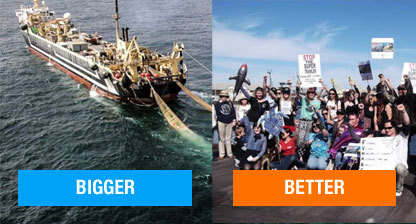
    Moments ago, the Environment and Fisheries Ministers held a press conference in Canberra to announce that the huge fishing super trawler, the Abel Tasman (a.k.a the FV Margiris), will be banned from Australian waters for two years.

    The super trawler was readying to leave port, set to trawl our oceans with a net longer than the Sydney Harbour Bridge.

    A huge congratulations to GetUp member, Rebecca Hubbard, who started the ‘Stop the Super Trawler’ campaign on GetUp’s community campaigning platform CommunityRun! Over the last month, Rebecca’s campaign grew to 93,864 petition signatures, over 18,000 emails to the Fisheries Minister, a series of rallies on the ground, and a huge national print advertising campaign calling on the Minister to stop the trawler. Thanks go to Rebecca, our allies at Environment Tasmania, Greenpeace, and the 14 other conservation and fishing groups who worked on this!

    This is what GetUp is all about. As Minister Burke said in this morning’s press conference, “no doubt there has been a massive public focus on this”. He heard from politicians across Australia who responded to the community concern over the super trawler. Congratulations.

    This afternoon, Minister Tony Burke will introduce legislation that bans supertrawlers for up to two years, and allow his office to conduct scientific research before approving or blocking such fishing in our waters in future. Fisheries Minister Joe Ludwig also announced a review of the 20 year old fisheries management legislation, in light of concerns about super trawlers devastating fish stocks.

    Can you help GetUp members keep running campaigns like this one?

    Rebecca’s campaign is one of hundreds powered by CommunityRun. It’s a new tool provided by GetUp, where members can start online campaigns, gather supporters and email them to raise money, run events, and contact politicians.

    It’s a great website, but it’s more than that. Dedicated GetUp staff and interns provide support for campaigns where we can, on everything from writing emails to securing media coverage, booking ads and holding events.

    The service is free to campaigners like Rebecca because it’s paid for by small donations from the GetUp community. The average donation is about $27, and every dollar helps us bring on more support for campaigns like this. Can you chip in?

    http://www.getup.org.au/supportcommunitycampaigns

    What the super trawler campaign proves is that we can come together on issues we’re passionate about – and we can win. Today we stopped a massive super trawler – who knows what’s possible tomorrow?

    Thanks for being part of this movement,
    Justine, for the team at GetUp and CommunityRun.

    PS – Thank you Minister Burke, Minister Ludwig, and Melissa Parke MP for responding to the community and an unprecedented threat to our marine life and fisheries. If you’d like to congratulate them, tweet at @Tony_Burke and @jw_ludwig or contact Melissa Parke on facebook.


    GetUp is an independent, not-for-profit community campaigning group. We use new technology to empower Australians to have their say on important national issues. We receive no political party or government funding, and every campaign we run is entirely supported by voluntary donations. If you’d like to contribute to help fund GetUp’s work, please donate now! If you have trouble with any links in this email, please go directly to www.getup.org.au. To unsubscribe from GetUp, please click here. Authorised by Sam Mclean, Level 2, 104 Commonwealth Street, Surry Hills NSW 2010.

    Click here to Reply or Forward
  • Global carbon trading system has ‘essentially collapsed’

    Global carbon trading system has ‘essentially collapsed’

    The UN clean development mechanism, designed to give poor countries access to green technologies, is in dire need of rescue

    BP  India wind energy investment, Suzlon Energy windfarm in Dhule

    The clean development mechanism is in dire need of rescue, according to a UN panel. Photograph: Corbis

    The world’s only global system of carbon trading, designed to give poor countries access to new green technologies, has “essentially collapsed”, jeopardising future flows of finance to the developing world.

    Billions of dollars have been raised in the past seven years through the United Nations‘ system to set up greenhouse gas-cutting projects, such as windfarms and solar panels, in poor nations. But the failure of governments to provide firm guarantees to continue with the system beyond this year has raised serious concerns over whether it can survive.

    A panel convened by the UN reported on Monday at a meeting in Bangkok that the system, known as the clean development mechanism (CDM), was in dire need of rescue. The panel warned that allowing the CDM to collapse would make it harder in future to raise finance to help developing countries cut carbon.

    Joan MacNaughton, a former top UK civil servant and vice chair of the high level panel, told the Guardian: “The carbon market is profoundly weak, and the CDM has essentially collapsed. It’s extremely worrying that governments are not taking this seriously.”

    The panel said that governments needed to reassure investors, who have poured tens of billions into the market, by pledging a continuation of the system, and propping up the market by toughening their targets on cutting emissions, and perhaps buying carbon credits themselves.

    Governments have a last chance to restore confidence in the system when they meet in Qatar this December to discuss climate change. But few participants hold out any hope that they will agree to toughen their 2020 emissions targets, which are scarcely even on the agenda. Instead, governments are focusing on drawing up a new climate change treaty by the end of 2015, which would stipulate emissions cuts for the period after 2020.

    Under the CDM, developers of projects to cut carbon emissions in developing countries receive a UN-issued carbon credit for every tonne of carbon dioxide the project avoids. This applies to a wide range of activities, from building new windfarms and solar panels, and distributing more efficient cook stoves and lights, to the installation of technology on factories to prevent the release of certain industrial gases.

    The system was set up under the 1997 Kyoto protocol, after years of debate, but no credits could be issued until that treaty finally came into force in 2005. Since then, just over 1bn CDM credits have been issued.

    These carbon credits can in theory be bought by the governments which are obliged by the Kyoto protocol to cut their emissions, to count against their targets. In practice, however, with the US refusing to ratify Kyoto and big emerging economies such as China, India and Mexico carrying no emissions-cutting obligations under the treaty, Europe is the only market of any size. The EU has its own cap-and-trade emissions scheme, under which heavy industries are awarded a quota of carbon they can emit, which they can top up by buying the UN credits.

    But the recession and Eurozone crisis have whipped the rug from under this market. As industrial activity has declined, and the after effects of too-generous carbon quotas early on work themselves through, few EU companies now need to top up their carbon quotas. To make matters worse, the current phase of the Kyoto protocol ends this year, and of the world’s major economies only the EU has pledged to continue it.

    All of this has combined to bring about a collapse in the price of UN credits, from highs topping $20 (£12.50) before the financial crisis to less than $3 each today. At such rates, many potential projects are not commercially viable. Financiers and project developers have abandoned the market in droves.

    MacNaughton warned that critics of the market, who argue it does not do enough to cut emissions, could end up regretting its demise, because the years of work it took to set up the market could not easily be replicated. “This is a stable framework, with functioning mechanisms and standards and legal [procedures], and all the things you need for a market. People are assuming this will all still be there in a few years when they want it again, but I don’t think it will [unless they act],” she said. Even if countries decided on reform, no new system could start functioning before 2020, so the CDM could “play a bridging role”.

    Mitchell Feierstein, chief executive of Glacier Environmental Funds, said the CDM had long been overshadowed by bigger opportunities for green investors. “Carbon markets will exist [in future] but certainly not as they exist today,” he said. “Investment capital will continue flowing into the innovative technologies which increase energy efficiency while reducing global dependence on fossil fuels. Private capital is now more easily deployed in other investment opportunities without the bureaucratic hassles of the current CDM.”

    But the CDM still has its optimists. Flora Yu, of the carbon specialist IdeaCarbon, said the market was likely to continue, as some countries – including Australia, China and South Korea – have been developing their own cap-and-trade carbon markets, which they will want to link to a global system. “There is still a potential opportunity for the CDM, to further develop the amount of money and resources that have already been invested in it. We think it is not going to go away.”

  • Burke poised to announce anti-trawler powers

    Burke poised to announce anti-trawler powers

    By Michael Vincent, staff, ABCUpdated September 11, 2012, 11:50 am

    The Federal Government is poised to announce new powers for the Environment Minister that could prevent a super trawler from fishing in Australian waters.

    Cabinet ministers discussed the situation last night, and it is now being put before caucus before a joint press conference by Environment Minister Tony Burke and Fisheries Minister Joe Ludwig later this morning.

    The ABC understands the Government is prepared to make changes to the Environment Protection and Diversity Act, giving Mr Burke more power to move against the trawler.

    The ship, now flagged as the Abel Tasman, has been awaiting final approvals from Queensland and federal authorities.

    But there has been growing pressure on the Government to stop the trawler, including from a large number of Labor backbenchers.

    Cabinet’s move comes as Labor MPs were due to debate the merits of a private member’s bill put forward by the Member for Fremantle, Melissa Parke, which would ban fishing vessels capable of storing more than 2,000 tonnes of catch.

    Ms Parke says the trawler will do enormous environmental damage and the public does not want it in Australian waters.

    “I’ve received very strong support from my Caucus colleagues and I’m confident it (the bill) will get up in one form or another,” she said.

    “A majority, possibly even a large majority, believe that this is not a sustainable operation.”

    Ms Parke says plans to put government observers on the ship simply do not go far enough.

    “Those officers are purely reactive,” she said.

    “They will be making a report when the dead dolphins and the deal seals come up to the surface, and by then it’s too late to do anything about them and they may send the boat 50 miles away to fish somewhere else and do the same thing there. I mean it’s not solving the problem.”

    She also says Environment Minister Tony Burke is quite sympathetic to her bill.

    Tasmanian Independent MP Andrew Wilkie says the Government has to do something.

    “I’m calling on the ALP today to say what’s in their hearts, and to vote to move against this and to prohibit this boat, because quite frankly this is a toxic issue for the ALP,” he said.

    “A great majority I think of the ALP Caucus want to see this boat stopped.”

    ‘Every regulation met’

    The company running the trawler, Seafish Tasmania, has been lobbying MPs and started up a newspaper advertising campaign, insisting it has complied with all regulations.

    The fishing industry and the ship’s operators say if Ms Parke’s plan succeeded, it would spell “doom” for existing licences and the very science quotas are based on.

    The operators say they have been working with the Government for seven years on their project and they have met “every rule, regulation and request” made of them.

    The Commonwealth Fisheries Association’s Brian Jeffriess is even blunter.

    “These are the standards set by governments, Labor and Liberal, over many years,” he said.

    “They’re being undermined in this case. People are rejecting science-based management.

    “Now as soon as you undermine that principle, then Australian Fisheries is doomed, simply because it cannot operate efficiently.”

    The Abel Tasman has a quota of 18 million kilograms of fish issued to it by the Australian Fisheries Management Authority.

    The Opposition’s fisheries spokesman and Liberal Senator Richard Colbeck says he supports the approval process that has taken place, and warns that any further government interference will add sovereign risk to Australia’s $2.2 billion fishing industry.

    “Now we’ve got a debate that’s been whipped up by the Greens and based on emotion, rather than fact and science,” he said.

    “Now if you’re going to argue that there shouldn’t be any interactions in our fisheries with dolphins, seals and sea lions, then effectively what you’re saying is that we close down our entire commercial fishery.

    “Is that the question that we’re putting? I can tell you that is the concern that has been put to me by the commercial fishing industry in this country.”

  • NSW voters so disillusioned they gave Barack Obama a tick in council elections

    ON THIS BASIS WHY IS VOTING COMPULSORY????

    NSW voters so disillusioned they gave Barack Obama a tick in council elections

    2
    Local Government elections

    NSW local government elections Port Macquarie Picture: Nathan Edwards Source: The Sunday Telegraph

    ONLY 50 per cent of eligible voters turned out for the Sydney City Council election on Saturday, among the lowest in NSW.

    And many of those that did wasted their vote by doodling or nominating US President Barack Obama.

    Did you vote in the council elections? Leave a comment below

    Scrutineers revealed that on many voting forms, instead of numbered boxes, fed-up electorates used the election pamphlet to sketch, some even drawing male genitalia.

    All the results from your local area

    Among the worst was Ashfield, in Sydney‘s inner west, where just 60 per cent of residents voted and of those, 17 per cent were filled out incorrectly, left blank or defaced.

    The informal vote reached heights of 25 per cent in places where voters preferred to draw their own candidate, with Mr Obama and Homer Simpson rating highly.

    “We had about four Barack Obama votes. Many people also voted above and below the line, which meant the vote was invalid,” one scrutineer said.

    In Parramatta and Canterbury nearly a quarter of people didn’t vote properly.

    Burwood, Kogarah, Taree, Campbelltown and Camden had wards where nearly 17 per cent of votes were wasted.

    In Strathfield, the informal vote was 14.58 per cent, while in Hornsby it was 14.03 per cent.

    In Sydney just 52.8 per cent of the 101,846 enrolled voters did so, with 2.9 per cent informal.

    Living Sydney’s Angela Vithoulkas said many people were confused about the election, saying they had already voted.

    “I am completely horrified about that. It is such a shame,” she said.

    “So many people were confused. They kept saying they had already voted. It may have something to do with the apathy and the disappointment in the way politicians behave.

    “They are so concerned with the appearance of doing good than actually doing it.” I think they are sick of federal politics, sick of state politics and it’s all too much in their face.”

    Those who didn’t make it to the polls will get a $55 fine.

    19 comments on this st

  • Caribbean coral reefs face collapse

    Caribbean coral reefs face collapse

    Caribbean coral reefs are in danger of disappearing, depriving the world of one of its most beautiful and productive ecosystems

    coral reef

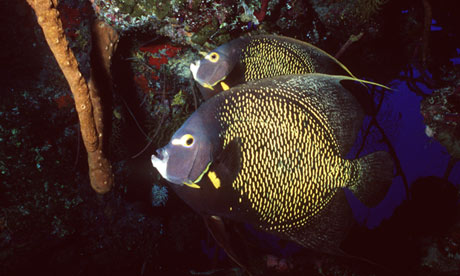
    A pair of French angelfish enjoy the coral reef in the Caribbean Sea. Photograph: Marcus Mays for the Guardian

    Caribbean coral reefs – which make up one of the world’s most colourful, vivid and productive ecosystems – are on the verge of collapse, with less than 10% of the reef area showing live coral cover.

    With so little growth left, the reefs are in danger of utter devastation unless urgent action is taken, conservationists warned. They said the drastic loss was the result of severe environmental problems, including over-exploitation, pollution from agricultural run-off and other sources, and climate change.

    The decline of the reefs has been rapid: in the 1970s, more than 50% showed live coral cover, compared with 8% in the newly completed survey. The scientists who carried it out warned there was no sign of the rate of coral death slowing.

    Coral reefs are a particularly valuable part of the marine ecosystem because they act as nurseries for younger fish, providing food sources and protection from predators until the fish have grown large enough to fend better for themselves. They are also a source of revenue from tourism and leisure.

    Carl Gustaf Lundin, director of the global marine and polar programme at the International Union for Conservation of Nature (IUCN), which published the research, said: “The major causes of coral decline are well known and include overfishing, pollution, disease and bleaching caused by rising temperatures resulting from the burning of fossil fuels. Looking forward, there is an urgent need to immediately and drastically reduce all human impacts [in the area] if coral reefs and the vitally important fisheries that depend on them are to survive in the decades to come.”

    Warnings over the poor state of the world’s coral reefs have become more frequent in the past decades as pollution, increasing pressure on fish stocks, and the effects of global warming on the marine environment – in the form of higher sea temperatures and slightly elevated levels of acidity in the ocean – have taken their toll.

    Last year, scientists estimated that 75% of the Caribbean’s coral reefs were in danger, along with 95% of those in south-east Asia. That research, from the World Resources Institute, predicted that by 2050 virtually all of the world’s coral reefs would be in danger.

    This decline is likely to have severe impacts on coastal villages, particularly in developing countries, where many people depend on the reefs for fishing and tourism. Globally, about 275 million people live within 19 miles of a reef.

    IUCN, which is holding its quadrennial World Conservation Congress on Jeju island in South Korea this week, said swift action was vital. The organisation called for catch quotas to limit fishing, more marine-protected areas where fishing would be banned, and measures that would halt the run-off of fertilisers from farmland around the coast. To save reefs around the world, moves to stave off global warming would also be needed, the group said.

    On a few of the more remote Caribbean reefs, the situation is less dire. In the Netherlands Antilles, Cayman Islands and a few other places, the die-off has been slower, with up to 30% coverage of live coral still remaining. The scientists noted that these reefs were in areas less exposed to human impact from fishing and pollution, as well as to natural disasters such as hurricanes.

    The report – compiled by 36 scientists from 18 countries – was the work of the IUCN-coordinated Global Coral Reef Monitoring Network.