Author: admin

  • Organic produce booms in China

    A fair for green produce from the Great Northern Wilderness, held in Beijing this month, was a hit with consumers. Some 20 tonnes of organic rice was sold during the five-day event.

    ”We banked on our reputation of being far away from pollution and working a land that hasn’t been treated with chemicals for 60 years,” says Sui Fengfu, director of the Agricultural Reclamation Bureau of the northeastern Heilongjiang province.

    For years, China pursued chemical input-heavy farming to increase yields and ensure enough food for its enormous population. Chinese leaders see food self-sufficiency as a political imperative and have invested millions in GM crop research in order to secure ever-higher yields.

    Nevertheless, recent years have seen a surge in organic farming, which advocates the use of traditional farming methods without use of fertilizers or pesticides. The demand is driven by an explosion of organic food sales overseas. China’s organic food exports totalled 142 million US dollars in 2003 and 200 million US dollars in 2004.

    While these overseas sales account for only a fraction of the 27 billion US dollar global market for organic foods, they are increasing at a rate of 50 percent annually.

    ”There was virtually no domestic market for organic products in the early 1990s," says Li Debo, deputy-director of the Organic Food Research Center under the State Environmental Protection Agency. "But now big cities like Beijing and Shanghai have many specialized shops for organic food, selling vegetables, tea, rice, honey and fruits."

    An estimated two million hectares of farmland are under organic cultivation, while some 1,400 companies and farms have been certified organic. Exports are the main driving engine behind the sector’s growth. Chinese organic products are exported mostly to Europe where they dominate the supply of pumpkin, sunflower seeds, and kidney and black beans. The U.S. and Japan are also major buyers.

    Growth in domestic demand has been spurred by rising urban incomes, the emergence an affluent middle class and also because recent years have seen an increasing number of food safety scandals.

    In 2004, transparent ‘glass’ noodles were banned in major Chinese cities after certain brands were found to be using a lead-based whitener. In 2003, 78 primary school children in the southern town of Beihai were poisoned after drinking contaminated soya milk. Such food scares have prompted calls for the expansion of the organic food sector.

    The government has heeded those calls, recognising the global and domestic market potential. Unlike in many countries, where organic farming has emerged spontaneously as a response to environment and health concerns, in China most conversion initiatives have been driven by the government.

    This year, the National People’s Congress adopted a new five-year blueprint for the country’s economic development, whose main tenet is to boost the incomes of the 800 million people living in the rural areas. The plan calls for a "new socialist countryside" and redress of the uneven distribution of wealth between the cities and the country, which has seen rural living standards lagging far behind those of their urban counterparts.

    Renowned agricultural economist Wen Tiejun has described the creation of organic farming trial zones around big cities as "Noah’s arks" that could avert social disorder by providing employment for migrant workers and laid-off people.

    Du Xiangge of the Beijing Agricultural University says promoting organic farming fits nicely with the government’s greater environmental sensitivity. The shift to certified organic methods requires a three-year conversion period during which no chemical fertilizers, pesticides or herbicides are used on the land.

    In the past, farmers have tried to increase yields with modern nitrate-based fertilizers, but this has had damaging side-effects on soil health. ‘’The return to more natural farming methods for organic production would allow the land to recover and would be a plus to the environment," says Du.

    But the rapid growth of the sector in a country where only 15 percent of the land mass is arable, has led to concern among some experts.

    Recently, scholars of the Chinese Academy of Sciences pointed out that if China were to adopt organic food strategy on a large scale, the size of the cropland would have to be expanded significantly, which is not an option for the land-scarce country.

    They argue that China is only able to feed one-fifth of the world’s population on one-seventh of the world’s arable land because some 75 percent of the crop nutrients are now supplied by chemical fertilizers, compared with only 22 percent in 1965.

    But Du dismisses the idea of organic farming going mainstream in China. "Only ten percent of the organically certified land is currently planted with grain," he says. "The big mass is planted with fruits, vegetables and tea.”

    Despite its vigorous growth, Du says the organic sector remains a tiny niche market, accounting for just one percent of total food sales.

    With the sector growing so fast, many fear for the quality control of the produce, given China’s enormous size and reputation for lax law enforcement. The country has over 200 individual food safety laws, regulations and standards, which apply at national and regional level, according to official media.

    Yet there have been reports of pesticide residues being found in organic-labelled spinach exported from China to Japan, prompting foreign buyers to begin dispatching their own food controllers.
    © Copyright 2006 IPS – Inter Press Service
  • Iraqi massacre worse than Abu Ghraib

    In Britain, the chief of the defence staff, Air Chief Marshal Sir Jock Stirrup, said yesterday that the “appalling” reports of the massacre could undermine British support for the war. “This sort of accusation does make that harder to achieve,” he said.

    The pictures of the dead, which are being closely guarded by the US naval criminal investigation service, were taken by a military photographer who is believed to have arrived on the scene moments after the shootings.

    Many American forces are accompanied by photographers to gather intelligence and to shield soldiers from false accusations of torture, intimidation and violence. In this case, the evidence points fatefully to a murder spree by marines.

    The stain on the American military could prove harder to erase than the photographs of sadistic prisoner abuse at Abu Ghraib.

    Comparisons are being made to the My Lai massacre in 1968 in Vietnam, in which American soldiers slaughtered up to 500 villagers.

    Up to a dozen marines may face criminal charges including murder, which carries the death penalty, dereliction of duty and filing a false report. Three marine commanders were suspended last month.

    The naval inquiry is focusing on the actions of a sergeant who may have been the leader of a four-man “fire team”.

    Miguel Terrazas, 20, a lance-corporal from El Paso, Texas, was travelling in a convoy of four Humvees in Haditha just after 7am on November 19 last year when a roadside bomb struck his vehicle, killing him and wounding two others.

    The events that followed are the subject of two military inquiries due to report soon: one into the facts, the other into a cover-up.

    One witness, Aws Fahmi, heard his neighbour, Yunis Salim Khafif, plead for his life in English, shouting: “I am a friend, I am good.”

    “But they killed him, his wife and daughters,” Fahmi said.

    It is clear the marines lied by blaming the deaths of 15 civilians on the roadside bomb and alleging that a further eight Iraqis were insurgents who died in a gun battle.

    Asked last week how many Iraqis were killed by the roadside bomb, a Pentagon official said: “Zero.” The marines never came under hostile fire, a spokesman added.

    Investigators have established that the killings unfolded over three to five hours. “This was not a burst of fire, but a sustained operation,” a Pentagon official said.

    The Sunday Times has reconstructed the events with the help of Abdul Rahman al-Mashandani, of the Hammourabi human rights group in Iraq. It appears the first killings took place when a taxi carrying four students pulled up at a checkpoint set up by the marines.

    Abu Makram, 50, had been awakened by the roadside bomb and watched from his window as the terror unfolded. The car’s occupants were all ordered out and shot.

    The marines then stormed three nearby houses. “They blew open the front door of the first house,” Makram recalled, “Once they were inside, we heard another explosion followed by a hail of gunfire.”

    It was the home of 76-year-old Abdul Hameed Ali Hassan, whose leg had been amputated because of diabetes. “He was a blind old man in a wheelchair,” Makram said.

    Hassan’s granddaughter, Iman Waleed, 10, was in her nightclothes. “About 10 marines entered the house,” she said. “They threw hand grenades and began firing in all directions. Grandpa was sitting close to the hall and they shot him dead.”

    In a nearby room, her father was reading the Koran. “The American soldiers went into the room and killed him too,” Iman said. “They gathered all of us into one room ­ my grandma, my mama, my brothers and my uncles. They threw in two handgrenades and started shooting at us.”

    The adults tried to protect the children with their bodies, but were slain. When Iman dared to look, she saw that “everyone was dead around me except for my brother and my uncle”.

    Both were injured and Iman was hurt in the leg. The rest of the family, including her brother, Abdullah, 4, died.

    Iman fled next-door, where her other grandfather Yunis lived, only to find everybody there appeared to have been killed too. There was in fact one survivor, Safa Yunis Salim, 12.

    “My daddy tried to open the door to let the Americans in, but he was immediately shot in the head and body,” Safa said.

    “I managed to hide under the body of my brother Mohammed. His blood covered me and protected me as I pretended to be dead.” They also killed her four sisters including Aysha, 4, and Zainab, 2.

    Five hours passed before Safa managed to escape. “I was the only one who survived. I watched them kill my entire family. I am all alone now,” she said, crying.

    When the marines stormed the third house they changed tactics. The men were separated from the women and stuffed into a large cupboard, according to Yussef Ayed Ahmad, the brother of the dead men, who lived next-door.

    “They placed my four brothers into the wardrobe and proceeded to shoot them as they were inside,” he said. “My mother and sister told me later how they died.”

    The marines found an AK 47 in the house ­ the only gun found in all three homes ­ but there is no evidence it was fired.

    The marines’ cover story quickly began to unravel. In March, Time magazine revealed the existence of a video shot the day after the attack by an Iraqi student journalist. It showed the victims still in their nightclothes, a trail of blood and shrapnel and bullet marks on the walls.

    At the local morgue Waleed al Obeidi, who received the corpses 24 hours after the killings, also disputed the marines’ account. “Two bodies were completely charred,” he said. “The others, including women and children, had all been shot at close range.”

    According to some reports, American warplanes dropped 500lb bombs on the houses.

    The marines paid $2,500 (£1,350) in compensation for each of the 15 victims who were shot in their homes. They refused to pay for the four brothers and five occupants of the taxi, claiming they were insurgents. Officials now say those men were innocent.

    General Michael Hagee, the US Marine Corps commander, flew to Baghdad last week to prepare his troops for the grim findings of the investigation. Many marines had witnessed the deaths of friends, he said. “The effects of these events can be numbing. There is the risk of becoming indifferent to the loss of a human life, as well as bringing dishonour upon ourselves.”

    The conclusions are likely to provoke widespread revulsion.

    President George W Bush said last week that the abuse at Abu Ghraib was one of his greatest regrets about the Iraq war. If the photographs from Haditha surface, they could provide a set of images that would be every bit as shocking.

  • Consumption is 50% of the equation

    I suspect that many of us believe we will be able to transition to new forms of energy without reducing our onsumption or making significant changes in how we live.

    This is going to be one of the biggest hurdles for us. For those who are trying to promote a gentler, slower, simpler way of life. And those who havent even considered this as an adaptation they need to make. I fear this latter group are going to suffer the consequences of this self-imposed blindness at levels that may end up being debilitating, the more they put off this inconvenient reality.

    James Says:
    May 27th, 2006 at 7:11 pm  on Transition Culture article on Urban Wind Farms – coming to a town near you …

  • The rise of the petro-rouble

    Currently, the central banks around the world carry large stockpiles of dollars to use in their purchases of oil. This gives the US a virtual monopoly on oil transactions. It also forces reluctant nations to continue using the dollar even though it is currently underwritten by $8.4 trillion national debt.

    Putin’s plan is similar to that of Iran, which announced that it would open an oil-bourse (oil exchange) on Kish Island in two months. The bourse would allow oil transactions to be made in petro-euros, thus discarding the dollar. The Bush administration’s belligerence has intensified considerably since Iran made its intentions clear. In fact, just yesterday, Secretary of State Condi Rice said that “security guarantees were not on the table” regardless of any Iranian commitment to stop enriching uranium. In other words, Washington will not provide Iran a “non-aggression pact” whether it follows UN Security Council guidelines or not.

    Surely, this is a sign that Uncle Sam is on a fast-track to war.

    The United States must protect its dollar-monopoly in the oil trade or it will lose the advantage of being the world’s “reserve currency”. As the reserve currency, the US can maintain its towering $8.4 trillion national debt and $800 billion trade deficit without fear of soaring interest rates or hyper-inflation. Trillions of greenbacks are constantly circulating in oil transactions just as hundreds of billions are stockpiled in foreign banks. In effect, the Federal Reserve is issuing bad checks with every dollar printed on the assumption that they will never reach the bank for collection. So far, they’ve been right, and as the price of oil continues to skyrocket, the Fed just keeps cheerily printing more worthless paper sending it to the 4 corners of the earth. Regrettably, if Russia or Iran goes ahead with their conversion plan, then the bad checks will flood back to their source and precipitate a meltdown.

    America’s economic supremacy depends entirely on its ability to compel nations to make their energy acquisitions in greenbacks. If the flaccid dollar is not linked to the world’s most vital resource, then banks will dump it overnight. This extortion-racket is the system we are defending in Iraq, not “democracy”. It is a huckster’s scam designed to perpetuate American debt by forcing worthless currency on the developing world.

    In a recent article by Dave Kimble, “Collapse of the petrodollar looming”, the author provides the details of Russia’s importance to the world oil market.

    “Russia’s oil exports represent 15.2% of the world’s export trade in oil, making it a much more significant player than Iran, with 5.8% of export volumes. Russia also produces 25.8% of the world’s gas exports, while Iran is still only entering this market as an exporter…. Venezuela has 5.4% of the export market.”

    Obviously, it is not in Russia’s interest to trade with its European partners in dollars any more than it would be for the US to trade with Canada in rubles. Putin can strengthen the Russian economy and improve Russia’s prestige in the world as an energy superpower by transitioning to rubles. But, will Washington allow him to succeed?

    A growing number of nations are now focusing on the empire’s Achilles’ heel, the dollar. Venezuela, Russia, Norway and Iran are all threatening to move away from the greenback. Is this a spontaneous uprising or is it a new type of asymmetrical warfare?

    Whatever it is, Washington is bound to be reeling from the affects. After all, war maybe possible with Iran or Venezuela, but what about Russia? Would Bush be stupid enough to risk nuclear Armageddon to protect the drooping dollar?

    The administration is exploring all of its options and is developing a strategy to crush Putin’s rebellion. (This may explain why Newsweek editor and undeclared spokesman for the Council on Foreign Relations (CFR), Fareed Zacharia, asked his guest on this week’s “Foreign Exchange” whether he thought Putin could be “assassinated”?!? Hmmm? I wonder if we’ll hear similar sentiments from Tom Friedman this week?)

    The Council on Foreign Relations (CFR), the secretive organization of 4,400 American elites from industry, finance, politics, media and the military (who operate the machinery of state behind the mask of democracy) has already issued a tersely worded attack on Putin (“Russia’ Wrong Direction”; Manila Times) outlining what is expected for Russia to conform to American standards of conduct. The missive says that Russia is headed in “the wrong direction” and that “a strategic partnership no longer seems possible”. The article reiterates the usual canards that Putin is becoming more “authoritarian” and “presiding over the rollback of Russian democracy”. (No mention of flourishing democracy in Saudi Arabia or Uzbekistan?) The CFR cites Putin’s resistance to “US and NATO military access to Central Asian bases” (which are a dagger put to Moscow’s throat) the banishing of Washington’s “regime change” NGOs from operating freely in Russia (“Freedom Support Act funds”) and Russia’s continued support for Iran’s “peaceful” development of nuclear energy.

    America has never been a friend to Russia. It took full advantage of the confusion following the fall of the Soviet Union and used it to apply its neoliberal policies which destroyed the ruble, crushed the economy, and transferred the vast resources of the state to a handful of corrupt oligarchs. Putin single-handedly, put Russia back on solid footing; taking back Yukos from the venal Khordukovsky and addressing the pressing issues of unemployment and poverty-reduction. He is a fierce nationalist who enjoys a 72% approval rating and does not need the advice of the Bush administration or the CFR on the best path forward for his country.

    The US has purposely strained relations with Russia by putting more military bases in Central Asia, feeding the turmoil in Chechnya, isolating Russia from its European neighbors, and directly intervening in its elections.

    When the G-8 summit takes place next week, we should expect a full-throated attack from the corporate media on Putin as the latest incarnation of Adolph Hitler. Watch the fur fly as the forth estate descends on its newest victim like feral hounds to carrion. (Putin’s announcement that Russia would be converting to rubles HAS NOT APPEARED IN ANY WESTERN MEDIA. Like the Downing Street Memo, the firebombing of Falluja, or the “rigged” 2004 elections, the western “free press” scrupulously avoids any topic that may shed light on the real machinations of the US government)

    Putin’s challenge to the dollar is the first salvo in a guerilla war that will end with the crash of the greenback and the restoration of parity among the nations of the world. It represents a tacit rejection of a system that requires coercion, torture and endless war to uphold its global dominance. When the dollar begins its inevitable decline, the global-economic paradigm will shift, the American war machine will grind to a halt, and the soldiers will come home. Maybe, then we can rebuild the republic according to the lost values of human rights and the rule of law.

    Putin’s plan is set to go into effect on July 1, 2006.

  • Police take anti-war banners

    Mr Haw, who has camped in front of the Houses of Parliament since 2001, was incensed at the "raid" – and said he now intended to go on hunger strike. "It was shocking. I would not have believed they could stoop so low. I thought they going to do it decently, to do it through the courts, when they came like thugs in the night. They have completely destroyed all the expressions of people who opposed the war in Iraq," he said."It seems I am going to die in this place now because I’m going to be fasting and praying. What else can I do as a Christian? They have taken my means of showing people what is going on."

    The battle between police and the 57-year-old protester has been going on for some time. Last July, the Serious Organised Crime and Police Act came into force, bringing with it powers to halt demonstrations in Parliament Square and its vicinity, a provision widely seen as having been designed with Mr Haw in mind.

    Mr Haw, in turn, has claimed the restrictions do not apply to him because his demonstration began in June 2001, before the Act became law. But a Court of Appeal hearing this month rejected his argument and refused leave to appeal to the Lords. The court said he would have to apply to the police for authorisation to continue the protest.

    Scotland Yard defended the raid, calling it a partial clearance in response to "continual breaches" of the conditions of the permission imposed on the demonstration. A Scotland Yard spokeswoman said: "This action follows a number of requests to the applicant to adhere to the conditions."

    Human rights and anti-war groups criticised the police for heavy-handedness. David Wilson, of the Stop the War Coalition, said Mr Haw was "hardly a radical revolutionary. He is a Christian who has taken it upon himself to remind politicians that occupation and war mean death and destruction to men, women and children."

    Doug Jewell, campaigns co-ordinator for Liberty, said the raid showed the "Government’s intolerance had reached fever pitch".

    Mr Haw is due to appear before Bow Street magistrates at the end of the month to answer charges of breaching conditions to demonstrate in the square.

    Yesterday his 20-strong group of supporters at Parliament Square said they were more resolute than ever to continue their protest. Barbara Tucker, 44, from Reading, said: "We will replace the placards and just carry on."

    The veteran peace activist Brian Haw was stripped of his anti-war banners and placards by up to 50 police officers in an early-morning raid in Parliament Square yesterday.

    There were chaotic and farcical scenes as police wrestled with nine dishevelled protesters led by Mr Haw, and a 40-metre line of anti-war placards, including two donated by the graffiti artist Banksy, was dismantled and dumped in a metal container. Two demonstrators, Martin McGrath and Maria Gallastegui, who tried to climb the metal container to salvage the placards, were arrested. Mr Haw claimed that officers had seized his "personal belongings" as well, including bedding, clothes and a treasured Bible.

    By yesterday afternoon, the 40-metre protest line had shrunk to three metres, with two small placards remaining. The police presence far outweighed that of the protesters, who included a mime artist bearing a thought bubble with the inscription "free speech".

    Mr Haw, who has camped in front of the Houses of Parliament since 2001, was incensed at the "raid" – and said he now intended to go on hunger strike. "It was shocking. I would not have believed they could stoop so low. I thought they going to do it decently, to do it through the courts, when they came like thugs in the night. They have completely destroyed all the expressions of people who opposed the war in Iraq," he said."It seems I am going to die in this place now because I’m going to be fasting and praying. What else can I do as a Christian? They have taken my means of showing people what is going on."

    The battle between police and the 57-year-old protester has been going on for some time. Last July, the Serious Organised Crime and Police Act came into force, bringing with it powers to halt demonstrations in Parliament Square and its vicinity, a provision widely seen as having been designed with Mr Haw in mind.

    Mr Haw, in turn, has claimed the restrictions do not apply to him because his demonstration began in June 2001, before the Act became law. But a Court of Appeal hearing this month rejected his argument and refused leave to appeal to the Lords. The court said he would have to apply to the police for authorisation to continue the protest.

    Scotland Yard defended the raid, calling it a partial clearance in response to "continual breaches" of the conditions of the permission imposed on the demonstration. A Scotland Yard spokeswoman said: "This action follows a number of requests to the applicant to adhere to the conditions."

    Human rights and anti-war groups criticised the police for heavy-handedness. David Wilson, of the Stop the War Coalition, said Mr Haw was "hardly a radical revolutionary. He is a Christian who has taken it upon himself to remind politicians that occupation and war mean death and destruction to men, women and children."

    Doug Jewell, campaigns co-ordinator for Liberty, said the raid showed the "Government’s intolerance had reached fever pitch".

    Mr Haw is due to appear before Bow Street magistrates at the end of the month to answer charges of breaching conditions to demonstrate in the square.

    Yesterday his 20-strong group of supporters at Parliament Square said they were more resolute than ever to continue their protest. Barbara Tucker, 44, from Reading, said: "We will replace the placards and just carry on."

  • Teenagers prescribed psycho-drugs

    TeenScreen is a very controversial so-called "diagnostic psychiatric service" aka suicide survey; done on children who are then referred to psychiatric treatment. The evidence suggests that the objective of the psychiatrists who designed TeenScreen is to place children so selected on psychotropic drugs.

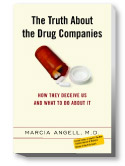
    "It’s just a way to put more people on prescription drugs," said Marcia Angell, a medical ethics lecturer at Harvard Medical School and author of "The Truth About Drug Companies." She said such programs will boost the sale of antidepressants even after the FDA in September ordered a "black box" label warning that the pills might spur suicidal thoughts or actions in minors. (The New York Post, December 5, 2004)

    TeenScreen is based on the thoroughly discredited "Diagnostic and Statistical Manual of Mental Disorders".

    … more