Author: admin

  • The folly of US population growth orthodoxy

    The folly of US population growth orthodoxy

    Rather than accept the panicky rhetoric that says we must grow our population to grow our economy, let’s consider alternatives

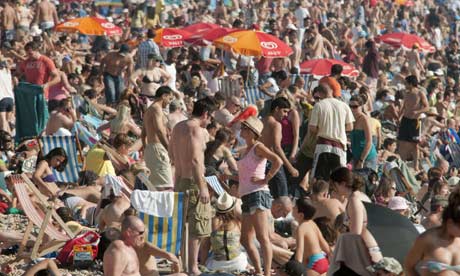
    • Hot weather in Brighton, Sussex, Britain - 02 Oct 2011

      Overpopulation: in a developed country near you. Photograph: Andrew Hasson/Rex Features

      Of all the fantasies indulged in by a society speeding toward self-destruction, none is as consequential as the idea that continuing growth – both in population and size of our economy – has a happy-ever-after ending. Yet, when overpopulation is discussed at all, it is discussed as a problem limited to the developing world. Indeed, a growing chorus of “pro-natalist” or population growth ideologues insists that, in the US and other parts of the developed world, population stability or decline represents a demographic crisis that needs to be reversed.

      In order to ignore the patently obvious fact that unlimited population growth is neither environmentally or socially sustainable, one would have to be prepared to explain how a resource-gobbling US of 500 million or 700 million people would work. (If you’re not prepared to do so, you’ve already accepted the reality that some limits exist and that the only question is what those limits should be.)

      If, though, you really believe that predictions of overpopulation-induced catastrophe have been overblown, there are still two critical questions to be addressed, both of which are currently verboten as a matter of public debate.

      First, even if ever-increasing population were survivable, is it really desirable? Second, are we really so inflexible that we can’t figure out any adaptations – beyond permanent crowding and permanent austerity for most citizens, that is – to enable a society that is becoming older to be economically and socially robust?

      In fact, more isn’t better, and there are both market-driven and state-driven alternatives to be pursued.

      Smaller has its advantages

      In a well-reported and chilling article on Nigeria’s population explosion last month, Elisabeth Rosenthal quoted a Nigerian demographer:

      “If you don’t take care of population, schools can’t cope, hospitals can’t cope, there’s not enough housing – there’s nothing you can do to have economic development.”

      US society doesn’t face imminent collapse, but aren’t many similar considerations at play? Despite the glut of unsold homes, we are still under-housed, and competition for housing in the most desirable housing markets has made life increasingly unaffordable. Demands on infrastructure – transportation, water, schools – have already reached or passed a breaking point in some parts of the US (just ask any suburban school district whether it is sanguine about the prospect of increased enrolment).

      As anyone who is old enough to recall the 1960s or 1970s can attest, there just aren’t spots available as there used to be. Spots in schools that used to be merely competitive are now virtually impossible to get into. Likewise, spots in secure, well-paying jobs are no longer available except to an increasingly small minority.

      The population of the US – currently estimated at 313 million – was 179 million in 1960, and 203 million in 1970. Does anyone think those were periods when the country was “too small” or economically weak?

      Adapting to the demographic shift

      Most of the secular hysteria that is generated against consideration of the advantages of stable or falling populations concerns the phenomenon of ageing populations. As people live longer, a greater percentage of the population is older, and there are, relatively speaking, fewer young “productive workers” to support everyone else.

      Just last month, the cries of alarm have included one op-ed piece asserting that “population decline poses a danger to the developed world”, and another describing Japan’s declining population as creating “grim consequences for an already-stagnant economy and an already-strained safety net”.

      Japan, by the way, is the poster child for those who want to sell the idea that only a growing country can be prosperous. Conveniently left out of the picture is Germany, whose economy is currently the envy of Europe, and whose demographics, my colleague Michelle Mayer has confirmed with the Federal Statistical Office of Germany, include: a fertility rate of 1.4 children per mother, one of the lowest in the world; a death rate that, since the 1970s, has continuously exceeded the birth rate; and a population projected to shrink to 65 or 70 million from the current 82 million.

      If one steps back from the panic, what comes most clearly into focus is the fact that the pro-natalists’ assumptions proceed from the basic premise that all economies and all societies always need to be organized in the same way. Once one begins to imagine alternatives, a future where fewer people are forced to engage in fierce, dog-eat-dog competition becomes very desirable indeed.

      The pro-natalist concern, in truth, is not that there won’t be sufficient young people to do the work, or that “there are just some jobs that Americans won’t do.” Rather, it is that with labor in greater demand, the work won’t be able to be had cheaply.

      There is nothing “natural” about someone in a parasitic profession (like much of investment banking) earning a lot of money and someone doing necessary but menial work (like garbage collection) earning much less. Where a society is really forced to “incentivize” the latter, the market will dictate a lower-than-current value for the derivatives trader and a higher-than-current value for the sanitation worker. That revaluation may make some people uneasy, but their complaint isn’t really that such a change is unworkable; it is that they find the prospect of different people than usual having to adapt outrageous.

      The nature of work, too, would likely be reorganized. Once, six-day work weeks were routine, as were 10- to 12-hour work days. Pressure from labor caused the developed world to adapt. If, by the middle or latter part of this century, workers who perform hard manual labor can only be secured by offering shorter-than-eight-hour days, we’ll have to adapt again.

      Jobs designed in lockstep with a time when households most typically had one, full-time (male) wage-earner might have to become more flexible (something that is already overdue) to facilitate the part-time participation of older workers in the labor market. And this not as an act of desperation but rather in a way that, consistent with any age-based constraints, facilitates participation in productive activity.

      And, yes, it would cost more as a society to support those who are not working. (News bulletin: it will cost more in any scenario, even if we insist on punishing more older people with decades of life spent at not much better than subsistence level.) The question will be the old one, and one that should be easy to answer for a society that, unlike most others, remains remarkably wealthy: is maintaining massive inequality of wealth on an individual level more important than trying to maximize the quality of life for most citizens?

      Better now than later

      For a long time, India, whose population now exceeds 1.2 billion people, did not act. Its population is estimated to grow to somewhere between 1.5 billion and 1.9 billion people in coming decades. As an article on more recent Indian attempts to control its birthrate pointed out, “Indian leaders recognize that [those massive growth scenarios] must be avoided.” The article quoted a demographer who said, “it’s already late … It’s definitely high time for India to act.”

      The US has the opportunity to be a lot more prescient, but we will have no chance to be so unless we begin to discuss all of the consequences of being a country that continues to grow, and allow ourselves to imagine the potential benefits of alternative futures.

      • This article was originally published by Remapping Debate and is crossposted by permission of the editor

  • Scathing reef report doesn’t impress govts (Great Barrier Reef)

    Scathing reef report doesn’t impress govts

    By Patrick Caruana, AAPUpdated June 2, 2012, 4:25 pm

    A scathing UNESCO report into Australia’s management of the Great Barrier Reef has failed to prompt a strong response from either the federal or Queensland governments.

    The report, released on Saturday, warns the reef could be listed as a World Heritage site in danger unless Australia makes substantial changes to its supervision of the area.

    It says the adverse listing could go ahead if the federal government does not convince the international body it has improved its performance before February next year.

    The report urges Australia not to permit the creation of ports separate to those which already exist near the reef and asks for a strategic assessment of the entire area, implying that new developments should be held up until that report is complete.

    Queensland Premier Campbell Newman said his government was aware of the issues raised in the report but could not accommodate some of its chief recommendations.

    “We will protect the environment but we are not going to see the economic future of Queensland shut down,” Mr Newman said.

    ” … We are in the coal business. If you want decent hospitals, schools and police on the beat we all need to understand that.”

    Federal Environment Minister Tony Burke said there was not much he could do to prevent development applications already in progress.

    “I can’t take away the rights at law that applicants have when they’ve already started their approval process,” he told reporters in Sydney.

    “(But) certainly for the areas that the World Heritage Committee would be most concerned about, we’re not expecting any of those decisions to come to me before the strategic assessment work is concluded anyway.”

    Greens Senator Larissa Waters said Mr Burke’s response was inadequate.

    “The laws are clear – the minister has the power to act. He has the power to press pause while the strategic assessment is undertaken,” Senator Waters told AAP.

    “Unfortunately he lacks the will … I have been very disappointed with the lack of interest he has shown in the Great Barrier Reef.”

    Australian Conservation Foundation CEO Don Henry said the report should be a wake-up call for the federal government.

    “To have a potential `in danger’ listing hanging over the reef is a national disgrace,” he said.

    The report calls for an internationally-recognised review of the management of Gladstone Harbour, saying there are a “range of unaddressed concerns” around the approval of major liquefied natural gas (LNG) plants at nearby Curtis Island.

    Environmentalists and fishermen blame dredging in Gladstone Harbour for the area’s poor water quality and a skin disease affecting marine life.

  • OVERPOPULATION

    GOOGLE WIKIPEDIA FOR MUCH DETAILED INFO ON POPULATION

    Overpopulation

    From Wikipedia, the free encyclopedia
    Jump to: navigation, search

    Overpopulation means that there are too many organisms of a certain species in a certain habitat. This means that the number of organisms living there is larger than the carrying capacity of the habitat. The habitat cannot support these numbers over time without hurting itself.

    The term “overpopulation” is most often used to refer to the number of humans living on Earth.[1]

    [change] Human overpopulation

    Human population growth rate in percent, with the variables of births, deaths, immigration, and emigration 2006

    The world’s population has greatly increased in the last 50 years, mainly due to medical advances and agricultural productivity.[2] Steve Jones, head of the biology department at University College London, has said,

    “Humans are 10,000 times more common than we should be, according to the rules of the animal kingdom, and we have agriculture to thank for that. Without farming, the world population would probably have reached half a million by now”.[3]

    The recent rapid increase in human population over the past two centuries has raised concerns that humans are beginning to overpopulate the Earth. The planet may not be able to sustain larger numbers of people. The population has been growing since the end of the Black Death, around the year 1400.[4] At the beginning of the 19th century, it had reached roughly 1,000,000,000 (one billion). The industrial revolution and green revolutions led to rapid population growth all over the world. By 1960, the world population had reached 3 billion, and it doubled to 6 billion over the next four decades. As of 2011, the estimated annual growth rate was 1.10%, down from a peak of 2.2% in 1963, and the world population stood at roughly 6.9 billion.

    Current projections show a steady decline in the population growth rate, with the population expected to reach between 8 and 10.5 billion between the year 2040[5][6] and 2050.[7]

    The scientific consensus is that the present population growth and increase in use of resources is a threat to the ecosystem. The InterAcademy Panel Statement on Population Growth called the growth in human numbers “unprecedented”, and stated that many environmental problems, such as rising levels of atmospheric carbon dioxide, global warming, and pollution, were made worse by the population expansion.[8] At the time, the world population stood at 5.5 billion, and optimistic scenarios predicted a peak of 7.8 billion by 2050, a number that current estimates show will be reached around 2030.[9][10]

    [change] Potential solutions

    The solutions usually suggested are better education and widespread free contraception (birth control). Many pregnancies are unplanned (40%) or unwanted.[11]

    There are powerful forces working against birth control. Religious and traditional beliefs often favour large families. Few governments have tackled the problem seriously.

    [change] References

  • Overpopulation

    Overpopulation

  • Indian Point: Still America’s Most Dangerous Nuclear Plant?

    News 6 new results for DANGER TO US NUCLEAR PLANTS
    Indian Point: Still America’s Most Dangerous Nuclear Plant?
    CounterPunch
    Indian Point: Still America’s Most Dangerous Nuclear Plant? by JOHN RAYMOND “Shut it down! Shut it down! Shut it down!” rang through the cavernous grand ballroom of the Doubletree Hotel in Tarrytown, NY, last week when the Nuclear Regulatory Commission
    See all stories on this topic »
    Report: Obama ordered Stuxnet attacks on Iran
    CSO Magazine
    US President Barack Obama ordered the Stuxnet cyberattacks on Iran in an effort to slow the country’s development of a nuclear program, according to a report in The New York Times. The Times, quoting anonymous sources, reported that, in the early days
    See all stories on this topic »
    San Onofre: Still Dirty, Still Dangerous
    CounterPunch
    A Jerry-Rigged Nuclear Reactor in a Jury-Rigged Political Environment. by RUSSELL D. HOFFMAN Hooray! Summer is “officially” upon us! The beaches had record numbers of people this past Memorial Day weekend. The tuna had cesium from Fukushima.
    See all stories on this topic »
    Tokyo Electric Power Company’s Radioactive Lies
    Dissident Voice
    Can we trust Tokyo Electric Power Company (Tepco) to tell the truth about the status of the Fukushima Nuclear Power Plant (FNPP) or is Tepco really “Tipco,” a company based on shaky practices that now claims their radioactive storage building won’t tip
    See all stories on this topic »
    Stuxnet cyberweapon created by U.S., Israel to attack Iran, reports NYT
    Digitaltrends.com
    The United States and Israel created the notorious Stuxnext worm to attack Iran’s nuclear facilities, reports The New York Times. The mysterious origin of Stuxnet, long considered one of the world’s most dangerous computer worms, is a mystery no more.
    See all stories on this topic »

    Digitaltrends.com
    Iran deserves the malware, but expect a backlash
    CSO (blog)
    But when you want to make nuclear weapons to use against Israel, the US and its allies, you’re asking for a response like this. I bring it up after reading a fascinating article in the New York Times about how President Obama secretly ordered
    See all stories on this topic »


    Tip: Use site restrict in your query to search within a site (site:nytimes.com or site:.edu). Learn more.

    Delete this alert.

  • Greenhouse gas levels pass symbolic 400ppm CO2 milestone

    Greenhouse gas levels pass symbolic 400ppm CO2 milestone

    Monitoring stations in the Arctic detect record levels of carbon dioxide, higher than ever above ‘safe’ 350ppm mark

    • guardian.co.uk, Friday 1 June 2012 12.50 BST
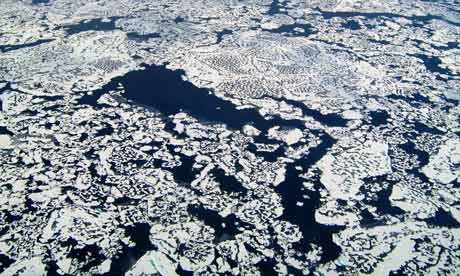
    • Big picture : Arctic ocean methane emissions

      The Arctic Ocean with leads and cracks in the ice cover of north of Alaska. Photograph: Courtesy Eric Kort/Jet Propulsion Laboratory/NASA

      The world’s air has reached what scientists call a troubling new milestone for carbon dioxide, the main global warming pollutant.

      Monitoring stations across the Arctic this spring are measuring more than 400 parts per million of the heat-trapping gas in the atmosphere. The number isn’t quite a surprise, because it’s been rising at an accelerating pace.

      Years ago, it passed the 350ppm mark that many scientists say is the highest safe level for carbon dioxide. It now stands globally at 395.

      So far, only the Arctic has reached that 400 level, but the rest of the world will follow soon.

      “The fact that it’s 400 is significant,” said Jim Butler, the global monitoring director at the National Oceanic and Atmospheric Administration’s Earth System Research Lab. “It’s just a reminder to everybody that we haven’t fixed this, and we’re still in trouble.”

      “The news today, that some stations have measured concentrations above 400ppm in the atmosphere, is further evidence that the world’s political leaders – with a few honourable exceptions – are failing catastrophically to address the climate crisis,” former vice president Al Gore, the highest-profile campaigner against global warming, said in an email. “History will not understand or forgive them.”

      Carbon dioxide is the chief greenhouse gas and stays in the atmosphere for 100 years. Some carbon dioxide is natural, mainly from decomposing dead plants and animals. Before the industrial age, levels were around 275 parts per million.

      For more than 60 years, readings have been in the 300s, except in urban areas, where levels are skewed. The burning of fossil fuels, such as coal for electricity and oil for gasoline, has caused the overwhelming bulk of the man-made increase in carbon in the air, scientists say.

      It’s been at least 800,000 years – probably more – since Earth saw carbon dioxide levels in the 400s, Butler and other climate scientists said.

      Readings are coming in at 400 and higher all over the Arctic. They’ve been recorded in Alaska, Greenland, Norway, Iceland and even Mongolia. But levels change with the seasons and will drop a bit in the summer, when plants suck up carbon dioxide, NOAA scientists said.

      So the yearly average for those northern stations likely will be lower and so will the global number.

      “It’s an important threshold,” said the Carnegie Institution ecologist Chris Field, a scientist who helps lead the Nobel Prize-winning Intergovernmental Panel on Climate Change. “It is an indication that we’re in a different world.”

      Ronald Prinn, an atmospheric sciences professor at the Massachusetts Institute of Technology, said 400 is more a psychological milestone than a scientific one. We think in hundreds, and “we’re poking our heads above 400,” he said.

      Tans said the readings show how much the Earth’s atmosphere and its climate are being affected by humans. Global carbon dioxide emissions from fossil fuels hit a record high of 34.8 billion tonnes in 2011, up 3.2%, the International Energy Agency announced last week.

      The agency said it’s becoming unlikely that the world can achieve the European goal of limiting global warming to just 2 degrees based on increasing pollution and greenhouse gas levels.