Author: admin

  • Bizarre scenes and shifting mood in Parliament

    Bizarre scenes and shifting mood in Parliament

    Posted June 01, 2012 07:07:51

    It could have been worse. Imagine if the actors in the bizarre scenes in the federal Parliament this week were switched; if it had been the Prime Minister running to avoid a vote and not Opposition Leader Tony Abbott.

    Imagine if Julia Gillard had taken off behind Anthony Albanese and bumped Dick Adams out of the way to get to the doors and avoid a “tainted” vote.

    That, for her, would have been the ultimate humiliation and almost certainly the end of a rocky career.

    But that’s the difference between government and opposition. Expectations on governments are higher, as they should be. Government is a serious business. Opposition, on the other hand, by definition, is more political. When judgments are flawed or tactics go wrong, nobody gets hurt.

    Not so when governments stuff up. That’s why the poor handling of the overseas workers issue matters more than a comical scene from the Parliament that seemed to fit a familiar pattern in the minds of the public anyway.

    As Geoff Kitney put it in the Financial Review, Tony Abbott was determined to have the upper hand on a principle and was prepared to look a bit “unhinged” in the process. Australians have known for years that he can be a bit whacky. It’s a character trait that was on display even during the last election campaign, and it did him no real harm.

    For a prime minister, on the other hand, a lack of judgment matters far more.

    After much internal wrangling and hand wringing, the Government has finally landed in a good place on the enterprise migration agreements. There will be oversight to ensure that the mining companies genuinely make jobs available first to qualified Australians, and that workers from overseas are not used as a source of cheap labour.

    But once again, getting there was a struggle, and the Prime Minister wasn’t able to properly articulate and argue a volatile policy issue because of poor implementation and internal politics.

    Yet despite all that, opinion polls show that the Government is doing quite well on key issues like the NBN, aged care, private health insurance and the mining tax. Even with the carbon tax, there is some encouragement for the Government depending on how the issue is presented to the voter.

    As polling expert Andrew Catsaras put it on Insiders this week, the worst thing that can happen for the Coalition is to believe it can’t lose the next election, and the worst thing that can happen for the Government is to believe it can’t win.

    And the “edge” that the Government has in those key policy areas does sustain many of the government MPs, for now.

    That and the surprising improvement in Newspoll in the past month.

    Politicians say parrot-like that an election is the only poll that counts, but this week we saw how one opinion poll can have a significant impact on the political atmospherics, in the media as well as in the parliamentary chambers. The new mood was so transparent you could photograph it.

    The mood change happened because a month ago, according to Newspoll, the primary vote gap between the two major parties was 24 points (51 per cent to 27 per cent.) Now it’s 14 points (46 per cent to 32 per cent.) Likewise with the two party preferred vote; a month ago the gap was 18 points (59 per cent to 41 per cent), now it’s 8 points (54 per cent to 46 per cent).

    The new figures immediately took some of the pressure off Julia Gillard and caused some introspection on the part of the Coalition about their aggressiveness.

    Tony Abbott uncharacteristically at a doorstop interview even tried to deflect attention from Newspoll, a poll that has served him so well, by referring the media to other polls out this week that were not as encouraging for Labor.

    The situation, nevertheless, is still grim for Labor. The figures defy political history. Traditionally, governments – the incumbents – have an advantage, particularly when the economy is strong, and sometimes even when it is not. Right now, it is apparently anything but the economy, in the minds of the electorate.

    Even with the three key indicators – unemployment, official interest rates and inflation – all below 5 per cent (and that hasn’t happened for 40 years) Labor still trails badly.

    Worse for Labor, they face an 8 per cent deficit in the polls even though Tony Abbott has a disapproval rating of 60 per cent and threatens to be the most unpopular opposition leader ever to be elevated to the prime ministership.

    But as Abbott warned his party room this week, Gillard will not give up without a fight, in spite of all the difficulties inherent in a minority government.

    The election could be 15 to 18 months away, and the Government is at 46 per cent two-party preferred.

    In 1993, Paul Keating’s government was at 46.5 per cent just five weeks out from an election and won. In 2001, John Howard’s government was at 56.5 per cent five weeks out and polled just 51 per cent at the election. In 2004, the Howard government was at 47.5 per cent three weeks out and won. In 2010, Julia Gillard’s government was at 52 per cent three weeks out and just fell in on the day.

    Big late swings can and have happened, and the electorate has never been more volatile and less rusted on to the major parties as it is now.

    The Coalition has a big lead and for all we know the electorate may have stopped listening to Julia Gillard and her government.

    But on the other hand, despite the hubris at some levels in the Coalition, and the constant references to state elections in NSW and Queensland, Tony Abbott is no Campbell Newman. The entire state of Queensland was interested in Newman and ultimately ready to embrace him. That is true of Abbott in only parts of Australia.

    There is a long way to go and lots of issues and events yet to be traversed. Both sides would be well served heeding Andrew Catsaras’ advice. The Coalition should avoid over confidence, and the Labor Party, despondency.

    Barrie Cassidy is the presenter of ABC programs Insiders and Offsiders. View his full profile here.

    Topics:federal-parliament, federal-government

  • Worried MPs are reluctant to judge Thomson

    Worried MPs are reluctant to judge Thomson

    June 2, 2012

    text

    Concerned … the acting Speaker, Anna Burke, says standards of civility are among the worst she has seen in her 14 years in Parliament. Photo: Mal Fairclough

    MEMBERS of Parliament’s powerful privileges committee are unenthusiastic about pursuing Craig Thomson and will mount a go-slow inquiry and hand out only the minimum penalty if anything untoward is found.

    The Herald understands that Labor and Coalition MPs on the committee are uncomfortable with having to pass judgment on whether one of their own has misled Parliament, the accusation the Coalition has made against Mr Thomson.

    The revelation comes as the acting Speaker, Anna Burke, joined the growing chorus of concern about the lack of civility, which has escalated on the back of the Thomson affair.

    Ms Burke told ABC radio yesterday that the hung Parliament had the place constantly on edge because there could be an election at any moment.

    She said standards of civility were among the worst she had seen in her 14 years in Parliament.

    This week, Ms Burke pulled MPs into line during question time when an unknown Coalition MP called the Minister for Infrastructure and Transport, Anthony Albanese, ”a dead man”.

    Ms Burke was a friend of the Victorian Labor MP Greg Wilton, who committed suicide in 2000. Mr Wilton’s death had been invoked last week as concerns grew for Mr Thomson’s wellbeing, given the enormous pressure he was under in Parliament, which was additional to official police investigations and a pending court hearing.

    Sources have told the Herald that MPs of all persuasions on the privileges committee are fearful of creating a precedent in judging Mr Thomson that could be used against their own in future, when other MPs are referred to the committee.

    Additionally, the findings against Mr Thomson by Fair Work Australia are also going to be tested in the Federal Court and the committee is wary of the Parliament acting as a court, either in parallel with, or before, the civil court proceedings.

    The committee met again on Wednesday night but there is little enthusiasm to meet outside parliamentary sitting weeks, ensuring the hearing will drag on for months, if not longer.

    Mr Thomson was referred to the privileges committee by the Coalition. It charged that the now-independent MP had misled Parliament on several counts during his hour-long statement on May 21 to reject the claims relating to his alleged misuse of $500,000 of members’ money when he was the national secretary of the Health Services Union.

    If the committee ever finds against Mr Thomson, sources said it would reprimand him at most.

    Read more: http://www.smh.com.au/opinion/political-news/worried-mps-are-reluctant-to-judge-thomson-20120601-1zn4h.html#ixzz1waWAnNt9

  • Harbour crossing back on track

    Harbour crossing back on track

    Jacob Saulwick

    June 2, 2012

    alt

    “A second harbour crossing is one option being considered” … Transport Minister, Gladys Berejiklian. Photo: Edwina Pickles

    A SECOND harbour crossing will be the centrepiece rail project in the state government’s draft transport masterplan, to be unveiled within months.

    The plan will reassert the importance of another rail crossing for the harbour, which has been long talked about but absent from government policy since 2008.

    Several sources have told the Herald a cross-government committee working on Sydney’s next train plan has agreed it would not be worth trying to avoid building another harbour crossing by upgrading technology on the existing rail corridor.

    The Transport Minister, Gladys Berejiklian, is understood to have accepted the advice and plans for a harbour rail link will form the basis of the O’Farrell government’s first substantial transport document.

    The crossing is needed because of the train system’s natural patronage growth and the construction of the North West Rail Link, which will bring tens of thousands of extra commuters and possibly more than eight trains an hour onto the network.

    Agreement on the need for a new crossing would confirm the death of Labor’s last train plan, which was to build a ”city relief line” underground from Redfern to Wynyard to provide extra capacity on the Western Line.

    Instead the draft masterplan will reopen a debate about how another crossing should make its way through the city – either under Sussex Street or under Pitt Street – and how it should connect to the rest of the network south of Central – either to the Western Line or the Illawarra Line.

    Ms Berejiklian would not say whether a decision had been made. “As our submission to Infrastructure Australia last year made clear, a second harbour crossing is one option being considered by Transport for NSW in order to increase rail capacity into the CBD to 2040 and beyond,” she said.

    An urgent need for a second crossing was identified in the long-term plan of the former NSW rail supremo Ron Christie in 2001. When that report was leaked in 2002, the transport minister, Carl Scully, agreed the crossing was needed, but not for two decades.

    The crossing remained alive as government policy in Bob Carr’s 2005 transport plan, but was shelved when his successor as premier, Morris Iemma, decided to build separate metro-style lines in 2008.

    A second crossing was also a central recommendation of the Herald’s independent transport inquiry in 2009 and 2010, but it has been vigorously resisted by elements within NSW Treasury because of its vast cost.

    In their November submission to Infrastructure Australia, Transport for NSW officials listed seven options for adding capacity to the city’s train system within the next two decades.

    Four included a second harbour rail link, while three attempted to avoid construction of the extra link by dramatically increasing capacity across the Harbour Bridge and through the CBD using technological upgrades and different types of trains.

    The options that did not include a second crossing focused on converting the network to single-deck, higher-frequency trains that took less time to stop at stations. But these would also require significant upgrades at CBD stations and, one source said, the potential closure of Wynyard and Town Hall for between six months and two years.

    In a separate development yesterday, a round table into the potential expansion of light rail from the city into the eastern suburbs heard it would cost more than $1 billion.

    The round table, chaired by the deputy director-general of Transport for NSW, Chris Lock, included the federal MP Malcolm Turnbull, business representatives, the University of NSW, the Sydney Cricket and Sports Ground Trust and local councils. Sources at the discussion said there was strong support for the expansion of the tram system.

    Read more: http://www.smh.com.au/nsw/harbour-crossing-back-on-track-20120601-1zn5c.html#ixzz1waV0LoJ4

  • U.S. Added Only 69,000 Jobs in May; Unemployment Rate Rises to 8.2%

    The New York Times
    Friday, June 1, 2012 — 8:34 AM EDT
    —–

    U.S. Added Only 69,000 Jobs in May; Unemployment Rate Rises to 8.2%

    The United States economy gained a net 69,000 jobs in May, the Labor Department said Friday, a showing that reflected mounting fears of a global slowdown. The unemployment rate rose for the first time in almost a year, to 8.2 percent from 8.1 percent.

    Read More:
    http://www.nytimes.com/?emc=na

    To unsubscribe, go to:
    http://www.nytimes.com/gst/unsub.html?email=nevilleg729@gmail.com&id=65721828&segment=34348&group=nl&product=NA

  • International Climate Talks Are Progressing, But Very Slowly

    International Climate Talks Are Progressing, But Very Slowly

    Posted: 31 May 2012 03:30 PM PDT

    The climate negotiations are proceeding at an “unacceptable” pace, said UN climate chief Christiana Figueres today, but progress is being made.Speaking in Cologne at the opening of the ninth Carbon Expo exhibition and conference, Figueres said: “I know we’re all frustrated with the slowness of the intergovernmental process”, to applause from delegates. But, she added, “despite the pace, which is completely unacceptable, governments are persevering”, in the face of four years of global economic turmoil.“They’re…

    Read more…

    Fuel Efficiency is the Most Important Factor When Americans Look for a New Car

    Posted: 31 May 2012 03:28 PM PDT

    Petrol prices have started to fall but still remain high enough to influence the actions of consumers. The American public are driving less, using less fuel, buying more fuel efficient cars, and many are actually choosing to forgo cars all together.In order to make savings at the pump many Americans are looking to downsize their cars, buy hybrids, or buy cars with diesel engines.A new survey carried out by the Consumer Reports National Research Centre found that 37 percent of Americans consider fuel economy as their top priority when looking to…

    Read more…

    Solar Parasol Provides Shade and Clean Electricity

    Posted: 31 May 2012 03:26 PM PDT

    Solar power is becoming more and more popular. The technology is reasonably simple and requires little knowledge to install, and therefore it has become a very popular energy source on a personal scale. The low cost of solar panels has led to a large number of homes and businesses installing their own solar cells to create cheap renewable electricity. However the problem is that solar arrays are unsightly and take up a lot of space, which has led them to be commonly installed on rooftops. Now the Italian company Ombrellone Solare has released a…

    Read more…

  • Fossil fuel subsidies must end, says Indian microfinance firm

    Fossil fuel subsidies must end, says Indian microfinance firm

    Award-winning organisations urge global leaders to concentrate on renewable energy and stop subsidising fossil fuels

    • guardian.co.uk, Thursday 31 May 2012 16.38 BST
    • MDG : Ashden Awards : Shri Kshethra Dharmasthala Rural Development Project (SKDRDP) in South India

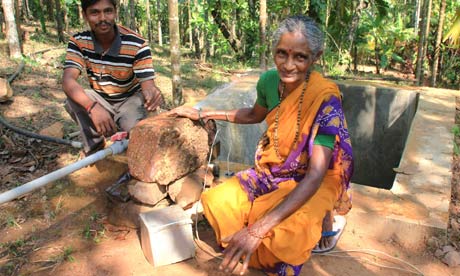
      A pico-hydro system financed by an loan from the SKDRDP microfinance firm in India. The company is calling for an end to fossil fuel subsidies. Photograph: Ashden awards

      Governments must end subsidies for fossil fuels and focus instead on supporting renewable energy sources, the executive director of an award-winning microfinance organisation said this week.

      Speaking to the Guardian, LH Manjunath, from Shri Kshetra Dharmasthala Rural Development Project (SKDRDP) in southern India, which provides consumer loans for energy projects, said: “Most fossil fuels are subsidised. The [Indian] government is spending millions on subsidies. It must stop all subsidies for fossil fuels and increase the number for clean energy.”

      His comments came as his organisation received a gold Ashden award at a ceremony in London on Wednesday evening. Five organisations received a total of £120,000 from Ashden, which each year acknowledges the work of “green energy champions” who are using local sustainable energy ideas to address climate change and tackle poverty. The prize money is used to help scale up the winners’ work. SKDRDP, which has provided nearly 20,000 loans for renewable energy projects in Karnataka state, was this year’s overall winner, winning a £40,000 prize.

      SKDRDP usually lends $300-400 (£190-250), which has a payback time of around three years. This can increase to 10 years depending on what the loan is used for. Typical weekly repayments are $3. Before taking out loans for energy projects – which could, for example, involve setting up a biogas plant that uses cattle dung to provide energy with reduced methane emissions – people have to show they have an income and are members of a “self-help” group. The organisation lends money to these groups, which then offer loans to members. Each member has to present a five-year plan of how they are going to spend the money. Interest rates are 18%. So far, the organisation has a 100% repayment record on energy loans.

      But although local solutions are important, Manjunath believes dramatic changes are needed on a national and global level to protect the environment and improve the lives of poor people. “It needs the willpower of governments to make it count,” he said.

      “The government makes it so difficult to get subsidies for solar energy in India. Loans by banks are subsidised, not from microfinance [organisations]. And who do the banks lend to? Rich people,” added Manjunath.

      Another Ashden award recipient, Tri Mumpuni, the executive director of the not-for-profit People-Centred Economic and Business Institute (IBEKA) in Indonesia, which works with communities to develop micro-hydro programmes that provide electricity, agreed that fossil fuel subsidies need to be cut. This year, Indonesia is spending $16.6bn on fossil fuel subsidies, she said. “We definitely have to reduce subsidies on fossil fuels. The money spent for renewable energy and fossil fuels is unbalanced.” Mumpuni added that she would like to see energy supplies decentralised to allow local resources to be better used.

      Mumpuni’s organisation has helped install 61 hydro schemes in Indonesia, which has provided electricity for 54,000 people and saves 7,400 tonnes of CO2 a year.

      However, Richenda Van Leeuwen, executive director of the UN Foundation’s energy and climate energy access initiative, who is spearheading the UN’s sustainable energy for all initiative, and was also in London this week, said she was “agnostic” about subsidies, recognising that some countries still need them. She said the Cook Islands can only use diesel to deliver energy, so the government needed to continue offering subsidies until it can move towards renewable sources.

      “We need to work with each country on specific issues. We need to ask: what are a community’s issues and needs? Rather than thinking one size fits all, we need to look at the local context,” she said, adding that both public and private sector investments need to be explored.

      All three agreed that June’s Rio+20 conference on sustainable development will offer a chance to explore new ideas, but Mumpuni and Manjunath stressed the need for politicians to take firm action. “If we are not all on the road towards sustainable development, we will face catastrophe,” said Mumpuni.