Author: admin

  • England faces wildlife tragedy as worst drought in 30 years hits habitats

    England faces wildlife tragedy as worst drought in 30 years hits habitats

    Wildlife trusts urge action to avoid loss of rare species and protect tadpole, wading bird and water vole populations

    • The Guardian, Monday 19 March 2012
    • Article history
    • Water vole

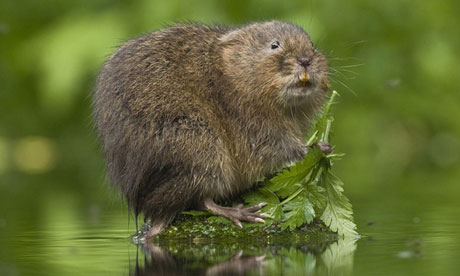
      Shrinking rivers and lower water levels in ditches and streams leave riverbank mammals, such as water voles, vulnerable to predators. Photograph: Terry Whittaker/PA/British Wildlife

      Tadpoles this spring will be facing more than the usual predatory threats of fish, birds and children with jam jars. Amid the worst drought in 30 years “a wildlife tragedy” is looming that could inflict a heavy toll on some of England’s best-loved species.

      As well as the risk of tadpoles of frogs, toads and rare species such as the great crested newt, dying if ponds dry out, pressure is growing on water voles and wading birds, and fish are already dying in numbers as habitats dry out, the Environment Agency warns.

      Agency staff have been removing fish from some ponds and rivers and placing them elsewhere, but this action is not feasible at every affected spot.

      Some once-common bird species, such as lapwings and curlews, whose populations have declined rapidly in recent years, could vanish altogether from smaller breeding sites, experts warn.

      Helen Perkins, of The Wildlife Trusts, said: “A wildlife tragedy is unfolding in parts of the country. After such a long period of low rainfall, some species may not recover and could be lost from some rivers and wetlands if we don’t act now.”

      Some areas of the country have suffered their driest 18 months since records began, and almost all of the east and south-east of England is now officially in a state of drought.

      At least seven water companies plan restrictions such as hosepipe bans, to come into force next month, and it is thought the drought could be felt as far north as Yorkshire and as far west as Wiltshire later in the spring. Water companies are looking at ways to share water, but transporting water over long distances is extremely difficult and costly.

      Only an extended period of much higher rainfall levels than normal could prevent a serious drought now, and the forecast is for a continuing dry spell.

      The soil is so dry in many parts of England that rainfall a fifth higher than normal would be needed to restore it. Many reservoirs are only half full after two dry winters. And rainfall from now on is less likely to recharge soils because more of the water will be lost to vegetation and less will stay in the ground.

      Caroline Spelman, the environment secretary, has called on households to save water. She said “The recent drought summit I held at my department highlighted the threats of a dry winter to various parts of the country, and it’s likely that more areas will follow Anglia into drought unless there is significant rainfall over the next few months.

      “We can all help reduce the effects of drought by being smarter about how we use water. Taking action now to reduce how much water we use will help us all in the future.”

      However, the picture is not uniform. Scotland, Wales and the far north of England, have still got good supplies of water, and South West Water, which serves Devon, Cornwall and parts of Dorset and Somerset, said it was “in a good position” with reservoir levels at 85% of normal.

      South West Water attributed its position to the upgrades made to the distribution network since the 1976 drought, the transformation of two china clay pits into reservoirs, and action on leakage.

      Other water companies, such as Thames Water, have come under fire for failing to fix leaking pipes.

      The Environment Agency said it was planning to help protect nationally important wildlife sites by altering the way it licensed organisations for the abstraction of water from rivers and underground sources – by allowing, for instance, higher pumping rates if any rainfall did occur.

      Some of the worst affected species will be water birds, which need wetland breeding sites and moist soils to probe for their food.

      Phil Burston, water policy officer at the RSPB, said: “Wading birds like lapwings, redshanks and avocets rely on shallow pools and boggy marshes. As we come into the breeding season, if these birds manage to breed at all, their chicks will need to feed on the insects that live close to the edge of pools. If [the ponds] dry up then the chicks will be forced to look elsewhere, putting them in danger.”

      He said snipe, redshank, lapwing, curlew and black-tailed godwit, were all species that had declined rapidly in numbers in recent years.

      Burston said that even the RSPB’s wetland reserves, which are carefully managed to preserve water and wildlife, would face difficulties. He predicted that outside the nature reserves the situation would become “desperate”.

      Dragonflies and other aquatic insects, on which birds and fish feed, are also among the likely victims, if streams, ponds and shallow lakes are dry before their larvae form. And shrinking rivers and lower water levels in ditches and streams expose the burrows of riverbank mammals, such as water voles, leaving these animals vulnerable to predators, such as stoats and weasels.

      Perkins blamed the loss of life on overuse of water. “We urgently need to change the way we use water at home and across businesses. Saving water now could save wildlife from an absolute disaster.”

  • IMF chief Christine Lagarde fears oil spike poses serious threat to global recovery

    IMF chief Christine Lagarde fears oil spike poses serious threat to global
    Telegraph.co.uk
    “The rising price of oil is a new threat that could derail the recovery. I think it is a major threat. “Optimism must not lull us into a false sense of security. The global economy may be on a path to recovery, but there is not a great deal of room for
    See all stories on this topic »

    Telegraph.co.uk
  • Railcorp improving updates for passengers on trains when delays occur

    Both Guards and Drivers have two way radios and are in contact with signal boxes. Most of our trains have communication systems fitted. I can see no reason why passengers cannot be kept informed. Train Controllers seated in front of an array of monitors upstairs at Sydney Terminal are very busy people. When the system fails they would be flat out to maintain services. There may be a problem there in getting info out to station/signal boxes etc. Transposition advices to trains running out of order is a very responsible business, requiring train controllers full attention. Perhaps staffing levels are not adequate in this section.

    RailCorp improving updates for passengers on trains when delays occur

    0
    RailCorp

    NSW Transport Minister Gladys Berejiklian. Picture: Justin Lloyd Source: The Daily Telegraph

    FRUSTRATED rail commuters caught up in major disruptions may soon have one less thing to complain about.

    RailCorp is overhauling the way staff update passengers sitting on trains and platforms, particularly when there are big delays across the network.

    Transport Minister Gladys Berejiklian yesterday said improving communication to passengers will reduce one of the biggest complaints people have when they are delayed.

    The so-called “passenger information improvement initiative” calls on the private sector to help RailCorp improve passenger information.

    “As part of a commitment to continually improve the way RailCorp delivers customer information, we are requesting information from the market on technology that will manage passenger data and deliver real-time, accurate, clear and useful service information to our customers where and when they need it, especially during disruptions,” a RailCorp spokesman said.

    9 comments on this story

  • L-Plater driver courses to slash 20 hours of practice under NSW cabinet approved plan

    Driving tests must be much more stringent and include a phychological assessment before issuing drivers licences. We are seeing incidents with P/Platers where other responsible drivers and their passengers are being killed or maimed. Perhaps the licensing age is too young

    L-plater driving courses to slash 20 hours of practise under NSW cabinet approved plan

    1
    L-plate

    Major change for L-plate drivers to be announced. Picture: Dave Highet Source: The Daily Telegraph

    LEARNER drivers can practise for 20 hours less – if they take a safe driving course, the government will announce today.

    State cabinet has approved a policy that allows L-platers under 25 to cut their practice hours from 120 to 100 if they finish the optional course successfully.

    The course is being developed by a board of road safety and education experts, chaired by VicRoads former director of road safety Eric Howard.

    Are you on your Ls? Are you the parent of someone on their Ls? What do you think of the changes? Drop us a line at news@dailytelegraph.com.au

    It is expected to be made up of five hours of combined on-road training and classroom education and will focus on safe driving practices as well as driver attitudes.

    The proposal was mooted before the state government came to power and yesterday Roads Minister Duncan Gay said he was pleased the government was on its way to developing the course.

    “Sadly young people are over represented in fatalities related to speeding and poor decision making while driving,” he said.

    “This will give young and inexperienced drivers the opportunity to have hands-on practice with experienced instructors.”

    The policy approved by cabinet said the course’s design would be based on recent road safety research, and would be available across NSW.

    L-platers under 25 currently have to log 120 hours of driving before they can qualify for their red P-1 licence.

    The Auditor-General has found the number of fatal crashes involving young drivers has gone down since learner drivers were made to graduate from their L, P-1 and P-2 licences before getting a full licence. The auditor-general also found high-risk behaviour in young drivers contributed to their over-representation in fatal crashes.

    The government estimates that 95,000 learner drivers would be eligible for the safe drivers course each year.

    Learner drivers are currently able to reduce their log-book hours by completing structured classes with an instructor.

    A one-hour lesson with a certified instructor is the equivalent of three hours practice with parents, family members or other holders of a full licence.

    But under the scheme, announced by the previous government in December 2009, L-platers can only use this method of fast-tracking their experience for up to 10 lessons.

    The latest policy was approved by cabinet after research showed some risks taken by young drivers were about bad choices, not driving skill.

    That is why the government has said the safe driving course would also be about changing attitudes as well as enhancing on-road skills.

    About 43 per cent of drivers under 26 are found to have been speeding when involved in fatal crashes, compared with 23 per cent of drivers aged over 26.

    Mr Gay said the board of safety experts would report back on its findings by August.


  • Tourist influx a danger to fragile outback: scientist

    Tourist influx a danger to fragile outback: scientist

    Updated March 19, 2012 09:02:57

    An ecologist is warning of potential environmental risks from an expected influx of tourists to the Lake Eyre region of outback South Australia.

    The visitors are expected to be drawn by another flooding of the often-parched region.

    Director the of the Australian Wetlands and Rivers Centre, Professor Richard Kingsford, says the area is vast but vulnerable from the effects of tourism.

    “People love to get out there and make a campfire beside the billabong, but every time someone comes they chop down a little bit of wood or pick up firewood that’s habitat for animals and some of the other microscopic animals that are in the system and rely on those areas,” he said.

    “We do tend to push the environment hard when we go to these spectacular places.”

    He said the remote outback would face other potential risks such as a spread of feral species.

    “Things like cane toads are on their way down through the northern part of the basin and pigs, and a range of plants that are really problematic,” he said.

    There was torrential rain across the outback more than two weeks ago.

    Topics:environmental-impact, environment, tourism, travel-and-tourism, lifestyle-and-leisure, rural-tourism, rural, floods, sa, port-augusta-5700, marree-5733, port-lincoln-5606, port-pirie-5540, renmark-5341

    First posted March 19, 2012 08:52:24

  • Antony Green’s Queensland Election Blog

    March 16, 2012