Author: admin

  • Land grab in Mali forces local farmers off their land

    Land grab in Mali forces local farmers off their land

    Ecologist

    4th December, 2009

    Local population evicted as Mali sells long-term leases on large tracts of agricultural land to Libyan company

    A Libyan agribusiness has bought the farming rights for 100,000 hectares of land in northern Mali.
     
    The deal is part of the Malian government’s strategy to promote private investment in rice production and includes the construction of a 40km irrigation canal.  
     
    But the region’s farmers are concerned that the deal will have negative consequences for their livelihoods.

    Under the agreement, Malibya, a subsidiary of a Libyan sovereign wealth fund, has been granted a 50-year lease to the land in the Office du Niger region.
     
    Lamine Coulibaly, of Coordination Nationale des Organisations Paysannes (CNOP), an umbrella organisation representing the interests of farmers, said the agreement was driven by Libya’s concerns over food security.
     
    ‘Libya is dependent on multinationals for agricultural products. Following the example of other Arab countries, projects like this in Office du Niger are an attempt to end this dependency,’ he said.
     
    Land grab or opportunity?
     
    Mali’s Agricultural Minister Agatham Ag Alassane said that Mali had no choice if is going to feed its own population.
     
    ‘Our concern today is to modernise agriculture, especially rice cultivation. To do this, we need a lot of resources and a lot of land. We cannot give a tractor to a small producer who would use it on two or three hectares; that would be a waste,’ he is reported as saying.
     
    CNOP said the local population were already being evicted from their land.
     
    ‘The Chinese company contracted to build the canal has started work on the demolition of 150 houses.  Other families have had their gardens destroyed along with all the food that they grow. So far there has been no compensation,’ said Coulibaly.
     
    Competition for water
     
    Local farmers are expected to receive compensation in the form of irrigated land but there are fears that large-scale rice production by Malibya will mean they lose out on water.
     
    ‘The project will increase competition for the waters of the river Niger, the most important irrigation resource in the country,’ said Coulibaly.
     
    He added that Malibya had entered into negotiations to have priority over water resources in the low season, when water supplies are weak.
     
    Roger Wilson, of the World Land Trust, expressed concern at the apparent lack of transparency in the agreement being made.
     
    ‘This is a strategic decision with a 50 year lock-in. There needs to be more information about the social and environmental ramifications of this project.’

    Useful links
    CNOP
    World Land Trust

  • Climate guru to boycott Copenhagen


    Dr Hansen, 68, was one of the first voices to raise the alarm about rising global temperatures in the early 1980s, forecasting correctly that the planet would warm in the coming decades.

    Next week he publishes his first book, Storms of my Grandchildren, warning that “our planet, with its remarkable array of life, is in imminent danger of crashing” and declaring, “It is our last chance.” He decries the cap-and-trade system envisaged by governments as ineffective in stemming carbon emissions. Under such systems, governments set limits on overall emissions and polluters trade quotas among themselves.

    “The fundamental problem is that fossil fuels are the cheapest form of energy. As long as they are, they are going to be used,” he said. “It’s remarkable. They refuse to recognise and address the fundamental problem and the obvious solution.”

    He dismisses government announcements of national targets for greenhouse gas emissions as promises that will not be kept.

    It would be better for the Copenhagen summit to fail rather than reach the type of cap-and-trade-based system envisaged, he said. “If they sign on to anything like they are talking about then it’s definitely counter-productive. Any time you start down that path, it’s time wasted. We would do better taking a year time-out and figuring out a better path.”

    Dr Hansen, adjunct professor at Columbia University’s Earth Institute in New York, says the only way to control global warming is through a carbon tax. “We are going to have to move beyond fossil fuels at some point. Why continue to stretch it out?” he said.

    “The only way we can do that is by putting a price on carbon emissions. The business community and the public need to understand that there will be a gradually increasing price on carbon emissions.” He proposes that carbon tax revenues be returned directly to the public in the form of a dividend.

    He also believes that the world must be prepared to abandon coal unless its emissions are captured.

  • Copenhagen climate change talks must fail, says top scientist


    “The whole approach is so fundamentally wrong that it is better to reassess the situation. If it is going to be the Kyoto-type thing then [people] will spend years trying to determine exactly what that means.” He was speaking as progress towards a deal in Copenhagen received a boost today, with India revealing a target to curb its carbon emissions. All four of the major emitters – the US, China, EU and India – have now tabled offers on emissions, although the equally vexed issue of funding for developing nations to deal with global warming remains deadlocked.

    Hansen, in repeated appearances before Congress beginning in 1989, has done more than any other scientist to educate politicians about the causes of global warming and to prod them into action to avoid its most catastrophic consequences. But he is vehemently opposed to the carbon market schemes – in which permits to pollute are bought and sold – which are seen by the EU and other governments as the most efficient way to cut emissions and move to a new clean energy economy.

    Hansen is also fiercely critical of Barack Obama – and even Al Gore, who won a Nobel peace prize for his efforts to get the world to act on climate change – saying politicians have failed to meet what he regards as the moral challenge of our age.

    In Hansen’s view, dealing with climate change allows no room for the compromises that rule the world of elected politics. “This is analagous to the issue of slavery faced by Abraham Lincoln or the issue of Nazism faced by Winston Churchill,” he said. “On those kind of issues you cannot compromise. You can’t say let’s reduce slavery, let’s find a compromise and reduce it 50% or reduce it 40%.”

    He added: “We don’t have a leader who is able to grasp it and say what is really needed. Instead we are trying to continue business as usual.”

    The understated Iowan’s journey from climate scientist to activist accelerated in the last years of the Bush administration. Hansen, a reluctant public speaker, says he was forced into the public realm by the increasingly clear looming spectre of droughts, floods, famines and drowned cities indicated by the science.

    That enormous body of scientific evidence has been put under a microscope by climate sceptics after last month’s release online of hacked emails sent by respected researchers at the climate research unit of the University of East Anglia. Hansen admitted the controversy could shake public’s trust, and called for an investigation. “All that stuff they are arguing about the data doesn’t really change the analysis at all, but it does leave a very bad impression,” he said.

    The row reached Congress today, with Republicans accusing the researchers of engaging in “scientific fascism” and pressing the Obama administration’s top science adviser, John Holdren, to condemn the email. Holdren, a climate scientist who wrote one of the emails in the UEA trove, said he was prepared to denounce any misuse of data by the scientists – if one is proved.

    Hansen has emerged as a leading campaigner against the coal industry, which produces more greenhouse gas emissions than any other fuel source.

    He has become a fixture at campus demonstrations and last summer was arrested at a protest against mountaintop mining in West Virginia, where he called the Obama government’s policies “half-assed”.

    He has irked some environmentalists by espousing a direct carbon tax on fuel use. Some see that as a distraction from rallying support in Congress for cap-and-trade legislation that is on the table.

    He is scathing of that approach. “This is analagous to the indulgences that the Catholic church sold in the middle ages. The bishops collected lots of money and the sinners got redemption. Both parties liked that arrangement despite its absurdity. That is exactly what’s happening,” he said. “We’ve got the developed countries who want to continue more or less business as usual and then these developing countries who want money and that is what they can get through offsets [sold through the carbon markets].”

    For all Hansen’s pessimism, he insists there is still hope. “It may be that we have already committed to a future sea level rise of a metre or even more but that doesn’t mean that you give up.

    “Because if you give up you could be talking about tens of metres. So I find it screwy that people say you passed a tipping point so it’s too late. In that case what are you thinking: that we are going to abandon the planet? You want to minimise the damage.”

    • James Hansen’s book Storms of My Grandchildren is published by Bloomsbury, £18.99

  • Copenhagen climate change talks must fail, says top scientist

    Copenhagen climate change talks must fail, says top scientist

    Exclusive: World’s leading climate change expert says summit talks so flawed that deal would be a disaster

    James Hansen

    ‘We don’t have a leader who is able to grasp [the issue] and say what is really needed. Instead we are trying to continue business as usual,’ say James Hansen. Photograph: Gareth Fuller/PA

    The scientist who convinced the world to take notice of the looming danger of global warming says it would be better for the planet and for future generations if next week’s Copenhagen climate change summit ended in collapse.

    ” + __flash__argumentsToXML(arguments,0) + ““)); }” s_getversion=”function () { return eval(instance.CallFunction(“” + __flash__argumentsToXML(arguments,0) + ““)); }” s_getmovieid=”function () { return eval(instance.CallFunction(“” + __flash__argumentsToXML(arguments,0) + ““)); }” s_getpageurl=”function () { return eval(instance.CallFunction(“” + __flash__argumentsToXML(arguments,0) + ““)); }” s_getpagename=”function () { return eval(instance.CallFunction(“” + __flash__argumentsToXML(arguments,0) + ““)); }” s_getaccount=”function () { return eval(instance.CallFunction(“” + __flash__argumentsToXML(arguments,0) + ““)); }” s_gettrackclickmap=”function () { return eval(instance.CallFunction(“” + __flash__argumentsToXML(arguments,0) + ““)); }” s_getdomindex=”function () { return eval(instance.CallFunction(“” + __flash__argumentsToXML(arguments,0) + ““)); }” s_getswfurl=”function () { return eval(instance.CallFunction(“” + __flash__argumentsToXML(arguments,0) + ““)); }” returntype=”javascript” name=”name”>

  • An Exclusive Look at the New Siemens 3-MW Direct Drive Turbine

    — Henrik Stiesdal, CTO, Siemens

    Proof of Concept

    The first concept prototype was erected in July 2008 and a second in March of this year. The most important functional aspect of this “Proof of concept” test trial was exchanging the gearbox and generator of a conventionally geared 3.6-MW SWT-3.6-107 with a direct-drive generator. The concept turbine drive system also includes a rotating main shaft supported by two bearings, whereby the upwind rotor is located in front and the generator behind the tower.

    Since the test set-up essentially includes only one main variable, a scientifically sound drive-system comparison can be conducted. Stiesdal said that these two machines have proved themselves faster than expected, including a high availability almost from day one and trouble-free operation of the generators with operating temperatures remaining favurably modest.

    Stiesdal explained that the “main lessons learned underline the long process required from [the] ideas phase to a “Proof of concept” machine. Secondly, the optimization required cost calculation models that are not readily available.”

    He said that the company “discovered that relevant and competent generator suppliers originate from ‘Design to Project’ practices, and not from parties focused at ‘Design to Manufacture.’ All of this took time to get aligned.

    System Layout

    The new highly compact 3-MW IEV WC IA turbine features a 101-metre rotor diameter and a cylindrically shaped nacelle. Visually the turbine is characterized by a large prominent cooling radiator unit located at the nacelle rear, while the characteristic long and tapering Siemens nose cone has been exchanged for a substantially shorter solution.

    A key conceptual difference with the concept turbine is that the annular generator has moved to the front of the tower. This direct-drive system layout is also taken from (earlier) turbine models that were developed by direct drive pioneers like Enercon and Vensys of Germany and former Lagerwey/Zephyros of the Netherlands.

    The main structural element of this 3-MW Siemens direct-drive system is a cast main carrier accommodating eight yaw motors, whereas the generator and rotor assembly as a unit are bolted to its inclined vertical mounting flange. Furthermore, a hollow stationary main pin with the main bearings is an integral part of the generator assembly and provides easy (service) access to the rotor hub internal workings. Both the rotor hub and rotor blades originate from the 2.3-MW SWT-2.3-101 turbine model.

    Inverted Generator

    For this turbine Siemens worked together with partners to develop a new fully enclosed liquid-cooled permanent magnet type generator. Siemens Large Drives based in Berlin, Germany, provided the generator for the prototype for the turbine prototype but in the future there will be additional suppliers.

    The electric machine itself is, in power-engineering terms, known as an inverted radial-flux generator. A key difference with “conventional” radial-flux generators is that the generator-rotor with its magnets facing inside now turns around the stator part. As a consequence this 2-plus-meter-long generator-rotor is directly exposed to the outside environment, and represents a substantial section of total nacelle length.

    Stiesdal explained that there were a number of specific reasons for choosing the inverted generator layout: “Annular generators are by definition big in size, which puts high demand on structural component stiffness, and that in turn is necessary for guaranteeing a constant air gap retention between generator-rotor and stator.”

    He further explained: “adding sufficient structural strength to the stator of a conventional generator by definition results into a substantial outside diameter increase, which potentially contributes to more complex transport logistics. With an inverted generator by contrast, ample space is available for adding stator support structure towards the centre. Our comparative concept analysis clearly showed that inverted generators can be built more compact compared to conventional radial flux equivalents.”

    Lightning Protection

    The compact nacelle cover with integrated lightning protection is further fitted with an onboard crane for easier heavy component exchange, including yaw motors, hydraulic pitch parts, etc. Components as well as people (in case of an emergency) can be lowered to the ground through a hatch located in the nacelle cover’s rear section. Main power electronics, including power cabinets, a full converter and a medium-voltage transformer, are all located at three levels in the tower foot similar to the 2.3-MW turbine series arrangement.

    When asked why Siemens had chosen a new 3-MW class direct-drive turbine, Stiesdal commented: “Some initial findings indicated that the costs per unit of torque (Nm) decrease when power rating goes up and that at a 3.6-MW rating [the] break-even point seems likely. Our expectations were therefore that a direct-drive concept mainly offers a commercially viable alternative for large offshore turbines. However, we now have sufficient indications that the concept might also be feasible for the high-end high-volume market, and do hope that this machine will prove competitive with our 2.3-MW volume turbine series.’

    Early in 2010 Siemens will begin an assembly-line system for the 2.3-MW and 3.6-MW series, the major benefits of which are expected to be substantially reduced assembly time per turbine and optimized factory floor utilization.

    Added Value

    Another key issue Stiesdal explicitly addressed is what a direct-drive solution can offer in terms of added value to customers. He explained that all manufacturers “feel the heat” of press reports on gearbox failures, but also stressed that his company has successfully built geared wind turbines since 1980.

    Stiesdal quoted the results of a 2008 survey on a substantial number of (former Bonus) turbines installed during the mid 1980’s in California. He said that even after more than 20 years, “96% of these installations were still running well.”  He also said that the systems were so reliable that the company was able to reduce service time from twice per year to only once per year.

    So while it is evident that geared turbines will remain a reliable, competitive alternative for many years to come, it’s important to note that a switch to direct-drive reduces the number of turbine components by 50%. This will make it easier to convince customers of the long-term income stability on their capital investment not to mention that 50% fewer parts to handle also turns into a real cost advantage during high-volume turbine manufacture. 

    Offshore Applications

    Siemens currently has more 450 of the upgraded 3.6-MW SWT-3.6-120 turbines on backlog. In the future Siemens will offer the new 3-MW turbine model for offshore applications, but only after successfully completing a rigorous product testing and optimizing period followed by a careful series production ramp-up.

    Stiesdal said that, “at this moment it is far to early to elaborate on 3-MW series production timing, as we first want to see how the turbine performs in the field. That is the way we always did it, and know based upon these experiences that there will always be issues with a new turbine model, smart design concepts included.”
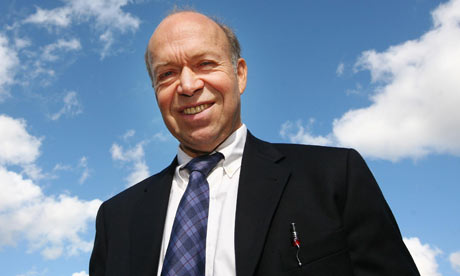
    Image Gallery (3)
     
  • Carbon trading is not enough to tackle climate change


    Shell’s chief executive, Peter Voser, was quoted as calling on governments to introduce a carbon tax or a minimum price for CO2 because “the ETS [emissions trading scheme] was failing to deliver sufficient incentives to kickstart expensive technologies such as carbon capture and storage”. This lack of incentive comes about because if industry surpasses expectations by cutting emissions far below the cap set within the ETS, or if the cap is unambitious, the price of carbon will be low and return on low-carbon investment reduced. This is exactly what has happened during this recession, where an economically induced reduction of emissions has caused the price of carbon to plummet.

    Emissions caps have an advantage over a carbon tax as they should guarantee emission levels are reduced at a specified rate. But, without a minimum price for CO2, they provide very little incentive to industry as a whole. Policies should encourage industry to reduce emissions as much as possible, not just to the level of the cap – which, if achieved, would still leave a good chance of dangerous climate change.

    Vincent de Rivaz, chief executive of EDF Energy, “warned of the dangers of a ‘sub-prime’ crisis inside the ETS if complex financial instruments were created by market participants”. There could indeed be a crisis, not because of the complexity of the financial instruments, but rather because of the quality of the underlying carbon credits. The EU common agricultural policy (CAP) gives us a great example of how large regional policies can be abused.

    The article also states that John Browne, “a former boss of BP and an early ETS promoter, has also expressed reservations about such schemes, saying it was ‘wrong’ to place all your faith in them”. He is entirely correct. Globally, where the greatest strides have been made in climate and energy policy, carbon markets have not played a role. Instead, government intervention and planning (such as in the Danish and now Chinese energy sector), guaranteed return on investment (such as through “feed in tariffs” for renewables in Germany and elsewhere), and heavy regulation of the energy sector (as in California’s energy efficiency improvements) have been key. My experience with UK industry was that any substantive decarbonisation was as a result of high energy costs and more direct policies such as the Renewables Obligation.

    Copenhagen will undoubtedly envisage a role for emissions trading. However, its shortcomings must be addressed and its limitations acknowledged through a commitment from all countries to a broad range of other policy measures.