Author: Geoff Ebbs

  • Who drove India’s play for a cashless society

    Who drove India’s play for a cashless society

    Over the course of 2017, India made a vigorous attempt to drive its diverse population toward a cashless society. Prime Minister Modi was regularly quoted as claiming that it would support his overall objective to reduce corruption and improve transparency in the economy. This is widely seen to have failed.

    Arguments abound about the pros and cons of the cashless society but the most vigorous have been that it was an attack on the poor who are least equipped to move away from traditional payment methods. The Conversation, for example, published a detailed analysis of the impact on the poor using the example of a local recycling business, among others, to prove the point.


    Indians stand in a queue outside a bank to withdraw cash in Ahmadabad, India, in December. AP Photo/Ajit Solanki

    Naturally, there was a geopolitical dimension to the move, with US organisations assisting the Indian government to implement and promote the policy in an attempt to thwart Chinese influence in India. One of the best researched and reasoned of these pieces appeared in Global Research in January 2017, two months after the initial move by Mobi’s government, then republished with more evidence in November.

    For the purposes of this article, the significance is that the drive to a cashless society is certainly convenient for customers, and can be sold as a method for creating greater transparency in the economy but it ultimately shifts power toward those who control the financial system, whether that is a national government or international financial corporations.

    As an informed customer, you need to decide, do you support the centralisation and automation of transactional data on the basis of your personal convenience, or do you resist such centralisation in the interests of privacy and independence. Of course, there is the separate argument that the system we are building goes well beyond individual concerns and we should all participate in the matrix for the greater good. Just be sure you have your blue pill before you make the decision.

  • Birth of a Classic

    Birth of a Classic

    Birth is a messy, painful reminder that life itself is torn from the earth at great cost. Birth is not a generally considered a comfortable spectator sport.

    Packaging the darkness that is the wasteland at the heart of this play in a romcom is a stroke of genius that allows us as an audience to enjoy the visceral excitement of new love in a world with plenty of dark corners.

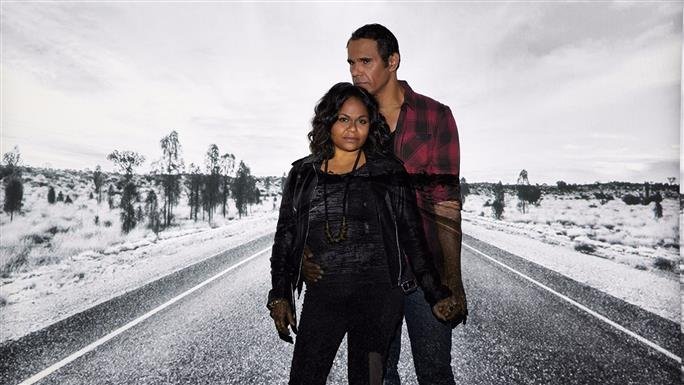
    There is nothing messy or painful about the production of Heart is a Wasteland premiered at the Malthouse in Melbourne last night, except the content itself. Despite this, a classic is born. This has a long and rich life ahead of it. This production will run as long as the principals can bear it. It will tour, it will become a standard of Australian repertory theatre and will dominate school curricula to come. Despite, or possibly because of,  its powerful anchoring in the Australian outback it has international appeal well beyond its stark and realistic portrayal of life for the First Nation people of this ancient land.

    Brother and sister team, John and Elizabeth Harvey have created a classic two hander play powerfully presented by two of Australia’s most brilliant actors, Aaron Pedersen and Ursula Yovic.

    They are brilliant.

    Ursula Yovich is powerful, sexy and grounded in the way that leaves men with their mouths flapping helplessly, their groins swelling hopefully and their hands searching desperately for something to do. As Rae the travelling troubadour, she delivers five very different songs throughout the play, providing welcome emotional release, evoking and summing up the deep and dark emotions that have been brought to a head by the tight, raw and refined script. The immediate concerns of motherhood, survival and respect are complemented by a commentary on the politics of nuclear testing, environmental destruction and economic disempowerment.

    It is a rich but familiar combination and the perfect complement to the stubborn, here and now, man of few words played by her co-star.

    Aaron Pedersen’s muscular, brooding performance as Dan has brought forth inevitable Brando comparisons but he embodies a back story far deeper and darker than Stan Powolski’s migrant experience of industrial America. His fine grained depiction of the emotional underpinnings of domestic violence is triggering, illuminating and scarifying all at once. Of course, the slow burning rage of cultural frustration and disempowerment is a universal story and Australia’s First Nation people experience all three in spades.

    The production might be a well-oiled machine but the birth of a new love is messy, dangerous and exciting. The close up focus on the two very different characters falling for each other is a traditional way to tell it. It is the trope of romantic comedy from Much Ado about Nothing to Moonlit. Isolating the love affair in a road trip, a remote location and a constrained time period is not new either. The Scottish Midsummer  is a recent example of a two hander play built around the lost weekend. It also combines music and drama in a manner not dissimilar to Heart is a Wasteland.

    The standout differentiator for this little black duck, however, is the deft way in which Heart is a Wasteland combines the personal and the political. Rae’s reflections on Maralinga are more didactic than theatrical but they are delivered from the passenger seat in precisely the manner one might expect an Aunt, brother or new girlfriend to deliver them.

    Her critique of Dan’s work for the mining companies is the real conversation going on around the barbecues and dinner tables of thousands of homes across the post-Colonial world. Her naming and shaming of the transactional nature of men’s approach to sex caused groans, laughter and a ripple of uncomfortable shifting through the audience.

    This is real life, extracted to an essence, synthesised into something very, very powerful and then delivered to us as a full meal with entrée, main and dessert.

    If you are in Melbourne this month you have a unique opportunity to witness the birth of a classic, close up and personal. No doubt, you will have plenty of opportunities to see the play again but you can only witness its birth once. I was very, very lucky to be present at its Premiere, but that is another story.

  • ORIC puts land ownership back in the hands of the people

    ORIC puts land ownership back in the hands of the people

    ORIC puts land back in the hands of the people
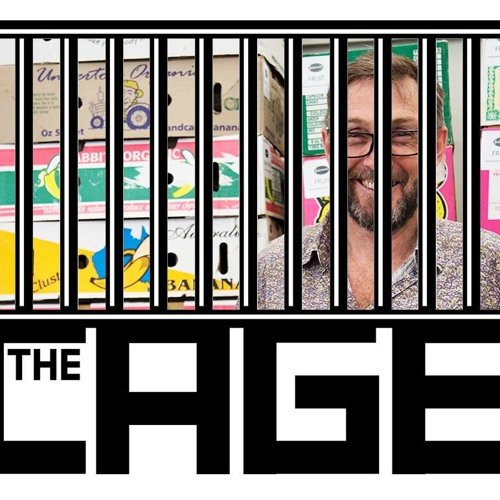
    Robert Pekin in the Cage to discuss ORIC

    Hot on the heels of the announcement of new laws allowing start up companies to seek investment via crowdsourcing an investment vehicle for organic agriculture has been launched.

    The Organic and Restorative Investment Coop, known as ORIC, will be launched in Melbourne next month.

    The aim of the Coop is to facilitate investment into agriculture that offers a fair price to farmers and nurtures the ecology that supports us all. The new crowd-sourced equity funding laws allow individual investors to put up to $10,000 into a company raising less than $5 million.

    A full interview with board member Robert Pekin is available on Soundcloud. Fundamentally, Robert tells Geoff that ORIC is a method for putting land ownership back in the hands of the people, thereby reversing the current trend of denuding the landscape of people and destroying community and human scale agriculture.

  • French government threatens the Autonomous Zone

    French government threatens the Autonomous Zone

    ZAD protestors
    ZAD protesters have successfully fought off 1,000 militarised gendarmes

    In the lead up to the French Presidential election, the French government has promised to destroy a rebellious community of 2000 activists that have squatted for eight years on the site of a proposed airport in Nantes. Known as ZAD, the Zone to Defend, the movement has inspired a range of protests against useless development across Europe. ZAD has its own farms, bakery and radio station and is home to 200 permanent residents and houses up to 2,000 people. It survived 2012 eviction attempt mounted by 1,000 armed police with helicopters and military equipment. With renewed threats to their existence, the Zadistes have begun publishing internationally in an appeal for broad support.


    The ZAD: An Autonomous Zone in the Heart of France

    It all started decades ago with the local resistance against the construction of a second airport near the city of Nantes in western France. Eight years ago, this resistance culminated in the establishment of a self-organized autonomous zone, commonly known as the ZAD

    http://www.truth-out.org/news/item/39531-the-zad-an-autonomous-zone-in-the-heart-of-france

    https://en.squat.net/2016/09/02/notre-dame-des-landes-france-defend-the-zad-a-call-for-international-solidarity/#more-17604

    https://newint.org/blog/2016/10/21/after-calais-france-to-evict-europe-biggest-anti-airport-protest/


  • UK reels from climate induced food rationing

    UK reels from climate induced food rationing

    Empty UK supermarket shelves
    Empty UK supermarket shelves have business and policy makers worried

    Fresh vegetables were rationed across the UK this month due to climate chaos in Southern Europe. Lettuces, zucchinis and broccoli were rationed and prices rose to four times their normal level. The shortage was exacerbated by uncertain trading arrangements due to Brexit. UK supermarkets have embarked on a program of culling fruit and vegetables that are increasingly difficult to grow in areas with ongoing water shortages. The events have revealed the multiple challenges to global trade from water shortages, climate chaos and protectionism reinforcing the need to support local produce. Australia is extremely vulnerable to such events. The nation has been a net importer of fresh fruit and vegetables since 2003, a fact masked by our large grain and meat exports.

    Will we still be able to feed ourselves as the climate get hotter? Australia is a net importer of fresh food – The supermarket food gamble may be finished 

    In the past 40 years, a whole supermarket system has been built on the seductive illusion of Permanent Global Summer Time. A cornucopia of perpetual harvest is one of the key selling points that big stores have over rival retailers. But when you take into account climate change, the shortages in the UK look more like a taste of things to come than just a blip.

    https://www.theguardian.com/commentisfree/2017/feb/20/supermarket-food-gamble-brexit-climate-migrant

    http://www.independent.co.uk/life-style/food-and-drink/courgette-shortage-uk-vegetable-shortage-cold-weather-ispain-italy-europe-continent-a7533236.html

    http://www.telegraph.co.uk/business/2017/02/03/causing-2017-vegetable-shortage-does-mean-consumers/

    Strange fruit

    The rapid rise of the farmers’ markets, home-delivery vegetable boxes and the resurgence of farm shops.

    https://www.theguardian.com/lifeandstyle/2002/sep/07/foodanddrink.shopping

    http://www.smh.com.au//breaking-news-national/australia-a-net-importer-of-food-20101027-173kl.html

    http://www.growcom.com.au/horticultures-vulnerability-must-be-acknowledged-by-government/


  • Norway stumps up $10million to counter US gag-rule

    Norway stumps up $10million to counter US gag-rule

    Erna Solberg
    Norway’s Prime Minister Erna Solberg

    Norway has just donated $10 million US dollars to the international campaign to provide family planning services for the world’s most vulnerable women in response to the US Republican Party’s global-gag-rule. The fund was started by the Netherlands and has commitments from Sweden, Denmark, Belgium, Luxembourg, Finland, Canada, and Cape Verde. The US gag-rule removes international aid funding from any group that provides or promotes family planning services. It has been enacted by every US president since Reagan, and subsequently repealed by each Democrat president. The current administration has deepened the cuts, defunding any organization that refers women to family planning services. Australian Foreign Minister, Julie Bishop has also defied the rule.

    Norway pledges $10 million to counter Trump’s global anti-abortion move

    Norway has joined an international initiative to raise millions of dollars to replace shortfalls left by U.S. President Donald Trump’s ban on US-funded groups worldwide providing information on abortion. In January, the Netherlands started a global fund to help women access abortion services, saying Trump’s “global gag rule” meant a funding gap of $600 million over the next four years, and has pledged $10 million to the initiative to replace that. Sweden, Denmark, Belgium, Luxembourg, Finland, Canada and Cape Verde have all also lent their support.

    http://www.reuters.com/article/us-usa-trump-norway-abortion-idUSKBN15Z1KL

    https://www.msn.com/en-us/news/other/norway-to-spend-dollar10m-combatting-trumps-anti-abortion-gag-rule/ar-AAn9jPH