NY Times picture of Dr Willerslev at his Institute
DNA studies of First Nations people in Papua and Australia confirm mounting archeological evidence that the First Australians are the oldest civilisation on Earth.
One of four studies on human ancestry published in Nature this week, the study by Prof Eske Willerslev of the University of Copenhagen shows that these groups arrived on the continent about 50,000 years ago and remained almost entirely isolated until around 4,000 years ago.
“They are probably the oldest group in the world that you can link to one particular place,” said Willerslev.
The founder of Permaculture and advocate for sustainable cities and food systems, Bill Mollison died last Saturday. Permaculture is a system of growing food that requires minimum energy, water and fertilizer and works with nature
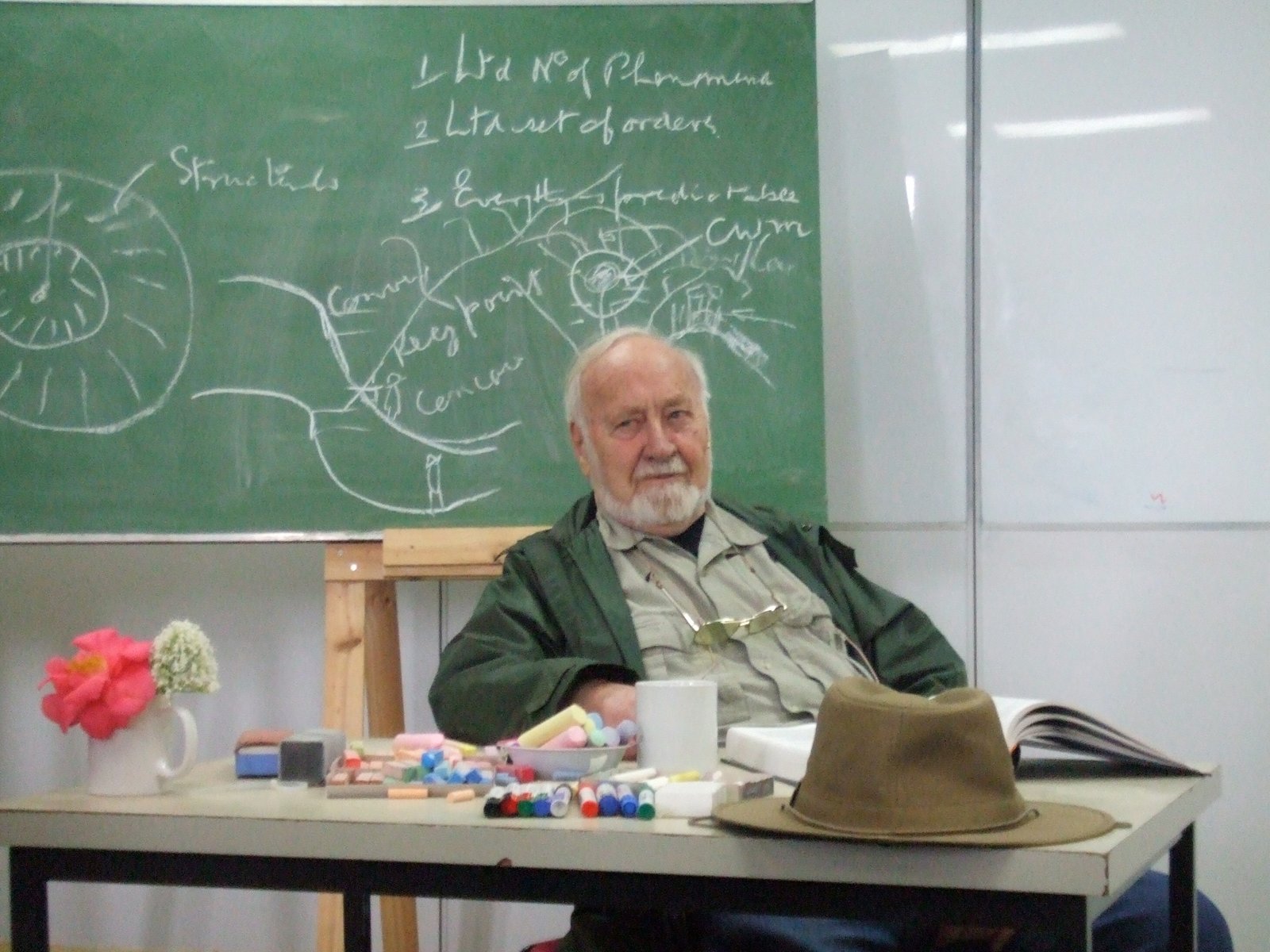
Founder of Permaculture, Bill Mollison, at his research institute in Tasmania
to reduce the ecological impact of feeding humans.
It has also been applied to greening the desert in places as diverse as the south-western prairies of the USA and the deserts of the Middle East.
Born in Tasmania, Bill Mollison founded the permaculture movement over forty years ago and has been instrumental in countering the industrial approach of corporate agribusiness.
From the official statement of the Permaculture Research Institute at the request of his widow Lisa Mollison
With deep sorrow, we wish to inform family and friends that Bruce Charles “Bill” Mollison, the “Father of Permaculture,” has passed away. He departed peacefully from this world in Hobart, Tasmania, just before 11 pm AEST, on the 24th of September, 2016.
After founding Permaculture Institute in 1978, he formalized the training of practitioners, which directly impacted hundreds of thousands of lives, and indirectly many millions more. For his service to humanity, he was honored with numerous awards, including the Right Livelihood Award in 1981. But of all the accolades he received, the one he was most proud of was the Vavilov Medal, in large part due to the tenacity, courage, and contributions of the award’s namesake, who Bill considered a personal hero. Bill was also the first foreigner invited and admitted to the Russian Academy of Agricultural Sciences.
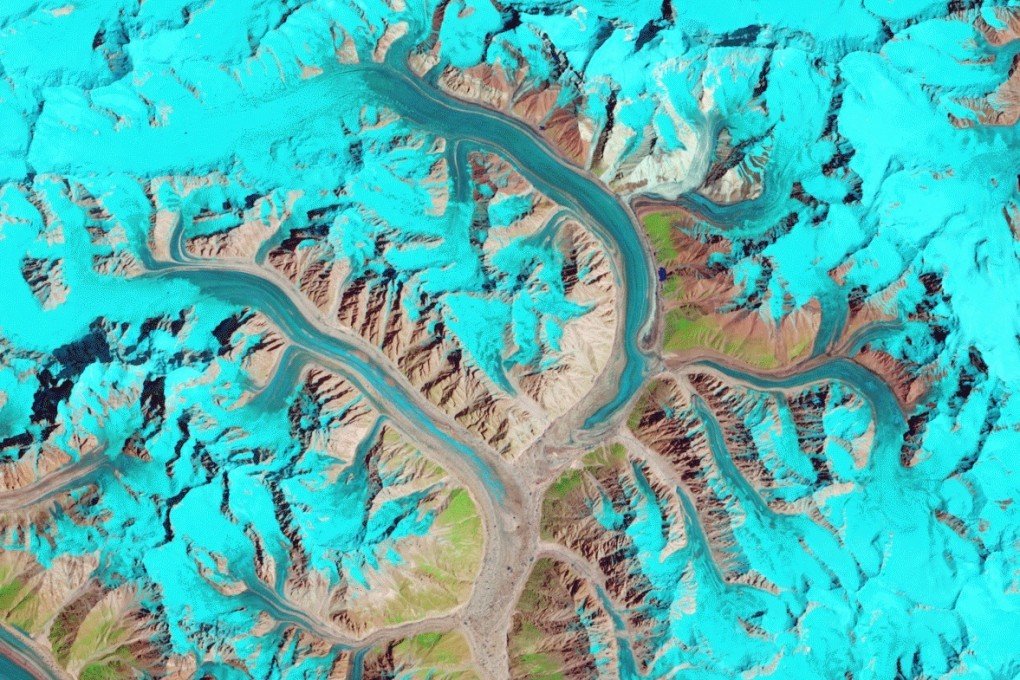
Glaciers in Central Asia are melting fast as temperatures rise at double the speed to those at sea level.
The rapid melting of glaciers in the so-called Third Pole located in the Himalayas and Central Asian mountains threatens the long term survival of billions of people across Central and Southern Asia.
The melting is due to a 1.5 degree increase in surface temperature and will increase flows in the Mekong, Yellow, Yangtse, Ganges and Indus rivers over the next decade after which it will begin to slow again. The area is known as the Third Pole because it contains as much frozen water as the North and South pole.
Glaciers on the Western side of the mountains appear to be unaffected to due increased precipitation being blown East from Europe.
Local herdsmen in Western China are already being re-located as climate refugees due to the changes in the landsape caused by the increased volume of water, warmer weather and lack of snowfall.
Crisis at the Third Pole
At the top of the world a climate disaster is unfolding that will impact the lives of more than 1 billion people. The real worry is the melt will set off a chain of climate disasters like the recent epic floods in Pakistan and China, or unprecedented heatwaves in India, or increasing desertification across the region. And the deeper concern is that while scientists know the changes in the Third Pole will affect global weather patterns such as monsoons and the El Nino, they don’t know by how much. And in a region where tension between countries over shared water resources is becoming increasingly common, the environmental threat is likely to spark a political one.
Activists arrested for protesting at the Piliga Push by “locking on” to the gates and preventing mining trucks from entering the forest have had demerit points deducted from their license and been fined for failing to follow police directions. At least three individuals have had three demerit points deducted and have been fined $350 or more under the NSW Road Transport Act 2013.
The Pilliga Push is protecting forests from mining
The particular offence being used is Rule 304(1) “Failing to follow directions of a police officer”. While the definition of Rule 304(1) does not specifically defined the scope of police powers, Section 32.1 of the NSW Road Transport Act 2013 identifies that offences for which demerit points are incurred are those (relating to the driving or use of motor vehicles).
The full wording of that clause is,
“(1)  The statutory rules may prescribe:

(a)  the offences (relating to the driving or use of motor vehicles), and the number of demerit points incurred for each offence, that comprise the national schedule of demerit points, and

(b)  additional offences (relating to the driving or use of motor vehicles) created under a law of this jurisdiction for which demerit points may be incurred and the number of demerit points incurred for each offence.”
Thus it is clear that the intent of the act is to restrict the use of demerit points to offences that reduce the safety of the roads or the citizenry due to activity on the roads.
Rule 304(1) is an offence under Section 32.1(a) as it is part of the Australian Road Rules, agreed to by all states to establish a national framework of regulation for traffic offences.
Under the Commonwealth Road Traffic Act 1961, Part 2, Division 1, Clause 11 “Australian Road Rules apply to vehicles and users on roads and road related areas.”
The question is likely then to come down to one of whether the arrest by NSW Police of protestors who “lock on” to protect the Pillaga from mining is
a road traffic and safety activity carried out on behalf of the citizens of NSW OR
a security operation carried out to protect the commercial interests of international mining companies who wish to destroy farmland and forest in the interests of profit.
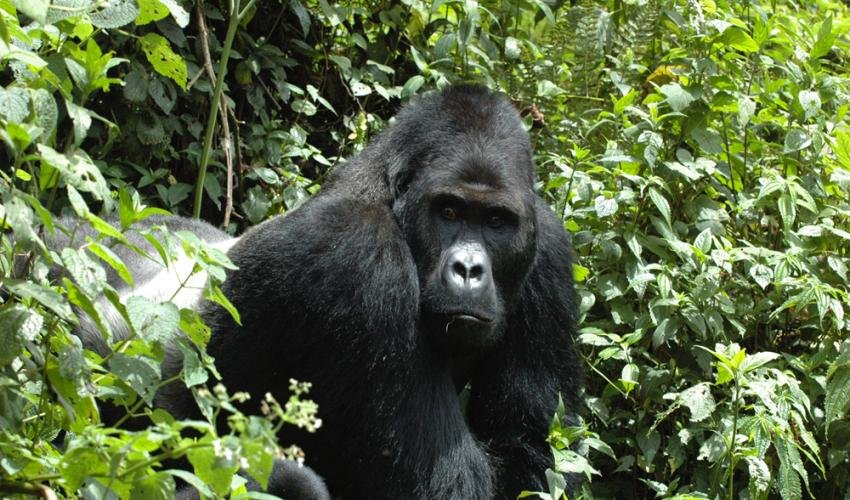
The Eastern Gorilla is one of four great apes added to the Critically Endangered list this week.
The world’s largest primate is now critically endangered due to illegal hunting. The Eastern Gorilla is the latest victim of a phenomena known as extinction investment where the market for endangered animals spikes in anticipation of their disappearance, thereby accelerating the process. Ironically, efforts by national governments to protect an endangered species, serve to heighten the value in this speculative market.
Great Apes Face Extinction
The Eastern Gorilla – the largest living primate – has been listed as Critically Endangered due to illegal hunting, as are four out of six great ape species – only one step away from going extinct – with the remaining two also under considerable threat of extinction. The Red List now includes 82,954 species of which 23,928 are threatened with extinction.
Aquion battery packs will power a nano-grid at the Illinois Institute of Technology.
A new salt based battery from US based Aquion will allow mass storage of solar generated power more cheaply than lithium iron or lead acid batteries.
The approach uses a bath of salts to store the charge without the chemical deterioration and inefficiencies found in most existing batteries. Batteries using highly reactive chemicals gradually wear out as the chemicals become polluted with constant re-use.
Similar technology was developed at the University of New South Wales thirty years ago using Vanadium salts, but was not successfully commercialized.
Solar and salt water battery storage used to create “nanogrid” of future
The unique solar and storage system designed for IIT will use alternating and direct current loads while charging batteries at the same time, allowing the nanogrid to run independent of the rest of the campus, as an islanded off-grid system.