Author: Neville

  • Scientists issue doomsday warning for Irish cities

    Login•Subscribe
    Sunday World
    January 7th, 2015
    Today’s Paper

    Home
    Top Stories
    Sport
    Entertainment
    Worldwoman
    Lifestyle
    Dating

    Scientists issue doomsday warning for Irish cities
    Wednesday 7th January 2015
    ● NewsBy Lynne Kelleher
    1

    Irish scientists have issued a stark doomsday warning about large swathes of the country going under the sea to climate change.

    In a grim global warming special on RTE’s flagship environment series Eco Eye, it is warned that sea level rises due to climate change could leave two per cent of Dublin swallowed by the ocean.

    Professor Robert Devoy, from the Coastal Marine Research Centre (CMRC), estimates that it will cost at least €5bn to protect our most populated cities and the most critical areas of the Irish coastline.

    He warned the low-lying cities of Cork, Dublin, Belfast and Galway will find it “very difficult” to defend against violent storm surges and rising seas in the coming decades.

    Professor Devoy, who is one of the country’s leading experts on global warming, warned of a doomsday scenario if climate change continues at its current pace.

    He said: “Climate change is a reality. It’s here. That’s something as a society we haven’t bought into. It will be a very difficult problem for Dublin, Cork, Galway and Belfast.

    “What is coming down the tracks is a significant warming of the planet. The last time it warmed of this order, 88 per cent of life on earth disappeared.

    “Given the nature of politics being short-term, it’s the last thing on our politicians’ minds.

    “I have five grandchildren. Whatever time is left to me it doesn’t matter, but for them at the age of four and five I can see we have significant problems to solve.

    “We can’t wait any longer for reducing carbon emissions and making significant changes.”

    In RTE’s climate change special, a series of scientists give a hard-hitting message about the catastrophic dangers of global warming, which will make last year’s extreme storms and flooding seem tame.

    It catalogues how the last decade has been the hottest on record and how plant and animal species are going extinct at rates thousands of times faster than before due to the unprecedented changes taking place on the planet.

    Irish climate experts have predicted that houses and other assets along the coast may have to be abandoned to the rising tides of the sea as it will be too costly to protect them.

    Dr Barry Dwyer, environmental scientist with the Coastal Marine Research Centre at the Irish Naval Headquarters, said climate models show that two per cent of the capital is in dire danger of being swamped by the sea, along with more than three per cent of northern counties.

    He said: “The big problem is storm surges that we have in Ireland with sea level rises, and then add another storm surge on top of that and that becomes a two-metre storm surge.

    “In the more northerly counties we are looking at up to 3.5 per cent of the entire land area being inundated, and that doesn’t account for the big wash that would come off the storm surge and the destruction from that.”

    In Eco Eye,presenter Duncan Stewart travels to the geologically spectacular country of Iceland to show how melting glaciers across the planet are contributing to sea level rise and climate change at an alarming rate.

    Eco Eye reports how NASA scientists discovered just last year that a huge section of the west Antarctic ice shelf has begun an irreversible calving into the sea, which on its own will raise sea levels by an additional metre above the current accepted figures.

    As global warming increases, so will the quantity of rain, which will put huge pressure on our rivers, with the Office of Public Works identifying at least 300 areas of Ireland which will suffer from increased flooding.

    Cathal O’Mahony, Coastal research scientist with the CMRC, said: “We’ve concentrated a lot of things along our coastline. Be it our urban centres, our road or rail networks and even our leisure time.

    “The strategy is really going to involve a lot of agencies working side by side.

    “No one organisation is going to have the answer to climate change.

    He said certain areas of the coastline may have to be sacrificed.

    He said: “We need to make decisions on where perhaps we can defend and where we can retreat.”

    Eco Eye will be shown on RTE One on tonight at 7pm.

  • The Child Inside MONBIOT

    The Child Inside

    29

    Children are being airbrushed from our towns and cities. No wonder they stay indoors.


    By George Monbiot, published in the Guardian 7th January 2015

    Where do the children play? Where can they run around unsupervised? On most of the housing estates I visit, the answer is hardly anywhere.

    A community not built around children is no community at all. A place that functions socially is one in which they are drawn to play outdoors. As Jay Griffiths argues in her magnificent, heartrending book Kith(1), children fill the “unoccupied territories”, the spaces not controlled by tidy-minded adults, “the commons of mud, moss, roots and grass”. But such places are being purged from the land and their lives. “Today’s children are enclosed in school and home, enclosed in cars to shuttle between them, enclosed by fear, by surveillance and poverty and enclosed in rigid schedules of time.” Since the 1970s, the area in which children roam without adults has decreased by almost 90%.(2) “Childhood is losing its commons”.

    Given all that we know about the physical and psychological impacts of this confinement(3), you would expect the authorities to ensure that the remaining 10% of their diminished range is designed to draw children out of their homes. Yet almost everywhere they are designed out. Housing estates are built on the playing fields and rough patches children used to inhabit, and offer almost nothing in return.

    In the government’s masterplan for England – the national planning policy framework – children are mentioned only twice: in both occasions in a catalogue of housing types(4). In parliament’s review of these plans, they aren’t mentioned at all(5). Young people, around whom our lives should revolve, have been airbrushed from the planning system.

    I spent Monday wandering the new and newish developments on the east side of Northampton. I chose this area because the estates here are spacious and mostly built for families. In other words, there is no possible excuse for excluding young people.

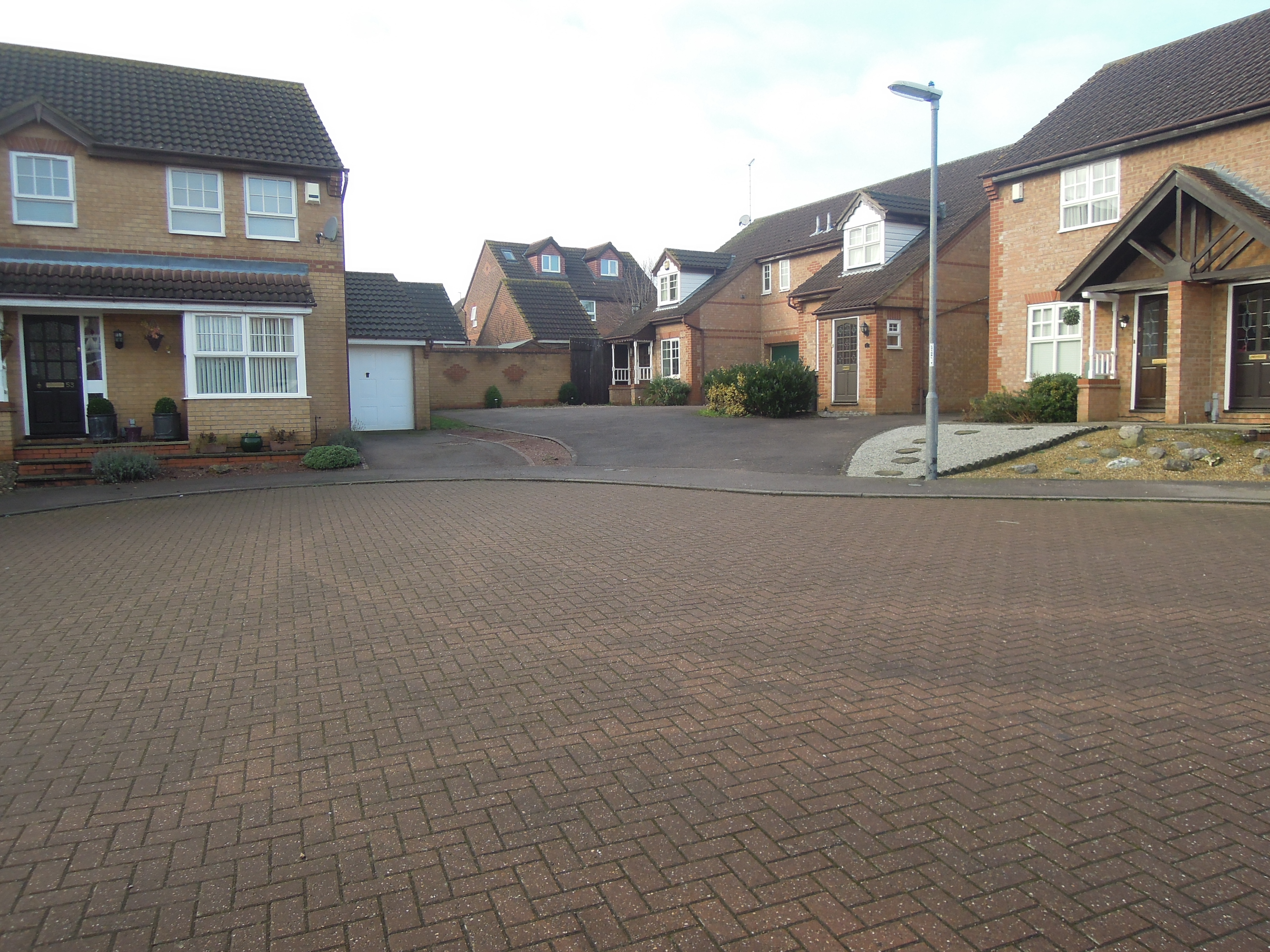
    plenty for cars

    In the places built 10 or 20 years ago, there’s plenty of shared space, but almost all of it is allocated to cars.

    ... but almost nothing for children


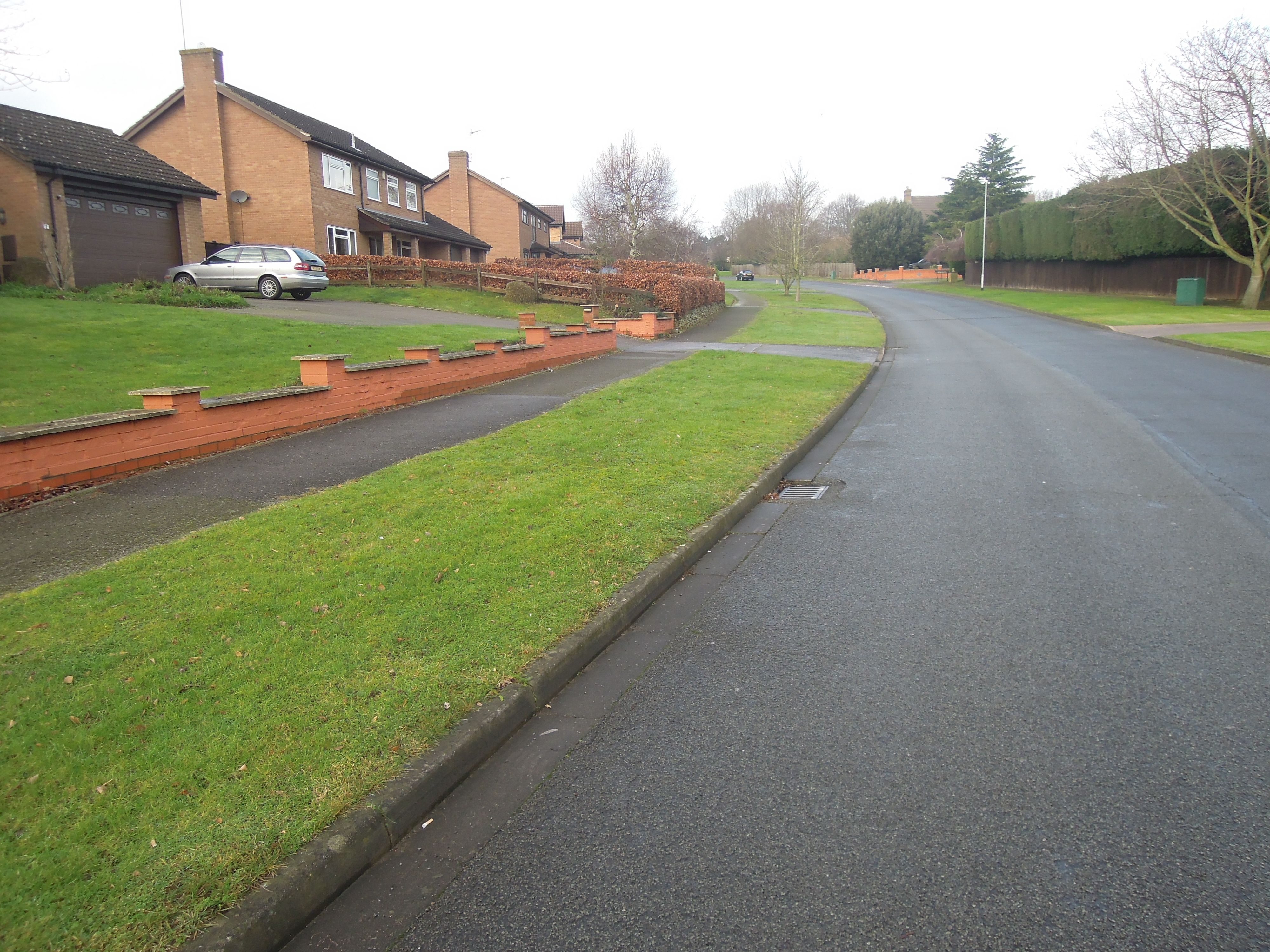
    Grass is confined to the roundabouts or to coffin-like gardens, in which you can’t turn a cartwheel without hitting the fence. I came across one exception: a street with wide grass verges. But they sloped towards the road: dangerous and useless, a perfect waste of space.

    A perfect waste of space

    This land of missed opportunities, designed by people without a spark of joy in their hearts, reifies the idea that there is no such thing as society. Had you set out to ensure that children are neither seen nor heard, you could not have done a better job. On the last day of the holidays, which was warm and dry, across four estates I saw only one child.

    By comparison, the Cherry Orchard estate just completed by Bellway Homes is a children’s paradise. But only by comparison. Next to the primary school, with plenty of three and four-bedroom houses, it’s designed to appeal to young families. But while plenty of thought has gone into the homes, it seems to me that almost none has gone into their surroundings.

    Still car mad

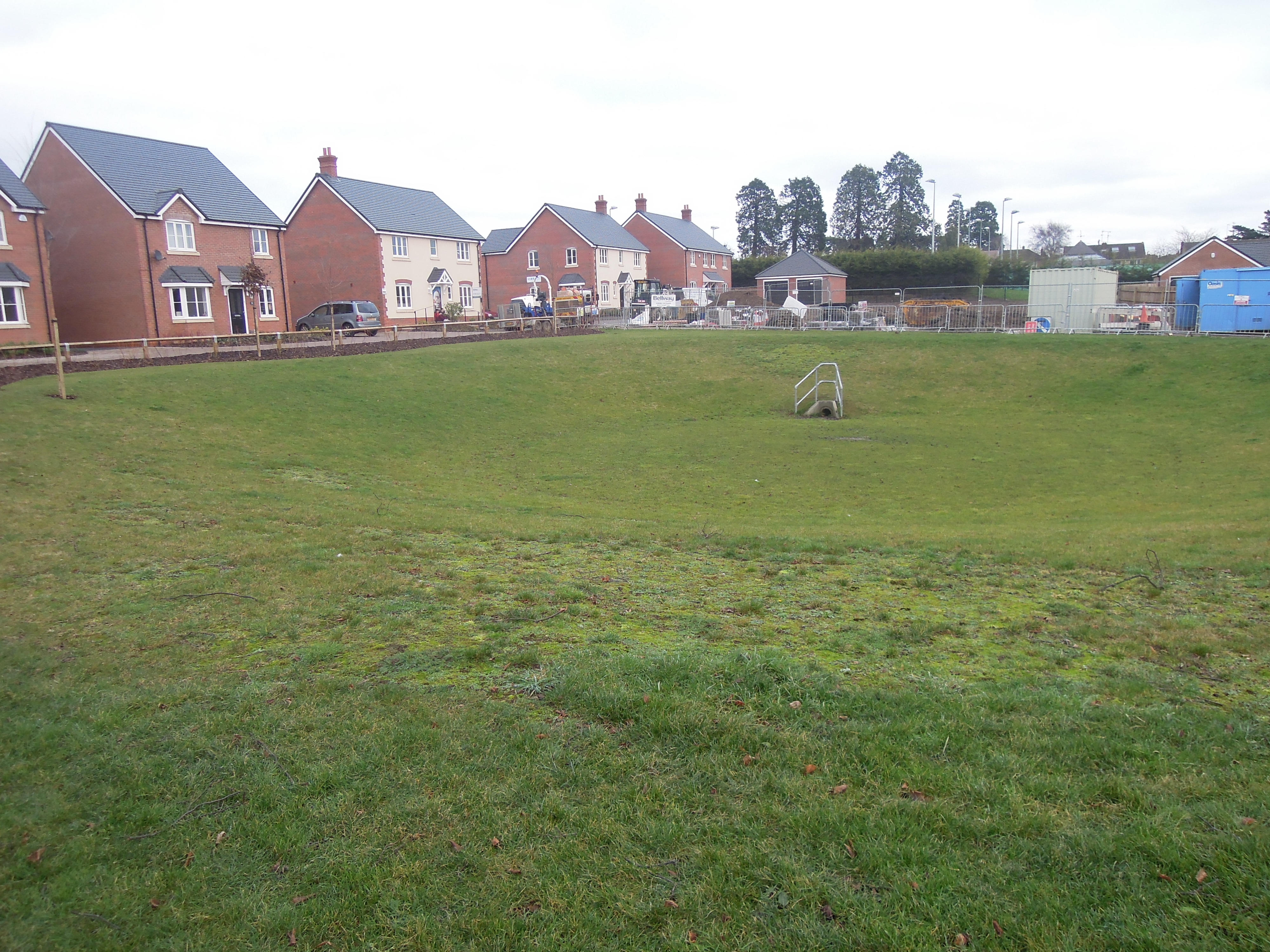
    In the middle of the development, where a village green might have been, there’s a strange grassy sump, surrounded by a low fence. It’s an empty balancing pond, to catch water during exceptional floods. Remove the fence, plant it with trees, throw in some rocks and logs, and you’d have a rough and mossy playground. But no such thing was in the plans.

    A balancing pond that could be so much more

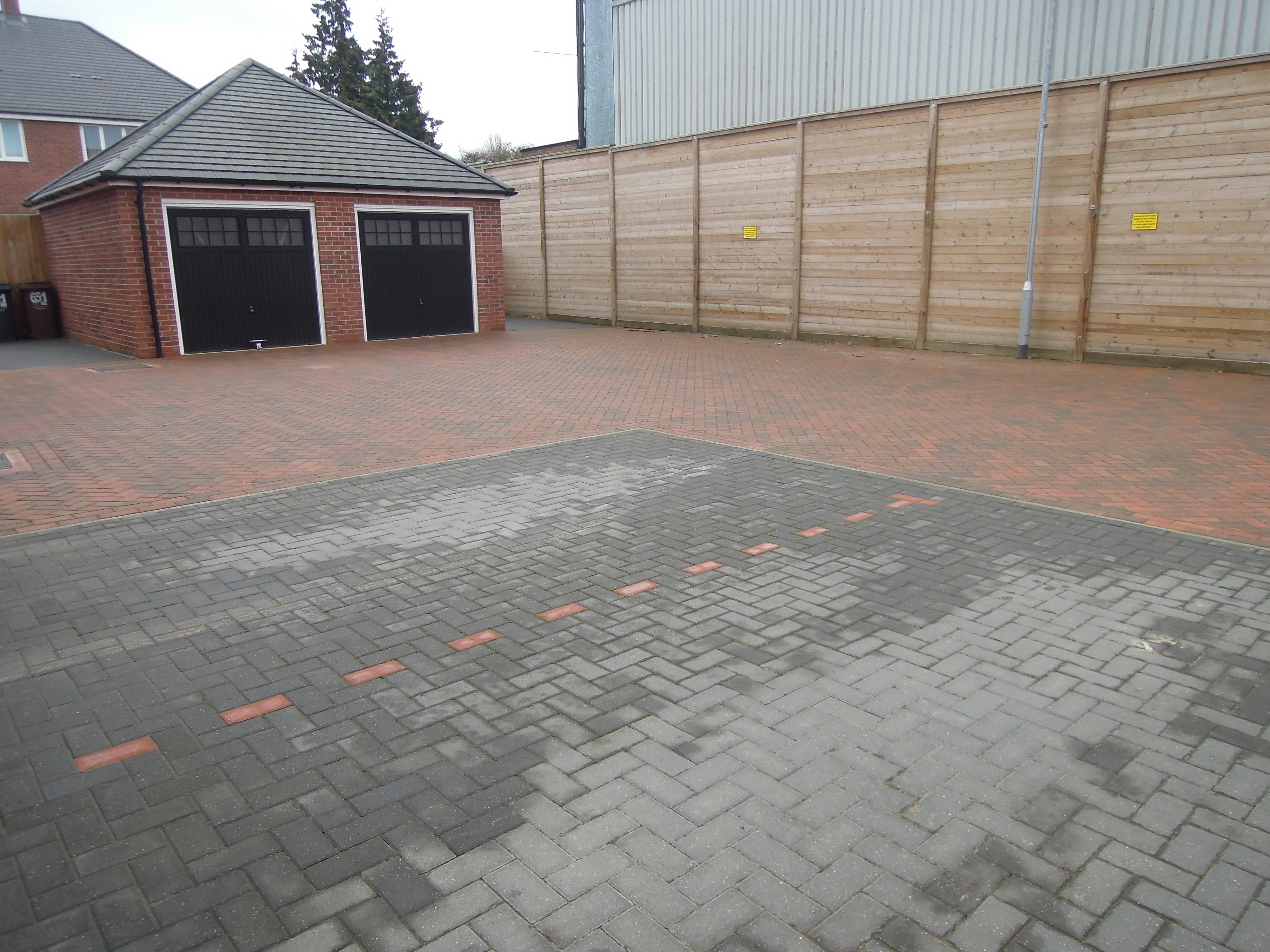
    Other shared spaces in the estate have the charming ambience of a prison yard: paved and surrounded by garden fences almost 9 feet high.

    Garden fences almost 9ft high

    And the charming ambience of a prison yard

    There were a few children outdoors, but they seemed pressed to the edges, sitting in doorways or leaning on the fences. Children don’t buy houses, so who cares?

    Throughout the country, they become prisoners of bad design, and so do adults(6). Without safe and engaging places in which they can come together, no tribe forms. So parents must play the games that children would otherwise play among themselves, and everyone is bored to tears.

    The exclusion of children arises from the same pathology that denies us decent housing. In the name of market freedom, the volume housebuilders, sitting on their land banks, are free to preside over speculative chaos, while we are free to buy dog kennels priced like palaces in placeless estates so badly designed that community is dead on arrival. Millions want to design and build their own homes, but almost no plots are available, as the big builders have seized them.

    In Scotland, the government is considering compulsory sale orders, which would pull down prices(7): essential when the speculative price of land has risen from 2% of the cost of a home in the 1930s to 70% today(8). A national housing land corporation would assemble the sites and supply the infrastructure, then sell plots to community groups, housing associations and people who want to build their own. It goes far beyond England’s feeble community right-to-build measures(9), which lack the muscular facilitation that only public authorities can provide. But still not far enough.

    What if people were entitled to buy an option for a plot on a new estate, which they would then help to plan? Not just the houses, but the entire estate would be built for and by those who would live there. The council or land corporation would specify the number and type of homes, then the future residents, including people on the social housing waiting list, would design the layout. Their children would help to create the public spaces. Communities would start to form even before people moved in, and the estates would doubtless look nothing like those built today.

    To the Westminster government, this probably sounds like communism. But as countries elsewhere in Europe have found, we don’t need volume house builders(8), except to construct high-rises. They do not assist the provision of decent, affordable homes. They impede it. What is good for them is bad for us.

    Bellway, its brochure reveals, asked children at the neighbouring primary school to paint a picture of a cherry orchard, and displayed the winning entries in its show home(10). “Why not pop over to say hello, view our wonderful development and sneak a peek?”. That’s the role the children were given: helping the company to sell the houses it had already built. Why can’t we shape the places that shape our lives?

    www.monbiot.com

    References:

    1. http://www.jaygriffiths.com/

    2. Stephen Moss, 2012. Natural Childhood. The National Trust. http://www.nationaltrust.org.uk/servlet/file/store5/item823323/version1/Natural%20Childhood%20Brochure.pdf

    3. http://www.monbiot.com/2012/11/19/housebroken/

    4. https://www.gov.uk/government/publications/national-planning-policy-framework–2

    5. http://www.publications.parliament.uk/pa/cm201415/cmselect/cmcomloc/190/19002.htm

    6. Please see the 1997 report by the Chartered Institute of Housing and the Joseph Rowntree Foundation for an excellent summary of what child centred design might involve. http://www.jrf.org.uk/publications/childs-play-facilitating-play-housing-estates

    7. http://www.scotland.gov.uk/Publications/2014/12/9659/7

    8. The Land Reform Review Group, 2014. The Land of Scotland and the Common Good.

    http://www.scotland.gov.uk/About/Review/land-reform/events/FinalReport23May2014

    9. See Stuart Gulliver and Steven Tolson, 2013. Delivering Great Places to Live: 10 Propositions aimed at transforming Placemaking in Scotland. http://bit.ly/1KiipiJ

    10. http://bit.ly/1DfziZx

  • Bushfires In Australia A ‘Wake-Up Call’ For Abbott Government To Commit To Climate Action Article

    U | Economy | Companies | Tech | Real Estate | Sports
    Bushfires In Australia A ‘Wake-Up Call’ For Abbott Government To Commit To Climate Action

    Article

    2

    Rate this Story
    0
    0

    Print
    Email
    Order Reprints
    Text Size

    By Reissa Su | January 6, 2015 10:03 AM EST

    The bushfires in South Australia and Victoria were described as the products of the government’s failure to address climate change. Australia Greens leader Christine Milne said the fires should be a wake-up call for the Abbott government to recognise the costs of global warming.
    View Full Image

    REUTERS/Country Fire Authority
    A helicopter dumps water on a bushfire burning near houses in the Grampians bushland in the southeastern Australian state of Victoria, about 300 km (186 miles) west of Melbourne, January 17, 2014. REUTERS/Country Fire Authority (CFA)/Handout via Reuters

    Related Articles
    Extremely Dry Conditions Spark Bushfires in Australia; CFS Issue Fire Danger Alerts

    As firefighters continue to contain the fires raging in the two states, dozens of homes were lost to the blaze. Milne warned that Australia is going to suffer the same extreme weather events. She said that the Abbott government must stop its climate change “denial” and get on with creating a plan in the face of extreme weather, ABC News reported.

    Milne said the government should look at the “suffering” of the people and commit to strong climate action. She recommended a number of actions in preparation for extreme heat, including the evaluation of current emergency services, increase in the number of firefighters and improvement in emergency response.

    Meanwhile, Minister for Justice Michael Keenan said that the Abbott government will need to hold talks with the state government to review how funds were spent before disasters happen. The federal government has indicated it wants to reduce spending on natural disaster recovery to focus on mitigating the risks before a catastrophic event strikes.

    Keenan and his South Australian counterpart Zoe Bettison have announced emergency grants of up to $280 per adult and $140 per child, The Guardian reported. The funds would be available for people affected by the bushfire in Sampson Flat to cover necessities like food and clothing.

    Firefighters are currently racing to contain a major bushfire before the weather will worsen the blaze. According to BBC News, more than 30 homes were feared destroyed behind the city of Adelaide. More than 500 firefighters have been monitoring the fires that have been burning since Jan 2. Fire authorities have declared that the bushfire was the worst in the area since the huge blaze in 1983, which left 75 people dead.

    Australia’s Bureau of Meteorology has predicted that temperatures will hit 34 degrees Celsius in Adelaide before reaching as high as 38C on Jan 7. South Australian Premier Jay Weatherill said the region is not yet safe from bushfires. He added that firefighters are trying to ensure the fire is contained before hotter conditions can spread it. He warned residents in South Australia to prepare for more severe bushfires.

    Contact email: r.su@IBTimes.com.au

    To contact the editor, e-mail: editor@ibtimes.com

  • Cause Of Pause Due To Heat Uptake By Three Oceans 03.12.2014

    NOAA: 2014

    El Nino

    Ice Age

    Emissions

    NOAA says 2014
    could still be the
    warmest year here
    Pacific Ocean continues
    to flirt with El Nino
    thresholds here
    Atlantic Ocean signaled
    Ice Age end 1,000
    years earlier here
    EU research reports
    record emissions
    here

    1 point on reddit

    Share on Tumblr Share

    Cause Of Pause Due To Heat Uptake By Three Oceans

    03.12.2014

    03.12.2014 18:04 Age: 34 days

    New study explains the role of oceans in global ‘warming hiatus’, claim researchers at the University of Southampton

    Click to enlarge. Warming hiatus. Courtesy: University of Southampton.


    Note: see our original article on this research here.

    From the University of Southampton

    New research shows that ocean heat uptake across three oceans is the likely cause of the ‘warming hiatus’ – the current decade-long slowdown in global surface warming.

    Using data from a range of state-of-the-art ocean and atmosphere models, the research shows that the increased oceanic heat drawdown in the equatorial Pacific, North Atlantic and Southern Ocean basins has played a significant role in the hiatus.

    The new analysis has been published in Geophysical Research Letters by Professor Sybren Drijfhout from the University of Southampton and collaborators from the National Oceanography Centre (NOC) Dr Adam Blaker, Professor Simon Josey, Dr George Nurser and Dr Bablu Sinha, together with Dr Magdalena Balmaseda from the European Centre for Medium Range Weather Forecasting (ECMWF).

    Professor Drijfhout said: “This study attributes the increased oceanic heat drawdown in the equatorial Pacific, North Atlantic and Southern Ocean to specific, different mechanisms in each region. This is important as current climate models have been unable to simulate the hiatus. Our study gives clues to where the heat is drawn down and by which processes. This can serve as a benchmark for climate models on how to improve their projections of future global mean temperature.”

    Previously, the drawdown of heat by the Equatorial Pacific Ocean over the hiatus period, due to cool sea-surface temperatures associated with a succession of cool-surface La Nina episodes, was thought to be sufficient to explain the hiatus.

    However, this new analysis reveals that the northern North Atlantic, the Southern Ocean and Equatorial Pacific Ocean are all important regions of ocean heat uptake. Each basin contributes a roughly equal amount to explaining the hiatus, but the mechanisms of heat drawdown are different and specific in each basin.

    In the North Atlantic, more heat has been retained at deep levels as a result of changes to both the ocean and atmospheric circulations, which have led to the winter atmosphere extracting less heat from the ocean.

    In the Southern Ocean, the extra drawdown of heat had gone unnoticed and is increasing on a much longer timescale (multi-decadal) than the other two regions (decadal). Here, gradual changes in the prevailing westerly winds have modified the ocean-atmosphere heat exchange, particularly in the Southern Indian Ocean.

    The team calculated the change in the amount of heat entering the ocean using a state-of-the-art high resolution ocean model developed and run by NOC scientists that is driven by surface observations. This estimate was compared with results from an ocean model-data synthesis from ECMWF and a leading atmospheric model-data synthesis produced in the US. Professor Josey said: “It is the synthesis of information from models and observational data that provides a major strength of our study.”

    Dr Sinha concluded: “The deeper understanding gained in this study of the processes and regions responsible for variations in oceanic heat drawdown and retention will improve the accuracy of future climate projections.”

    Abstract

    The first decade of the twenty-first century was characterised by a hiatus in global surface warming. Using ocean model hindcasts and reanalyses we show that heat uptake between the 1990s and 2000s increased by 0.7 ± 0.3Wm−2. Approximately 30% of the increase is associated with colder sea surface temperatures in the eastern Pacific. Other basins contribute via reduced heat loss to the atmosphere, in particular the Southern and subtropical Indian Oceans (30%), and the subpolar North Atlantic (40%). A different mechanism is important at longer timescales (1960s-present) over which the Southern Annular Mode trended upwards. In this period, increased ocean heat uptake has largely arisen from reduced heat loss associated with reduced winds over the Agulhas Return Current and southward displacement of Southern Ocean westerlies.

    Citation

    Surface warming hiatus caused by increased heat uptake across multiple ocean basins By S. S. Drijfhout, A. T. Blaker, S. A. Josey, A. J. G. Nurser, B. Sinha and M. A. Balmaseda published in Geophysical Research Letters DOI: 10.1002/2014GL061456

    Read the abstract and get the paper here.

    Source

    University of Southampton news release here.

    Also

    See our original article on this research here.

  • [New post] QLD 2015 – day one

    1 of 23

    [New post] QLD 2015 – day one

    Inbox
    x
    The Tally Room
    Ben Raue posted: “As predicted, Campbell Newman visited the Acting Governor y…
    11:43 PM (10 hours ago)

    The Tally Room <donotreply@wordpress.com>

    9:02 AM (1 hour ago)

    to me

    New post on The Tally Room

    QLD 2015 – day one

    by Ben Raue

    As predicted, Campbell Newman visited the Acting Governor yesterday and called the next Queensland state election for January 31.

    Rolls close this Saturday, 10 January at 5pm, and nominations close on Tuesday, 13 January at 12pm. If you haven’t enrolled to vote, updated your details, or you’re not sure, you can check your enrolment here.

    As I said yesterday, my complete guide to the Queensland state election is now available online. Antony Green has also now posted his guide at ABC Elections.

    Starting from this morning, I will be regularly posting electorate profiles on the front page, starting with Southern Downs and concluding with some key marginals on January 30.

    Feel free to use this post as an open thread for discussing the election – I will post open threads every couple of days, and you can continue to discuss particular electorates on the relevant pages.

    Ben Raue | January 7, 2015 at 8:00 am | Tags: Queensland 2015 | Categories: Uncategorized | URL: http://wp.me/ppI95-6ky
  • YOU can make a better Queensland! Special meeting this Saturday 10 Jan NOOSA GREENS

    lick here to enable desktop notifications for Gmail.   Learn more  Hide
    More

    2 of 5
    Web Clip

    YOU can make a better Queensland! Special meeting this Saturday 10 Jan

    Inbox
    x

    Noosa and Hinterland Greens via mail70.atl91.mcsv.net Unsubscribe

    3:47 PM (42 minutes ago)

    to me

    Noosa and Hinterland Greens
    STANDING UP FOR WHAT MATTERS
    IN NOOSA, GYMPIE & MARYBOROUGH
    I

    Dear Neville

    In the context of ongoing poor governance, concerns of corruption, further planned environmental vandalism, erosion of public services and a party that is increasingly unpopular and deservedly untrusted Campbell Newman and the State LNP have called a ‘snap’ election for Saturday 31 January less than four weeks away.

    We already have Joe Shlegeris and Shena Macdonald as our candidates for Noosa and Gympie and we will shortly announce our candidate for Maryborough.

    We now need you to join the campaign. Tell your family, friends and neighbours that their votes actually do make a real and meaningful difference. That they can also contribute to a fair, safe, sustainable and prosperous Queensland for all of us.

    Additionally you can help directly with a number of tasks to support our candidates and our campaign. We need members and supporters to help with pre-polling and on polling day, door knocking and telephone canvassing, information distribution, letters to local papers etc.

    And particularly DONATIONS! Whilst the local LNP and ALP candidates will access considerable financial support from their sponsors in coal mining and coal seam gas multinational corporations we will need donations from you to get our message into the community.
    Even a few dollars will make a difference and your contributions are tax deductible. You can contribute online here

    We are calling a special meeting of the Noosa and Hinterland Branch this Saturday 10 January from 1pm at 29 Summit Road Pomona. Your participation will be most valued and appreciated. Sorry for the short notice… 🙂

     
    Warm regards

    Steve