Author: Neville

  • Love, actually.    World Wildlife Australia

    Click here to enable desktop notifications for Gmail.   Learn more  Hide
    1 of 2
    Web Clip
    NYT TravelHeads Up: Down the Hobbit Hole in Switzerland6 hours ago

    Love, actually.

    Inbox
    x

    Dermot O’Gorman, WWF-Australia noreply@act.wwf.org.au via server8839.e-activist.com 

    2:37 PM (28 minutes ago)

    to me
    Under water coral, Great Barrier Reef  © Troy Mayne

    Hi NEVILLE,

    It’s been a huge year for the Great Barrier Reef, and next year is going to be even bigger.  But as Christmas approaches, we (and Nemo) wanted to take a moment to say thanks for all that you’ve done for the Reef this year.

    We hope you like this little video message we’ve put togetherActually, we hope you love it:

    Nemo Christmas Video

    Merry Christmas!

    Dermot, Cristel, Gilly, Louise, Richard, Owen, Kate, Mark, Phil & the whole WWF-Australia team

    (P.S. If the video is a little perplexing – this might add some context: https://www.youtube.com/watch?v=00kjd-OekOA)

  • Click here to enable desktop notifications for Gmail.   Learn more  Hide
    1 of 15
    Web Clip
    CNN.com Recently Published/UpdatedNathaniel Kibby faces hundreds of charges in kidnapping2 hours ago

    RE: Pure desperation

    Inbox
    x

    Tanya Cross via Change.org

    1:30 PM (4 minutes ago)

    to me
    Change.org

    NEVILLE – Tanya Cross’ house was showered with asbestos in the fatal Tuncurry explosion – yet 18 months on, she and her son are still unable to return home as ANZ deny her home insurance claim.

    As ANZ hold their annual general meeting today, Tanya is making a plea for more support on her change.org petition to force ANZ to address her situation. Will you add your name today to help?

    Read on below for more information on her petition:

    ANZ Insurance: Pay our home insurance and allow us to move on with our lives

    Tanya Cross
    Forster, Australia
     Our home /property was damaged and contaminated with asbestos on 14/6/2013 by our neighbours fatal home explosion. His home was made of asbestos and the blast showered surrounding properties (including ours) with asbestos fragments making it unsafe to return home.

    As the explosion made national news you can find/verify information regarding the incident by googling ‘Tuncurry Explosion’.

    There were 4 residents/families including ours displaced on that day, 3 of which have been able to return to their homes at various times during that past 18 months. To date our home is the only property which has not been restored and we are the only residents insured with ANZ.

    My son and I have been forced to relocate several times and remain in temporary rental accomodation (currently we reside in the 3rd).

    The Short But Factual Version Of Our Ongoing Struggle:

    • We have held ANZ Home and Contents insurance for over a decade. ANZ insurance is currently underwritten by QBE.
    • We have never missed a payment, have always paid via direct debit and in fact still pay for our policies even though we haven’t been able to live there.
    • ANZ insurance ceased paying our temporary accomodation leaving us with mortgage payments and temporary accomodation rent. We can’t afford to continue paying both as I am a sole parent and therefore our sole bread winner.
    • ANZ have accepted our claims.
    • ANZ have paid part of our contents claim, we are unsure why this hasn’t been finalised however this is of little consequence when we don’t have a home. What they did pay however was useful and has now been exhausted into our mortgage/rent payments.
    • ANZ representatives advise that although my policy is ANZ Insurance, ANZ consider themselves unable to assist us?? I have asked numerous ANZ representatives (including their CEO) why they continue to choose to be underwritten by QBE when QBE are not providing the protection to their customers properties in accordance to their policies and product disclosure statements, I am yet to receive a response.
    • To date my property remains contaminated and therefore deemed ‘unsuitable for residential use’.
    • This fact was only proven after I fought for second opinion on the asbestos clean-up due to 2 failed attempts requiring Workcover intervention, by the insurers asbestos ‘experts’. This process took me from July 2013 – January 2014 at which time the new asbestos team confirmed the current dangerous contamination.
    • In February the insurer acknowledged this outcome and committed to paying the new asbestos company to complete the clean-up however to date this has not occurred. I have begged, pleaded and complained everywhere but still no progress.
    • ANZ has not apologised for the risk they placed my family in by insisting our property was safe up until I successfully proved their opinion inaccurate.
    • An ANZ Insurance appointed an engineer has attended my property twice, firstly in November 2013 and again in January 2014. The engineer wrote a report after both visits and there is currently 3 scopes of work as a result of these reports. The issue with these is none of them match. Some scopes have some details, some scopes have others and some reported damage is not in any of the scopes?? I escalated these obvious issues to the insurer and received a written committment that the builders would attend with all of the scopes when quoting. Disappointingly yet predictably this did not occur resulting in the builders attending in January/February 2014 and only being able to quote on the one scope they were issued.
    • The engineers report from January 2014 makes note of the fact that our home had deteriorated since his previous visit in November 2013 due to the home being unoccupied and remaining open to the elements via blown out windows not being fixed and therefore allowing in wind, water, squatters, animals, vermin etc.
    • Reported deterioration November 2013 – January 2014 yet we are now in December 2014 and the insurer has done NOTHING. Obviously and unfairly our home has continued its steady but predictable deterioration.

    We have resisted media contacts until recently when we agreed to tell our story as we sincerely hoped our claim would be settled fairly and privately, however we now accepted this will not be the case.

    It is very humbling to ask for help and I only speak up now out of pure desperation for our financial future and wellbeing.

    We know ANZ and QBE don’t care, we know we are nothing but a faceless insignificant number to them, but we hope Australians do care and will want to help us.

    We are not asking for anything unreasonable. We have paid for and held our ANZ polices in good faith for many years. We simply want ANZ Insurance to step up and live up to their promises.

    Thank you for taking the time to read our story. Should you choose to sign our petition that would be wonderful and we will be forever grateful.

  • The John James Newsletter No 36

    ktop notifications for Gmail.   Learn more  Hide


    More


    1 of 15


    Web Clip

    Gmail Blog – Use your cúpla focal on Gmail, now in Irish – 6 days ago

    The John James Newsletter 36 – URGENT – Provocation for WWIII at Cristmas

    Inbox x

    John James

    11:00 AM (14 minutes ago)
    to John

    The John James Newsletter 36

    18 December 2014. 

    Three Members of Congress Just Reignited the Cold War While No One Was Looking

    Pphoto of the chamber of the House of Representatives that shows H.R. 5859 passing by unanimous consent in the span of one second. (Photo: AP/J. Scott Applewhite)

    Late Thursday night, the House of Representatives unanimously passed a far-reaching Russia sanctions bill, a hydra-headed incubator of poisonous conflict. The second provocative anti-Russian legislation in a week, it further polarizes our relations with Russia, helping to cement a Russia-China alliance against Western hegemony, and undermines long-term America’s financial and physical security by handing the national treasury over to war profiteers.

    Here’s how the House’s touted “unanimity” was achieved: Under a parliamentary motion termed “unanimous consent,” legislative rules can be suspended and any bill can be called up. If any member of Congress objects, the motion is blocked and the bill dies.

    At 10:23:54 p.m. on Thursday, a member rose to ask “unanimous consent” for four committees to be relieved of a Russia sanctions bill. At this point the motion, and the legislation, could have been blocked by a single member who would say “I object.”  No one objected, because no one was watching for last-minute bills to be slipped through.

    Most of the House and the media had emptied out of the chambers after passage of the $1.1 trillion government spending package.


    The Congressional Record will show only three of 425 members were present on the floor to consider the sanctions bill. Two of the three feigned objection, creating the legislative equivalent of a ‘time out.’ They entered a few words of support, withdrew their “objections” and the clock resumed.

    According to the clerk’s records, once the bill was considered under unanimous consent, it was passed, at 10:23:55 p.m., without objection, in one recorded, time-stamped second, unanimously.

    Then the House adjourned.

    I discovered, in my 16 years in Congress, that many members seldom read the legislation on which they vote. On Oct. 24, 2001, House committees spent long hours debating the Patriot Act. At the last minute, the old bill was swapped out for a version with draconian provisions. I voted against that version of the Patriot Act, because I read it. The legislative process requires attention.

    Legislation brought before Congress under “unanimous consent” is not read by most members simply because copies of the bill are generally not available. During the closing sessions of Congress I would often camp out in the House chamber, near the clerk’s desk, prepared to say “I object” when something of consequence appeared out of the blue. Dec. 11, 2014, is one of the few times I regret not being in Congress to have the ability to oversee the process.

    The Russia Sanctions bill that passed “unanimously,” with no scheduled debate, at 10:23:55 p.m. on Dec. 11, 2014, includes:

    1. Sanctions of Russia’s energy industry, including Rosoboronexport and Gazprom.
    1. Sanctions of Russia’s defense industry, with respect to arms sales to Syria.
    1. Broad sanctions on Russians’ banking and investments.
    1. Provisions for privatization of Ukrainian infrastructure, electricity, oil, gas and renewables, with the help of the World Bank and USAID.
    1. Fifty million dollars to assist in a corporate takeover of Ukraine’s oil and gas sectors.
    1. Three hundred and fifty million dollars for military assistance to Ukraine, including anti-tank, anti-armor, optical, and guidance and control equipment, as well as drones.
    1. Thirty million dollars for an intensive radio, television and Internet propaganda campaign throughout the countries of the former Soviet Union.
    1. Twenty million dollars for “democratic organizing” in Ukraine.
    1. Sixty million dollars, spent through groups like the National Endowment for Democracy, “to improve democratic governance, and transparency, accountability [and] rule of law” in Russia. What brilliant hyperbole to pass such a provision the same week the Senate’s CIA torture report was released.
    1. An unverified declaration that Russia has violated the Intermediate-Range Nuclear Forces Treaty, is a nuclear “threat to the United States” and should be held “accountable.”
    1. A path for the U.S. withdrawal from the INF Treaty, which went into force in 1988. The implications of this are immense. An entire series of arms agreements are at risk of unraveling. It may not be long before NATO pushes its newest client state, Ukraine, to abrogate the Non-Proliferation Treaty, which Ukraine signed when it gave up its nuclear weapons, and establish a renewed nuclear missile capability, 300 miles from Moscow.
    1. A demand that Russia verifiably dismantle “any ground launched cruise missiles or ballistic missiles with a range of between 500 and 5,500 kilometers …”—i.e., 300 and 3,300 miles.

    Read the legislation, which Congress apparently didn’t.

    As reported on GlobalSecurity.org, earlier that same day in Kiev, the Ukrainian parliament approved a security plan that will:

    1. Declare that Ukraine should become a “military state.”
    1. Reallocate more of its approved 2014 budget for military purposes.
    1. Put all military operating units on alert.
    1. Mobilize military and national guard units.
    1. Increase military spending in Ukraine from 1 percent of GDP to 5 percent, increasing military spending by $3 billion over the next few years.
    1. Join NATO and switch to NATO military standards.

    Under the guise of democratizing, the West stripped Ukraine of its sovereignty with a U.S.-backed coup, employed it as a foil to advance NATO to the Russian border and reignited the Cold War, complete with another nuclear showdown.

    The people of Ukraine will be less free, as their country becomes a “military state,” goes into hock to international banks, faces structural readjustments, privatization of its public assets, decline of social services, higher prices and an even more severe decline in its standard of living.

    In its dealings with the European Union, Ukraine could not even get concessions for its citizens to find work throughout Europe. The West does not care about Ukraine, or its people, except for using them to seize a strategic advantage against Russia in the geopolitical game of nations.

    Once, with the help of the West, Ukraine fully weighs in as a “military state” and joins the NATO gun club, its annual defense budget will be around $3 billion, compared with the current defense budget of Russia, which is over $70 billion.

    Each Western incitement creates a Russian response, which is then given as further proof that the West must prepare for the very conflict it has created, war as a self-fulfilling prophecy.

    That the recent Russia sanctions bill was advanced, “unanimously,” without debate in the House, portends that our nation is sleepwalking through the graveyards of history, toward an abyss where controlling factors reside in the realm of chance, what Thomas Hardy termed “crass casualty.” Such are the perils of unanimity.

    http://www.commondreams.org/views/2014/12/16/three-members-congress-just-reignited-cold-war-while-no-one-was-looking

  • [New post] Brisbane City – redrawing the wards

    1 of 16

    [New post] Brisbane City – redrawing the wards

    Inbox
    x

    The Tally Room <donotreply@wordpress.com>

    10:06 AM (6 minutes ago)

    to me

    New post on The Tally Room

    Brisbane City – redrawing the wards

    by Ben Raue

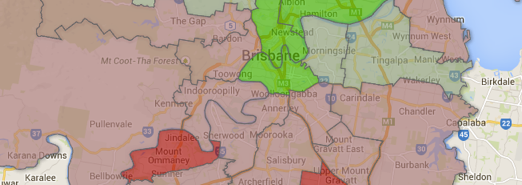
    briswards

    The City of Brisbane is unlike any other council in Australia. With a population of over one million people, the council is much larger than metropolitan councils in other Australian cities.The election for Lord Mayor of Brisbane is the largest single-member election in Australia, with over 550,000 people voting in the 2012 election. This is much more than in a federal electorate. The council consists of 26 councillors, each elected from their own ward. Those 26 wards are also quite large – almost as large as Queensland state seats.

    Considering all this, elections for the City of Brisbane are more like a small state election than any other local council election around Australia. With this in mind, I’m planning to cover the March 2016 Brisbane election in the same way I have done for recent state elections, with a guide for each ward.

    In the meantime, the Electoral Commission of Queensland is currently undertaking a redistribution of Brisbane’s wards for the 2016 and 2020 elections. The last redistribution took place before the 2008 election, and the current wards have been used for two elections.

    In this post, I’m looking at what changes may need to be made to the existing ward boundaries.

    At the last redistribution before the 2008 election, the ward of Grange was abolished in the north of Brisbane, and was effectively replaced by a southern ward. In exchange, the seat of Walter Taylor lost the one third of its territory on the southern side of the river. This effectively cut the number of wards north of the river from 12.7 to 12. It seems likely that some of these trends will be reversed in this redistribution.

    The ECQ has released enrolment figures for each ward as of 2014, as well as projects for 2016 and 2018. All wards must be within 10% of the quota in 2014, and it’s a good idea to also try and draw boundaries that keep wards within that quota by 2018.

    https://www.google.com/fusiontables/embedviz?q=select+col2%3E%3E1+from+1ByKQ6IjFE94FTAdokmy_jnGaXl4v7LZq-PlVhT6b&viz=MAP&h=false&lat=-27.447330799541334&lng=153.01067861328124&t=1&z=12&l=col2%3E%3E1&y=2&tmplt=2&hml=GEOCODABLE

    For my analysis I have split Brisbane into four quarters. There are twelve wards north of the river and fourteen south of the river. For the wards south of the river, I have split them into two quarters of seven wards each. The south-east covers The Gabba ward in South Brisbane and all those wards to the east of the M3, while the south-west covers the remaining wards south of the river.

    The north-west covers Central ward (covering the Brisbane CBD) and wards further west covering areas like Indooroopilly, Ashgrove and Moggill. The north-east covers areas to the north and east of the CBD.

    Region Enrolment Wards 2014 variation 2016 variation 2018 variation
    North-East 167,584 6 20.37 24.53 28.23
    North-West 162,855 6 2.86 6.11 3.07
    South-East 188,911 7 -0.68 -3.67 0.53
    South-West 183,002 7 -22.55 -26.97 -31.83

    Overall, the north-west and south-east are close to quota. There are some seats over quota – Central is 10.2% over quota already, and The Gabba is expected to be more than 10% over quota by 2018 – but theoretically these issues could be resolved by minor changes between neighbouring wards rather than major structural changes to the whole city.

    However the north-east is well over quota and the south-west is well under quota. By 2018, the north-east will have enough extra voters for 28% of an extra ward. By 2018, the south-west’s population will fall 31.8% short of justifying a seventh ward.

    In order to resolve these differences, wards will need to shift north from the south-west to the north-east. Since these two regions don’t border each other, it will require significant changes to some wards in one of the regions where the population is on quota.

    In particular, it will be necessary for one of the wards to cross the river. At the moment, there is no ward crossing the river. In the past, the Walter Taylor ward (covering the Indooroopilly area) has included areas on the south side of Brisbane, and the Indooroopilly state seat is currently the only Brisbane seat to cross the river. Because of this, it seems likely that a ward will cross the river in this area.

    So the most likely trend seems to be:

    • Seats in the south-east undergo minor changes, with the Gabba shrinking and giving territory to Holland Park, and Holland Park and three of its neighbours all expanding slightly to absorb the growth from the Gabba. The surplus from Doboy will bring Wynnum-Manly up to quota relatively simply.
    • In the south-west, Parkinson will shrink, but all of its neighbours will have to grow, in particular Jamboree and Macgregor. This will require one of these wards, probably Tennyson, to jump the river and take in about 8000 voters.
    • The wards of Walter Taylor, The Gap and Toowong all will require substantial more population, which will probably result in significant redrawing of their borders and a general shift to the north-east. This will include taking in substantial parts of Central ward, which is well over quota.
    • Bracken Ridge will likely give some of its territory to Deagon to bring them both into quota, and McDowall will take population from Marchant to bring them into quota. No changes are necessary to Northgate.
    • Hamilton is due to be way over quota, and with Northgate not needing changes, most of this population growth will need to be discharged into Central ward. With Central giving up some of its territory to Toowong, this will result in Central shifting towards the north-east.

    You can find out more about the redistribution at the ECQ website, and submissions close on December 22.

  • Did anyone notice that Australia now has a carbon trading scheme? By Nathan Lim on 17 December 2014

    rss

    Did anyone notice that Australia now has a carbon trading scheme?

    Print Friendly

    xenephon

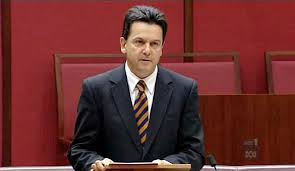
    Senator Nick Xenophon has brought back a carbon trading scheme to Australia and nobody seems to have noticed. Quietly tucked behind the headlines from the Palmer United Party and the government was the mention of Senator Xenophon inserting a ‘Safeguard Mechanism’ into the Direct Action legislation.

    The mechanism creates the framework for a baseline and credit system which is similar to a cap-and-trade system in that both are market based methods to arrive at a price for carbon. While the specific details of the Safeguard Mechanism have yet to be determined, conceptually any company who currently emits more than 100,000 tonnes of CO2 annually will be required from 1 July 2016 to keep their emissions below a predetermined baseline level or face penalties.

    Before proceeding further it is important to understand the mechanics of the government’s Direct Action plan. The central part of the plan is the Emission Reduction Fund (ERF). Initially seeded with $2.55 billion over 10 years, it will be used to help pay for projects that seek to abate carbon emissions.

    To be eligible to receive payments from the ERF, a project must first be submitted to the regulator who will vet the project and then issue it Australian Carbon Credit Units (ACCU). Holders of ACCUs can then bid their project into the ERF and receive a fixed payment from the government for their ACCUs or they can offer these credits into a secondary market.

    This secondary market is for either projects that had previously agreed to deliver ACCUs into the ERF but for whatever reason fell short (like a wind farm not producing enough power) or for companies that fall under the safeguard mechanism and have exceeded their emissions cap.

    The bidding of projects into the ERF and a functioning secondary market for ACCU is expected to allow market forces to determine the price of carbon. While all this sound good in principle we see a number of issues with the plan:

    The carbon price will become a political construct not an economic exercise

    The regulator has made it clear that it will accept offers to sell credits to it up to a maximum price. For example, a wind farm might generate a certain number of credits annually and then offer these credits to the ERF at $10 each. Another wind farm might offer the same credits for $11 and so forth but ultimately the regulator will accept offers up to a certain price.

    The regulator is apparently under tremendous pressure to release what is the price ceiling so potential projects can determine whether it is worth bidding. This is not really a market determined price because the regulator has already set the price. It should also be noted here that the consensus view is the $2.55 billion in the ERF will be awarded on a first-come-best-dressed basis such that once the funds are spent, there will be no further auctions. Also, since the regulator is setting the maximum price, the price of carbon is looking more like a political exercise than an economic process.

    The market looks to become flooded with ACCUs

    The regulator is seeking as many projects as possible and is actively promoting its flexibility when considering applications. What has caught our attention are energy efficiency projects which include lighting upgrades, heating, ventilation and cooling system upgrades, boiler upgrades, and variable speed drive installations. As long as the project cuts emissions by 5%, it is considered an eligible project. As we have maintained encouraging energy efficiency is an important pillar of energy policy but in this instance many of these projects are economic today without financial assistance and would probably have been performed by a company with or without the existence of the ERF.

    When you consider that switching to LEDs will cut power consumption (and by extension emissions) by up to 90%, or the installation of an AC motor drive will cut power usage between 20-50%, the potential for any company or property owner to aggregate these upgrades into large blocks of ACCUs will put significant down pressure on carbon prices. The regulator will even accept commercial building efficiency upgrades based on NABERS ratings as being capable of creating ACCUs. While promoting the breadth of the regulators efforts to curb emissions is well intentioned, it seems likely to us that the price of carbon will remain low for an extended period of time.

    ERF could be empty after the first auction

    There is speculation that coal-fired power plants will bid their closure as a form of abatement given the excess power capacity in the market. For example, Loy Yang A produces just over 20 million tonnes of CO2 per year. Assuming it bids at the current European carbon price of $10, it could capture $1.4 billion of the fund itself (20 million tonnes x $10 x 7 years – the longest contract period under the ERF). Throw in Bayswater and the entire fund will have been consumed! Admittedly taking out 16% of Australia’s power production overnight is not going to happen but this highlights how closing smaller coal-fired plants could consume large portions of the fund very quickly.

    Putting the cynical view aside, we ask whether on balance the ERF is worth it? The coal example above is indicative of what the ERF will achieve. Shutting down both Loy Yang A and Bayswater would cause an immediate 6% reduction in our national emissions, a good start. If all that generating capacity is replaced with lower emission technologies then the ERF could be on track to achieve a reduction in emissions, but where is the follow-through plan? While the safeguard mechanism could, in theory, provide the follow-through to drive structural change, the abundance of ACCUs threatens the economic incentive to make these changes and the lack of detail of the mechanism itself means we need to trust Prime Minister Abbott to do the right thing.

    The final rules around the safeguard mechanism are thus the key structural drivers we need to reduce the emissions intensity of Australia

    We would like to see the safeguard mechanism include the following principles:

    • A declining cap for emissions intensive industries which will prevent them from just maintaining the status quo or gaming the system
    • A price floor for ACCUs as a true safeguard against too much political interference

    We thank Senator Xenophon for keeping Australia relevant in the fight against climate change but we suspect the real battle is still to come.

    Nathan Lim is Portfolio Manager at Australian Ethical Investment.

  • The Grinch that Stole Xmas? 350 org

    1 of 15
    Web Clip

    The Grinch that Stole Xmas?

    Inbox
    x

    Charlie Wood – 350.org Australia <350@350.org>

    5:05 PM (47 minutes ago)

    to me

    Dear friend,

    With Xmas around the corner, our Government is trying to fast-track plans to construct the world’s largest coal port on the Great Barrier Reef. If they get their way, approvals could be given as early as Xmas eve and construction could start on the 2nd of January!

    The Abbot Point Coal Terminal would provide a gateway for coal companies to unlock nine mega coal mines in the Galilee. These mines would cook the climate and wreck the Reef.

    We have a tiny window of time to tell the Government what we think of these disastrous plans. Environment Minister Greg Hunt has given Australians just ten days to comment on over 2300 pages of material about the construction plans and the submission deadline is 5pm tomorrow!

    Don’t let Greg Hunt be the Grinch that stole Xmas – click here to tell him what you think about these plans to dredge the Reef and open the floodgates to massive new coal mine expansion.

    These plans are insane in so many ways — ripping up the Great Barrier Reef to exploit what would be the world’s largest carbon bomb at a time when coal prices are plummeting, renewables are punching above their weight, public opposition is skyrocketing and financiers are backing away en masse. What’s more, to construct the Port, Reef sea floor would be dug up and dumped into the internationally significant Caley Valley Wetlands, home to 40,000 water birds including rare and threatened species.

    As we head into holiday season, let’s not allow these disastrous plans slip through whilst we aren’t watching – click here to voice your opposition today.

    Wishing you a very happy, safe and coal-free xmas,

    Charlie and the whole 350.org Australia team

    PS: Click here to read our blog about the 10 reasons why the Galilee Basin is insane.