Author: Neville

  • A Vision for Nature – monbiot.com

    1 of 17
    Web Clip

    A Vision for Nature – monbiot.com

    Inbox
    x

    George Monbiot <noreply+feedproxy@google.com>

    6:16 PM (1 minute ago)

    to me

    A Vision for Nature – monbiot.com


    A Vision for Nature

    Posted: 27 Nov 2014 07:02 AM PST

    As governments tear down the rules that defend our wildlife from extinction,  here’s a positive attempt to stop the wreckage.

    By George Monbiot. posted on the Guardian’s website, 21st November 2014

    One of the fears of those who seek to defend the natural world is that people won’t act until it is too late. Only when disasters strike will we understand how much damage we have done, and what the consequences might be.

    I have some bad news: it’s worse than that. For his fascinating and transformative book, Don’t Even Think About It: why our brains are wired to ignore climate change, George Marshall visited Bastrop in Texas, which had suffered from a record drought followed by a record wildfire, and Sea Bright in New Jersey, which was devastated by Hurricane Sandy. These disasters are likely to have been caused or exacerbated by climate change. He interviewed plenty of people in both places, and in neither case – Republican Texas or Democratic New Jersey – could he find anyone who could recall a conversation about climate change as a potential cause of the catastrophe they had suffered. It simply had not arisen.

    The editor of the Bastrop Advertiser told him “Sure, if climate change had a direct impact on us, we would definitely bring it in, but we are more centred around Bastrop County.” The mayor of Sea Bright told him “We just want to go home, and we will deal with all that lofty stuff some other day.” Marshall found that when people are dealing with the damage and rebuilding their lives they are even less inclined than they might otherwise be to talk about the underlying issues.

    In his lectures, he makes another important point that – in retrospect – also seems obvious: people often react to crises in perverse and destructive ways. For example, immigrants, Jews, old women and other scapegoats have been blamed for scores of disasters they did not create. And sometimes people respond with behaviour that makes the disaster even worse: think, for instance, of the swing to UKIP, a party run by a former City broker and funded by a gruesome collection of tycoons and financiers, in response to an economic crisis caused by the banks.

    I have seen many examples of this reactive denial at work, and I wonder now whether we are encountering another one.

    The world’s wild creatures are in crisis. In the past 40 years the world has lost over 50% of its vertebrate wildlife. Hardly anywhere is spared this catastrophe. In the UK, for example, 60% of the 3,000 species whose fate has been studied have declined over the past 50 years. Our living wonders, which have persisted for millions of years, are disappearing in the course of decades.

    You might expect governments and officials, faced with a bonfire of this magnitude, to rush to the scene with water and douse it. Instead they have rushed to the scene with cans of petrol.

    Critical to the protection of the natural world are regulations: laws which restrain certain activities for the greater public good. Legal restrictions on destruction and pollution are often the only things that stand between species and their extinction.

    Industrial interests often hate these laws, as they restrict their profits. The corporate media denigrates and demonises the very concept of regulation. Much of the effort of those who fund political parties is to remove the regulations that protect us and the living planet. Politicians and officials who seek to defend regulation will be taken down, through campaigns of unrelenting viciousness in the media. Everywhere the message has been received.

    The European Commission has now ordered a “review” of the two main pillars of the protection of our wildlife: the Birds Directive and the Habitats Directive. It’s likely to be the kind of review conducted by a large tracked vehicle with a steel ball on the end of a chain. The problem, the Commission says, is that these directives could impede the “fitness” of business in Europe.

    But do they? Not even Edmund Stoiber, the conservative former president of Bavaria who was appointed by the Commission to wage war on regulation, thinks so. He discovered that European environmental laws account for less than 1% of the costs of regulation to business: the lowest cost of any of the regulations he investigated. “However, businesses perceive the burden to be much higher in this area.” So if these crucial directives are vitiated or scrapped, it will not be because they impede business, but because they are wrongly perceived to impose much greater costs than they do.

    The UK chancellor, George Osborne, claimed in 2011 that wildlife regulations were placing ridiculous costs on business. But a review by the environment secretary, Caroline Spelman, concluded the claim was unfounded.

    In the United Kingdom, whose leading politicians, like those of Australia and Canada, appear to be little more than channels for corporate power, we are facing a full-spectrum assault on the laws protecting our living treasures.

    The Small Business, Enterprise and Employment Bill, now passing through the House of Commons, would oblige future governments to keep deregulating on behalf of business, regardless of the cost to the rest of society. The government’s Red Tape Challenge at first insisted that no new regulation could be introduced unless an existing one is scrapped. Now two must be scrapped in exchange for any new one.

    Cameron’s government has set up what it calls a “Star Chamber”, composed of corporate executives and officials from the business department, before which other government departments must appear. They must justify, in front of the sector they regulate, any of the rules these business people don’t like. If they are deemed insufficiently convincing, the rules are junked.

    Usually, governments go to some lengths to disguise their intent, and to invent benign names for destructive policies. Not in this case. A Star Chamber perfectly captures the spirt of this enterprise. Here’s how a website about the history of the Tudors describes the original version (my emphasis):

    “The power of the court of Star Chamber grew considerably under the Stuarts, and by the time of Charles I it had become a byword for misuse and abuse of power by the king and his circle. … Court sessions were held in secret, with no right of appeal, and punishment was swift and severe to any enemy of the crown. Charles I used the Court of Star Chamber as a sort of Parliamentary substitute during the years 1628-40, when he refused to call Parliament. Finally, in 1641 the Long Parliament abolished the hated Star Chamber, though its name survives still to designate arbitrary, secretive proceedings in opposition to personal rights and liberty.

    Yes, that is exactly what we’re looking at. I suspect the government gave its kangaroo court this name to signal its intent to its corporate funders: we are prepared to be perfectly unreasonable on your behalf, trampling justice, democracy and rational policy-making to give you what you want. We are putting you in charge. So please keep funding us, and please, dear owners of the corporate press, don’t destroy our chances of winning the next election by backing UKIP instead.

    Then there’s the Deregulation Bill, which has now almost run its parliamentary course. Among the many ways in which it tilts the balance even further against defending the natural world is Clause 83, which states this:

    “A person exercising a regulatory function to which this section applies must, in the exercise of the function, have regard to the desirability of promoting economic growth.”

    So bodies such as the Environment Agency or Natural England must promote economic growth, even if it directly threatens the natural wonders they are charged with protecting. For example, companies could save money by tipping pollutants into a river, rather than processing them or disposing of them safely. That means more funds for investment, which could translate into more economic growth. So what should an agency do if it is supposed to prevent pollution and promote economic growth?

    Not that the government needs to bother, for it has already stuffed the committees that oversee these bodies.

    Look, for example, at the board of Natural England. Its chairman, Andrew Sells, is a housebuilder and major donor to the Conservative Party, who was treasurer of the thinktank Policy Exchange, which inveighs against regulation at every opportunity. Its deputy chairman, David Hill, is also chairman of a private company called the Environment Bank, whose purpose is ”to broker biodiversity offsetting agreements for both developers and landowners.” Biodiversity offsetting is a new means of making the destruction of precious natural places seem acceptable.

    The government has recently appointed to this small board not one but two Cumbrian sheep farmers – Will Cockbain and Julia Aglionby – who, my encounters with them suggest, both appear to be fanatically devoted to keeping the uplands sheepwrecked and bare. There’s also a place for the chief executive of a group that I see as a greenwashing facility for the shooting industry, the Game and Wildlife Conservation Trust. And one for a former vice-president of Citibank. The board members with current or former interests in industries that often damage the natural world outnumber those who have devoted their lives to conservation and ecology.

    So what do we do about this? You cannot fight assaults of this kind without producing a positive vision of your own.

    This is what the RSPB and the Wildlife Trusts have done with the publication of their Nature and Wellbeing Green Paper. It’s a proposal for a new act of parliament modelled on the Climate Change Act 2008. It obliges future governments to protect and restore the living world. It proposes targets for the recovery of species and places, a government agency (the Office for Environmental Responsibility) whose role is to ensure that all departments help to defend wildlife, and Local Ecological Networks, which devolve power to communities to protect the places they love most.

    I have problems with some aspects of this proposal, not least its enthusiastic embrace of the Natural Capital Agenda, which seeks to persuade us to value nature by putting a price on it. This strategy is, I believe, astonishingly naïve. To be effective, you must open up political space, not help to close it down by accepting the premises, the values and the framing of your opponents. But I can see what drove them to do it. If the government accepts only policies or regulations that contribute to economic growth, it’s tempting to try to prove that the financial value of wildlife and habits is greater than the financial value to be gained by destroying them, foolish and self-defeating as this exercise may be.

    But I’ll put this aside, because their proposal is the most comprehensive attempt yet to douse the bonfire of destruction on which the government is toasting our wildlife like marshmallows. The Climate Change Act and its lasting commitments are just about the only measures that oblige this government to restrict greenhouse gases. It remains a yardstick against which the efforts of all governments can be judged. Should we not also have similar, sustained protection for wildlife and habitats? Only lasting safeguards, not subject to the whims and fads of passing governments, can defend them against extinction.

    The Nature and Wellbeing Act is a good example of positive environmentalism, setting the agenda, rather than merely responding to the policies we don’t like. We must do both, but while those who love wildlife have often been effective opponents, we have tended to be less effective proponents.

    It will be a struggle, as the times have changed radically. In 2008 the Climate Change Act was supported by the three main political parties. So far the Nature and Wellbeing Act has received the support of the Liberal Democrats (so after the election both their MPs will promote it in parliament) and the Green Party. The Conservatives, despite the green paper’s desperate attempts to speak their language, are unreachable. And where on earth is Labour? So far it has shown no interest at all.

    If you care about what is happening to the living world, if you care about the assault on the enthralling and bewitching outcome of millions of years of evolution for the sake of immediate and ephemeral corporate profits, join the campaign and lobby your MPs. The Nature and Wellbeing Act will succeed only through a movement as big as the one that brought the Climate Change Act into existence. Please join it.

    www.monbiot.com

  • Fueling inequality

    1 of 2
    Web Clip
    Entertainment News Headlines — Yahoo! NewsSwiss museum publishes list of Gurlitt works15 hours ago

    Fueling inequality

    Inbox
    x

    The Australia Institute <mail@tai.org.au> Unsubscribe

    5:35 PM (5 minutes ago)

    to me
    The Australia Institute

    Dear Neville —

    Divestment on the agenda

    Australia Financial Review might have gone totally overboard in its attack on ANU, but now it seems everyone’s talking about divestment. It was top of mind at the recent Responsible Investment Association of Australia conference; where funds representing hundreds of billions came together and where the topic of fossil fuel divestment was raised in most sessions. Investors are learning about new fossil free indexes and funds that allow funds to avoid carbon risk while delivering competitive returns.

    Interest at the big end of town is driven by the interest on the ground, and an eager crowd joined us to hear all about it at Politics in the Pub this week. Simon Sheikh, founder of Australia’s first fossil free superannuation fund – Future Super, spoke about divestment as a way to drive change in the super sector. Tom Swann, a long running Fossil Free ANU campaigner and researcher at the Australia Institute, spoke about his experiences campaigning for universities, religious groups and local governments to take a leadership role in helping Australia break it’s addiction to fossil fuels.  We’ll have the footage online soon.

    Divestment was also on the agenda at a recent Senate hearing. Peter Costello, now the Chair of Australia’s $105 billion Future Fund, was asked why the fund doesn’t invest in tobacco but does invest in fossil fuels, to which he said: “The answer that the board came to was no amount of tobacco can be non-harmful, whereas it doesn’t believe that every amount of oil is harmful or every amount of gas is harmful or every amount of coal is harmful.”

    We checked the facts on that, and found that every tonne of carbon is doing us damage. Even the US Government thinks the average damage is $AUD48 per tonne of CO2 emitted now and rising. If the world’s 2-degree climate target is a ‘safety limit’, then the vast majority of carbon is unsafe – a point endorsed by the head of the Bank of England and which Obama’s climate envoy declared “obvious”.

    “It would be a very strange thing for a country like Australia, which exports coal and which exports gas, for its government to say we think these things are so filthy and so wrong that we won’t even touch them on the stock market,” Mr Costello also said.

    Meanwhile in Norway, a vigorous debate is underway about divesting their ‘oil fund’ from fossil fuels. The debate is not just about the environment, but about financial risk. Norway has taxed its oil sensibly and now has an $800 billion ‘oil fund’, owning more than one per cent of all stock in the world!

    Christine Meisingset, head of sustainability research at Norwegian insurer Storebrand (which has itself divested a number of fossil fuel stocks), said: “As a country we are so exposed to fossil fuels, which is a risky position in the transition to a low-carbon economy. That makes the discussion around the oil fund so important.”

    Maybe they should have a chat?

    Gender pay gap continues to cost women

    This week the Workplace Gender Equality Agency released a new report providing the most comprehensive picture ever of gender equality in Australian workplaces.

    The report presents some shocking findings about gender equality. The gender pay gap in Australia is growing and currently sits at 19.9 per cent for base pay, rising to 24.7 per cent for total remuneration.

    This is an increase on statistics revealed in previous research by The Australia Institute, which calculated a 17.4 per cent the pay gap between Australian men and women. The same research found that the combination of the gender pay gap and time out of the workforce for caring equates to women earning $1.4 million less than men over a lifetime.

    The rising gender pay gap means women are being paid nearly one quarter less than men to do the same job.  Financial and Insurance Services is the worst performing industry for pay equality, with women earning 36.1 per cent less than men for total remuneration.

    Although the gender pay gap is a rising concern, the report finds that only around a quarter of employees (24 per cent) have undertaken a gender pay gap analysis.

    The report also finds the representation of women in the workforce declines the more you move up the management level. Women comprise only 26.1 per cent of key management positions and 17.3 per cent of CEO positions. As is well known, representation of women is low even at the government level with only one woman in the Federal Cabinet. While being underrepresented at the management level, women are over represented in administrative positions, making up more than three quarters of employees in the clerical and administrative workforce.

    The data presented in the report by the Workplace Gender Equality Agency presents a bleak picture of gender equality in Australia. While there is much talk about the role of ‘choice’ when it comes to women and work, structural factors and gender bias appear to play a strong role. There is a strong argument for closing this gap and promoting women’s participation in work. Doing so will be beneficial to both workplace productivity and the economy in general. Australian workplaces and society need to take this report as a wakeup call and act to improve equality in Australia’s workforce.

    Are we beginning to overcome Indigenous disadvantage?

    The latest report on Overcoming Indigenous Disadvantage was released by the Productivity Commission this week and the results are a bit of a mixed bag.  The report measures Australia’s progress toward nationally set indicators of the health and wellbeing of Aboriginal and Torres Strait Islander people.

    It details new developments, new concerns, as well and new causes for optimism in working to break down some of the disadvantages impacting on Indigenous Australians.

    Observers can take comfort from “some positive trends in the well being of Aboriginal and Torres Straight Islander Australians, with improvements in health, education and economic outcomes.”  The proportion of 20-24 year olds successfully completing their high school diploma has increased 14 per cent since 2008, reaching nearly 60 per cent in 2013. Welfare dependency is falling amongst the adult Indigenous population, and 41 per cent of adults report living primarily on income from employment, up from 32 per cent in 2002.

    Indigenous employment has fallen six per cent since 2008, the report finds. Hospitalisations for intentional self-harm has increased 48 per cent since 2004-05. Indigenous suicide rates remain nearly twice as high as non-indigenous Australians.

    Aboriginal and Torres Straight Islander adults in 2012-13 were imprisoned at more than 13 times the rate of non-indigenous adults.

    But while the facts are clear, the politics of the day are not.  The government remains adamant that “throwing more money” at addressing indigenous disadvantage is not the solution. National Aboriginal Community Controlled Health Organisation chair Matthew Cooke, on the other hand, used a media release to blast the policy failures of state and federal governments, including the GP co-payment, and the failure to recommit to coordinated efforts to close the gap.

    But there’s an enormous gap between throwing money everywhere in the hope that some of it lands in the right place and actively seeking to make savings off the back of some of Australia’s most vulnerable communities . As with most things in politics, the solutions are not clear cut. The most viable option will be one that falls in the space between irresponsible spending and irresponsible saving.

    It’s a gap that needs to be closed, if the government is serious about closing the gap.

    TAI in the media

    Renewable energy proposal helps only existing hydro companies
    Tasmania a big winner under RET scheme

    Clever Leyonhjelm gives Abbott a template to kill wind power
    Tasmania RET impact slammed as bogus, as shadow boxing continues
    Canberra light rail: Experts urge caution, transparency with public-private partnership deals

  • Pyne won’t miss this UNIVERSITY DEREGULATION

    1 of 2
    Web Clip
    NYT Travel36 Hours in Santa Fe1 day ago

    Pyne won’t miss this

    Inbox
    x

    Amanda Rishworth via sendgrid.info 

    11:21 AM (17 minutes ago)

    to me

    Neville,
    This week we’ve been trying to present our petition of more than 100,000 Australians against $100,000 degrees to the Education Minister, Christopher Pyne.

    Students across the country have signed this petition, so we asked signatories from the Australian Medical Students’ Association to present our petition to Christopher Pyne.

    They’ve requested a meeting with the Minister so they can show him just how strong the community’s opposition to deregulation is. They’ve called, they’ve emailed, but they haven’t yet got a meeting.

    Rather than wait, we thought we’d take the petition to Christopher Pyne in his electorate this weekend, by getting these mobile scooter signs with the names of people who’ve signed the petition on them, out where he (and the people who can vote him in, or out) can’t miss them.

    We’re ready to get the signs out — towed around on the back of scooters — in his electorate tomorrow, but we need to raise money to keep up the fight against uni fee deregulation. Can you donate $5.50 today?

    Here’s what they look like:

    scooter-mockup.jpg

    If everyone who gets this email contributes just $5.50 we can keep going with our campaign against uni fee deregulation, including taking our giant petition to Christopher Pyne in a way he cannot miss. By the time he’s back home in Adelaide, he won’t be able to escape your call for a fair and accessible university system.

    Click here to chip in and put our petition scooters on the road.

    With the constituents in Christopher Pyne’s own electorate joining us and speaking up against an Americanised university system, we can put even more pressure on him to drop his unfair changes.

    Thank you for standing with me,

    Amanda Rishworth
    Shadow Assistant Minister for Higher Education

  • The video Mr Abbott needs to see GET-UP

    Click here to enable desktop notifications for Gmail.   Learn more  Hide
    More

    1 of 16
    Web Clip
    NYT Travel36 Hours in Santa Fe13 hours ago

    The video Mr Abbott needs to see

    Inbox
    x

    Paul – GetUp!

    6:41 PM (4 minutes ago)

    to me

    NEVILLE,

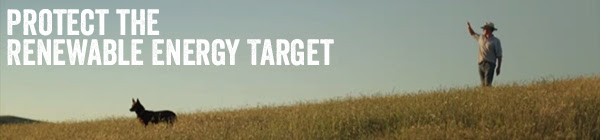
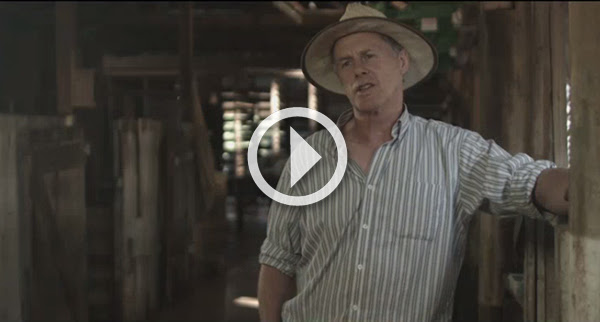
    If you ask Charlie Prell, a farmer from the NSW town of Goulburn, what the government could do to support farmers, he’d say it’d be keeping a solid, stable Renewable Energy Target.

    Charlie’s neighbour Kim agrees. As a small-business owner down the road, she’s watched the local economy boom as a result of the renewable energy industry. John, from the nearby earthmoving company, has hired an extra 40 locals since the introduction of solar and wind projects into the community. Even the Mayor of Goulburn, a staunch conservative, believes that renewables are the future for the area.

    But the continued prosperity of townships like Goulburn is now at risk. With two weeks left of Parliament, it’s likely Tony Abbott will attempt to push through cuts to the Renewable Energy Target (RET). If he succeeds, it’ll be devastating for our clean energy industry and regional Australia.

    Charlie features in this powerful TV ad, telling his story and the story of his community. With the help of GetUp’s environmental partner organisations, we’ve secured advertising spots on Sky News (the channel shown on every TV screen in Federal Parliament). If we can air this ad in the offices of MPs and Senators during the critical final sitting days of Parliament, we’ll show them just how much worse off Australians will be, including those in the Coalition’s heartland, if the Government cuts the RET.

    Will you chip in to help show the Government that cutting the Renewable Energy Target will risk losing their key voter base in regional Australia?

    http://www.getup.org.au/renewing-australia

    So far, the RET has created 24,000 new jobs and $20 billion worth of investment in Australia. But as it stands, investment has dropped by 70% this year just from the mere speculation that the Government will cut the RET.1 If speculation proves true and the Government cuts the real 41,000 GWh target, it would completely devastate the industry.

    When Tony Abbott came into office just over a year ago, he declared Australia “open for business”. But regional towns across Australia – the Coalition’s core – are beginning to speak out about how his plan to cut the RET will do the exact opposite.

    And the Coalition are listening to their constituents closely. Right now, the Abbott Government is more vulnerable than they’ve ever been in the polls2 – they know they can’t afford to lose supporters, which is why we need to take the story of Goulburn to Canberra. Because as people in Charlie and Kim’s community know, an attack on the Renewable Energy Target is an attack on regional Australia.

    If enough of us chip in what we can, we can keep this strategic TV ad running on Sky News for the remainder of the parliamentary year so our politicians know cutting the RET would mean damage to their electorates they can’t afford to risk. If we raise enough money, we’ll be able to fund ads in critical regional and marginal electorates too.

    Click here to check out the video and help get it on air!

    Over 75% of Australians support the Renewable Energy Target. Yet many of our leaders probably haven’t heard Charlie’s story, and may not know just how much of a difference renewables make to regional Australians’ lives. Now’s our chance to prove to politicians voters know cutting the RET will hurt Australian jobs, households and the economy, and that we won’t support it.

    Thanks for helping tell the success story of renewables to those who need to hear it most.

    Paul and Sally for the GetUp team

    PS – On Monday, Senator Jacqui Lambie resigned from the Palmer United Party. Despite the renewable energy industry creating almost a thousand jobs and tens of millions of dollars worth of investment in Tasmania, Ms Lambie has already stated she’s ready to negotiate the RET’s repeal with Mr Abbott.3 Tony Abbott has never been closer to cutting the RET, so we need to act now. Will you chip in to get this ad on air? http://www.getup.org.au/renewing-australia

    References:
    [1] Investment in renewable energy down 70 per cent: Climate Council report, ABC News Online, 10 November 2014
    [2] Poll Bludger: Obama-Xi deal spoilt Abbott’s hoped-for G20 bounce, Crikey, 21 November 2014
    [3] RET under new threat from cross benchers after Lambie quits PUP, Renew Economy, 24 November 2014

  • Renew Economy Daily Update

    Click here to enable desktop notifications for Gmail.   Learn more  Hide
    1 of 1
    Web Clip
    Dictionary.com Word of the Dayfrigorific: causing or producing cold. – 4 days ago

    Daily update: Regulator slaps down networks on more attempted gold-plating

    Inbox
    x

    Renew Economy editor@reneweconomy.com.au via mail68.atl51.rsgsv.net 

    3:09 PM (21 minutes ago)

    to me
    Regulator slaps down networks on more attempted gold-plating; AEMC paves way for changes in network pricing; Climate denying crusader behind Leyonhjelm RET campaign; Why Uralla wants to be first z-net town; Campaign launched for first community solar thermal+storage plant; What would success in Lima look like?; Why aren’t rural electric cooperatives champions of local clean power?; The micropower revolution is here; and Belectric unveils first battery storage facility.
    Is this email not displaying correctly?
    View it in your browser.
    RenewEconomy Daily News
    The Parkinson Report
    NSW networks want to charge 50% per cent more over the next 5 years than the regulator thinks is reasonable. The networks, it says, are still not taking into account lower peak demand, lower cost of capital, and potential efficiencies.
    Solar households face changes to how their bills are packaged after AEMC delivers new rules to impose ‘cost reflective’ pricing on networks.
    Senator leading charge to kill renewables is advised by former head of one of Australia’s most notorious climate science-denying, anti-wind NGOs.
    NSW town of Uralla wants to be Australia’s first zero net energy town, powered by 100% renewables, to boost local investment, address climate change.
    NGO campaigns climate-minded people to invest in development of Australia’s first citizen-funded community solar thermal + storage plant.
    Here are five things that need to happen at the Lima negotiations for them to be considered a success.
    Why are America’s rural electric cooperatives are tethered to dirty, old coal-fired power plants instead of local-wealth generating renewable power?
    Micro-electricity producers are relatively small scale, inexpensive, and most importantly, produce little to no carbon emissions.
    Belectric and Vattenfall cut the ribbon for a new battery storage facility at the Alt Daber solar power plant in Germany.
  • CAN you believe it? 350 org Australia

    Click here to enable desktop notifications for Gmail.   Learn more  Hide
    1 of 16
    Web Clip
    The Age National HeadlinesFriends could end up at Demons in AFL5 hours ago

    CAN you believe it?

    Inbox
    x

    Charlie Wood – 350.org Australia <350@350.org>

    10:32 AM (2 minutes ago)

    to me

    Dear friend,

    CAN you believe it? Last week, the Australian Financial Review named Commonwealth Bank as an arranger for Indian mining giant Adani’s plan to build the world’s largest coal port on the Great Barrier Reef. CommBank has neither confirmed nor denied this.

    Click here to tell CommBank that they CAN and must say no to Adani!

    The Abbot Point coal port expansion will enable coal companies to unlock nine mega mines in Queensland’s Galilee Basin that would cook the climate and wreck the Reef.

    Over the past 12 months, over 150,000 Australians have urged Commonwealth and the other Big Australian Banks to get out of fossil fuels and say no to Abbot Point. They’ve met with branch managers, taken out full-page newspaper ads, asked questions at AGMs, shut their CommBank accounts and moved millions of dollars out of the Bank.

    But CommBank is not listening so we urgently need your help to step things up. CommBank is terrified of their brand reputation being tarnished. Their worst nightmare is hundreds of angry customers turning up on their doorsteps and plastering their inboxes and social media channels, so this is where we need to focus our energy right now!

    Help us flood CommBank with messages telling them we won’t stand idly by as they do deals that will cook the climate and wreck the Reef.*

    Commonwealth Bank is a major sponsor of the Great Barrier Reef Foundation. Their Chairman is on the Foundation’s Board. They say they take climate change seriously. So how come they’re working for one of the dodgiest mining companies who wants to unlock Australia’s biggest carbon bomb and irreparably damage the Reef?

    Already eight major international banks have said no to Adani. They see how dodgy and damaging this crazy coal deal is and have ruled out supporting the destruction

    Help us talk sense into CommBank – tell them they CAN and MUST say no to Adani today.

    Yours for a clean energy future,

    Charlie for 350.org Australia

    *Your messages will be taken directly to the Bank tomorrow when Sydneysiders turnout at CommBank’s headquarters.

    PS: Thanks so much to those of you who took action to tell the State Bank of India to get out of this project too! Since we emailed, over 5600 emails have been sent to the Bank. Help us keep them coming by signing on or sharing this link today: www.350.org.au/SBIsayno


    350.org is building a global climate movement.You can connect with us on Facebook, follow us on Twitter, and become a sustaining donor to keep this movement strong and growing.