Author: Neville

  • Daily update: Utilities wake up to threat of mass grid defection

    ere to enable desktop notifications for Gmail.   Learn more  Hide

    1 of 3
    Why this ad?
    Small loads our specialtywww.sydney-rubbishremovals.com.au – Rubbish recycling, collection and more – save time and money

    Daily update: Utilities wake up to threat of mass grid defection

    Inbox
    x

    Renew Economy editor@reneweconomy.com.au via mail200.atl81.rsgsv.net

    3:09 PM (9 minutes ago)

    to me
    Utilities wake up to threat of mass grid defection, CCA warns on action as Abbott’s advisor rejects science, Clean energy manufacturers warn of doom if RET slashed, Yingli, NGOs launch campaign as polling backs renewables, Slash Australians’ power bills by beheading a duck at night, The death of another beautiful game? Women smart than men on climate and clean energy, Massive Oz coal project dumped in face of China energy revolution.
    Is this email not displaying correctly?
    View it in your browser.
    RenewEconomy Daily News
    The Parkinson Report
    At least one of Australia’s big retailers has woken up to the threat of mass grid defection, as solar and storage make competitors of their consumers.
    Australia’s independent climate policy advisor calls for stronger climate policies, while Abbott’s business advisor says climate science a con.
    Australia’s few clean energy manufacturers – including one transitioning from car industry – have warned of job losses and closures if RET is changed.
    World’s 2nd biggest turbine maker warns China companies took Abbott at his word, while world’s biggest solar manufacturer says Australia could be International laggard.
    NGO’s launch “Stop the Dinosaur” campaign to protect renewables target, as new polling shows overwhelming support for green energy.
    Solar has slashed demand for electricity during the day, but left evening peak power demand largely unchanged. That’s why we now need to behead a duck.
    The EU’s ‘bought’ proposal to kill off renewable energy makes FIFA’s decision to hold the 2022 World Cup in Qatar look scrupulously honest.
    More women accept the science of climate change, and the benefits of renewable energy, than men.
    Another major Australian coal infrastructure project – a proposed 180m tonne coal port – has been dumped as coal markets turn and China
  • How Rupert Murdoch created the world’s newest climate change villain

    Monday, Jun 23, 2014 01:30 AM +1000

    How Rupert Murdoch created the world’s newest climate change villain

    Australia was once a leader on climate action. Thanks to American conservative powerhouses, that’s no longer true

    Topics: Rupert Murdoch, Climate Change, Global Warming, Australia, Tony Abbott, Grover Norquist, Conservatism, Climate deniers, , ,

    How Rupert Murdoch created the world's newest climate change villainTony Abbott, Rupert Murdoch (Credit: Reuters/Dinuka Liyanawatte/Lionel Bonaventure/Photo montage by Salon)

    Australia, the sunburned country, is uniquely vulnerable to the dangers and risks of global warming. Whether it is the severe effects of flooding, unseasonal heat waves, devastating bush fires or decade-long droughts, Australia’s people, economy and natural environment have all keenly felt the impact of extreme weather and climate change.

    Australia’s national scientific organizations have been raising the alarm for more than a decade, and the previous government accepted that scientific consensus and enacted a cap-and-trade scheme in 2012. But after a divisive election last year — one that saw native-born Rupert Murdoch exercise his considerable influence in Australian media markets to disastrous effect — the country is now governed by a deeply unpopular Liberal-National government, crafted in the image of the most climate-denying elements of the Tea Party. And its position on climate change has significant impacts on global efforts to reduce carbon emissions: Australia is not only the chair of the G-20 group of nations, but also holds a place on the U.N. Security Council.

    The rest of the world saw this ideology on full, embarrassing display with the recent visit by Prime Minister Tony Abbott to Canada and the United States. A week after President Obama’s introduction of substantial policy reforms to reduce carbon pollution, and China’s first-ever pledge to cap carbon emissions, the Australian prime minister stood next to his Canadian counterpart and scoffed at the idea of global warming, saying that climate change is “not the only or even the most important problem that the world faces” and that measures to reduce carbon emissions would “clobber” the economy.

    All of this marks a shift for Australia, from constructive middle-power to fringe-dwelling rock-thrower and -blocker. Back at home, Tony Abbott is on course to make Australia the first nation in the world to abolish a legislated carbon price.

    But how on earth did this happen?

    The calm before the storm


    advertisement

    Tony Abbott was elected prime minister last September, after six years of rule by the progressive Labor Party, which had engineered Australia’s leap forward as a leader on global climate policy. Following its rise to ruling party in 2007, the first act of the new Labor government was to ratify the Kyoto protocol, after a decade of refusal by the former prime minister and close George Bush ally John Howard. Howard himself was defeated and ignominiously lost his own seat in parliament. Labor’s historic victory was later dubbed the world’s first “climate election.”

    For the decade leading up to that 2007 election, Australia had suffered a prolonged drought affecting almost the entire continent. Water restrictions were introduced in most major population centers, and the nation’s food bowl, the Murray Darling Basin, was close to collapse. A series of severe bush fires also ravaged the country, peaking in 2009 with Australia’s worst ever bush fire disaster, Black Saturday, when 173 people died.

    Public support for action on climate change was at an all-time high, and before the 2007 election, Labor leader Kevin Rudd called climate change the “greatest moral, environmental and economic challenge” facing Australia and the globe. He repeated the statement and the sentiment many times as prime minister.

    On the back of this wave of support, Rudd introduced carbon pricing laws in 2009 called the Carbon Pollution Reduction Scheme. The conservative opposition was in disarray, and its private-equity millionaire leader Malcolm Turnbull, a climate-action advocate, largely supported the policies. So did, surprisingly the national coal-miners union.

    Someone who did not support the legislation was Tony Abbott. Backed by the hard-right sections of his party  – many of whom openly denied the scientific basis of anthropogenic global warming — he defeated Turnbull in late 2009 in a vote for the leadership by a single vote. The carbon pricing laws were then defeated in the senate, where the Greens party voted with the climate deniers to block the carbon pricing laws. Two moderate Liberal-National senators crossed the floor to vote with the Labor government, but to no avail.

    Meanwhile, the failure of the Copenhagen Climate Council to deliver the strong climate action that many were hoping for, combined with the failure of the carbon pricing laws in the senate, saw Rudd shelve the policy to concentrate instead on the economy and healthcare reform in the aftermath of the global financial crisis. His moral and political standing subsequently collapsed, and he was replaced as prime minister in 2010 by Julia Gillard.

    Unholy alliance: Murdoch, Norquist and Abbott

    In 2010, Gillard managed to shepherd a cap-and-trade law to passage, in the form of the Clean Energy Future Act. However, the government’s popularity was on the wane, and the opposition party took full advantage. Tony Abbott called the science of climate change “crap” and various senior figures in his front-bench team openly questioned the scientific basis of anthropogenic global warming. Abbott spoke at anti-carbon price rallies in front of banners proclaiming Prime Minister Gillard as a “witch” and a “bitch.”

    Behind the scenes, several key members of Abbott’s party including the now-Finance Minister Mathias Cormann, visited the United States to meet with conservative think tanks such as the Heritage Foundation, and conservative players in last year’s government shutdown debacle of 2013, including Matt Kibbe and Grover Norquist.

    Gillard’s carbon pricing laws eventually came into effect in 2012, amid the biggest fear campaign ever seen in Australia. Rupert Murdoch-owned mastheads, controlling as much as 70 percent of the newspaper market, carried front-page stories attacking the laws.

    U.S. climate-denier talking points became commonplace in the Australian media. Gina Rinehart, whose wealth is significantly derived from coal mining, aggressively bought up shares in Australia’s only major non-Murdoch-owned media company, Fairfax. She is now its largest shareholder. Australia’s only national daily newspaper, the Murdoch-owned Australian, promoted “misleading” stories giving credence to climate denialist views, outnumbering those accepting climate science by 10-to-1, according to a report in the Quarterly Essay.

    A senior Liberal-National senator who played a major role in Abbott’s rise to the party leadership was sponsored to attend a Heartland Institute conference in 2013; that same senator is also a member of the American Legislative Exchange Council, an organization that has opposed climate action in the past. Another senior backer of Abbott and former Howard government minister, Nick Minchin, who has since retired, is an avowed climate skeptic and claims recent warming is due to a “natural cycle”

    Despite the fear campaign, after a year of operation of the carbon pricing laws, the evidence was in: Carbon emissions from the now carbon-constrained sectors of the economy decreased by 7 percent, and new renewable energy generation increased by 30 percent.

    Nothing was going to save the Labor government, though. They were swept from power by the Abbott-led opposition in September 2013. Abbott named repealing the carbon price laws as his No. 1 legislative priority in the days after the election. And among his first acts as newly elected prime minister, in contrast to Rudd in 2007, was to block the creation of an international Commonwealth climate compensation fund, and to abolish the independent Climate Commission.

    Coal’s terrible toll

    To understand Australia’s conflicted and controversial path toward first legislating a carbon price — and later its steps toward abolishing it — it is important to recognize the huge influence that the fossil-fuel industry has.

    Coal is Australia’s second largest export industry, and Australia itself has the largest reserves of brown coal in the world; globally it is the largest coal exporter. These reserves are the source of enormous revenue for state and national governments, through royalties and company taxes. Several of Australia’s billionaires, including the world’s richest woman, Gina Rinehart, and newly elected member of parliament Clive Palmer, have substantial coal interests.

    The domestic energy generation industry is also closely tied to coal, with around 76 percent of stationary electricity coming from coal-fired power stations. It was these utilities, along with big emitting heavy manufacturers, that were covered by the carbon price laws.

    In addition to an ideological opposition to the reality of climate change, the Liberal-National party has received substantial financial support from the fossil fuel and mining industry. While the amounts are not comparable to the tens of millions spent on U.S. elections, for a nation of 23 million people the donated sums are large.

    In Australia there are no federal caps on donations and corporations are legally allowed to donate to political parties. Regulations consist of declaration thresholds, which were controversially increased by the Howard government in 2006 from $1,500 to $10,000 (and then linked to inflation). Although Labor tried to reduce this threshold, it was blocked by the Liberal-National dominated Senate from 2007-13.

    Major donors to the LNP since 2010 include Hancock Coal (owned by Gina Rinehart), Minerology (owned by Clive Palmer), Caltex (Chevron), QCoal, Santos and Woodside. Also contributing to the LNP were energy retailers AGL, Origin Energy and Energy Australia.

    At a recent Minerals Industry dinner, Prime Minister Abbott clearly stated that he thought “our job in government is to keep mining strong” and reaffirmed that “we are determined – utterly determined – to abolish the carbon tax.”

    According to a report by Charles Sturt University professor Clive Hamilton, almost $13 million was donated by fossil fuel interests to the Liberal-National party before the 2007 election.

    More recently, the Independent Commission Against Corruption in the state of New South Wales has discovered that an entity associated with the Liberal-National party called Eight-by-Five was operating to allegedly circumvent donation declaration laws. Key players involved in the scandal included a coal magnate who was allegedly seeking planning approval for a $1 billion coal loader. Eight-by-Five was linked to federal senator and assistant treasurer Arthur Sinodinos, who was the former chief of staff to Prime Minister John Howard from 1996 to 2006.

    The commission has uncovered the extent and depth of influence held by mining companies and developers in the Liberal-National party in the prime minister’s home state of New South Wales.

    Similarly, an investigation revealed that in the coal-rich state of Queensland, a QCoal corporate affairs executive was seconded by the mining company to the Liberal-National party to work full-time in the lead-up to the 2012 state election. QCoal’s owner, Chris Wallin, is one of the LNP’s largest donors, and QCoal also made large donations to the LNP. There is no indication of unlawful behavior.

    The age of Abbott

    After Abbott won the election, he announced a review into Australia’s previously bipartisan renewable energy target. Set at a goal of 20 percent renewables by 2020, the renewable energy target has been criticized by the fossil fuel energy producers for lowering the price of electricity and reducing demand from high-emitting stationary power stations. Liberal-National party donors Origin Energy and Energy Australia have been lobbying for the target to be reduced.

    Abbott’s review is headed up by climate skeptic and anti-wind farm businessman Dick Warburton. He was a significant business voice against the carbon price under Labor and has expressed the view that climate science is not settled: “On the cause there’s huge debate about whether carbon dioxide is the main cause.”

    Finally, the scheme announced by Tony Abbott to replace the carbon price, called “direct action,” has been criticized by businesses, unions and conservation groups alike for its enormous expense for no perceivable carbon emission reductions. It has been called a “fig-leaf” for climate deniers by several commentators, notably the former Liberal-National party leader Malcolm Turnbull. The policy amounts to massive government regulation and handouts to polluters in contrast to the market mechanism of emissions trading.

    While Prime Minister Abbott is doing all he can to stymie action on global warming in Australia, his views also have an international impact.

    Australia has a seat on the United Nations Security Council, and holds the chair of the G-20 group of nations. At the UNFCCC, Australia has joined the shrinking group of fossil fuel-addicted nations like Canada and is now seen as “anti-climate” at multilateral negotiations.

    Australia’s climate obstinacy comes at a time when President Obama is forging ahead with his own direct action. Abbott is now significantly out of step with Australia’s major ally and trading partner on climate policy; this saw substantial confusion as to whether he would cancel meetings with the heads of the IMF and World Bank, both of whom are climate action advocates. (He later met with both.)

    The same ideological and climate-denying foes in Congress who are blocking a path forward for Obama have secured a foothold in Australia. Abbott’s actions no doubt give credibility to the climate skepticism and stalling tactics of denialist Republicans.

    But despite the scare campaign and media cheer squad against climate change and the carbon price, Australian public opinion is swinging back in favor of action.

    Opinion polls show that not only is Tony Abbott one of the least popular prime ministers in 40 years, but also that Australians are again increasingly concerned with global warming.

    This change in public opinion coincides with unprecedented heat waves, unseasonal bush fires and threats to the Great Barrier Reef. This May saw a record-matching hot streak in a normally cool month, leading to Twitter wits quipping that “Winter is not coming” to Australia.

    The carbon price repeal has already been blocked in the senate. A new senate will sit in July. Anything could happen.

  • Global justice, sustainability and the sharing economy

    Global justice, sustainability and the sharing economy Stories listHome >

    Global justice, sustainability and the sharing economy

    by Rajesh Makwana, originally published by Share the World’s Resources  | Jun 18, 2014

    If the sharing economy movement is to play a role in shifting society away from the dominant economic paradigm, it will have to get political. And this means guarding against the co-optation of sharing by the corporate sector, while joining forces with a much larger body of activists that have long been calling – either explicitly or implicitly – for more transformative and fundamental forms of economic sharing across the world.


    With public interest in the sharing economy on the rise, a polarisation of views on its potential benefits and drawbacks is fast becoming apparent. Much of the mainstream media continues to focus on the ability of the sharing economy to generate wealth and create new billionaires, while some social entrepreneurs and progressives claim that interpersonal sharing is the solution to the world’s most intractable problems. At the same time, a growing number of analysts are concerned that the sharing economy could enable businesses to evade regulations and even break the law. These increasingly conflicting views reflect the diverse interests of the many individuals, organisations and businesses engaged in what is essentially an emerging movement for sharing that has yet to clarify its purpose.

    To add a further layer of confusion to the debate, there is little agreement on what the sharing economy actually is. For example, Rachel Botsman – a leading proponent of the ‘what’s mine is yours’ philosophy – argues that the sharing economy forms part of a much wider collaborative economy that leverages technology and trust to facilitate a more efficient distribution of goods and services. A broader definition has been put forward by The People Who Share, who regard the sharing economy as an “alternative socio-economic system which embeds sharing and collaboration at its heart – across all aspects of social and economic life”. Friends of the Earth have also significantly expanded the discourse on sharing to include the political sphere, albeit focussing on city-wide sharing as a means for improving environmental sustainability and equity among citizens.

    All of these existing definitions still pay insufficient attention to national and global forms of economic sharing, particularly those facilitated by democratically elected governments. Instead, the focus generally remains limited to individual (peer-to-peer) and local sharing initiatives. Apart from those advocating for localised forms of sharing to be replicated in cities across the world, rarely is the sharing economy discussed in terms of systems of sharing and redistribution that operate on a nationwide or global scale, or in relation to calls for governments to institute the more transformative forms of economic sharing that are possible today.

    This is not to deny the very real potential of the sharing economy to help strengthen communities, reduce the rate at which resources are consumed, and create financial returns at very low marginal cost. However, if our reason for supporting different modes of sharing is a desire to create a more equitable and sustainable economic system, we need to significantly broaden our understanding and interpretation of what constitutes a sharing economy. There is no question that it makes sound economic and environmental sense for businesses and individuals to reduce their carbon footprints and share scarce resources. But government policy (enacted either nationally or through international agreements) ultimately determines how effectively nations and the international community can address the underlying causes of inequality, climate change and resource wars – some of the most pressing challenges that face humanity in the 21st century.

    Bearing in mind the urgent need to implement sharing on a systemic and global basis, a fresh evaluation of the sharing economy from the perspective of social justice and environmental sustainability is presented below. The five general positions that follow do not present a comprehensive critique by any standards, but they are a starting point for broadening the sharing economy discourse and making it more relevant to the bigger picture issues that concern many progressives today. In particular, this perspective questions the role of commerce in so-called sharing-related business activities. It also proposes that we should include longstanding national and global forms of sharing in our definition of what constitutes a sharing economy, especially if we are working towards the creation of a more equal, just and sustainable world.

    Interpersonal forms of sharing are not enough to deliver social justice or environmental sustainability

    There is good reason to doubt whether the sharing economy (at least as it is generally understood today in terms of peer-to-peer activities) can ever have a significant impact on pressing global crises. For example, many people involved in the sharing economy aim to reduce their personal consumption to sustainable levels. While this is an important practice, the sheer scale of the ecological crisis suggests that simply sharing surplus or under-utilised personal goods is not a sufficient response to a global problem that requires systemic change at all levels to resolve. As often repeated, humanity as a whole is consuming natural resources 50% faster than the planet can replenish them. Not only is this massive overshoot in global consumption levels set to worsen as the world’s consumer class expands, it is also further complicated by huge imbalances. Around 20% of the world’s population are responsible for 80% of all resource consumption, while the remaining 80% are surviving on a ‘low consumption pathway’ and 20% are in ‘basic needs deficit.’

    Clearly the global sustainability crisis cannot be addressed effectively until the structural factors that are responsible for creating these inequalities are fully addressed, and this has huge implications for transforming government policies and economic systems both nationally and globally. A huge array of reforms are needed to reconfigure the way nations extract, produce, distribute and consume resources across the world. For instance, this would include rethinking our notions of progress and prosperity, ending the dominance of consumption-led economic growth over government policy, and reversing the relentless push towards trade liberalisation. Much also needs to be done to dismantle the culture of consumerism, reconceptualise financial measures like GDP, and shift investment towards building and sustaining a low-carbon infrastructure, as endlessly debated by civil society.

    In fact, the entire ecological conundrum is increasingly being framed in terms of sharing by progressive analysts – either through an ‘equity and fair shares’ lens or from the perspective of sharing the planet’s resources more sustainably to secure basic human rights for all. Although these critical discourses on sharing are becoming ever more urgent and popular among civil society thinkers, sharing economy advocates have generally neglected these systemic issues and failed to connect with environmentalists and anti-poverty campaigners who are often calling for vital forms of global economic sharing.

    The need for public sector-driven solutions is also evident in relation to tackling poverty and inequality which, in simple terms, requires governments to ensure universal access to essential goods and services. But instead of promoting or facilitating these fundamental aspects of economic sharing, most sharing economy supporters tend to focus on the collaborative (and often for-profit) sharing of household items, cars or spare rooms – not the resources that people most desperately need to be shared today such as nutritious food, healthcare and essential public services. Similarly, while sharing in terms of charitable giving and voluntary assistance within communities can help redistribute wealth and alleviate some instances of human deprivation, it cannot address the structural causes of poverty and inequality that have their basis in public policy.

    If advocates of the sharing economy are really motivated to tackle complex social and ecological issues, they should also devote time and energy to promoting forms of sharing that are far more effective at addressing these problems, such as universal social protection or contraction and convergence approaches to addressing climate change. This means moving beyond the solely personal, community and city-oriented view of sharing, and embracing a wider understanding of sharing that includes the role of governments in advancing effective social policy and environmental regulations. Most of all, it is at the national and global level that the sharing economy can be revolutionary and transformative – if its supporters are willing to engage in the gritty politics of reforming government policy to establish truly effective and ‘sharing’ societies.

    A much broader definition of the sharing economy is needed

    Existing definitions of the sharing economy tend to focus on personal, local and business approaches to sharing, even when those involved in the sharing movement profess to care deeply about climate change and other global issues. But these definitions present a very limited and superficial understanding of what the sharing economy is, which disconnects the sharing economy movement from serious attempts to address social injustice or environmental degradation. For instance, national systems of sharing are arguably the most established, important and fundamental examples of sharing economies that exist in the modern world, as alluded to above. Through systems of progressive taxation and the provision of essential public services and social protection for all, the vast majority of people in most developed countries are involved in and benefit from these broad-based sharing systems. Why aren’t these crucial examples of sharing part of the discourse and evolving definition of the sharing economy?

    Perhaps a majority of those involved in the sharing economy come from an entrepreneurial or technology background, and therefore prefer to focus on social enterprise solutions or software-driven and online peer-to-peer platforms. Others might be deeply sceptical about state intervention and regulation – a view that is particularly prominent in the United States. Or perhaps, as various commentators are increasingly suggesting, the sharing economy is more concerned with profit and the private sector than it is with the ethic of sharing per se. It stands to reason that if the sharing economy movement had a more robust focus on the welfare of people and the planet, one would expect more vocal opposition to austerity measures or greater support for environmental campaigns by organisations like Greenpeace – issues that are rarely if ever mentioned on the pages of the most prominent sharing economy websites. In this sense, the millions of people across the US and Europe who are mobilising against government austerity policies could be considered the real champions of the sharing economy.

    In some cases, focussing on new sharing economy platforms, technologies and initiatives could even undermine more effective and established systems of national sharing. For example, while car sharing schemes are clearly good for the environment, a universally accessible public transport system is undeniably better. Indeed public transport can be regarded as a greener citywide or nationwide sharing platform – but few people promoting the sharing economy are advocating to improve such services. The intense focus that the sharing economy places on individuals and the private sector might also explain the recurring issues around sharing-oriented businesses flaunting regulatory and licencing conventions designed to protect society at large.

    If a key focus for the sharing economy movement is on resolving global crises, it stands to reason that our understanding and definition of the sharing economy must include critical forms of sharing resources on an international basis that urgently need strengthening and scaling-up. Sharing resources on a finite planet, almost by definition, must take place globally and between governments. Even though international mechanisms for sharing are still in their infancy compared to the national systems of sharing mentioned above, some examples do already exist. These include essential forms of global redistribution such as humanitarian aid; emergent systems of global governance (as ineffectual and biased as they currently are); and frameworks and agreements that facilitate the protection and sharing of the planet’s scarce natural resources. This international aspect of sharing is the most crucial with regards to social and environmental justice, although it still remains the least developed or discussed among proponents of the sharing economy.

    Supporters of peer-to-peer sharing could help build a much stronger identity by recognising that their activities form part of these much broader and more fundamental sharing systems that operate at all levels of society. An inclusive working definition that can embrace the diverse national and international forms of sharing was put forward in STWR’s report Financing the global sharing economy, and is worth revisiting:

    “The sharing economy is a broad term used in this report that encompasses the many systems of sharing and redistribution that exist locally, nationally and globally – whether facilitated by individuals, states or other institutions. It is concerned with the social, economic, environmental, political and spiritual benefits of sharing both material and non-material resources – everything from time and love to money and natural resources.”

    “In comparison, the global sharing economy refers specifically to systems of sharing and redistribution that are international or global in nature – whether facilitated directly by people and governments or by global institutions like the United Nations. It refers to the many methods by which the international community can share their financial, technical, natural and other resources for the common good of all people. The global sharing economy is still in its infancy, but is nonetheless an important expression of the growing sense of solidarity and unity between people and nations.”

    The sharing economy movement must resist co-optation by the corporate sector

    In a worrying phenomenon sometimes described as ‘sharewashing’, commercial activities that have never before been regarded as sharing are now re-branded under this trendy new meme. For example, most people would agree that renting is not the same as sharing and neither is giving people a lift in your car in exchange for cash. Room sharing and car sharing enterprises might offer excellent and rewarding services in their own right, but they may have little to do with the principle of sharing in relation to human rights and concerns for equity, democracy, justice and sustainability, especially when the main beneficiaries are company shareholders and not customers or employees. It is already well recognised that many so-called sharing enterprises adopt business models and ethics that do not allow wealth, income or decision-making to be shared with their employees or customers to any significant extent.

    Above all, we must guard against sharing-oriented initiatives from being co-opted by the corporate sector. Rampant commercialisation is at the heart of the social and environmental problems we face, so those involved in the sharing economy movement should be cautious about supporting large corporations whose wider business models and practices fail to embody the principle of sharing in any real sense. This sort of co-optation is a well-documented phenomenon in relation to social and environmental issues, with the ‘greenwashing’ of oil companies that supposedly pursue an ecological agenda, and the ‘whitewashing’ of unethical corporations through Corporate Social Responsibility programs.

    If sharing is not to be co-opted by venture capital and the corporate sector, perhaps there should be a minimum criteria for any company that professes to be part of the sharing economy. At the very least, sharing economy businesses should be set up as not-for-profits or cooperatives, or else they should adopt business models that promote the triple bottom line of people, planet and profit. They must also pay their fair share of taxes, as this is a key part of the established and most important system of sharing that we have (yet) created.

    Sharing is already a common cause for the global justice movement

    Many supporters of sharing economy initiatives think that sharing is fashionable and trendy – a lifestyle choice – and that by sharing they are doing their bit to promote egalitarian or environmentally conscious ethics and values. But if the sharing movement is to play a role in shifting society away from the dominant economic paradigm and help to resolve global crises, it will have to get political. This means recognising that sharing economy advocates are part of a much larger body of people calling for more transformative forms of economic sharing in relation to pressing social and environmental concerns.

    Millions of people across the world are already campaigning for economic and political reforms that embody the principle of sharing, although they don’t always use the term ‘sharing’ in their advocacy and activities. The sharing of wealth, power or resources is central to what progressives have long been calling for, and supporting these demands for social justice, peace and ecological sustainability is fundamental to affecting structural change on the scale that is now necessary. This means being more aware of the issues that environmentalists and activists campaign on, and explicitly aligning local sharing activities with their broader justice-based vision of economic and ecological sharing.

    For example, as mentioned above, strengthening systems of progressive taxation and public services is essential at the national level – and this means opposing economic austerity measures and supporting nationwide systems of sharing. Campaigners are also calling for new mechanisms for sharing the global commons (including the atmosphere – a key issue in international climate change negotiations) as this is the only way to create a more sustainable and peaceful world. If we support the sharing economy in its broadest sense as outlined here, we need to support these and other sharing-related campaigns in their many and diverse forms.

    The sharing economy is best promoted by appealing to intrinsic values

    It is not hard to imagine how a process of sharing could theoretically play a key role in addressing multiple global crises, as genuine forms of economic sharing should result in a fairer distribution of resources for all people within planetary limits. However, there is a great deal of evidence to suggest that promoting the sharing economy as another way to supplement our income is likely to promote extrinsic values that will undermine efforts to create a more equitable and sustainable world. According to detailed studies, promoting intrinsic values that go beyond concerns about oneself are far more likely to encourage sustainable lifestyles than a focus on extrinsic values, such as personal financial gain. In other words, those who share because they are told it can help them make some spare cash are less likely to engage in other environmentally beneficial activities, compared to those who share out of purely environmental concerns.

    Of course, there is nothing wrong with making some extra money or being motivated by extrinsic values. However, if our goal is to help address the world’s interconnected and intractable crises, the evidence suggests that our campaigning activities must remain firmly aligned to intrinsic values. This has huge implications for all those involved in promoting the sharing economy at a time when so much of the public discourse on sharing highlights the growth and success of certain businesses in predominantly monetary terms.

    To conclude, there is little doubt that through the time-honoured act of sharing we can strengthen communities, reduce consumption and facilitate the non-monetary distribution of goods and services – and this can potentially help rebalance an economic system that is increasingly dependent on greed and hyper-consumerism for its continued success. But interpersonal sharing is not enough at a time when humanity is facing what can only be described as a global emergency that includes massive poverty and rising levels of inequality, climate change and the wider ecological crisis, as well as ongoing conflicts over the world’s dwindling natural resources.

    The process of sharing can only play a transformative role in addressing these crises if we move beyond our egocentric understanding of the sharing economy, and embrace national and global forms of sharing that are facilitated by government bodies in response to urgent social and environmental needs. By being vigilant about how we promote and participate in the sharing economy, we can also guard against the pervasive influence of commerce as it seeks to expand into new markets in a last ditch attempt to preserve the status quo. And by working more closely with the many millions of campaigners and organisations across the world who recognise the transformative potential of economic sharing – whether this is explicitly or implicitly expressed – we can significantly strengthen our chances of establishing an ecologically viable and socially just future for all.

    Photo credit: cogdogblog, flickr creative commons

  • Australians want renewable energy target retained by big margin

    Australians want renewable energy target retained by big margin

    Polling shows 72% of Australians want to keep or expand RET, as Abbott government considers abolishing it

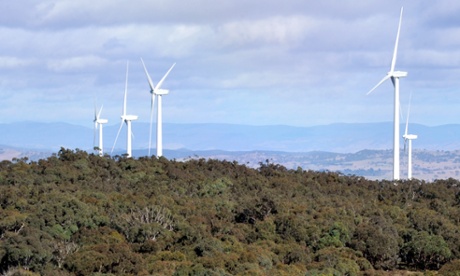
    Wind farm
    The RET requires that 20% of energy is sourced from renewables by 2020. Photograph: Alan Porritt/AAP

    Australians overwhelmingly want the renewable energy target to be retained or even increased, as the Abbott government considers abolishing the incentive for new renewable projects.

    Polling for the Climate Institute shows 72% of Australians want to keep or expand the renewable energy target (RET), which requires that 20% of energy is sourced from renewables by 2020.

    This is slightly higher than the 69% who said they wanted the RET maintained or increased when the same questions were posed in last year’s poll, despite a strong campaign over the past year by industry groups and Coalition backbenchers arguing that the RET was increasing power prices.

    Respondents were then told “opponents of the scheme say the RET is a subsidy that drives up electricity bills, while supporters say it has helped create jobs and has tripled Australia’s wind and solar energy since 2009”. 71% still thought it should remain at its current level, 20%, or be increased, even after hearing the arguments. Support was especially high among women, with only 7% wanting the RET decreased or abolished.

    But government sources said the Abbott government is likely to “grandfather” the scheme after it receives the final report from its review of the program, led by businessman and self-professed climate sceptic Dick Warburton. This would see it deliver only about one third of the renewable power that was originally legislated – with bipartisan support.

    The sources said the challenge now was to work out how this could be achieved in practice.

    The Coalition went to the election promising to keep the RET, which underpins investment in energy sources such as wind and solar, but saying it would review the fact that the policy was exceeding its original goal of delivering 20% renewable energy by 2020 because of falling electricity demand.

    As yet unreleased modelling for business groups including the Business Council of Australia, the Minerals Council of Australia and the Australian Chamber of Commerce and Industry has considered four options: leaving the RET as it is, reducing it to a “real” 20%, “grandfathering” it to allow only existing investments to continue, and abolishing it altogether.

    In its submission, the Institute of Public Affairs think tank, which favours abolition of the RET, says the government has three options, abolition, “grandfathering” or reducing it to a real “20%”.

    The RET is currently required to deliver 41,000 gigawatt hours of renewables by 2020 (which was 20% of what it was incorrectly estimated that the market would be). To deliver 20% of the current market this would have to be reduced to 33,000GWh. Grandfathering would deliver only 15,000GWh.

    The poll also found that 76% of people think state governments should do more to provide incentives to renewable energy. Again the strongest support came from women (82%).

    The poll was conducted for the Climate Institute by JWS research from May 16-20. The sample size was 1,145 and the margin of error is 2.9%.

    Warburton, a veteran industrialist and the chairman of the Westfield Retail Trust, described his views on climate science in a 2011 interview on ABC in this way: “Well, I am a sceptic. I’ve never moved away from that. I’ve always believed sceptical,’’ he said. “But a sceptic is a different person than a denier. I say the science is not settled. I’m not saying it’s wrong. I’ve never said it’s wrong, but I don’t believe it’s settled.”

  • Climatologists offer explanation for widening of Earth’s tropical belt

    This is influencing El Nino and Lanina patterns and causing the severe weather we are experiencing.

    Climatologists offer explanation for widening of Earth’s tropical belt

    Posted in Uncategorized By Neville On June 3, 2014

    widening of Earth’s tropical belt

    Climatologists offer explanation for widening of Earth’s tropical belt

    Posted in Uncategorized By Neville On March 19, 2014

    Featured Research

    from universities, journals, and other organizations

    Climatologists offer explanation for widening of Earth’s tropical belt

    Date:
    March 18, 2014
    Source:
    University of California – Riverside
    Summary:
    Climatologists posit that the recent widening of the tropical belt is primarily caused by multi-decadal sea surface temperature variability in the Pacific Ocean. This variability includes the Pacific Decadal Oscillation (a long-lived El Niño-like pattern of Pacific climate variability) and anthropogenic pollutants, which act to modify the Pacific Decadal Oscillation. Until now there was no clear explanation for what is driving the widening.

    A cool-water anomaly known as La Niña occupied the tropical Pacific Ocean throughout 2007 and early 2008. In April 2008, scientists at NASA’s …

    Credit: NASA image by Jesse Allen, AMSR-E data processed and provided by Chelle Gentemann and Frank Wentz, Remote Sensing Systems

    Recent studies have shown that Earth’s tropical belt — demarcated, roughly, by the Tropics of Cancer and Capricorn — has progressively expanded since at least the late 1970s. Several explanations for this widening have been proposed, such as radiative forcing due to greenhouse gas increase and stratospheric ozone depletion.

    Now, a team of climatologists, led by researchers at the University of California, Riverside, posits that the recent widening of the tropical belt is primarily caused by multi-decadal sea surface temperature variability in the Pacific Ocean. This variability includes the Pacific Decadal Oscillation (PDO), a long-lived El Niño-like pattern of Pacific climate variability that works like a switch every 30 years or so between two different circulation patterns in the North Pacific Ocean. It also includes, the researchers say, anthropogenic pollutants, which act to modify the PDO.

    Study results appear March 16 in Nature Geoscience.

    “Prior analyses have found that climate models underestimate the observed rate of tropical widening, leading to questions on possible model deficiencies, possible errors in the observations, and lack of confidence in future projections,” said Robert J. Allen, an assistant professor of climatology in UC Riverside’s Department of Earth Sciences, who led the study. “Furthermore, there has been no clear explanation for what is driving the widening.”

    Now Allen’s team has found that the recent tropical widening is largely driven by the PDO.

    “Although this widening is considered a ‘natural’ mode of climate variability, implying tropical widening is primarily driven by internal dynamics of the climate system, we also show that anthropogenic pollutants have driven trends in the PDO,” Allen said. “Thus, tropical widening is related to both the PDO and anthropogenic pollutants.”

    Widening concerns

    Tropical widening is associated with several significant changes in our climate, including shifts in large-scale atmospheric circulation, like storm tracks, and major climate zones. For example, in Southern California, tropical widening may be associated with less precipitation.

    Of particular concern are the semi-arid regions poleward of the subtropical dry belts, including the Mediterranean, the southwestern United States and northern Mexico, southern Australia, southern Africa, and parts of South America. A poleward expansion of the tropics is likely to bring even drier conditions to these heavily populated regions, but may bring increased moisture to other areas.

    Widening of the tropics would also probably be associated with poleward movement of major extratropical climate zones due to changes in the position of jet streams, storm tracks, mean position of high and low pressure systems, and associated precipitation regimes. An increase in the width of the tropics could increase the area affected by tropical storms (hurricanes), or could change climatological tropical cyclone development regions and tracks.

    Belt contraction

    Allen’s research team also showed that prior to the recent (since ~1980 onwards) tropical widening, the tropical belt actually contracted for several decades, consistent with the reversal of the PDO during this earlier time period.

    “The reversal of the PDO, in turn, may be related to the global increase in anthropogenic pollutant emissions prior to the ~ early 1980s,” Allen said.

    Analysis

    Allen’s team analyzed IPCC AR5 (5th Assessment Report) climate models, several observational and reanalysis data sets, and conducted their own climate model experiments to quantify tropical widening, and to isolate the main cause.

    “When we analyzed IPCC climate model experiments driven with the time-evolution of observed sea surface temperatures, we found much larger rates of tropical widening, in better agreement to the observed rate–particularly in the Northern Hemisphere,” Allen said. “This immediately pointed to the importance of sea surface temperatures, and also suggested that models are capable of reproducing the observed rate of tropical widening, that is, they were not ‘deficient’ in some way.”

    Encouraged by their findings, the researchers then asked the question, “What aspect of the SSTs is driving the expansion?” They found the answer in the leading pattern of sea surface temperature variability in the North Pacific: the PDO.

    They supported their argument by re-analyzing the models with PDO-variability statistically removed.

    “In this case, we found tropical widening — particularly in the Northern Hemisphere — is completely eliminated,” Allen said. “This is true for both types of models–those driven with observed sea surface temperatures, and the coupled climate models that simulate evolution of both the atmosphere and ocean and are thus not expected to yield the real-world evolution of the PDO.

    “If we stratify the rate of tropical widening in the coupled models by their respective PDO evolution,” Allen added, “we find a statistically significant relationship: coupled models that simulate a larger PDO trend have larger tropical widening, and vice versa. Thus, even coupled models can simulate the observed rate of tropical widening, but only if they simulate the real-world evolution of the PDO.”

    Future work

    Next, the researchers will be looking at how anthropogenic pollutants, by modifying the PDO and large scale weather systems, have affected precipitation in the Southwest United States, including Southern California.

    “Future emissions pathways show decreased pollutant emissions through the 21st century, implying pollutants may continue to drive a positive PDO and tropical widening,” Allen said.


    Story Source:

    The above story is based on materials provided by University of California – Riverside. The original article was written by Iqbal Pittalwala. Note: Materials may be edited for content and length.


    Journal Reference:

    Robert J. Allen, Joel R. Norris, Mahesh Kovilakam. Influence of anthropogenic aerosols and the Pacific Decadal Oscillation on tropical belt width. Nature Geoscience, 2014;

  • Urgent Message to Governments from the Arctic Methane Emergency Group, AMEG

    ameg

    map

    Register For News Updates:

    Arctic Sea Ice – Methane Release – Planetary Emergency

    Urgent Message to Governments from the Arctic Methane Emergency Group, AMEG

    AMEG’s Declaration
    Governments must get a grip on a situation which IPCC, the Intergovernmental Panel on Climate Change, has ignored.  A strategy of mitigation and adaptation is doomed to fail.  It will be impossible to adapt to the worst consequences of global warming, as IPCC suggests.  


    The Arctic must be cooled, ASAP, to prevent the sea ice disappearing with disastrous global consequences.   Rapid warming in the Arctic, as sea ice retreats, has already disrupted the jet stream.  The resulting escalation in weather extremes is causing a food crisis which must be addressed before the existing conflicts in Asia and Africa spread more widely.


    Dangerous global warming and ocean acidification must be prevented by reducing the level of CO2 in the atmosphere, especially by improved agricultural practice, thereby addressing the food crisis at the same time.


    This is an unprecedented opportunity for international collaboration for common purpose.


    1.   The Arctic is rapidly heading for meltdown.  As snow and sea ice retreat, exposing land and sea with lower albedo (i.e. less reflectiveness), more solar energy is absorbed, thus leading to further melting and retreat in a vicious cycle.  This cycle has been self-sustaining for many years – we are well past the tipping point.  There is no sign of any natural process to break the cycle.


    2.   As the extent of snow and sea ice has been plummeting, even while global warming has stalled, Arctic albedo loss has rapidly overtaken CO2 as the main driver of climate change in the Northern Hemisphere, as witness the escalation of weather extremes.  The Arctic has warmed well above global average, resulting in a reduction of the temperature gradient between tropics and pole, this in turn reducing the strength of the polar jet stream, with increased meandering and a tendency to get stuck in blocking patterns.  This explains the recent escalation of weather extremes in the form of long periods of weather of one kind such as the months of high rain the UK has experienced this past winter 2013-14, and the protracted extreme cold in the US over the same period, crop failures and an upward trend in the world food price index.

    3.   While land and subsea permafrost thaws ever faster, methane could become the dominant climate forcing agent. 
    Emissions threaten to break through the gigaton-per-year level within twenty years.  AMEG has been continuing its research into the situation.  A recent paper, co-authored by Peter Wadhams, a founder member of AMEG, has used the Stern Review economic model to show that the economic cost of a 50 megaton release of methane from the Arctic Ocean seabed will cost $60 trillion.  Research in the East Siberian Arctic Shelf has suggested that such a vast release of methane was possible, and continued exponential increase of methane could, within 20 years, reach a level where methane dominated over CO2 in global warming.  Some researchers warn of a 50 gigaton burst being possible “at any time”.


    4.  Therefore, urgent and strenuous efforts are needed ASAP to cool the Arctic, halt snow and sea ice decline, and suppress methane.  


    5.  Techniques exist for cooling on the necessary scale.  Both the brightening of low-level clouds and the production of a reflective haze in the stratosphere are techniques based on natural phenomena which have been studied extensively.  Various methane suppression techniques have been proposed.  However, all these techniques require technology development and testing before deployment.


    6.  Ocean acidification threatens to devastate the marine food chain. 
    Atmospheric CO2 must be reduced to a safe level within twenty years or less.


    7.  Therefore, CO2 must be removed from the atmosphere faster than it is put in.   The rate of removal should be increased until it is around double the rate of emissions and the CO2 level has fallen sufficiently to avoid dangerous ocean acidification. Funds could be raised by having a levy on carbon taken out of the ground, specifically to fund the return of carbon to the ground.


    8.  CO2 can be removed from the atmosphere utilising the photosynthesis of plants and certain algae to produce biomass.  The carbon of this biomass must then be kept from returning to the atmosphere, e.g. by pyrolytic conversion to biochar.   This process of capture and sequestration has to be massively scaled in order for the CO2 removal rate to exceed CO2 emission rate.


    9. The profound economic, social, security and political impacts of the abrupt climate change, being witnessed as an escalation of climate extremes and crop failures, must be addressed.  The underlying price of food as indicated by the food price index is already above the crisis level, leading to the food riots we have observed in several countries where income is insufficient to buy daily needs.


    These are unprecedented opportunities for international collaboration in the interests of every country, every section of the community, rich and poor alike. 
    The necessary actions of cooling the Arctic, suppressing methane and CO2 removal present enormous engineering and logistical challenges.   The objectives should be achievable without any revolution or radical change in the way we live.   In fact the solutions to the challenges are not only affordable but can be of great economic benefit in the long run.


    There is no excuse for procrastination. We must see action now


    Current situation and gross omissions from IPCC


    The IPCC WG1, WG2 and WG3 assessment reports (AR5) make no mention of the downward trend in sea ice volume, and rely on models which fail to properly capture the processes of warming and melting.  Furthermore they fail to mention the strong evidence that Arctic warming is already a driver of climate change in the Northern Hemisphere, compounding the effects of global warming.


    Arctic warming and sea ice retreat is already having a serious impact on climate change across the Northern Hemisphere, which is affecting food production, food prices and food security. The latest WG2 report claims that the Arctic sea ice will be subject to ‘very high risks with an additional warming of 2 degrees C’. In fact, the September sea ice volume is already down 75% with a trend to zero by September 2016, suggests that the Arctic is heading for complete meltdown, which would be a planetary catastrophe. The loss of Arctic ecosystems and the climate implications of ice disappearance are in fact acute risks NOW as both ice and ice-dependent species are set to disappear within a matter of years.


    These are catastrophic omissions.  AR5 is supposed to provide the best analysis of the state of the planet and its future climate, on which governments can base policy for protection of citizens.   These omissions are leading governments into a false sense of security about the future of our planet.


    The only clear policy deduction from AR5 concerns the reduction of CO2 emissions by keeping within a carbon budget.  Reductions alone have no chance of preventing catastrophes arising from Arctic meltdown.  Intervention to cool the Arctic is an absolute requirement to prevent such catastrophes.  There is no realistic alternative.


    The concept of a carbon budget, espoused in AR5, hides the short-term consequences of various powerful feedback processes which get zero or scant attention in AR5.  In particular, snow and sea ice albedo feedback seems to be totally ignored in the budget.  And the mounting concentration of methane in the atmosphere is ignored.  The real truth is that the carbon budget has already been spent.  WG3’s limit of 450 ppm for CO2 equivalent has already been passed, even without taking into account albedo loss.


    Governments must also address ocean acidification, whose threat has also been ignored in AR5.  There is no alternative but to start a major campaign for CO2 removal (CDR).  The latest WG3 assessment report suggests CDR as a possibility for offsetting emissions, but only in so far as for keeping within their carbon budgets of 450ppm CO2e and above, which would have catastrophic consequences for humanity, even without all the other overlooked positive feedbacks described above. CDR must be adopted, being the only possibility in order to stop the existing contribution to global warming of CO2 and ocean acidification.


    Meanwhile there is the threat of Arctic methane emissions to burst above the gigaton level, totally ignored in AR5.  And the AR5 projections of sea level rise are hopelessly optimistic if the sea ice disappears as rapidly as the trend indicates.


    About the Arctic Methane Emergency Group, AMEG


    AMEG meeting in San Francisco, 11th December 2013

    Agenda: 

    • 10.30 Introductions
    • 10.40 Discussion about the Arctic situation from latest evidence on temperature, sea ice, methane, Greenland Ice Sheet and ocean circulation
    • 11.20 Official launch of AMEG response to AR5 (WG1 and WG2) – press invited
    • 11.40 Presentation of the AMEG case for urgent action – press invited
    • 12.00 Break for informal discussion with refreshments
    • 12.30 Discussion of latest ideas for measures and techniques to cool the Arctic, save the sea ice and suppress methane, including 10-minute presentations of several geoengineering techniques.
    • 1.20 Summing up
    • 1.30 End of the meeting

    Location: 

    The Arctic Community Meeting Room is reserved for the AMEG meeting “Arctic Warming, Sea Ice Retreat, and Methane Emissions” on Wednesday, 11 December 2013 at 10:30 am – 1:30 pm. We will be in Pacific Room I on the 4th floor of the San Francisco Marriott Marquis (780 Mission Street).

    Arctic Methane Emergency Group Davos Presentation

    AMEG  Chairman, John Nissen, today (12th july 2013) gave this presentation at the “Davos Atmosphere and Cryosphere Assembly DACA-13”


    You can download the presentation by clicking here.


    ANNOUNCEMENT: Governments must put two and two together, and pull out all stops to save the Arctic sea ice or we will starve.

    Arctic sea ice

    Next week, the White House will hear evidence from Australian scientist, Carlos Duarte, that the Arctic sea ice is on such a downward spiral that we may see a dramatic decline of sea ice over the next two years [1].  Evidence was given to the UK government last year from British scientists, Peter Wadhams and John Nissen, that we could see minimal sea ice by September 2015, simply extrapolating the sea ice volume trend [2].  Evidence from recent satellite images suggests that a record melt is in progress this year.  The plight of the Arctic was highlighted to MPs and the Met Office in a recent showing of the film “Chasing Ice” at the House of Commons, London [3].  The Arctic has recently become an issue in the European Parliament [4].

    Weather extremes and food security

    Research from US scientist, Jennifer Francis, suggests that the retreat of sea ice is causing a disruption of jet stream behaviour, producing weather extremes [5].  Evidence was given to the UK government last year that the weather extremes being experienced in the UK and elsewhere could be due to this disruption of weather systems as the Arctic warms relative to the tropics.  This evidence was reported by Robin McKie in the Observer, on 7th April in an article entitled: “Why our turbulent weather is getting harder to predict” [6].  The weather extremes from last year are causing real problems for farmers, not only in the UK, but in US and many grain-producing countries.  World food production can be expected to decline, with mass starvation inevitable.  The price of food will rise inexorably, producing global unrest and making food security even more of an issue [7].

    Action required

    Putting these two strands of evidence together, it is obvious that we face an ever worsening food crisis unless something dramatic is done straightaway to cool the Arctic and save the Arctic sea ice.  This sounds impossible, but can be done.  Our best chance of success in cooling the Arctic quickly involves cloud cooling techniques, such as being developed by engineers Stephen Salter in the UK and Aaron Franklin in New Zealand.  Franklin’s technique could be deployed almost immediately.
    Rapid collaborative action is common-sense logic and therefore the morally and legally correct thing to do in protecting citizens, see UNFCCC, Article 3 [8].   It also presents a golden opportunity for reconciliation between all peoples and all communities through working together towards a common purpose: to save our planet for enjoyment by future generations.   There is no time to lose.

    References

    [1] http://au.news.yahoo.com/thewest/a/-/wa/16886947/professor-joins-fight-to-save-arctic/

    [2] http://www.publications.parliament.uk/pa/cm201012/cmselect/cmenvaud/c1739-ii/c173901.htm

    [3] http://channel.nationalgeographic.com/channel/a-night-of-exploration/episodes/chasing-ice/

    [4] http://www.theparliament.com/latest-news/article/newsarticle/arctic-ocean-predicted-to-be-ice-free-by-2015/#.UXaQU0qINQJ

    [5] http://e360.yale.edu/feature/linking_weird_weather_to_rapid_warming_of_the_arctic/2501/

    [6] http://www.guardian.co.uk/uk/2013/apr/07/science-behind-britain-coldest-easter?INTCMP=SRCH

    [7] http://www.financialsense.com/contributors/joseph-dancy/record-food-prices-will-likely-disrupt-energy-markets

    [8] http://unfccc.int/essential_background/convention/background/items/1355.php