Author: Neville

  • Millionaires Graeme Wood, Jan Cameron to turn former Gunns woodchip mill into tourist attraction

    By Michael Atkin

    Updated 51 minutes ago

    Two Australian millionaires will transform a key Tasmanian woodchip mill into a major tourist attraction, in a blow to the State Government and the forestry industry.

    The Triabunna mill was sold to Wotif.com co-founder Graeme Wood and Kathmandu clothing brand founder Jan Cameron in 2011 for $10 million. Both are passionate environmentalists.

    The forestry industry and the State Government have been desperate for the site to re-open, but Mr Wood has confirmed to 7.30 that will not be happening.

    Environmental Protection Authority approval for the site to operate lapsed in May and it has now entered a rehabilitation phase.

    The multi-purpose development will be known as Spring Bay Mill and will seek to boost tourism on the island, which is facing a faltering economy.

    “I think it is time to move on. I’m interested in the future, I’m interested in economic development [and] Tasmania needs it badly,” Mr Wood said.

    “I see this as the most effective way of achieving that.”

    Mr Wood and Ms Cameron had maintained the site, formerly owned by timber giant Gunns, would be re-opened to forestry, even putting the running of the mill out to tender.

    But Mr Wood is unapologetic about keeping it closed.

    “We never got one tender that made economic sense and the reason for that was wood-chipping makes less and less sense internationally,” he said.

    The value of woodchip exports fell by over 40 per cent in the past five years.

    Shutting key infrastructure ‘ludicrous’

    But James Neville Smith, who runs Neville Smith Timbers, a major player in the Tasmanian forestry industry, is not impressed.

    “The whole of Tasmania should be disappointed about that decision,” Mr Smith said.

    “The proposition that that infrastructure is shut and will remain shut is ludicrous.”

    He challenged Mr Wood’s claim that the woodchip mill would not make money.

    “If you chose to operate that site right now it would be a good business, but people do weird things,” he said.

    If you chose to operate that site right now it would be a good business, but people do weird things.

    James Neville Smith


    “That would allow the state commercial body Forestry Tasmania to generate significant revenue that has otherwise been lost because they have to cart the wood to the north of the state.”

    But Mr Wood is unfazed by the criticism, deriding it as “last-century thinking”.

    He gave 7.30 an exclusive tour of the 43-hectare site to flesh-out his radically different vision. It is wide-ranging, including accommodation, artistic performances, a culinary school and farm stays.

    He believes the tourism development needed a fresh start with a new name.

    “Spring Bay Mill just has a nice ring to it,” he said.

    “We’re not wanting to deny the forest history. I mean history is history.

    “We’d like to incorporate as much of the existing infrastructure into the site as we can.”

    Location, scenery represents ‘untapped potential’

    Triabunna’s prime location is a major feature of the development. The key attraction is Maria Island national park, a former convict settlement and home to a disease-free population of Tasmanian devils.

    “Triabunna’s fascinating because it is on the mid-point of the East Coast, an hour from Hobart airport,” Mr Wood said.

    The whole East Coast, if you drive the whole length, it’s got pristine features: clear water, clear air, magnificent scenery.

    Graeme Wood


    “The whole East Coast, if you drive the whole length, it’s got pristine features: clear water, clear air, magnificent scenery. It’s untapped potential for me.”

    But tourists have not been heading there in great numbers: just 12,000 travel to Maria Island each year.

    Mr Wood is confident he can succeed where the tourism industry has failed.

    “When you look at the natural beauty of this place, I’d have to say not enough people know about it,” he said.

    “The tourism industry here hasn’t been coherent enough, bold enough.”

    Link with MONA could provide ‘leg-up’

    The first public performance at the site will be in January in a cavernous rusted tin shed that was previously used to store equipment.

    The performance is a joint production with David Walsh’s MONA FOMA music festival.

    “The Australian Chamber Orchestra string quartet, plus a couple of friends, are going to come and perform here,” Mr Wood said.

    It is a strategic move to get involved with the Museum of Old and New Art (MONA), which is known for its unique events and art that focuses heavily on the themes of sex and death.

    MONA has also changed the type of tourism the state is known for.

    “800,000 people go there (to MONA) in a year,” Mr Wood said.

    “If 10 per cent of those can come here and experience some weird industrial stuff going on here as well as all of the other tourist attractions, that’s not a bad leg-up.”

    The Spring Bay Mill development is in its infancy, with no development approvals, a need for new investors and no estimates on the number of jobs it will create.

    “We don’t have a really solid business plan,” Mr Wood said.

    “We’ve got a lot concepts that we want to try. Some will win, some will lose. But I take gambles all the time. That’s the business that I’m in.”


  • The largest corporate power grab you’ve never heard of

    The largest corporate power grab you’ve never heard of

    Charlie Wood – 350.org Australia

    To Me
    Dec 1 at 3:12 PM

    Friends,

    Heard of the Trans Pacific Partnership (TPP)?

    It’s a highly secretive and expansive free trade agreement between twelve countries — including the United States, Canada, Mexico, New Zealand and Australia — that could undermine our democracy. Leaked text reveals that the TPP would empower corporations to directly sue governments over laws and policies that corporate power alleges reduce their profits. Legislation designed to address climate change, curb fossil fuel expansion and reduce air pollution could all be subject to attack as a result of the TPP.

    Next weekend ministers are meeting in Singapore to sign the deal, but public outrage has some governments reconsidering their support for the agreement. In Australia, New Zealand, USA, Peru, Malaysia, Vietnam and Singapore, citizens have taken to the streets in protest. Last year, 130 members of US Congress voiced their concerns. Opposition is growing stronger, and people-power has been waking up our leaders.

    Let’s amplify the voices of those fighting this dirty deal and push governments on the fence to withdraw their support:

    Click here to tell governments to reject the Trans Pacific Partnership.

    Check this infographic to get a sense of how threatening the TPP is:

    (If you can’t see the infographic above, make sure to click “Turn on Images” in your email program. Here are some instructions if you’re not sure how. Or, just click here to view the infographic in your web browser.)

    Approved in its current form, the TPP would throw a massive spanner in all of our divestment work. Any multinational fossil fuel company could sue governments over laws which curb fossil fuel investment and expansion, such as policies to limit investment in fossil fuel companies, legislation to reduce air pollution and carbon pricing.

    But this is just one component of the deal. Other parts could criminalize internet use, undermine workers’ and human rights, manipulate copyright laws, restrict government regulation of food labelling and adversely impact subsidised healthcare.

    There’s a lot at stake, but we can stop this. To stand up to this corporate takeover, we need to come together and make our voices heard:

    Sign our petition to show the negotiating governments how widespread opposition to this deal is.

    The movement we are building locally, nationally and globally to wind back fossil fuels and reign in a safe climate future is growing by the day, and the industry is getting scared of the uncertainty ahead. The TPP is a symptom of this fear – a massive bid to overthrow any restrictions we might throw at them. And we will not let their fear threaten our democracy — or our future.

    Onwards,

  • History of Australian bushfires: interactive | News …

  • Victoria First’s Inaugural Meeting Speech KELVIN THOMSON MP

    ———- Forwarded message ———-
    From: Thomson, Kelvin (MP) <Kelvin.Thomson.MP@aph.gov.au>
    Date: Mon, Dec 2, 2013 at 12:19 PM
    Subject: Victoria First’s Inaugural Meeting Speech
    To: “Thomson, Kelvin (MP)” <Kelvin.Thomson.MP@aph.gov.au>
    Cc: “Hamilton, Tim (K. Thomson, MP)” <Tim.Hamilton@aph.gov.au>

    Dear All,
    Thank you to everyone who attended the first meeting of Victoria First. I was greatly encouraged by the attendance and the enthusiasm of all concerned, and by the generosity of those who became members.
    For those who were unable to attend please see the following speech on Youtube from the launch.
    Regards,
    Kelvin Thomson
    Click here to Reply, Reply to all, or Forward
    Why this ad?Ads –
    Now From $5999 W/ European Inverter Bonus 5+5 Year Warranty. Call Now!
    0.02 GB (0%) of 15 GB used
    ©2013 Google – Terms & Privacy
    Last account activity: 23 minutes ago

    Details

    People (7)
    Thomson, Kelvin (MP)
    kelvin.thomson.mp@aph.gov.au
    Show details
    Ads
    Windows 7 Driver Download

    Windows 7 Drivers Latest Download. Microsoft Certified. (Recommended)
    $4990 5kW Solar System

    5kW solar system for $4990 Limited time – NSW, QLD only
    Cheap Energy Bill

    9% Off Your Power Bill For A Year. No Lock In Contracts. Sign Up Now.
    Genealogy Research

    Billions of Historical Records. All Digitized & Easily Searchable.
  • Climate change is increasing the intensity of extreme weather events

    Climate change is increasing the intensity of extreme weather events

    Far from being isolated, the Philippines typhoon Haiyan followed other extraordinary meteorological events that are becoming more frequent and increasingly severe
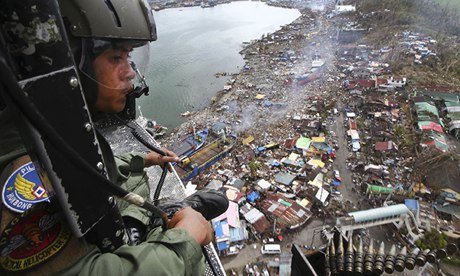
    A Philippine Air Force crewman looks out over the typhoon Haiyan-ravaged city of Tacloban

    A Philippine Air Force crewman looks out from his helicopter over the typhoon Haiyan-ravaged city of Tacloban. Photograph: Dita Alangkara/AP

    Three weeks ago the most powerful typhoon ever recorded to hit land destroyed parts of the Philippines. The devastation has been catastrophic, flattening homes, schools and hospitals and leaving thousands dead and 5.5 million children affected.

    Unicef has worked in the Philippines since 1948 and experienced staff returning from the worst affected areas such as Leyte are reporting having never seen anything like this – not even after the Asian tsunami on Boxing day almost a decade ago. They have seen hundreds of kilometres of coconut groves literally blown away by 300kph winds. A coconut tree takes 12 years to grow, so this is a decade of livelihoods wiped out in a single storm.

    I am incredibly concerned about the children who are without a doubt the most vulnerable right now. But as the immediate shock of the typhoon news reports begin to fade from people’s memories we need to address with energy and decision the true facts behind the intensity of the Philippines typhoon.

    If the Philippines typhoon was an isolated incident, it would be a meteorological phenomenon, but the real worry is that far from being isolated, these events are both frequent and increasingly severe. This typhoon comes on top of other extraordinary meteorological events that have occurred recently; unprecedented floods caused by a cyclone in Sardinia last week; unprecedented typhoons in the United States a few weeks ago; unprecedented rains that caused the Pakistan floods in August and last year.

    We can not turn a blind eye to the stark reality; the reality that is climate change. Leaving aside the appalling individual tragedies that have occurred we must see that these are flashes of the future. Climate change is contributing to these events becoming more intense.

    Hazards only become disasters when a population or society’s capacity to cope within existing resources is overwhelmed. In such a situation, children, especially the hardest to reach, are always the most vulnerable. Disasters put children at greater risk of death, exposure to disease and trauma, and disruption to their education and social development.

    As disasters intensify with increasing impacts of climate change, there must be an expansion of adaptation and resilience programmes in vulnerable countries to protect children from risk. Unicef’s disaster risk reduction programmes implement simple measures like early warning systems which can mean the difference between life and death. These programmes work – the Indian state of Orissa’s disaster preparedness plan implemented last month undoubtedly saved lives as nearly a million people were evacuated when a cyclone was known to be heading towards the eastern coastal region.

    Last weekend the UN climate change talks ended in Warsaw. The Philippines disaster should have sent an urgent message demanding bold action to protect children from disasters like these and delivered plans for how we can effectively rebuild when the worst happens, but the lack of energy has left me speechless. I can not believe we are not yet gripping this issue with the urgency that is needed and unless we do that, what you see isn’t going to be one event that shocks and saddens us but an event that is repeated and repeated and repeated.

    I’m not saying that human beings alone are causing global warming, they’re not. The Earth is going through one of its warming cycles, but there is no doubt, none whatsoever, that human beings are adding to that and adding to that in a dangerous and ultimately fatal way. Unless we begin to take this seriously, according to experts, climate related disasters could affect 375 million people every year by 2015, up from 263 million in 2010.

    Children in developing countries like the Philippines are the hardest hit, despite being the least responsible for causing climate change. Climate change is no longer a murky forecast of an abstract and distant future, it is already a reality which will tamper with the lives of our very own children.

    Our government must keep its promise to fund simple risk-reduction measures that can protect children when disasters strike. Development and resilience programmes should not be planned in silo. There’s no point in aid helping Philippines to develop when these successes can so easily be wiped out by weather-related disasters.

    As for the humanitarian response in the wake of the typhoon, the UK public has responded with extraordinary generosity, donating £4m in just three weeks to Unicef’s Philippines appeal. Let’s help the children suffering the most right now in the Philippines and also raise our voices against such atrocities happening again.

    • Lord Ashdown is Unicef UK’s president. Donations to Unicef’s typhoon Haiyan fund can be made online