Author: Neville

  • Assessing “Dangerous Climate Change” HANSEN

    Why this ad?
    NORTH Excavations Dee Whywww.aaanorthexcavations.com.au – 0438737568 Mini Excavator Skid Steer Tipper And Small Demolition .

    Assessing “Dangerous Climate Change”

    Inbox
    x
    James Hansen
    Email not displaying correctly? View it in your browser. Assessing “Dangerous…
    4:18 AM (4 hours ago)

    Neville Gillmore <nevilleg729@gmail.com>
    9:03 AM (0 minutes ago)

    ———- Forwarded message ———-
    From: James Hansen <jimehansen@gmail.com>
    Date: Wed, Dec 4, 2013 at 4:18 AM
    Subject: Assessing “Dangerous Climate Change”
    To: nevilleg729@gmail.com

    Email not displaying correctly? View it in your browser.
     Assessing “Dangerous Climate Change”
    The paper ‘Assessing “Dangerous Climate Change”: Required Reduction of Carbon Emissions to Protect Young People, Future Generations and Nature’ is being published today in the leading open-access journal PLOS ONE. A 2-page paper summary + 4-page opinion (Hansen & Kharecha) re policy implications is available here or from my web site.

    The paper was written to provide the scientific basis for legal actions against federal and state governments, in the United States and other nations, for not doing their job of protecting the rights of young people.  The legal actions being filed by Our Children’s Trust ask the courts to require the government to provide a plan for how they will reduce fossil fuel emissions consistent with stabilizing climate.

    We dispute the common assumption that the world necessarily is going to develop all fossil fuels that can be found, thus making large global warming inevitable.  Humanity does not need to be a bunch of lemmings headed over a cliff.  Indeed, appropriate policies that phase out fossil fuel emissions over decades would be economically and environmentally beneficial.  The editors of PLOS ONE, noting our statement “…there is still an opportunity for humanity to exercise free will”, are establishing a  “Responding to Climate Change” Collection in the journal PLOS ONE.  They invite paper submissions in all areas of research and a broad range of disciplines aimed at returning Earth to a state of energy balance.

    The paper draws attention to the moral and ethical issues caused by the inertia of the climate system, which causes most of the impacts of climate change to be felt by young people and future generations, as a consequence of action or inaction of the current generation.  Besides this moral issue, we point out that effective government policies, collecting a rising carbon fee from the fossil fuel industry that made fossil fuels pay their costs to society, would be a path to economic prosperity, while business-as-usual only assures economic decline.

    ~Jim

  • Friends of the Earth International at the Warsaw climate talks

    1 of 3
    Why this ad?
    Get 3 Solar QuotesSolar-Power-Australia.com.au – Compare 3 Solar Installers. Save Time & Money Now!

    Friends of the Earth International at the Warsaw climate talks

    Inbox
    x
    Jagoda Munic, Friends of the Earth International web@foei.org via bounce.bluestatedigital.com
    11:06 PM (8 minutes ago)

    to me
    Images are not displayed. Display images below – Always display images from web@foei.org
    at the Warsaw climate talks

    Dear friends,

    More than a week after Friends of the Earth (FoE) groups walked out of the UN Climate Talks in Warsaw, we bring you a special report on our work at the talks. We staged numerous colorful high-impact actions, we lobbied and put pressure wherever we could, and we took every opportunity to remind the media of our perspectives and our solutions on behalf of all of the many diverse parts of our federation.

    Read this inspiring overview by Friends of the Earth International Chair Jagoda Munic.

    We hope you enjoy the read.

    In solidarity,
    Friends of the Earth

    Note: We usually shorten Friends of the Earth to FoE, so FoEE is ‘Friends of the Earth Europe,’ YFoEE ‘Young Friends of the Earth Europe’, etc.

    Action highlights

    Sunday November 10

    Day of action to support people who face persecution and brutalization for defending the environment. Actions took place around the world including at FoEI delegation meeting.


    Monday November 11

    Action outside of the COP venue in the morning, where YFoEE members handed out Reclaim Power leaflets to the delegates as they arrived and thus delivered the message of the Reclaim Power Global Month of Action.
    YFoEE members Maruska Mileta and Silje Lundberg delivered opening statements on behalf of the Climate Justice Now network at the opening sessions of the COP (Conference of Parties) and the CMP (Meeting of the Parties of Kyoto Protocol) respectively.

    FoE Europe together with Greenpeace International, WWF International, Oxfam International, Action Aid International and Christian Aid wrote a public letter to Christiana Figueres, the Executive Secretary of the UNFCCC urging her not to attend the Coal Summit on November 18.

    YFoEE members helped Yeb Sano, climate commissioner for the Philippines, organize a solidarity walk after opening plenary of UNFCCC. One member along with two other youth activists were removed from the venue and then banned from the COP for the action.

    Tuesday November 12

    At an informal press conference on typhoon Hayian with Philippines climate commisioner Jeb Sano, YFoEE member Silje Lundberg announced a Solidarity Fast.

    Wednesday November 13

    YFoEE activists were among the groups that organized actions to expose the dirty energy corporations sponsoring the COP in the streets of Warsaw and at the conference venue, ‘auctioning the climate to the highest bidder.’

    Saturday November 16

    FoEI, FoEE and YFoEE campaigners participated in the Climate March in the streets of Warsaw. Read FoEE news article ‘Climate justice not corporate power. System change not climate change march.’
    FoEE set up a ‘fossil dinosaur’ at the end of the march. Watch the video.
    FoEE led a delegation of environmental and development groups in a face to face meeting with Christiana Figueres to demand that she not attend the Coal Summit and that if she did that the ‘Peoples Communique on Coal’ also be officially included in the official negotiations.

    Monday November 18

    On 18 and 19 November, Poland hosted the World Coal Summit in parallel with the COP, convening the world’s leading coal-producing companies.

    FoEI, FoEE and YFoEE campaigners joined the ‘Cough 4 Coal’ action organized by allies including HEAL, Bankwatch and 350.org at the summit venue early in the morning, and organized the  ‘There is no clean coal’ action there, and the action ‘Kicking coal out of the climate talks’ at the climate conference.

    Launch of the People’s Communique on Coal, a declaration that comes out of Reclaim Power – a global month of action on energy, which occurred throughout October and highlighted resistance against dirty energy that is driving climate change and proposed clean, people-controlled solutions.

    Tuesday November 19 + Wednesday November 20

    YFoEE/FoEE participated in an anti-nuclear action together with other local and international anti-nuclear campaigners.
    Anti-shale gas action with local anti-fracking activists outside of the COP.

    Thursday November 21

    “Polluters talk, we walk. Volveremos!”

    FoEI delegation amongst 800 people including youth, NGOs, social movements, gender groups and trade unions who walked out of the COP.

    Press conferences and side events

    FoEI press conference: State of play in Warsaw: Will Poland’s corporate COP halt the climate crisis? – November 13th

    FoEI Press conference: COP19 set to fail – who is to blame? – November 20th

    Handover of more than 700,000 signatures from an Avaaz petition to express solidarity with the Phillipines at a press conference with Silje Lundberg from YFoEE speaking alongside Philippines climate commisioner Yeb Sano on November 19.

    From 15 – 16 November the European Greens organized the conference “Citizens’ energy for a good climate: A participatory debate about Poland and its future”. FoEI chair Jagoda Munic and FoEE campaigner Susann Scherbarth participated in panel discussions at the conference

    Back to top >

    FoEI member groups in action

    Many FoEI member groups joined our actions and the walk out of the COP from back home. Here are some highlights:

    FoE South Africa organized a People’s Climate Camp in Durban with its own Twitter account. On Saturday 16 November a live video link up was established between the Warsaw convergence space outside the COP and the Camp in Durban.

    FoE Austria achieved a lot of media coverage for their framing of the walk out, and also organized their office to take action.
    FoE England Wales and Northern Ireland organized an action outside the Australian High Commission and carried an update from FoE Australia and also wrote to the Japanese Embassy and carried an update from FoE Japan.

    Calling climate change ‘the Berlin Wall of our times’, activists from Young Friends of the Earth Germany gathered at the remains of that wall to call on the negotiators at the UN climate conference in Warsaw to overcome their wall of inaction.

    FoE Papua New Guinea spread the message online and also organized a small protest march to the Australian High Commission. FoE Cyprus also organized an action, as did FoE Switzerland, FoE Ukraine, FoE Netherlands, FoE Denmark, FoE Spain, FoE US, and FoE France.

    Read more

    Publications

    Issue briefs from some FoE member groups and other climate justice groups on: Markets, Equity,
    Loss and Damage, Globally funded Feed in Tariffs

    Blogs

    Interview with Urszula Stefanowicz, climate campaigner with FoE Poland, November 6

    Stop colluding with corporate climate culprits! Blog by FoEI chair Jagoda Munic in New Internationalist, November 20

    Loss and Damage, blog by Gita Parihar of FoE EWNI explaining what loss and damage is, why the
    stakes are so high, and what’s going on right now at the talks

    International press coverage

    Photo galleries

    Find us on social media

  • 2 degrees hotter not an acceptable climate target but a disaster, say leading scientists

    Press ? for Keyboard Shortcuts.

    climate code red

    Climate Code Red

    To Me
    Today at 8:12 PM

    climate code red


    2 degrees hotter not an acceptable climate target but a disaster, say leading scientists

    Posted: 02 Dec 2013 04:37 PM PST

    Countries round the world have pledged to try and limit the average global temperature rise to 2°C above pre-industrial figures. That’s way too high and would threaten major dislocations for civilization say a group of prominent scientists.

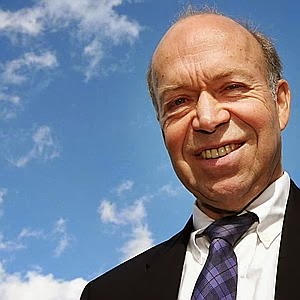
    Lead author James Hansen

    by Tim Radford, Climate News Network

    Governments have set the wrong target to limit climate change. The goal at present – to limit global warming to a maximum of 2°C higher than the average for most of human history – “would have consequences that can be described as disastrous”, say 18 scientists in a review paper in the journal PLOS One.

    With a 2°C increase, “sea level rise of several meters could be expected,” they say.  Increased climate extremes, already apparent at 0.8°C warming, would be more severe. Coral reefs and associated species, already stressed with current conditions, would be decimated by increased acidification, temperature and sea level rise.
    The paper’s lead author is James Hansen, now at Columbia University, New York, and the former NASA scientist who in 1988 put global warming on the world’s front pages by telling a US government committee that “It’s time to stop waffling so much and say the evidence is pretty strong that the greenhouse effect is here.”

    Hansen’s fellow authors include the economist Jeffrey Sachs of Columbia University and the biologist Camille Parmesan, of the University of Plymouth in the UK and the University of Texas at Austin, USA.

    Their argument is that humanity and nature – “the modern world as we know it” – is adapted to what scientists call the Holocene climate that has existed for more than 10,000 years since the end of the Ice Age, the beginnings of agriculture and the first settlement of the cities.

    Warming of 1°C relative to 1880–1920 keeps global temperature close to the Holocene range, but warming of 2°C, could cause “major dislocations for civilization.”

    The scientists study, uncompromisingly entitled “Assessing ‘dangerous climate change’: required reduction of carbon emissions to protect young people, future generations and nature” differs from many such climate analyses because it sets out its argument with remarkable directness and clarity, and serves as a useful briefing document for anyone – politicians, journalists and lay audiences – anxious to better understand the machinery of climate, and the forces that seem to be about to dictate climate change.

    Its critics will point out that it is also remarkably short on the usual circumlocutions, caveats, disclaimers and equivocations that tend to characterise most scientific papers. Hansen and his co-authors are however quite open about the major areas of uncertainty: their implicit argument is that if the worst outcomes turn out to be true, the consequences for humankind could be catastrophic.

    The scientists case is that most political debate addresses the questions of reducing greenhouse gas emissions, but does not and perhaps cannot factor in the all potentially dangerous unknowns – the slow feedbacks that will follow the thawing of the Arctic, the release of frozen reserves of methane and carbon dioxide in the permafrost, and the melting of polar ice into the oceans. They point out that 170 nations have agreed on the need to limit fossil fuel emissions to avoid dangerous human-made climate change.

    “However the stark reality is that global emissions have accelerated, and new efforts are underway to massively expand fossil fuel extractions by drilling to increasing ocean depths and into the Arctic, squeezing oil from tar sands and tar shale, hydro-fracking to expand extraction of natural gas, developing exploitation of methane hydrates and mining of coal via mountain-top removal and mechanised long wall-mining.”

    The scientists argue that swift and drastic action to limit global greenhouse gas emissions and contain warming to around 1°C would have two useful consequences. One is that it would not be far from the climate variations experienced as normal during the last 10,000 years, and secondly that it would make it more likely that the biosphere, and the soil, would be able to sequester a substantial proportion of the carbon dioxide released by human industrial civilisation.

    Trees are, in essence, captive carbon dioxide. But the warmer the world becomes, the more likely it is that existing forests – the Amazon, for example – will start to release more CO2 than they absorb, making the planet progressively even warmer.

    “Although there is merit in simply chronicling what is happening, there is still opportunity for humanity to exercise free will,” says Hansen.

  • A summer of real direct action started last night!

    Why this ad?
    Saving Electricity At Homewww.clickenergy.com.au – 9% Off Your Power Bill For A Year. No Lock In Contracts. Sign Up Now.

    A summer of real direct action started last night!

    Inbox
    x
    Josh Creaser – 350.org Australia josh.creaser@350.org.au via list.350.org
    5:50 PM (4 hours ago)

    to me

    Dear friend,

    “Australia has seen brutal summer heat in recent years; now it’s time to turn up the heat on those responsible – the out-of-control fossil fuel industry”, – Bill McKibben

    Right around Australia, individuals like you are stepping up to show Tony Abbott what a real direct action plan on climate change looks like.

    Already hundreds of people have pledged to take on the fossil fuel industry this summer and beyond. Yesterday, we projected their images on to the heart of the industry lobby – the Minerals Council of Australia headquarters – to launch our Summer Heat campaign and to demonstrate the diverse and inspiring movement that is building to halt fossil fuel expansion in Australia.

    Like and share these photo highlights from the day and our campaign launch video

    The fossil fuel industry plans to triple Australia’s coal and gas exports. Mines such as those proposed in the Galilee Basin and at Maules Creek will lead to more pollution, higher sea levels and more extreme weather events such as the recent bushfires in New South Wales and the typhoon in the Philippines.

    That’s why, with the Abbott Government failing to lead, we’ll be taking our own direct action. As the temperature rises over Summer, people from communities right across Australia will be stepping up campaigns to target the industry and their radical plans.

    We aren’t a movement of radical activists. We are mothers and fathers, grandparents, church leaders, lawyers, teachers, nurses and students. We are a community standing up to a radical industry that is trashing our future.

    Join the movement today and let’s get going with our summer of real direct action! There’s already plenty of actions registered, and there’s more on the way – sign up and we’ll keep you posted!

    In solidarity,

    Josh, Charlie, Aaron, Blair and Simon, and the rest of the Summer Heat team

    P.S. Check out our blog about the launch and this message of support from

    Felix Riebl of the Cat Empire

  • “Managing Transparency” Monbiot

    Why this ad?
    Solar Systems from $5,999EnergyAustralia.com.au/SolarSaver – 3.5Kw System W/ European Inverter & Bonus 5+5 Year Warranty. Call Now!

    Monbiot.com

    Inbox
    x
    George Monbiot news@monbiot.com via google.com
    6:14 PM (56 minutes ago)

    to me

    Monbiot.com


    “Managing Transparency”

    Posted: 02 Dec 2013 12:42 PM PST

    Politicians and officials are desperately seeking to justify their transatlantic assault on democracy.
    By George Monbiot, published in the Guardian 3rd December 2013

    Panic spreads through the European Commission like ferrets in a rabbit warren. Its plans to create a single market incorporating Europe and the United States, progressing so nicely when hardly anyone knew, have been blown wide open. All over Europe people are asking why this is happening; why we were not consulted; for whom it is being done.

    They have good reason to ask. The Commission insists that its Transatlantic Trade and Investment Partnership should include a toxic mechanism called investor-state dispute settlement. Where this has been forced into other trade agreements, it has allowed big corporations to sue governments before secretive arbitration panels composed of corporate lawyers, which bypass domestic courts and override the will of parliaments(1).

    This mechanism could threaten almost any means by which governments might seek to defend their citizens or protect the natural world. Already it is being used by mining companies to sue governments trying to keep them out of protected areas(2,3); by banks fighting financial regulation(4); by a nuclear company contesting Germany’s decision to switch off atomic power(5). After a big political fight we’ve now been promised plain packaging for cigarettes. But it could be nixed by an offshore arbitration panel. The tobacco company Philip Morris is currently suing Australia through the same mechanism in another treaty(6).

    No longer able to keep this process quiet, the European Commission has instead devised a strategy for lying to us. A few days ago an internal document was leaked(7). This reveals that a “dedicated communications operation” is being “coordinated across the Commission”. It involves, to use the EC’s chilling phrase, the “management of stakeholders, social media and transparency.” Managing transparency should be adopted as its motto.

    The message is that the trade deal is about “delivering growth and jobs” and will not “undermine regulation and existing levels of protection in areas like health, safety and the environment”. Just one problem: it’s not true.

    From the outset, the Transatlantic Trade and Investment Partnership has been driven by corporations and their lobby groups, who boast of being able to “co-write” it(8,9). Persistant digging by the Corporate Europe Observatory reveals that the commission has held eight meetings on the issue with civil society groups, and 119 with corporations and their lobby groups(10). Unlike the civil society meetings, these have taken place behind closed doors and have not been disclosed online.

    Though the Commission now tells the public that it will protect “the state’s right to regulate”(11), this isn’t the message the corporations have been hearing. In an interview last week, Stuart Eizenstat, co-chair of the Transatlantic Business Council, instrumental in driving the process, was asked whether companies whose products had been banned by regulators would be able to sue(12). Yes. “If a suit like that was brought and was successful, it would mean that the country banning the product would have to pay compensation to the industry involved or let the product in.” Would that apply to the European ban on chicken carcasses washed with chlorine, a controversial practice permitted in the US? “That’s one example where it might.”

    What the Commission and its member governments fail to explain is why we need offshore arbitration at all. It insists that domestic courts “might be biased or lack independence”(13), but which courts is it talking about? It won’t say. Last month, while trying to defend the treaty, the British minister Kenneth Clarke said something revealing:

    “Investor protection is a standard part of free-trade agreements – it was designed to support businesses investing in countries where the rule of law is unpredictable, to say the least.”(14) So what is it doing in an EU-US deal? Why are we using measures designed to protect corporate interests in failed states in countries with a functioning judicial system? Perhaps it’s because functioning courts are less useful to corporations than opaque and injust arbitration by corporate lawyers.

    As for the Commission’s claim that the trade deal will produce growth and jobs, this is also likely to be false. Barack Obama promised that the US-Korea Free Trade Agreement would increase US exports by $10bn. They immediately fell by $3.5bn(15). The 70,000 jobs it would deliver? Er, 40,000 were lost. Bill Clinton promised that the North American Free Trade Agreement would create 200,000 new jobs for the US; 680,000 went down the pan(16,17). As the commentator Glyn Moody says, “the benefits are slight and illusory, while the risks are very real.”(18)

    So where are our elected representatives? Fast asleep. Labour MEPs, now frantically trying to keep investor-state dispute mechanisms out of the agreement, are the  exception(19); the rest are in Neverland. The LibDem MEP Sir Graham Watson wrote in his newsletter, before dismissing the idea, “I am told that columnists on The Guardian and The Independent claim it will hugely advantage US multinational companies to the detriment of Europe.”(20) We said no such thing, as he would know had he read the articles, rather than idiotically relying on hearsay. The treaty is likely to advantage the corporations of both the US and the EU, while disadvantaging their people. It presents a danger to democracy and public protection throughout the trading area.

    Caroline Lucas, one of the few MPs who remains interested in the sovereignty of parliament, has published an early day motion on the issue(21). It has so far been signed by only seven MPs. For the government, Kenneth Clarke argues that to ignore the potential economic gains of the trade agreement “in favour of blowing up a controversy around one small part of the negotiations, known as investor protection, seems to me positively Scrooge-like.”(22)

    Quite right too. Overriding our laws, stripping away our rights, making parliament redundant: these are trivial and irrelevant beside the issue of how much money could be made. Don’t worry your little heads about it.

    www.monbiot.com

    References:

    1. http://democracyctr.org/wp/wp-content/uploads/2013/05/Under_The_Radar_English_Final.pdf
    2. http://action.sumofus.org/a/mining-costarica/

    3. http://democracyctr.org/wp/wp-content/uploads/2013/05/Under_The_Radar_English_Final.pdf

    4. http://corporateeurope.org/trade/2013/06/transatlantic-corporate-bill-rights

    5. http://www.tni.org/briefing/nuclear-phase-out-put-test

    6. http://www.mccabecentre.org/focus-areas/tobacco/philip-morris-asia-challenge

    7. http://corporateeurope.org/trade/2013/11/leaked-european-commission-pr-strategy-communicating-ttip

    8. http://corporateeurope.org/sites/default/files/businesseurope-uschamber-paper.pdf

    9. http://www.nytimes.com/2013/10/09/business/international/european-officials-consulted-business-leaders-on-trade-pact-with-us.html?partner=rss&emc=rss&smid=tw-nytimesworld%20&_r=0

    10. http://corporateeurope.org/trade/2013/09/european-commission-preparing-eu-us-trade-talks-119-meetings-industry-lobbyists

    11. http://trade.ec.europa.eu/doclib/docs/2013/november/tradoc_151916.pdf

    12. http://www.br.de/fernsehen/das-erste/sendungen/report-muenchen/interview-stuart-eizenstat-100.html

    13. http://trade.ec.europa.eu/doclib/docs/2013/october/tradoc_151790.pdf

    14. http://www.theguardian.com/commentisfree/2013/nov/11/eu-us-trade-deal-transatlantic-trade-and-investment-partnership-democracy

    15. http://www.epi.org/publication/trade-pacts-korus-trans-pacific-partnership/

    16. http://www.epi.org/publication/trade-pacts-korus-trans-pacific-partnership/

    17. Paul Krugman has explained the simple economic rules which make this happen: http://krugman.blogs.nytimes.com/2010/12/06/trade-does-not-equal-jobs/

    18. By email. You can read Glyn Moody’s posts on the issue here: http://blogs.computerworlduk.com/open-enterprise/

    19. http://www.theguardian.com/commentisfree/2013/nov/06/david-cameron-eu-us-trade-deal-investor-state-dispute-settlement

    20. http://www.grahamwatsonmep.org.uk/index.php?option=com_content&view=article&id=1653&catid=8&Itemid=159

    21. http://www.parliament.uk/edm/2013-14/793

    22. http://www.theguardian.com/commentisfree/2013/nov/11/eu-us-trade-deal-transatlantic-trade-and-investment-partnership-