Author: Neville

  • You made this happen. Congratulations and thank you. (ADAM BANDT)

    THIS CLEARLY SHOWS THE VALUE OF SOCIAL MEDIA, WHICH HAS BEEN VERY PREVALENT

    IN THIS ELECTION.

    On Sun, Sep 8, 2013 at 1:49 PM, Adam Bandt <info@adambandt.com> wrote:

    Dear Neville 

    We just showed the country what people power can do.

    You made this happen. Congratulations and thank you.

    This is a vote for people power, but this is also a vote that says that the people of Melbourne are sick of a race to the bottom. Elections should be about the best in us. Not the worst in us.

    The people of Melbourne have made it clear that they want to see a positive vision and plan for a clean economy and a caring society.

    Your commitment has kept me going and your hard work has changed politics in this country forever.

    I am so proud of you.

    Adam

    PS. We’ve only just begun. Please share our great news with your family and friends so they can sign up to be part of what we do from now on.

  • Underestimating climate change and underfunding innovation

    We are underestimating climate change and underfunding innovation

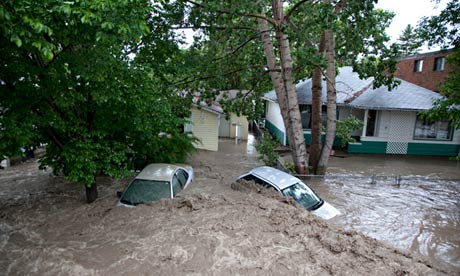
    The destructive power of extreme weather events, such as the Calgary floods, reduces our ability to invent, build and invest

    Calgary floods

    How can we fund our future if we are constantly remediating the destruction caused by extreme weather events? Photograph: Jordan Verlage/AP

    Sustainability has become a race between two kinds of destruction. The destructive power of a changing climate reduces our economic activity and forces us to divert available funds toward remediation and repair, threatening our ability to incubate and fund ‘creative destruction‘, first named by Joseph Schumpeter. Creative destruction replaces the old and unsustainable with new products, services and processes of greater value.

    By destroying what we have already built and forcing us to repair or write off old infrastructure, natural disasters undermine our ability to invest in the future. The increasingly frequent and severe natural disasters that climate change is causing threaten the innovation we so desperately need.

    Climate change makes three demands on the capacity of businesses, governments and individuals to invest scarce resources. First, we must adapt our existing systems to the new climate, adding more robust power and cooling systems, redeveloping almost all of our agricultural processes, building new levees and barrier islands, clearing flood plains of development and resettling affected businesses and families.

    Second, we must be prepared to write off or repair existing assets that will be damaged by storms, heat and drought, even as the insurance industry becomes more restrictive in its underwriting. Third, we must develop new technologies that will reduce and reverse our carbon emissions, a programme critical to our survival as a species. Every extreme weather event that causes damage costing billions to remediate diverts investment dollars away from productivity and into subsistence.

    Calgary

    In late June, sudden storms and a saturated water table overwhelmed two great rivers of southern Alberta, the Bow and the Elbow, flooding the downtown core of Calgary.

    It destroyed homes and businesses, forced the evacuation of tens of thousands and caused an estimated C$5bn in damage. A railway bridge collapsed under the weight of a cargo train, leaving carriages filled with toxic petroleum diluent dangling over the Bow River for nearly 24 hours. The disaster befell Calgary a week before the Stampede rodeo, which brings in C$340m annually.

    For many years, reports and planning documents warned of the potential for extraordinary losses due to flooding. But Calgary has never fully addressed the risks inherent in building a downtown core in a flood plain.

    The negative impact of the floods will be followed by insurance money, new mortgages and government disaster relief flowing into the areas most deeply affected. However, a great deal of value will have been written off, displacing investments in innovation.

    Creative destruction

    In recent years, Calgary has built an infrastructure to promote entrepreneurship. Innovate Calgary is a massive organisation providing assistance to start-ups. Haskayne, the University of Calgary business school, offers an entrepreneurship and innovation concentration. Startup Calgary creates networks among high-tech business founders, and AcceleratorYYC provides incubator services. There’s a group for women entrepreneurs. Together, this infrastructure has produced Canada’s highest number of entrepreneurs per capita.

    Many of these entrepreneurs have been creating greener alternatives, chasing the dream of a better future. They’ve built Twin Hills, a LEED-ND certified “next era” town, based in wetlands preservation and water and energy conservation, good public transit, reliable fibre optics, alternative energy use and entrepreneurial solutions. They have created green roofs and xeriscape garden installations. They are creating employee reward programmes that include green spending accounts. The Southern Alberta Institute of Technology is backing student-led innovations in green building technology.

    As is true almost everywhere, the only limit seems to be funding. There are simply not enough high-risk, high-reward funding sources to bring great ideas to fruition as viable products or companies. And now the increasingly indebted Alberta government and its people must find billions of dollars to help rebuild what has been lost.

    The future

    How can we fund our future if we are constantly remediating the destruction of our existing capital? If we are to reduce destruction of our capital due to climate-change related weather, we must identify and invest in the best new technologies and pursue them until they are viable.

    The problem of extreme weather will only become more dangerous. It has already become commonplace, destroying crops, riverbanks, homes, towns, factories and offices. Insurance providers, whether governments or corporations, are less willing and able to underwrite risks and compensate policy holders.

    Both natural and creative destruction make it clear that material objects – inventions, bridges, dams, early warning systems – are the building blocks of an economy. We must invent, build and invest in the ones that have the most value for our future. We cannot afford to do otherwise.

    This content is brought to you by Guardian Professional. Become GSB member to get more stories like this direct to your inbox

    &lt;div style=”display: none” id=”__document_write_ajax_div-14″&gt;&lt;/div&gt;&lt;SCRIPT language=’JavaScript1.1′ &gt;window[‘__document_write_ajax_callbacks__’][’14’]();&lt;/script&gt; &lt;NOSCRIPT&gt; &lt;A HREF=”http://ad-emea.doubleclick.net/jump/N799.286450.AMNET/B7863990;abr=!ie4;abr=!ie5;sz=300×250;u=xbAAXbk6pU-8rtsjD3rD33lLKgLHF6bFRCRjJus24fnCTIQgpaYl3nATDLiJ8xB4ZxCuqCeSHMmD3ipGOchRYjeAPRoe8SmlrkvQ;dc_ref=http://www.theguardian.com/;dc_ref_truncated=1;ord=1378806951?”&gt; &lt;IMG SRC=”http://ad-emea.doubleclick.net/ad/N799.286450.AMNET/B7863990;abr=!ie4;abr=!ie5;sz=300×250;u=xbAAXbk6pU-8rtsjD3rD33lLKgLHF6bFRCRjJus24fnCTIQgpaYl3nATDLiJ8xB4ZxCuqCeSHMmD3ipGOchRYjeAPRoe8SmlrkvQ;dc_ref=http://www.theguardian.com/;dc_ref_truncated=1;ord=1378806951?” BORDER=0 WIDTH=300 HEIGHT=250 ALT=”Advertisement”&gt;&lt;/A&gt; &lt;/NOSCRIPT&gt;

    • Guardian Small Business Awards

      Recognising SME talent and innovation across seven categories. Showcase your company’s success for a chance to win. Find out more and enter
    • Sustainable business courses

      Practical half-day courses from the Guardian on sustainability communications, brand, collaboration and leadership. Book now.

    About Guardian Professional

    • Guardian Professional Networks

      Guardian Professional Networks are community-focused sites, where we bring together advice, best practice and insight from a wide range of professional communities.

      Some of our specialist hubs within these sites are supported by funding from external companies and organisations. All editorial content is independent of any sponsorship, unless otherwise clearly stated. We make Partner Zones available for sponsors’ own content. Guardian Professional is a division of Guardian News & Media

  • Peak oil is alive and and costing the earth

    You might have heard that peak oil – the theory that one day crude oil production will stop increasing, even as demand grows – is dead. Shale oil production is surging in the US. The premiere peak oil website, The Oil Drum, is shutting up shop. Even notoriously left-leaning columnist George Monbiot has…

    W78cnqrh-1377583281
    There’s plenty of oil, but at what price? arbyreed/Flickr

    You might have heard that peak oil – the theory that one day crude oil production will stop increasing, even as demand grows – is dead. Shale oil production is surging in the US. The premiere peak oil website, The Oil Drum, is shutting up shop. Even notoriously left-leaning columnist George Monbiot has announced: “We were wrong about peak oil”.

    But he’s wrong about being wrong.

    Peak oil is very much alive, and squeezing its hands ever more tightly around the throats of oil-dependent economies. The new economics of oil also have alarming implications for climate change, as Monbiot acknowledged, suggesting this is a subject we dismiss at our own peril.

    Peak oil, of course, doesn’t mean that the world is running out of oil any time soon. There is a vast amount of oil left. Over the last 150 years, however, we’ve picked the low hanging fruit, so to speak, meaning that the remaining oil is harder to find and more expensive to extract. This is making it more difficult to increase the “flow” of oil out of the ground.

    When the rate of crude oil production cannot be increased, that represents peak oil. This is considered by many to signify a defining turning point in history, because oil demand is expected to increase as the world continues to industrialise. The theory goes that, as the supply of oil stagnates and the demand increases, the cost per barrel will rise, making the consumption of oil an increasingly expensive and debilitating addiction.

    So is this theory alive or dead? Well, it’s not a theory, it’s a fact. Around 2005 the production of crude or “conventional” oil stopped growing significantly and has been on a corrugated plateau ever since. This plateau has been acknowledged even by mainstream institutions like the International Energy Agency, a position it recently reiterated through its chief economist, Fatih Birol. Global demand for oil, however, has continued to grow significantly, which has put upward pressure on the price of oil.

    This upward pressure on price has changed the economics of several sources of unconventional oil, making them financially viable to produce when once they were not. Shale oil was not produced previously because the costs of getting it out of the ground and refining it were significantly more than the market price for oil, historically around US$25 per barrel.

    But now that oil is above US$105 per barrel, producers can make money producing shale oil and other unconventional oils, even though their energy and economic returns on investment are considerably lower than conventional oil.

    The fact that unconventional oil is much more carbon-intensive than crude oil – exacerbating an already intractable climate problem – doesn’t seem to trouble oil producers or most politicians.

    Driven by high prices, this new production has meant total oil production (conventional plus unconventional oil) has been able to meet increasing global demand, even though conventional oil has shown almost no growth in recent years. Because total oil production has increased to meet demand, many commentators have declared that “peak oil” is dead. These declarations, however, are based on a misunderstanding.

    The main reason unconventional oils are economically viable is because crude oil production has essentially stopped growing, causing the price of oil to jump. Geopolitical instability in oil rich regions of the world also keeps prices high, with the current situation in Syria being the latest manifestation of this dynamic. Our industrial economies, however, are addicted to oil – the world consumes 90 million barrels of oil every day – and when oil gets expensive, our economies suffer.

    At US$25 per barrel – the historic average – 90 million barrels would be US$2.25 billion every day on oil expenditure. At US$105 per barrel, that amounts to US$9.45 billion per day. This is a difference of US$7.2 billion every day, an extra cost to the global economy which is primarily a result of crude oil having peaked. It lacks credibility to pronounce the death of something costing the global economy US$7.2 billion every day – or US$2.6 trillion every year.

    The economic costs of peak oil are especially significant for oil importing nations. Due to the price of oil rising in recent years, the US is now spending an extra US$600 million every day on its net oil imports of 7.412 million barrels, which is money leaving the US economy. Had crude oil not peaked and prices remained low, every day the US would have that US$600 million to spend on things other than expensive, foreign oil. This is hardly a phenomenon to dismiss.

    When oil gets expensive, everything dependent on oil gets more expensive: transport, mechanised labour, industrial food production, plastics, etc. This pricing dynamic sucks discretionary expenditure and investment away from the rest of the economy, causing debt defaults, economic stagnation, recessions, or even longer-term depressions. That seems to be what we are seeing around the world today, with the risk of worse things to come.

    This should provide us all with further motivation to rapidly decarbonise the economy, not only because oil has become painfully expensive, but also because the oil we are burning is environmentally unaffordable.

    If people had listened to the warnings of the peak oil school, we could have broken our addiction to oil and had this money to spend on other things. I, for one, can think of better things on which to spend US$2.6 trillion dollars per year – such as renewable energy, bike lanes, better public transport, and local food production.

    We have entered a new era of energy and economics, one in which expensive oil is going to make it increasingly difficult for oil dependent economies to grow their economies. This is alarming because almost no attention is being given to this issue at the macro-economic and political levels. Economists and politicians are still crafting their policies based on flawed, growth-based thinking, but the growth model, which assumes cheap energy inputs, is now dangerously out-dated. The climatic implications of exploiting unconventional oils make the math more worrying still.

    Granted, we’re not running out of oil any time soon, but we have already run out of the oil that is economically and environmentally affordable.

  • Micro party Senate hopefuls defend their legitimacy amid electoral reform push

    Micro party Senate hopefuls defend their legitimacy amid electoral reform push

    ABC ABC September 9, 2013, 10:46 pm

    Micro party senators have defended their legitimacy to a seat on the crossbench amid calls to reform the Senate voting system.

    It is predicted that a combination of micro party members will hold the balance of power in the new Senate – even though they only received a few thousand primary votes.

    Vote-counting for the Senate is a complex, painstaking affair and the final make-up is still subject to change.

    But there are six micro party candidates who look on track to enter the Upper House next July, joining others such as the Democratic Labour Party’s (DLP) John Madigan.

    The group includes Wayne Dropulich from the Australian Sports Party, the Liberal Democrats’ David Leyonhjelm and .

    In New South Wales the theory is that some people may have confused the Liberal Democrats for the Liberals, and Mr Leyonhjelm was the lucky name in the first column on the vast Senate voting paper.

    But Mr Leyonhjelm believes his party would have picked up votes regardless where it was positioned on the ballot.

    “We think we would’ve won no matter where we were on the ballot paper. Our vote in South Australia, Western Australia and Tasmania was 3.5 to 4 per cent, and by our calculations that would’ve meant we were elected anyway,” he told the ABC’s 7.30 program.

    “So we think we would’ve got there without the donkey vote, but I’m quite happy to have the donkey vote.

    “Every party in every election, every ballot paper wants to have the first position, so we were just lucky.”

    Mr Dropulich also says his party was open about its principles.

    “Whether it’s the way that the system is run for the Senate, and we’ve campaigned out there and got our votes and the preferences look like they’re going to be going our way,” he said.

    “We spoke to all the other parties that were contesting Western Australia in the Senate and explained to them our policy and what we’re all about.

    “They obviously thought that what we stood for and our agenda is a good thing, and they agreed with what they stand for. So they’ve obviously preferenced us accordingly and so it’s resulted in where we are at the moment.”

    Senator Madigan added none of the micro or minor parties made the rules for the Senate voting system.

    “They haven’t broken the rules. They’ve done nothing to deceive people. They’ve stood for election and they’ve been elected and that’s what a democracy’s about,” he said.

    Crossbenchers to hold balance of power

    The biggest challenge potentially facing the Abbott Government over the next three years could be an unruly Senate.

    Both Labor and the Greens have indicated they will not support moves to dump the carbon pricing scheme.

    This would would leave the bill deadlocked in the Senate and could trigger a double dissolution election – an option Mr Abbott has said is on the table.

    An alternative would be to wait until the newly-elected senators take their seats next July, though that would mean negotiating with a disparate group.

    Mr Dropulich would not be drawn on what his party’s position is on the carbon tax, .

    “At this stage we’re about a week away probably before we find out if we definitely have won a seat in the WA Senate,” he said.

    “The Electoral Commission said that and when that time comes and if we are still fortunate enough to have one of those seats in the WA Senate, we’ll then move on to the next phase of this whole process and then come out with all our various policies and all those various issues.”

    Mr Leyonhjelm says his libertarian party is in favour of low taxes, less bureaucracy, smaller government and less expenditure.

    He says he would then be in favour of the carbon tax being repealed – but not other Coalition policies.

    “We would definitely support that… But we are not in favour of the Coalition’s policy on climate change, for example. It’s just a large amount of money down a black hole which will achieve nothing.”

    New government’s mandate to repeal carbon tax

    Mr Leyonhjelm added he would be guided by his party’s principles when voting on legislation.

    “We respect his (Mr Abbott’s) mandate and we wouldn’t seek to block anything that didn’t contravene our two principles, that is, a reduction in tax – reduction in taxes or an increase in liberty,” he said.

    “So as long as he wasn’t aiming to increase taxes or deprive us of any of our freedoms, we respect his mandate.”

    Senator Madigan also wants to see the carbon tax scrapped.

    “But we are concerned deeply about what’s happening down at Yallourn in Victoria in the La Trobe Valley,” he said.

    “There’s 75 workers who’ve been shut out of Energy Australia’s plant. We’re concerned about the transition to the so-called clean energy future and the fact – where’s the money that the La Trobe Valley was promised, for instance?

    “We’re concerned about the Energy Security Council and the $500-odd million that Energy Australia received from the Federal Government.

    “And in the abolition of the carbon tax, what are they going to do about the Clean Energy Regulator and the systemic regulatory failure that has come about in the wind industry and also the problems in the solar industry?”

    Senator Madigan says he hopes the Senate continues to be a house of review.

    “Being elected to Parliament, to the Senate, is a privilege, it’s not a licence to bludgeon,” he said.

    “But it is a licence to put forward people’s concerns and to express sections of our society that get ignored.”

  • Congratulations Wide Bay Greens!

    Noosa and Hinterland Greens
    STANDING UP FOR WHAT MATTERS

    Congratulations Wide Bay Greens!

    Matthew and Gail at Imbil
    Matthew and Gail at Imbil Polling Booth

    Dear NEVILLE

    I wish to take this opportunity to thank each and every one of our members and friends for a fantastic effort in this Federal Election campaign.

    I want to thank all those who gave of their time and resources to deliver material, post corflutes and banners, and thank those who distributed our How To Vote cards at booths across our Wide Bay electorate. Our primary vote is standing at 6.3% with Noosa hinterland areas polling up to 21.3% (Cooran) and the eastern beaches polling up to 19% (Peregian). A full breakdown of votes per booth can be found here

    I would especially like to forward thanks on behalf of our branch to Robyn Ford who did her usual great job of coordinating the effort of booth workers, particularly in the southern half of our electorate.

    And finally I wish to offer my sincere appreciation and thanks to Joy Ringrose as a candidate for all of our electorate, giving so much of her own time and resources to ensure that the people of our communities could vote for a person with integrity and a candidate with a genuine commitment to those positive progressive values that bring us together as a party.

    We have a strong platform upon which to build our community support as we continue to advocate for social justice, environmental sustainability, and a fair and compassionate Australia. We will continue to promote our policies and campaign for these values at the federal, state and local government levels across Wide Bay.

    I look forward to being alongside you

    Warmest regards
    Steve

    Steve Haines
    Convenor
    Noosa and HInterland Branch
    Queensland Greens
    (serving the state electorate of Noosa, and the federal electorate of Wide Bay)
    0421 00 1956

    Share this email:

    Twitter Digg Facebook Delicious Reddit StumbleUpon DZone Google LinkedIn MisterWong MySpace Netvouz NewsVine Slashdot Technorati YahooMyWeb BlinkList Design Float Webnews.de

    Contact Us:

    0421 00 1956

    PO Box 2038
    Noosa Heads Q 4567

    view email in browser | unsubscribe | update your profile | forward to a friend
    You are receiving this email because previous email lists have identified you as a member or friend of the Noosa and Hinterland Greens

    Email Marketing Powered by MailChimp

  • “Model in crisis” of many big green groups, says Naomi Klein

    climate code red

    FROM Climate Code Red TO You

    climate code red


    “Model in crisis” of many big green groups, says Naomi Klein

    Posted: 08 Sep 2013 01:56 AM PDT

    Introduction: Australia has a new climate-change-denialist Liberal–National Party (LNP) government led by Tony Abbott, who says the science of climate change is “crap”.  His government has a clear majority in Australia’s lower house, and similarly will enjoy majority rule in the upper house (with the support of conservative,and often climate denialist, small parties) when new Senators take their places on 1 July 2014.
    The Senate results mean the LNP will very likely enjoy that majority for at least two terms (six years), and there is only one occasions in which an elected government in Australia has lasted only one term. So a government which for all practical purposes denies climate change and has the mission of destroying Australia’s carbon price and most renewable energy initiatives will likely run the place for at least six years. For those large climate and environment NGOs who have made working inside the Canberra beltway a priority, their models faces a crisis.
    And in a different way so do we all, in working out the way to get the climate emergency approach, which does not downplay now grim scientific realities that global warming is already dangerous in favour of political convenience and incrementalism, onto the agenda.
    At this moment, with the triumph of climate-denialist politics in Australia, Naomi Klein’s recent interview is particularly pertinent. – David

    by Naomi Klein, interviewed by Jason Mark

    First published  Earth Island Journal, 5 September 2013 (extracts)

    JM: In the wake of Hurricane Sandy you wrote about the potential of a “people’s shock.” Do you see that it’s happening, a global grassroots response to some of the extreme weather we’re experiencing?

    NK: I see a people’s shock happening broadly, where on lots of different fronts you have constituencies coming forward who have been fighting, for instance, for sustainable agriculture for many, many years, and now realize that it’s also a climate solution. You have a lot of reframing of issues – and not in an opportunistic way, just another layer of understanding. Here in Canada, the people who oppose the tar sands most forcefully are Indigenous people living downstream from the tar sands. They are not opposing it because of climate change – they are opposing it because it poisons their bodies. But the fact that it’s also ruining the planet adds another layer of urgency. And it’s that layering of climate change on top of other issues that holds a huge amount of potential.
    In terms of Hurricane Sandy, I really do see some hopeful, grassroots responses, particularly in the Rockaways, where people were very organized right from the beginning, where Occupy Sandy [5] was very strong, where new networks emerged. The first phase is just recovery, and now as you have a corporate-driven reconstruction process descending, those organized communities are in a position to respond, to go to the meetings, to take on the real estate developers, to talk about another vision of public housing that is way better than what’s there right now. So yeah, it’s definitely happening. Right now it’s under the radar, but I’m following it quite closely.

    JM: In a piece you wrote for The Nation in November 2011 you suggested that when it comes to climate change, there’s a dual denialism at work – conservatives deny the science while some liberals deny the political implications of the science. Why do you think that some environmentalists are resistant to grappling with climate change’s implications for the market and for economics?

    NK: Well, I think there is a very a deep denialism in the environmental movement among the Big Green groups. And to be very honest with you, I think it’s been more damaging than the right-wing denialism in terms of how much ground we’ve lost. Because it has steered us in directions that have yielded very poor results. I think if we look at the track record of Kyoto, of the UN Clean Development Mechanism, the European Union’s emissions trading scheme – we now have close to a decade that we can measure these schemes against, and it’s disastrous. Not only are emissions up, but you have no end of scams to point to, which gives fodder to the right. The right took on cap-and-trade by saying it’s going to bankrupt us, it’s handouts to corporations, and, by the way, it’s not going to work. And they were right on all counts. Not in the bankrupting part, but they were right that this was a massive corporate giveaway, and they were right that it wasn’t going to bring us anywhere near what scientists were saying we needed to do lower emissions. So I think it’s a really important question why the green groups have been so unwilling to follow science to its logical conclusions. I think the scientists Kevin Anderson and his colleague Alice Bows at the Tyndall Centre [6] have been the most courageous on this because they don’t just take on the green groups, they take on their fellow scientists for the way in which neoliberal economic orthodoxy has infiltrated the scientific establishment. It’s really scary reading. Because they have been saying, for at least for a decade, that getting to the emissions reduction levels that we need to get to in the developed world is not compatible with economic growth.
    What we know is that the environmental movement had a series of dazzling victories in the late 60s and in the 70s where the whole legal framework for responding to pollution and to protecting wildlife came into law. It was just victory after victory after victory. And these were what came to be called “command-and-control” pieces of legislation. It was “don’t do that.” That substance is banned or tightly regulated. It was a top-down regulatory approach. And then it came to screeching halt when Regan was elected. And he essentially waged war on the environmental movement very openly. We started to see some of the language that is common among those deniers – to equate environmentalism with Communism and so on. As the Cold War dwindled, environmentalism became the next target, the next Communism. Now, the movement at that stage could have responded in one of the two ways. It could have fought back and defended the values it stood for at that point, and tried to resist the steamroller that was neoliberalism in its early days. Or it could have adapted itself to this new reality, and changed itself to fit the rise of corporatist government. And it did the latter. Very consciously if you read what [Environmental Defense Fund [7] president] Fred Krupp was saying at the time.

    JM: It was go along or get along.

    NK: Exactly. We now understand it’s about corporate partnerships. It’s not, “sue the bastards;” it’s, “work through corporate partnerships with the bastards.” There is no enemy anymore.
    More than that, it’s casting corporations as the solution, as the willing participants and part of this solution. That’s the model that has lasted to this day.
    I go back to something even like the fight over NAFTA, the North American Free Trade Agreement. The Big Green groups, with very few exceptions, lined up in favor of NAFTA, despite the fact that their memberships were revolting, and sold the deal very aggressively to the public. That’s the model that has been globalized through the World Trade Organization, and that is responsible in many ways for the levels of soaring emissions. We’ve globalized an utterly untenable economic model of hyperconsumerism. It’s now successfully spreading across the world, and it’s killing us.
    It’s not that the green groups were spectators to this – they were partners in this. They were willing participants in this. It’s not every green group. It’s not Greenpeace [8], it’s not Friends of the Earth [9], it’s not, for the most part, the Sierra Club [10]. It’s not 350.org [11], because it didn’t even exist yet. But I think it goes back to the elite roots of the movement, and the fact that when a lot of these conservation groups began there was kind of a noblesse oblige approach to conservation. It was about elites getting together and hiking and deciding to save nature. And then the elites changed. So if the environmental movement was going to decide to fight, they would have had to give up their elite status. And weren’t willing to give up their elite status. I think that’s a huge part of the reason why emissions are where they are.

    JM: At least in American culture, there is always this desire for the win-win scenario. But if we really want to get to, say, an 80 percent reduction in CO2 emissions, some people are going to lose. And I guess what you are saying is that it’s hard for the environmental leadership to look some of their partners in the eye and say, “You’re going to lose.”

    NK: Exactly. To pick on power. Their so-called win-win strategy has lost. That was the idea behind cap-and-trade. And it was a disastrously losing strategy. The green groups are not nearly as clever as they believe themselves to be. They got played on a spectacular scale. Many of their partners had one foot in US CAP [Climate Action Partnership] and the other in the US Chamber of Commerce. They were hedging their bets. And when it looked like they could get away with no legislation, they dumped US CAP completely.
    The phrase win-win is interesting, because there are a lot of losers in the win-win strategy. A lot of people are sacrificed in the name of win-win. And in the US, we just keep it to the cap-and-trade fight and I know everyone is tired of fighting that fight. I do think there is a lot of evidence that we have not learned the key lessons of that failure.

    JM: And what do you think the key lessons are?

    NK: Well one of them is willingness to sacrifice – in the name of getting a win-win with big polluters who are part of that coalition – the communities that were living on the fenceline. Communities, in Richmond, California for instance, who would have been like, “We fight climate change and our kids won’t get as much asthma.” That win-win was broken because you get a deal that says, “OK you guys can keep polluting but you’re going to have to buy some offsets on the other side of the planet.” And the local win is gone, is sacrificed.
    I’m in favor of win-win, you know. The book I am writing is arguing that our responses to climate change can rebuild the public sphere, can strengthen our communities, can have work with dignity. We can address the financial crisis and the ecological crisis at the same. I believe that. But I think it’s by building coalitions with people, not with corporations, that you are going to get those wins. And what I see is really a willingness to sacrifice the basic principles of solidarity, whether it is to that fenceline community in Richmond, California or whether it’s with that Indigenous community in Brazil that, you know, is forced off their territory because their forest has just become a carbon sink or an offset and they no longer have access to the forest that allowed them to live sustainably because it’s policed. Because a conservation group has decided to trade it. So these sacrifices are made – there are a lot of losers in this model and there aren’t any wins I can see.

    JM: You were talking about the Clean Development Mechanism as a sort of disaster capitalism. Isn’t geoengineering the ultimate disaster capitalism?

    NK: I certainly think it’s the ultimate expression of a desire to avoid doing the hard work of reducing emissions, and I think that’s the appeal of it. I think we will see this trajectory the more and more climate change becomes impossible to deny. A lot of people will skip right to geoengineering. The appeal of geoengineering is that it doesn’t threaten our worldview. It leaves us in a dominant position. It says that there is an escape hatch. So all the stories that got us to this point, that flatter ourselves for our power, will just be scaled up.
    [There is a]willingness to sacrifice large numbers of people in the way we respond to climate change – we are already showing a brutality in the face of climate change that I find really chilling. I don’t think we have the language to even describe [geoengineering], because we are with full knowledge deciding to allow cultures to die, to allow peoples to disappear. We have the ability to stop and we’re choosing not to. So I think the profound immorality and violence of that decision is not reflected in the language that we have. You see that we have these climate conventions where the African delegates are using words like “genocide,” and the European and North American delegates get very upset and defensive about this. The truth is that the UN definition of genocide is that it is the deliberate act to disappear and displace people. What the delegates representing the North are saying is that we are not doing this because we want you to disappear; we are doing this because we don’t care essentially. We don’t care if you disappear if we continue business-as-usual. That’s a side effect of collateral damage. Well, to the people that are actually facing the disappearance it doesn’t make a difference whether there is malice to it because it still could be prevented. And we’re choosing not to prevent it. I feel one of the crises that we’re facing is a crisis of language. We are not speaking about this with the language of urgency or mortality that the issue deserves.

    JM: You’ve said that progressives’ narratives are insufficient. What would be an alternative narrative to turn this situation around?

    NK: Well, I think the narrative that got us into this – that’s part of the reason why you have climate change denialism being such as powerful force in North America and in Australia – is really tied to the frontier mentality. It’s really tied to the idea of there always being more. We live on lands that were supposedly innocent, “discovered” lands where nature was so abundant. You could not imagine depletion ever. These are foundational myths.
    And so I’ve taken a huge amount of hope from the emergence of the Idle No More [12] movement, because of what I see as a tremendous generosity of spirit from Indigenous leadership right now to educate us in another narrative. I just did a panel with Idle No More and I was the only non-Native speaker at this event, and the other Native speakers were all saying we want to play this leadership role. It’s actually taken a long time to get to that point. There’s been so much abuse heaped upon these communities, and so much rightful anger at the people who stole their lands. This is the first time that I’ve seen this openness, open willingness that we have something to bring, we want to lead, we want to model another way which relates to the land. So that’s where I am getting a lot of hope right now.
    The impacts of Idle No More are really not understood. My husband is making a documentary that goes with this book, and he’s directing it right now in Montana, and we’ve been doing a lot of filming on the northern Cheyenne reservation because there’s a huge, huge coal deposit that they’ve been debating for a lot of years – whether or not to dig out this coal. And it was really looking like they were going to dig it up. It goes against their prophecies, and it’s just very painful. Now there’s just this new generation of young people on that reserve who are determined to leave that coal in the ground, and are training themselves to do solar and wind, and they all talk about Idle No More. I think there’s something very powerful going on. In Canada it’s a very big deal. It’s very big deal in all of North America, because of the huge amount of untapped energy, fossil fuel energy, that is on Indigenous land. That goes for Arctic oil. It certainly goes for the tar sands. It goes for where they want to lay those pipelines. It goes for where the natural gas is. It goes for where the major coal deposits are in the US. I think in Canada we take Indigenous rights more seriously than in the US. I hope that will change.

    JM: It’s interesting because even as some of the Big Green groups have gotten enamored of the ideas of ecosystem services and natural capital, there’s this counter-narrative coming from the Global South and Indigenous communities. It’s almost like a dialectic.

    NK: That’s the counternarrative, and those are the alternative worldviews that are emerging at this moment. The other thing that is happening … I don’t know what to call it. It’s maybe a reformation movement, a grassroots rebellion. There’s something going on in the [environmental] movement in the US and Canada, and I think certainly in the UK. What I call the “astronaut’s eye worldview” – which has governed the Big Green environmental movement for so long – and by that I mean just looking down at Earth from above. I think it’s sort of time to let go of the icon of the globe, because it places us above it and I think it has allowed us to see nature in this really abstracted way and sort of move pieces, like pieces on a chessboard, and really loose touch with the Earth. You know, it’s like the planet instead of the Earth.
    And I think where that really came to a head was over fracking. The head offices of the Sierra Club and the NRDC and the EDF all decided this was a “bridge fuel.” We’ve done the math and we’re going to come out in favor of this thing. And then they faced big pushbacks from their membership, most of all at the Sierra Club. And they all had to modify their position somewhat. It was the grassroots going, “Wait a minute, what kind of environmentalism is it that isn’t concerned about water, that isn’t concerned about industrialization of rural landscapes – what has environmentalism become?” And so we see this grassroots, place-based resistance in the movements against the Keystone XL pipeline and the Northern Gateway pipeline, the huge anti-fracking movement. And they are the ones winning victories, right?
    I think the Big Green groups are becoming deeply irrelevant. Some get a lot of money from corporations and rich donors and foundations, but their whole model is in crisis.

    JM: I hate to end a downer like that.

    NK: I’m not sure that is a downer.

    JM: It might not be.

    NK: I should say I’m representing my own views. I see some big changes as well. I think the Sierra Club has gone through its own reformation. They are on the frontline of these struggles now. I think a lot of these groups are having to listen to their members. And some of them will just refuse to change because they’re just too entrenched in the partnership model, they’ve got too many conflicts of interest at this stage. Those are the groups that are really going to suffer. And I think it’s OK. I think at this point, there’s a big push in Europe where 100 civil society groups are calling on the EU not to try to fix their failed carbon-trading system, but to actually drop it and start really talking about cutting emissions at home instead of doing this shell game. I think that’s the moment we’re in right now. We don’t have any more time to waste with these very clever, not working shell