Author: Neville

  • What are our options in Syria?

    What are our options in Syria?

    Posted Fri 30 Aug 2013, 2:28pm AEST

    The West can step up its response to the continuing suffering in Syria without launching another in a string of legally dubious military interventions, writes Donald K Anton.

    The drums of military intervention are beating once again, and the question of what to do about the civil war in Syria has taken on urgency.

    What are our options? We’ve heard a lot about military intervention, but from a legal point of view, as I will demonstrate, this has no place on the table.

    However there are a number of other paths we can take including support for humanitarian relief, condemnation, sanctions and other action by the General Assembly under the Uniting for Peace resolution, and referral to the International Criminal Court.

    Military intervention

    Military intervention as an option to stem the violence in Syria looms large following reports that the Assad regime once again used chemical weapons in an attack on August 21.

    It is claimed that more than 1,300 people were killed in the attack outside Damascus, many of them women and children. The use of force as an option, however, does not appear to be legally available.

    Military intervention would require UN Security Council (SC) authorisation or action in self-defence in order to be legal under the UN Charter. SC authorisation will not be forthcoming because Russia and China feel betrayed by the military intervention in Libya that they voted to authorise. They believe that the Libya resolution authorising military force to protect civilians was transformed into an instrument for the pursuit of regime change and will not support such a resolution for Syria.

    Some commentators claim that states could use force under the doctrine of “responsibility to protect” in Syria outside of the UN framework. These folks seem to forget, however, that 2005 World Summit outcome document, subsequently approved by SC Resolution 1674, requires that action to protect populations take place “through the Security Council, in accordance with the Charter”.

    In terms of self-defence, unless the international community is now prepared to embrace the highly controversial doctrine of anticipatory self-defence put forward by George W Bush it has previously rejected, there are no grounds upon which it can be based. No imminent attack on another state by Syria is on the horizon that would justify the use of force in self-defence.

    That leaves so-called humanitarian intervention. However, the right to intervene on humanitarian grounds – not to mention the scope of the right – outside of the framework of the UN Charter is contentious, persistently denied, and, as such, lacks the force of international law as a lawful ground for the unilateral use of force.

    Even the UK, for many years, strenuously challenged the unilateral right of humanitarian intervention. In 1986, the British Foreign Office wrote that “the overwhelming majority of contemporary legal opinion comes down against the existence of a right of humanitarian intervention”. Nothing in state practice, including Kosovo, has changed this conclusion since.

    Humanitarian assistance

    It is beyond doubt that the best way that outside parties can help alleviate the suffering and misery caused by the ongoing civil war in Syria is through increased support for the delivery of humanitarian assistance.

    In June, the UN estimated that 6.8 million people required humanitarian aid in Syria, including 4.25 million internally displaced. Outside of Syria, over 1.5 million refugees need humanitarian aid and nearly 1 million are children under the age of 18.

    Unfortunately, the international community is not meeting current commitments. It was recently reported that donors have only funded 36 per cent of the $4.4 billion they have pledge under the UN’s two main appeals, the Syria Humanitarian Response Plan (Sharp), which targets needs within Syria, and the Regional Refugee Response Plan (RRP), which focuses on refugees from Syria in neighbouring Jordan, Lebanon, Turkey, Iraq and Egypt.

    Together, the two appeals have received less than $1.6 billion, leaving a nearly $3 billion deficit. Clearly, states should immediately fund unmet requirements so that food, decent shelter, medical care, and educational programs for children reach people affected by the ongoing conflict.

    In addition to this, though, humanitarian aid commitments should also be given to independent relief agencies like the Red Crescent and Red Cross to allow them to address immediate needs.

    Condemnation

    Condemnation is the most readily available course of action open to the international community. Repeated condemnation by the General Assembly expressing “outrage” has been normatively significant.

    More recently, the statement by ambassador María Cristina Perceval (Argentina), the SC president for August, that “all Council members agree that any use of chemical weapons by any side, under any circumstances, is a violation of international law” is important in establishing the illegality of acts in Syria.

    Hopefully, Australia can build on this as president of the SC this month and put forward a resolution that would have the SC formally condemn the all use of chemical weapons.

    Although condemnation (collective and individual) has been employed for nearly two years without the desired result of ending the violence, this does not mean it is not important. Indeed, from a legal point of view, strong and universal condemnation of the use of chemical weapons remains essential.

    Some are worried that failing to act militarily in Syria somehow means that the treaty law and customary international law banning the use of chemical weapons will fail and the use of chemical weapons will become commonplace. The view is wrong, but universal condemnation, including through the UN General Assembly, will help ensure the strong normative prohibition on their use.

    More generally, shaming states and playing upon their reputation is not a zero-sum game.  When stretched over time, it has helped to bring many states to the negotiating table.

    Sanctions

    Sanctions are another option that may be available. Russia and China, for the reasons given above, are not likely to support collective sanctions imposed by the SC under Chapter VI of the UN Charter.

    However, it is open to the General Assembly acting under the 1950 Uniting for Peace Resolution to make “appropriate recommendations … for collective measures”.

    Ordinarily, this provision has been used for deployment of peacekeeping forces with the consent of the host state. However, so long as the SC is not effectively exercising its functions over the violence in Syria, it is arguable that the General Assembly has the power to recommend proportionate sanctions aimed at stopping the violence.

    The problem here is both Russia and China have already vetoed three SC resolutions on Syria (October 2011, February 2012 and July 2012). These vetoes would make a sanctions recommendation by the General Assembly contentious.

    It may be that the use of proportionate unilateral “smart” or “targeted” sanctions is a more viable option. States acting on their own volition, but in concert, could make greater use of economic asset freezes and travel bans on key individuals and organisations.

    Referral to the ICC

    Fifty-seven states have urged that the situation in Syria be referred by the SC to the International Criminal Court (ICC) for investigation. A referral by the SC is necessary because Syria is not party to the ICC treaty.

    Again, however, the SC veto means there is little prospect of this happening in the way the referral was made in the Libyan situation. Even if it were possible, the referral would suffer the same jurisdictional limitations as in Libya because the ICC could not investigate the actions of non-states parties. This raised serious concerns about the legitimacy of the exercise in Libya.

    Conclusion

    Of the options available, three seem most promising. First, we should ramp up support for the delivery of humanitarian assistance through the UN and Red Crescent and Red Cross. Second, condemnation and sanctions, to the extent possible, should be strengthened. Finally, we should be working toward a SC referral of the situation to the International Criminal Court.

    While these things will do little to stop the violence in Syria in the near term, they are probably the best options in a very bad situation.

    Donald K Anton is Associate Professor of Law and co-director of International Programs & Exchanges at the Australian National University College of Law. View his full profile here.

     

  • Could climate change be added to the civil rights agenda?

    Should climate change be added to the civil rights agenda?

    This week, tens of thousands of people from across America streamed into the nation’s capital to observe the 50th anniversary of the 1963 March on Washington — and Green for All was among them

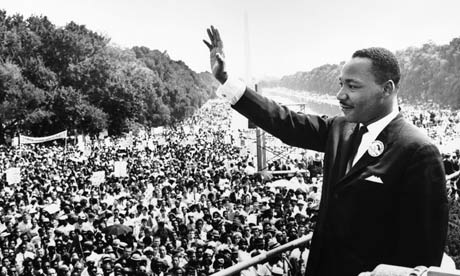
    Martin Luther King Jr. at March on Washington

    Fighting global warming – the right way – will get us closer to achieving the dream Martin Luther King Jr. spoke about on that day in Washington 50 years ago. Photograph: Hulton-Deutsch Collection/CORB

    We marched against the recent attack on voting rights. We demanded justice in the face of Stand Your Ground laws and racial profiling. We marched to raise awareness on unemployment, poverty, gun violence, immigration, and gay rights. And we called for action on climate change.

    Chances are, when you think about civil rights, environmental issues aren’t on the radar screen. But stop and think about it. Remember Hurricane Katrina?

    The hurricane that leveled New Orleans showed that severe weather in low-income neighborhoods and communities of colour is a matter of life and death. The images from the storm are hard to forget: bodies floating in water for days and thousands of people stranded without shelter, waiting for help that was too slow to come.

    It’s not difficult to see how injustice and inequality played out during Hurricane Katrina. Thousands of people were subjected to needless loss, suffering, even death — just because they didn’t have the resources to prepare and escape the storm.

    What’s harder to see is the imminent threat that severe weather — occurring with increased frequency and voracity — poses to our communities. We should never again witness the kind of devastation and preventable suffering we saw during Katrina. That’s why we have to add climate change to our retooled list of what the civil rights movement stands for.

    Climate change isn’t just an environmental issue; it’s about keeping our communities safe. It’s a matter of justice. Because when it comes to disasters — from extreme temperatures to storms like Katrina — people of colour are consistently hit first and worst.

    African-Americans living in L.A. are more than twice as likely to die in a heat wave as other residents in the city, thanks to an abundance of pavement and lack of shade, cars, and air conditioning in neighborhoods with the fewest resources. Factor in a steady rise in temperature — last year was the hottest year on record in the U.S. — and we’re looking at an urgent problem.

    Meanwhile, our communities are at the tip of the spear when it comes to pollution. Fumes from coal plants don’t just accelerate climate change — they cause asthma, heart disease and cancer, leading to 13,000 premature deaths a year. And people of colour are once again most vulnerable; 68% of African-Americans live within 30 miles of a toxic coal plant. That might help explain why one out of six black kids suffers from asthma, compared with one in 10 nationwide.

    But that’s not the only reason we should pay attention. Fighting global warming – the right way – will get us closer to achieving the dream Martin Luther King Jr. spoke about on that day in Washington 50 years ago.

    The solutions to climate change won’t just make us safer and healthier — they are one of the best chances we’ve had in a long time to cultivate economic justice in our communities. Clean energy, green infrastructure, and sustainable industries are already creating jobs and opportunity. There’s a cleantech boom unfolding right now that is on par with the tech boom that made Silicon Valley. And this time, we don’t want to miss the boat.

    If we do this right, we can make sure the steps we take to fight pollution also build pathways into the middle class for folks who have been locked out and left behind. These green jobs are real — 3.1 million Americans already have them. And because they pay more (13% above the median wage) while requiring less formal education, they are exactly what’s needed to eradicate poverty in our communities.

    We have work to do to make sure more people of color have access to the opportunities created by responding to climate change. But if we are successful, we will help create a world where our kids can breathe clean air and drink clean water; where we’re safe and resilient in the face of storms; where more of us share in the nation’s prosperity.

    This is Dr. King’s dream reborn. And fighting climate change helps get us there.

    So, even as we confront the pressing dangers and injustices that cry for an immediate response — like attacks on our right to vote or racial profiling — we can’t lose sight of the future. We need to respond to climate change today to ensure safe, healthy, prosperous lives for our kids tomorrow.

  • Money trail backs the clean energy revolution

    Money trail backs the clean energy revolution

    Date
    August 31, 2013
    • 151 reading now
    • (150)

    Ben Cubby, Peter Hannam

    Across Australia, thousands of rooftops have been turned into solar-power money generators.

    Here’s a bright idea: what if, instead of paying for solar panels to keep your electricity bills down, you asked a solar company to put them on your roof for free, then paid them back with excess energy that you didn’t need?

    Well, it’s already happening. Solar panel installation with no upfront payments, paid off over several years from the money saved out of your power bills, began in Australia almost two years ago. In a few years, it is likely that companies will be competing with each other to pay you for the privilege of using your roof to generate electricity for your home.

    What we are seeing is a transition from high carbon to a low carbon system.

    If that sounds fanciful, bear in mind that a decade ago there were just a few hundred working solar-powered home in the country, run mostly at significant personal expense by enthusiasts. By the end of last year, 936,810 solar systems were installed, and the number cruised past 1 million earlier this year.

    Slowly but surely, renewable energy is eating into the business model of the fossil-fuel-burning energy generators. Those in the industry liken it to the effect the internet is having on publishing: disrupting revenue, overturning tradition and, literally, tilting the balance of power in favour of the customer, rather than big corporations.

    Advertisement

    Oliver Yates, a former Macquarie Bank executive who was appointed to head the government’s Clean Energy Finance Corporation, describes renewable energy as ”the android on the pitch”.

    The analogy goes that the traditional big players are now competing with new opposition that does not have to worry about week-to-week fluctuations in fuel costs, mining approvals, or the burdens of paying for a massive electricity grid. Whenever there is sunshine or wind blowing, the android keeps plodding along. When it isn’t, the traditional players are called back off the substitutes bench to kick on.

    ”At the end of the day, if your competitor is doing the same job for less, it’s a problem for you,” Yates says. ”Increasingly, we will see this taking effect on the profitability of the traditional players.”

    At present, a small 1.5-kilowatt solar panel system might set a householder back about $4500, less a rebate of about $900, and would pay itself off in about seven years from savings on energy bills. According to the Climate Commission, the cost of a solar panel this year has dropped to less than a quarter of its price in 2002, driven by mass production of highly efficient solar panels in China.

    But not everyone can afford that kind of outlay, especially given that solar panels are more popular in rural areas and outer city suburbs that tend to have lower and middle incomes. In Sydney, Blacktown is the solar energy epicentre, while solar panels in Melbourne’s working class west outstrip those in the inner city by five to one. In South Australia, 19.2 per cent of all households are now solar-powered, according to data from consultancy CleanTechnica.

    One of the new players trying to take advantage of the android effect is California-based SunPower, which launched in Australia earlier this month, in partnership with local credit union Community First.

    Its business model is based on free installation of solar panels, lengthy 10-year loans from the credit union to spread out repayments and payback based on the amount of power generated. It’s in everyone’s interest to generate as much renewable energy as possible – except existing power providers that rely on burning coal or gas.

    ”Initially, SunPower partners work with home owners interested in purchasing a solar power system to determine what size system would best meet their energy needs,” company chief executive Tom Werner says.

    ”They follow a precise method in order to understand the home owner’s energy profile, using this information to design a tailored solar power system. For example, they consider how much energy the home owner consumes and during which times, where they’re located geographically and any local incentives. In most cases, home owners should be able to pay monthly loan payments with the savings generated.”

    The claims of many solar companies are yet to be tested, because the industry is growing fast and few people have been connected to the electricity grid for long enough to fully pay off the systems they have bought. The best that can be said is that the sums appear to add up.

    Of course, a lot of this depends on policy settings, at state and federal government levels. The number of panel installations have increased less rapidly since subsidies began to be rolled back, as state governments decided their various feed-in tariff schemes were too popular.

    NSW will shortly release its Renewable Energy Action Plan in a bid to grab a bigger share of the renewable energy investment that will be needed if Australia is to hit its target of supplying 20 per cent of power from clean energy sources by 2020.

    A draft version of the plan boasts that NSW already has the largest installed renewable energy capacity in the country – although about 86 per cent of the total at the time of its release was in hydropower plants built decades earlier.

    The O’Farrell government has made modest steps to close the non-hydro renewable energy gap by tipping in more than $400,000 to help community renewable energy projects get a start. It has also acted on one of its draft action plan goals by appointing Australia’s first renewable energy advocate, Amy Kean.

    Kean says that the industry already employs 25,000 people in the state and is the base for 45 per cent of Australian firms in the sector.

    “NSW is a hub for renewable energy companies.”

    While she plans to avoid “picking winners” among the technologies, Kean knows her role will inevitably thrust her into the fray when country communities battle new projects such as wind farms because of perceived health risks or despoilment of the landscape.

    “I would advocate the important role of consultation and education with communities based on the evidence,” Kean says.

    Work by the National Health and Medical Research Council and other such bodies “needs to be communicated to communities”, she says.

    Kean says her role will have “a degree of independence”, not unlike that of the state’s Chief Scientist, Mary O’Kane, in her ability to give advice across government and sometimes in opposition to it.

    With the federal opposition poised to dismantle or change much of the infrastructure built up around renewable energy should it win government, that advocacy role may take on extra importance.

    At present, the Coalition has promised to abolish the carbon price, the Clean Energy Finance Corporation and the Climate Change Authority – which will recommend the greenhouse gas reduction targets that will in turn influence renewable energy growth.

    This week it also announced that it would cut funding to the Australian Renewable Energy Agency – an independent group that oversees about $3.2 billion in renewables investment, and which the opposition has previously said would be retained.

    The exact nature of the newly pledged cuts remains obscure.

    ”There will be some savings over the forward estimates – those details will be out with the full costings before the election,” a spokeswoman said.

    The head of the renewable energy agency, Ivor Frischknecht, had told Fairfax Media earlier in the election campaign that he believed his agency would be left untouched by the Coalition.

    ”It’s not been a topic that we’ve discussed. We have been given no reason at all to believe that,” Frischknecht said.

    The election is seen by many in the renewables and finance sector as a fork in the road for renewable energy. Data prepared by banks and investors suggests a massive amount of private investment, totalling about $4.1 billion, would be held back over the next three years under a Coalition government, if it engaged in a campaign to force a repeal of the carbon price legislation in the Senate.

    ”Why would you spend money when there is real uncertainty around the return – people will just sit on it until the last minute,” one finance sector source said.

    But the impact that would have on households is uncertain. Most of the effects would be felt in large-scale projects like wind farms and utility-scale solar power stations, with household renewable energy still expected to record big growth.

    A key to the thinking of investors is that both major parties still support the mandatory renewable energy target, which dictates that a fifth of the nation’s total energy must come from renewables by 2020.

    That provides some basis for thinking the cost of renewables will keep coming down, driven by fixed demand for fuel-free energy. And if the past five years are any measure, Chinese manufacturers will continue to churn out solar panels that are cheaper and cheaper.

    ”There is an enormous amount of capital tied up in our energy systems, and what we are seeing is a transition from high carbon to a low carbon system,” Yates says.

    ”What we’re heading into is a period of sustained high volatility in the industry. There is a high possibility that, if this is not managed correctly, we will all end up with much higher costs than we could have had.

    ”You can transform the energy system in a non-disruptive fashion or in a disruptive fashion … But ultimately it is

    Read more: http://www.smh.com.au/environment/energy-smart/money-trail-backs-the-clean-energy-revolution-20130830-2sw4d.html#ixzz2dUzTb61e

  • Syria intervention plan fueled by oil interests, not chemical weapon concern

    Syria intervention plan fueled by oil interests, not chemical weapon concern

    Massacres of civilians are being exploited for narrow geopolitical competition to control Mideast oil, gas pipelines

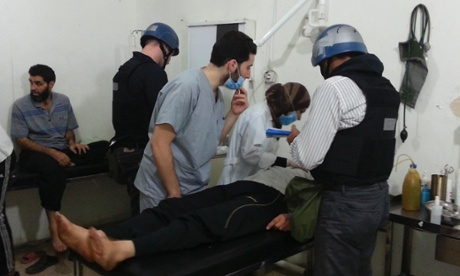
    U.N. chemical weapons experts visit people affected by an apparent gas attack, at a hospital in the southwestern Damascus suburb of Mouadamiya.

    U.N. chemical weapons experts visit people affected by an apparent gas attack, at a hospital in the southwestern Damascus suburb of Mouadamiya. Photograph: Stringer/Reuters

    On 21 August, hundreds – perhaps over a thousand – people were killed in a chemical weapon attack in Ghouta, Damascus, prompting the US, UK, Israel and France to raise the spectre of military strikes against Bashir al Assad’s forces.

    The latest episode is merely one more horrific event in a conflict that has increasingly taken on genocidal characteristics. The case for action at first glance is indisputable. The UN now confirms a death toll over 100,000 people, the vast majority of whom have been killed by Assad’s troops. An estimated 4.5 million people have been displaced from their homes. International observers have overwhelmingly confirmed Assad’s complicity in the preponderance of war crimes and crimes against humanity against the Syrian people. The illegitimacy of his regime, and the legitimacy of the uprising, is clear.

    Experts are unanimous that the shocking footage of civilians, including children, suffering the effects of some sort of chemical attack, is real – but remain divided on whether it involved military-grade chemical weapons associated with Assad’s arsenal, or were a more amateur concoction potentially linked to the rebels.

    Whatever the case, few recall that US agitation against Syria began long before recent atrocities, in the context of wider operations targeting Iranian influence across the Middle East.

    In May 2007, a presidential finding revealed that Bush had authorised CIA operations against Iran. Anti-Syria operations were also in full swing around this time as part of this covert programme, according to Seymour Hersh in the New Yorker. A range of US government and intelligence sources told him that the Bush administration had “cooperated with Saudi Arabia’s government, which is Sunni, in clandestine operations” intended to weaken the Shi’ite Hezbollah in Lebanon. “The US has also taken part in clandestine operations aimed at Iran and its ally Syria,” wrote Hersh, “a byproduct” of which is “the bolstering of Sunni extremist groups” hostile to the United States and “sympathetic to al-Qaeda.” He noted that “the Saudi government, with Washington’s approval, would provide funds and logistical aid to weaken the government of President Bashir Assad, of Syria,” with a view to pressure him to be “more conciliatory and open to negotiations” with Israel. One faction receiving covert US “political and financial support” through the Saudis was the exiled Syrian Muslim Brotherhood.

    According to former French foreign minister Roland Dumas, Britain had planned covert action in Syria as early as 2009: “I was in England two years before the violence in Syria on other business”, he told French television:

    “I met with top British officials, who confessed to me that they were preparing something in Syria. This was in Britain not in America. Britain was preparing gunmen to invade Syria.”

    The 2011 uprisings, it would seem – triggered by a confluence of domestic energy shortages and climate-induced droughts which led to massive food price hikes – came at an opportune moment that was quickly exploited. Leaked emails from the private intelligence firm Stratfor including notes from a meeting with Pentagon officials confirmed US-UK training of Syrian opposition forces since 2011 aimed at eliciting “collapse” of Assad’s regime “from within.”

    So what was this unfolding strategy to undermine Syria and Iran all about? According to retired NATO Secretary General Wesley Clark, a memo from the Office of the US Secretary of Defense just a few weeks after 9/11 revealed plans to “attack and destroy the governments in 7 countries in five years”, starting with Iraq and moving on to “Syria, Lebanon, Libya, Somalia, Sudan and Iran.” In a subsequent interview, Clark argues that this strategy is fundamentally about control of the region’s vast oil and gas resources.

    Much of the strategy currently at play was candidly described in a 2008 US Army-funded RAND report, Unfolding the Future of the Long War (pdf). The report noted that “the economies of the industrialized states will continue to rely heavily on oil, thus making it a strategically important resource.” As most oil will be produced in the Middle East, the US has “motive for maintaining stability in and good relations with Middle Eastern states”:

    “The geographic area of proven oil reserves coincides with the power base of much of the Salafi-jihadist network. This creates a linkage between oil supplies and the long war that is not easily broken or simply characterized… For the foreseeable future, world oil production growth and total output will be dominated by Persian Gulf resources… The region will therefore remain a strategic priority, and this priority will interact strongly with that of prosecuting the long war.”

    In this context, the report identified several potential trajectories for regional policy focused on protecting access to Gulf oil supplies, among which the following are most salient:

    “Divide and Rule focuses on exploiting fault lines between the various Salafi-jihadist groups to turn them against each other and dissipate their energy on internal conflicts. This strategy relies heavily on covert action, information operations (IO), unconventional warfare, and support to indigenous security forces… the United States and its local allies could use the nationalist jihadists to launch proxy IO campaigns to discredit the transnational jihadists in the eyes of the local populace… US leaders could also choose to capitalize on the ‘Sustained Shia-Sunni Conflict’ trajectory by taking the side of the conservative Sunni regimes against Shiite empowerment movements in the Muslim world…. possibly supporting authoritative Sunni governments against a continuingly hostile Iran.”

    Exploring different scenarios for this trajectory, the report speculated that the US may concentrate “on shoring up the traditional Sunni regimes in Saudi Arabia, Egypt, and Pakistan as a way of containing Iranian power and influence in the Middle East and Persian Gulf.” Noting that this could actually empower al-Qaeda jihadists, the report concluded that doing so might work in western interests by bogging down jihadi activity with internal sectarian rivalry rather than targeting the US:

    “One of the oddities of this long war trajectory is that it may actually reduce the al-Qaeda threat to US interests in the short term. The upsurge in Shia identity and confidence seen here would certainly cause serious concern in the Salafi-jihadist community in the Muslim world, including the senior leadership of al-Qaeda. As a result, it is very likely that al-Qaeda might focus its efforts on targeting Iranian interests throughout the Middle East and Persian Gulf while simultaneously cutting back on anti-American and anti-Western operations.”

    The RAND document contextualised this disturbing strategy with surprisingly prescient recognition of the increasing vulnerability of the US’s key allies and enemies – Saudi Arabia, the Gulf states, Egypt, Syria, Iran – to a range of converging crises: rapidly rising populations, a ‘youth bulge’, internal economic inequalities, political frustrations, sectarian tensions, and environmentally-linked water shortages, all of which could destabilise these countries from within or exacerbate inter-state conflicts.

    The report noted especially that Syria is among several “downstream countries that are becoming increasingly water scarce as their populations grow”, increasing a risk of conflict. Thus, although the RAND document fell far short of recognising the prospect of an ‘Arab Spring’, it illustrates that three years before the 2011 uprisings, US defence officials were alive to the region’s growing instabilities, and concerned by the potential consequences for stability of Gulf oil.

    These strategic concerns, motivated by fear of expanding Iranian influence, impacted Syria primarily in relation to pipeline geopolitics. In 2009 – the same year former French foreign minister Dumas alleges the British began planning operations in Syria – Assad refused to sign a proposed agreement with Qatar that would run a pipeline from the latter’s North field, contiguous with Iran’s South Pars field, through Saudi Arabia, Jordan, Syria and on to Turkey, with a view to supply European markets – albeit crucially bypassing Russia. Assad’s rationale was “to protect the interests of [his] Russian ally, which is Europe’s top supplier of natural gas.”

    Instead, the following year, Assad pursued negotiations for an alternative $10 billion pipeline plan with Iran, across Iraq to Syria, that would also potentially allow Iran to supply gas to Europe from its South Pars field shared with Qatar. The Memorandum of Understanding (MoU) for the project was signed in July 2012 – just as Syria’s civil war was spreading to Damascus and Aleppo – and earlier this year Iraq signed a framework agreement for construction of the gas pipelines.

    The Iran-Iraq-Syria pipeline plan was a “direct slap in the face” to Qatar’s plans. No wonder Saudi Prince Bandar bin Sultan, in a failed attempt to bribe Russia to switch sides, told President Vladmir Putin that “whatever regime comes after” Assad, it will be “completely” in Saudi Arabia’s hands and will “not sign any agreement allowing any Gulf country to transport its gas across Syria to Europe and compete with Russian gas exports”, according to diplomatic sources. When Putin refused, the Prince vowed military action.

    It would seem that contradictory self-serving Saudi and Qatari oil interests are pulling the strings of an equally self-serving oil-focused US policy in Syria, if not the wider region. It is this – the problem of establishing a pliable opposition which the US and its oil allies feel confident will play ball, pipeline-style, in a post-Assad Syria – that will determine the nature of any prospective intervention: not concern for Syrian life.

    What is beyond doubt is that Assad is a war criminal whose government deserves to be overthrown. The question is by whom, and for what interests?

    Dr Nafeez Ahmed is executive director of the Institute for Policy Research & Development and author of A User’s Guide to the Crisis of Civilisation: And How to Save It among other books. Follow him on Twitter @nafeezahmed

    A more detailed in-depth special report based on this article is available at the author’s website here.

  • available: a guide to the IPCC’s new RCP emissions pathways The new IPCC RCPs describe four scenarios how the planet might change in th

    Now available: a guide to the IPCC’s new RCP emissions pathways

    The new IPCC RCPs describe four scenarios how the planet might change in the future, for climate research and modeling

    Planet Earth

    The IPCC RCPs give us four possible future climate scenarios. Photograph: Corbis

    When I started to research a rebuttal to the myth that future sea level rise had been exaggerated for Skeptical Science, the newer papers referred frequently to ‘Representative Concentration Pathways’ (RCPs).
    RCPs have replaced Special Report on Emissions Scenarios (SRES), and are used in Working Group I: The Physical Science Basis, the first part of the forthcoming IPCC Assessment Report Five (AR5), to be released in mid-September.

    Needing more information, I looked for a handy ‘executive summary’ of RCP data, science and development. There wasn’t one. By the time I’d found out what I wanted to know from the primary literature, I had realised that a sensible guide/reference would be a damn useful thing to have. I assume you’ve already guessed what I did next?

    RCPs are the third generation of scenarios. The first set – IS92 – were published in 1992. In the year 2000, the second generation – SRES – were released. The latest, now in use, are the RCPs.

    Like their predecessors, Representative Concentration Pathways are a set of standards used primarily by climate modellers. Research takes place in many countries, and RCPs provide a common, agreed foundation for modelling climate change. The data sets are used to initialize models so that everyone starts from a place everyone else understands, using values everyone is familiar with. RCPs reduce duplication and save money; climate modelling is an expensive business. They also provide a way to compare results and communicate findings easily across a broad spectrum of interests.

    So what are these Representative Concentration Pathways? There are four: RCP8.5, RCP6, RCP4.5, and RCP2.6 (the latter also referred to as RCP3PD, where ‘PD’ stands for Peak and Decline). The numbers refer to radiative forcings (global energy imbalances), measured in watts per square metre, by the year 2100.

    Forcing is one key metric of the RCPs. Another is emission rates – how fast we put more greenhouse gases into the atmosphere. The third metric is emission concentrations, measured in parts per millions for each of the greenhouse gases e.g. CO2, methane, nitrous oxide, etc.

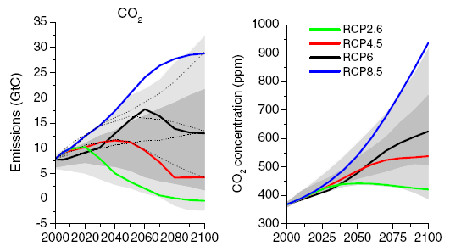
    Each pathway ‘fixes’ two values in the year 2100; how much the planet has heated up, and the concentration of greenhouse gases. Each RCP differs greatly in the rate of forcing and emissions. These different rates, or trajectories, form the ‘pathways’. Here’s two examples: on the left are the four pathways for CO2 emissions up to the year 2100, in gigatons of carbon. On the right, the corresponding concentration (total) of CO2 over the same period, measured in parts per million.

    Emissions of main greenhouse gases across the RCPs (left), and trends in concentrations of greenhouse gases (right). Grey area indicates the 98th and 90th percentiles (light/dark grey) of the literature. The dotted lines indicate four of the SRES marker scenarios. (Graphs from van Vuuren et.al. 2011 Emissions of main greenhouse gases across the RCPs (left), and trends in concentrations of greenhouse gases (right). Grey area indicates the 98th and 90th percentiles (light/dark grey) of the literature. The dotted lines indicate four of the SRES marker scenarios. (Graphs from van Vuuren et.al. (2011).Each RCP was developed independently by a modelling team whose previous work was a close match to the starting requirements for the new scenarios. To determine the trajectories of emissions and forcings for each RCP, the teams reviewed the existing literature and synthesized values for a wide range of scientific and socioeconomic data, like population growth, GDP, air pollution, land use and energy sources.
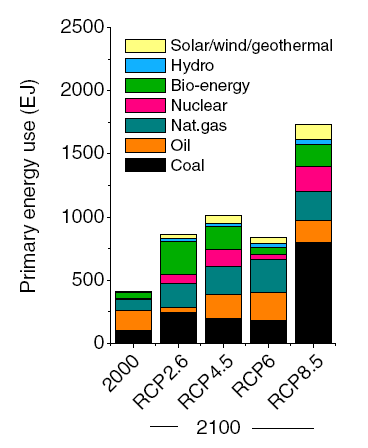
    Energy sources by sector (van Vuuren et.al. 2011) Energy sources by sector (van Vuuren et.al. 2011)Why were new scenarios necessary? One reason is efficiency; the RCPs allow more flexibility (and reduced costs) in modelling processes. Possibly the most important improvement is that, unlike SRES, RCPs allow teams to test different social, legislative and other policy initiatives, and see the economic effects as well as environmental; mitigation results as well as adaptation.

    Variations in socioeconomic models are called narratives (or storylines) and are expected to form a key plank of on-going investigation into the best way to address climate change at both regional and global scales. The IPCCs AR5 Working Group 2 report, “Impacts, Adaptation and Vulnerabilities”, released in March 2014, will report on new “shared socioeconomic pathways” (SSPs).

    Climate models are essential and valuable tools. Despite much criticism, they have made many predictions whose chief criticism should be that they are too conservative. Even the crude early models have proved surprisingly accurate; you can read about them here.

    Understanding scenarios helps us understand the models and the information they produce. The Skeptical Science Beginner’s Guide to Representative Concentration Pathways is available as an online resource, (also available as a PDF). The guide is split in three sections: In Part 1 we explore their historical background, explain why scenarios are necessary, and who uses them. Part 2 starts with an examination of the demand for new scenarios, and describes their development. In Part 3 we take a look at the scenarios in detail, consider the technical aspects, the differences between the four RCPs, and how they compare to earlier SRES scenarios. The public can also use the RCP database, the central resource for the data that forms each pathway.

  • 7 More National Parks Threatened by Fire

    7 More National Parks Threatened by Fire

    Yosemite isn’t the only park facing a growing risk of wildfires.

    —By

    | Fri Aug. 30, 2013 3:00 AM PDT

    California’s massive Rim Fire has now charred more than 192,000 acres, including 45,000 acres in Yosemite National Park. But Yosemite isn’t the only national park facing the threat of wildfires. Across the western US, rising temperatures, past fire suppression policies, and invasive species are increasing the fire risk—meaning some of country’s greatest natural treasures could one day go up in smoke.

    Here are seven beautiful parks where the danger is very real.

    Yellowstone and Grand Teton National Parks

    Yellowstone

    Yellowstone National Park. And_Ant/Shutterstock

    America’s first national park is also one of the most threatened by fire. Anthony Westerling, a wildfire expert at the University of California, Merced’s school of engineering, says that large blazes were once relatively infrequent in the northern Rocky Mountains but that climate change could dramatically increase fire activity in the Yellowstone area.

    In 2011, Westerling and his colleagues found that continued warming “could completely transform” fire activity in the Greater Yellowstone ecosystem, which includes the Yellowstone and Grand Teton parks. In fact, by the middle of this century, both the frequency of fires and the area burned could be greater than at any time in the past 10,000 years. The researchers concluded that these changes would result in a “real likelihood of Yellowstone’s forests being converted to nonforest vegetation during the mid-21st century” because new trees wouldn’t have a chance to grow between the increasingly frequent fires.

    Sequoia and Kings Canyon National Parks

    Sequoia National Park

    Giant sequoias in Sequoia National Park. Galyna Andrushko/Shutterstock

    These Sierra Nevada parks, roughly 100 miles south of Yosemite, are facing severe drought and “extreme” fire danger. Right now, “we’re in the ‘holy cow, things are dry’ stage,” says park official Deb Schweizer, explaining that Sequoia and Kings are currently operating under their highest level of campfire restrictions.

    The parks are best known for their giant sequoias—the same type of ancient trees that firefighters have been scrambling to protect in Yosemite. Giant sequoias are a “fire-adapted” species that typically benefits from low-intensity ground fires—the trees’ thick bark protects them from flames, and the heat helps release their seeds. But massive blazes like the one in Yosemite could be a different story.

    Patrick Gonzalez, a climate change scientist with the National Park Service, has been working with a team of researchers to analyze the vulnerability of the parks’ giant sequoias to a potential increase in fire due to climate change. Gonzalez said in an email that “it is not yet possible to say that climate change has increased fire danger” in Sequoia. Still, he says, park officials are “considering how to adapt their fire management practices” based on the research.

    Glacier National Park

    Glacier National Park

    Saint Mary Lake in Glacier National Park. e X p o s e/Shutterstock

    It’s well known that this park’s iconic glaciers are threatened by climate change. But officials at the park—in Montana’s northern Rockies, along the Canadian border— are also concerned about the potential for increasing fires. According to a park service publication, temperatures in the Glacier area increasing nearly twice as fast as the global average. The heat, combined with decreased snowfall and other factors, could cause an “increase in frequency, size, and intensity of wildfires.” Glacier officials are worried that warmer weather is worsening insect infestations—which in turn might weaken trees and make them more vulnerable to fire. According to a recent Government Accountability Office report:

    [P]ark staff said additional funding could be used to address increased western spruce budworm infestations. This insect normally infests trees for 3 years, but due to temperature increases, its infestation period has lengthened to 7 to 15-year cycles, according to park managers. As a result, hundreds of forested acres of Glacier National Park have been weakened, which could increase their susceptibility to fires.

    Saguaro National Park

    Saguaro National Park

    Saguaro cacti in Saguaro National Park. SNEHIT/Shutterstock

    This desert park’s namesake, the saguaro cactus, is “severely threatened” by a highly flammable invasive plant called buffelgrass, according to the National Park Service.

    Julio Betancourt, a scientist with the US Geological Survey, thinks it’s likely that warmer temperatures are playing a role in spreading buffelgrass. He explains that beginning in the 1980s and ’90s, buffelgrass “exploded across the landscape,” filling the Sonoran Desert with fuel for small, intense fires that can transform the landscape. “These fires burn hot,” says Betancourt, “this is not something Saguaros are going to survive.”

    After a fire, the buffelgrass regrows quickly, often thicker than before. But saguaros—as well as other species native to the park—grow very slowly and simply can’t compete with the fire-adapted grass. According to the park service, “Many scientists believe that local extinctions of saguaros will occur and the Sonoran Desert vegetation and wildlife will be changed forever.”

    Joshua Tree National Park

    Joshua Tree National Park

    Joshua trees in Joshua Tree National Park. agap/Shutterstock

    Located in the California desert, Joshua Tree faces a similar threat from invasive grasses—in this case, from red brome and cheatgrass. According to the park service, these plants “made a major assault on the park” beginning in the 1990s and are fundamentally altering the ecosystem:

    Formerly when lightning struck a Joshua tree or juniper, it would consume that plant then burn out. Now the grasses covering the ground carry the fire from the ignited plant on to others.

    Desert plants are not adapted to fire; plant seeds do not require fire to break dormancy, nor do many of the plants resprout after fire. We believe that larger fires do occur in deserts, but historically only every century or so. Due to exotic grasses, we are now seeing large fires, such as the Juniper Complex fire that burned 14,000 acres in 1999, every five to 30 years in the Mojave.

    As the threat of grass fires increases, says Betancourt, “Joshua Tree National Park could very