Author: Neville

  • Vote Compass data confirms Labor had ‘bloke problem’ under Julia Gillard By Antony Green Vte Compass data confirms Labor had ‘bloke problem’ under Julia Gillard By Antony Green

    Updated 1 hour 15 minutes ago

    It may rarely receive much attention in general political discussion but gender and politics has long been a matter of debate among political scientists.

    The arrival of Julia Gillard as Australia’s first female prime minister made gender more central to the political debate, especially given Ms Gillard on several occasions specifically attacked Mr Abbott on gender issues.

    That opinion polls tended to show Mr Abbott polling less well among female voters was another factor in bringing gender into the general political debate.

    Labor regularly highlighted Mr Abbott’s polling with female voters and the Liberal Party’s decision to feature Mr Abbott more often with his family and with his female colleagues and candidates suggested Liberal Party polling revealed something similar.

    Yet there are two dimensions to issues of gender and voting patterns. A gap in voting by gender can be caused by shifts in female voting patterns, but equally can be due to shifts in male voting patterns.

    On July 16, after the change of Labor leadership, the Australian featured a special analysis of Newspoll looking at the shift in gender voting with the change in leadership.

    The article pointed to Labor’s support among women having lifted from 34 per cent to 38 per cent with the change of leadership. The article’s headline was all about Rudd being more popular among women than Gillard, the story re-visiting the misogyny and gender debate.

    What I thought more revealing in the Australian’s table was the shift in the male vote after the change of leadership. Labor’s vote among men rose 7 per cent from 28 per cent to 35 per cent.

    Before the change, a Fairfax Nielsen poll published on June 16 had highlighted a slump in Labor support among male voters; Labor slipping from its traditional position of polling more strongly among men than women had been evident earlier.

    For all the talk of Mr Abbott’s problem with female voters, not nearly as much attention was paid to a clearly evident problem that Ms Gillard had with male voters, the other dimension to a gender gap in voting.

    Labor had a bloke problem.

    And a bloke problem is something of a worry for the Labor Party. While the gap in gender voting has declined over the past four decades, it is still unusual for Labor to poll better than the Coalition among female voters but Labor normally polls better among male voters.

    After the switch in leadership from Julia Gillard to Kevin Rudd, Labor achieved one of the biggest poll boosts in Australian polling history, a seven-point jump according to some polls.

    Such a dramatic shift was worth investigating with Vote Compass and for the first week of the tool’s operation, we included a ‘question of the day’ on voter attitudes to the change in Labor leadership.

    To try to measure sentiment properly, the question was asked three different ways, though each respondent was asked only one of the questions. In a sample of about 300,000 respondents who gave their demographic details, one third received each question.

    The results reveal there was a vast gender difference in respondent attitudes to the change in leadership, but it was the shift in attitude among male voters that was more important to Labor’s poll recovery than the reaction of female voters.

    The first question asked was:

    Regardless of which party you intend to vote for on election day, do you prefer Kevin Rudd or Julia Gillard as leader of the Labor Party?

    As shown in the graph below, the strongest support for Kevin Rudd was among intended Labor voters, who 63 per cent to 31 per cent stated they preferred Mr Rudd. The approval number would have been boosted by the number of voters switching to Labor because of the change, a consequence of the question being asked after the event.

    Among ‘Other’ voters, preference for Kevin Rudd was 47 per cent to 26 per cent; among undecided voters 42 per cent to 36 per cent; but Green supporters backed Gillard 51 per cent to 35 per cent.

    Coalition voters were evenly split, perhaps reflecting some Coalition supporters thinking Gillard was the better option for ensuring a Coalition victory.


    Looking at respondents’ self-selected left-right ideology, an even more interesting pattern emerges. The group giving greatest support to Mr Rudd were respondents who considered themselves ideologically in the centre. Australian elections are always won in the centre, so such a finding suggests bad polling could in part be sheeted home to Ms Gillard’s lack of appeal to this group compared to Mr Rudd.

    Respondents of both left and right persuasion were more evenly split, probably for a variety of reasons. The graph below shows the full results.


    Unsurprisingly, support for the change was strongest in Mr Rudd’s home state of Queensland, followed by New South Wales and Tasmania, the three states where Labor’s polling had been weakest. The only jurisdiction where voters supported Ms Gillard was the ACT.


    As shown below, the gender difference on this question was stark. Men preferred Mr Rudd 56 per cent to 27 per cent, while women backed Ms Gillard 44 per cent to 36 per cent. This finding backs my suggestion that it was Julia Gillard’s problem with male voters that was the gender issue driving the change of Labor leadership.


    The second question asked voters to look backwards and state what they would have done at an election were Julia Gillard still Prime Minister. Would they be more or less likely to support Labor?

    If Julia Gillard were still Prime Minister would you be more or less likely to vote for the Labor Party?

    The response based on intended party vote is a bit confused, probably because the group that really mattered, those who switched back to Labor with Rudd becoming leader, were hidden by the rest of the Labor voters who still intended to vote Labor.

    The analysis based on self-assigned ideology shown in the graph below displays the overall picture more clearly.


    The response of Right and Centre-Right voters can be ignored, as most would not have voted Labor anyway. Left-aligned voters stated they were slightly more likely to vote Labor with Gillard as leader than Rudd.

    But among Centre voters the gap was vast, 47 per cent less likely with Gillard compared to only 15 per cent more likely. And as I said, Australian elections are won in the centre.

    As you would expect, the gender gap on this question was stark. Among male voters, 50 per cent stated they were less likely to vote Labor as opposed to 12 per cent more likely. Among female voters, 31 per cent were less likely to vote Labor, 26 per cent more likely. All the upside for Labor’s vote on a change of leadership was among male voters, with little likely change in female support because of the switch.


    The final question asked more specifically whether Labor had made the right decision. It didn’t ask about intended change of vote, just simply whether the decision was ‘right’ by whatever criteria the respondent chose to use:

    In your opinion, did the Labor Party make the right decision in changing leaders from Julia Gillard to Kevin Rudd?

    Among Labor intended voters the response was overwhelming, 74 per cent saying yes and only 16 per cent saying no. Was this Labor voters falling in behind the new leader? Perhaps.

    Green supporters were evenly split on the question, supporters of ‘Others’ were in favour 58 per cent to 29 per cent, and Undecided voters were in favour 44 per cent to 33 per cent.

    Only Coalition supporters said the change was not the right thing to do. Again, some Coalition intended voters may have been thinking the right thing for their party was for Julia Gillard to remain as Labor leader.


    Below is the breakdown by ideology, and every group except Right voters considered the change was the correct decision by Labor. By far the strongest support was among Centre and Centre-Left respondents, the sort of groups Labor needed to retain support from to avoid a landslide defeat, and to even hope for possible victory.


    Again there were stark differences along gender lines. Male voters thought the change was the right decision 61 per cent to 27 per cent, while female voters split in favour 44 per cent to 40 per cent.


    In summary it is clear that in changing leader, Labor received overall support among intended Labor voters, received greatest backing for the change from among Centre voters, and received overwhelming backing from male voters – with little evidence of a major backlash among female voters.

    As Julia Gillard said in her farewell press conference, gender didn’t explain everything about her troubled Prime Ministership, it didn’t explain nothing, but it explained something.

    Books have already appeared on the role of gender in Julia Gillard’s political demise, and many a thesis will yet be written.

    Yet what was seen in the polls beforehand, and what is clearly shown in the Vote Compass data, is that it is the reaction among male voters to Julia Gillard’s demise that has played an important part in Labor’s poll recovery.

    The misogyny debate had focused political attention on Tony Abbott’s perceived problems with female voters while not nearly as much attention was paid to Labor’s and Julia Gillard’s growing problem with male voters.

    Labor’s base electoral percentage vote is in the mid to high 30s. Under Julia Gillard, Labor was polling below this base level. In the circumstances, a change of leadership was always on the cards when a reticent Labor Caucus finally faced up to looming political oblivion.

    Whether Labor’s problems were caused by sexism in the electorate, sexism by Ms Gillard’s opponents, sexism in the media, or missteps by Ms Gillard herself, clearly Labor couldn’t allow the impasse on the leadership to persist.

    Labor’s bounce in the polls after the leadership change has subsided, and the Coalition are still favourites to win the election.

    But Labor is still polling better than before the leadership change, and the Vote Compass data reveals that the story is not about Tony Abbot and female voters, but male voter attitudes to Julia Gillard.

    Topics: federal-elections, gillard-julia, rudd-kevin, australia

  • Antarctica: How current ice melts follow past patterns

    Antarctica: How current ice melts follow past patterns

    Different regions of Antarctica are warming at different rates. This differential melting occurred similarly during ancient warming periods, researchers have found. Now scientists hope understanding the past will help them to better predict the future.

    By Becky Oskin, Livescience.com / August 14, 2013

    A West Antarctica Ice Sheet Divide researcher stands next to an ice core with data from 68,000 years ago. The current melting pattern of Antarctic ice sheets mirrors melts of ancient warming periods, researchers have found.

    Kendrick Taylor/Desert Research Institute

    Enlarge


    The modern meltdown of the Antarctic Ice Sheet mirrors the frozen continent’s big thaw after the last ice age ended 20,000 years ago, a new study finds.

    Skip to next paragraph

    Ads by Google
    150+ online & distance courses.
    20% off all courses this month!

    Subscribe Today to the Monitor

    Click Here for your FREE 30 DAYS of
    The Christian Science Monitor
    Weekly Digital Edition

    New ice core records from West Antarctica show the huge ice sheet started heating up about 20,000 to 22,000 years ago, 2,000 to 4,000 years earlier than previously thought. But in East Antarctica, which was higher in elevation, colder and drier than the West, the continent stayed in its deep-freeze cycle until 18,000 years ago. The results were published today (Aug. 14) in the journal Nature.

    The mismatch between West and East is similar to today’s Antarctica. Modern West Antarctica is one of the fastest-warming places on the planet. The middle of West Antarctica has warmed by 4.4 degrees Fahrenheit (2.4 degrees Celsius) since 1958, three times as fast as the overall rate of global warming. But relatively little warming — half a degree or less — has been measured in East Antarctica. [In Photos: Stunning Photos of Antarctic Ice]

    Looking at how Antarctica melted in response to past climate change can help researchers better predict the ice sheet’s future behavior, said lead study author T.J. Fudge, a doctoral student at the University of Washington. “This most recent deglacial warming is the spot in time we can look at to really understand how our climate goes through big changes,” Fudge told LiveScience.

    The study is based on an ice core more than 2 miles (3,405 meters) long, covering 68,000 years, the longest U.S. ice core ever drilled. The five-year effort to retrieve the core ended in December 2011. Scientists are only halfway through the ice, having analyzed 30,000 years’ worth of annual layers, according to a statement from the University of Washington.

    The authors — a consortium of 42 researchers signed off on the study — suggest that 20,000 years ago, warming in the Southern Ocean melted sea ice around Antarctica. The missing ice meant more storms traveled inland, boosting West Antarctica’s warming.

    West Antarctica is influenced by the ocean much more than the ice up high in East Antarctica, so you are able to see this [warming] happening before you notice it in East Antarctica,” Fudge said. “We’re seeing something similar in the modern climate, where West Antarctica seems to be changing more quickly.”

    The findings also resolve a long-standing problem: The timing of polar melting when the ice age ended. Based on earlier ice core records, mainly from East Antarctica, researchers had thought Antarctica warmed up 18,000 years ago, about 2,000 years after the Northern Hemisphere had warmed. Climate modelers sought to explain the delay through shutdowns in ocean currents (which help carry heat across the globe), among other factors.

    Now, the warming in West Antarctica matches the onset of warming in the Northern Hemisphere, also pegged at 20,000 years ago.

    Email Becky Oskin or follow her @beckyoskin. Follow us @livescienceFacebook & Google+. Original article on LiveScience.

  • Corruption cost NSW Labor $90m

    Earlier this month, the Independent Commission Against Corruption (ICAC) recommended criminal charges be brought against former Labor ministers Eddie Obeid and Ian Macdonald over their involvement in the Mount Penny and Doyles Creek mines.

    It followed the largest corruption investigation in the state’s history.

    Under questioning in budget estimates, Mr Baird said he had asked Treasury, and the Minerals and Resources Department, to look into the costs.

    “You will be appalled at the numbers that have come out of that report,” he told the hearing on Thursday.

    “I sort of sit here and shake my head. If the licences were not issued corruptly or negligently this state would be $90 million better off.”

    Instead, he said the state got “absolutely nothing”.

    “Those resources, our resources, the state’s resources, were effectively given away…

    “We have seen $90 million given away by the former Labor government to their mates.”

    Mr Baird said the $90 million estimate was a conservative figure as the licences were granted in boom times, and there had also been a delay of $50 million in ongoing royalties on an annual basis.

    He said the ICAC hearings amounted to about $2 million.

    “Whether it be seven new schools or 900 teachers, the state has been short changed…

    The treasurer called on the opposition to apologise for allowing the corruption to happen on its watch and short changing the state.

    “I can’t believe the size, I can’t believe the culture that allowed that to happen.”

  • ​Preserving Blue Carbon to Limit Global Climate Change: An Interview with Juha Siikamäki

    ​Preserving Blue Carbon to Limit Global Climate Change: An Interview with Juha Siikamäki

    This article appears in the Resources 2013 digital issue, available exclusively to Resources app subscribers on the iPad, iPhone, and Android. For access to the full digital issue, get the Resources app.

    Juha Siikamäki
    Resources sat down with RFF Associate Research Director and Fellow Juha Siikamäki to discuss his recent work on how protecting coastal mangroves, salt marshes, and sea grass meadows may prevent billions of tons of carbon dioxide emissions from entering the air. In an excerpt from that interview, he emphasizes the importance of incorporating blue carbon into climate policy and describes the conservation challenges ahead.

    Download this interview on iTunes and
    listen to other RFF podcasts here.

    Resources: What exactly is blue carbon, and why is it important?

    Juha Siikamäki: “Blue carbon” refers to carbon that is stored by coastal and ocean environments. Recently, the main focus of the conservation community has been on three different kinds of blue carbon ecosystems: mangroves, salt marshes, and sea grasses. These areas are generally known as carbon sinks. We know that these areas preserve a considerable amount of carbon, but the storage capacity is under threat due to development.

    Their storage capacity is especially significant relevant to their total area. It turns out that the total area—for instance, of mangroves—is relatively small. It’s only about 1 percent of the total area of tropical forests. But on a per-acre basis, the amount of carbon stored in mangroves is multiple times the amount of carbon stored in tropical forests.

    Resources: How did you decide to focus on blue carbon storage?

    Siikamäki: For a long time now, we’ve known that natural systems provide a significant storage capacity for carbon. Recently, there’s been a great deal of discussion and research on tropical forests, focusing on reducing emissions from deforestation and forest degradation (REDD).

    It turns out that, according to most estimates, we can avoid emissions at a relatively low cost by preventing deforestation. It’s less costly to avoid emissions from tropical deforestation than, for example, reducing emissions from an industrial source with fossil fuel combustion. It seems like a win–win strategy.

    We’ve also known that coastal areas are extremely valuable for many reasons. They provide ecological functions; they’re important for fisheries; they’re important for water quality, storm protection, recreation, and so on. We’ve also known that they contain a considerable amount of carbon, but we haven’t known exactly how much.

    The big challenge with coastal conservation is that coastal areas have become especially attractive for development. Coastal areas have been converted for many purposes: agricultural development, tourism, residential development, industrial development, and even fisheries development. And coastal development can create very high returns. The idea is that maybe blue carbon will help strengthen the case for coastal preservation.

    Missing from this debate was any information on the economic potential of avoiding carbon emissions by protecting coastal environments. Exactly how much carbon do these areas store? How much is the carbon worth? How costly would it be to preserve these areas? Our goal when we started this research was to find out to what extent, from an economic perspective, there might be justification for preservation of coastal areas.

    Resources: How do you determine how much carbon is stored by mangroves?

    Siikamäki: We started out from a satellite-based map of mangrove areas globally. Across the 140,000 square kilometers of mangroves that have been identified throughout the world, we divided those areas into small locations—roughly 5.5 by 5.5 miles in area. For each plot, we developed an estimate of mangrove biomass above and below ground. That gave us an estimate of the carbon stored in the biomass. Additionally, we developed estimates of the amount of soil carbon in mangroves. A lot of natural science goes into answering the question.

    Resources: How could blue carbon be incorporated into REDD programs?

    Siikamäki: In principle, the same general framework would work, especially for mangroves. Mangroves are forests. So in that sense there would be a natural fit under the REDD umbrella.

    A few important differences exist between tropical forests and coastal environments, however. In particular, most of the carbon in tropical forests is stored in the living trees and their roots. When we talk about coastal ecosystems, especially mangroves, the situation is very different. The biomass stores carbon, but most of the carbon is stored in the soil as a result of hundreds of years of accumulation and sequestration.

    From the REDD perspective, the difference is quite critical. Rules for other tropical forests do not allow accounting for soil carbon—so REDD effectively rules out mangroves. One of the key next steps to consider is to find ways of accounting robustly for the soil carbon in coastal environments.

    There has been a good bit of work in this area recently. In fact, there is a new voluntary carbon standard designed specifically for accounting for carbon in wetlands.

    Resources: In some of your previous research, you noted that targeting forests for conservation purely based on carbon storage may lead to missed opportunities to save areas rich in plant and animal species. Can you explain how we can combine the goals of forest carbon sequestration and biodiversity preservation?

    Siikamäki: The basic dilemma here is that the areas that are most attractive for preserving carbon may not be the same areas that would be most attractive for preserving biodiversity. There’s some overlap, but these different goals can significantly impact the kinds of areas that we would target for conservation.

    In the context of mangroves, the difference is actually less critical. It turns out that even by focusing on carbon sequestration, we can preserve quite a bit of biodiversity. And the same is true if we focus on biodiversity preservation—the carbon sequestration benefits would be quite significant.

    There is an additional cost of adding biodiversity conservation criteria into carbon-focused programs, but we find it’s quite minimal—around a few dollars per ton of carbon dioxide. To put that in context, we estimate that without any additional emphasis on biodiversity, blue carbon emissions could be avoided at less than roughly $10 per CO2. To assess the economic potential, we compared this to the cost of emissions reductions from industrial sources. We used an estimate of $10 to $20 per ton of carbon dioxide. That’s roughly the market price from the European Union Emissions Trading Scheme, which is the biggest market for carbon emissions permits and offsets.

    Resources: What are some of the major challenges for conserving blue carbon areas in developing economies?

    Siikamäki: There are many challenges. Fish and shrimp farming, for example, are major drivers of mangrove conversion. One of the main challenges with aquaculture is that it’s extremely productive. It creates very high returns. Competing against those returns is difficult. But we find that in many cases, solely focusing on carbon probably would justify the preservation of those areas. That’s a striking result.

    In developing countries, you start dealing with issues related to institutional capacity and governance—the kinds of issues that demand attention when thinking about potentially implementing large-scale conservation programs. One might need to focus on building capacity and developing protocols for monitoring and managing conservation areas. Much work needs to be done at a practical level before one can think about effectively implementing conservation programs.

    Resources: What are the next steps to link blue carbon preservation to climate change mitigation policies?

    Siikamäki: Our work clearly suggests that these areas are of significant value in the context of avoiding emissions. There certainly is a case to be made that a serious effort should be put in place to incorporate them into climate policy via a REDD-like framework.

    Another next step is to start thinking about pilot projects in different locations. Through process, we’ll learn a great deal and identify other issues that still need further consideration. For example, what locations are most attractive? How do you deal with issues related to institutional capacity? There are many concerns, but I do think the evidence is sufficient to move ahead with more advanced policy development and to experiment with actual projects.

    Learn more about the work by RFF researchers on blue carbon, a joint effort of RFF’s Center for Climate and Electricity Policy and Center for the Management of Ecological Wealth.

  • Each Degree of Warming Will Raise Sea Levels 7.5 Feet

    Each Degree of Warming Will Raise Sea Levels 7.5 Feet

    Posted by in Air/Climate, Latest News, Oceans, RSS on July 15, 2013 6:06 pm / no comments


    CORVALLIS, Oregon, July 15, 2013 (ENS) – Global sea levels will rise about 2.3 meters, or 7.5 feet, for every degree Celsius (1.8 degrees Fahrenheit) that the planet warms over the next several thousand years, finds new research that combines all the major causes of sea level rise.

    This international study is one of the first to combine analyses of the four major contributors to potential sea level rise into a collective estimate, and compare it with evidence of past sea-level responses to global temperature changes.

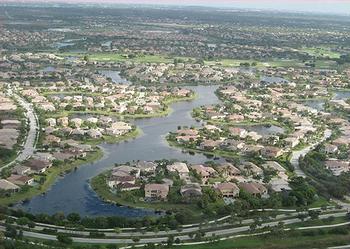
    homes at sea level

    Homes in West Palm Beach, Florida are built at sea level (Photo by Netherlands Diplomatic Missions in the USA)

    Scientists say the four major contributors to sea-level rise on a global scale are: melting of glaciers, melting of the Greenland ice sheet, melting of the Antarctic ice sheet, and expansion of the ocean itself as it warms.

    Several past studies have examined each of these components, the authors of this study say, but this is an early attempt to merge the four different analyses into a single projection.

    The study, funded by the U.S. National Science Foundation and the German Federal Ministry of Education and Research, is published in the current issue of the journal “Proceedings of the National Academy of Sciences.”

    “The study did not seek to estimate how much the planet will warm, or how rapidly sea levels will rise,” said author Peter Clark, an Oregon State University paleoclimatologist.

    “Instead, we were trying to pin down the sea-level commitment of global warming on a multi-millennial time scale. In other words, how much would sea levels rise over long periods of time for each degree the planet warms and holds that warmth?”

    Clark

    Professor Peter Clark (Photo courtesy Oregon State U.)

    “The simulations of future scenarios we ran from physical models were fairly consistent with evidence of sea-level rise from the past,” Clark explained.

    “Some 120,000 years ago,” he said, “it was one to two degrees warmer than it is now and sea levels were about five to nine meters higher. This is consistent with what our models say may happen in the future.”

    The researchers ran hundreds of simulations through their computer models to calculate how the four components would respond to warming, Clark said, finding that the amount of melting and subsequent sea-level response was commensurate with the amount of warming.

    The exception, Clark said, is Greenland, which seems to have a threshold at which the response can be amplified.

    “As the ice sheet in Greenland melts over thousands of years and becomes lower, the temperature will increase because of the elevation loss,” Clark said. “For every 1,000 meters of elevation loss, it warms about six degrees Celsius. That elevation loss would accelerate the melting of the Greenland ice sheet.”

    By contrast, the Antarctic ice sheet is so cold that elevation loss will not affect it the same way.

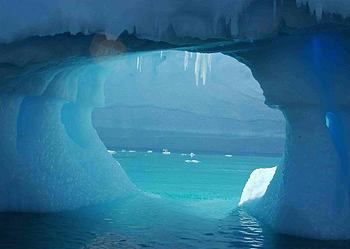
    iceberg

    Tunnel through an iceberg off the coast of Antarctica (Photo by cam17)

    The melting of the ice sheet there comes primarily from the calving of icebergs, which float away and melt in warmer ocean waters, or the contact between the edges of the ice sheet and seawater.

    The authors note that sea-level rise in the past century has been dominated by the expansion of the ocean and melting of glaciers.

    In the future, the biggest contributions may come from melting of the Greenland ice sheet, which could disappear entirely, and the Antarctic ice sheet, which will likely reach some kind of equilibrium with atmospheric temperatures and shrink significantly, but not disappear, the authors predict.

    “Keep in mind that the sea level rise projected by these models of 2.3 meters per degree of warming is over thousands of years,” said Clark, who is a professor in Oregon State University’s College of Earth, Ocean, and Atmospheric Sciences, where he teaches history and dynamics of former glaciers and ice sheets, paleo-sea level, paleoclimatology and abrupt climate change.

    “If it warms a degree in the next two years, sea levels won’t necessarily rise immediately,” said Clark. “The Earth has to warm and hold that increased temperature over time.”

    “However, carbon dioxide has a very long time scale and the amounts we’ve emitted into the atmosphere will stay up there for thousands of years,” he warned. “Even if we were to reduce emissions, the sea-level commitment of global warming will be significant.”

    Copyright Environment News Service (ENS) 2013. All rights reserved.

  • $59m Bureau of Meteorology upgrade to usher in a next-generation weather prediction system

    $59m Bureau of Meteorology upgrade to usher in a next-generation weather prediction system

    • by: Steven Scott National Political Correspondent
    • From: The Courier-Mail
    • August 14, 2013 12:00AM
    sprawling storm

    A $59 million upgrade for the Bureau of Meteorology to be announced by Prime Minister Kevin Rudd will address criticisms we no longer possess the capability to sufficiently predict extreme weather events that threaten Queenslanders. Source: AFP

    KEVIN Rudd will on Wednesday announce a $58.5 million boost to the Bureau of Meteorology, almost two years after receiving warnings it could not properly predict extreme weather.

    The Prime Minister will use a trip to Cairns to release his long-awaited response to a review completed in December 2011 that found the bureau was understaffed and could struggle to deal with another summer of floods and cyclones.

    Labor’s funding pledge will cover a next-generation flood forecasting system and an advanced storm tide prediction system.

    Extra frontline meteorologists and hydrologists will be hired as part of the package.

    Bureau chief says super storm ‘just blew up’

    The Government will also pledge to set up a National Centre for Extreme Weather that will assist other offices during emergencies.

    “Climate change is increasing the frequency and intensity of extreme weather events and we need to be in a better position to respond to these events to ensure people can make decisions to protect their lives, their homes as well as community infrastructure,” Mr Rudd said.

    “In particular, better flood warnings and advanced storm tide prediction is extremely important for Queenslanders in low-lying areas along the coast.”

    The 2011 report written by Chloe Munro, who is now the Clean Energy Regulator, warned the bureau was overstretched and could struggle to accurately predict extreme weather events.

    “The bureau is at the limit of its human capacity to provide a sustainable extreme weather forecasting and warning service,” the report said.

    “This creates risk for the bureau, the Government and the public.”

    Urgently needed upgrades to the bureau’s supercomputer were recently estimated to cost about $40 million.

    Environment Minister Mark Butler conceded the bureau was under-resourced but said the funding boost would address the shortfall.

    “In recent years, widespread severe weather has led to sustained pressure on the Bureau of Meteorology during periods of protracted extreme weather on multiple fronts,” Mr Butler said.

    “This commitment will ensure the bureau has the resources it needs to meet the demands for the essential frontline services the community has come to rely on and trust.”

    ###

    Read more: http://www.couriermail.com.au/national-news/queensland/m-bureau-of-meteorology-upgrade-to-usher-in-a-nextgeneration-weather-prediction-system/story-fnii5v6w-1226696607655#ixzz2bvjECRSC