Author: Neville

  • Senate report on extreme weather and climate warming paves way for rethink on emissions target

    Senate report on extreme weather and climate warming paves way for rethink on emissions target

    Your Friends’ Activity

    NEW! Discover news with your friends. Give it a try.
    To get going, simply connect with your favourite social network:

    Facebook
    • twitter
    • linkedin
    • google

    This feature allows you to discover news with your friends on Our Network.

    This means stories that are read and watched will be shared with your friends, and they’ll share things with you too.

    To try out Discover news with friends simply login with your favourite social network. You can login with Facebook, Twitter, Linkedin or Google+

    Give it a try! You can turn it off at any time.

    Emissions target must be lifted

    A strong global agreement is needed to tackle climate change. Source: AFP

    From the Homepage

    IBM defends role as state considers blacklist

    IBM defends role as state considers blacklistUPDATE: IBM has rejected key findings from the Queensland Health payroll inquiry, as state looks at sacking public servants adversely named in report.

    Serial offender in 430km chase drug user since 10

    Serial offender in 430km chase drug user since 10 WATCH THE EXTRAORDINARY VIDEO: A repeat offender who led police on a wild chase from Mount Gambier to Adelaide, terrifying numerous motorists, started taking drugs when he was 10.

    Meet Queensland’s most selfless man

    Meet Queensland's most selfless manCLIVE Berghofer has made the largest single donation in Australian history – yet he still uses shopper dockets for petrol. How he made his $320m fortune.

    Measles warning for Brisbane residents

    Measles warning for Brisbane residentsBRISBANE residents need to be on alert for measles symptoms after an infectious patient visited a busy shopping centre, authorities say.

    Denyer: ‘I can’t watch Sunrise’

    Denyer: 'I can't watch Sunrise'GRANT Denyer says watching Sunrise “is like watching someone else having a turn of your wife”.

    What not to do at auctions

    What not to do at auctions THINK you can outwit an auctioneer and play by your own rules to win that dream home? Think again as it usually doesn’t end well.

    Ultimate man cave: Yours for $3m

    Ultimate man cave: Yours for $3mWHATEVER your idea of the perfect man cave is, this hole in the ground will surpass it. Wine? 4000 bottles. Location? Waterfront. Spacious? Nine storeys so bring your mates. Come and take a look inside.

    ‘I’m black, on drugs, don’t steal my kids’

    'I'm black, on drugs, don't steal my kids'CELIA is an Aboriginal woman. She uses drugs. She’s got hep C. And she’s angry. She wants an end to the new generation of “stolen” black children.

    CLIMATE politics may have been back in the headlines recently, but have we forgotten why we cared so much about cutting carbon pollution in the first place?

    Today sees the long awaited completion of the Senate’s inquiry into the impact of extreme weather and our preparedness to deal with a warming climate.

    Australians are all too familiar with the devastation and heartache that extreme weather events can cause, from properties lost to floods and bushfires, to cyclones damaging crops and driving up food prices.

    A hot world is a hungry world, with rising temperatures and shifting rainfall patterns reducing yields in regions already stricken by food shortages. Extreme weather events can wipe out entire harvests in a stroke.

    The picture could not be clearer – without stronger action to reduce emissions and increase the resilience of vulnerable communities around the world, we could lose almost all the recent hard-won gains in the fight against poverty.

    Our neighbours in the Pacific remain among the most acutely vulnerable in a changing climate, despite having contributed almost nothing to the world’s carbon emissions.

    Every major economy has initiatives to tackle climate change. Thirty-five countries have national emissions trading schemes.

    China and the US, who together produce 37 per cent of global emissions, are on track to meet their current targets and have signalled they will be strengthening efforts. In April, they struck an agreement to tackle climate change together.

    But it’s a strong global agreement we really need if we are to avoid the worst impacts of climate change. As we approach the pointy end of international negotiations, aimed at finalising a fair and ambitious new climate agreement in 2015, Australia will be judged on whether it’s putting in a fair share of the global effort to keep warming to no more than two degrees celsius above pre-industrial levels.

    We have the highest per capita emissions of any advanced economy, yet the current bipartisan emissions target of 5 per cent below 2000 levels by 2020 is absurdly short of what a country with our historic responsibility and economic capability should be delivering.

    Were all developed countries to set their sights so low, we would be condemning the world to greater hunger, poverty and instability.

    Climate change is not a future threat. It is a real and present challenge, with profound implications for Australia and the rest of the world.

    This is the conversation we need to have – not whether tinkering with current policies may help strengthen support from one sector of the community or another.

    Within weeks of taking office, the next Government will be confronted by the Intergovernmental Panel on Climate Change’s latest assessment of the scale of the climate challenge.

    And next year, whoever is running the country will need to defend Australia’s emissions reduction target at a special summit of world leaders convened by the UN Secretary General, to lift global ambition ahead of the signing of a new agreement in 2015.

    As president of the G20 next year, Australia will be in a special position to help drive international progress. But our current target decreases our credibility. It’s time to lift our game.

    Dr Helen Szoke, Chief Executive of Oxfam Australia.

    ###

  • Extreme weather likely to increase and intensify, report finds

    Extreme weather likely to increase and intensify, report finds

    WeatherTemperatures are rising, with both maximums and minimums increasing. Photo: Kirk Gilmour

    The extreme weather events that have hit Australia in recent years are likely to increase in frequency and potentially intensify in the future as a result of climate change, a Senate inquiry has found.

    The inquiry, Recent trends in and preparedness for extreme weather events, recommended increased co-ordination across governments and many sectors of society to prepare for and limit the impact of such events.

    The Senate committee report also called for “credible and reliable flood mapping” to assist landowners of potential risks and to better inform land-use planning laws.

    WeatherFloods have been Australia’s most costly extreme weather events in recent years. Photo: Glenn Hunt

    The report will likely be welcomed by the insurance industry in particular, which had been calling for many of the changes it recommends. These include toughening building codes to “account for foreseeable risks”, and removing disincentives for taking up insurance, such as state taxes.

    Advertisement

    The cost of so-called catastrophe claims from floods, cyclones, bush fires and other such events was $8.8 billion in the three years to March 2013, according to a spokesman for the Insurance Council of Australia. The sum included $5.4 billion in 2011 alone.

    “These events are becoming more expensive,” the spokesman said. “The driver of this is that more and bigger homes are being built in disaster-prone areas, such as flood plains.”

    weatherGlobally, glaciers are shrinking in one signal of a warming planet. Photo: Andrew Bain

    “Much of (the cost) could have been avoided if the damaged properties had been built to be resilient to the risks,” the spokesman said. 

    Hot times

    Some of the report’s submissions coincided with the country’s hottest period of record. January, for instance, broke records for the hottest average national maximum temperature and for the hottest single month on record in what would be Australia’s hottest summer.

    weatherThe bushfire season is getting longer and the fire danger index is on the rise. Photo: Kirk Gilmour

    The report’s release also comes as the US released its State of the Climate report for 2012, which found last year to be the eighth or ninth hottest in data series going back to 1850. It noted many other signals of a warming planet including record low Arctic ice cover and the 22nd consecutive year of shrinking glacier mass.

    The Greens jumped on the Senate committee’s findings, saying it was time Labor and the Coalition acknowledged Australia “is unprepared for a significant increase in natural disasters as a result of climate change”.

    “The inquiry found the frequency and intensity of extreme weather events will increase in coming decades, costing Australia billions of dollars,” Greens Leader Senator Christine Milne said. “In the past six years alone, natural disasters have affected hundreds of thousands of Australians and cost the economy more than $10 billion.”

    WeatherThe atmosphere can hold roughly 6% more moisture for every degree of warming. Photo: Reuters

    “We will obviously consider an extensive report carefully,” said Greg Hunt, the Coalition’s spokesman for climate change.

    Mr Hunt singled out the inquiry’s recommendations that the government work closely with the CSIRO and the Bureau of Meteorology to step up research into early warning of extreme events and also the links between weather events and climate trends.

    “I have a deep respect for and belief in the work of both the Bureau of Meteorology and CSIRO,” Mr Hunt said. “We therefore strongly support continued and extended research by both into climatic trends, weather events and climate change.”

    Fairfax Media has sought a response from Mark Butler, the Minister for Climate Change. 

    Insurer support

    The report found that Australia’s exposure to extreme events is increasing not just from climate change but also because of the spread of population and investments into vulnerable areas.

    The attention to those threats has been welcomed by insurers.

    “Today’s report is another voice that strongly says we need a comprehensive and more sustainable approach to managing natural disasters in Australia to keep people safe,” said Mike Wilkins, chief executive of IAG, one of Australia’s biggest insurers.

    “Every Australian is impacted by natural disasters and extreme weather,” Mr Wilkins said.

    “Whether it be through personal devastation in losing loved ones or property, whether it be through billions of their taxpayer dollars spent on recovery, the creation of special flood levies, or through higher insurance premiums, we all pay the price when we fail to make where we live as safe as possible.”

    Beyond science

    Mark Stafford Smith, from CSIRO’s Climate Adaptation Flagship, said the strongest signals of climate change affecting Australia included hotter temperatures and rising sea levels.

    Heat records, for instance, were falling at three times the rate for those involving cold temperatures over the past decade or so.

    “If nothing was happening, you’d expect them to be roughly equal,” Dr Stafford Smith said.

    Rising temperatures were also contributing to ‘‘a significant increase’’ in bushfire danger, he said.

    While other signals were less clear, such as the frequency of heavy rainfall events, ‘‘responsible managers’’, including governments, would be looking to reduce risks and improve the resilience of infrastructure, he said.

    Political leaders and the wider community would have to make a call on the right balance, a tough challenge given that some of the science of climate change will remain uncertain.

    “How much do we want to invest today for future generations as opposed to putting it into our own well-being?” Dr Stafford Smith said. ‘‘That’s a genuine societal value trade-off that no science can answer.’’

    Read more: http://www.brisbanetimes.com.au/environment/climate-change/extreme-weather-likely-to-increase-and-intensify-report-finds-20130807-2rggq.html#ixzz2bGmXgifN

  • Peak Oil Is Finally Here

    Peak Oil Is Finally Here

    By Morgan Housel| More Articles | Save For Later
    August 5, 2013 | Comments (6)

    Peak oil is here, writes The Economist.

    But not the peak oil you’re thinking of, where supplies dwindle and prices march inevitably higher. That’s so 2008. This is peak oil demand, and it could hit in the next few years.

    It writes:

    We believe that demand, not supply, could decline. In the rich world oil demand has already peaked: it has fallen since 2005. Even allowing for all those new drivers in Beijing and Delhi, two revolutions in technology will dampen the world’s thirst for the black stuff.

    The first revolution was led by a Texan who has just died (see article). George Mitchell championed “fracking” as a way to release huge supplies of “unconventional” gas from shale beds. … The other great change is in automotive technology. Rapid advances in engine and vehicle design also threaten oil’s dominance. Foremost is the efficiency of the internal-combustion engine itself. Petrol and diesel engines are becoming ever more frugal. The materials used to make cars are getting lighter and stronger. The growing popularity of electric and hybrid cars, as well as vehicles powered by natural gas or hydrogen fuel cells, will also have an effect on demand for oil.

    The last time domestic oil production was as high as it was in May (about 7.5 million barrels per day), current college seniors weren’t yet alive:

    Source: Energy Information Agency. Assumes 30 days per month.
    And here’s demand, measured by oil supplied to U.S. markets. It’s fallen to near levels last seen when Bob Dole was running for president:

    Source: Energy Information Agency.

    Rising production and falling demand is a dynamic few predicted even three years ago. But it’s today’s reality. And it can stop the end-of-the-world peak oil argument dead in its tracks.

    These comments tend to bring up one question and one rebuttal.

    The question is, Why hasn’t this lowered gas prices?

    There are two answers. One is that nationwide gas prices are lower today than they were five years ago, so the impact rising production may have on prices is a matter of perception. Second, and more important, oil trades on a global market, and rising American production has been offset by geopolitical factors like Iranian sanctions.

    The common rebuttal to the peak-demand theory is to point to China.

    A rising Chinese middle class means tens of millions of more cars on China’s roads over the coming decade, which should push oil demand inevitably higher.

    But oil demand from growth in Chinese autos is being dampened by the same force affecting America: rising fuel economy.

    There were roughly 115 million cars on Chinese roads last year, and that figure should rise to above 200 million by the end of the decade. But the Chinese government recently imposed strict fuel economy standards that should bring average passenger cars’ fuel consumption from 8.2 liters per 100 kilometers in 2008 to 5 liters per 100 kilometers by 2020. The country hopes to have 5 million electric vehicles sold by the end of the decade. And forecasts of massive automobile growth assume China’s roads and air quality can handle such a surge. Perhaps they can’t. Four major Chinese cities already restrict vehicle sales. Eight more are expected to do so, according to the China Association of Automobile Manufacturers. Combine this with slowing population growth in Europe and Japan, and oil’s demand story can deflate quickly.

    Two hundred years ago, Thomas Malthus predicted that population growth would outstrip food production, leading to inevitable misery and famine. “The power of population is so superior to the power in the earth to produce subsistence for man, that premature death must in some shape or other visit the human race,” he wrote.

    What he overlooked was humans’ ability to adapt through increased agricultural yield. The long-term energy story may be similar. Auto giants from General Motors (NYSE: GM  ) to Toyota (NYSE: TM  ) have doubld down on fuel efficiency. New jets from Boeing (NYSE: BA  ) emphasize fuel efficiency. Buses, trucks, and factories have all become more efficient, and in some cases are switching to new fuels entirely. Energy analyst Daniel Yergin points out that the United States uses less than half as much energy per unit of GDP today as it did in the 1970s.

    What looked inevitable a few years ago — falling production and rising demand — isn’t so clear any more. We are adapting. And like Malthus, predictions of inevitable gloom may end up looking severely overblown.

    For more on the economy, check out my report, “Everything You Need to Know About the National Debt.” It walks you through with step-by-step explanations about how the government spends your money, where it gets tax revenue from, the future of spending, and what a $16 trillion debt means for our future. Click here to read it.

    The Fool just turned 20; our paying members are getting rich…
    And we’re in a mood to celebrate. That’s why our top stock pickers (just ranked #1, #2, and #3 over the last 5 years according to an industry watchdog) are about to roll out the next generation of Motley Fool signature stock picks. We’re talking about what could be the next Amazon (1,700% gains)… Priceline (up 3,300%)… or Netflix (up over 1,500%)…

    In fact, we believe so strongly in all this, we’re plunking down our own company money on a few of these stocks! And we want to invite you along to see it all – FREE, no strings attached. Just enter your email address, and we’ll be in touch.

    Fool contributor Morgan Housel has no position in any stocks mentioned. The Motley Fool recommends General Motors. Try any of our Foolish newsletter services free for 30 days. We Fools don’t all hold the same opinions, but we all believe that considering a diverse range of insights makes us better investors. The Motley Fool has a disclosure policy.


    Read/Post Comments (6) | Recommended 10 Times

  • My Campaign Diary Week 1 Antony Green

    « Election Called for 7 September | Main

    August 05, 2013

    My Campaign Diary – Week 1

    From the mundane to the exhilarating, I thought I’d share the pathos and bathos of the life of an election analyst during a Federal election campaign. I’ll do a post for each week of the campaign.

    I’ve switched to reverse date order so the newest entry is always at the top.

    Tuesday 6 August – Day 1 of the Formal Campaign.

    You always know it is going to be a bad day when you wake up before 5am for no particular reason. It is made so much worse by my first response, grabbing the phone to find out how the cricket finished. Exactly where it was when I went to bed is the answer, but by this stage I’m wide awake and realising the afternoon is going to drag.

    Returning to the land of nod proves a failure, so the only answer is to get up. Shock tactics are required, so after NewsRadio’s 5:30 bulletin I turn to 2GB for Squawk at Dawn. The performance and content are getting very repetitive, but the effect is blood curdling enough to make the cold dash to the bathroom welcoming.

    And at least I now have a supply of clean dry black socks.

    I arrive early to find new BBC Correspondent Jon Donnison busy in our shared office. London and Singapore have both asked for stories, and neither concern the election. Singapore want an interview speculating about interest rates, and London want a story about cricket and how Australian sport is becoming a laughing stock in the wake of the Ashes loss and Lions tour defeat.

    So Jon wants shots of locals playing sport, and the obvious spot is the Sydney Domain at lunch time. Winter, 24 degrees and sunny, shots of people playing sport with the CBD in the background, and vox pops of Australians be-moaning their sporting teams.

    The only things missing from the story that would make it a perfect BBC story from Australia is either (a) sharks, (b) poisonous snakes and spiders, (c) crocodiles or (d) lost backpackers. Preferably the lost backpackers should involve one or more of sharks, crocodiles and poisonous snakes and spiders. London can never get enough stories on backpackers lost in scrub infested with poisonous snakes and spiders.

    Jon also asks me to explain the powers of the Senate, how preferential voting works, and how results are reported on election night. I do my best but his eyes just glaze over. He’s still getting over his jetlag it seems.

    Only two interviews this morning, ABC Dubbo and ABC Tamworth, both about Vote Compass. My colleague Gillian Bradford is soaking up other far flung parts of the ABC rural network. We are working hard to get non-metropolitan people to use Vote Compass to make sure the exercise isn’t entirely captured by iPad users trying to occupy themselves while waiting for their trendy cafe to serve their de-caff soy lattés. (Before some humourless person quotes me on that, can I point out it was a joke.)

    The word is good from the Canadians in charge of the Vote Compass software. The number of respondents giving us an electorate or postcode is high, and over half of people are filling the demographic questions. The team in Toronto have been surprised by the response rate. We have a couple of discussions on how to present the results of the first report on Friday graphically. The project has the potential to be quite interesting, but we will need to keep up the response rate.

    We also had it confirmed that the WikiLeaks Party had been added to the list of offered parties on the Senate question. Some consideration to imposing an IP block on the Ecuadorian Embassy in London has been considered.

    The rest of the morning is spent adding extra candidates and pictures, and continuing on with proof reading the candidate profiles. I get sent a photo of Kevin Rudd sitting in front of a Vote Compass banner which is worth sharing on Twitter.

    The news desk in Brisbane likes my campaign diary and decides to start plugging it. They’ve asked if a can do a ‘selfie’ at my desk for it. ‘Social media will love it’ I’m told, but it’s an odd request given a certain sexting story running high in the Queensland rundown. I presume they are not suggesting a Peter Dowling style selfie.

    Two hours post- lunch is absorbed in trying to sort how to publish the Senate background material on the ABC website. The site has been completely re-designed for the 2013 election so that it runs properly on mobile and tablet devices. There are new style sheets across the House pages, so the designer needs to work out how these can be applied to the Senate pages generated in a different manner.

    At which point I discover I didn’t re-write the mutli-member publishing modules when I modified the code in my database in 2011. An hour of patch coding and retro-fitting produces something respectable for a first draft, something to work on tomorrow.

    The day is rounded off with twenty minutes at Triple J talking to the ‘The Doctor’, I suppose the counterpoint to spending the morning doing interviews in tardis booths. It turns out we’d met before when he introduced himself with a real name.

    I thought about telling my anecdote about having listened to 2JJ on the first day it broadcast, and 2JJJ the first day it broadcast on FM, and could still name the first songs. But it seemed a bit grandpa-ish to do it. So I pretended to understand the Harry Potter joke, swapped jokes about Peter Dowling, and joined a couple of above the waist selfies with some political junkies. I hope it all made sense to the audience.

    By now fatigue is setting in so it is time for home. I suddenly realise I haven’t seen anything about the election campaign for the second day in a row. I might be an election tragic, but I’m certainly not a campaign tragic. At least there is the News and 7:30 to help catch up on the day. Apart from the interest rate cut, it all looks a bit same-old same-old. 32 days to go then.

    Thankfully there will be no cricket to keep me up tonight, but I am going to have to accept that I can’t listen to both ‘What the Papers Say’ with Tony Delory and ‘Squawk at Dawn’ if I hope to survive the campaign. One or other but not both.

    Footnote: The first song on 2JJ was the banned “You just like me ‘cos I’m good in bed” by Skyhooks, and the first song on 2JJJ was ‘Gay Guys’ by the Dugites. And the first announcer on 2JJ was Holger Brockman, who these days works as a producer and announcer for NewsRadio. Before 2JJ he worked at 2SM under the name ‘Bill Drake’, long foreign sounding names not being common on commercial radio in those days. Perhaps it’s best I didn’t share that with everyone at JJJ.

    Monday 5 August – Writs are Issued, legally Day Zero of the Campaign.

    An early start and more time for proof reading on the bus. Then it is on to a morning of non-stop interviews about the campaign and about Vote Compass. The Compass has already been filled in 90,000 times despite its technical problems overnight. Thankfully the wonderful Jane Wilson is arranging my interview schedule so I’m not being pestered with phone requests for interviews at the same time as I’m trying to get to where I need to be to do the interviews.

    The day starts with AM on Radio National, followed by a quick sprint up two floors for ABC local radio in Sydney and Brisbane. Then it’s back down two floors to a television studio for a cross with Virginia Trioli at ABC News Breakfast, then a dash to the other end of the building for ABC NewsRadio. At least in Newsradio I’m talking to a face, not someone at the other end of an earpiece for a change.

    Back up two floors to the ABC Tardis booths, the remote operated booths in Master Control used for interstate interviews. By now the Master Control staff are getting used to me. This time I’m talking to Alice Springs, Newcastle and Adelaide, then time for a coffee before talking to Jon Faine in Melbourne.

    Now upstairs to the office I share with the BBC for a television interview with BBC World in Singapore, and like all television crosses there’s endless thumb twiddling while waiting for the presenter to come to you. Once that’s dealt with, back to the Tardis to talk to Perth local radio.

    By this stage I’m all talked out. There are only so many times you can say the same thing over and over again without going ga-ga. Time for a couple of conversations about TV News graphics for later in the week, discussions on radio interviews I’m booked for this afternoon and tomorrow, and I also take the opportunity to publish candidate photos on the ABC election site. Once the proof reading is done I can turn on the profiles as well. Also time for a quick discussion on the thrashing that Vote Compass took overnight. The initial load of people trying to fill it in was much greater than the Canadian team running the project had expected.

    Suddenly I am blissfully free of media demands, so time to deal with domestics. My trip to Brisbane last week prevented me from picking up a dozen bottles of red I had waiting for collection, so that’s the first task. Then its the coloureds wash so I can have some clean socks, very important for analysing elections, and while the water and suds do their work, time for some grocery shopping so I eat properly this week. Living on your own can be a real hassle in the midst of an election campaign.

    With wine collected, food stacked and socks hung, the bus trip back to work offers an opportunity for more proof reading. Back at work there’s two calls to return to journalists from the Australian, plus sundry e-mails arriving about candidate who are standing, and in some cases no longer standing. And more proof reading. And the first complaint, the first of no doubt many in the election campaign. I’m also missing a ‘u’ in every instance of Democratic Labour Party on the site. Apparently they’ve changed their name since the last election.

    5pm and its back to the tardis for interviews with ABC regional drive programs in Queensland and South Australia, with more proof reading squeezed in between, and more proof reading afterwards. Finally it’s suit and tie time again for an interview with Leigh Sales on 7:30. More proof reading on the bus heading home, then it’s time to try the new wine. Very nice.

    So, the writs are issued, the first full  day of campaigning is over. My sum total of election campaigning observed – 15 minutes on ABC-TV news. Just as well I don’t do commentary on the campaign itself. Perhaps when the distraction-free requirements of proof reading are over, I’ll be free to turn the television on.

    Twitter has also been banned today. Nothing gets done if you respond to twitter, so it’s best left off. If something happens I need to know about, e-mail or phone is always the best way to tell me.


    Sunday 4 August – The Date is Announced

    No campaign announced this morning, so I make the mistake of thinking it’s safe to go the Courthouse Hotel in Newtown (Newtown’s AFL pub) to watch the Swans versus Bulldogs with my footy mates. Lunch downed and one beer part drunk when the message comes through, Rudd is on the way to Canberra. Ruddy hell!

    Time to be responsible, so the schooner has to last until half-time, by which time the growing rumbles of Rudd’s intentions force me to head home. Time to ditch the torn jeans and red and white shirt in favour of something more suitable for live television. But first I need to iron some shirts and find some clean socks. Bad news on the latter front, I knew I should have done a dark clothes wash this morning.

    Suddenly the neighbour wants to talk to me over the fence again about having our common roof replaced, just as the messages start arriving that Rudd is on the way to Yarralumla. Even worse, the Bulldogs pull within eight points amidst the messages and the discussion about roof colour and technical standards for insulation. Just what you want mid-campaign, your roof removed.

    Three goals in the two minutes before three-quarter time solve the footy crisis so it is safe to go to work. Shirts ironed, suits packed, taxi grabbed and it’s into the office. Two interviews with Radio Current Affairs, two with News 24, plus lots of pfaffing around as political leaders step from nowhere to be interviewed just as I’m expecting to be asked my opinion. The joys of live television!

    Finally it’s time to print 60 pages of website proof reading that has to be done, and I get a bit of time to start it on the bus. At last I get to see the final quarter of the Swans win when I get home. Rohan Connolly’s prediction two weeks ago that Essendon would finish second and the Swans out of the five isn’t looking good at the moment. And people wonder why I don’t make election predictions.

    An important theorem that remains unproven but appears to be correct is that sagacity is inversely proportional to the number of incorrect predictions you make. The relationship becomes statistically less significant if anything that could be construed as a definitive prediction is smothered with enough caveats.


    Posted by on August 05, 2013 at 11:00 PM in Federal Politics and Governments | Permalink

    Comments

    Thanks for posting this Antony! I have great mental images of you dashing round and round a multi-floor ABC labyrinth. Looking forward to further updates though the campaign. Good luck!

    Posted by: Dave Ferguson | August 06, 2013 at 09:24 AM

    Antony, it sounds like your message to AFL bosses is to programme the Swans to play their first week of finals on Sunday 8 September, rather than Friday 6 September and definitely not Saturday 7 September! I would like to know will you be wearing a Swans beanie or at least a red & white tie on the election night in front of ABC TV!

    More seriously, good luck and take care of yourself during the election campaign – sounds like campaign diary will be a lot more interesting than the politicians!

    Posted by: TT | August 06, 2013 at 09:43 AM

    Thank you for the backroom view of the turmoil behind your expert commentary on the election. Your writing is always worthy of the time spent reading it.

    Posted by: Scott | August 06, 2013 at 10:16 AM

    Hi Antony
    Not sure if this is the right place to raise this, but why was the Wikileaks PartY not included in Vote Compass? It seems a really odd oversight.

    COMMENT: We originally concentrated on the House vote, adding only Palmer’s United Party. For the Senate vote I then added every party that polled 1% in the Senate at the 2010 election. It has been added now as it is probably worth including, as it is likely to out-poll about 30 of the other micro parties.

    Posted by: Rachel | August 06, 2013 at 11:10 AM

    What was already a great respect for your analysis has increased significantly with the realisation that you’re a Swans supporter.

    Posted by: Joe | August 06, 2013 at 02:51 PM

    Fascinating description of a couple of days in the life of Antony Green! I do hope you’ve thought about writing a book after all these years observing the Australian political landscape.

    It’s a great service you’re doing for the rest of us, and I wish you the best for many years to come. Hopefully not as hectic as it seems now, but I suspect everything will only increase in pace.

    Posted by: Simon Chen | August 06, 2013 at 02:52 PM

    Great Blog Antony…The Courthouse Hotel Newtown is a great place to relax, I’ve had many a beer in the beer garden there! As a a former candidate, hope you get more time in this campaign to do more of the that! Cheers!

    Posted by: James Stewart Keene | August 06, 2013 at 03:43 PM

    How refreshing to see a question that’s bugged me for ages so authoritatively answered… there IS a silent “p” in “pfaffing”. If it’s good enough for Antony Green, it’s good enough for me.

    Posted by: tone!! | August 06, 2013 at 04:00 PM

    I loved Antony Green’s first week (or should that be day) commentary. Certainly sounds like he deserved his wine o’clock. Antony does the most uncomplicated write ups about our elections, I can at least understand the system when he delightfully breaks it down to a readable order. Thank you.

    Posted by: Philomena Kaarma | August 06, 2013 at 04:03 PM

    Are you going to call this one Antony? Or is it too early and looking a little more interesting than we had all thought? As always, we’ll be relying on you psephologists for the reliable intel!

    COMMENT: It is certainly closer than when Julia Gillard was Prime Minister.

    Posted by: Annie | August 06, 2013 at 05:00 PM

    Dear Anthony,
    We greatly appreciate your Election Calculator, however we feel that it is tainted by the people who collect the data and believe that you should include the Bookmakers tilt at the odds which have been disturbingly accurate.
    I have the feeling that this Federal Election may become a landslide and reversal to the medias projections, much like the Keating Howard election some years ago.
    COMMENT: If you don’t like the swings produced by the polls, estimate your own swings. It’s an interactive tool for people to use as they will.

    Posted by: Mr. Chritopher Cope | August 06, 2013 at 05:27 PM

    1) What size socks do you wear? Perhaps if each of your blog readers mails in a pair of new socks we will get more analysis and less irrelevant sock-washing out of you.

    2) On Vote Compass, why are the Greens listed as one of “the big three” but not the Nationals?

    COMMENT: (1) It’s a bit hard to comment on a campaign I barely get to see. As for commenting on opinion polls, the media and blog sites are already crawling with that sort of commentary so I don’t feel the need to add further to the volume. I’ll be doing some commentary on Vote Compass results through the campaign, something that will be very different from everything else going around.

    (2) There is a single set of Coalition policy documents and the Nationals expressed no desire to be separately identified on the Vote compass.

    Posted by: SomeGuyOnTheInternet | August 06, 2013 at 05:59 PM

    Indeed a wonderful read, needing no spin! – an instructive insight as well.
    I look forward to next week.
    Michael G, Rawson VIC
    P.S. Do others share my recurring dilemma – viz. which of the majors should I put last ?

    Posted by: Michael Gerrard | August 06, 2013 at 06:22 PM

    Keep up the good work.

    Posted by: enno | August 06, 2013 at 06:26 PM

    Enjoy the wine and TV, Antony – thank you for all of your hard work! It is very much appreciated out here in ‘voterland’!

    Posted by: Alex | August 06, 2013 at 08:30 PM

    Verify your Comment

    Previewing your Comment

    Posted by:  |

    This is only a preview. Your comment has not yet been posted.

    Working...
    Your comment could not be posted. Error type:
    Your comment has been saved. Comments are moderated and will not appear until approved by the author. Post another comment

    The letters and numbers you entered did not match the image. Please try again.

    As a final step before posting your comment, enter the letters and numbers you see in the image below. This prevents automated programs from posting comments.

    Having trouble reading this image? View an alternate.

    Working...

    Post a comment

    Comments are moderated, and will not appear until the author has approved them.

    Comment below or sign in with Typepad Facebook Twitter Google+ and more…
    You are currently signed in as (nobody). Sign Out
    (URLs automatically linked.)

    Your Information

    (Name and email address are required. Email address will not be displayed with the comment.)

  • 6 Unexpected Effects of Climate Change

    6 Unexpected Effects of Climate Change

    By Laura Poppick, Staff Writer   |   August 05, 2013 11:21am ET
    7

    37

    3

    Share

    2

    Surprising effects


    Along with its anxiety-inducing effects, climate change also offers an interesting opportunity to consider fascinating, interconnected processes on Earth. The smallest to the largest components of the planet – from bacteria to volcanoes – all somehow feel the effects of a changing climate. Here are six of the most unexpected ways climate change impacts Earth.

    Desert bacteria dies


    Desert soil may appear desolate and void of life, but it actually teems with bacteria. Bacterial colonies can grow so thick that they form sturdy layers called biocrusts that stabilize soil against erosion.

    & lt;a href=”http://www.livescience.com/37805-climate-change-alters-desert-biocrusts.html” target=”_blank”>A study of these biocrusts across deserts in the United States showed that different types of desert bacteria thrive in different temperature regimes. Some prefer the sweltering heat of Arizona and New Mexico, while others fare better in the cooler climate of southern Oregon and Utah. As temperatures become more erratic with climate change, desert bacteria may struggle to adapt, leaving desert soil more prone to erosion.

    Volcanic eruptions explode


    As glacial meltwater floods into oceans and the global sea level rises with climate change, the distribution of weight on the Earth’s crust will shift from land to sea. & lt;/p>This shift in weight distribution could cause volcanoes to erupt more often, some studies suggest. Evidence of this phenomenon has been detected in the rock record, with remnants of more abundant volcanic eruptions correlating with periods of glacial melt at several points in Earth history. Humans in the 21st century probably won’t experience this shift, however, since this effect seems to lag by up to about 2,500 years.

    Oceans darken


    Climate change will increase precipitation in some regions of the world, resulting in stronger-flowing rivers. Stronger river currents stir up more silt and debris, which all eventually flows into the ocean and makes the ocean more opaque. Regions along the coast of Norway have already experienced increasingly darker and murkier ocean water with increased precipitation and snow melt in recent decades. Some researchers have speculated that the murkiness is responsible for changes in regional ecosystems, including a spike in jellyfish populations.

    Allergies worsen


    As climate change causes springtime to spring out earlier in the year, sneeze-inducing pollen will ride the airwaves that much earlier in the year as well. This will increase the overall pollen load each year, and could make people’s allergies worse. Some temperature and precipitation models have shown that pollen levels could more than double by the year 2040.

    Ant invasions slow


    Pheidole megacephala, also known as the big-headed ant, is one of the top 100 most invasive species on Earth. Hoards of these insects thrive in South America, Australia and Africa, and their voracious populations spread rapidly. As invasive animals, they steal habitat and resources from native species, disrupting regional ecosystems and jeopardizing biodiversity. They have even been known to hunt bird hatchlings. & lt;/p>Researchers have estimated that 18.5 percent of the land on Earth currently supports the big-headed ant. But as temperatures shift in the coming decades, the habitat range of these cold-blooded animals will likely shrink substantially. Some climate models suggest that the ant’s range will decrease by one-fifth by the year 2080. How native insects will respond to these changes, however, remains unclear.

    Sunlight floods polar seafloor


    As sea ice melts, more sunlight will bathe shallow coastal regions around the poles. Seafloor communities of worms, sponges, and other invertebrates accustomed to existing in darkness will begin to experience longer periods of sunlight each summer. Recent research has shown that this shift could significantly alter these communities, by allowing seaweeds and other marine plant-life to smother invertebrates. This transition from invertebrate-dominated communities to algae-dominated communities has already been observed in pockets of both the Arctic and Antarctic coastlines, and could significantly decrease biodiversity in these regions.

    ‹ prev
    Jump To:
    of 6
    GO
    next ›
    sea ice

    Surprising effects

    Credit: Evgeny Kovalev spb | ShutterstockAlong with its anxiety-inducing effects, climate change also offers an interesting opportunity to consider fascinating, interconnected processes on Earth. The smallest to the largest components of the planet – from bacteria to volcanoes – all somehow feel the effects of a changing climate. Here are six of the most unexpected ways climate change impacts Earth.

  • Drastically altered marine food web on the horizon

    Drastically altered marine food web on the horizon

    If current climate trends follow historical precedent, ocean ecosystems will be in state of flux for next 10,000 years, according to Scripps Oceanography researchers.

    If history’s closest analog is any indication, the look of the oceans will change drastically in the future as the coming greenhouse world alters marine food webs and gives certain species advantages over others.

    coral gardens

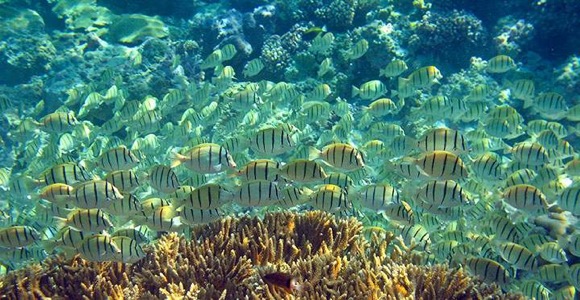
    Coral Gardens: A school of surgeonfish cruise coral reefs near Palmyra Atoll.

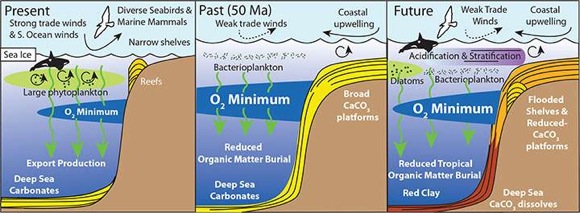
    Scripps Institution of Oceanography, UC San Diego, paleobiologist Richard Norris and colleagues show that the ancient greenhouse world had few large reefs, a poorly oxygenated ocean, tropical surface waters like a hot tub, and food webs that did not sustain the abundance of large sharks, whales, seabirds, and seals of the modern ocean. Aspects of this greenhouse ocean could reappear in the future if greenhouse gases continue to rise at current accelerating rates.

    The researchers base their projections on what is known about the “greenhouse world” of 50 million years ago when levels of greenhouse gases in the atmosphere were much higher than those that have been present during human history. Their review article appears in an Aug. 2 special edition of the journal Science titled “Natural Systems in Changing Climates.”

    For the past million years, atmospheric CO2 concentrations have never exceeded 280 parts per million, but industrialization, forest clearing, agriculture, and other human activities have rapidly increased concentrations of CO2 and other gases known to create a “greenhouse” effect that traps heat in the atmosphere. For several days in May 2013, CO2 levels exceeded 400 parts per million for the first time in human history and that milestone could be left well behind in the next decades. At its current pace, Earth could recreate the CO2 content of the atmosphere in the greenhouse world in just 80 years.

    In the greenhouse world, fossils indicate that CO2 concentrations reached 800-1,000 parts per million. Tropical ocean temperatures reached 35º C (95º F), and the polar oceans reached 12°C (53°F)—similar to current ocean temperatures offshore San Francisco. There were no polar ice sheets. Scientists have identified a “reef gap” between 42 and 57 million years ago in which complex coral reefs largely disappeared and the seabed was dominated by piles of pebble-like single-celled organisms called foraminifera.

    “The ‘rainforests-of-the-sea’ reefs were replaced by the ‘gravel parking lots’ of the greenhouse world,” said Norris.

    The greenhouse world was also marked by differences in the ocean food web with large parts of the tropical and subtropical ocean ecosystems supported by minute picoplankton instead of the larger diatoms typically found in highly productive ecosystems today. Indeed, large marine animals—sharks, tunas, whales, seals, even seabirds—mostly became abundant when algae became large enough to support top predators in the cold oceans of recent geologic times.

    marine-life-characteristics

    “The tiny algae of the greenhouse world were just too small to support big animals,” said Norris. “It’s like trying to keep lions happy on mice instead of antelope; lions can’t get by on only tiny snacks.”

    Within the greenhouse world, there were rapid warming events that resemble our projected future. One well-studied event is known as the Paleocene-Eocene Thermal Maximum (PETM) 56 million years ago, which serves as a guide to predicting what may happen under current climate trends.

    That event lasted about 200,000 years and warmed the earth by 5-9° C (9-16° F) with massive migrations of animals and plants and shifts in climate zones. Notably, despite the disruption to Earth’s ecosystems, the extinction of species was remarkably light, other than a mass extinction in the rapidly warming deep ocean.

    “In many respects the PETM warmed the world more than we project for future climate change, so it should come as some comfort that extinctions were mostly limited to the deep sea,” said Norris. “Unfortunately, the PETM also shows that ecological disruption can last tens of thousands of years.”

    Indeed, Norris added that continuing the fossil fuel economy even for decades magnifies the period of climate instability. An abrupt halt to fossil fuel use at current levels would limit the period of future climate instability to less than 1,000 years before climate largely returns to pre-industrial norms. But, if fossil fuel use stays on its current trajectory until the end of this century, then the climate effects begin to resemble those of the PETM, with major ecological changes lasting for 20,000 years or more and a recognizable human “fingerprint” on Earth’s climate lasting for 100,000 years.

    Via UC San Diego