Author: Neville

  • Will climate change trigger endless war?

    Will climate change trigger endless war?

    If we don’t change prevailing business-as-usual political economies, probably – but we can still say ‘no’ and mean it

    British soldiers

    British soldiers might be deployed more frequently to respond to new climate-induced disasters in remote regions. Photograph: David Cheskin/PA

    A new study published in the journal Science finds that climate change is strongly linked to human violence around the world. Based on more data than ever studied before – and looking at all major regions of the world from the United States to Somalia – the study unearthed a pattern of conflict linked to even minor climatic changes, including increased droughts or higher than average temperatures.

    The study covered all major types of conflict, from the standard “Intergroup violence and political instability, like civil wars, riots, ethnic violence, and land invasions” to the less studied categories of “Personal violence and crime such as murder, assault, rape, and domestic violence” – and even covered: “Institutional breakdowns, such as abrupt and major changes in governing institutions or the collapse of entire civilizations.”

    All three types of conflict exhibit “systematic and large responses to changes in climate, with the effect on intergroup conflict being the most pronounced”. In particular, the study found a positive relationship between high temperatures and greater violence.

    With a business-as-usual scenario of CO2 emissions heading for a minimum 3-4 Celsius (C) rise in global average temperatures by as early as mid-century, the study’s findings suggest that violent conflict will get more pronounced for the foreseeable future if we don’t do something to mitigate climate change – in the study’s own words:

    “… amplified rates of human conflict could represent a large and critical impact of anthropogenic climate change.”

    But the big mystery is why?

    “We can show that climatic events cause conflict, but we can’t yet exactly say why,” said lead author Dr Solomon Hsiang, an assistant professor at UC Berkeley’s Goldman School of Public Policy.

    “Currently, there are several hypotheses explaining why the climate might influence conflict. For example, we know that changes in climate shape prevailing economic conditions, particularly in agrarian economies, and studies suggest that people are more likely to take up arms when the economy deteriorates, perhaps in part to maintain their livelihoods.”

    Yet how firm are the study’s conclusions? A 2010 study in Proceedings of the National Academy of Sciences (PNAS), for instance, contradicted previous studies claiming that conflict in Africa was driven by climate change. The main driver of conflict, rather, has been poverty, economic inequalities, socio-political tensions, and ‘identity politics’ mobilising around ethnicity.

    At the time, PNAS author Dr Halvard Buhaug from Oslo’s Peace Research Institute said:

    “Even if you found that conflict, defined in a particular way, appeared to be associated with climate, if you applied a number of complementary measures – which you should do in order to determine the robustness of the apparent connection – then you would find, in almost all cases, the two were actually unrelated.”

    Dr Buhaug is deeply sceptical of the latest comprehensive study – which focuses entirely on quantitative analysis that excludes other complex social factors:

    “I disagree with the sweeping conclusion (the authors) draw and believe that their strong statement about a general causal link between climate and conflict is unwarranted by the empirical analysis that they provide. I was surprised to see not a single reference to a real-world conflict that plausibly would not have occurred in the absence of observed climatic extremes. If the authors wish to claim a strong causal link, providing some form of case validation is critical.”

    In reality, both approaches are flawed. While the new Science study focuses on correlations between climate change and different forms of violence without exploring the role of other social factors, the 2010 PNAS study dismissed too easily the role of climate change as a potential amplifier of such factors.

    By demonstrating strong correlations between climate change and incidents of violence, the Science study makes a compelling case for a link between the two. But the elephant in the room is the authors’ inability to coherently explain why the two should be linked at all, beyond vague references to ‘the economy’ or ‘physiology’.

    Missing from the analysis is the reality that climate change is always refracted through the complex socio-political, economic and cultural relations of different societies. It is precisely the way in which climate change might impact on those relations, and the way that those societies then choose to respond to those impacts, that determines the trajectory toward violence.

    The PNAS study of conflict in Africa provides an important antidote to assuming that climate change in itself guarantees a rise in violence, by highlighting the political, economic and ideological complexity of African societies.

    A fundamental issue is the new economy of war in which the impact of neoliberal capitalism and IMF-World Bank structural adjustment has devastated societies, ramping up infant mortality rates, widening inequalities, and entrenching regional states with unsustainable debt.

    The result in many cases has been a rise in ‘identity politics’ – where the unravelling of communities in the face of mounting crises is exploited by political groups who project the cause of this unravelling against what is most easy and visible to oppose – ‘the Other’, whether defined by ethnicity, tribe, political affiliation, or simply location. In this way, economic and social dislocation can become refracted into war. Thus, by focusing only on climate change, the Science study obscures the entrenched national and global power disparities that play a central role in converting environmental-induced resources stressors into a propensity for violence.

    Where the PNAS study falls short, however, is in recognising that climate change impacts play a key role in exacerbating the socio-political factors that might speed up this process of communal unravelling – whether by generating new resource challenges affecting food, water and energy that existing systems are ill-equipped to deal with, or by escalating natural disasters that destroy such systems altogether.

    But in themselves such processes do not ‘necessitate’ conflict. The fact that they might end up resulting in violence more often than not, is a question of the nature of the political and economic systems at stake, and the choices that political and economic actors make in pursuit of narrow vested interests.

    So will climate change trigger endless war? On a business as usual trajectory, quite probably. But not necessarily – we can say ‘no’.

    Dr Nafeez Ahmed is executive director of the Institute for Policy Research & Development and author of A User’s Guide to the Crisis of Civilisation: And How to Save It among other books. Follow him on Twitter @nafeezahmed
  • Australia faces increased risk of disease from climate change, reports find

    Australia faces increased risk of disease from climate change, reports find

    A number of recent studies have shown a clear connection between a warming planet and increased health risks

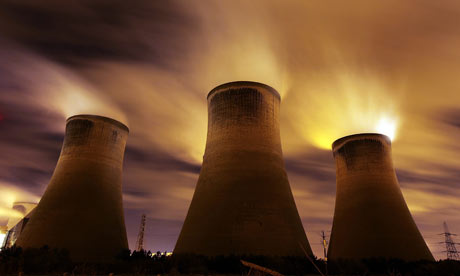
    Climate Change And Pollution  At Copenhagen : coal fueled Fiddlers Ferry power station, Warrington

    Australia faces significant challenges in responding to the effects of climate change, a number of reports have found. Photograph: Christopher Furlong/Getty Images

    Australia has been warned of the rising threat of dengue fever and heat stroke deaths in the wake of a study that found climate change is aiding the spread of infectious diseases around the world.

    The report, part-funded by the US National Science Foundation and published in Science, found that climate change is already abetting diseases in wildlife and agriculture, with humans at heightened risk from dengue fever, malaria and cholera.

    Wealthy countries will do much better at predicting and tackling new disease threats than poorer ones, according to the study.

    “Moving forward, we need models that are sensitive to both direct and indirect effects of climate change on infectious disease,” said Richard Ostfeld, co-author of the report.

    “We need to transcend simple arguments about which is more important – climate change or socioeconomics – and ask just how much harder will it be to control diseases as the climate warms? Will it be possible at all in developing countries?”

    While Australia, as a wealthy nation, possesses the resources to respond to the health impacts of climate change, studies have shown the country still faces significant challenges.

    Last month, the World Health Organisation said there was a clear connection between climate change and eight new health threats that have emerged in the Pacific region over the past decade.

    “This year alone we had dengue from Papua New Guinea, Fiji, New Caledonia, Solomons, French Polynesia and even northern Queensland,” said Dr Colin Tukuitonga, the director of the public health division in the Secretariat of the Pacific Community.

    “With the changes that come about with the result of climate change we’re concerned dengue will continue to spread.”

    A report published by Australia’s Climate Commission in 2011 warned that rising temperatures and changes in climate variability could trigger an extra 205,000 cases of gastroenteritis a year.

    More worryingly, the report stated that deaths from heatstroke, strokes and accidents could soar, while diseases such as dengue could move southwards.

    Lesley Hughes, co-author of the report and ecologist in the department of biological sciences at Macquarie University , told Guardian Australia that there needed to be greater awareness of the health implications of climate change.

    “I think there’s an under-appreciation that climate change is a human issue. People seem to think of it as just an environmental issue that doesn’t impact them,” she said.

    “Incidents of dengue fever are already changing, as are incidents of things like salmonella. Human adaptions are a big driver as well as climate – people put in water tanks to deal with drought but these are ideal breeding grounds for mosquitos.”

    “This year we’ve had the hottest ever summer, hottest ever month and hottest ever day on record. We take notice when people die in bushfires, but there’s not much awareness of the numbers of people who die from heatwaves, especially the elderly, isolated people and those from poor socio-economic backgrounds who can’t afford air conditioning.”

  • Solar project uses 120,000 metric tons of molten salt

    Monday, July 29, 2013

    Solar project uses 120,000 metric tons of molten salt

     We were surprised at first to read that the giant Abengoa Solana solar energy project had to import 120,000 metric tons of molten salt from Chile.  After all, Arizona has numerous massive salt deposits some of which are being actively mined.   But then we learned that the molten salt mixes for thermal storage are typically 60% sodium nitrate and 40% potassium nitrate.   The mixtures vary and and also include calcium nitrates.
    The 280-megawatt, 3 square mile, $2 billion project will use the molten salt as a heat storage sink that will allow electricity to be generated for as long as 6 hours after the sun sets, according to a report in the Arizona [Phoenix] Republic.   [Right, diagram of plant design.  Credit, US Dept. Energy]

    2 comments:

    1. John Moore8:45 PM

      Isn’t that mixture explosive? I hope we don’t have a .12 kt explosion out in the desert some place.

      ReplyDelete

      Replies

    2. This question has been asked before and the response is that this mixture is not explosive.

      For an industry sourced FAQ see:
      http://cleantechnica.com/2012/04/24/interview-molten-salt-storage-is-safe-could-store-heat-for-2-months/

      Perhaps you’re reminded that when potassium nitrate is mixed with black carbon powder and sulfur it makes gunpowder.

  • Scientists, industry, regulators struggle with the suspect math of natural gas leaks

    EMISSIONS:

    Scientists, industry, regulators struggle with the suspect math of natural gas leaks

    Stephanie Paige Ogburn, E&E reporter

    ClimateWire: Thursday, August 1, 2013

    Second of a three-part series. To read the first part, click here.

    Snaking beneath the surface of many Eastern cities is a network of aging, cast-iron pipes carrying natural gas. The pipes, buried underground, have been shifted for decades by winter freeze-thaw cycles, and some are simply cracked from age. Because of this, some pipes leak.

    Just how much gas from those older pipes and their newer replacements in the pipeline distribution system leaks out and rises into the atmosphere, though, is up for debate. Because methane, which makes up about 95 percent of the natural gas in pipelines, is about 25 times more potent as a greenhouse gas than carbon dioxide, the leakage raises a troubling climate question: How clean is natural gas?

    The growing role of natural gas in the United States’ energy mix makes it more important to quantify the leakage. If that number is significant, it could negate the climate benefit of natural gas — measured against coal — unless the leaks are plugged.

    “It’s outrageous and it’s astounding, how little we know [about leaks],” said Nathan Phillips, a Boston University researcher who is working to figure out how much methane is leaking from cities.

    Getting accurate measurements of the exact amount of gas leaking from any given city system is difficult. Phillips should know: Last year, his research team found the city of Boston’s pipeline distribution system had more than 3,000 leaks.

    But though they know there are a lot of leaks, they have yet to determine how much gas is coming out of them. That’s what Phillips is working on now. Scientists have proposed other ways of estimating methane emissions from distribution systems, but they all suffer from significant limitations.

    Cornell University researcher Robert Howarth and others have suggested using a number the government collects from every gas distribution company in the country. This metric is called “lost and unaccounted for” gas. The federal Pipeline and Hazardous Materials Safety Administration defines it as the difference between what the gas company sends out through its pipeline system and what gets metered at the receiving end.

    Missing in action in the gas business

    Say the gas company sends out 100 cubic feet of gas. Some of it might leak out of a pipe and into the soil. Cooling temperatures might make the gas contract, so the meter on the other end reads it as less gas. Some might waft through another leaky pipe out of a manhole or a crack in the asphalt, and into the atmosphere.

    At the end, only 97 cubic feet get to customers. The missing 3 cubic feet? That’s what industry calls “lost and unaccounted for.”

    According to PHMSA, there are two main reasons for this “lost” gas. The first is leaks. The second is measurement issues caused by inconsistent meters or those temperature and pressure variations that cause meters to measure more or less gas, depending on environmental conditions.

    Logically, say Howarth and other researchers interested in how much methane leaks to the atmosphere, a higher lost and unaccounted for percentage would mean more gas is escaping the system and warming the planet.

    “If one company reports 4 percent lost gas consistently across years and another reports 1 percent, wouldn’t you expect the first company’s pipelines to be responsible for more methane leakage to the atmosphere?” asked Robert Jackson, a Duke University scientist who is conducting research into methane losses from cities.

    The numbers do vary, and some utilities are consistently higher than others in their percentages of lost and unaccounted for gas.

    Southern California Gas Co., the largest gas distribution company in the nation, reported a 0.87 percent loss rate in 2012; in 2011, that rate was 0.84 percent. In comparison, Washington Gas Light Co., which serves the greater District of Columbia, had a 3.65 percent loss rate in 2012; in 2011 it was 4.04 percent.

    Yet while there is probably some correlation between this percentage and losses to the atmosphere, it is difficult to tease out which part of that is the part that escapes, said Boston University’s Phillips.

    Some losses are impossible

    “Right now we can’t say that ‘unaccounted for’ means leaks,” Phillips said. “It’s some black box that includes leaks, accounting errors and meter errors.”

    Additionally, the reported numbers on lost and unaccounted for gas often seem unreliable. In 2012, PHMSA data on lost and unaccounted for rates from gas companies included a range of numbers that defied the possible.

    One company, Indiana Utilities Corp., responsible for 139 miles of total pipeline, was listed as having a 563 percent lost and unaccounted for rate. Many others, mostly small systems of less than 200 pipeline miles, were listed at improbably high percentages of lost and unaccounted for gas.

    In an emailed statement responding to a query on why the lost and unaccounted for numbers appeared to have so many errors, PHMSA said the responsibility for the data’s accuracy lay with the reporting company.

    “The accuracy of the data provided for unaccounted for gas is dependent on the operator’s ability to understand how to calculate the formula. PHMSA data staff will be following-up with operators to verify data accuracy,” the statement read.

    In a telephone interview, Frank Czeschin, the president of Indiana Utilities Corp., opened up the electronic file of his 2012 report to PHMSA in order to look over his numbers.

    “I just pulled my actual report, and it indicated 0.563 percent. I do not know how the report you pulled was missing the decimal,” said Czeschin, who added that PHMSA had not contacted him about the supposed 563 percent loss.

    Industry experts say the lost and unaccounted for rate should be no higher than 3 percent. PHMSA recommends contacting the company if the rate is more than 10 percent.

    In the PHMSA database, which lists more than 1,400 gas companies, 72 companies reported lost and unaccounted for rates of 10 percent or higher. Two-hundred-and-seventy-five companies had a rate between 3 and 9.9 percent.

    How much goes up? The jury remains out

    The natural gas industry, represented by the American Gas Association, says the reported lost and unaccounted for percentages should not be used as a proxy for emissions. “It doesn’t have anything to do with emissions or with what actually is emitted into the atmosphere,” said Pamela Lacey, AGA’s senior managing counsel for environment.

    For its part, AGA is quick to highlight U.S. EPA’s estimates of methane emissions from natural gas. EPA has said that, from the gas well to your stovetop, the industry leaks 1.4 percent of the gas it produces.

    For the pipeline distribution system, the agency calculates this loss based on leak rates calculated from a 1996 study, conducted in collaboration with the Gas Research Institute (now the Gas Technology Institute). That study took leak measurements from participating gas companies for different kinds of pipes: cast iron, unprotected and protected steel, and plastic.

    To determine total leaks, the agency multiplies the leak rate by the miles of pipe, subtracts any emissions reductions techniques reported by gas companies and comes up with a final emissions number. Cornell’s Howarth has argued that this study underestimates emissions from natural gas.

    New research to re-examine distribution system leak rates has been funded by the Environmental Defense Fund as part of a larger project to quantify lost methane from the natural gas system. Much of the field work on that is being done this year, headed up by Brian Lamb, a researcher at Washington State University.

    “The whole objective of our work is to develop this database of direct emission and leak rates,” said Lamb.

    Another EDF-funded study is also underway in Boston, where Harvard University professor Steven Wofsy and others are working to use measurements of methane in the atmosphere above the city to determine how much of the gas is being released. They expect to publish those results in the fall.

    Among these unknowns, there is one data point that is widely accepted: The pipelines will continue leaking.

    Advertisement

    Greenwire -- Start A Trial!

    Want to read more stories like this?

    E&E is the leading source for comprehensive, daily coverage of environmental and energy politics and policy.

    Click here to start a free trial to E&E — the best way to track policy and markets.

  • Fast magma refills suggest some volcanoes connect straight to the mantle


    Fast magma refills suggest some volcanoes connect straight to the mantle

    Tracking the refilling could provide advanced warning of eruption risks.

    by Simon Redfern Aug 2 2013, 3:00am +1000

    Irazu volcano climbs 3,432 m above Costa Rica.

    Because of their location’s geology, Icelandic volcanoes are known to be directly connected to the Earth’s mantle. New research shows that a volcano in Costa Rica may have a direct connection to the mantle too, despite lying on a much thicker part of Earth’s crust. This discovery suggests that eruptions in a wider range of volcanoes might be predicted by techniques such as earthquake monitoring, something proposed for Icelandic volcanoes. But it also suggests that volcanoes can recharge with magma very quickly, raising the risk of a sudden eruption.

    Tectonic plates cover the Earth’s surface. The boundaries between these plates can be dangerous places, with earthquakes, volcanoes, and tsunamis all originating along the places where plates meet. The plates create two types of volcanoes. Those that sit on oceanic crust are directly connected to the mantle (the thick layer between the Earth’s crust and molten outer core); they spew magma directly from it. Others erupt magma that has been heated, mixed, and stored in magma chambers over an extended period. These are assumed to lack a direct connection to the mantle.

    Icelandic volcanoes are an example of the former, occurring on the mid-ocean ridge of the North Atlantic where crust is constantly being created. In contrast, most volcanoes around the Pacific rim, including the Costa Rican volcano, have been assumed to be examples of the latter.

    That, however, turns out not to be the case, as shown by the work of Philipp Ruprecht and Terry Plank of Columbia University, who published their results in Nature. They studied ash ejected during an eruption of the Irazu volcano in Costa Rica, which occurred between 1963 and 1965, to draw this conclusion.

    They measured the amount of the metal nickel in olivine crystals found in the ash. These crystals preserve variations in nickel content depending on how they are formed within the magma. Thus, studying this variation can reveal where the magma actually came from and how long its journey from the depths took. From their data, Ruprecht and Plank could detect that there was a shallow chamber underneath the volcano that refills with melt from the mantle.

    While such chambers are common, what was surprising was the timescale at which the chamber refilled. It took as little as a matter of months, which is rapid for geology. The Irazu volcano is an arc-type volcano, which is formed when oceanic crust dives into the mantle beneath a continental plate, causing melting. In an arc volcano, a quick refill could happen only if the magma chamber is directly connected to the mantle. (These arc-type volcanoes are a subset of “stratovolcanoes” that are capable of huge explosions and devastating eruptions that throw ash high into the stratosphere, more than 10 km above the ground.)

    According to Sally Gibson of the University of Cambridge, who was not involved in the study, “It has widely been assumed that the so-called ‘arc’ volcanoes’ magma is the result of stalling and crystallization of primitive mantle melts in long-lived chambers that exist over a range of depths in the continental crust. Ruprecht and Plank’s findings show that the melts beneath the Irazu volcano must have ascended through the crust very rapidly.”

    Gibson suggests that this sort of migration of the magma is similar to that found in Icelandic volcano systems. The Icelandic magmatic movement can be detected by seismic activity in the area, so Ruprecht and Plank’s results suggest that geophysical seismic monitoring of small earthquakes in the deep crust may provide advance warning of eruption risks. Of course, given the speed of refilling seen here, we may have to extend monitoring to volcanoes that were generally thought to be at a relatively low risk of eruption.The Conversation

    Nature, July 2013. DOI: 10.1038/nature12342 (About DOIs)

    Simon Redfern is professor of mineral physics at the University of Cambridge. This article was first published at The Conversation.

    You must login or create an account to comment.

    You May Also Like

    • Gibraltar might be the beginning of the end for the Atlantic Ocean
    • Volcanic earthquakes produce a “seismic scream” just before eruption
    • Can fracking cause bigger, more frequent earthquakes?
    • Modeling the Yellowstone magma plume with a vat of sugar water
    • Earth’s orbital cycles may trigger peaks of volcanic eruptions
    • Dino-killing asteroid also triggered mind-blowing submarine landslides
    • The story behind the island that wasn’t there
    • Researchers ponder what’s next in volcanic Yellowstone
      • Feature Story (3 pages)

        Cheaper than most, better than all: the 2013 Nexus 7 reviewed

        Great screen, fast internals make this refreshed tablet a great deal at any price.

      • Stay in the know with

        • Follow Ars on Facebook

        • Follow Ars on Twitter

        • Follow Ars on Google Plus

        • Sign Up for the Ars Newsletter

          Sign up for the Ars Technica Dispatch, which delivers links to the most popular articles, journals, and multimedia features via e-mail to your inbox every week.

        • Follow Ars with RSS

        • The Ars Podcast

          It’s the Ars Technicast! Listen to our staff discuss the issues of the day.

    Latest News


      1. Crypto experts issue a call to arms to avert the cryptopocalypse


      2. Windows 8 passes Vista at last, as IE10 growth slows

      3. I Spy with my Panopticon Eye

        NSA’s Internet taps can find systems to hack, track VPNs and Word docs


      4. You get the dongle you pay for in Google’s Chromecast


      5. Performance preview: The Moto X sports a great GPU, respectable CPU

      6. High speed footage

        Curiosity’s first year on Mars

  • Arctic sea ice loss could threaten even land animals

    Arctic sea ice loss could threaten even land animals

    Ice is habitat akin to trees in a forest, B.C. researcher says

    CBC News

    Posted: Aug 1, 2013 2:23 PM ET

    Last Updated: Aug 1, 2013 4:38 PM ET

    The loss of sea ice is expected to lead to isolation and increased inbreeding among Arctic foxes, which currently use ice to travel between populations.
The loss of sea ice is expected to lead to isolation and increased inbreeding among Arctic foxes, which currently use ice to travel between populations. (Jeff Kerby/Science)
    Facebook
    95
    Twitter
    27
    Share
    122
    Email

    The melting of Arctic sea ice as the climate warms is such a dramatic change to northern ecosystems that it will have a serious impact not just on ocean dwellers such as whales and seals, but land animals such as caribou and foxes, scientists say.

    Caribou may be affected by changes in their food sources, as a result of the warming climate, and increased human activity along shipping routes may affect their migration. Caribou may be affected by changes in their food sources, as a result of the warming climate, and increased human activity along shipping routes may affect their migration. (Mark Post/Penn State University)The proportion of the Arctic covered by sea ice during the summer hit a record low in 2012. Since 1979, the summer sea ice coverage has declined by about three-million kilometres squared, losing an area larger than the province of New Brunswick each year, scientific records show. Because dark open water reflects far less sunlight than ice, warming accelerates with sea ice loss, which in turn causes the ice to melt more quickly.

    While most people see the loss of sea ice as a sign or indicator of climate change, it’s far more than that, say U.S. and Canadian scientists in a paper published Thursday online in the journal Science.

    Sea ice in the Arctic is analogous to trees in a forest, said Jedediah Brodie, a conservation ecologist at the University of British Columbia who co-authored the paper.

    “When you cut the trees, you alter the entire ecosystem — every other species that lives in a forest in some way depends on those trees,” he said in a phone interview.

    ‘Loss of a globally important ecosystem’

    The loss of sea ice is “actually the loss of a habitat,” he added, “and that’s the loss of a globally important ecosystem.”

    Sea ice plays a huge role in the Arctic because 80 per cent of the low-lying tundra is within 100 kiometres of the ocean that is covered by ice for at least part of the year.

    Penn State University biologist Eric Post, lead author of the paper, wanted to examine the relationships among Arctic organisms from algae to whales to bears, and compile the ways in which they might be affected by the loss of sea ice. He sought help from experts in the U.S. and Canada, including Brodie, who researches how environmental change affects ecosystems; University of Calgary veterinary medicine researcher Susan Kutz; and University of Alberta polar bear specialist Ian Stirling.

    It’s most obvious that sea ice loss will affect marine organisms, but some of the specific effects are not intuitive.

    Polar bears are spending more time on land as the sea ice melts, leading to increased contact with grizzly bears. Interbreeding has created hybrids, such as this one shot on Banks Island, N.W.T., in 2006. Polar bears are spending more time on land as the sea ice melts, leading to increased contact with grizzly bears. Interbreeding has created hybrids, such as this one shot on Banks Island, N.W.T., in 2006. (Canadian Press)For example, the loss of ice reduces the fat content of algae that live between layers of ice, making them less nourishing to marine animals, the researchers noted.

    The melting ice is also changing the timing each summer of huge blooms of phytoplankton that form the base of the Arctic food chain, which may shorten the season for the blooms, causing ripples all the way up the food chain to fish, seabirds and marine mammals such as seals and whales.

    Many marine mammals such as seals also rely on sea ice as a place to raise their young or even just to rest after long dives in search of fish. As the sea ice disappears, animals such as walruses have been crowding onto shorelines, which can lead to their young being trampled or the spread of disease through the population.

    The loss of sea ice also has many indirect, inintuitive effects on both marine and land animals.

    “It can have pretty dramatic effects on climate even far inland,” Brodie said.

    That in turn can affect the growth of vegetation on land, disrupting food sources for animals such as caribou.

    Indirect effects on migration, breeding

    The article notes a number of other potential indirect effects of sea ice loss on land animals:

    • Isolation and increased inbreeding among populations of wolves and arctic foxes, which currently use ice to travel between populations during most of the year.
    • Increased interbreeding and hybridization between grizzly bears and polar bears because polar bears are spending more time on land, where they come into contact with grizzlies.
    • The spread of diseases that were once restricted by sea ice barriers to a certain part of the Arctic, such as phocine distemper virus, which currently affects only eastern Arctic seals.
    • Increased shipping in the Canadian Arctic and the later freeze up of the ice could affect the annual migration of the Dolphin and Union caribou herd.

    The paper noted that it is a challenge to forsee how sea ice decline will increase human activities such as shipping and industrial development in the Arctic, which could also have negative consequences for many species.