Author: Neville

  • Shell says Gulf find may hold 100 million barrels

    Shell says Gulf find may hold 100 million barrels

    Posted on July 3, 2013 at 10:32 am by Emily Pickrell in featured, General

    Shell's state-of-the-art Olympus platform is preparing to journey to the deep-water Gulf of Mexico. (Shell)

    Shell’s state-of-the-art Olympus platform is preparing to journey to the deep-water Gulf of Mexico. (Shell)

    A drilling hunch with its roots in the Jurassic period is paying off for Royal Dutch Shell, with a potential 100-million barrel oil find adding to the company’s bounty in the Gulf of Mexico.

    Shell said Wednesday that its Vicksburg exploratory well encountered an estimated 500 feet of net oil pay. The well is five miles from the company’s Appomattox site, where Shell already has found 500 million barrels of potentially recoverable resources.

    “This is a Jurassic-age reservoir that is more than 160 million years old that was deposited as desert dunes and now is sitting beneath the floor of the Gulf of Mexico,” said Mark Shuster, executive vice president of Shell Upstream Americas Exploration.

    Gamers: Energy company hopes video game will help fill jobs

    He said Shell geologists were brainstorming about 15 years ago and came up with the idea of exploring to see whether they could access the Norphlet Play — a prolific onshore formation — in the deep waters of the Gulf of Mexico.

    “No one thought we would be able to find oil in this reservoir in the deep water,” Shuster said. “But we made the first forays into this play, and subsequently, other companies are coming along.”

    Shell bought licenses in 2002 for the area where it drilled the Vicksburg and Appomattox wells.

    It made its first oil discovery at Appomattox in 2009 and now is evaluating strategies for  going forward with development.

    The Vicksburg discovery nearby raises the possibility of connecting the wells to make production more economic, Shuster said.

    He said that the company probably will produce from multiple wells at Appomattox, regardless of further development on Vicksburg discoveries.

    “The reason that Vicksburg is important is that it is another significant discovery and it is adjacent to Appomattox,” Shuster said. “What’s most surprising is that we found a resource base that is in the range of what we had expected, but at the higher end.”

    The Vicksburg well is under nearly 7,500 feet of water and was drilled to a total depth of 26,385 feet, making it one of Shell’s deepest wells in the Gulf — with the attendant challenges of high pressures and well temperatures.

    Study: Deep-water drilling expansion will strain workforce

    But the discoveries have more than proved that the instincts of the geologists 15 years back were right on track.

    “The Norphlet Play is a strong pillar of our portfolio,” Shuster said. “We have been out there since the early 2000s, exploring for oil in these deep plays. We are quite happy — we have had the Appomattox success and now this new Vicksburg success.”

    Shell is operating the Vicksburg well with a 75 percent interest. Nexen, a wholly owned subsidiary of Chinese national oil company CNOOC Ltd., owns the remaining 25 percent interest.

    Transocean’s Deepwater Nautilus rig drilled the Vicksburg well.

    Also on Fuel Fix:

  • Evidence for extensive methane venting on the southeastern U.S. Atlantic margin

    Evidence for extensive methane venting on the southeastern U.S. Atlantic margin

    Posted By News On July 7, 2013 – 5:21pm

    Results reported here by L.L. Brothers and colleagues show the first evidence for widespread seabed methane venting along the southeastern U.S. Atlantic Margin beyond the well-known Blake Ridge Diapir Seep.

    While it was suspected that such seeps existed, there was little direct evidence until now.

    Data collected from recent ship and autonomous underwater vehicle surveys discovered multiple water-column gas plumes (>1000 m height and made up of bubbles). Brothers and colleagues also mapped extensive new chemosynthetic seep communities (communities of biological organisms that directly use methane and/or sulfide for life processes) at the Blake Ridge and Cape Fear Diapirs.

    Flow along these systems is both more dynamic (more active) and more widespread than previously believed.

    L.L. Brothers et al., DOI:10.1130/G34217.1.

    Post new comment

    The content of this field is kept private and will not be shown publicly.

    • Allowed HTML tags: <em> <strong> <cite><p><br><i><b><center><ul><li><div><html5:figure><html5:figcaption>
    • Lines and paragraphs break automatically.

    More information about formatting options

    CAPTCHA
    Sorry, we know you’re not a spambot, but they’re out there
  • It’s time to replace the Sydney Harbour Bridge

    It’s time to replace the Sydney Harbour Bridge

    Be first to comment

    Ross Cameron

    Ross Cameron

    When the Sydney Harbour Bridge was built 80 years ago, it joined together what had been a divided city, with almost incalculable social and economic benefits. But now, it has become a liability, writes Ross Cameron.

    My mother texted me last week: “It feels weird to have a son who wants to replace the Sydney Harbour Bridge.”

    Five of my business friends and associates, whose opinion I respect, told me separately, “We love your M4East concept, but leave the bridge out – people won’t cope.”

    Well, boys and girls, I’m really sorry but the Sydney Harbour Bridge has to be replaced. Yes, it is iconic and World Heritage listed, but it is in decay and has been outgrown by the city it serves.

    I must have missed the chemistry lecture that explained, “In the early 20th century, Sydney alchemists invented a form of steel that doesn’t rust or oxidise and will last forever.” Everything you can see is perishing – including the Sydney Harbour Bridge.

    It has to be replaced sometime. Our bridge will not be there in a hundred years – at least not the same steel. Here are the arguments for replacing the bridge now.

    When the bridge was opened, New South Wales had a total car pool of 10,000 and a population of 1 million. This week, over a million cars will pass over the bridge, from a city population of 4.6 million and growing at over 65,000 a year.

    After 80 years of distinguished service, our fair lady is entering her twilight and is now forced beyond its design limits every weekday. It is one of the three most extreme “choke” points on Sydney’s mass transit network (the other two being the Central to Strathfield rail corridor and the M4). Our inability to move people across the harbour holds hostage the rest of Sydney’s transport network.

    Dr John Bradfield selected the design in part because of its ability to later bolt on a second deck of road and rail under the existing suspension platform. (It was also designed, like all well-engineered structures, with a view to its eventual replacement, in a reversal of the method of its assembly.) The NSW Government received a proposal to add the second deck in the late 1990s. The proposal was rejected, because the assay made clear that the ageing span was no longer sound to safely bear the weight of the second tier.

    The bridge is 39,000 tonnes of steel, prefabricated in Scotland and shipped for assembly in parts. It was known as Sydney’s “iron lung” because its erection gave an income to thousands of families during the depression. The whole city filled with hope as the skyline changed, each new section reaching out to eventually close in the centre. Its completion meant that a city divided was at last joined, its social and economic benefits almost defying calculation.

    The 6 million rivets (like buttons on a shirt) were heated in coking coal-fuelled furnaces on the Luna Park site before modern welding techniques (which are more like “stitching”). The rudimentary furnaces allowed differing levels of penetration by steel-damaging nitrogen and ash. Each rivet now has variable load bearing and surface qualities. Some of the “buttons” have started to pop. In March this year, a fastening failure caused a two-square-metre steel panel to shear off the arch – it could easily have fallen onto the carriageway below.

    Roads and Maritime Services made no comment about the extent to which that failure signals ongoing risks from an 80-year-old structure. I understand that reticence – nobody reading this article should panic. But our bridge has “issues”. The fact that the bridge replacement program is not included in the 20-year plan of Infrastructure NSW is a serious omission.

    The bridge could stand for another decade or two and continue to give service but prudent asset maintenance means all of those rivets should now be replaced. Many are covered by external steel panels and buried deep within girders and beams. The metals, dust, paint, salt spray and dirt combine to turn our bridge into a battery, carrying electric currents up and down the arch to accelerate the oxidising and corrosion of steel standing over a body of water. (Vast stretches of rust underneath are visible to the naked eye). Assuming we continue a maximum toll of $4, in one direction only, each car needs to travel over and back 250 times to raise the revenue to replace one rivet.

    Working on the assumption that the people of Sydney are not mature or rational enough to consider replacing the bridge, the NSW Government has developed another plan – a new two-lane rail tunnel crossing. The easy route under the harbour has already been taken by the existing cross harbour tunnel. The only route available to us now is very deep, reaching 80m below sea level. To safely reach that depth, such a tunnel would have to begin as far back as Redfern and climb to St Leonards – still as steep as any mass transit train path in the world. The project is dangerous and difficult and extravagantly expensive – between $8bn and $10bn. The rail tunnel offers no benefit to road users and will still leave us with a vast sinkhole of maintenance cost on the bridge and likely near term replacement (or could it be closed down to commuters with the built form left as a heritage relic? Perhaps with a new bridge somewhere else, competing for sight lines?).

    You can buy a brand new super tanker, 45,000 tonnes of steel, from a Japanese or Korean shipyard, for $80m. We can probably procure a brand new, welded replica of our Sydney Harbour Bridge, with a second deck below, carrying 16 lanes of road and eight lanes of rail, with change out of $300m. We can erect the new structure as a bypass on the western side, de-commission and remove the original, then slide the “son of SHB” across on a bearing foundation, clicking into the old alignment – with minimal commuter disruption.

    We might choose, after public discussion, to make it a few metres wider and taller, with adequate clearance for the super yachts and naval vessels to pass underneath, while preserving the same colour, profile and alignment. We can then spend the savings – where they should be spent – integrating new road and rail capacity desperately needed on either side, including redeveloped stations on the City Circle and between Milsons Point and St Leonards, into a much more functional and resilient mass transit system for Sydney.

    In 1789 Erasmus Darwin – grandfather of Charles – prophesied in poetry a “proud arch” spanning Sydney Harbour – 134 years before the first rivet was forged. John Bradfield cited Darwin’s poem at the opening ceremony. So there is a sense in which the bridge is immortal – it comes to us from before our time, and will go on, adapted to the city it serves, over centuries to come. Each generation can be faithful to the immortal arch, while replacing the molecules that make up its span. We have a duty to our heritage but also to the millions of Australians as yet unborn who will inherit, and must live and move in, the city we leave.

    Ross Cameron is a former federal MP and Macquarie Banker, now Chairman of Towncars.com and AspireSydney infrastructure consortium (in which he has a financial interest). AspireSydney’s Unsolicited Proposal in September 2012 to the NSW Government to evaluate a PPP on a replacement and upgrade of the Sydney Harbour Bridge received no response. View Ross Cameron’s full profile here.

  • ALP leader must be directly elected: Rudd

    ALP leader must be directly elected: Rudd

    AAPUpdated July 8, 2013, 5:18 pm

    Prime Minister Kevin Rudd wants grass-roots members to be able to have a say in directly electing the leader of the parliamentary Labor party.

    Mr Rudd told reporters in Canberra on Monday he had called for a special meeting of the caucus on July 22 to discuss the federal election and party rule changes.

    The key rule change would be enabling the leader of the parliamentary party to be directly elected, with 50 per cent of the vote coming from grass-roots members and 50 per cent from the caucus.

    “This is the most significant reform to the Australian Labor Party in recent history,” Mr Rudd said.

    Mr Rudd said any candidate for the leadership would need the initial backing of 20 per cent of caucus members.

    Other leadership positions such as deputy, House leader and Senate leader, and ministry candidates would be decided by the caucus, he said.

  • Coal Terminal Action Group

    Coal Terminal Action Group via email.nationbuilder.com
    12:04 PM (2 hours ago)

    to me
    Images are not displayed. Display images below – Always display images from hcec@hcec.org.au

    Dear Nevile,

    The Stop T4 campaign now has more than 3,000 supporters, and we’re growing all the time. We’ve sent four campaign updates since last June, asking people to donate so we can monitor air pollution, inviting people to come to the Stop T4 rally and urging folks to write to the Premier and other elected representatives.

    This is a different kind of update. We’re not asking you to do anything for the moment. In fact, we want to thank everyone who has taken action to support the campaign against T4 during recent weeks and months. Thousands of people sent letters to the Premier. Our most recent appeal to fund the ‘coal train signature’ monitoring study raised almost $2,500. Our monitoring will kick off next Monday July 14th in Beresfield and Waratah.

    We thought you’d appreciate hearing the story behind all the recent media about particle pollution from coal wagons. The Australian Rail Track Corporation report on particle pollution from coal trains has been front page news in the Newcastle Herald and Maitland Mercury. It has also been reported in the Sydney Morning Herald, the Age and The Daily Telegraph, on ABC’s Stateline, NBN television and many other places.

    With so much media hype, you may be asking what all this means for community health in Newcastle and other coal-affected communities, and how it impacts on the NSW Government’s plans for T4.

    The Australian Rail Track Corporation (ARTC) is the Commonwealth-owned corporation that manages the transport of coal from Hunter coalmines to Newcastle’s port. The ARTC is licenced to pollute by the NSW Environmental Protection Authority (EPA), and the licence requires them to implement a pollution reduction program (PRP). To comply with this program, ARTC has monitored particle pollution from coal trains twice during the last 18 months.

    In a nutshell:

    1. Experts condemn the ARTC report and recommend that the NSW Government dismiss its conclusions. Months after the monitoring, 15 of the report’s 18 conclusions were re-written the day before it was released.
    2. Within 24 hours of receiving the ‘doctored’ version of the report, EPA Chair Barry Buffier announced that the ARTC would not be required to cover coal wagons.
    3. No peer review was undertaken before the report was released. Scientific research is normally reviewed by two or three independent experts. The EPA asked Dr Luke Knibbs from the University of Queensland to review the study but announced and accepted its findings before receiving his review. Two weeks later, the EPA received Dr Knibbs’ review which identified a “major flaw” in the statistical analysis that is “very likely to obscure” and “underestimate” the reality of particle emissions from coal trains.
    4. Both the ARTC and Katestone say they have done nothing wrong, and simply followed the EPA’s instructions to the letter.

    Having received the leaked report, we called on the NSW Premier to set up a Special Commission of Inquiry. More than 500 people wrote to the Premier supporting an inquiry. So far, Mr O’Farrell hasn’t replied. Instead, the EPA announced on July 3 that they would ask the Chief Scientist of NSW to recommend a statistician to re-examine the ARTC data.

    In our meeting with member for Newcastle Tim Owen this morning. Mr Owen committed to presenting the Premier with your 500 emails supporting an inquiry. We’ll keep you posted on that.

    But this will not get to the heart of the matter. A statistician cannot clear up the question of why the NSW Government received two conflicting versions of the ARTC report. And a statistician cannot advise the Premier whether particle pollution levels along the coal corridor are high enough to warrant covering coal wagons. Fitting lids would cost $10,000 per wagon and reduce particle pollution by up to 99%. The ARTC is determined not to put lids on wagons.

    For these reasons, we feel a government inquiry is the appropriate response. If you haven’t yet, please phone, email or write to the Premier, Environment Minister Robyn Parker or Member for Newcastle Tim Owen to express your concern.

    Keep up to date by ‘liking’ our Facebook page. And feel free to drop us a line, phone or drop by the HCEC office on Parry St any time.

    For a healthy Newcastle,

    James Whelan
    for the Hunter Community Environment Centre
    ph. 02 4962 5316

  • World’s poorest will feel brunt of climate change, warns World Bank

    World’s poorest will feel brunt of climate change, warns World Bank

    Droughts, floods, sea-level rises and fiercer storms likely to undermine progress in developing world and hit food supply

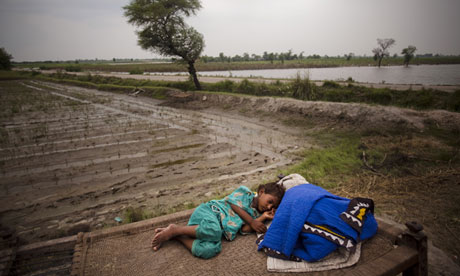
    Pakistan floods

    Pakistan says the 2010 floods has affected about 20 million people, many of whom lost homes or livelihoods. Photograph: Warrick Page/Getty Images for UN

    Millions of people around the world are likely to be pushed back into poverty because climate change is undermining economic development in poor countries, the World Bank has warned.

    Droughts, floods, heatwaves, sea-level rises and fiercer storms are likely to accompany increasing global warming and will cause severe hardship in areas that are already poor or were emerging from poverty, the bank said in a report.

    Food shortages will be among the first consequences within just two decades, along with damage to cities from fiercer storms and migration as people try to escape the effects.

    In sub-Saharan Africa, increasing droughts and excessive heat are likely to mean that within about 20 years the staple crop maize will no longer thrive in about 40% of current farmland. In other parts of the region rising temperatures will kill or degrade swaths of the savanna used to graze livestock, according to the report, Turn down the heat: climate extremes, regional impacts and the case for resilience.

    In south-east Asia, events such as the devastating floods in Pakistan in 2010, which affected 20 million people, could become commonplace, while changes to the monsoon could bring severe hardship to Indian farmers.

    Warming of at least 2C (36F) – regarded by scientists as the limit of safety beyond which changes to the climate are likely to become catastrophic and irreversible – is all but inevitable on current levels, and the efforts of governments are limited to trying to prevent temperature rises passing over this threshold. But many parts of the world are already experiencing severe challenges as a result of climate change, according to the World Bank, and this will intensify as temperatures rise.

    Jim Yong Kim, the bank’s president, warned that climate change should not be seen as a future problem that could be put off: “The scientists tell us that if the world warms by 2C – warming which may be reached in 20 to 30 years – that will cause widespread food shortages, unprecedented heatwaves, and more intense cyclones.

    “In the near-term, climate change – which is already unfolding – could batter the slums even more and greatly harm the lives and hopes of individuals and families who have had little hand in raising the Earth’s temperature.”

    The development bank is stepping up its funding for countries to adapt to the effects of climate change, and is calling for rich countries to make greater efforts at cutting greenhouse gas emissions.

    Rachel Kyte, vice president of the World Bank, said it had doubled its aid for adaptation from $2.3bn (£1.47bn) in 2011 to $4.6bn last year, and called for a further doubling. She said the bank was working to tie its disaster aid and climate change adaptation funding closer together.

    Aid from the bank to help poor countries cut their greenhouse gas emissions and pursue environmentally sustainable economic development stands at about $7bn a year, and is backed by about $20bn from regional development banks and other partners.

    The report’s authors used the latest climate science to examine the likely effects of global warming of 2C to 4C on agriculture, water resources, coastal ecosystems and fisheries, and cities, across sub-Saharan Africa, south and south-east Asia.

    Kyte said the effects would be to magnify the problems that developing regions experience. More people would be pushed into slums, with an increased risk of disease. “We are looking at major new initiatives [in] cities; cities need billions of investment in infrastructure, but many developing cities are not really creditworthy,” she said.

    She pointed to Jakarta, where rising sea levels and decades of pumping freshwater from underground sources beneath and around the city were increasing its vulnerability to flooding. Choices would need to be made soon in many cities on how to stem the likely effects, but Kyte warned that the plans must be future-proof, citing Ho Chi Minh City in Vietnam, which has been forced to rethink its flood preparations despite spending $2bn on them.

    Green campaigners emphasised the need to try to avoid 2C of warming, which scientists stay is possible if countries bolster their ambitions to cut greenhouse gas ambitions in the near future.

    Stephanie Tunmore, climate campaigner at Greenpeace International, said: “Fossil fuels are being extracted in burned in the name of development and prosperity, but what they are delivering is the opposite.

    “Some major impacts from climate change are already unavoidable and rich countries must urgently support the poor and vulnerable to adapt. But massive increases in the future costs of adaptation and damage can only be avoided by investing in a clean energy future now.”

    The World Bank has come under fire in the past for funding coal-fired power plants in some developing countries. However, it said the move was the result of old policies and was being phased out.