Author: Neville

  • Julia Gillard Parole State of Origin Defence Force Climate change like atom bomb:

    Climate change like atom bomb: scientists

    Neda Vanovac, AAP June 22, 2013, 5:18 pm

    The planet has been building up temperatures at the rate of four Hiroshima bombs of heat every second, and it’s all our fault, say climate scientists.

    Hurricane Katrina and superstorm Sandy are just two examples of how extreme weather will intensify, Australia’s Climate Action Summit has heard.

    Humans are emitting more carbon dioxide into the atmosphere than any other time in history, says John Cook, Climate Communication Fellow from the Global Change Institute at the University of Queensland.

    “All these heat-trapping greenhouse gases in our atmosphere mean … our planet has been building up heat at the rate of about four Hiroshima bombs every second – consider that going continuously for several decades.”

    In a speech on extreme weather in Sydney on Saturday, Mr Cook said about 90 per cent of global warming was going into the oceans, which act like a natural thermometer along with changes in land, ice, and animal species.

    Distributions of trees are shifting towards cooler areas such as the poles or mountains, and animal species are responding to global warming by mating earlier in the year.

    “This isn’t because animals are getting randier, it’s because the seasons themselves are shifting,” Mr Cook said.

    120 climate records were broken in Australia this January, including the hottest month and the hottest day.

    New colours had to be added to temperature maps to denote highs of over 50 and 54 degrees celsius.

    Warmer air holds more water, so Australia will experience heavier rainfall in wetter areas, while dry regions are becoming drier.

    There will be more category four and five tropical cyclones, and a “catastrophic” rating has already been added to fire gauges.

    Mr Cook said studies have tried to put a number on how much of global warming is caused by humans, “and the rough answer is, all of it”.

    He said for the past two decades, 97 per cent of scientists have been in agreement human activity is causing warmer temperatures.

    B

  • Climate Change Promises Tough Times for Asia and Africa – Report

    Home News World Climate Change Promises Tough Times for Asia and Africa – Report

    Climate Change Promises Tough Times for Asia and Africa – Report

    Friday, 21 June 2013 02:24 Stephen Leahy
    E-mail Print PDF

    Africa-asia-america-to-scal

    UXBRIDGE, Canada, Jun 20 2013 (IPS) – Extreme heat, flooding and water and food shortages will rock South Asia and Africa by 2030 and render large sections of cities inhabitable, if the world continues to burn huge amounts of coal, oil and gas, the World Bank is warning.

    Turn Down the Heat: Climate Extremes, Regional Impacts and the Case for Resilience“, a new report commissioned by the World Bank and released Wednesday, analysed the expected effects on South Asia and Africa if global temperatures increase by two and four degrees Celsius.

    The report showed that a global temperature rise of two degrees Celsius will have a wide range of dangerous effects, including a loss of 40 to 80 percent of cropland in Africa and rising sea levels that will destroy significant parts of many coastal cities in South Asia.

    “If the world warms by two degrees Celsius – warming which may be reached in 20 to 30 years – that will cause widespread food shortages, unprecedented heat waves, and more intense cyclones,” said World Bank President Jim Yong Kim.

    He pointed out that such change could “greatly harm the lives and the hopes of individuals and families who have had little hand in raising the earth’s temperature”.

    The burning of carbon-based fuels has increased the amount of carbon dioxide (CO2) in the atmosphere by 40 percent. CO2 and water vapour in the atmosphere are crucial in retaining some of the sun’s heat energy; without them, the earth’s atmosphere would be more like the moon’s: 100 degrees Celsius in the daytime and -150 degrees at night.

    Adding 40 percent more CO2, however, has increased the amount of heat energy the Earth absorbs, with more than 93 percent of it warming the oceans.

    Bleak findings

    One of the shocking findings in the new study is the enormous impact a two-degree rise will have on the urban poor, said Rachel Kyte, the vice president for sustainable development at the World Bank.

    Urbanisation is increasing rapidly, especially in the developing world, with many more people living in slums and informal settlements, Kyte told IPS from London.

    The report painted a bleak picture for many cities.

    As climate change disrupts rainfall patterns and generates more extreme weather in the coming decades, leading to poor crop yields, rural populations will flood cities. Escalating numbers of urban poor will suffer, with temperatures magnified by the “heat island effect” of the constructed urban environments.

    Safe drinking water will also be harder to find, especially after floods, contributing to greater water-borne diseases such as cholera and diarrhoea.

    Coastal regions like Bangladesh and India’s two largest coastal cities, Kolkata and Mumbai, will face extreme river floods, more intense tropical cyclones, rising sea levels and very high temperatures.

    “Huge numbers of urban poor will be exposed in many coastal cities,” Kyte said.

    Meanwhile, a sea level rise of 30 centimetres, possible by 2040, will result in massive flooding in cities and inundate low-lying cropland with saltwater, which is corrosive to crops. Vietnam’s Mekong Delta, a global rice producer, is particularly vulnerable to sea level rise, and a 30-centimetre rise there could result in the loss of about 11 percent of crop production, the report found.

    “We face a huge challenge over the next 20 years to…redesign our cities to protect them from climate change,” Kyte predicted, even as cities already face a huge infrastructure investment gap.

    One trillion dollars a year needed to be invested every year by 2020 by some estimates, Kyte said, adding that “to build climate resilience into cities will take another 300 to 500 million dollars a year”.

    A lack of water will be a problem in other regions. The projected loss of snowmelt from the Himalayas will reduce the flow of water into the Indus, Ganges and Brahmaputra river basins, which altogether threaten to leave hundreds of millions of people without enough water, food or access to reliable energy, the report said.

    In Sub-Saharan Africa, by the decades of 2030 or 2040, drought mixed with destructive flooding will contribute to farmers’ losing 40 to 80 percent of cropland used for growing maize, millet and sorghum.

    And while carbon emissions have already increased oceans’ acidity by 30 percent, by 2040, oceans will be too acidic for many coral reefs to survive. The death of coral reefs results in major loss of fish habitats as well as protection against storms.

    “That will have significant consequences for ocean fish catches, which are already in decline today,” said Bill Hare of Climate Analytics and who was the lead author of the study.

    Policy recommendations

    The report is a science-based guide for the World Bank and governments for what these regions will face over the next 20 to 30 years, said Hare.

    “Much of this can be avoided, and it will cost far less with urgent action to reduce carbon emissions,” Hare told IPS.

    In a speech at Berlin’s Brandenburg Gate Wednesday, U.S. President Barack Obama called climate change the “global threat of our time” and promised the United States would do far more to reduce emissions. A detailed announcement is expected next week.

    Last week, the United States and China agreed to reduce phase out HFCs, a greenhouse gas used in air conditioners. China has also created a series of carbon trading regions to cut emissions.

  • Climate Change: Part II – world effects By News Staff on June 21, 2013 in Gov

    Climate Change: Part II – world effects

    By on June 21, 2013 in Gov
    climatechangePart II– How does Climate Change Affect the World?

    Provided by the Fort Independence Environmental Climate Change Working Group

    Chair: Dennis Mattinson

    1. How can a change of one or two degrees in global average temperatures have an impact on our lives? 

    Changing the average global temperature by even a degree or two can lead to serious consequences around the globe. For about every 2°F of warming, we can expect to see:

    5—15% reductions in the yields of crops as currently grown

    3—10% increases in the amount of rain falling during the heaviest precipitation events, which can increase flooding risks

    5—10% decreases in stream flow in some river basins, including the Arkansas and the Rio Grande

    200%—400% increases in the area burned by wildfire in parts of the western United States [6]

    Global average temperatures have increased more than 1.4 degrees Fahrenheit over the last 100 years. [2] Many of the extreme precipitation and heat events that we have seen in recent years are consistent with what we would expect given this amount of warming. [5] Scientists project that Earth’s average temperatures will rise between 2 and 12 degrees Fahrenheit by 2100. [1]

    2. Do emissions of carbon dioxide from human activities have a big impact on Earth’s climate?

    Plants, oceans, and soils release and absorb large quantities of carbon dioxide as a part of the Earth’s natural carbon cycle. These natural emissions and absorptions of carbon dioxide on average balance out over time. However, the carbon dioxide from human activities is not part of this natural balance. Ice core measurements reveal that carbon dioxide levels in the atmosphere are higher than they have been for at least 800,000 years. [5] The global warming that has been observed in recent decades was caused by elevated levels of carbon dioxide and other greenhouse gases in the atmosphere, due primarily to human activities. [1]

    3. Will a small rise in sea level affect people (even in the United States)?

    A small rise in sea level will affect many people, even in the United States. The amount of sea level rise expected to occur as a result of climate change will increase the risk of coastal flooding for millions to hundreds of millions of people around the world, many of whom would have to permanently leave their homes. [7] Global sea level has risen approximately 9 inches, on average, in the last 140 years. [4] This has already put some coastal homes, beaches, roads, bridges, and wildlife at risk. [5] By the year 2100, sea level is expected to rise another 1.5 to 3 feet. [6] Rising seas will make coastal storms and the associated storm surges more frequent and destructive. For example, in New York City what is currently termed a once-in-a-century coastal flooding event could occur as frequently as once per decade. [5]

    References

    1. NRC (2011). America’s Climate Choices: Final Report.   National Research Council. The National Academies Press, Washington, DC, USA.
    2. NRC (2010). Advancing the Science of Climate Change.   National Research Council. The National Academies Press, Washington, DC, USA.
    3. NOAA (2011). 2010 Tied For Warmest Year on Record. National Oceanic and Atmospheric Administration. Accessed 3/16/2012.
    4. EPA (2010). Climate Change Indicators in the United States. U.S. Environmental Protection Agency, Washington, DC, USA.
    5. USGCRP (2009). Global Climate Change Impacts in the United States. Thomas R. Karl, Jerry M. Melillo, and Thomas C. Peterson (eds.). United States Global Change Research Program. Cambridge University Press, New York, NY, USA.
    6. NRC (2011). Climate Stabilization Targets: Emissions, Concentrations, and Impacts over Decades to Millennia. National Research Council. The National Academies Press, Washington, DC, USA.
    7. IPCC (2007). Climate Change 2007: Synthesis Report.  Contribution of Working Groups I, II and III to the Fourth Assessment Report of the Intergovernmental Panel on Climate Change [Pachauri, R.K. and A. Reisinger (eds.)]. Geneva, Switzerland.


    4.  What are the effects of Climate Change on world life?

    Life on Earth is profoundly affected by the planet’s climate. Animals, plants, and other living beings around the globe are moving, adapting, and, in some cases, dying as a direct or indirect result of environmental shifts associated with our changing climate—disrupting intricate interactions among Earth’s species, with profound implications for the natural systems on which humans depend. Climate change is happening on a global scale, but the ecological impacts are often local. – (COMMITTEE ON ECOLOGICAL IMPACTS OF CLIMATE CHANGE)-


  • Immigration helps drive Australian population explosion to new heights

    Immigration helps drive Australian population explosion to new heights

    Immigration helps drive Australian population explosion to new heightsImmigration helps drive Australian population explosion to new heights

    A recently-issued government report states that Australia’s population growth in 2012 has returned to the excessive increases seen in 2009, and attributes migration from overseas as the main reason.

    The report by the Australian Bureau of Statistics (ABS) estimates a growth of 1.8 per cent, the level supported by previous prime minister Kevin Rudd and renounced by Julia Gilliard after her election victory. It’s being suggested that the Gilliard government has been quietly restoring immigration levels to those endorsed by Rudd.

    ABS director Bjorn Jarvis has confirmed that the population increase has been largely driven by increased immigration, Net overseas migration, he said, added 235,900 individuals to the population in 2012, representing a 17 per cent increase over the previous year.

    Natural increase, he added, was responsible to 40 per cent of the population growth, a four per cent increase over the past year, and 60 per cent was due to increased numbers of migrants. Western Australia had the largest increase of all states, with 2.47 million by the end of last year, and the lowest population growth of just 0.1 per cent was recorded in Tasmania.

    Previous statistics have shown that Asia, and China and India in particular, are now the major sources of migrants to Australia, overtaking those from Britain, traditionally the main source over many years. It remains to be seen how the recent sweeping changes in immigration law will affect population totals in the future.

    1 1 1

    Related Stories:

    – See more at: http://www.emigrate.co.uk/news/20130621-7158_immigration-spurs-oz-population-growth#sthash.V17q3oZv.gDf0RhWi.dpuf

  • Parklea-Kellyville ridge ranks 13th on Housing Industry Association Population and Residential Building list

    Parklea-Kellyville ridge ranks 13th on Housing Industry Association Population and Residential Building list


    Kellyville Population Boom

    Zanna Kotronakis with her children Adriane, 6, and Julian, 8, at their home in Kellyville. Picture: Fotiadis John Source: The Daily Telegraph

    A MASSIVE influx of families is driving a population boom in Sydney’s north-west, with the Parklea-Kellyville Ridge area rating 13th on a national housing and construction growth survey.

    The area’s population grew by 10.2 per cent in the last financial year, putting it on the Housing Industry Association (HIA) Population and Residential Building Hotspots list.

    The Homebush Bay-Silverwater region, with a nine per cent population growth, rated 18th. It was the only other NSW area to make the list, which was dominated by Victoria and Western Australia and covers areas with more than $100 million in residential building work approved.

    “The Parklea-Kellyville Ridge area has been a fast-growing home building area for some time now within an overall under-performing Sydney market,” said HIA economist Harley Dale.

    “Some 89 per cent of households in that area are made up of families.”


    Sydney property prices boom to beat Manhattan, London

    Sydney’s west to lead housing boom

    Elise Lau of McGrath Castle Hill said traffic for open homes in the region had doubled in the past six months.

    Major arteries in all directions means it is well placed for road transport, while the planned North West Rail Link will add to transport infrastructure.

    Zanna Kotronakis, who has lived in Kellyville for 13 years, said the rush of people to the area had been sudden with houses popping up everywhere.

    “The road between Windsor and Parklea used to be rural, but in the last few months, all these houses have sprung up,” Mrs Kotronakis said.

    In contrast, the nine per cent population growth in Homebush Bay-Silverwater reflected interest from professionals, downsizers and investors.


  • The Dwyfor is surely one of the loveliest of Welsh rivers

    The Dwyfor is surely one of the loveliest of Welsh rivers

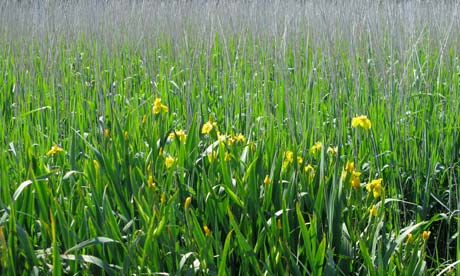
    Llanystumdwy: In the black ooze, flags are flowering – vibrant yellow against a faint lilac in the stems of last year’s reeds

    Country Diary  : Yellow flags and last year's reeds alongside the Dwyfor, Llanystumdwy, Wales

    Yellow flags and last year’s reeds alongside the Dwyfor, Llanystumdwy, Wales. Photograph: Jim Perrin

    A friendly young sheepdog, made idle by the sun, yawns and scratches in the farmyard, from which a path descends behind a tip of broken asbestos and old tyres to lead through beechwood and arrive at the bank of the Afon Dwyfor. Despite the brevity of its course – barely a dozen miles from its source in the Eifionydd hills to the sea a mile west of Criccieth – few would argue against this being one of the loveliest of Welsh rivers. The late spring has adorned its banks with ramson and may. Translucence of young beech leaves overhead imparts a soft green dappling light. A pond-skater scissor-kicks upstream across velvet water. In the deep shade, drifts of seeding bluebells blanch and curl.

    Beyond Lloyd George’s grave I cross the main road and the railway to where the river sidles into a winding mile through meadows. The farmer from Aberkin is out hay-making, taking advantage of fine June weather, leaving bales wrapped in pale plastic mesh and scattered across the fields. I sit on a dyke, chew grass and watch the stream. Just below me, where a drain enters, the water is seething with activity. Fins break the surface. Large fish swirl round. A solitary dunlin on the muddy shore straightens from its feeding stoop, observes the commotion and scurries away protesting.

    I peer down into disturbed water and see a shoal of 50 or so grey mullet bottom-feeding in the shallows – handsome fish, some of them 2ft long, churning through the algal filth and sucking up whatever organic matter they find there. Opinion varies widely on their edibility, though I suspect their eating habits are the main taint to their gastronomic reputation. The river reaches a marsh before it curls round to merge with the waves. Duckboards of the new coastal path are laid across the mire. In the black ooze alongside, flags are flowering – vibrant yellow against a subtle, faint lilac in the stems of last year’s reeds.