Category: Energy Matters

  • South west of England to become world centre for wave and tidal energy

    South west of England to become world centre for wave and tidal energy


    Business secretary Lord Mandelson names Cornwall as the UK’s first low carbon economic area with pioneering Wave Hub project


    Wave Hub

    The Wave Hub socket, part of the pioneering wave power project off the coast of Cornwall Photograph: Public Domain


    The south west of England will become a world centre for wave and tidal energy under plans published by the government today.


    Business secretary Lord Mandelson named the region as the UK’s first low carbon economic area at the launch of the low carbon industrial strategy.


    The government also announced an investment of £9.5m for the pioneering Wave Hub project, which will see a giant national grid-connected “socket” built on the seabed off the coast of Cornwall.


    The project, which will become the world’s largest wave farm, also received the official go-ahead today from the South West Regional Development Agency (RDA) and could create more than 1,800 jobs.


    Stephen Peacock, enterprise and innovation executive director of the South West RDA, said: “Being identified as the UK’s first low carbon economic area is a tremendous accolade and recognition of our commitment to develop this unprecedented economic opportunity.


    “We want to forge a new industry from the seas around our shores and today’s announcements cement our position as a global leader in wave and tidal technologies.


    “We also welcome the low carbon industrial strategy which sets out a range of opportunities to ensure that we take advantage of a global market for low carbon products and services that could be worth £4.3 trillion by 2015.”


    A further £10mm has been made available for the South West RDA to support other marine energy projects in the region.


    The European Regional Development Fund Convergence Programme also announced it would invest £20m in Wave Hub, which will be commissioned next summer.


    The first equipment orders for the project were placed this week.


    The combined government, RDA, European and private sector funding in the south west’s marine energy programme in the next two years is expected to exceed £100m.Today’s announcements form part of the government’s low carbon industrial strategy including a white paper on the low carbon transition plan as well as the UK’s renewable energy strategy, the low carbon industrial strategy and carbon reduction strategy for transport.

  • A Rising Tide for Water Power Funding?

    July 10, 2009

    A Rising Tide for Water Power Funding?


    by Justin Moresco, Contributor

    California, United States [RenewableEnergyWorld.com]

    Power generated from the movement of water has enormous potential for growth in the United States, but funding for the renewable energy source lags behind other technologies like solar and wind. Institutional investors have been hesitant to enter the market, and while the U.S. Department of Energy has increased its budget for water power, industry experts say more funding is needed, particularly for emerging technologies.


    “I think part of the lack of funding is tied to the regulatory issue…If you want to put [renewable energy] megawatts online, you see that you can put money into wind or solar with a simpler regulatory environment.”

    — Mike Bahleda, Consultant


    Consider the DOE’s budget for its water-power program, whose mission is to research, test and develop innovative technologies for generating electricity from water. The good news for the industry is that funding quadrupled this year, from about US $10 million last year to $40 million this year. But advocates of more water-power funding are quick to point out that the program was allocated no money in 2006 and 2007 and that it took a concerted lobbying effort to have it restored last year.


    But even with the funding increase this year, the budget for the DOE’s water power program still pales in comparison to other sources of renewable energy. The department has allocated $175 million this year for solar energy technologies, $55 million for wind technologies, and $169 million for fuel cell technologies.


    “Considering that just a few years ago the federal government provided no funding for hydropower R&D,” said Kristen Nelson, a spokeswoman for the trade group National Hydropower Association, “this [funding] will at least start us on the road toward meeting the Obama administrations goal of doubling renewable energy resources.”


    Part of the new budget is planned to support ocean-based power, such as technologies that harness energy from tides and waves. The department said its priority is to reduce barriers to the development and deployment of these technologies and projects, including research and development funding for components and devices and more accurate ways to assess water-power potential. Money will also go toward environmental studies and what the department calls integrated national marine renewable energy centers.


    DOE funding last year, for example, went toward a demonstration ocean wave power system developed by White River Junction, Vt.-based Concepts ETI and the expansion of national marine energy centers at Oregon State University, the University of Washington at Corvallis and Seattle and the University of Hawaii.


    The DOE’s budget this year also includes money for conventional hydropower, such as power plants attached to dams and pumped storage, where water is pumped from a lower reservoir to a higher reservoir to meet anticipated peaks in electricity demand. The DOE’s budget is supposed to fund efforts to assess the current state of U.S. hydroelectric infrastructure and identify opportunities for increased and more valuable generation, such as through efficiency and capacity gains at existing power stations. Some funding also may be used for placing power stations at existing non-powered dams and in constructed waterways.


    The Obama stimulus package, which has millions of dollars for renewable energy and other clean technology projects, wasn’t particularly kind to water-power either. It included $32 million specifically targeted for the industry to improve existing hydropower infrastructure, but not for emerging technologies, though there may be funding in broader-defined allocations, such as those to research institutes.


    Hydropower has great potential as a source of renewable energy. At 96,000 megawatts (MW) of installed capacity, almost all of which is from conventional plants, it’s also already the largest source of renewable energy in the country. A 2007 report by the Electric Power Research Institute, a nonprofit research organization, estimates that the country could increase hydropower capacity by 23,000 MW by 2025. The increase would come from ocean and conventional sources and from fresh water hydrokinetic technologies, like those that harness power from rivers.


    To achieve that build-out, however, three broad changes are needed, said Mike Bahleda, an independent consultant who was principal investigator for the institute’s report. They include more research and development funding, better economic incentives (water power is only given half as much as wind in federal production tax credits), and a streamlined regulatory environment (water projects are the only renewable source that need a federal approval). The study called for the DOE to allocate at least $37 million per year to water power, though the National Hydropower Association has called for $91 million starting in 2010 (the DOE will likely get $30 million in 2010 according to a tentative budget). 


    “I think part of the lack of funding is tied to the regulatory issue,” said Bahleda. “If you want to put [renewable energy] megawatts online, you see that you can put money into wind or solar with a simpler regulatory environment.” Another reason is widespread lack of appreciation of the potential for generating electricity from water, Bahleda said. 


    Of course the growth of any industry can’t fully depend on government support, and some would argue that industries shouldn’t depend on it at all, regardless of their potential. But venture capitalists, the traditional source of funding for emerging technologies, have largely resisted entering the water-power sector. Since 2002, U.S. water-power startups raised a total of $500,000 in 2004 and $2.6 million in 2008, according to Dow Jones VentureSource. That’s compared with $55 million in 2004 and $2.4 billion last year for solar startups.


    Some of the reasons include high capital costs and regulatory and technological risks, according to John Miller, director of the New England Marine Renewable Energy Center, a center within the University of Massachusetts that promotes the development of ocean-based renewable energy for New England. Miller said the industry isn’t lacking for ideas — he gets a call a week from someone looking to develop a new ocean power technology. And he says there at least a few dozen startups in the country focused on ocean power, almost all of which are backed by private money, from angel investors and the like.


    But the ocean power industry is relatively immature — there are no commercial plants in the United States, only a handful of pilot projects — and Miller believes that venture capital will start flowing once companies have proven their technologies. He forecasts that there will be commercial generation from wave and tidal plants within five years. Offshore wind is also considered ocean-based power, and that is further along, Miller said.


    Houston, TX-based Hydro Green Energy is one of the few U.S. water-power startups to have attracted venture capital — it alone accounted for the $2.6 million raised last year.


    The company has developed systems for generating power downstream from existing hydro plants and in the downstream portion of auxiliary or active navigational locks. One is a floating platform that suspends underwater hydrokinetic turbines at existing hydropower plants, and the other is a metallic lock gate with rows of underwater turbines. The lock gate systems could each generate between 5 and 50 MW of power.


    “We got venture funding because we had a strong business plan and intellectual property, and we had tested our technology,” said Mark Stover, vice president of corporate affairs. The company already has installed a platform system in Hastings, Minn., and it hopes to install its first lock gate for a separate project in Minnesota next year. By 2011, Stover said the company could be developing 10 to 15 projects a year.


    As forward thinking as venture capitalists often are, they’ve also been known to behave like pack animals. If Hydro Green Energy and a handful of other leading water-power startups can prove the economic viability of their businesses, venture capitalists might start jumping into the sector. Government funding might not change, but there’s nothing like the promise of profits to spur more investment in emerging industries.


    Justin Moresco has been writing about sustainability and green issues since 2005, first as a correspondent in West Africa for IRINnews. He now focuses mainly on emerging clean technology and is based in the San Francisco Bay Area. Before becoming a journalist, he was a licensed civil engineer.
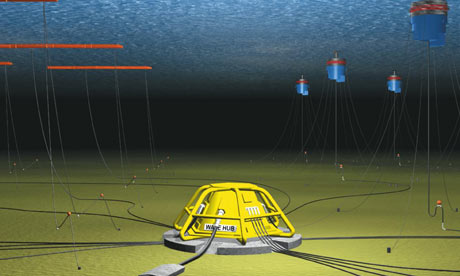


    Image Gallery (1)


  • Methanol and artificial photosynthesis

    Methanol and artificial photosynthesis


    Carbon dioxide generated by power stations can be converted into methanol and used to generate electricity or fuel cars


    Permanent underground storage is only one of the options for dealing with CO2 captured at a power station. One much-discussed alternative is to feed the gas to algae and turn the algae into biofuels. A less familiar but equally promising approach, advocated by the Polish environmentalist Marcin Gerwin, is to convert the CO2 into methanol fuel using a process called “artifical photosynthesis”.


    In this system, the first step is to dissolve the CO2 in water. The resulting solution is directed into tubes containing a catalyst that is activated by UV light and causes the dissolved CO2 to react with water (H2O) to form methanol (CH3OH). The methanol can then be burned for power generation, displacing coal use, or used as a vehicle fuel instead of oil.


    The basic conversion process for turning pure CO2 into methanol is proven, and research is now being carried out to assess the viability of using the technology on unprocessed gas from power-station flues.


    The profile of the CO2-to-methanol approach has been boosted by support from chemistry the Nobel Laureate George Olah.

  • Concentrated power Technology


    Concentrated solar power technology

    Zenith Solar, based in Nes Ziona a suburb of Tel Aviv, is a pioneer in a new type of solar energy that uses mirrors and lenses to focus and intensify the sun’s light, producing far more electricity at lower cost. Compared with traditional flat photovoltaic panels made of silicon, this so-called concentrated solar power technology has proved in tests to be up to five times more efficient. That puts it on the verge of being competitive with oil and natural gas, even without government subsidies.

    Since it was founded in 2006, the startup has raised $5 million from private investors in Israel and the U.S. Now it’s trying to raise an additional $10 million to $15 million to cover the cost of commercializing its technology.

    Zenith bought the rights to the solar technology from Ben-Gurion University and Germanys Fraunhofer Institute. A joint Israeli-German research team from the two organizations designed a working prototype, which consists of a 10-sq.-meter dish lined with curved mirrors made from composite materials. The mirrors focus the sun’s radiation onto a 15.5-sq.-in.) generator that converts light to electricity. The generator also gives off intense heat, which is captured via a water-cooling system for residential or industry hot-water uses.

    Tested over the past few years at Israel’s National Solar Center in the Negev desert, the prototype achieved astounding results: A concentration of solar energy that was more than 1,000 times greater than standard flat panels. One of the biggest advantages of Zenith Solar’s approach, especially in today’s market, is its limited use of polysilicon. Skyrocketing global demand for traditional photovoltaic panels has led to a worldwide shortage of the material and lifted prices tenfold in the past four years.

    After further refining the technology, Zenith plans in the coming months to take its first major steps toward commercialization. Two large-scale test installations are planned for this summer at a kibbutz and a factory. The company will put 86 of its 7-meter-high dishes on an acre of land at Kibbutz Yavne to provide the community of 250 families with more than a quarter of their energy needs. The second project will replace fuel oil used to produce heat at a large chemical plant in central Israel. Once these projects are operational, Zenith plans to begin commercial sales in Israel in 2009 and then overseas, says CEO Segev.


  • Luminescent Solar Concentrator

     Luminescent solar concentrator


    Luminescent solar concentrators are plastics which concentrate sunlight to a particular spot, where the concentrated solar energy can then be converted by a multi-junction PV solar cell.[16] [17][18] This not only increases efficiency, but also decreases cost, as luminescent solar concentrator panels can be made cheaply from plastics, while PV-cells need to be completely constructed from expensive materials as silicium.


    Research is being conducted (amongst others) at universities as RU Nijmegen and TU Delft.[19]


    Also, at the Massachusetts Institute of Technology (MIT) Researchers have found a way to convert windows into devices that concentrate sunlight for conversion into electricity. MIT developed a mixture of dyes that can be painted onto a pane of glass or plastic. The dyes absorb sunlight and then re-emit it within the glass in a different wavelength of light, which then tends to reflect off the interior surfaces of the glass. As the light reflects within the glass pane, it tends to get channeled along the length of the glass to its edges, where it is emitted. The MIT researchers estimate that sunlight is concentrated by a factor of 40, allowing solar cells that are optimized for such concentrated sunlight to be mounted along the edges of the window. The unique optics of the approach yields a cheap solar concentrator that does not need to be pointed toward the sun, as is needed for lens-based concentrators. MIT estimates that the process will be commercialized by Covalent Solar [20] within the next 3 years .[21]

  • The Fireless Locomotive


    The Fireless Locomotive      


    Written by Hank Morris   

    The fireless locomotive is one of the most remarkable and foolproof locomotive designs devised. A locomotive equipped with a large tank or reservoir instead of a boiler and firebox, it carries no fire. This engine was essentially a giant thermos bottle lying on its side with wheels.


    This type of locomotive was very desirable for service in plants where cleanliness and the elimination of fire hazards and noise were important. They were quite popular in applications where smoke and cinders could ruin the product, as in textile mills or agricultural processing plants. In those applications where this type of locomotive fits, it was a reliable and economical unit of motive power. Fireless locomotives could be found working in chemical industries, powder plants, paper mills, food plants and electric power plants, wherever a reliable source of steam or compressed air was readily available.

    Before the perfection of electric street traction in the 1880s, American city railways tried many exotic forms of power in an effort to displace horse-propelled cars. In the 1870s the Crescent City Railway of New Orleans tried some steam storage motors built in Paterson, N.J., by Theodore Scheffler in 1876. These locomotives were fireless and obtained a “charge” of steam from a stationary boiler house. Fireless locomotives were extensively used In Europe long before their introduction in this country. The first European-built fireless was brought to the U.S. in 1913.


    Learn more at the National Railway Historical Society website