Category: Water

  • World on course to run out of water, warns Ban Ki-moon

    World on course to run out of water, warns Ban Ki-moon

    Freshwater supply and water quality under pressure, warns UN secretary general on International Day of Biological Diversity

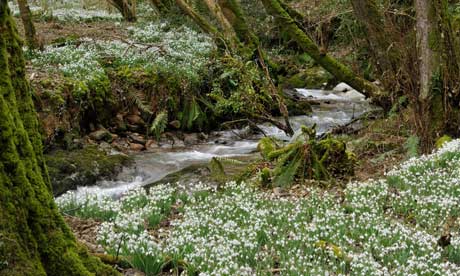
    Woodland stream with carpet of Snowdrops - Galanthus nivalis Snowdrop Valley, Exmoor, Somerset

    Woodland stream Snowdrop Valley, Exmoor. ‘Although seemingly abundant, only a tiny amount of the water on our planet is easily available as freshwater,’ said Ban Ki-moon. Photograph: Martin Fowler/Alamy

    Ban Ki-moon has warned the world is on course to run out of freshwater unless greater efforts are made to improve water security.

    Speaking on the UN’s International Day of Biological Diversity, Ban said there was a “mutually reinforcing” relationship between biodiversity and water that should be harnessed.

    “We live in an increasingly water insecure world where demand often outstrips supply and where water quality often fails to meet minimum standards. Under current trends, future demands for water will not be met,” Ban said.

    Water, food, energy and climate are all linked.

    Most forms of energy generation require water, variable weather is making agriculture harder while extreme weather events are hindering natural water storage.

    Ban believes there is an opportunity to address these challenges as the Millennium Development Goals are replaced with a new set of objectives.

    “As the international community strives to accelerate its efforts to achieve the Millennium Development Goals and define a post-2015 agenda, including a set of goals for sustainable development, water and biodiversity are important streams in the discussion.

    “Although seemingly abundant, only a tiny amount of the water on our planet is easily available as freshwater,” he said.

    The latest UN World Water Development Report, released last year, called for $13.7bn to $19.2bn of the Green Climate Fund’s annual targeted funding of $100bn to be directed at the challenges faced by the water sector.

    Much of this would be used to tackle supply shortfalls and flood management.

    Climate change is already impacting the availability of water through rainfall disruption, soil moisture, glacier, snow and ice melt and river, ground and water flows.

    Ban said the once competing campaigns for water and biodiversity protection could now be turned to the benefit of societies facing stresses on both water and food security.

    “Where once the focus was on trade-offs between water use and biodiversity, today we are coming to understand how biodiversity and water security are mutually reinforcing,” he said.

    “Ecosystems influence the local, regional and global availability and quality of water. Forests help regulate soil erosion and protect water quality and supply. Wetlands can reduce flood risks. Soil biodiversity helps maintain water for crops.

    “Integrating nature-based solutions into urban planning can also help us build better water futures for cities, where water stresses may be especially acute given the rapid pace of urbanization.”

  • Urgent meetings over water sediment threat

    Dirty water turbidity at Mt Crosby water treatment plant.Dirty water turbidity at Mt Crosby water treatment plant. Photo: Supplied
    Directors-general of three state government departments have been called in to urgent meetings to discuss the threat which silt in the Brisbane River poses to Brisbane’s water supply.

    (more…)

  • 2011 report confirms locals concerns about flood management

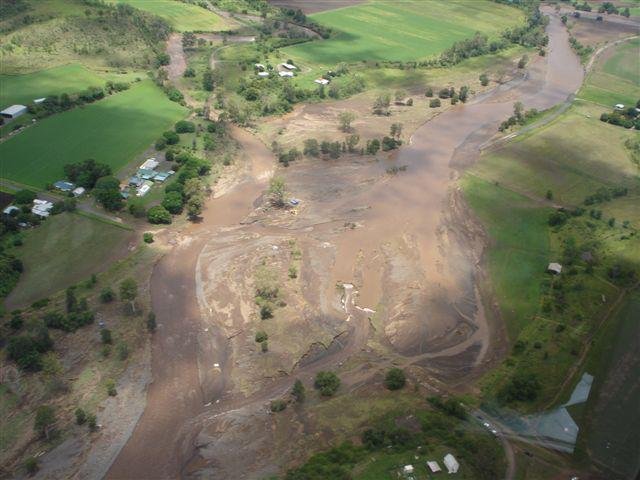
    Energex_Mt_SylviaThe 2011 Queensland Floods report confirms the concerns of locals Diane and Mark Bruhn about the lunacy of the flood measures being taken by local and state governments.

    Published in The Generator last week they provided new evidence that they are bulldozing and burning, increasing the speed and ferocity of the floods and the subsequent damage. If instead they listened to the science, slowed down the rivers and dispersed the water into the landscape, it would reduce flood damage and  have drought reduction value as well. It is well documented that the majority of water in streams comes from groundwater. Clearing the landscape and increasing the speed of run-off reduces the availability of groundwater significantly.

    Qld Floods 2011

  • Flood management worsens Lockyer Valley floods


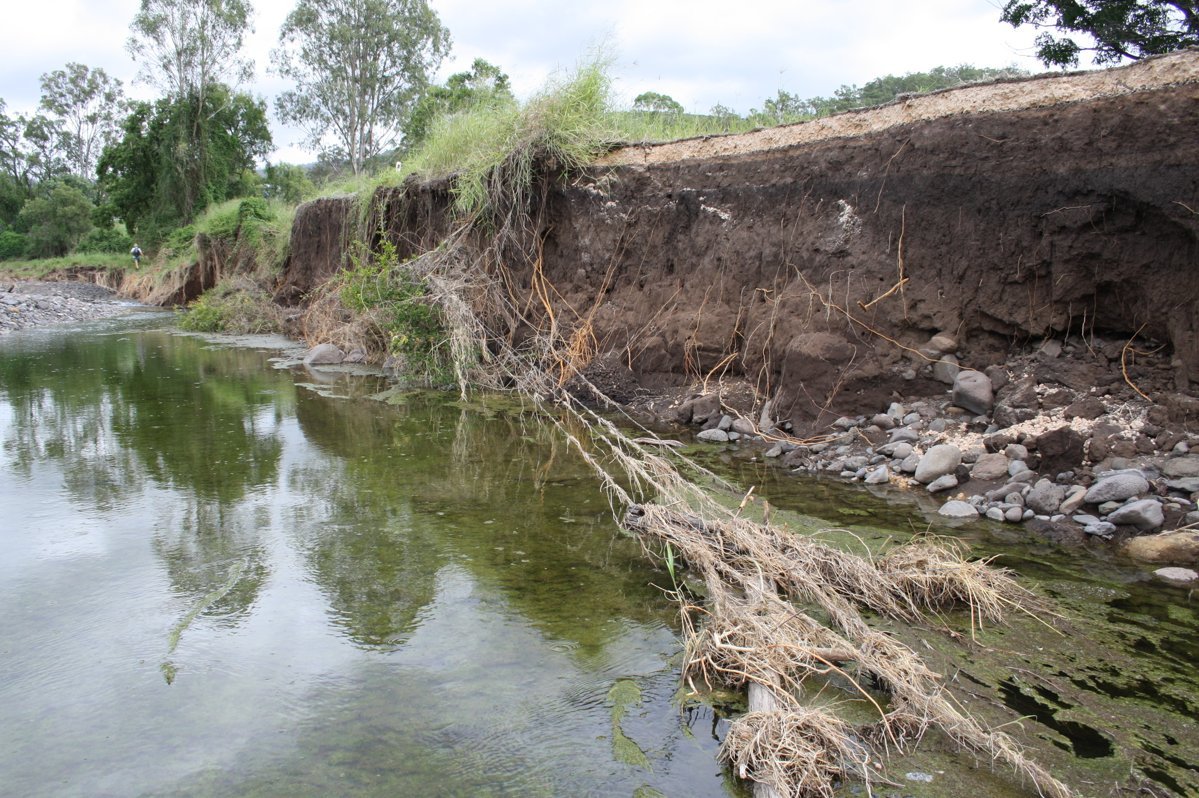
     Energex_Mt_SylviaDiane and Mark Bruhn live in the Lockyer Valley and are alarmed by the mismanagement of the waterways that continues to make floods worse through landclearing. They have been trying to communicate their views to State Government about possible land management factors which may have played a part in the recent unbelievable flood they’ve had across both the 2011 and 2013 floods and now have photographic evidence supporting their case.

    We tried our best in 2011, to have local and State Government listen to our concerns http://www.thechronicle.com.au/news/earthworks-destroy-creeks-waterways-lockyer-valley/1067473/.

    (more…)

  • Authorities deny toxin studies in Gladstone port

    Aquatic veterinarian Dr Matt Landos.
    Aquatic veterinarian Dr Matt Landos.

    AN AQUATIC veterinarian critical of the dredging project in Gladstone Harbour has attacked testing and reporting methods used by authorities.

    Dr Matt Landos has written a long list of criticisms of testing by Gladstone Ports Corporation (GPC) and the Department of Environment and Heritage Protection (EHP).

    Those departments yesterday went on the front foot, delivering lengthy answers, and rejections, of Dr Landos’s criticisms.

    (more…)

  • Store water underground: scientists

    Store water underground: scientists

    AAPNovember 26, 2012, 6:08 pm

    Surplus rainwater should be stored underground instead of in dams to prepare for drought, a scientific study says.

    The National Centre for Groundwater Research and Training has made the recommendation as the federal government tables Australia’s first national Murray-Darling Basin plan in parliament.

    Researcher Andrew Ross says Australia should be “banking” its water underground as an alternative to traditional dams during times of heavy rain.

    “There is enormous national potential to store surplus water in aquifers, ensuring sufficient water is available for cities, homes, industry, farming and the environment when drought strikes,” he said in a statement.

    “Historically, Australians have relied on dams to provide water for agriculture and cities.

    “This strategy is not sufficient to cope with increasing climate variability or droughts as demand for food and water grows.”

    Up to 3000 billion litres (GL) of water a year evaporates from the Murray-Darling Basin, he said.

    That level of evaporation almost matches the 3200 billion litres a year the government is hoping to flush back into the Murray-Darling Basin, under its plan unveiled last week and tabled in parliament on Monday.

    Mr Ross, who has researched integrated surface water and groundwater management, said storing water underground would ensure sufficient was available for Murray-Darling Basin agricultural production and environmental flows, and avoid the shutdown of irrigation.

    AAP saj/bar